
Tool 5 · Count
How much material
Every coating estimate is the same five moves: measure, allow for the surface and the waste, read the rate off the data sheet, multiply by the coats, round up to the containers. This does the arithmetic. The rates are yours to bring: gallons per square per coat belongs to one product on one substrate, and it is printed on that product's data sheet.
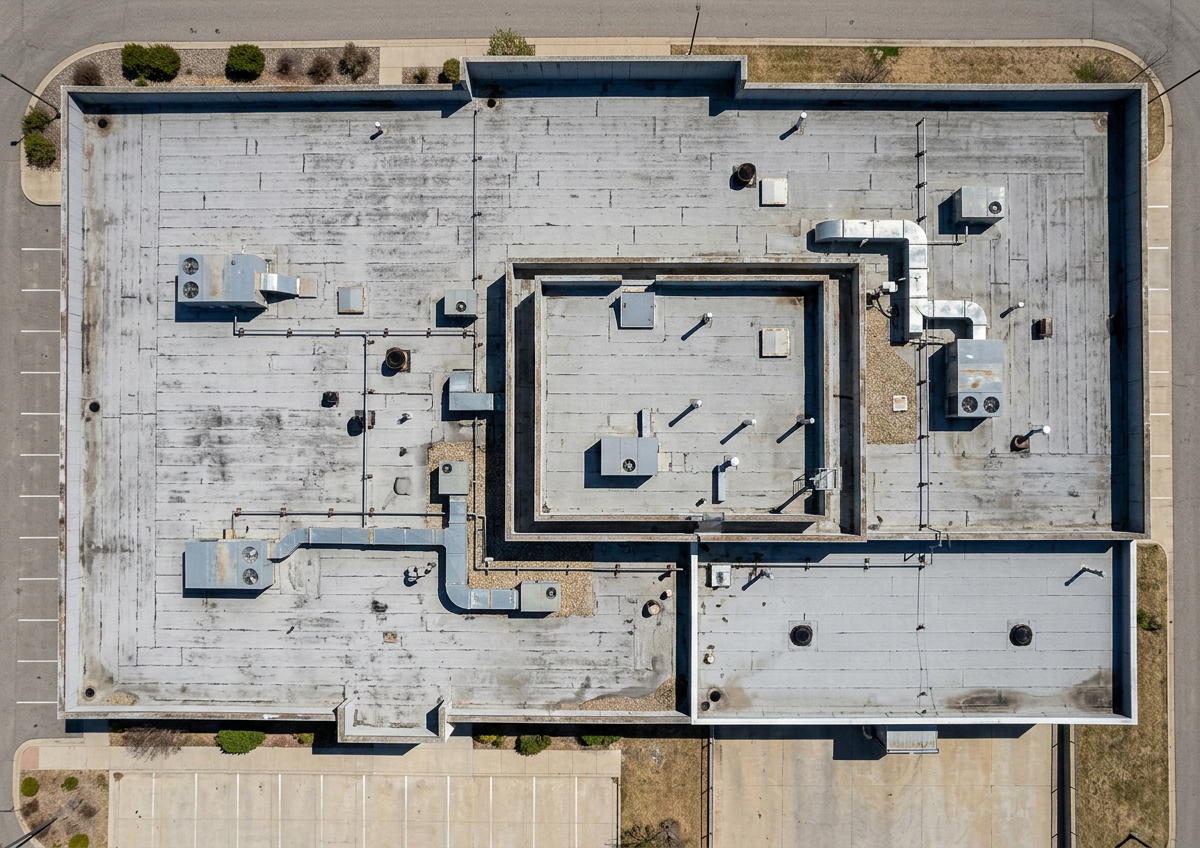
Run the count
One roof level at a time. Measure the field flat on plan, deduct only openings big enough to matter, and keep each level as its own count.
Where the rates come from
A rate is gallons per square per coat for one product on one substrate, and the current data sheet prints it; we do not print rates as our own. Rate and film thickness are the same fact said two ways: one gallon spread one mil thick covers 1,604 sq ft, so a gallon over 100 sq ft goes down at about 16 wet mils, and dry film is wet film times volume solids. Wet mils, dry mils and coverage works through the formulas, so you can check a rate against the dry film a specification asks for before you put it in the calculator.
Count the details separately
Parapet base, curbs and drain rings are perimeter and curb lengths times the fabric width the detail calls for. Penetrations and fastener rows are a count each, converted to cartridges: sealant ships in 10.1 oz, 10.3 oz, 10 oz, 9.5 oz and 29 oz cartridges, and the brushable sealant in 1-gallon cans. Repairs found at survey are patching cement or wet-dry roof cement by the pail, and low spots and crickets are Slope Builder, a 40 lb powder pail mixed with water on site, from the area and depth being built up; under silicone, the adhesion test and Uniflex decide whether it goes in. The guide walks each line.
You do not have to do this to get a price
Send the roof area and type through the quote form and a person runs the count from the data-sheet rates, adds the detail materials, and replies with the price, freight and a ship date.
Guides
The guides behind the tools
- How to estimate material for a roof coating job
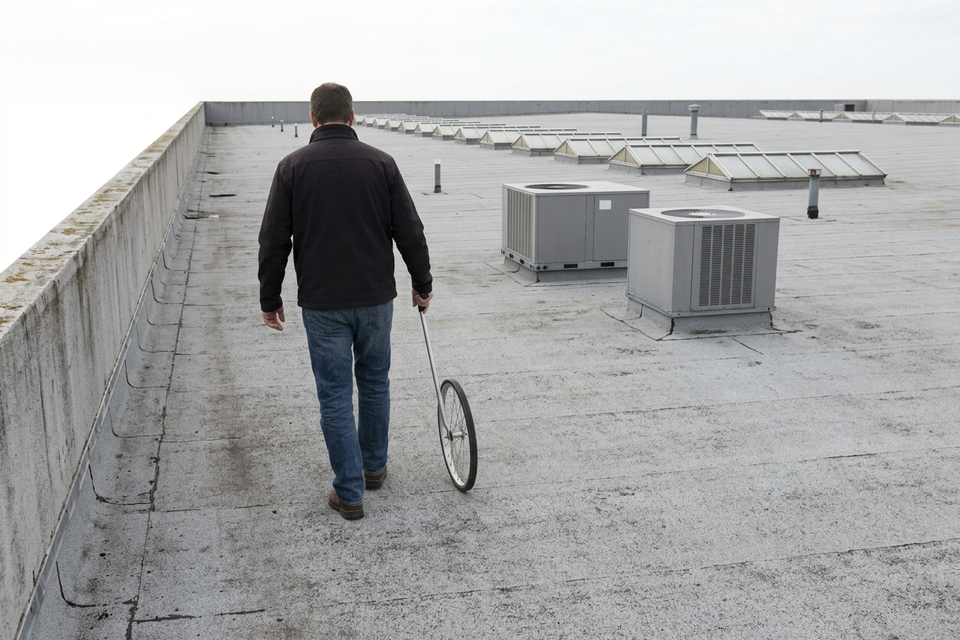
Area to squares, an allowance for texture and waste, the data-sheet rate per square per coat, round up to pails and drums, then count the detail materials.
- Wet mils, dry mils and coverage: the math behind a coating job
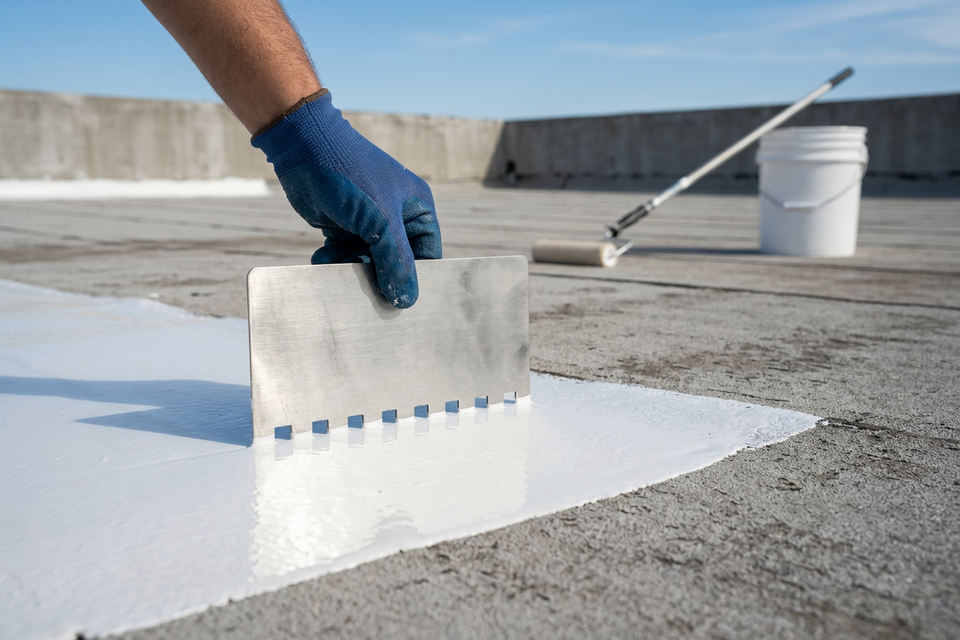
Dry mils are wet mils times volume solids, and a gallon over 100 sq ft is about 16 wet mils. Here are the formulas, worked examples and the checks on the roof.
- Which coating system goes over which roof
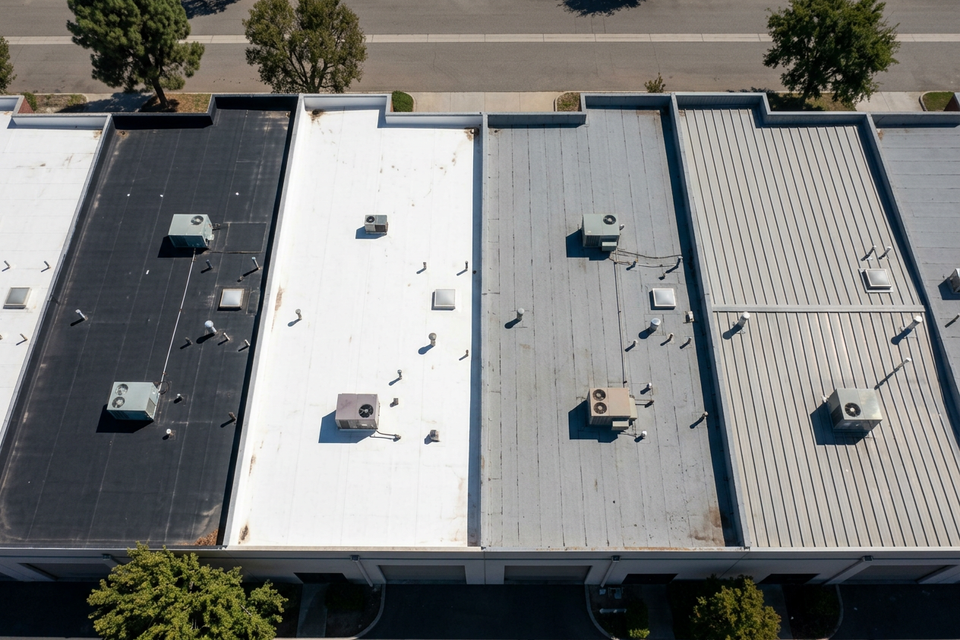
The acrylic and the silicone build-up for each roof: metal, EPDM, TPO, PVC, Hypalon, BUR, cap sheet, foam and concrete, with the part numbers.
- Restore or replace: how to tell whether a roof can be coated
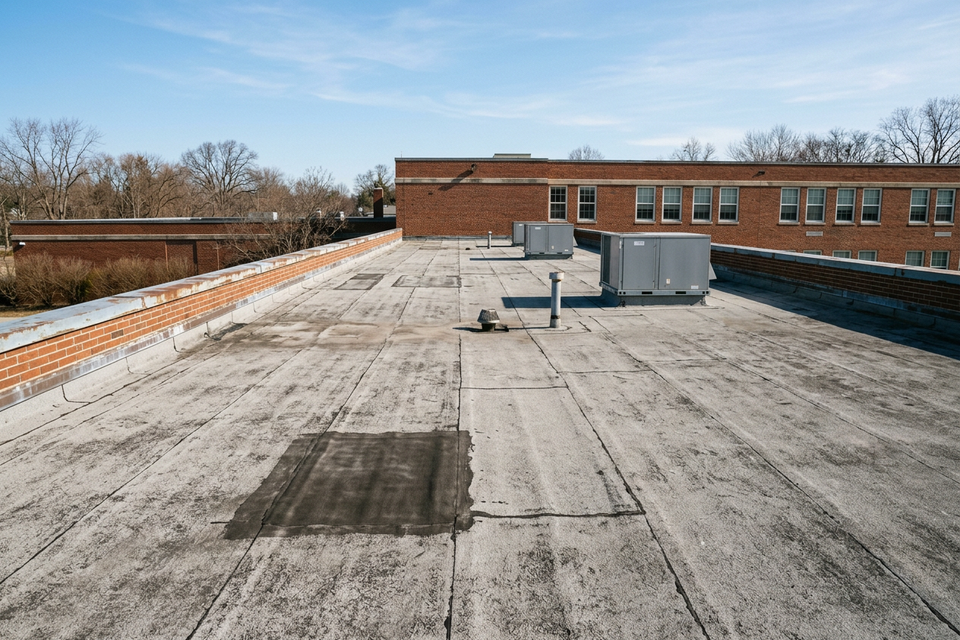
What makes a low-slope roof a candidate for a fluid-applied restoration, what rules it out, and the survey, cores and test patch that settle it.
Send the count, get the price
The area by level, the system, the seam feet and the counts. A person sends back the price, freight and a ship date.
We reply within one business day.