
Drone moisture scan · commercial flat roofs
Find out whether the roof is wet before you budget
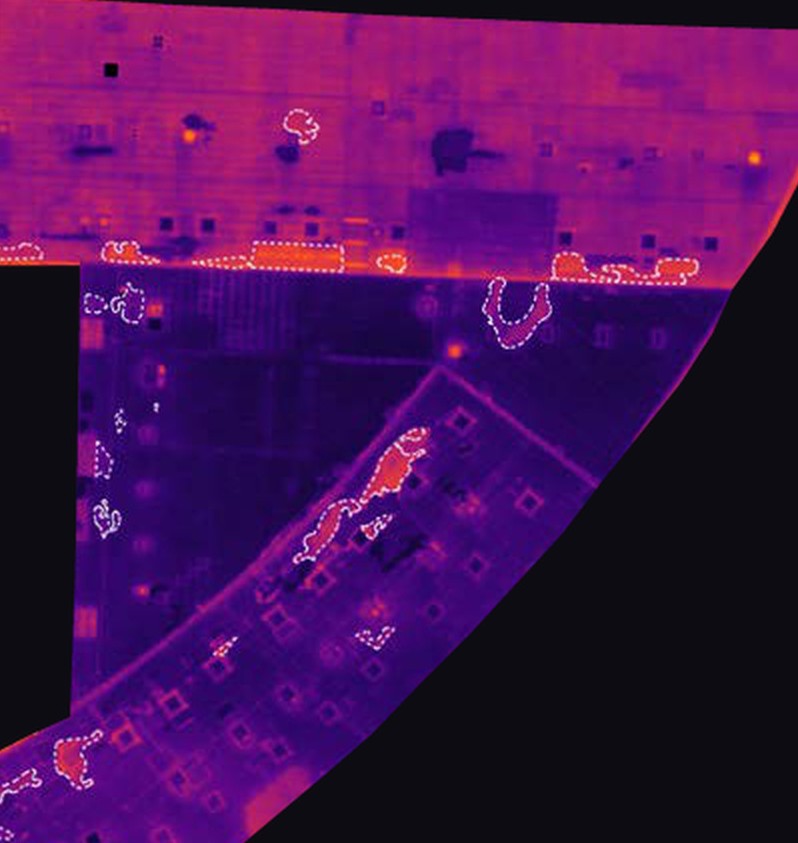
Once the sun has set after a sunny day, a drone with a thermal camera flies the roof: wet insulation holds the day's heat longer than dry, so it shows up warmer. It usually takes one evening, and the building runs as normal. You get a map with any areas that look wet outlined and measured in square feet, video from the flight and a written assessment; core samples then confirm the flagged areas.
Why the scan comes first
Wet insulation comes out before the coating goes on
Coating makers, Sherwin-Williams included, require wet insulation to be found and replaced before a coating goes on. The map shows whether the roof needs a coating with a few sections replaced first, or whether so much of it is wet that replacing it makes more sense, before you budget for either.
- Sherwin-Williams Uniflex requires a moisture survey on every system-warranty project, and a third-party survey where a 15-year warranty is requested. Whether a survey is accepted is its call.
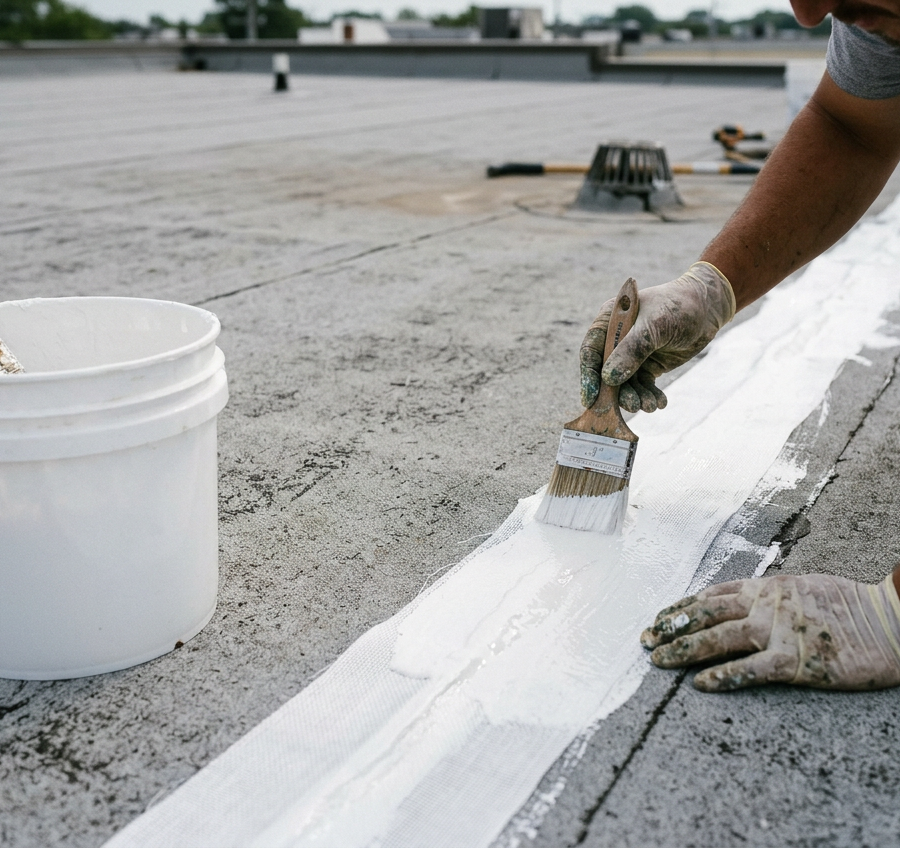
- A coating cannot dry out wet insulation: laid over it, it seals the water in under a surface that looks finished.
- A roof with wet insulation is not a candidate until that is cut out and replaced.
- A white coating makes later thermal work harder: one more reason to scan before coating.
What you get
A map you can budget from
Three things come back to the owner: the map, video from the flight and a written assessment, with the flagged areas added up. None of them commits you to a contractor or a coating, and nothing about the roof has to be decided before you have them.
-
The map of the whole roof
The roof from above after sunset. Every area that looks wet is outlined where it sits, measured in square feet, and shown beside a daylight photo of the same spot.
-
Video from the flight
Footage of the roof from the drone, to look over alongside the map.
-
A written assessment
A plain-language read of what the scan found: the flagged areas and their size, which to core first, what the pattern suggests for restore or replace. A screening read; cores confirm.
-
The square-foot total
Every flagged area added up, and what share of the roof that is: the number the restore-or-replace question starts from.
The sample scan
The same patch of roof, by day and after sunset
Three of the 28 areas flagged on a roof of about 50,000 sq ft, 1,929 sq ft in all. The sample shows the map and the image pairs; a full scan also comes with video from the flight and a written assessment. Slide across each picture; the dotted line marks what the scan flagged.
-
A stain, and how far the warm band runs
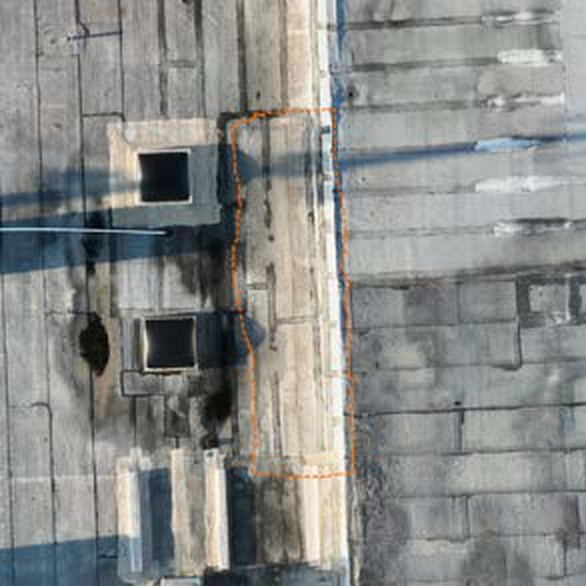 Daylight
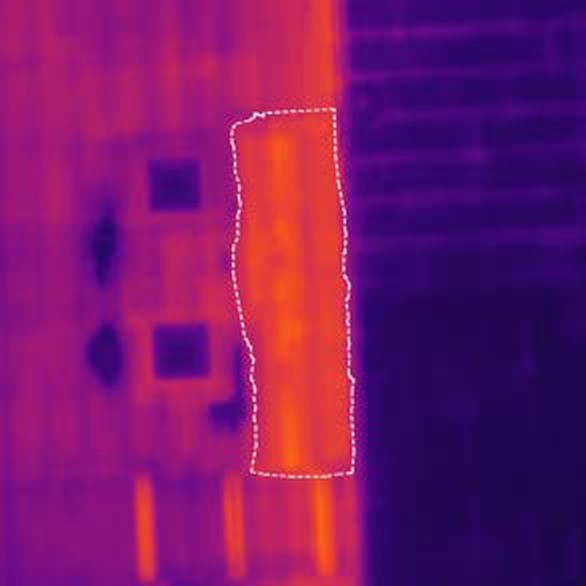 Thermal
- Area flagged
- 204.7 sq ft
- Warmer by
- 14.5 °F
- Peak
- 91.4 °F
A long strip beside two rooftop curbs. Daylight shows staining; the thermal image shows a warm band the whole length of the outline, which a stain alone would not tell you. -
Nothing by day, warm after sunset
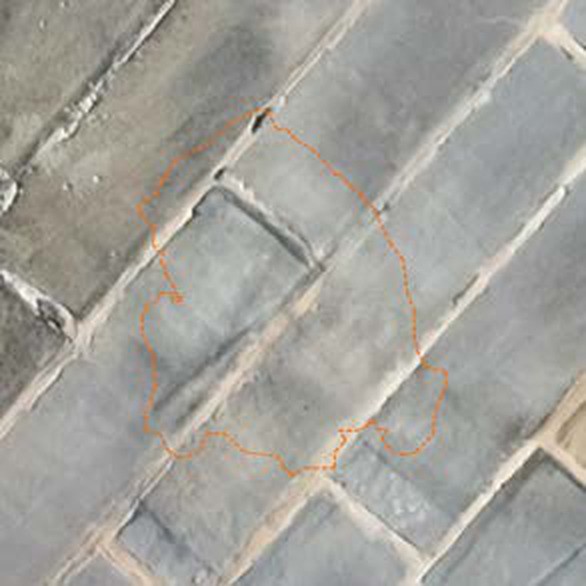 Daylight
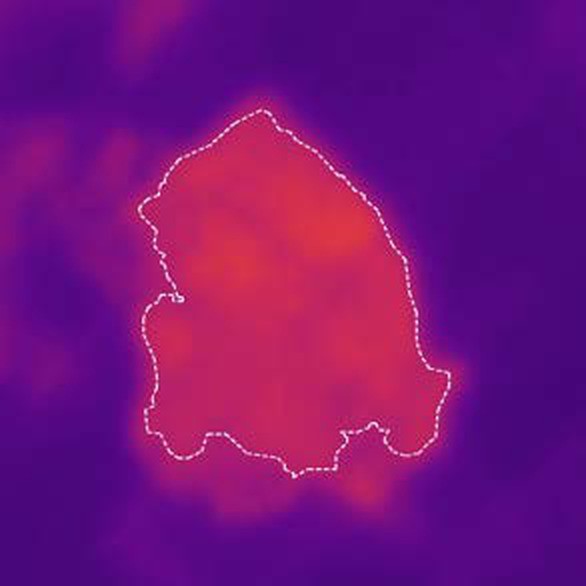 Thermal
- Area flagged
- 34.2 sq ft
- Warmer by
- 9.5 °F
- Peak
- 88.1 °F
Nothing in the daylight photo would send anyone to look here. After sunset the same patch reads clearly warmer than the roof around it. This is the case for flying the camera. -
The cover marks the spot, not the extent
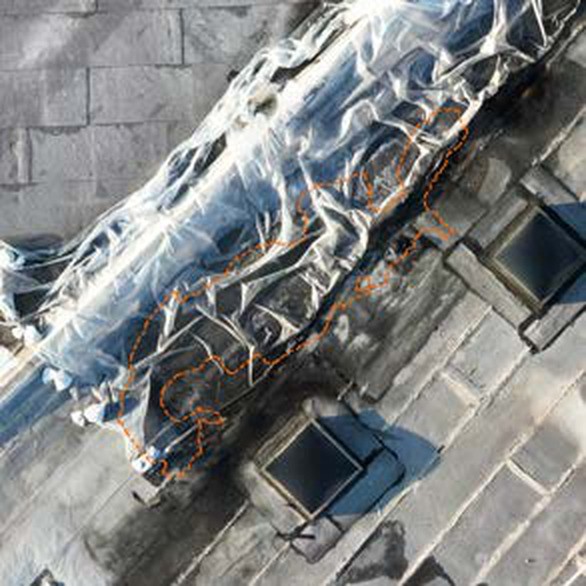 Daylight
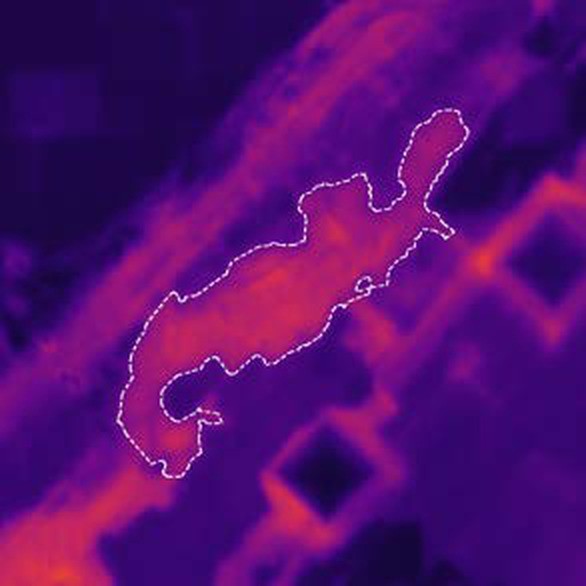 Thermal
- Area flagged
- 112.7 sq ft
- Warmer by
- 10.5 °F
- Peak
- 86.5 °F
Someone had laid a plastic cover over a problem area. The warm area reads under it and around it, so the cover shows where a problem was noticed, not how far the warm area reaches.
A sample from a real scan, with the address, the people and the companies removed and the map re-oriented. Nothing in it was cored, so every area is suspected until a core confirms it. Warmer by is measured against the dry roof right around each area.
How it goes
From the request to the answer
You send the address and the owner gives the go-ahead; we arrange the flight; a roofing contractor cuts the cores. The weather sets the flight date. Everything else runs in this order.
-
You ask, with the building's address
The scan button fills in the message; add the building's address. The form already asks for the roof area, the state, the ZIP and your role. A facility manager, a property manager or the owner's roofing contractor can ask on the owner's behalf.
-
Fit check, then the owner's written go-ahead
If a thermal camera is the wrong tool for the roof, we say so and name the survey that fits instead. If it suits, we quote the scan for that roof, and we fly only once the owner has given the go-ahead in writing.
-
The evening flight
It needs a sunny day, then a clear, dry, calm evening, so we confirm the date when the forecast lines up. The drone flies once the sun has set, and the building runs as normal.
-
The map, the video and the assessment
The map, with any areas that look wet outlined and measured in square feet, each beside a daylight photo of the same spot; video from the flight; and a written assessment, a screening read that the cores then confirm. This is the first point at which there is anything to decide.
-
Cores confirm
Small core samples show whether the insulation is wet: at the strongest flagged areas, at a faint one, and one in roof the scan calls dry, for comparison. A roofing contractor cuts and patches them: yours, or one we introduce. The scan marks suspects; the cores confirm them.
-
The answer
A restoration with nothing to replace first, a restoration once the wet sections are cut out and replaced, or a replacement because too much of the roof is wet. The map and the cores show which, before you budget for any of them.
Before you ask
The scan in plain terms
What it measures and needs, what it cannot tell you, and the roofs it suits and the ones it does not. For one roof, the scan-fit tool asks the questions.
| What it measures | Surface temperature after sunset. Wet insulation holds the day's heat longer than dry insulation, so the membrane over it reads warmer. |
|---|---|
| What it needs | A sunny day, then a clear, dry, calm evening. The flight starts once the sun has set, and the weather sets the date. |
| What it cannot tell you | Where water gets in, what is under rooftop units, or for certain why an area reads warm: exhaust, ponded water and dirt can read warm too. Cores and a roofer's look settle those. |
| Roofs it suits | Low-slope roofs with insulation under the membrane: single-ply, modified bitumen and smooth built-up. |
| Roofs where it is the wrong tool | Ballasted or heavy-gravel roofs, metal panel roofs, already-white or highly reflective surfaces, and closed-cell foam, which does not hold water. |
| What is used on those roofs instead | Core samples, a capacitance or nuclear moisture survey, or a walk-through. We tell you which, rather than fly a roof the camera cannot read. |
| How flagged areas are confirmed | Small core samples at the flagged areas, cut and patched by a roofing contractor. ASTM C1153, the standard practice for infrared roof moisture surveys, calls for cores to verify infrared findings. |
What the map tells you
Dry, partly wet or widely wet: what each means
The cores settle which of the three it is, before anyone prices a job. Restoring a low-slope roof with a coating system typically runs $3.50 to $7 per square foot installed; tearing it off and replacing it typically runs $10 to $18. Those are typical installed ranges drawn from published industry figures, not a quote: the roof's condition, how much wet insulation has to come out, access and region move the number.
- Dry, with no wet areas confirmed: a restoration is worth pricing. Applied over a sound, dry roof, a restoration system adds 10 to 15 years of service life.
- Partly wet: those sections are cut out and replaced first, then the roof can be restored.
- Widely wet: replacing the roof makes more sense, and you know it before you have budgeted for a coating.
Questions
Scan questions
Cost, disruption, fit, what a blank map means, whether you are tied to anyone, and who decides what.
What does a scan cost?
Does the building have to shut down, or someone walk the whole roof?
Will it work on my roof?
What if nothing shows warm?
Do I have to use your installer or buy the materials from you?
Who can ask for a scan, and who gets the map?
Where do you fly?
Is the scan a warranty inspection?
Guides
How the scan works, in depth
How infrared surveys work and when they do not, how to read the map, why wet insulation comes out first, and how a core confirms what the scan flagged.
- Infrared roof moisture survey: how it works, and when it does not
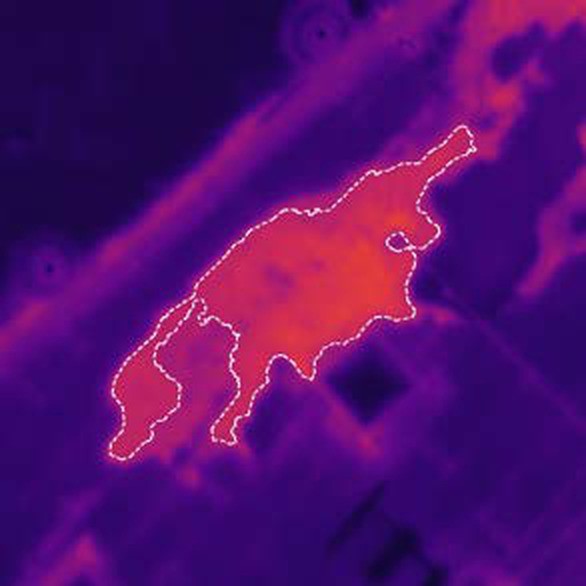
An infrared roof moisture survey sees temperature, not water: here is what it needs, which roofs it suits, what the report shows and why cores confirm it.
- How to read a thermal roof scan report: the map and the numbers
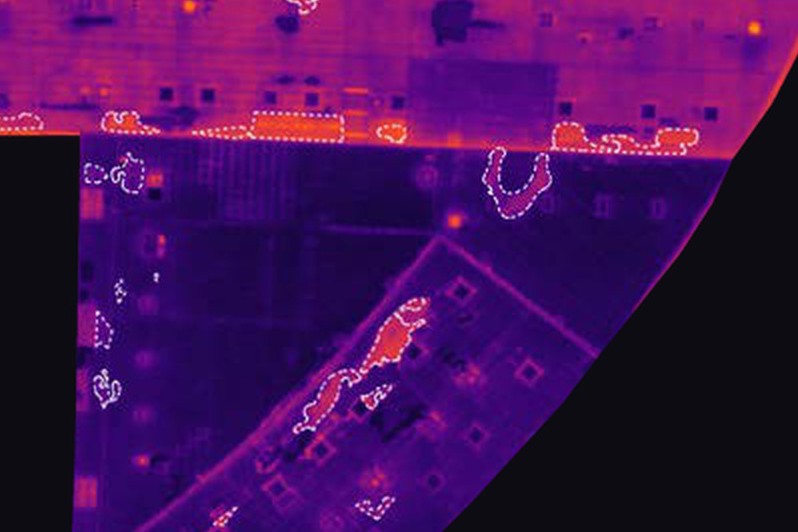
What the colors, dotted outlines, square feet and degrees-warmer figures on an infrared roof scan mean, how to rank findings, and which areas to core first.
- Wet insulation in a flat roof: why it comes out before a coating
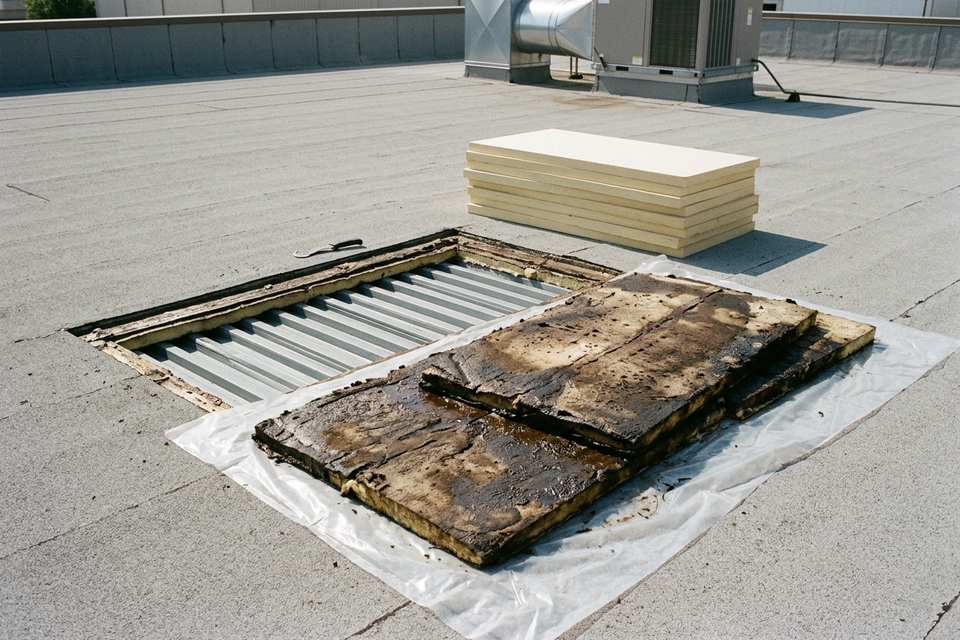
Wet insulation under a flat roof cannot dry on its own. What it does, how a scan and cores find it, how it is cut out, and when there is too much to restore.
- Roof core samples: the test cuts that confirm a moisture scan
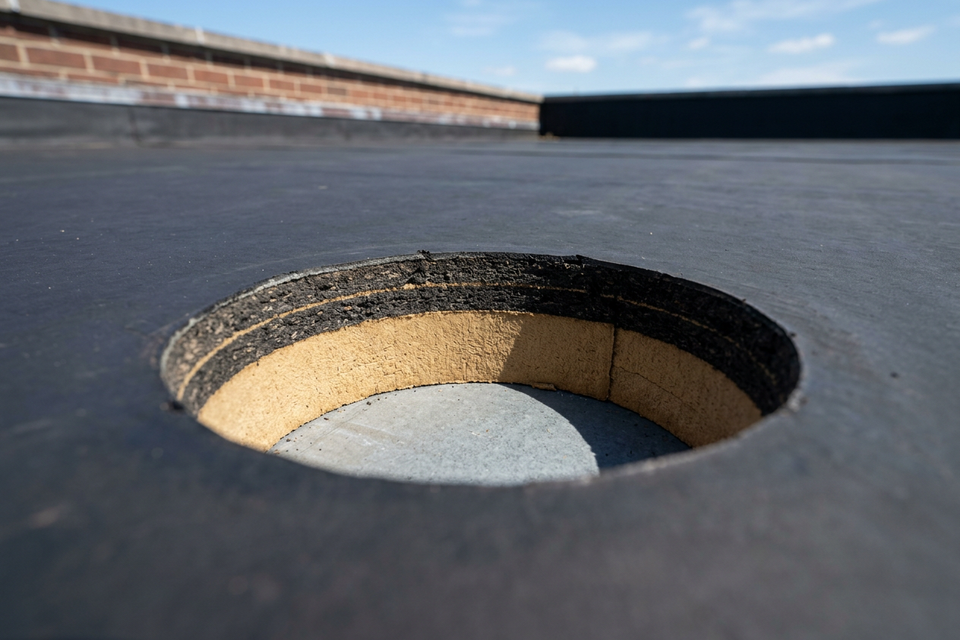
Core samples turn a scan's suspects into facts: what a cut shows, where to cut and how many, wet from dry by feel and by weight, and same-day patching.
See the map first, decide afterwards
Send the building's address through the form. We tell you whether the roof suits a thermal scan and quote the scan for that roof. After the map, we can introduce an installer anywhere in the US and supply the materials. Nothing is booked until the owner gives the go-ahead in writing.