How to estimate material for a roof coating job
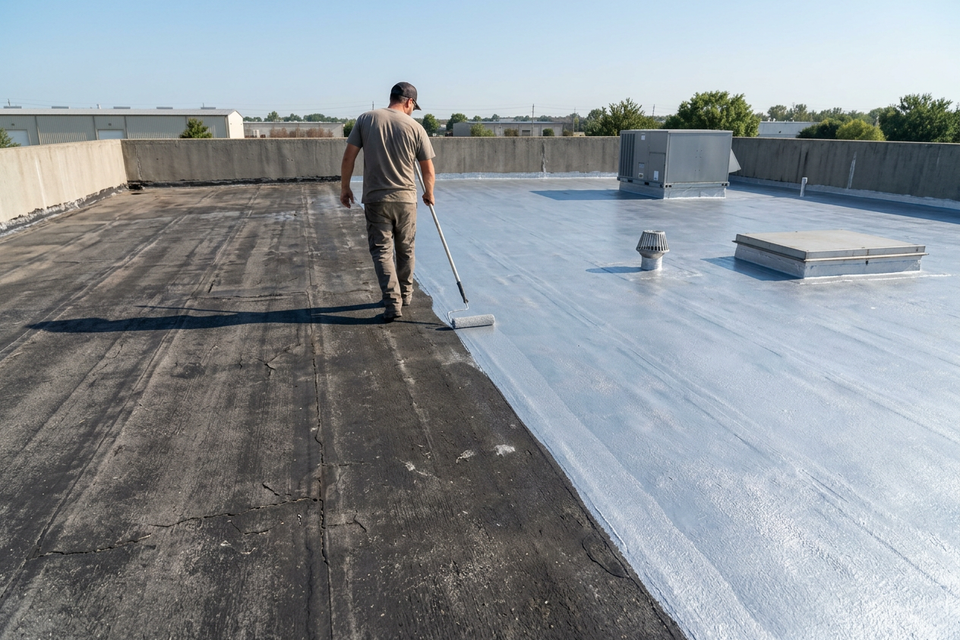
Every coating estimate is the same five moves: measure the roof, allow for the surface and the waste, read the application rate off the data sheet for the system you are using, multiply by the number of coats, and round up to the containers the product ships in. Then count the details, a separate list and the one most often forgotten.
What this page will not do is hand you a rate. Gallons per square per coat belongs to one product on one substrate, it is printed on that product’s data sheet, and a number copied off a web page is how a crew runs short on a Friday afternoon.
Measure the area, level by level
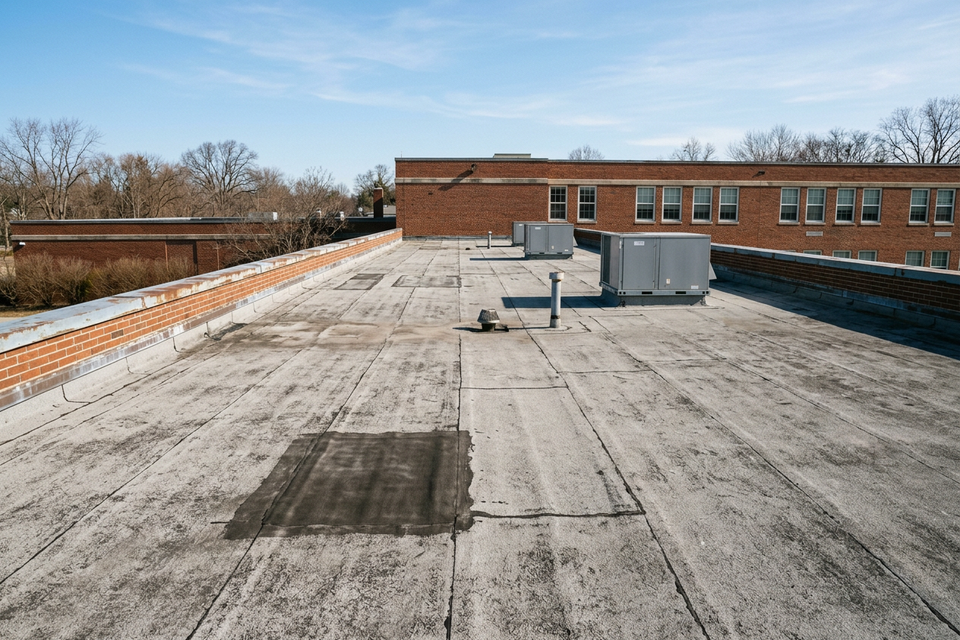
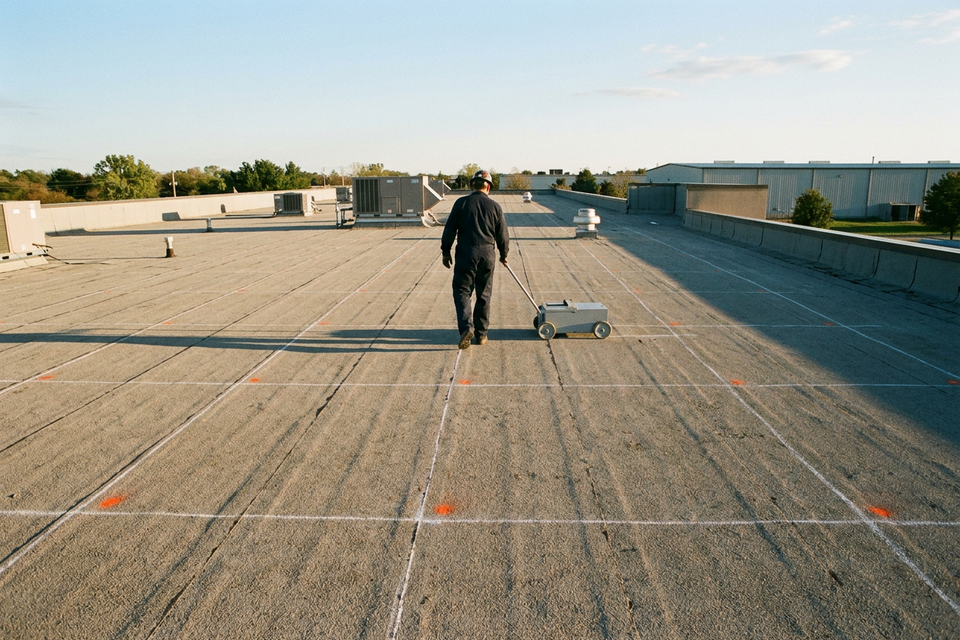
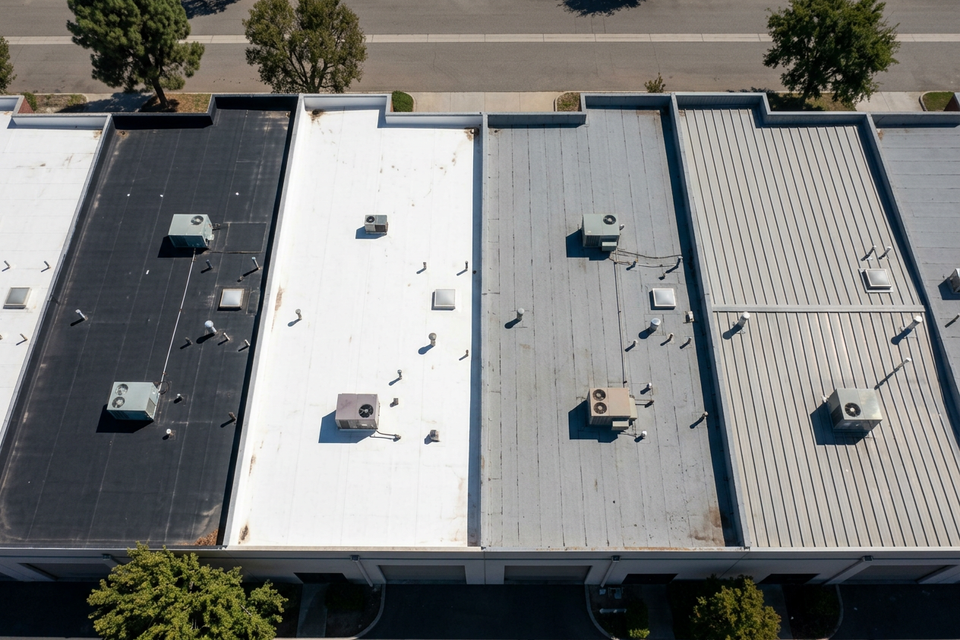
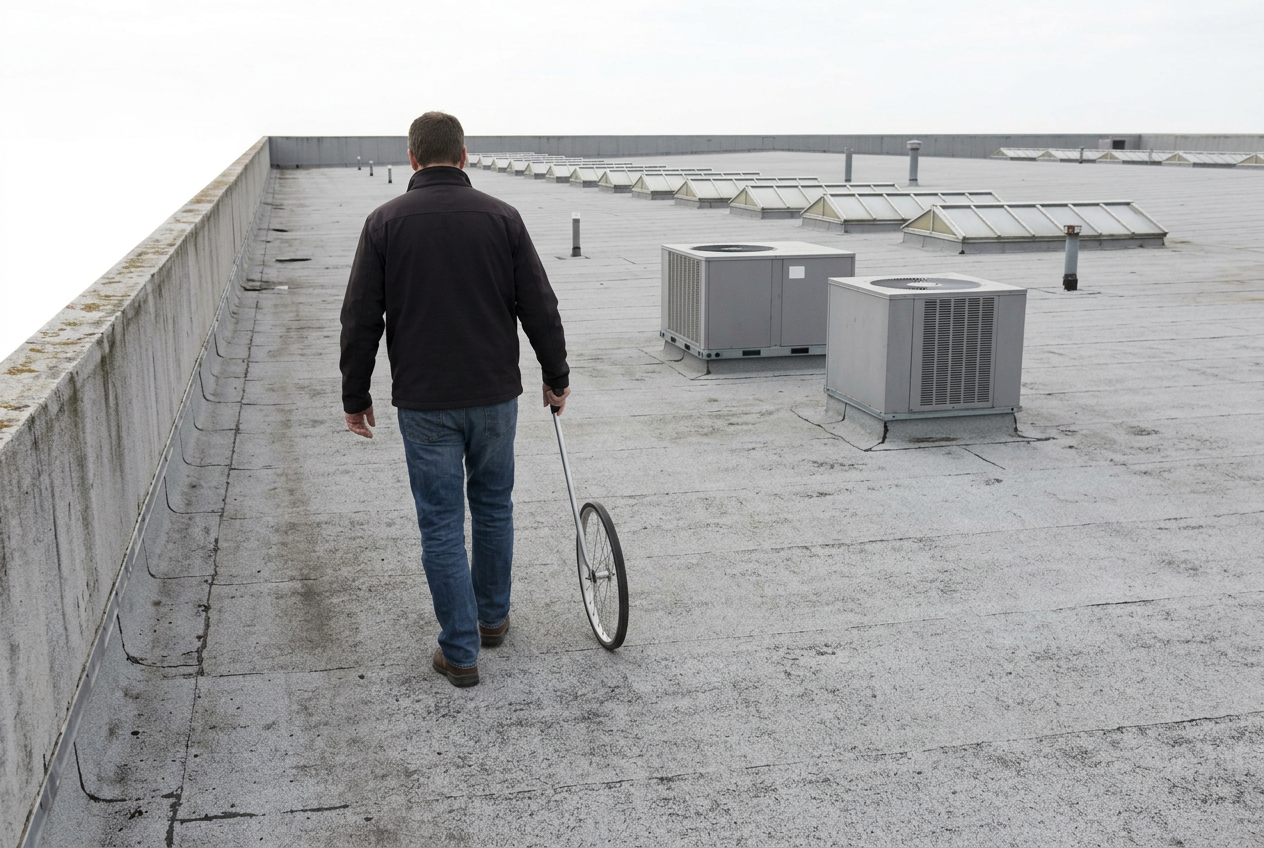
Measure the field flat on plan, not along the slope, and keep each roof level as its own number — levels get different substrates, different access and sometimes different systems. Deduct only openings big enough to matter: a rooftop unit’s footprint, a skylight bank, a shaft. Small penetrations stay in the field area; the detail work goes on top of it.
Then convert to squares. One square is 100 sq ft, and the trade quotes coverage per square, so squares keep the arithmetic in the data sheet’s unit.
Add for the surface and for waste
The measured area is the flat plan area. The surface the coating has to cover is bigger, by an amount the surface itself decides:
- A granular cap sheet swallows material into the granules on the first coat.
- Sprayed foam has an orange-peel surface with real area in it.
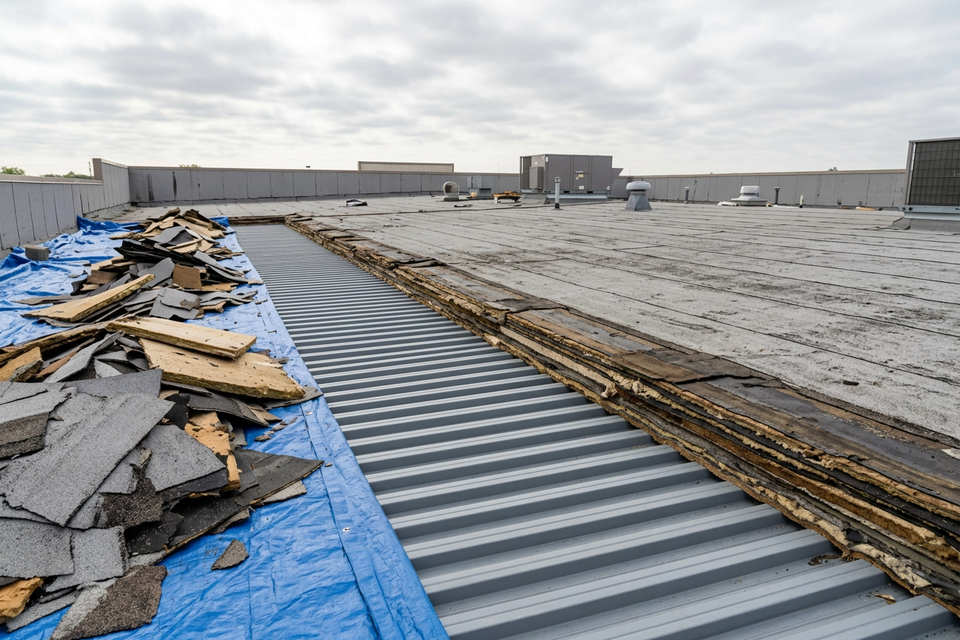
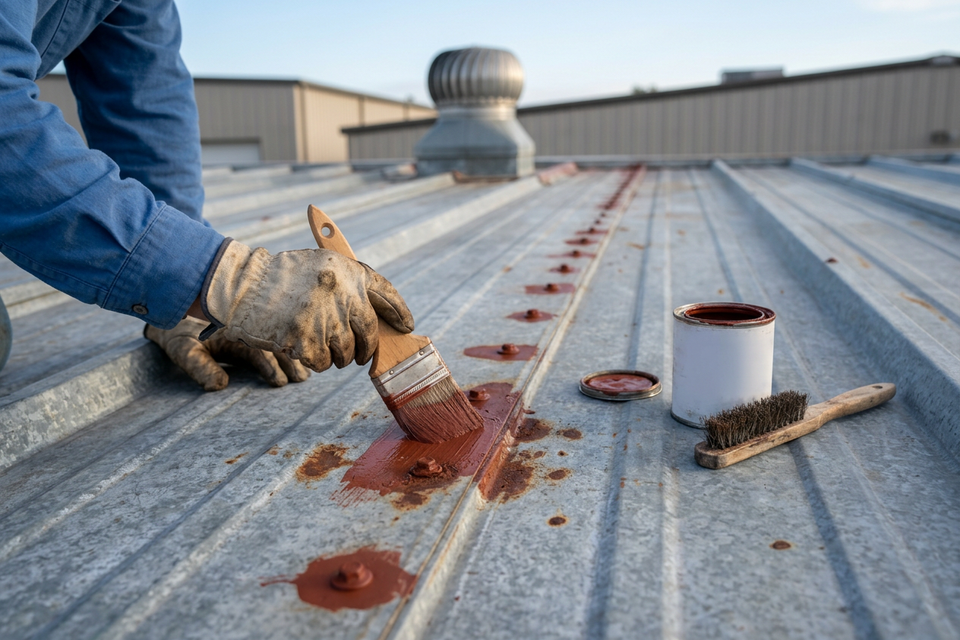
- Ribbed or corrugated metal has more surface than its footprint, and the ribs hold coating.
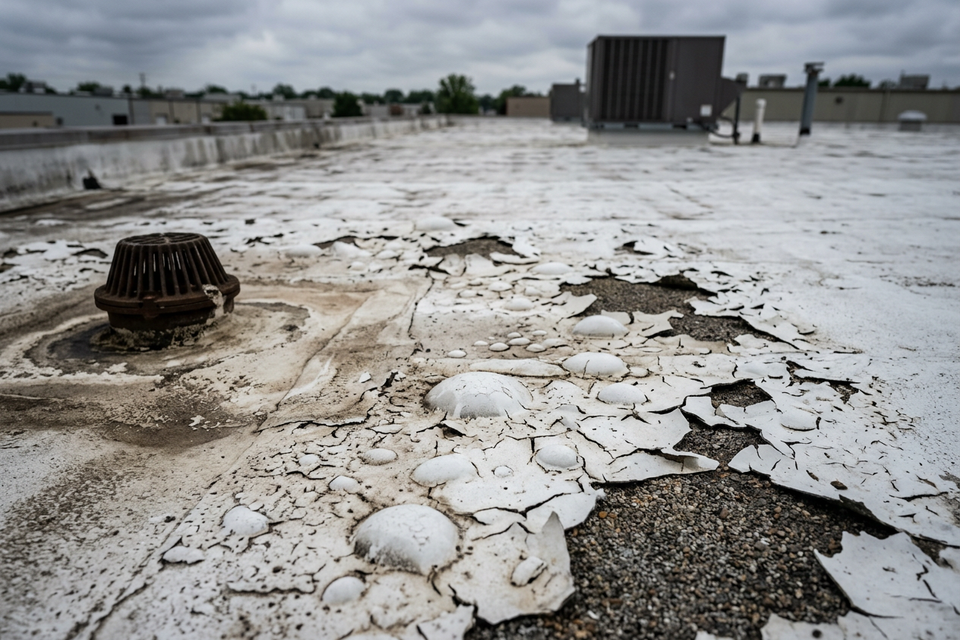
- An alligatored asphaltic roof is rough and thirsty too.
On top of that comes waste: what stays in the pail, what goes into the hose and the pump, overspray, and what is lost at the edges. That percentage is the contractor’s own number from past jobs.
Read the rate off the data sheet
The data sheet gives an application rate in gallons per square per coat, usually as a range, per product. Base coat and finish coat are not the same rate (a Silicone44 system has no base coat to count), primer is quoted again separately, and a primer on rusted metal is not the same number as a wash primer on EPDM.
Take the rate for your substrate, the higher end of the range on a rough surface, and note how many coats the system calls for. Where a manufacturer’s representative wrote the specification, its rate is the rate.
Multiply, then round up to pack sizes
Gallons per coat is squares times the rate. Total gallons is that times the number of coats, plus the surface and waste allowances.
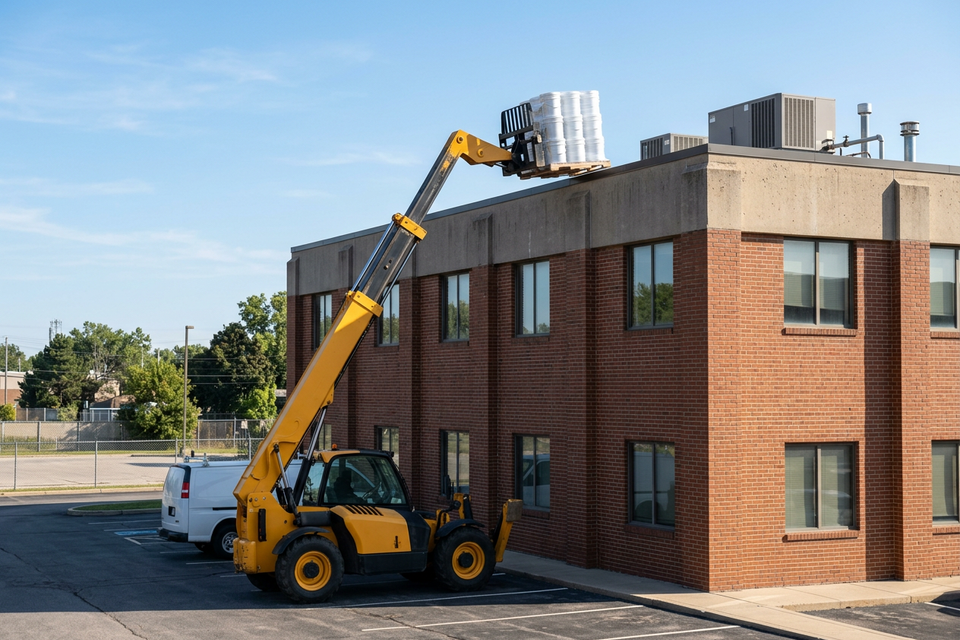
Then round up to what the product ships in: a 5-gallon pail, a 55-gallon drum, and for several coatings — KST041300, KST041500, KST041320, KST041510, KST041520, KST042100 and KST042200 — a 275-gallon tote. Round up per product, never across the order: leftover base coat does not become finish coat.
One worked example
The rate below is an invented number, put in only to show the arithmetic. It is not a product figure and not a rate for any coating in this catalog. Read the real rate off the data sheet for your system.
A single-level smooth modified bitumen roof, 24,000 sq ft, base coat and finish coat.
- 24,000 sq ft / 100 = 240 squares.
- Illustrative rate: 1.5 gal per square per coat, for both coats.
- Base coat: 240 x 1.5 = 360 gal. Finish coat: 240 x 1.5 = 360 gal.
- Surface and waste allowance, illustrative at 10 per cent: 396 gal of each.
- Round up per product: 396 gal of base coat is 8 drums (440 gal), or 1 tote, 2 drums and 3 pails (400 gal). Same again for the finish coat.
Change the rate by a quarter of a gallon per square and the order moves by a drum. That is why the rate comes off the data sheet and not off an example like this one.
Count the details separately
The details are counted in linear feet and each, not in squares:
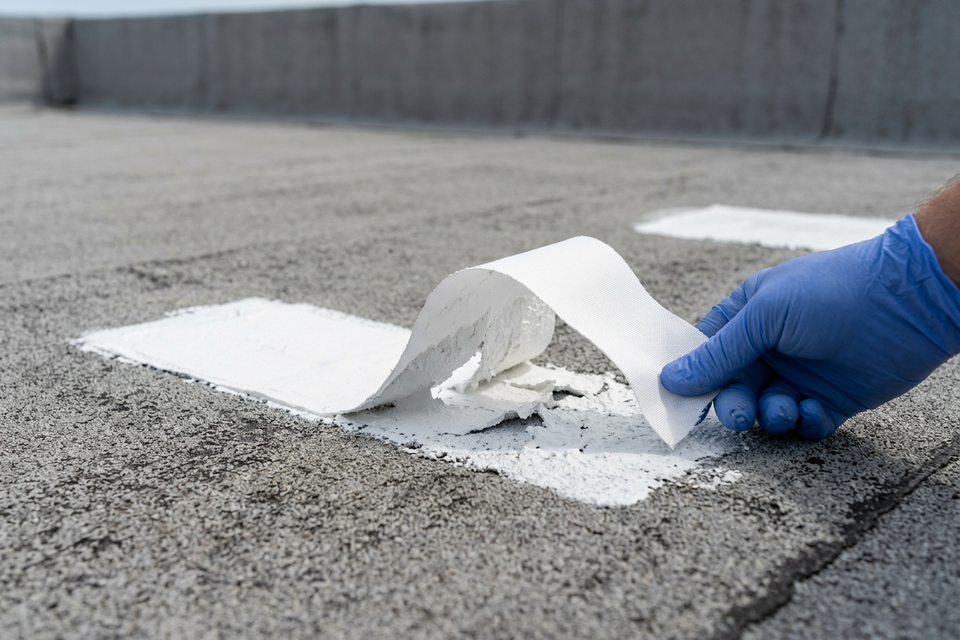
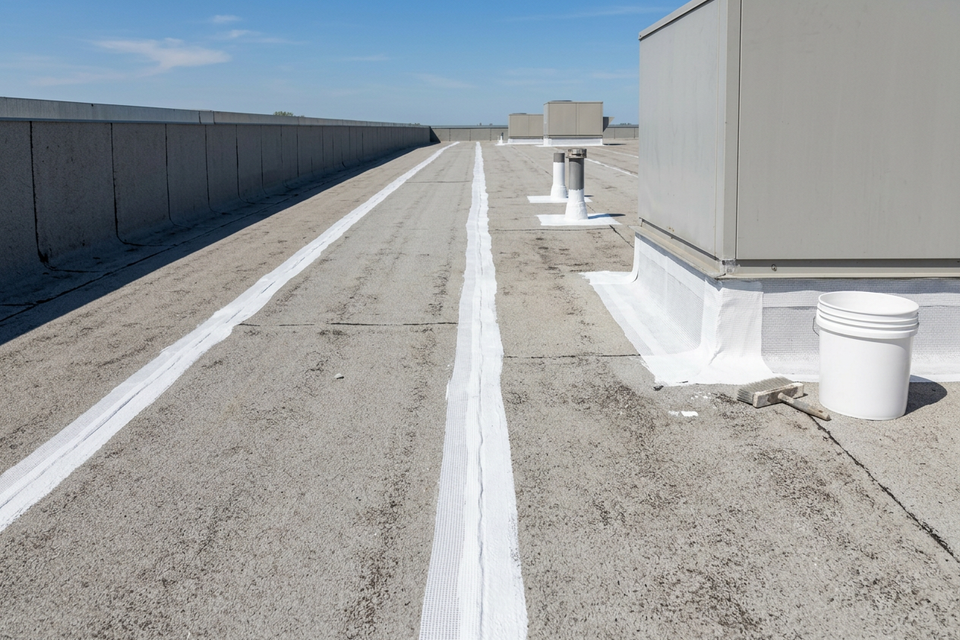
- Seams, laps and ribs. Total linear feet, and the width you intend to detail. Butyl seam tape comes in 50 ft rolls in 2, 4, 6 and 8 in widths (KST020802, KST020804, KST020806, KST020808), cased 12, 6, 4 and 3 rolls. Polyester fabric comes in 324 ft rolls, 6 in KST20385A, 12 in KST20385B and 40 in KST020385.
- Parapet base, curbs and drain rings. Perimeter and curb lengths, times the fabric width the detail calls for.
- Penetrations and fastener rows. A count each, converted to cartridges. Sealant ships in 10.1 oz, 10.3 oz, 10 oz, 9.5 oz and 29 oz cartridges, cased 24 or 6, and the brushable sealant in 1-gallon cans cased four.
- Repairs found at survey. Patching cement KST041220 in 2- and 5-gallon pails; wet-dry roof cement KST058600 in cartridges and 1-, 3- and 5-gallon sizes.
- Low spots and crickets. Slope Builder KST0SLPBD, a powder sold as 40 lb in a 5-gallon pail and mixed with water on site, counted from the area and depth being built up.
Two things catch people out. A three-course detail uses coating as well as fabric, and those gallons belong in the coating total rather than the fabric line. And fleece-backed bonding tape KST058004 or KST058006 needs no coating over it, which changes the count at gutters, skylight curbs and flashings.
What the estimate is and is not
An estimate is a material count, not a specification and not a warranty figure. The data sheet owns the rate, the contractor owns means, methods and the waste factor, and the building’s engineer owns anything structural. Sherwin-Williams offers UNIGUARD system warranties of 10 or 15 years when one of its authorized contractors applies the system. The warranty is the manufacturer’s, issued under its own terms; we supply the materials.
What to send for a quote
- The roof area by level, and the substrate of each.
- The system, or the specification, if one has been named.
- Linear feet of seams and laps, and a count of curbs, penetrations and drains.
- Whether fabric, tape, sealant and repair material go on the same order, plus the site ZIP and your timing.
The material estimator runs this arithmetic with the rates you read off the data sheet, and wet mils, dry mils and coverage explains the film math behind a rate. You do not have to do this arithmetic to get a price. Send the roof area and type through the quote form and a person runs the count from the data-sheet rates, adds the detail materials, and replies with the price, freight and a ship date. The coatings are at Elastomeric & silicone finish coats, primers and base coats at Base coats & primers, fabric and tape at Reinforcing fabrics & seam tapes and cartridges at Roofing sealants.
Last updated 2026-10-05.