Restore or replace: how to tell whether a roof can be coated
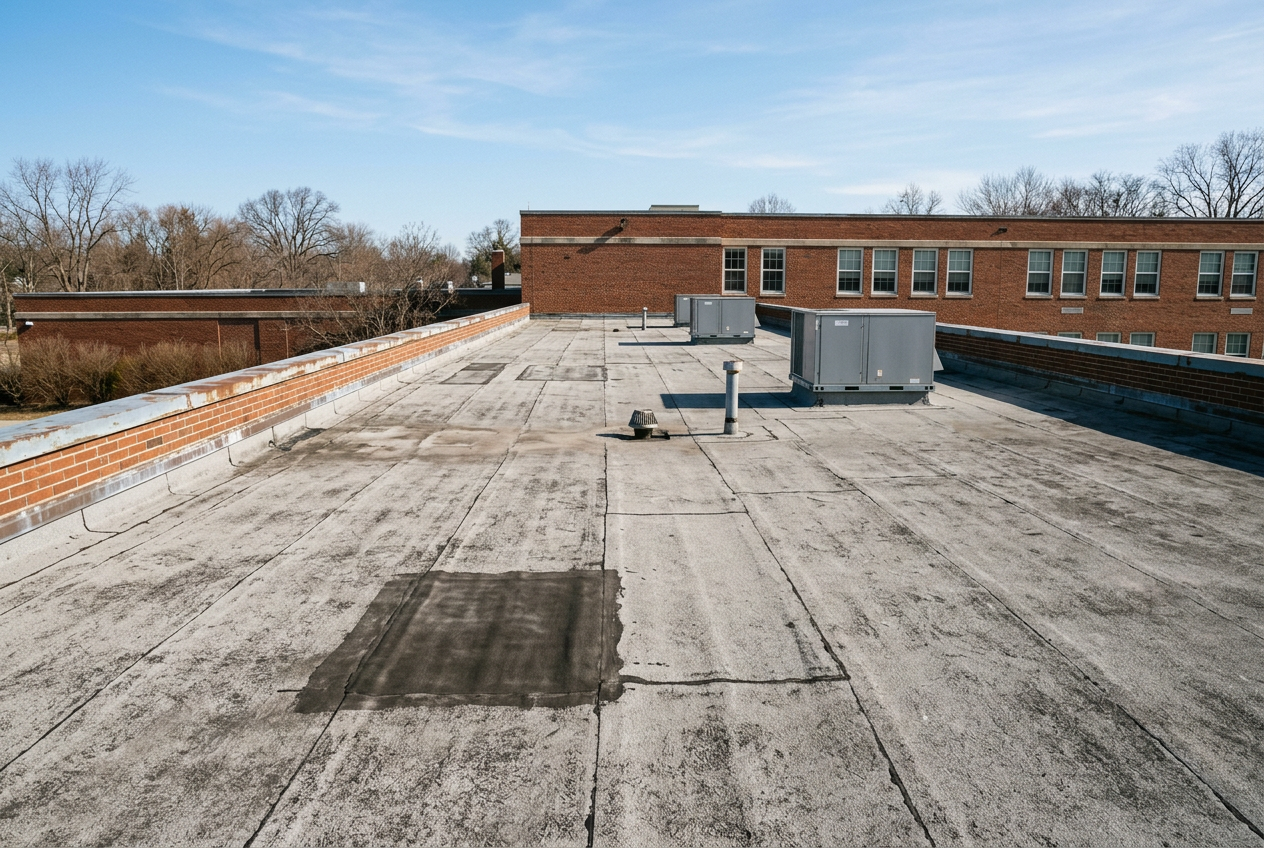
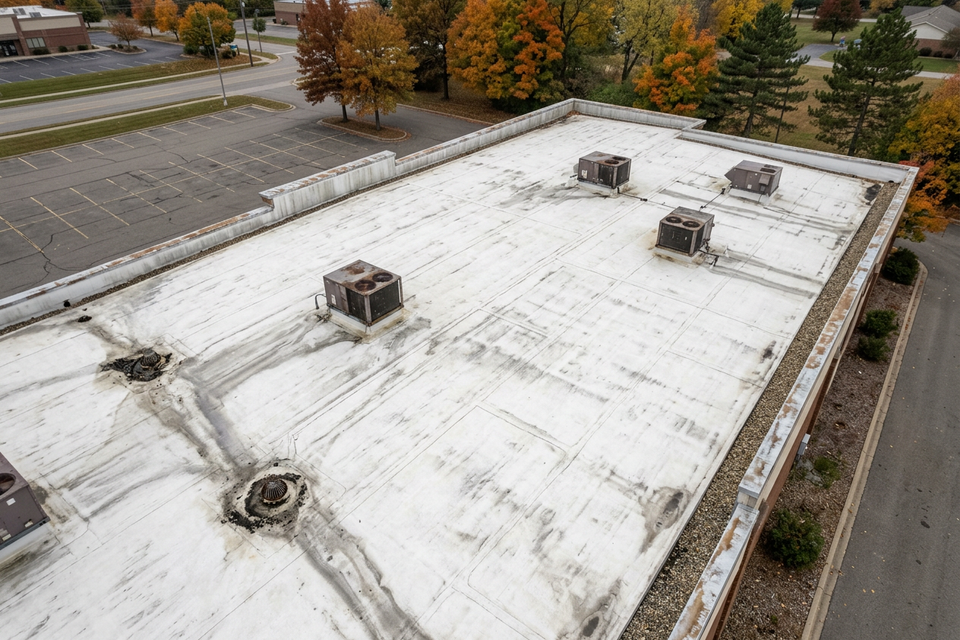
A fluid-applied restoration is not a cheaper tear-off. It is a new continuous surface built on top of a roof that is still doing its job, and everything it buys depends on the condition of what sits underneath. Put a coating over a roof that has already failed and the money has gone into hiding the failure.
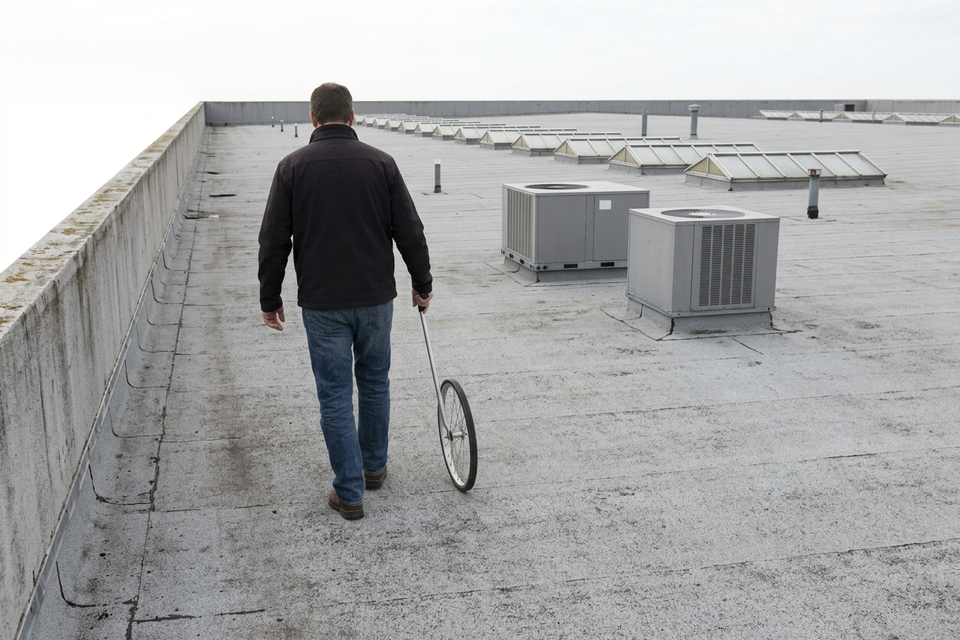
So the first question on the job is not which coating. It is whether this roof is a candidate at all, and that gets answered on the roof — with a survey, a few cores and a test patch — not from the parking lot.
What a restoration system does, and what it does not
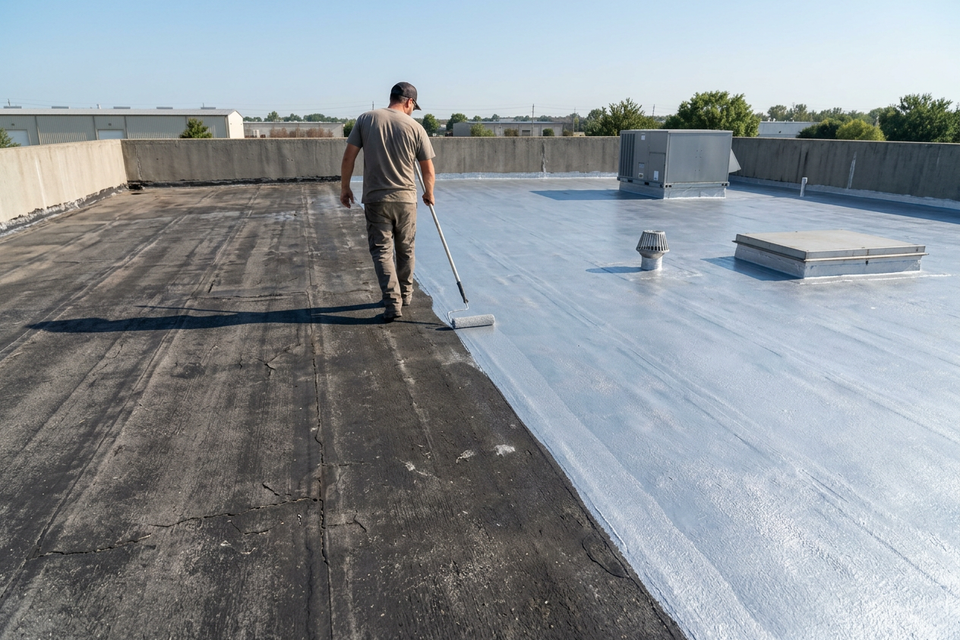
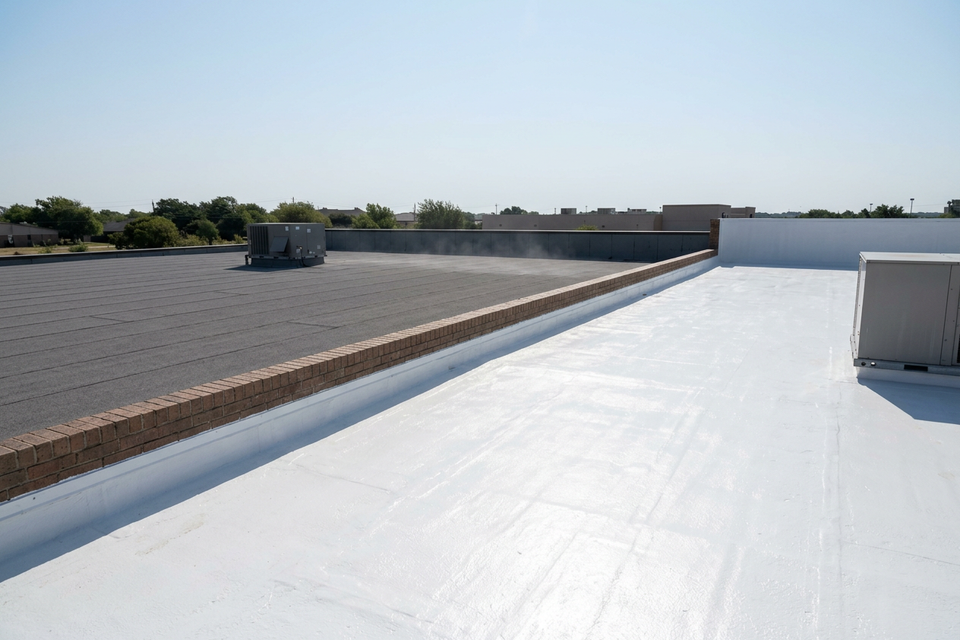
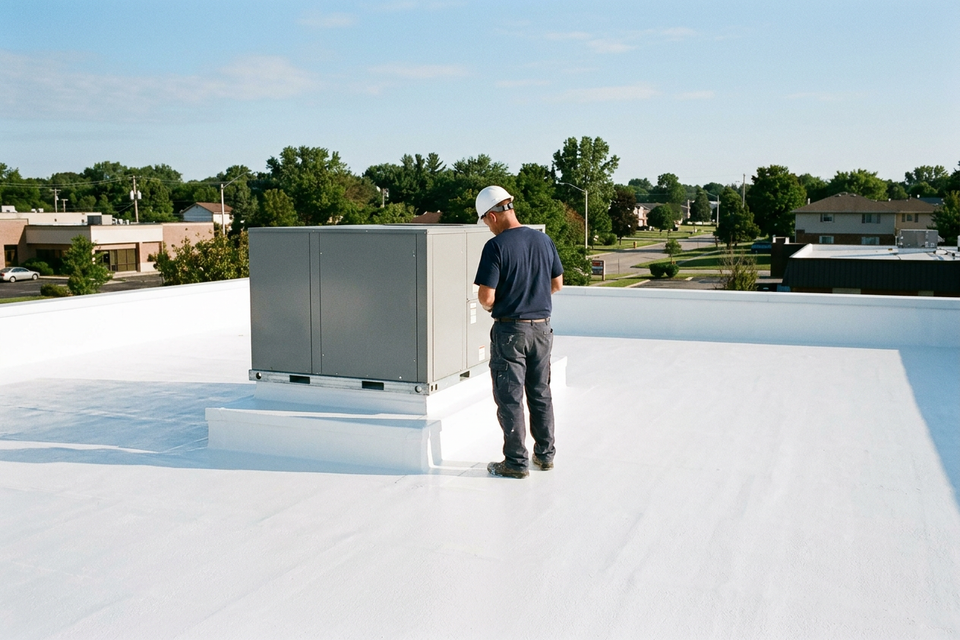
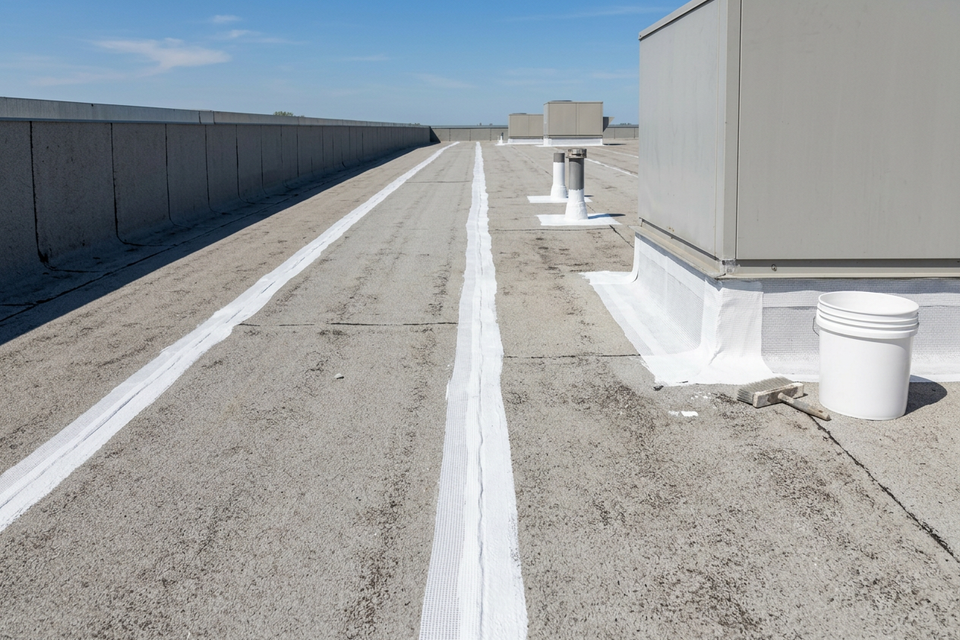
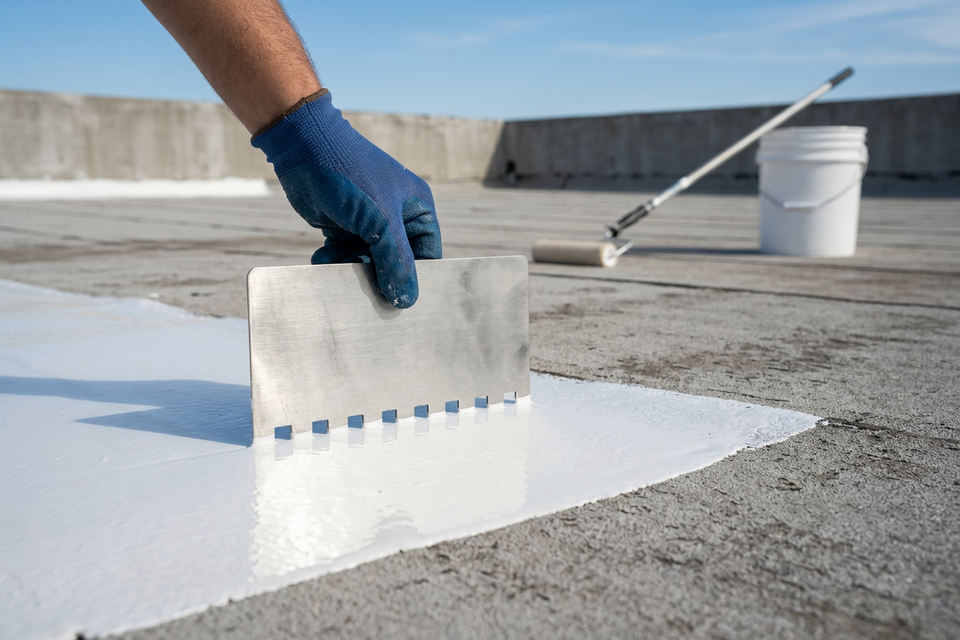
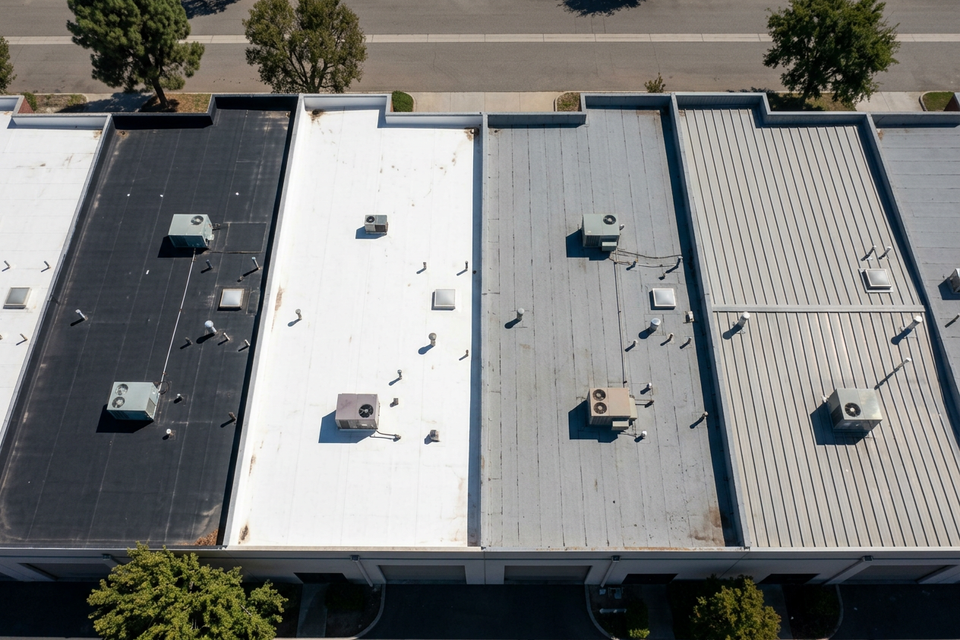
A Sherwin-Williams Uniflex restoration runs in a set order: clean the roof, repair what is broken, prime where the substrate needs it, reinforce every seam, fastener head and penetration, then lay the coats across the whole field: a base coat and a finish coat in an acrylic system, Silicone44 on its own where water stands. What comes out is one surface with no laps in it, bonded to the roof the building already owns. Applied over a sound, dry roof, a restoration system adds 10 to 15 years of service life.
What it does not do is replace a deck, dry out wet insulation, put slope on a roof that never had any, or settle whether another layer is permitted on the building. Two of those are not the contractor’s call at all.
What makes a roof a candidate
A structurally sound deck. It has to carry the crew, the equipment and the finished system. Steel rusted through, rotted wood, or a deck that moves underfoot is a structural question for the building’s engineer, and no coating answers it.
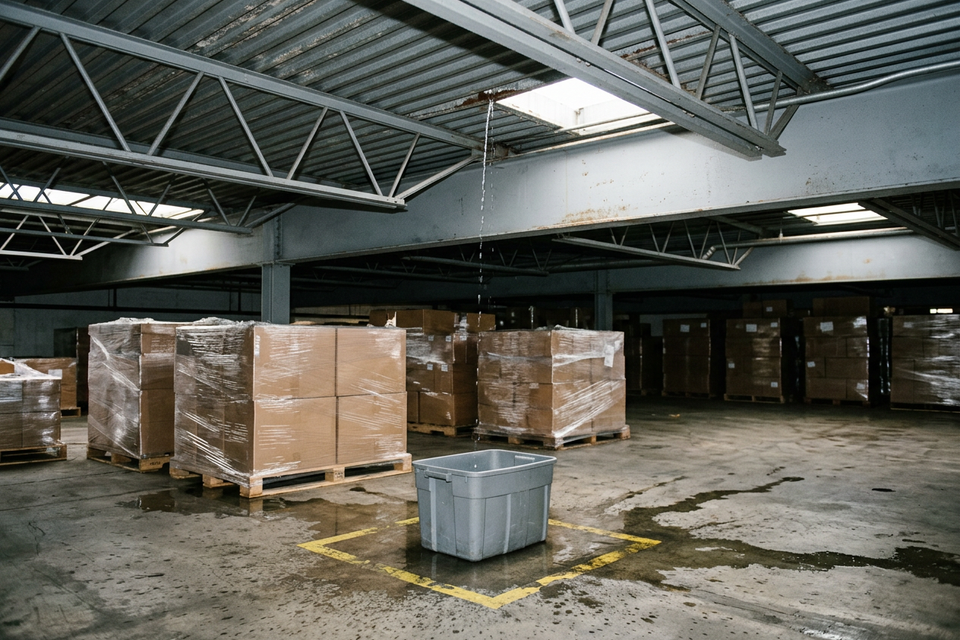
Dry insulation. This is the one that decides most jobs. A coating is a surface; it cannot dry what is already wet, and wet insulation keeps working on the deck and fasteners underneath.
A membrane largely intact. Weathered, chalked, faded, with splits at the laps that can be repaired one by one — that is a normal candidate. It also has to still be attached: a field that has come loose from the substrate is a different job.
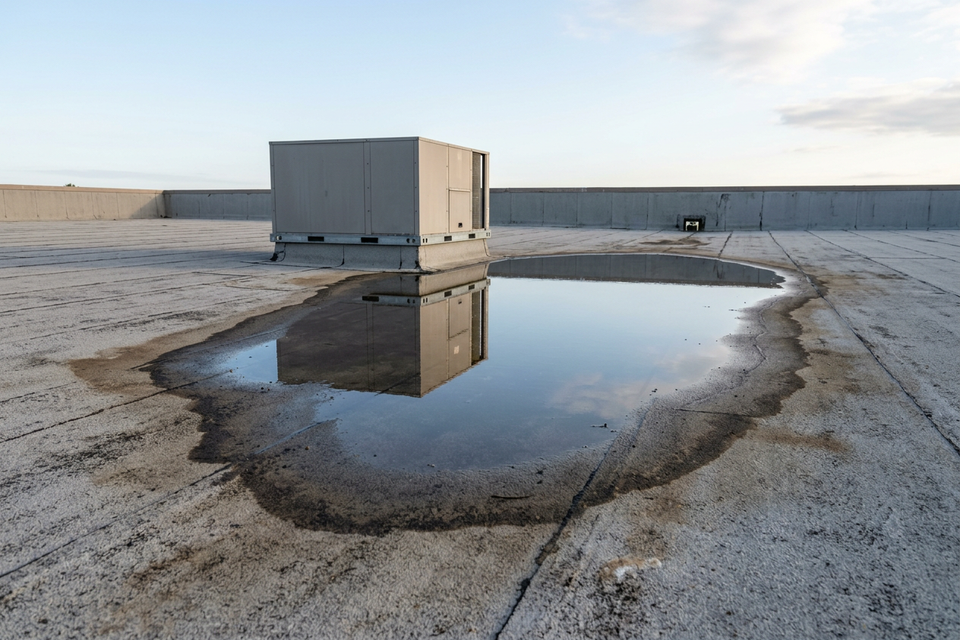
Drainage that works, or can be made to work. Water should leave at the drains and scuppers. Low areas at drains, in valleys and along parapets can be built up first, and Slope Builder KST0SLPBD is in the line for that and for crickets behind rooftop equipment. Water standing across the field after every rain is a different conversation, and where the cause is deflection it belongs to the engineer.
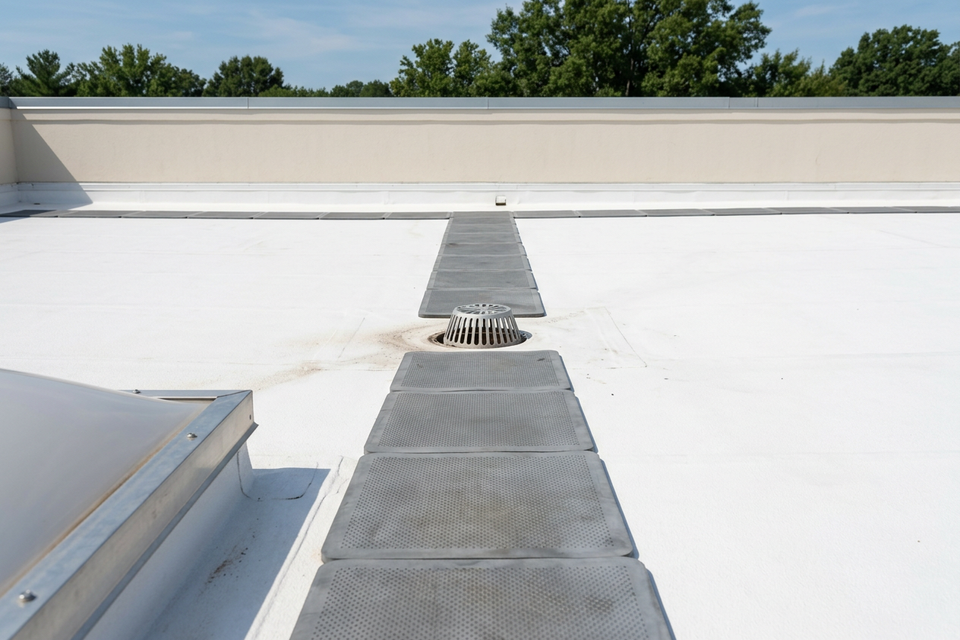
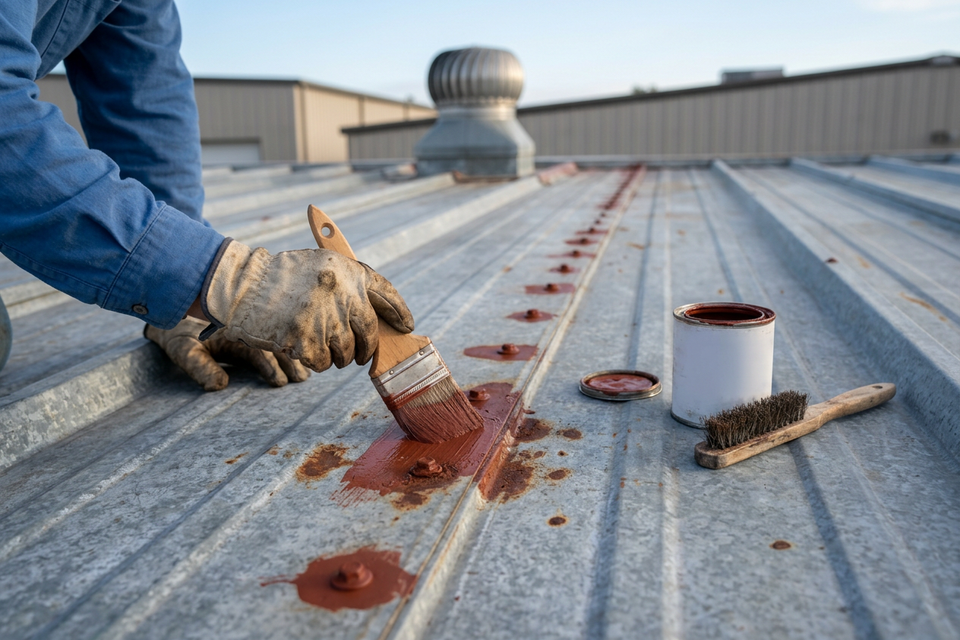
Seams, flashings and penetrations that can be repaired. Curbs, pitch pans, drain rings, parapet flashings and every pipe through the roof get detailed before the field is coated, and they want counting at survey rather than discovering in week three.
What rules a roof out
Saturated insulation over a large share of the area. Cutting out and replacing a few wet areas is routine. Once the confirmed wet area runs past a certain share of the roof, cut-and-replace stops being a repair line and becomes a replacement, and the arithmetic turns over with it. Where that share sits is a rule of thumb, not a code: manufacturers commonly draw the line somewhere between 15% and 30% of the roof area.
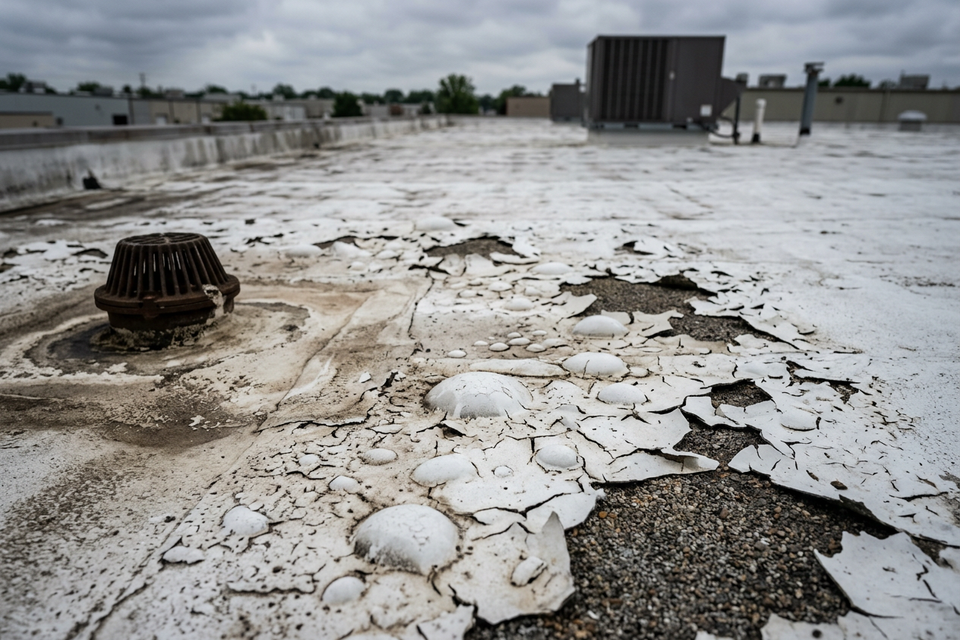
Widespread membrane failure. Splits running through the field rather than at the laps, laps open along their length, a cap sheet worn down to the mat, foam that crumbles under a screwdriver.
Structural problems. Deflection that creates the ponding, deck movement, corroded metal deck, framing that was never right. The building’s engineer decides these, and nothing here is structural advice.
A roof already carrying the number of layers the local building department allows. Roofing over roofing is a re-cover question, jurisdictions treat coatings differently from a new membrane, and only the department can answer it for the address.
How to find out
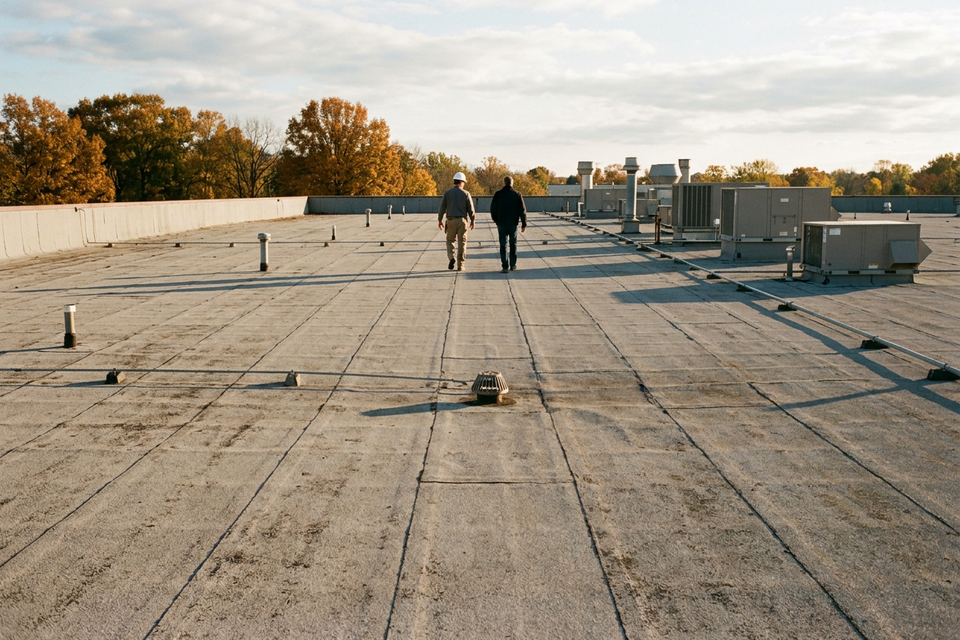
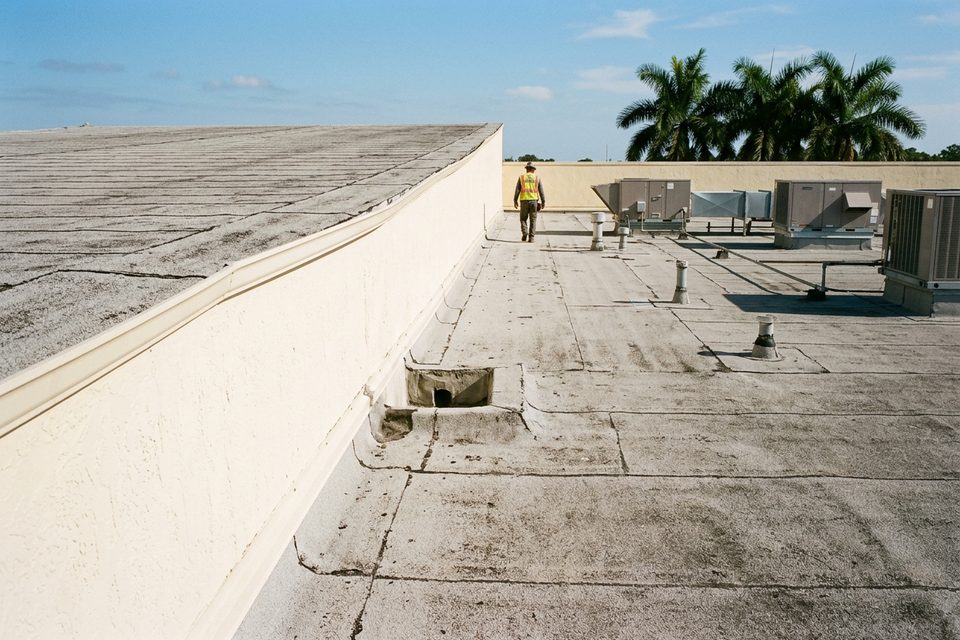
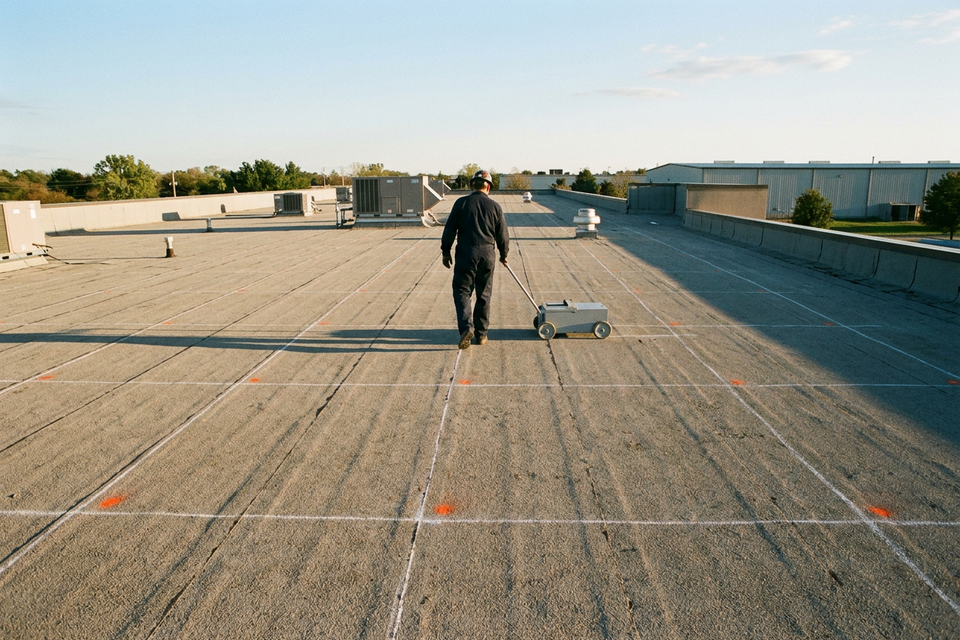
- Walk it with the roof plan. Measure the field, mark drains, scuppers, curbs, expansion joints and every penetration, note the substrate, and photograph every detail that needs repair. That survey becomes the material count later.
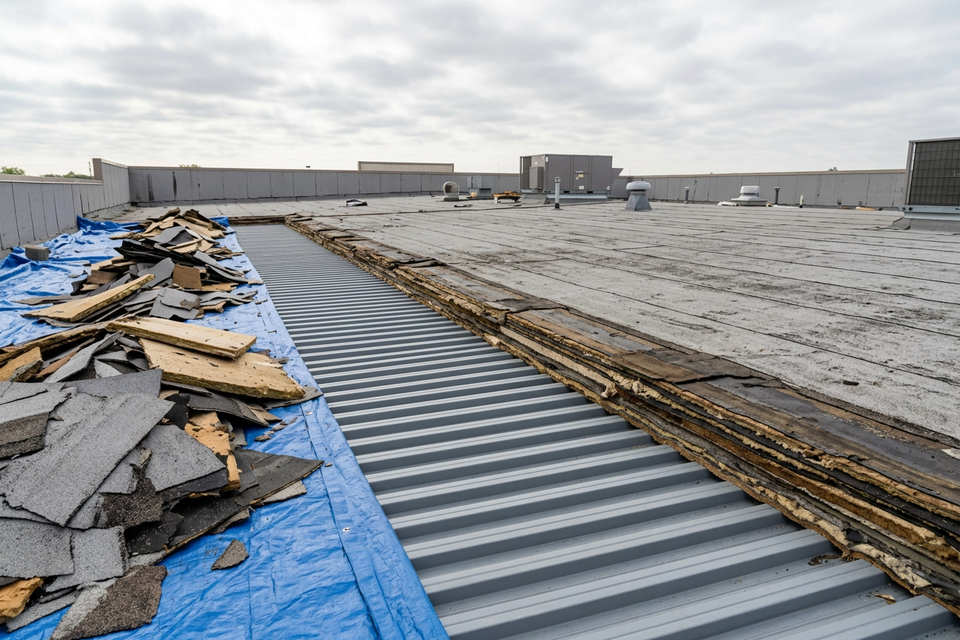
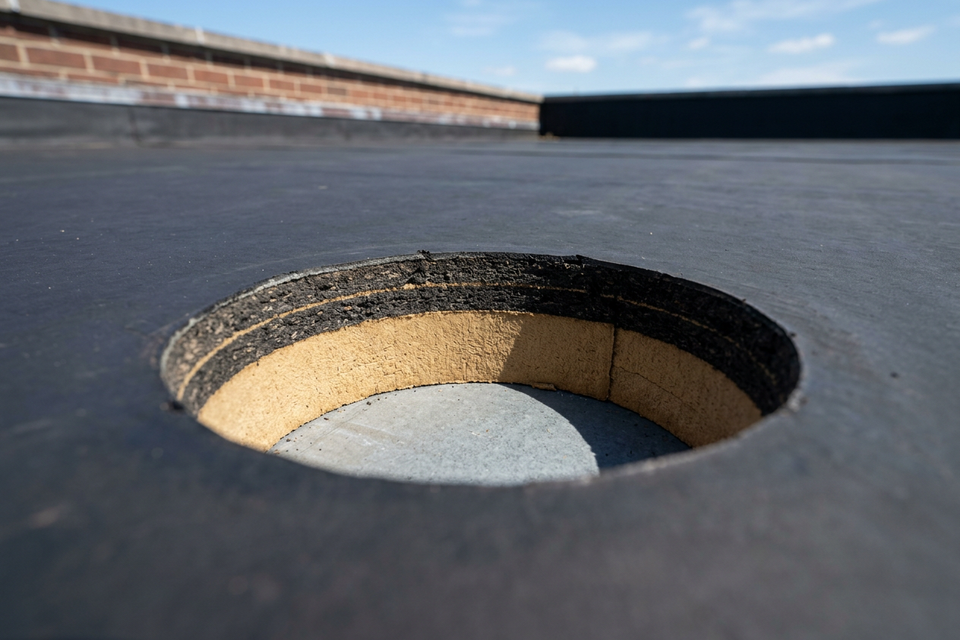
- Take core cuts. A few small cuts through the assembly say what is actually up there: how many layers, what insulation and how thick, and whether it is wet. Patch each core the day it is cut — wet-dry roof cement KST058600 takes a repair on an asphaltic roof wet or dry.
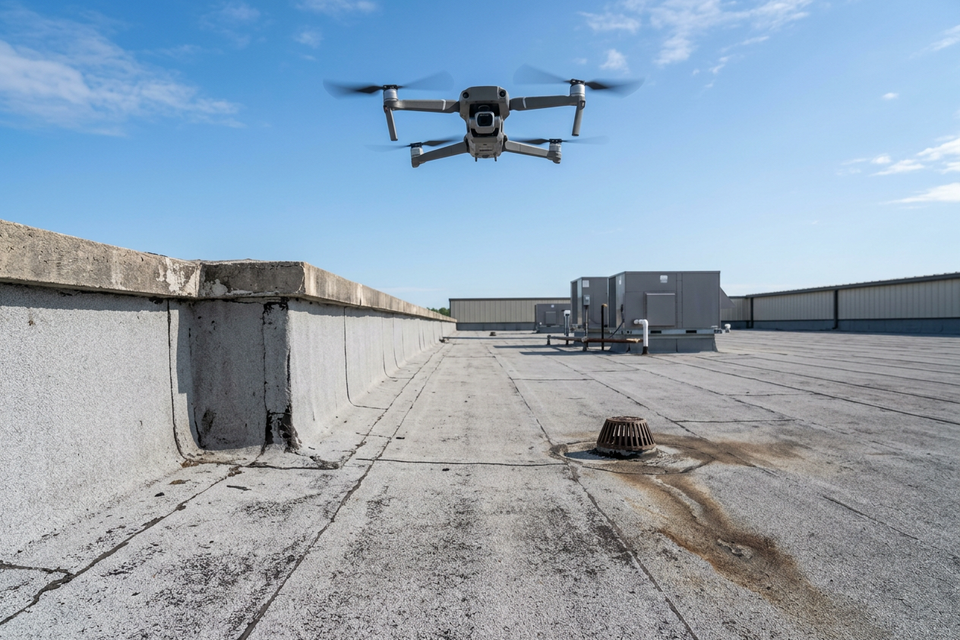
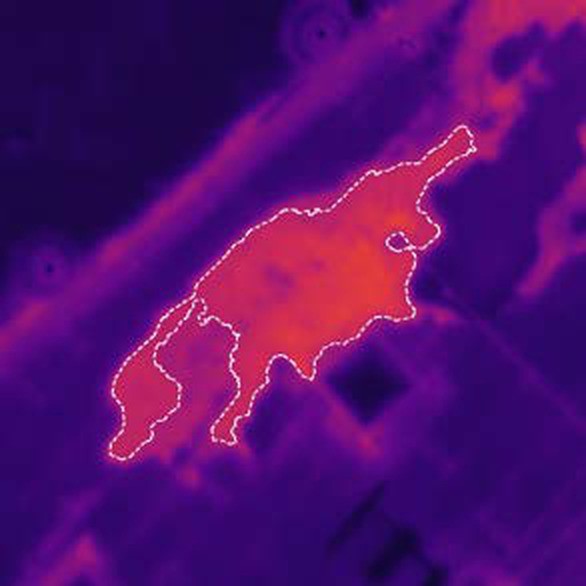
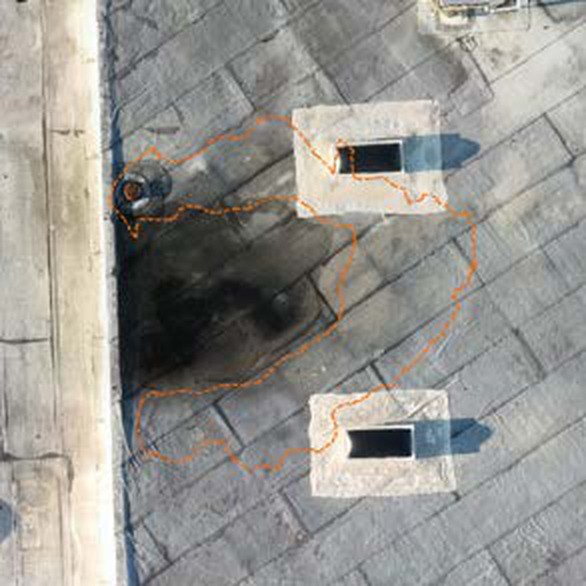
- Run an infrared moisture scan. Taken in the right conditions, it turns a suspicion about wet insulation into an outline on the plan. The scan marks suspects; the cores confirm them. We arrange a drone moisture scan for commercial low-slope roofs anywhere in the US: you get a map with any areas that look wet outlined and measured in square feet, video from the flight and a written assessment of what the scan found, and how to read a thermal roof scan explains how to read the map.
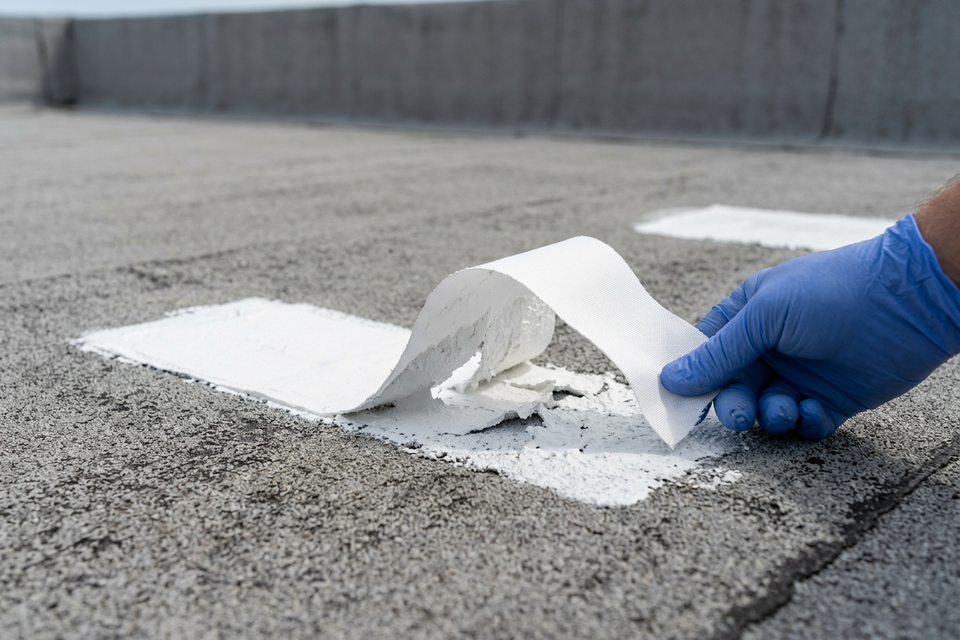
- Apply an adhesion test patch. Put the actual system down on a small area — any primer it calls for, then its coats, with a fabric strip bedded in — let it cure as the data sheet requires, then pull it. Under Silicone44, Uniflex requires one on every job: the patch stays three days and should pull at 2 lb per inch or more. Nothing else answers whether this coating will hold on this roof, and dirt, oils, ponded silt, loose granules and a previous coating all bear on the answer.
Wet areas come out first
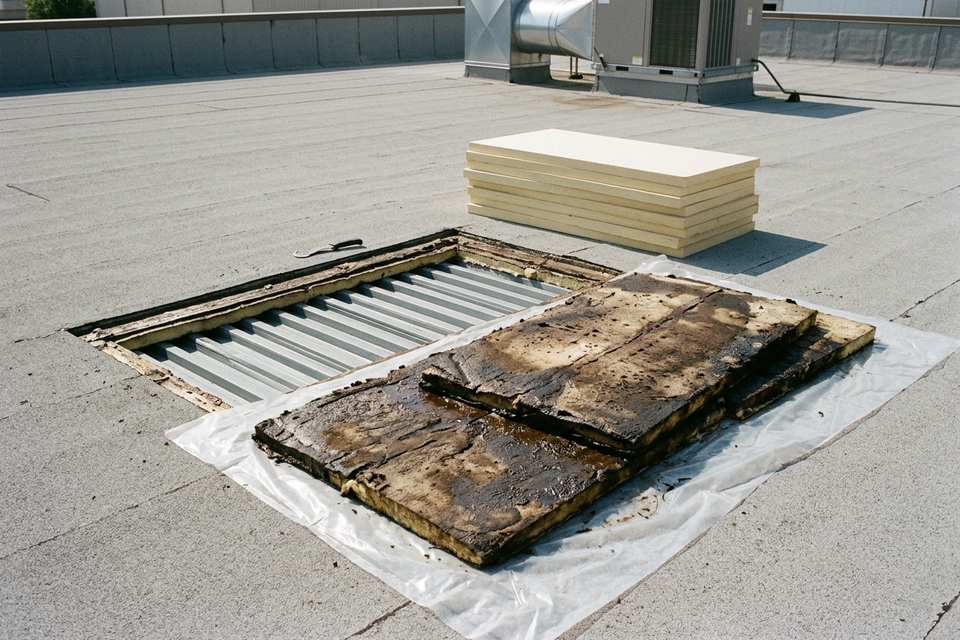
Wet insulation and the membrane over it get cut back to sound material, the insulation replaced to matching thickness, and the patch tied back into the field. A coating laid over a wet area seals the water in rather than letting the assembly dry, and the wet spot spreads under a surface that looks finished.
Who decides
- The contractor writes the scope and owns the means and methods.
- The building’s engineer decides anything structural: what the deck carries, why the roof deflects, and what may be added.
- The local building department decides whether another layer is permitted at that address and what permits the work needs.
- The manufacturer inspects the finished roof before it issues a system warranty. Sherwin-Williams offers UNIGUARD system warranties of 10 or 15 years when one of its authorized contractors applies the system. The warranty is the manufacturer’s, issued under its own terms; we supply the materials.
- The owner’s accountant decides how the work is treated on the books.
What to send for a quote
- The roof area and substrate, with each roof level listed separately.
- What the survey found: core results, the areas the moisture scan flagged, and the square footage coming out and going back.
- Linear feet of seams and laps, and a count of curbs, penetrations and drains.
- Whether a manufacturer system warranty is wanted, the site ZIP and your timing.
The finish coats are at Elastomeric & silicone finish coats, and the cements, slope-building compound and skylight coating at Patch & repair. Describe the survey in the notes on the quote form, and a person counts the material off the area and the detail lengths, names what is not included, and replies with the price, freight to the site and a ship date.
If the roof has not been surveyed yet, start there: request a moisture scan with the building’s address, or answer the questions in the restore-or-replace tool first. The cost page sets typical restoration and replacement ranges side by side.
Last updated 2026-10-05.