
For building owners, facility and property managers
Restore the roof you have, instead of replacing it
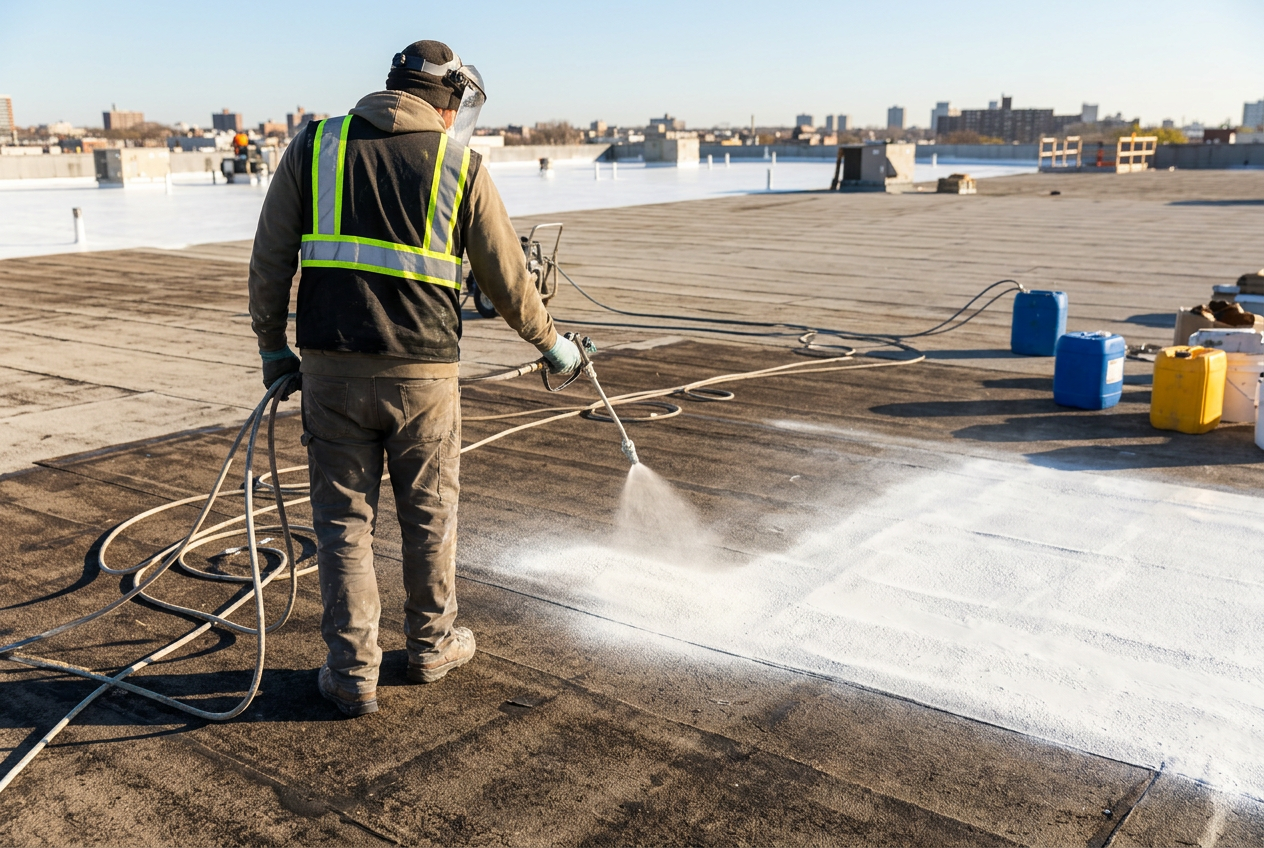
Buy genuine Sherwin-Williams Uniflex at a good price, from a stocking authorized reseller: a written price per project, with the freight, within one business day. A low-slope roof with a sound, dry deck and insulation does not need tearing off. A drone moisture scan maps any areas that look wet, with video from the flight and a written assessment; cores confirm them, and only those are replaced.
Prices
Great prices for building owners
You can buy the materials for your roof straight from us, at a good price, in writing. For the whole job, materials and the installer's labor together, restoring a low-slope roof with a coating system typically runs $3.50 to $7 per square foot installed; tearing it off and replacing it typically runs $10 to $18. Those are typical installed ranges from published industry figures, not our price and not a quote: the roof's condition, how much wet insulation comes out, access and region move them.
- Genuine Sherwin-Williams Uniflex from an authorized reseller that stocks it, in the maker's sealed packaging
- A written price for each project, with the freight on it, within one business day of your request
- The materials priced apart from the installer's labor, so you see what each part of the job costs
- An installer introduced anywhere in the US, or the materials supplied to your own roofing contractor
How it works
The path, in order
Each step answers one question before you commit to the next. We arrange the scan, supply the materials and can introduce an installer; the roofing work is the installer's.
-
The moisture scan, usually one evening
On an evening after a sunny day, once the sun has set, a drone with a thermal camera flies over the roof. Wet insulation holds the day's heat longer than dry insulation, so it shows up warmer. Nobody has to walk the whole roof and the building runs as normal.
-
Map, video from the flight, written assessment
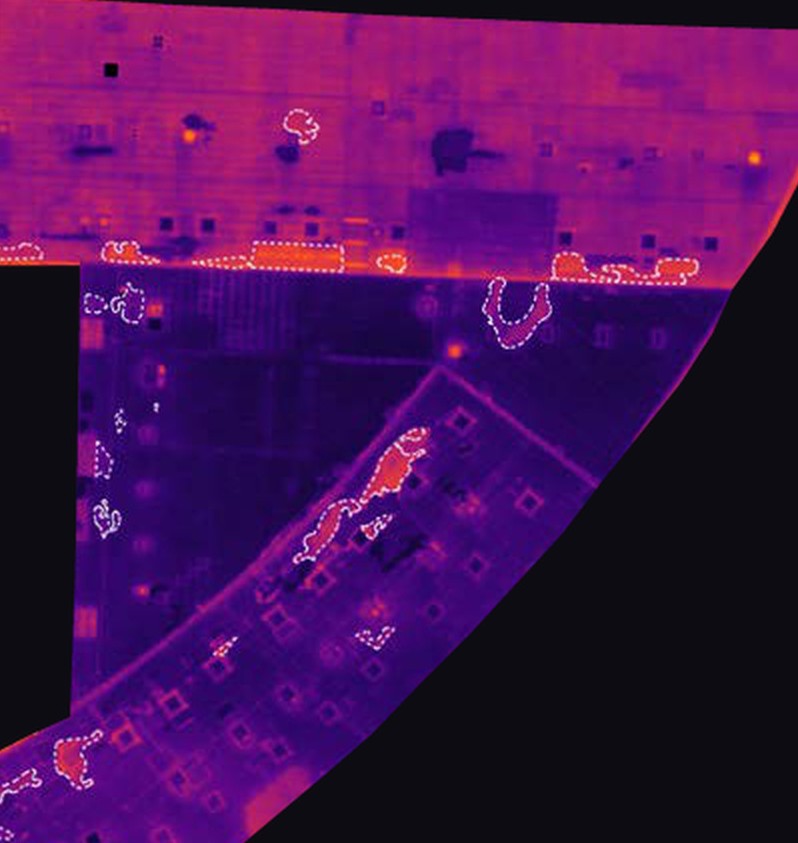
Every area that looks wet is outlined and measured in square feet. On one sample roof of about 50,000 sq ft, the scan flagged 28 areas, 1,929 sq ft in all: 3.8% of the roof.
-
Cores confirm it
The camera reads temperature differences, not water. The scan marks suspects; the cores confirm them: a few small cuts at the flagged areas show whether the insulation under the membrane is wet. What the cores confirm is what gets cut out and replaced.
-
What the map and cores tell you
Nothing confirmed wet: the roof goes to the installer as it stands. A few sections wet: those come out first. So much wet that replacing makes more sense: you know before you budget. Coating makers, Sherwin-Williams included, require wet insulation to be found and replaced before a coating goes on.
-
An installer looks at the roof
We work with a network of installers, roofing contractors who apply these systems, and can introduce you to one anywhere in the US, who looks at the roof and says whether it is a good candidate for restoration. An adhesion test patch settles whether the coating holds on this roof.
-
The right build-up, in stock
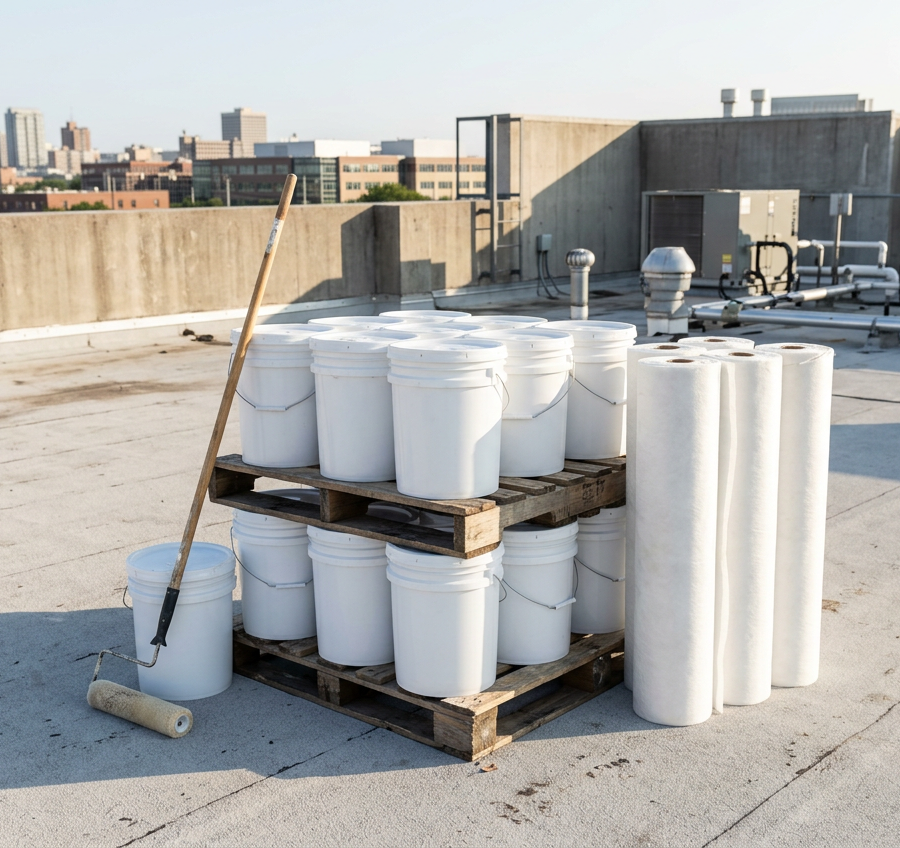
Genuine Sherwin-Williams Uniflex in the maker's sealed packaging, chosen for the roof type and how it drains: an acrylic system where it drains, Silicone44 where water stands. Stocked items ship in 1–3 business days.
From a real scan
What the camera sees that the eye does not
Two of the 28 areas flagged on that sample roof. Slide across each picture: the dotted outline marks what the scan flagged, and the first shows nothing at all to the eye. Warmer by is measured against the dry roof right around each area.
-
Nothing to see in daylight
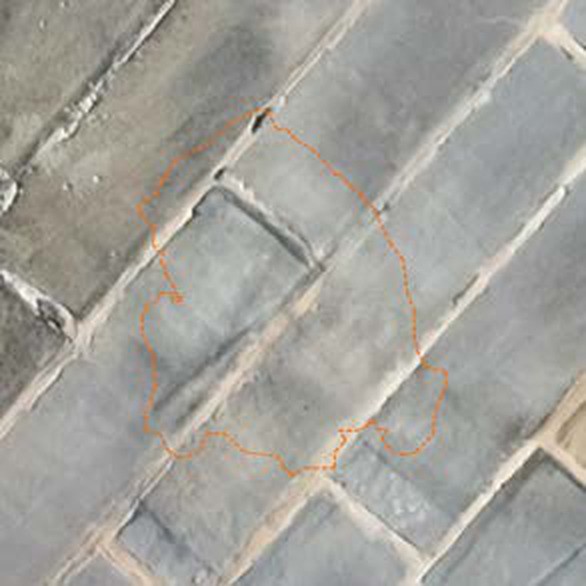 Daylight
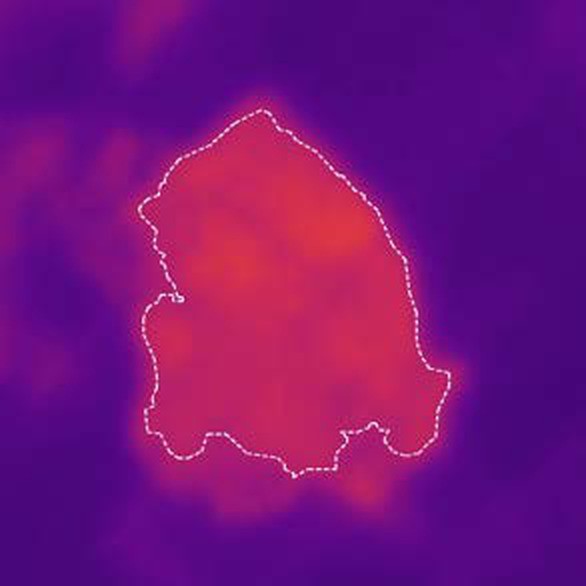 Thermal
- Area flagged
- 34.2 sq ft
- Warmer by
- 9.5 °F
-
Beside a rooftop air-handling unit
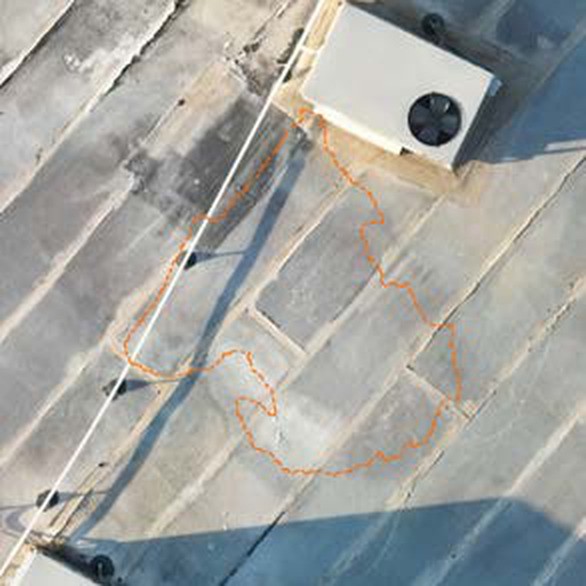 Daylight
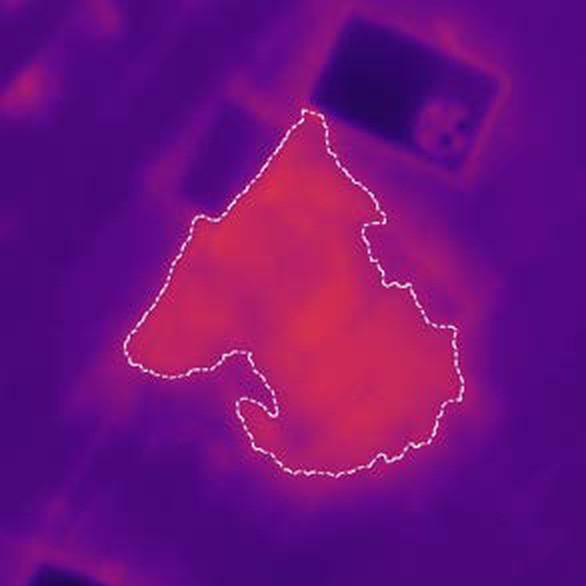 Thermal
- Area flagged
- 92.0 sq ft
- Warmer by
- 8.7 °F
A sample from a real scan, with the address, the people and the companies removed and the map re-oriented. Nothing in it was cored, so every area is suspected until a core confirms it. A full scan also comes with video from the flight and a written assessment.
The decision
Restore or replace, from the owner's side
Both cost lines are typical installed ranges drawn from published industry figures, not a quote. The roof's condition, how much wet insulation has to come out, access and region move the number. The cost page runs both over your roof's area.
Restore
- Typical installed cost
- Typically runs $3.50 to $7 per sq ft installed; acrylic systems sit toward the low end, silicone toward the high end
- Tear-off
- None: the existing roof stays, less any sections the cores confirm wet
- Tenants and operations
- Stay open while the work is done; the coating system needs no kettle or open flame
- Wet insulation
- Marked by the scan, confirmed by cores, cut out and replaced before any coating goes on
- When it is the answer
- The deck is sound, the membrane largely intact, and the wet areas few enough to cut out and replace
Replace
- Typical installed cost
- Typically runs $10 to $18 per sq ft installed; Florida's wind code keeps replacement in the upper half of that range
- Tear-off
- The roof comes off down to the deck and is hauled away
- Tenants and operations
- Each section is open to the deck until the new roof closes it
- Wet insulation
- Comes off with everything else, wet or dry
- When it is the answer
- Much of the insulation is wet, the membrane is failing across the field, or the building's engineer finds the deck is not sound
Our part
What you get from us
CoatYard is an authorized reseller of the Sherwin-Williams Uniflex roofing line. Four things come from us; the roofing work and any system warranty do not.
-
Sherwin-Williams Uniflex, in stock
Listed under their Sherwin-Williams part numbers, in the maker's sealed packaging, by the pail, drum or tote, in the right build-up for each roof type.
1–3 business days Ship time, stocked items
-
A written price in one business day
The materials for your roof priced per project, with the freight, apart from the installer's labor, and a calculator that runs the typical installed ranges over your roof's area.
-
An introduction to an installer
A roofing contractor from the network of installers we work with, anywhere in the US, who looks at the roof and says whether it is a good candidate for restoration.
-
The scan, arranged
We arrange the drone moisture scan for commercial low-slope roofs anywhere in the US, and fly only with the owner's written go-ahead. You get the map, video from the flight and a written assessment.
What a restoration adds
Keep the roof, renew the surface
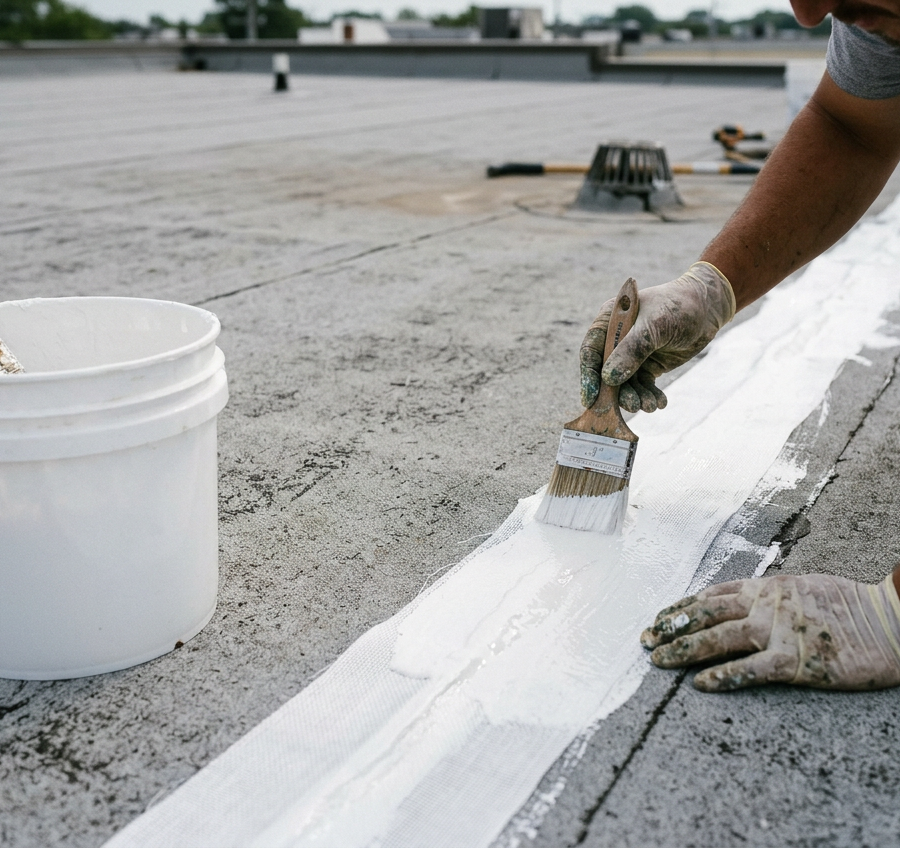
A restoration keeps the deck, the dry insulation and the membrane, and lays a coating system across the whole field as one continuous surface, bonded to the roof the building already owns. Applied over a sound, dry roof, a restoration system adds 10 to 15 years of service life.
- Seams, fastener heads, curbs and penetrations detailed first, then the whole field coated
- A light system: ounces per square foot, not pounds
- White finish coats reflect sunlight and keep the roof surface cooler
- A system warranty is the manufacturer's, issued under its own terms after it inspects the finished roof
- What it does not do: replace a deck, dry out wet insulation or put slope on a roof that never had any
Planning it
Budget from the map, not from a guess
Coating goes easiest in the local dry season: the months when rain is least frequent where the building is. On a calendar-year budget, scan and core in the months before the budget is set, so the installer's price goes into next year's numbers.
- Put it in order: scan and cores, then the installer's scope and price, then the budget line
- Allow for the weather: the scan needs a sunny day, then a clear, dry, calm evening
- Scan before anything is coated: a white coating makes later thermal work harder
- Leave the start date to the installer, who works to the data sheet's conditions on the day
- Many owners treat restoration as maintenance for tax purposes — worth a word with your CPA
If you look after more than one roof
Several buildings, one roof at a time
Each roof gets the same path, in the same order: its own scan, its own map, its own answer. The map pictured is a sample from a real scan, with the address, the people and the companies removed and the map re-oriented; every area on it is suspected until a core confirms it.
- Send the list in one request: each building's address, and its roof area if you know it
- We say which roofs a thermal scan suits and quote the scan for each; the rest are surveyed another way
- Each roof gets its own map, video from the flight and a written assessment
- An installer from our network for each building, anywhere in the US, if you want one
Questions
Questions from owners and managers
Will the building stay open?
Do you do the roofing work?
What does the scan cost?
What if the roof turns out to need replacing?
How long does a restored roof last?
Is there a warranty?
Our roof is metal, or ballasted with stone. Does the scan work?
Who decides whether the roof can be restored?
Guides
What to read before the budget meeting
- Restore or replace: how to tell whether a roof can be coated
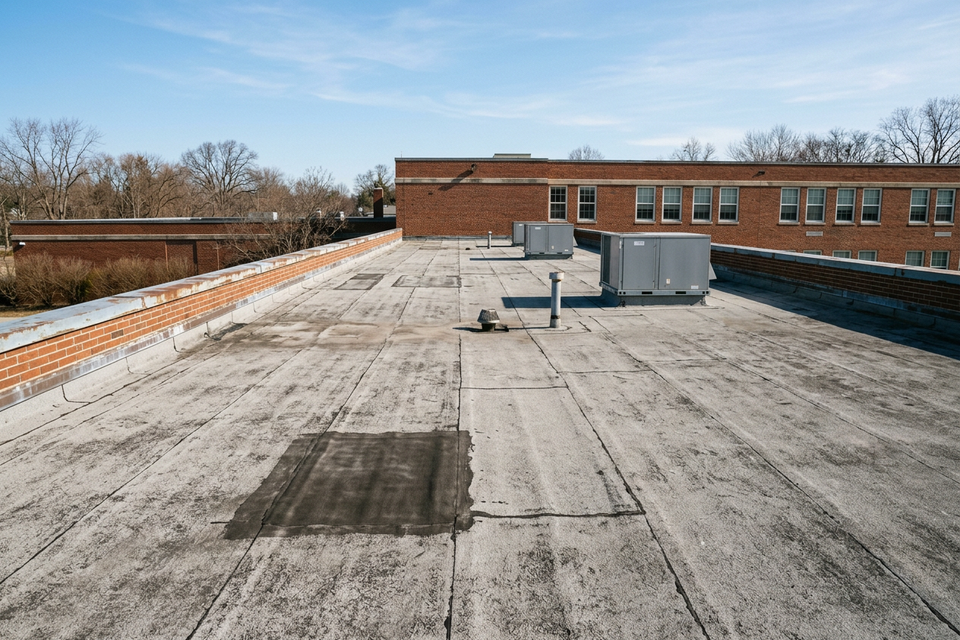
What makes a low-slope roof a candidate for a fluid-applied restoration, what rules it out, and the survey, cores and test patch that settle it.
- Coating, recover or replacement: three ways to renew a flat roof
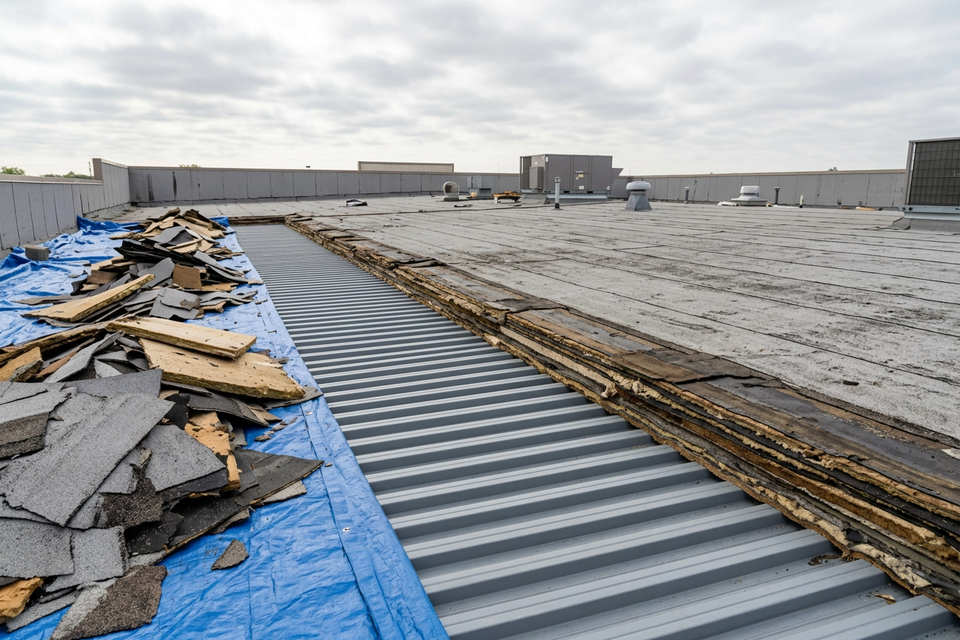
How a coating restoration, a recover and a tear-off compare on fit, cost, code and wet insulation, and how a moisture survey, cores and the deck pick one.
- Choosing a commercial roof coating contractor: what to check
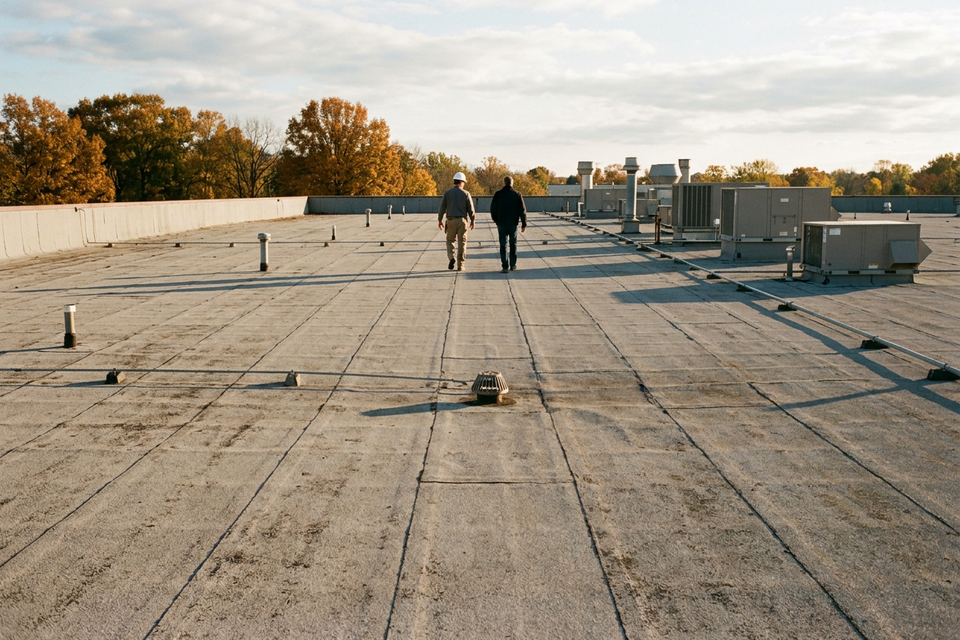
Check the license, get the roof surveyed first, ask for a scope that names part numbers and the dry film, and compare bids line by line before you hire.
- Roof coating warranties: what they are and what they ask of you
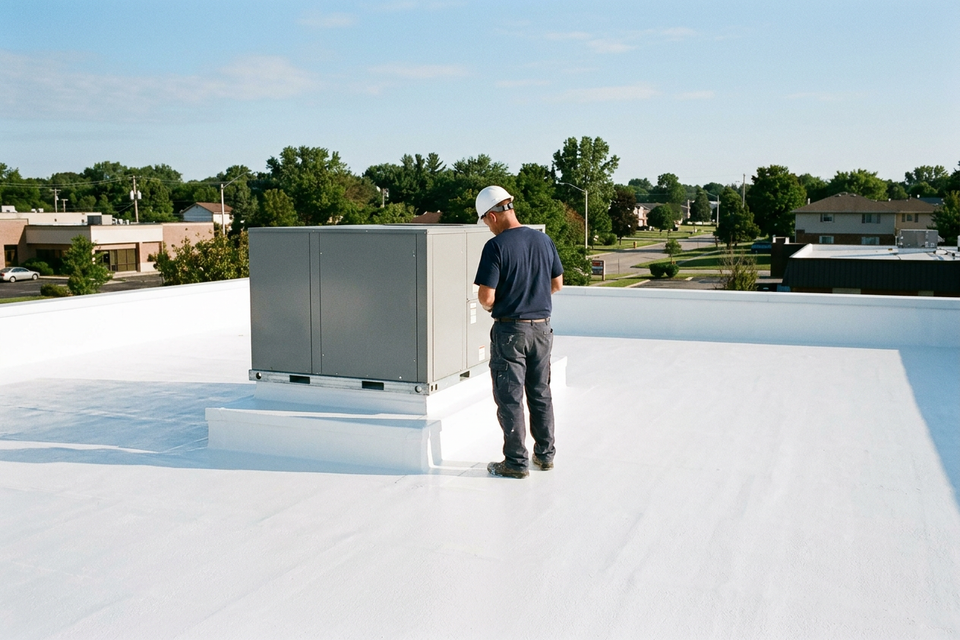
Product warranty or manufacturer's system warranty: here is who issues each, what specifications ask before one is issued, and what to ask before work starts.
- When to coat a flat roof: the day, the season and the budget year
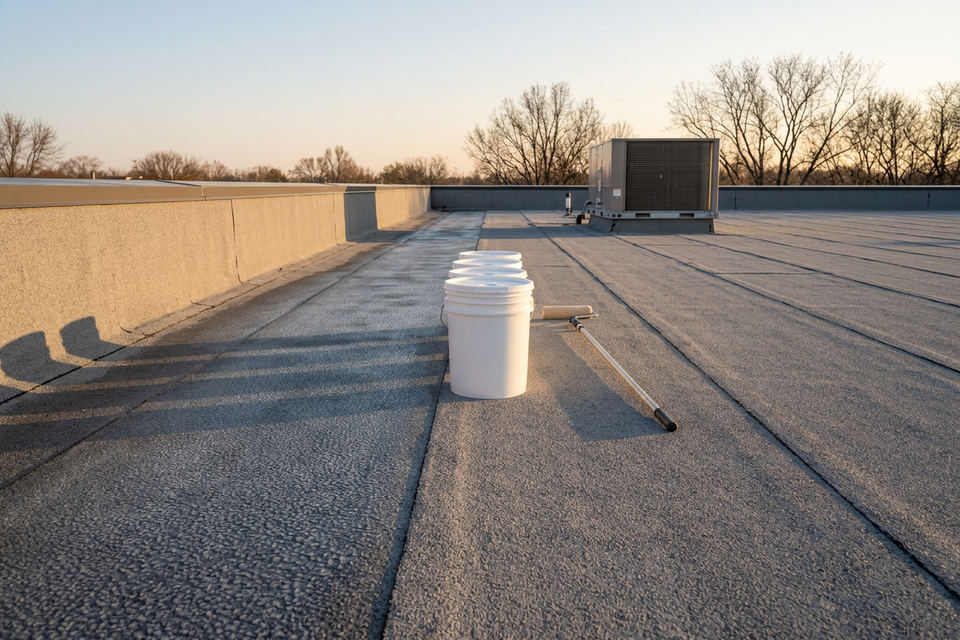
The local dry season, December to April in Florida, is the easiest time to coat a flat roof. The data sheet picks the day; the scan and budget come first.
- A commercial flat roof is leaking: what to do first
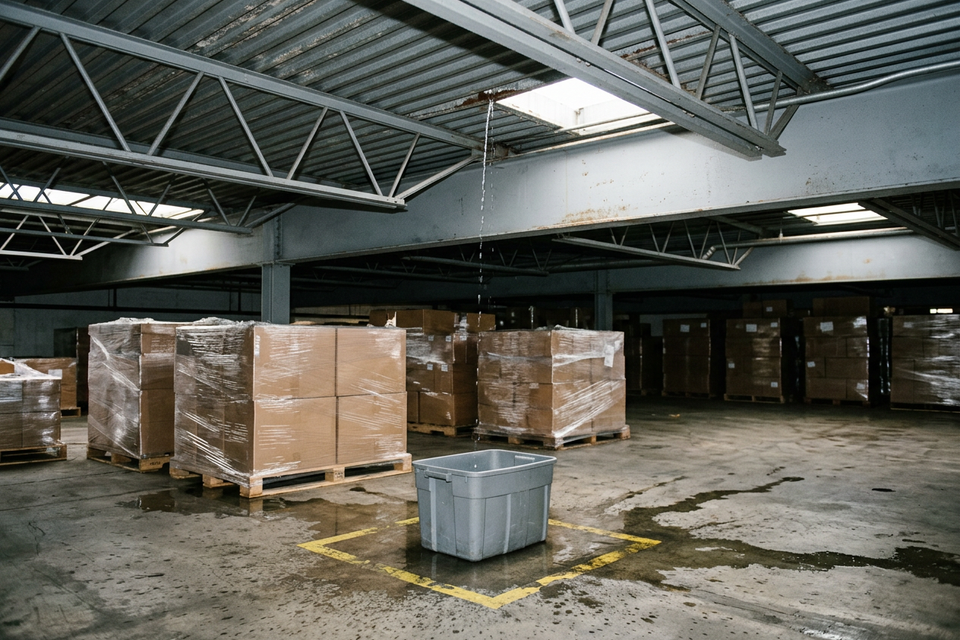
Contain the water, write down what you see, get the opening closed, then find out whether water reached the insulation and how far before you budget anything.
A good price for your roof, in writing
Send the building's address, the roof type and its area: we reply within one business day with a written price for the materials and the freight. To map any areas that look wet before you budget, request the scan: we quote it for that roof and fly only with the owner's written go-ahead.