
Tools for building owners and contractors
Roof restoration tools, from the survey to the last pail
Five short tools, in the order a restoration job meets them. Each asks what a survey or a data sheet tells you and returns the next step; none of them sees the roof, which is still the survey's job.
The order of the job
Five questions, in the order a job asks them
Owners: start at the top, and stop where an answer says to. Contractors with the survey in hand: start at four.
-
Survey: will a thermal scan work?
Before anyone books a flight. Sorts the roof into a good fit for our drone moisture scan, or names the survey that does the job instead.
-
Decide: is the roof a candidate?
With the survey in hand. Says whether restoration is on the table and what has to happen first.
-
Price: what does each route cost?
Before the budget. Runs the roof's area through both typical installed ranges, side by side.
-
Specify: which system?
Once restoring is the plan. Names the build-up for the substrate, primer to finish coat, by part number.
-
Count: how much material?
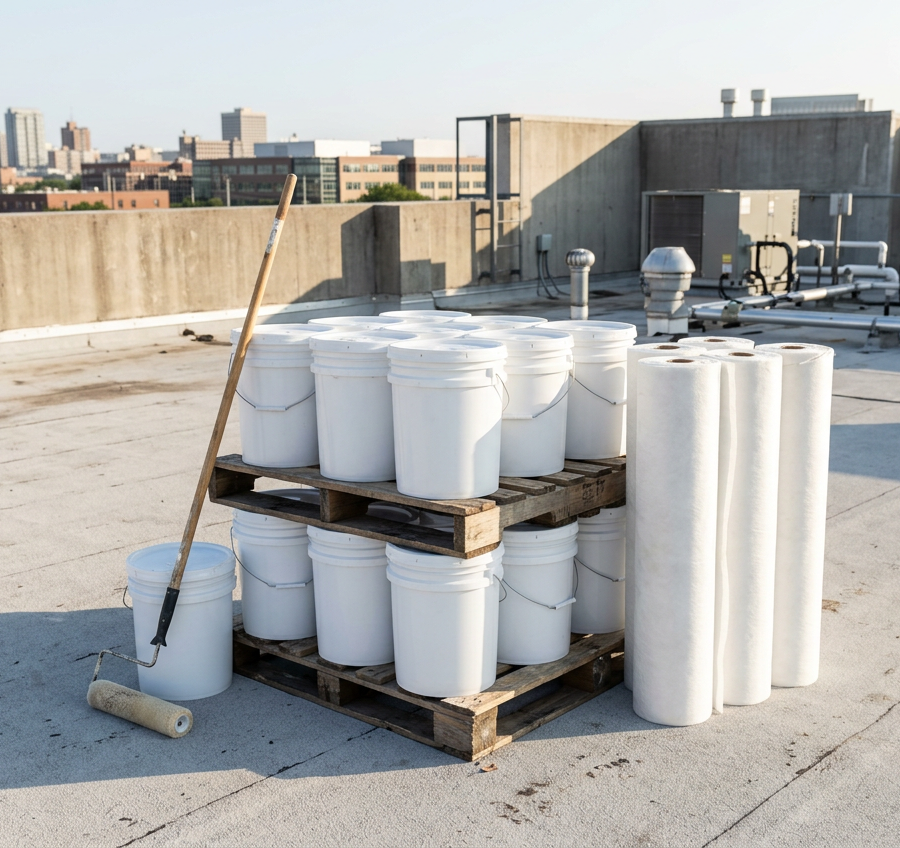
For the takeoff. Turns the area, the coats and the data-sheet rates into pails, drums and rolls.
Tool 1 · Survey
Before you book a scan, check it suits the roof
A thermal scan shows temperature differences, not water: it marks areas that look wet, and cores confirm them. Only some roofs give it something to read. It suits low-slope roofs with insulation under a membrane: single-ply, modified bitumen, smooth built-up. It is the wrong tool on ballasted or heavy-gravel roofs, metal panels, spray foam, and highly reflective or already white-coated surfaces. We arrange drone moisture scans for commercial low-slope roofs anywhere in the US; this tells you first whether yours is one the camera can read.
- Asks: the roof type, what the surface looks like from above, and what sits between the deck and the membrane
- Returns: a good fit, a likely fit, or the other survey to use: cores, capacitance or nuclear, or a walk-through
- A white coating makes later thermal work harder, which is one more reason to scan before anyone coats
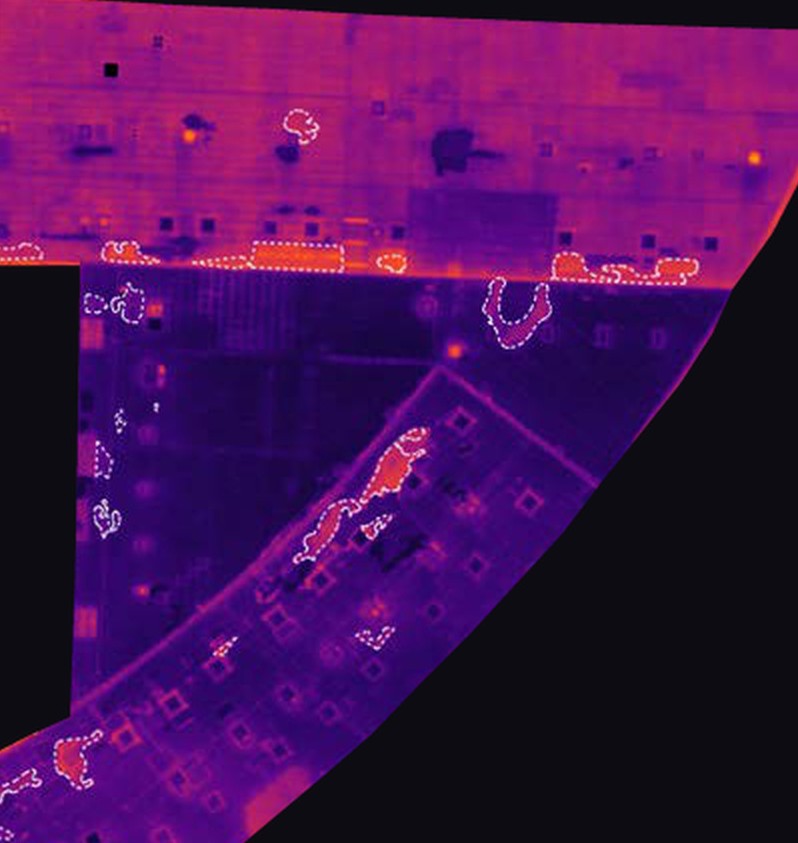
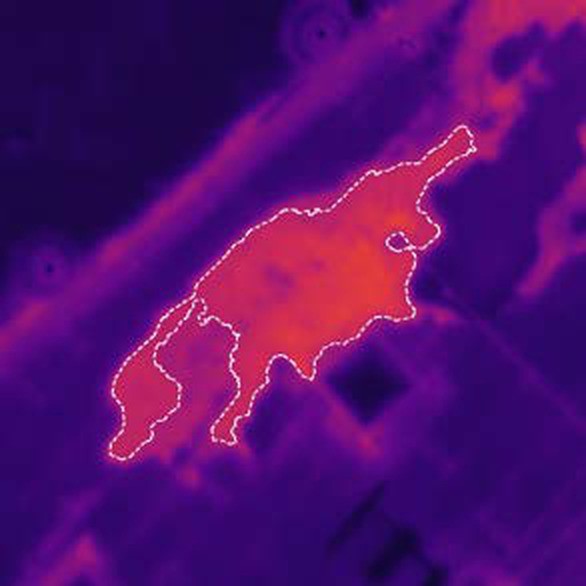
- Pictured: part of a sample map from a real scan, with the address, people and companies removed and the map re-oriented
- A full scan comes with the map, video from the flight and a written assessment of what the scan found
Tool 2 · Decide
Sort the survey into restore or replace
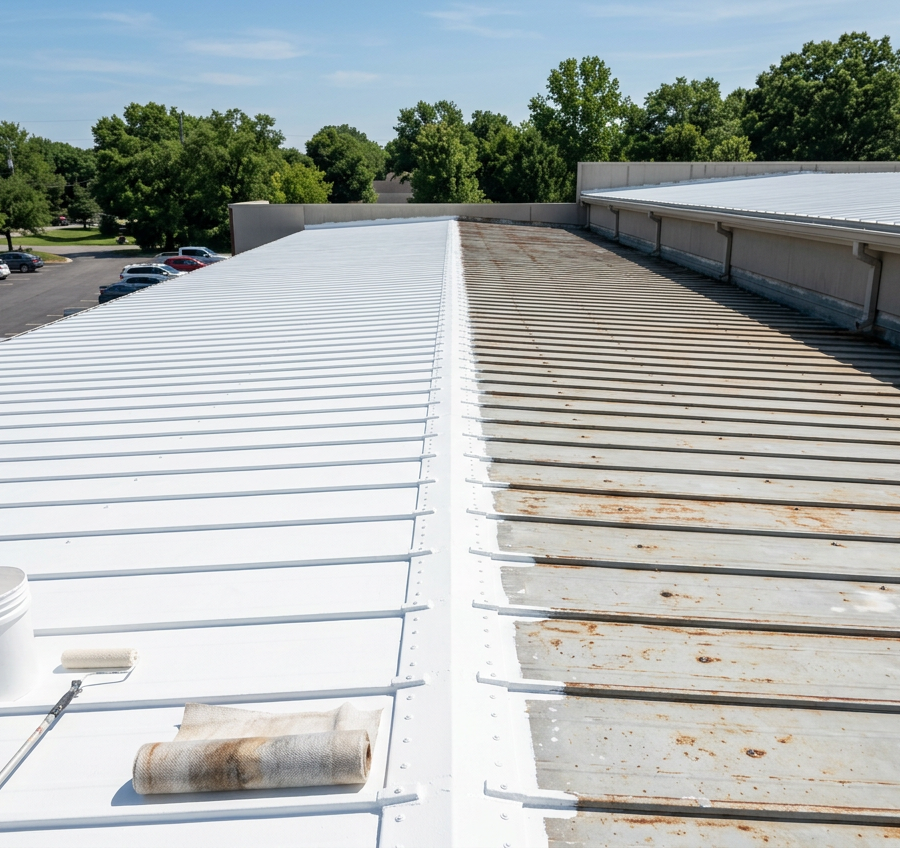
A coating is a new surface over a roof that is still doing its job. It cannot replace a deck, dry out wet insulation or put slope on a roof that never had any. Answer with what the survey found and the tool says whether restoration is on the table, what has to happen first, and which questions belong to the engineer or the building department rather than to a coating.
- Asks: the deck, what the scan and the cores found, the membrane, and how the roof drains
- Returns: a candidate, a candidate after named repairs, a question to settle first, or not a candidate
- A roof with wet insulation is not a candidate until that is cut out and replaced
- Next, we can introduce an installer from our network anywhere in the US, who looks at the roof and says whether it is a good candidate
Tool 3 · Price
Price restoring next to tearing it off
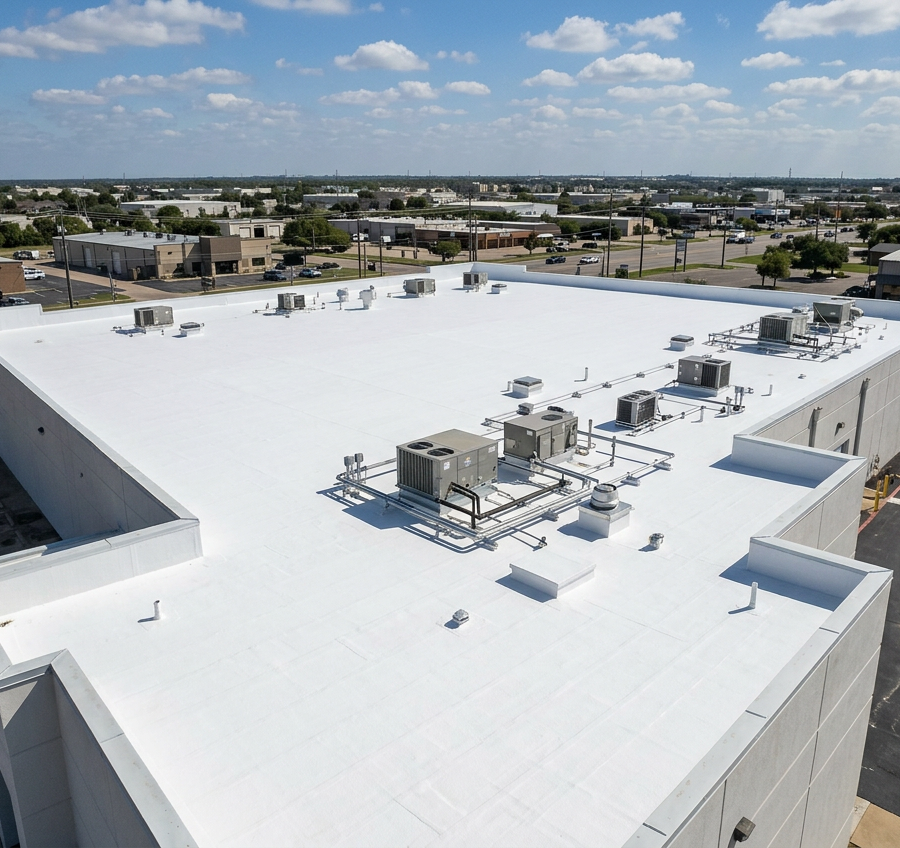
Restoring a low-slope roof with a coating system typically runs $3.50 to $7 per square foot installed. Tearing it off and replacing it typically runs $10 to $18. The calculator runs your roof's area through both. These are typical installed ranges drawn from published industry figures, not a quote: the roof's condition, how much wet insulation has to come out, access and region move the number.
- Asks: the roof area, the years of added service you plan on, and any rates from your own quotes
- Returns: both installed ranges for your area, and restoration's cost per year of added service
- Acrylic systems sit toward the low end of the restore range, silicone toward the high end
- Florida's wind code keeps replacement in the upper half of its range
- The years hold only over a sound, dry roof, so the scan and the cores come before the budget
Tool 4 · Specify
Match the system to this substrate
The finish coat is the last decision, not the first. What the roof is made of decides the primer; whether water stands on it decides the chemistry on top, and the chemistry decides the base coat: an acrylic finish goes over one, Silicone44 goes on without. Answer for the roof and the tool lays out the build-up in the order it goes on, with the Sherwin-Williams Uniflex product for each step by part number.
- Asks: what the roof is made of, whether it holds water, and white elastomeric or aluminum on top
- Returns: repairs, primer, detail course, a base coat where the system has one, and the finish coat in order, each with its part number
- EPDM, TPO and PVC are all covered: weathered TPO and PVC take Silicone44 directly once an adhesion test passes, with no primer and no base coat
- A Hypalon roof that holds water goes to the quote form: no Uniflex silicone document covers Hypalon, so Uniflex names the primer in writing
- Several roof levels or substrates: run it once for each
Tool 5 · Count
Turn the area into pails and drums
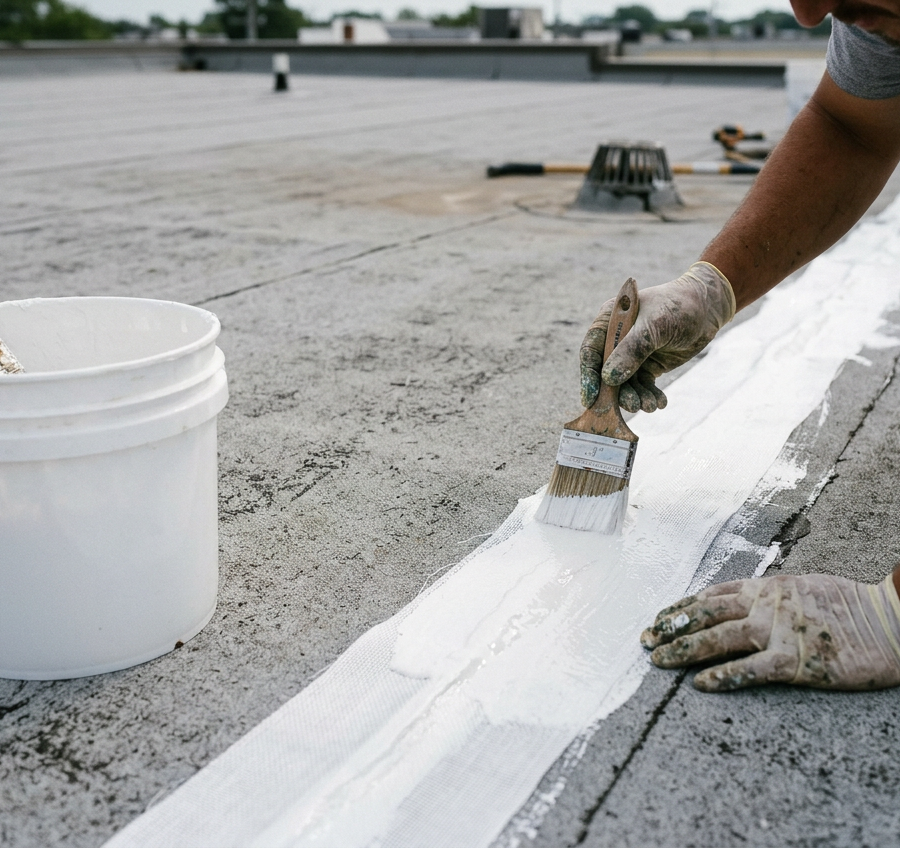
Every coating estimate is the same arithmetic: measure, allow for the surface and the waste, read the rate off the data sheet, multiply by the coats, round up to the containers. The estimator does the arithmetic and holds no coverage rate of its own. You type the rate from the data sheet of the product you are buying, so the count matches that product.
- Asks: the area, your surface and waste allowance, the base and finish rates, the coats and the seam footage
- Returns: gallons, 5-gallon pails and 55-gallon drums per product, plus rolls of seam tape or fabric
- Rounded up per product, never across the order: leftover base coat does not become finish coat
- A Silicone44 system has no base coat: set the base coats to 0
- Primer is a separate count, off its own data sheet
- Seven of the coatings also come by the 275-gallon tote, priced on the quote
Guides
Read the reasoning behind the tools
Each tool rests on a guide: the infrared survey behind the scan check, the candidate test, the cost ranges, the build-up by roof type and the coverage math, plus the adhesion test patch no tool replaces. Read the guide for the why; use the tool when you already know the roof.
- Infrared roof moisture survey: how it works, and when it does not
An infrared roof moisture survey sees temperature, not water: here is what it needs, which roofs it suits, what the report shows and why cores confirm it.
- Restore or replace: how to tell whether a roof can be coated
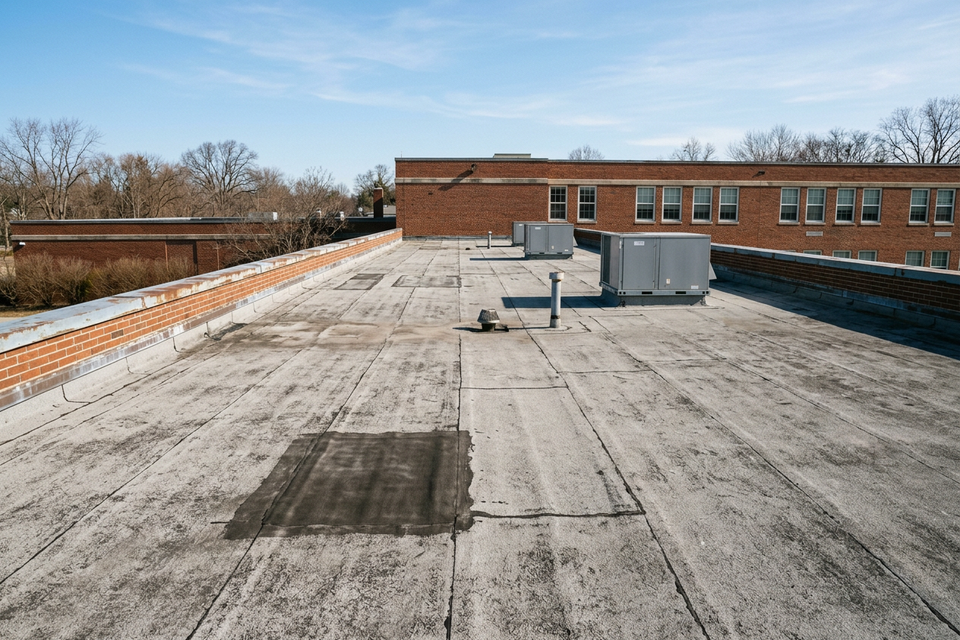
What makes a low-slope roof a candidate for a fluid-applied restoration, what rules it out, and the survey, cores and test patch that settle it.
- What a commercial roof coating costs per square foot
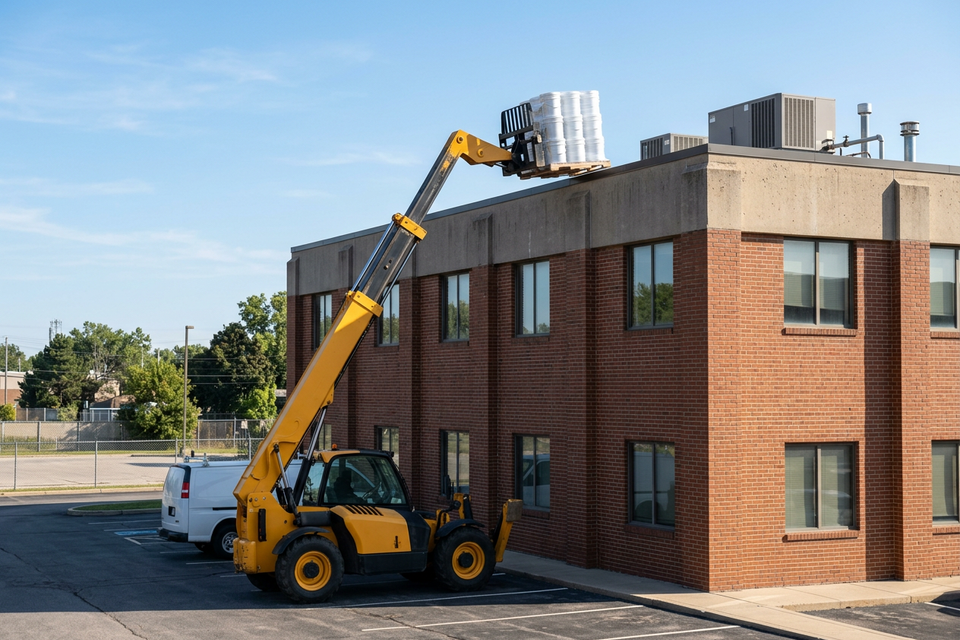
Here is what a coating restoration typically costs per square foot installed, the seven things that move the number, and how to firm it up before anyone bids.
- Which coating system goes over which roof
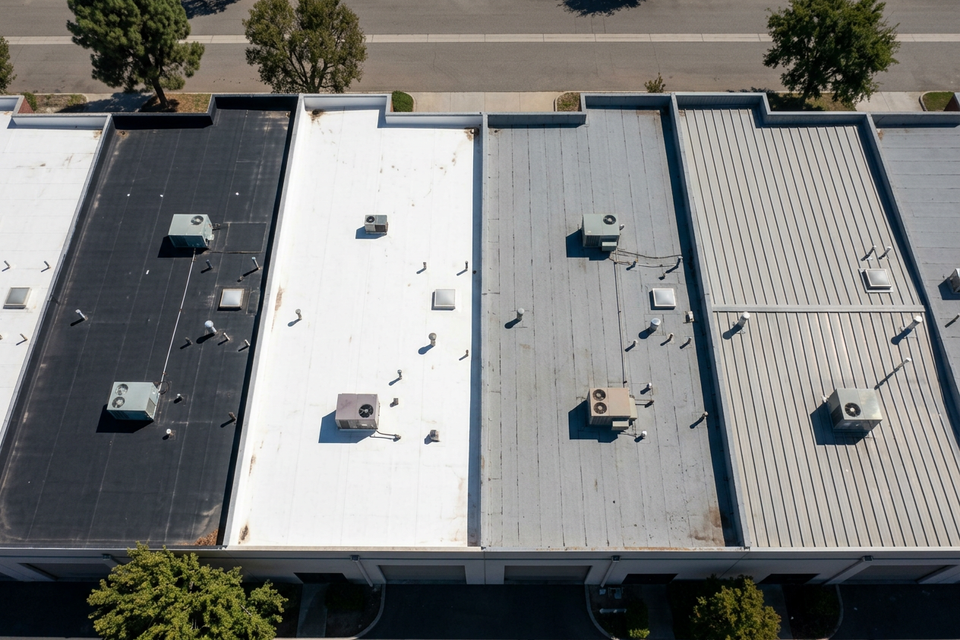
The acrylic and the silicone build-up for each roof: metal, EPDM, TPO, PVC, Hypalon, BUR, cap sheet, foam and concrete, with the part numbers.
- How to estimate material for a roof coating job
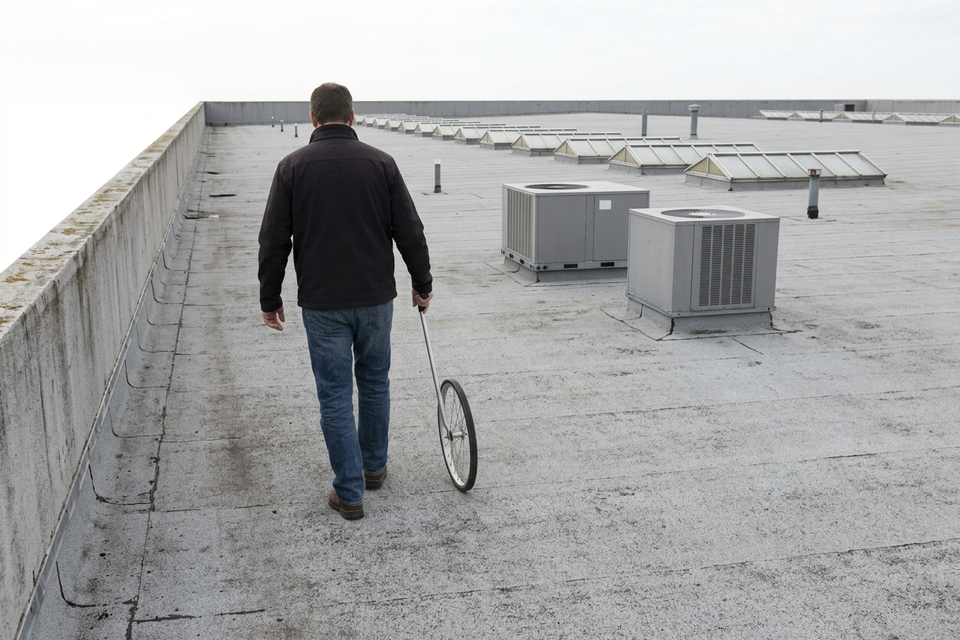
Area to squares, an allowance for texture and waste, the data-sheet rate per square per coat, round up to pails and drums, then count the detail materials.
- The roof coating adhesion test patch: make it, pull it, read it
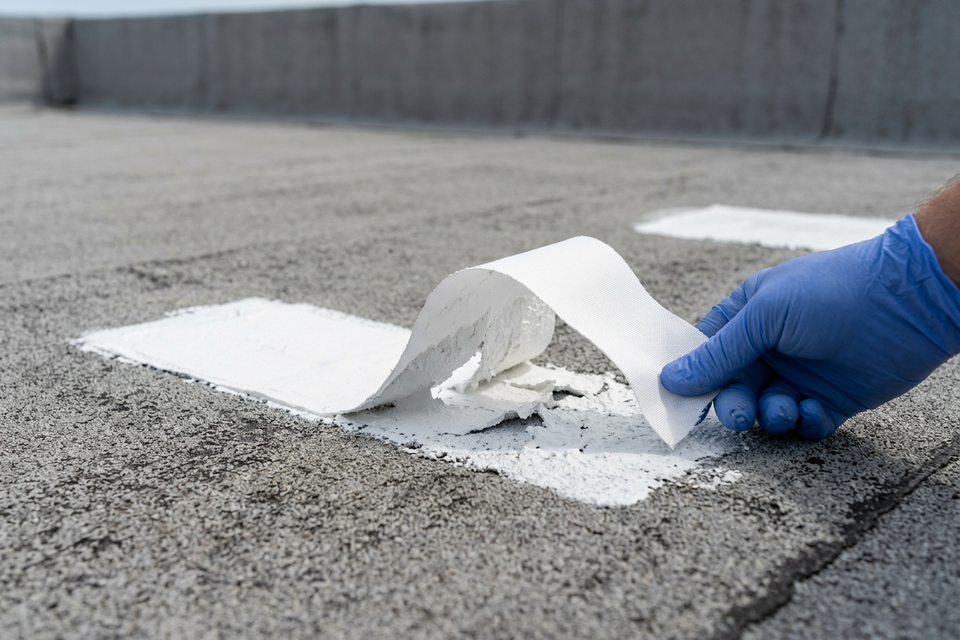
Only a test patch shows whether a coating will hold on a particular roof: where to put each one, how to make it, how to pull and read it, and what to record.
Before you rely on a result
What the tools do not replace
The tools sort what you already know and do the arithmetic. They never see the roof, so three things outrank any result. Anything structural stays with the building's engineer, another layer on the roof with the local building department, and a system warranty with Sherwin-Williams, under its own terms.
- The data sheet: it names the preparation, the rate and the cure, and where it disagrees with a tool, it wins
- The adhesion test patch: the actual system, cured on a small area and pulled, settles whether it holds on this roof
- The contractor's survey: the walk, the measurements, the detail count and the cores the scope is written from
When the tools run out, send us the roof
Owners: request a moisture scan with the building's address, and we quote the scan for that roof. Contractors: send the part numbers or the roof type and square footage, with the site ZIP, for a price, freight and ship date within one business day, or ask to join our installer network.