Which coating system goes over which roof
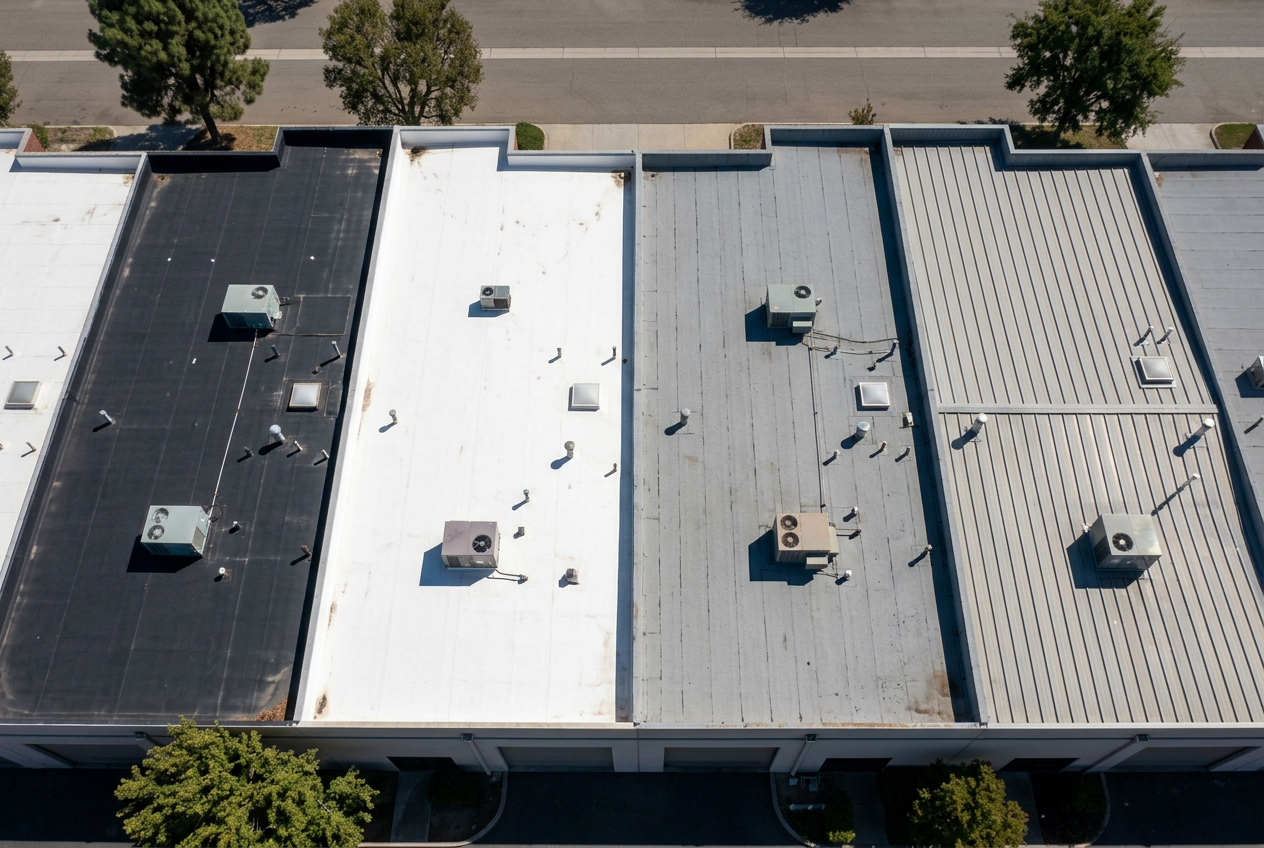
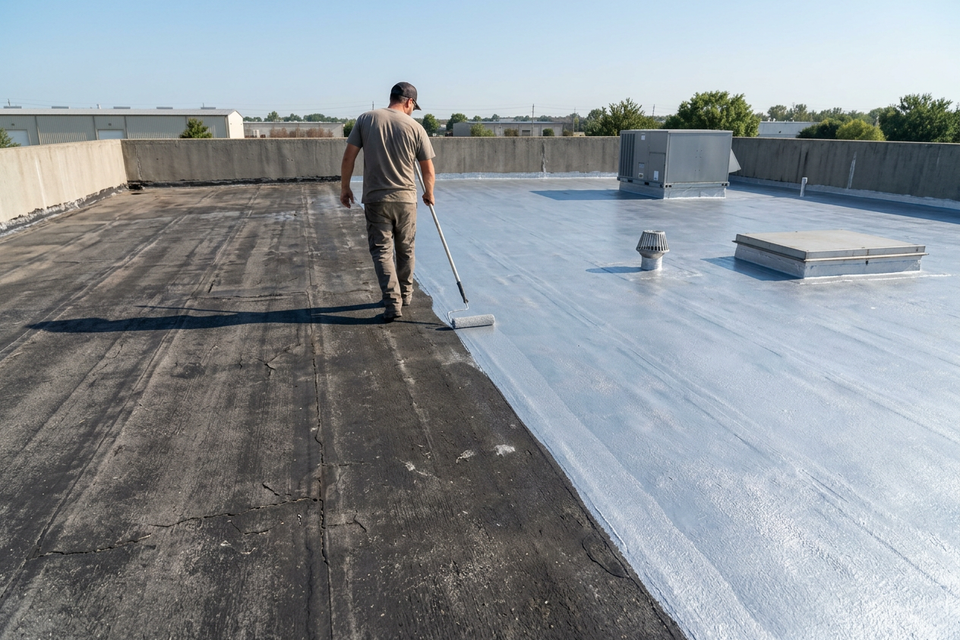
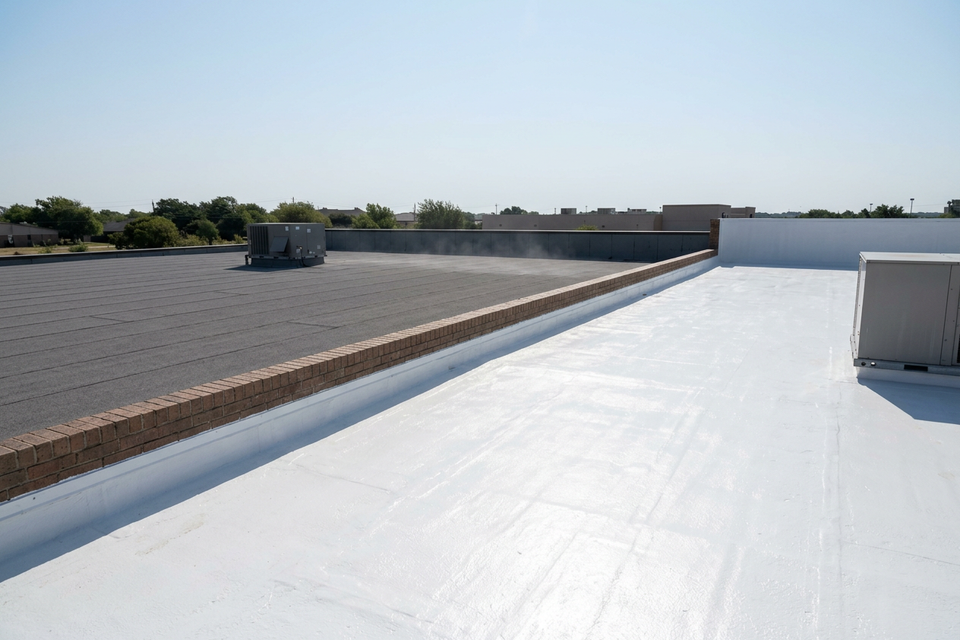
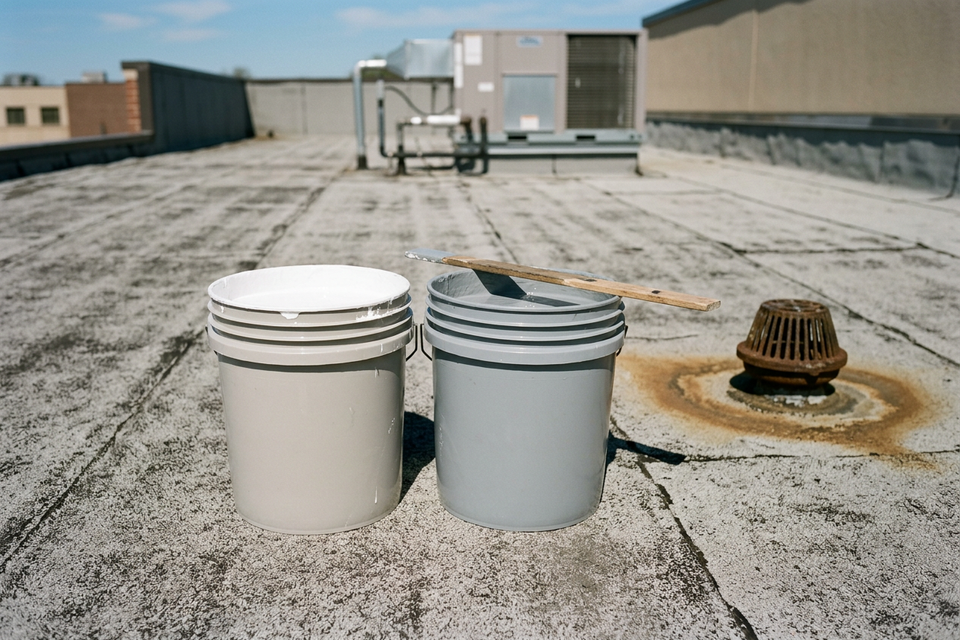
A fluid-applied system is not one product out of a pail. It is preparation chosen for the substrate, a detail course over every seam and penetration, and then the coats: a base coat and a finish coat under an acrylic finish, the silicone on its own under Silicone44. Swap one step for the wrong one and the job comes apart at the laps rather than in the field.
This guide walks the substrates a coating crew meets and names the Sherwin-Williams Uniflex products for each, first for a roof that drains (acrylic), then for a roof that holds water (Silicone44). The data sheet for the system being priced stays the authority on primers, rates and cure.
The order of work is the same everywhere
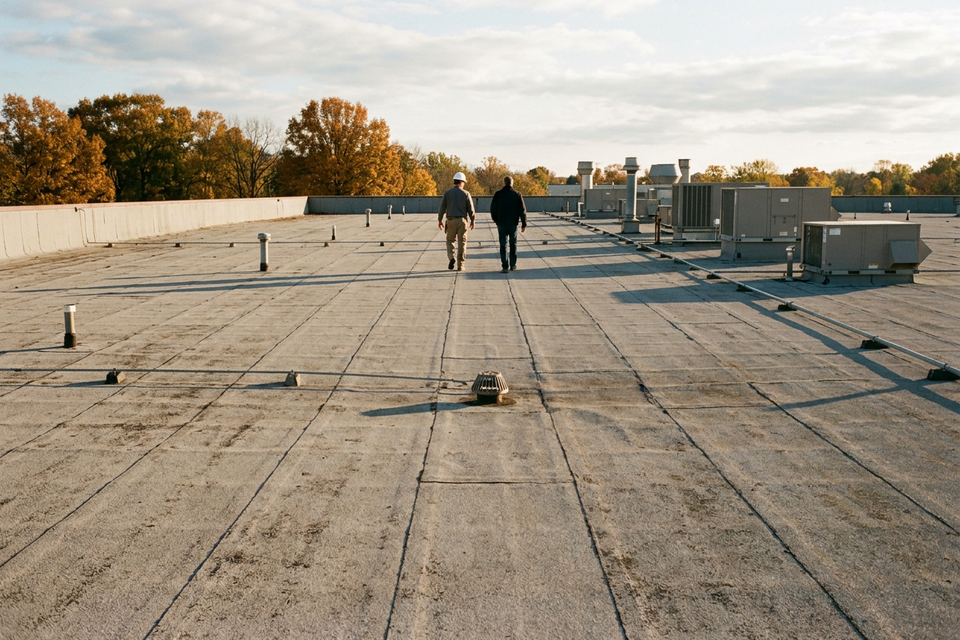
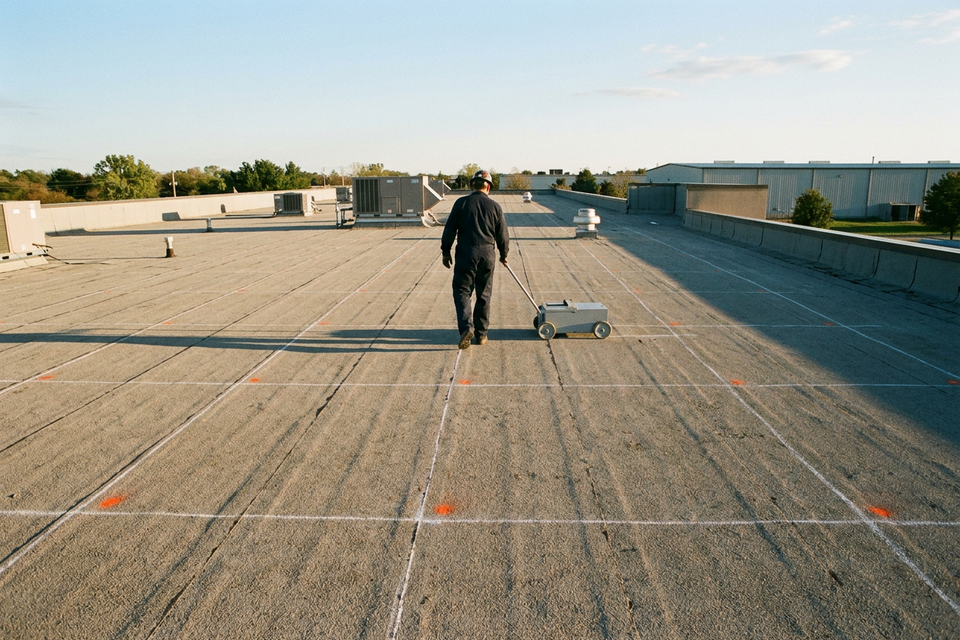
- Clean. Pressure wash the field, get ponded silt and loose granules off, and let the roof dry as the data sheet requires.
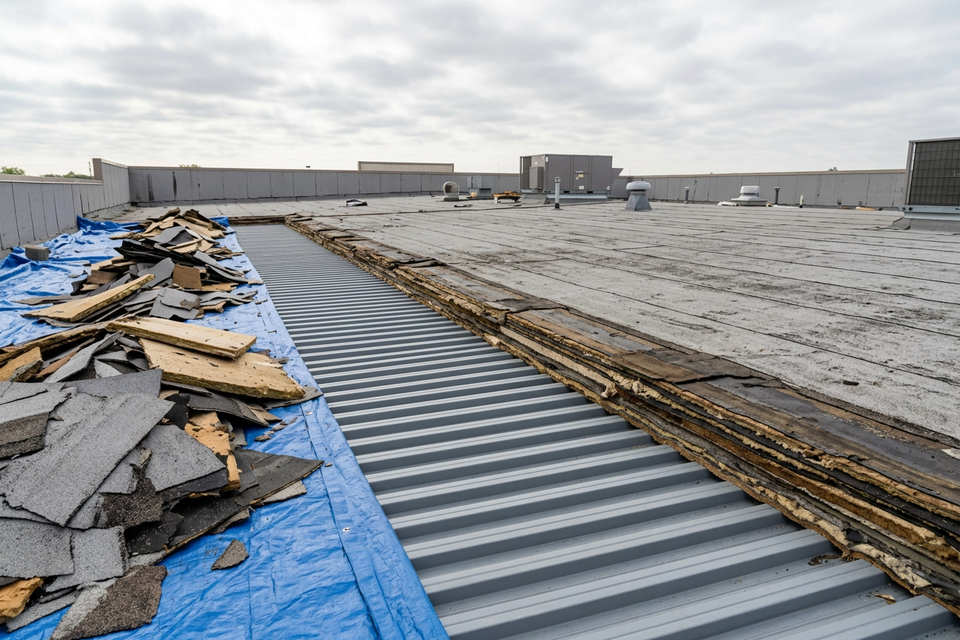
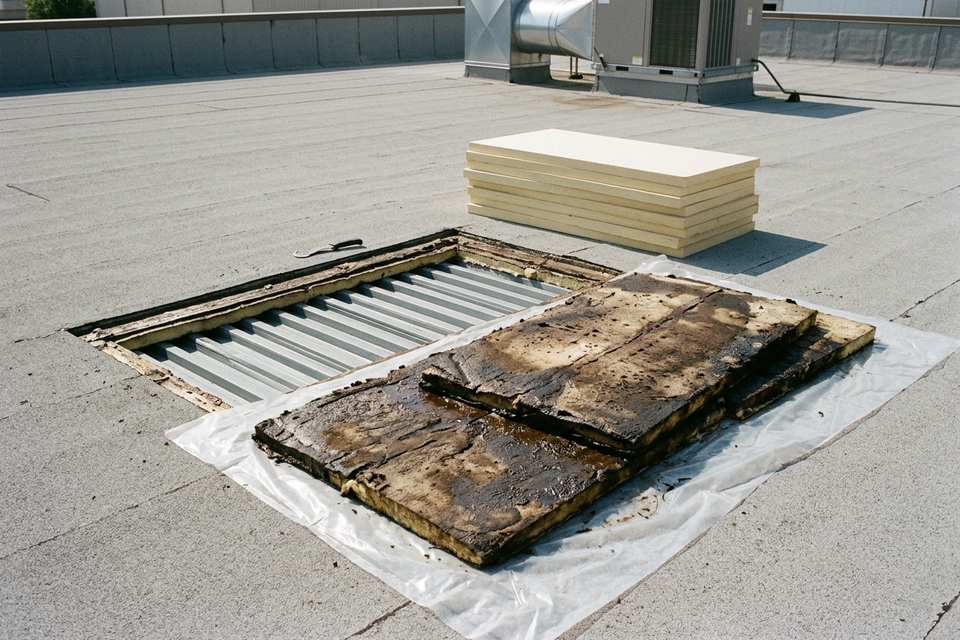
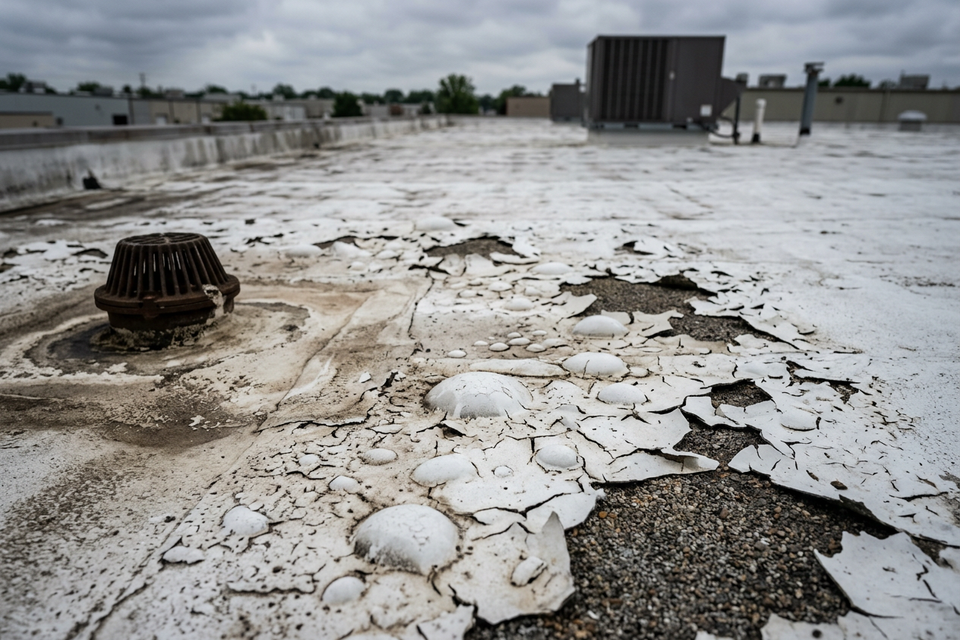
- Repair. Splits, blisters, open laps, torn flashings and failed fasteners come first: acrylic patching cement KST041220 on metal seams, flashings, small holes, splits and blisters in built-up, modified bitumen, foam and concrete; wet-dry roof cement KST058600 on asphaltic roofs wet or dry; brushable repair sealant KST058500 on damp or oily spots, but not on EPDM.
- Correct the low spots. Slope Builder KST0SLPBD, a powder mixed with water on site, builds crickets behind rooftop equipment and fills low areas at drains, in valleys and along parapets. No silicone specification names it under Silicone44; there the adhesion test and Uniflex decide.
- Prime where the substrate needs it. The step that changes roof to roof, and with the finish.
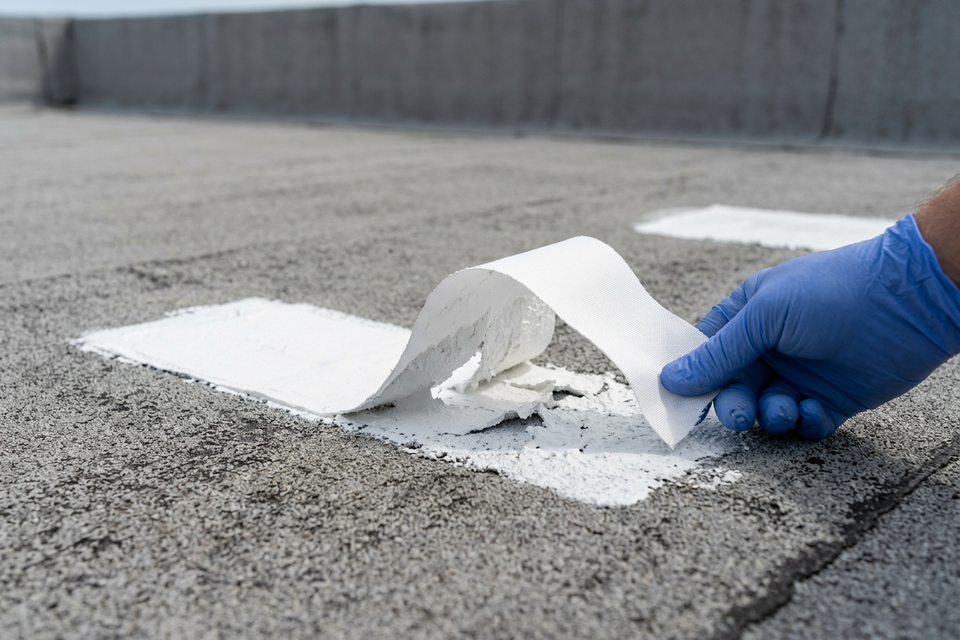
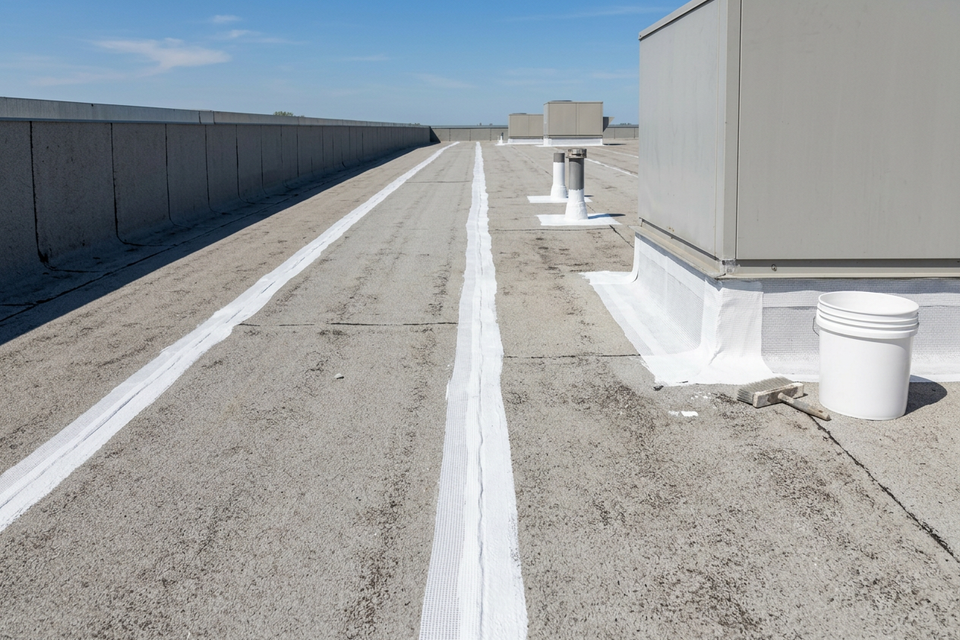
- Detail everything that is not flat field. Polyester fabric in 6 in KST20385A, 12 in KST20385B and 40 in KST020385 widths for three-course work; butyl seam tape in 2, 4, 6 and 8 in (KST020802, KST020804, KST020806, KST020808); fleece-backed MS hybrid bonding tape KST058004 and KST058006. Cartridges close the true joints: MS hybrid in white KST058300 and black KST058310, polyurethane KST058100, fast-skin KST058200, tripolymer KST058400.
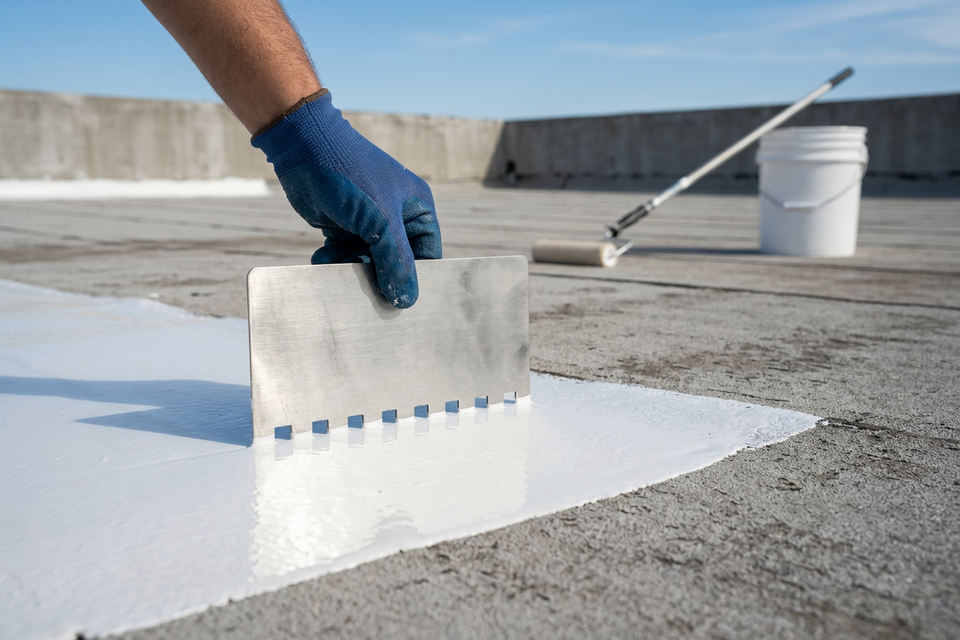
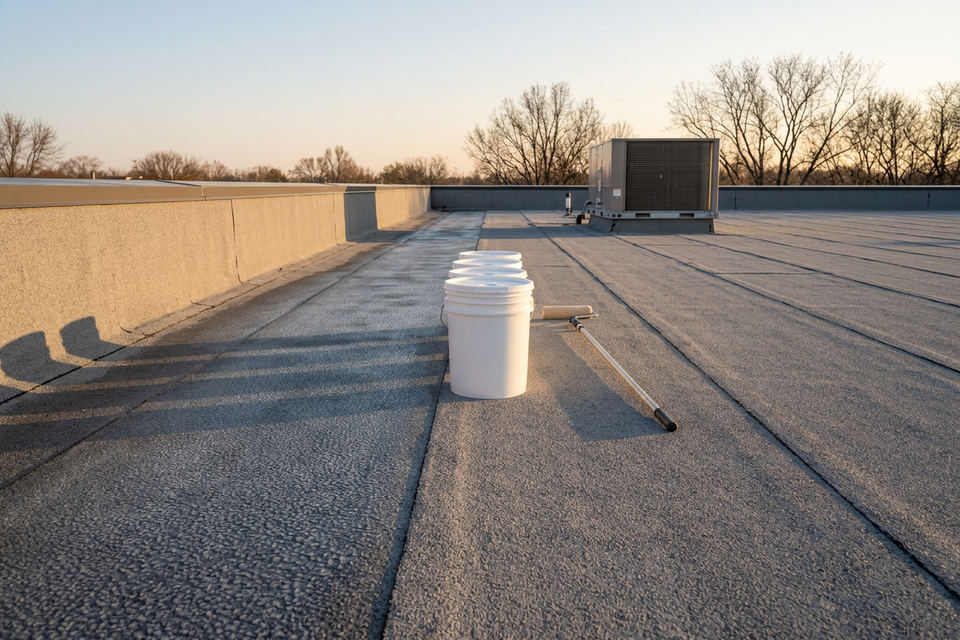
- The coats. Under acrylic, a base coat and a finish coat, usually two colors so the crew can see coverage. Under Silicone44, no base coat.
Every silicone job also starts with an adhesion test: a small patch of Silicone44 with a fabric strip embedded, left three days, then pulled. Uniflex looks for at least 2 lb per inch; a lower result goes to Uniflex, which decides the primer.
Substrate by substrate
Metal
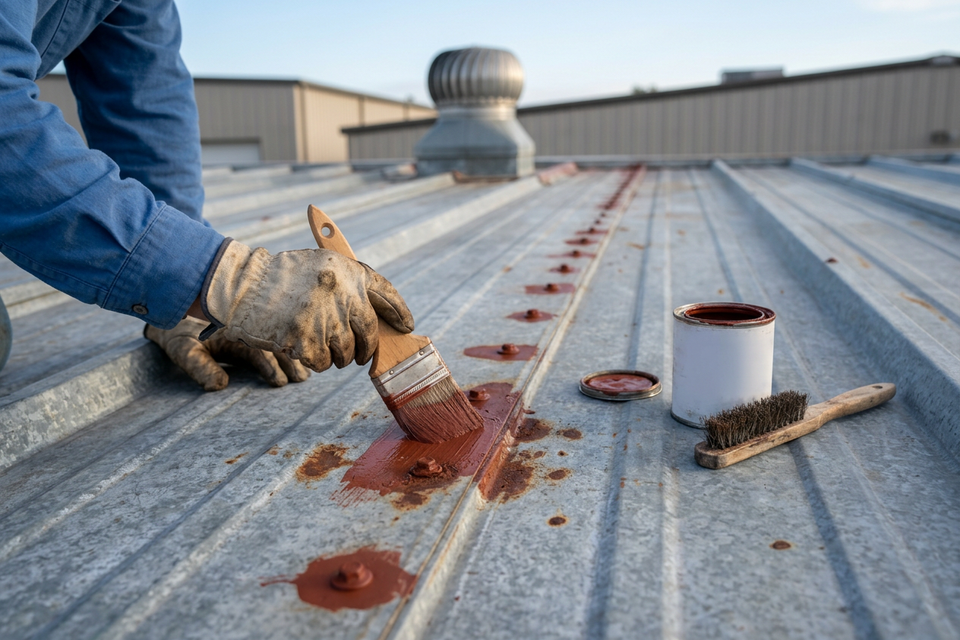
Fasteners get tightened or replaced and laps open more than 1/8 in fastened. Acrylic: rust-inhibitive metal primer KST034520 where corrosion is the problem, or the acrylic white KST036520, listed for pre-finished fluorocarbon panels; seams and fastener rows detailed with butyl tape; base coat KST041320 or KST041520; acrylic finish. Silicone44: wash, prime every rusted area with KST034520 and let it cure, stripe end laps, fastened seams and ridge-cap laps with Silicone44, then coat the field with it. On factory-finished (Kynar) panels an adhesion test decides whether any primer is needed; send us the roof.
EPDM
Acrylic: Bond-It wash primer KST038620, made for EPDM and not for white EPDM, then single-ply base coat KST041321 and an acrylic finish; KST041300 and KST041500 both list EPDM. Silicone44: repair and wash, clean with KST038620, rinse and let dry, seal open seams and flashings with black MS hybrid KST058310, then coat. New, unweathered EPDM takes a different primer; ask us. The brushable sealant is not for EPDM.
TPO and PVC
Acrylic: pressure wash, single-ply base coat KST041321, acrylic finish. The wash primer is for EPDM only. On PVC, Uniflex’s single-ply specification covers the membrane and the adhesion test settles the build-up. Silicone44: repair, wash, adhesion test, then Silicone44 directly on the weathered membrane, with no primer and no base coat. Open seams and flashings take black MS hybrid KST058310, whose sheet lists aged TPO and PVC; new TPO or PVC needs a primer first, so ask us. If the test comes in low, Uniflex names the primer for that roof.
Hypalon
Acrylic: pressure wash, single-ply base coat KST041321, whose sheet lists weathered EPDM and Hypalon, then KST041300 or KST041500. At seams and flashings, butyl seam tape is the one detail product we stock that lists Hypalon, coated over the same day. None of our cartridge sealants names Hypalon: the sealant is confirmed with the manufacturer’s technical service and an adhesion test before the order, so tell us the membrane type. Silicone44: no Uniflex silicone document covers Hypalon. A Hypalon roof that holds water is one to send us; the primer under silicone would have to come from Uniflex in writing, after an adhesion test.
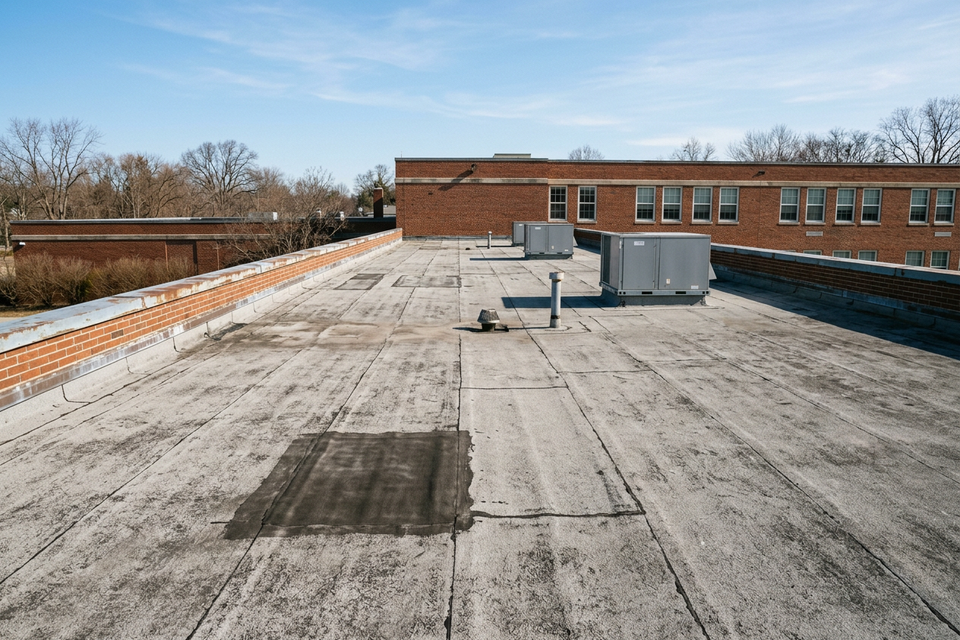
Smooth BUR, modified bitumen and granular cap sheet
Acrylic: elastomeric MB base coat KST041510 white or KST041512 gray is the first coat, with fabric at the details, then an acrylic finish. Skipping it is how asphalt stains through a white finish. Silicone44: repair and wash; where the asphalt is newer or likely to bleed through, Uniflex’s Bleed Blocker Primer goes first, which we do not stock (ask on the quote form); seal seams and flashings with KST058310; then Silicone44. No MB base coat and no asphalt primer go under it. Either way, granules take more coating per square than a smooth surface.
Sprayed polyurethane foam
Wet or damaged foam is cut out and replaced first. Acrylic: base coat KST041320 or KST041520, both listed for foam, then the finish. Silicone44: directly on the foam, after an adhesion test; no primer, no base coat.
Concrete
Acrylic: acrylic concrete primer KST036500, listed for surfaces with a pH of 6 to 13, then a base coat and a finish. Silicone44: directly on clean concrete, no primer, no base coat. Uniflex asks for concrete cured at least 29 days, moisture at 15% or less, and sealers and release compounds removed. Wider cracks are reinforced with fabric KST20385A; the sealant Uniflex specifies for cracks is not in our catalogue.
An existing coating
Silicone44 goes directly over a sound, aged acrylic, silicone or urethane roof coating after washing, scraping loose coating back and passing adhesion tests.
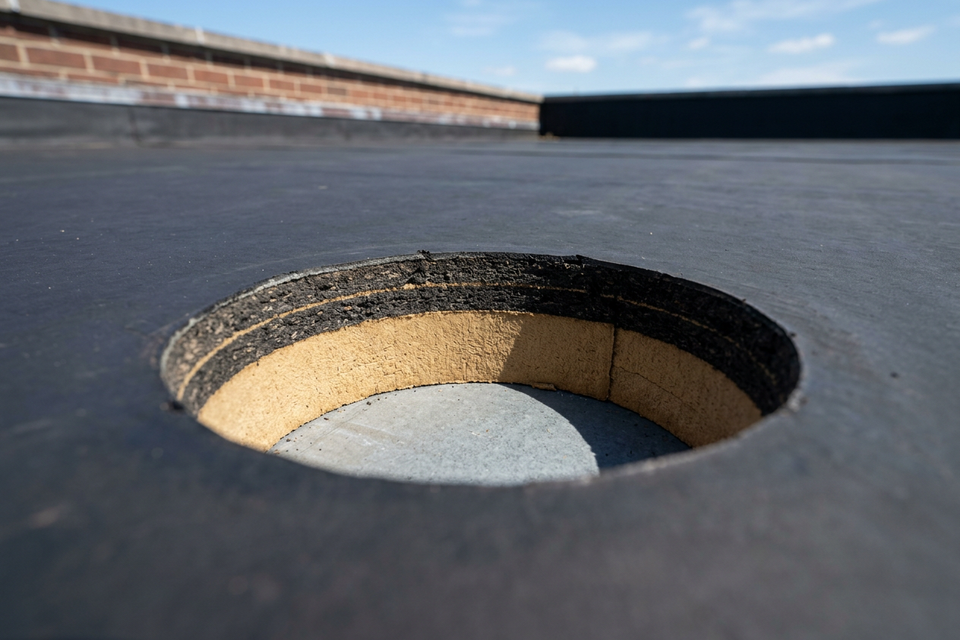
At curbs and penetrations under silicone, Uniflex’s specifications use its OneFlash sealant, which we do not stock; ask us rather than substitute a cartridge.
Which chemistry, and why
Acrylic: KST041300 white, KST041500 commercial grade, KST041325 black, KST04130T and KST41300T in tans, plus accent, deep and pastel tint bases (KST04130A, KST04130D, KST04130P). The default on a roof with positive drainage.
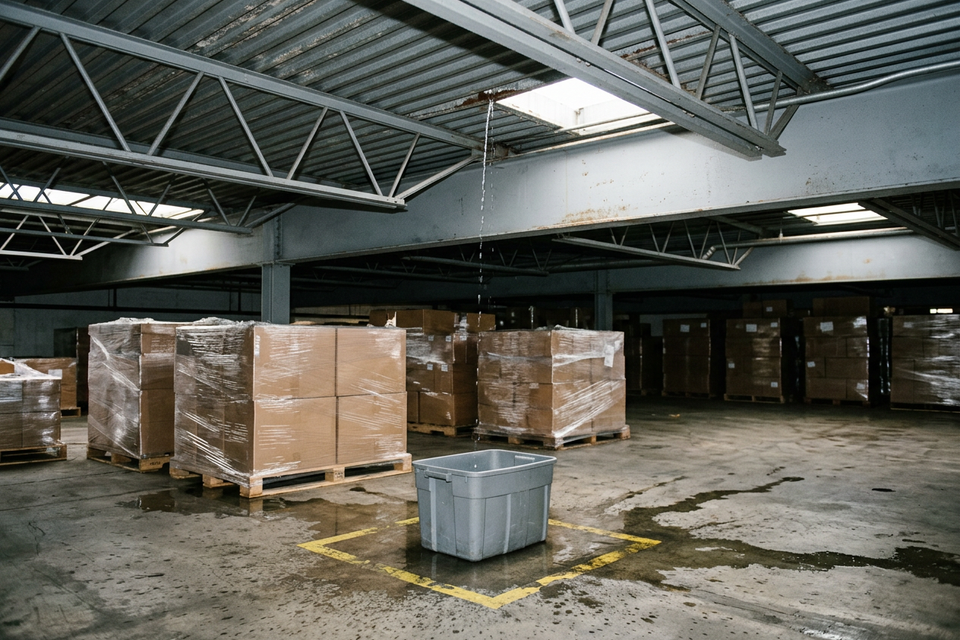
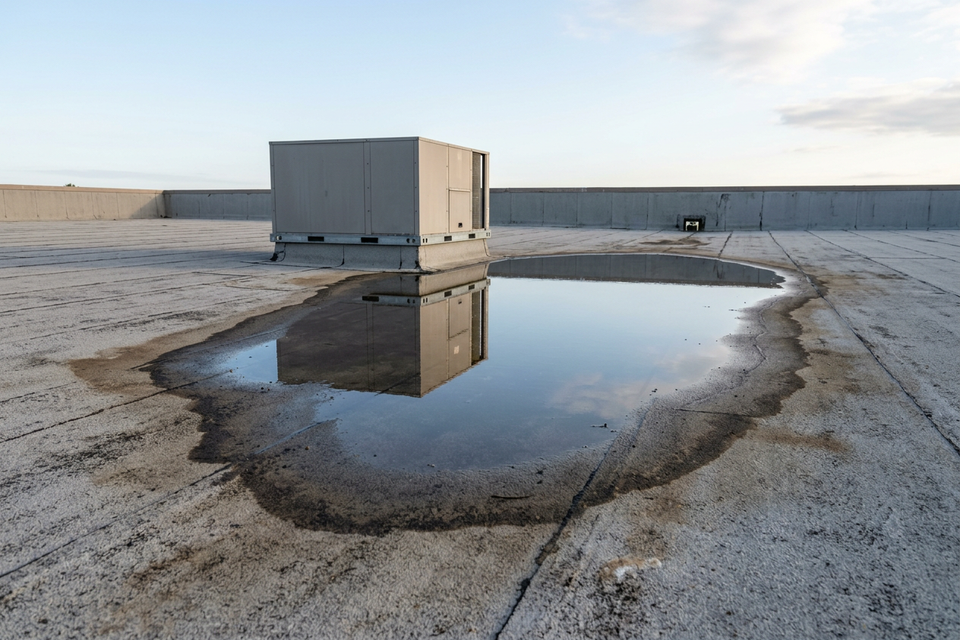
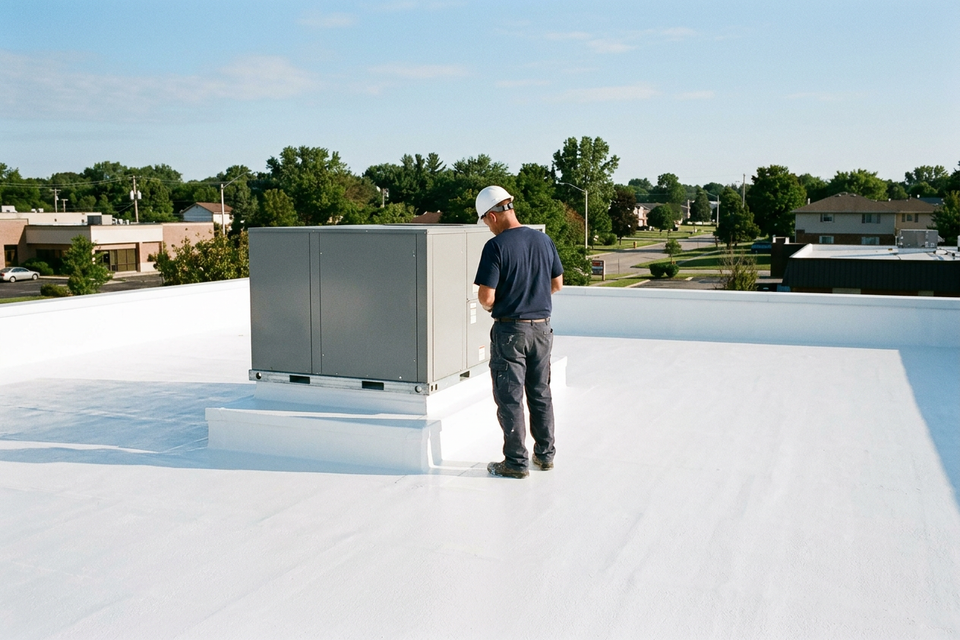
Silicone: Silicone44 KST044300 (white) and Silicone44 KST044320 (gray), made for areas where water stands. It does not fix drainage: Uniflex’s silicone specifications still expect at least 1/4 in per ft of slope and working drains.
Solvent-based elastomeric: finish coat KST042100 white over base coat KST042200 gray, the other answer where water stands on metal, foam, smooth BUR, modified bitumen and cap sheet. It ships as regulated freight.
Aluminum: non-fibered KST020418, or fibered in two grades, KST020475 and KST020480, all listed for metal, smooth built-up, granulated asphalt and granulated or smooth modified bitumen. The two fibered grades are also stated to go directly over lightly rusted metal.
Asphalt emulsion: fibered KST040312 or non-fibered KST040314. Not a finish: an emulsion resurfaces an extremely dried-out or heavily alligatored smooth BUR or modified bitumen roof so a coating has something whole to go on.
Fiberglass skylight panels take the skylight restorative clear coating KST019100.
What settles the specification
Three things, in order: the current data sheet, which names the primer and the preparation; the adhesion test patch on the roof; and, where a system warranty is wanted, the manufacturer’s representative, who inspects and accepts the specification. Sherwin-Williams offers UNIGUARD system warranties of 10 or 15 years when one of its authorized contractors applies the system. The warranty is the manufacturer’s, issued under its own terms; we supply the materials.
What to send for a quote
- The substrate and the roof area, level by level, and for single-ply the membrane type and age.
- Linear feet of seams and laps, plus a count of curbs, penetrations, drains and fastener rows.
- The system named in the specification, if one is named.
- Whether fabric, tape and sealants go on the same order, the site ZIP and your timing.
The finish coats are at Elastomeric & silicone finish coats, primers and base coats at Base coats & primers, aluminum and emulsion at Aluminum & asphalt coatings, cements and the slope compound at Patch & repair, detail materials at Reinforcing fabrics & seam tapes and cartridges at Roofing sealants. Send the roof through the quote form and a person prices the system off the area and the detail lengths, names what is not included, and replies with the price, freight and a ship date.
The system finder returns the build-up by part number. Each roof type has its own page under systems by roof type, and silicone vs acrylic and primers by substrate go deeper on the two choices that trip most jobs. Roofing and coating contractors who apply these systems can also Join the installer network: a person answers.
Last updated 2026-10-05.