
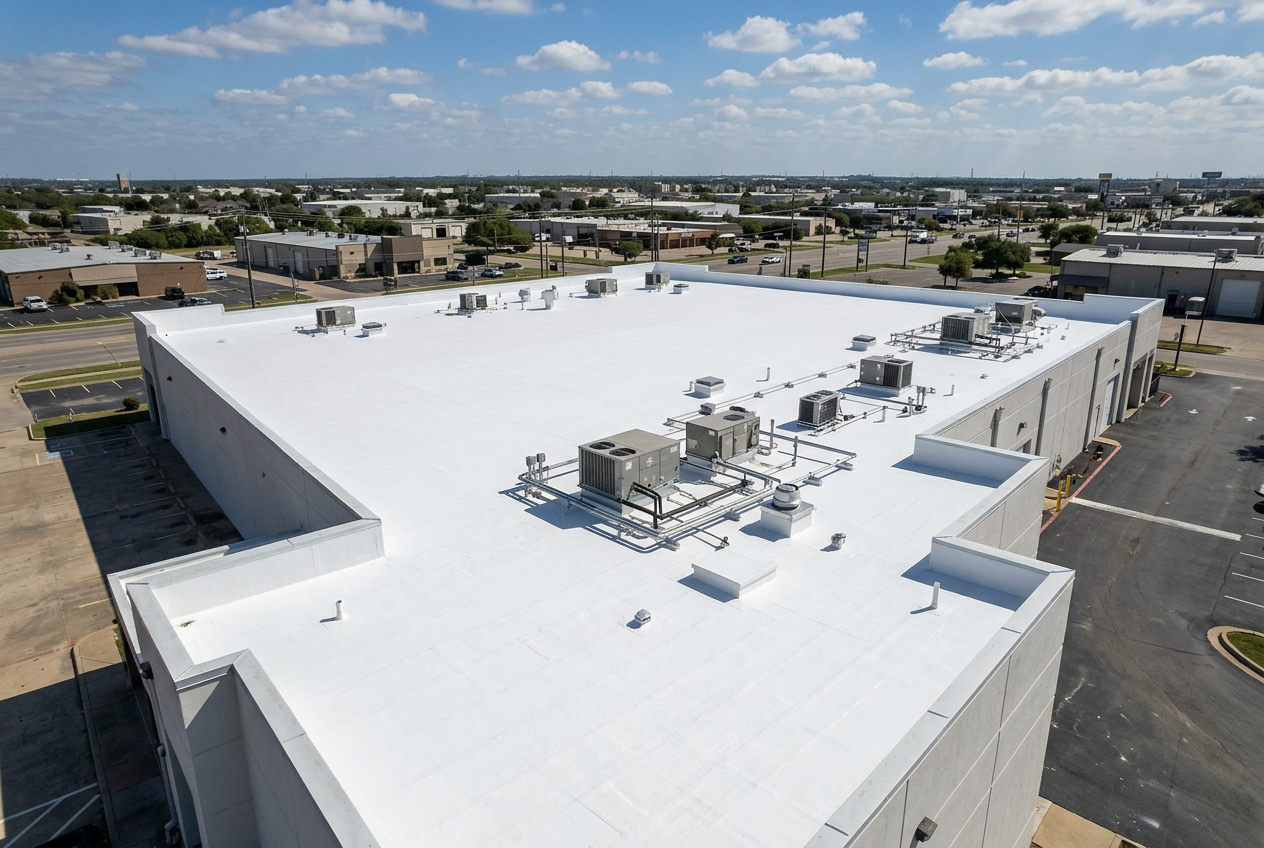
Commercial roof restoration
Restore the roof you have. Skip the tear-off.
Applied over a sound, dry roof, a restoration system adds 10 to 15 years of service life. There is no tear-off and the building stays open. Start with a moisture scan: the map shows whether a few sections need replacing first, or so much is wet that replacing the roof makes more sense, before you budget for either.
What a restoration is
Keep the roof, renew the surface
A restoration keeps the existing roof and builds a new surface on it. A re-cover lays a new roof covering over the old one; a tear-off strips the roof to the deck. In a restoration everything sound stays in place, and the coating system adds one continuous surface on top. It does not replace a deck, dry out wet insulation or put slope on a roof that never had any. Whether a building department treats it as maintenance or as a re-cover varies, and only the department can say for the address.
- No tear-off: the existing roof stays and carries the new surface
- No shutdown: the building stays open while the work goes on
- Light: ounces per square foot, not pounds
- One surface: continuous over the field, the seams and the flashings
- Reflective: white finish coats reflect sunlight and keep the roof surface cooler
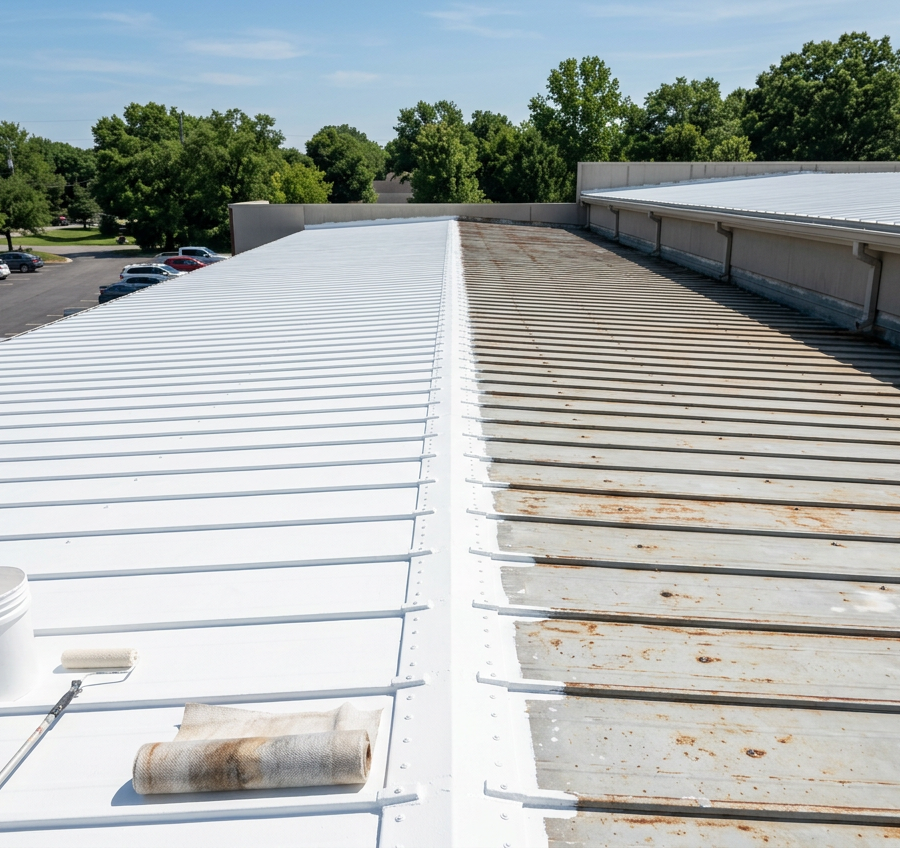
Restore or replace
Restore or tear off: what each one involves
The cost lines are typical installed ranges drawn from published industry figures, not a quote. The roof's condition, how much wet insulation has to come out, access and region move both numbers.
Restoration
- Installed cost
- Typically runs $3.50 to $7 per sq ft installed
- The existing roof
- Stays in place, less any sections confirmed wet, and carries the new surface
- The building while work goes on
- Open and in use; no kettle or torch on the roof
- Wet insulation
- Marked by the scan, confirmed by cores, and replaced where confirmed
- What it adds
- Reinforced details and a coating system over the existing roof: acrylic base and finish coats, or silicone with no base coat
- Warranty
- Sherwin-Williams', under its own terms, when one of its authorized contractors applies the system
- What rules it out
- Wet insulation over much of the roof, a membrane failing across the field, or a deck that is not sound
Tear-off and replacement
- Installed cost
- Typically runs $10 to $18 per sq ft installed
- The existing roof
- Stripped to the deck and hauled away
- The building while work goes on
- Each section is open to the deck until the new roof closes it
- Wet insulation
- All removed with the rest of the roof, wet or dry
- What it adds
- A new roof assembly: insulation, membrane and flashings
- Warranty
- The new roof's own terms, from its maker and its installer
- What rules it out
- Little: it is the route when restoration is ruled out
Candidates
Which roofs qualify, and what settles it
A coating is a surface, so everything it buys depends on what sits under it. A roof is worth pricing as a restoration when all five of these hold. The scan and the cores settle the insulation, an adhesion test patch settles whether the system holds on this roof, and the building's engineer settles anything structural. The installer who looks at the roof says whether it is a good candidate.
- A sound deck that carries the crew, the equipment and the finished system
- Dry insulation, or wet areas few enough to cut out and replace first
- A membrane largely intact and still attached: split at the laps is normal, failed across the field is not
- Drainage that works, or low spots that can be built up so water leaves at the drains and scuppers
- Seams, flashings and penetrations that can be repaired one by one before the field is coated
How it goes
From scan to finish coat, in order
Each step depends on the one before it, and the scan comes before anything is coated: a white finish makes later thermal work harder. We arrange the scan and supply the materials; a roofing contractor does the work on the roof.
-
Scan the roof, then core it
On an evening after a sunny day a drone with a thermal camera flies the roof. You get a map measuring each area that looks wet, video from the flight and a written assessment. The scan marks suspects; the cores confirm them. Metal, ballasted, white-coated and spray foam roofs need another survey.
-
Replace what is wet
Each confirmed wet area is cut back to sound material, the insulation replaced to matching thickness and the patch tied back into the field. Coating makers, Sherwin-Williams included, require it before a coating goes on.
-
Clean and prime by substrate
The roof is washed and left to dry. The primer follows the substrate: rust-inhibitive on corroded steel, the wash primer on EPDM only, none on weathered TPO or PVC, foam or concrete under silicone. An adhesion test patch settles whether the system holds; on a low result, Uniflex names the primer.
-
Detail seams, fasteners and penetrations
Seams, laps, fastener heads, curbs, pitch pans, drains and every pipe through the roof are reinforced or sealed before the field is coated: fabric or seam tape under an acrylic system, sealant and a striped coat under silicone. Count them at survey rather than discover them in week three.
-
Base coat, under an acrylic finish
An acrylic finish goes over a base coat across the field and the details: the single-ply base on EPDM, TPO, PVC and Hypalon, the modified bitumen base on asphaltic roofs, the acrylic base on metal, concrete and foam. Silicone44 takes no base coat. The data sheet names the rate and the cure.
-
Finish coat, and the inspection
The finish coat is the surface the weather sees: acrylic where the roof drains, silicone where water stands, though silicone does not fix drainage. Where a system warranty is wanted, Sherwin-Williams inspects the finished roof before it issues one.
The build-up
What goes on the roof, from the deck up
On a membrane roof over insulation, the bottom three layers are the roof the building already has: the deck, the insulation and the membrane stay, and only what the cores confirm wet is cut out and replaced. The top four are what a restoration adds, applied on site in this order; under a silicone finish there is no base coat.
- Finish coat The surface the weather sees
- Base coat Under an acrylic finish; silicone takes none
- Fabric or tape at details Seams, fasteners and penetrations
- Primer by substrate Where the substrate calls for one
- Existing membrane Sound and attached; it stays in place
- Insulation Dry, or replaced where it was wet
- Deck Structurally sound
By roof type
The roof decides the system
The finish coat is the last decision, not the first. What the roof is made of decides the primer and the detail materials; how it drains decides the chemistry on top. An acrylic finish goes over a base coat; silicone goes on without one, after an adhesion test.
| Metal | Fasteners tightened, open laps fastened, rust primed; then seam tape and acrylic base and finish coats, or laps striped and the field coated in silicone. A thermal scan is the wrong tool here. |
|---|---|
| EPDM | Wash primer, rinsed; then the single-ply base coat and an acrylic finish, or open seams sealed and silicone with no base coat. |
| TPO and PVC | Washed and adhesion-tested; then the single-ply base coat and an acrylic finish, or silicone directly on weathered membrane. New TPO or PVC needs a primer first: ask us. |
| Hypalon | Where it drains, the single-ply base coat and an acrylic finish, with butyl seam tape at the details. Where water stands, send us the roof: Uniflex names the primer under silicone. |
| Modified bitumen and built-up | Under an acrylic, the modified bitumen base coat is the first coat, with fabric at the laps. Under silicone, no base coat; newer asphalt takes a bleed-blocking primer first, which we do not stock. |
| Spray foam | Damaged or wet foam cut out and replaced, then a base coat and an acrylic finish, or silicone directly. A thermal scan is the wrong tool on closed-cell foam, so it is surveyed another way. |
| Concrete decks | Concrete primer, fabric at cracks and details, then acrylic base and finish coats; or silicone directly on clean concrete cured at least 29 days, with no primer and no base coat. |
| Over an existing coating | Silicone goes directly over a sound, aged acrylic, silicone or urethane coating once it is washed, loose coating is scraped back and adhesion tests pass. |
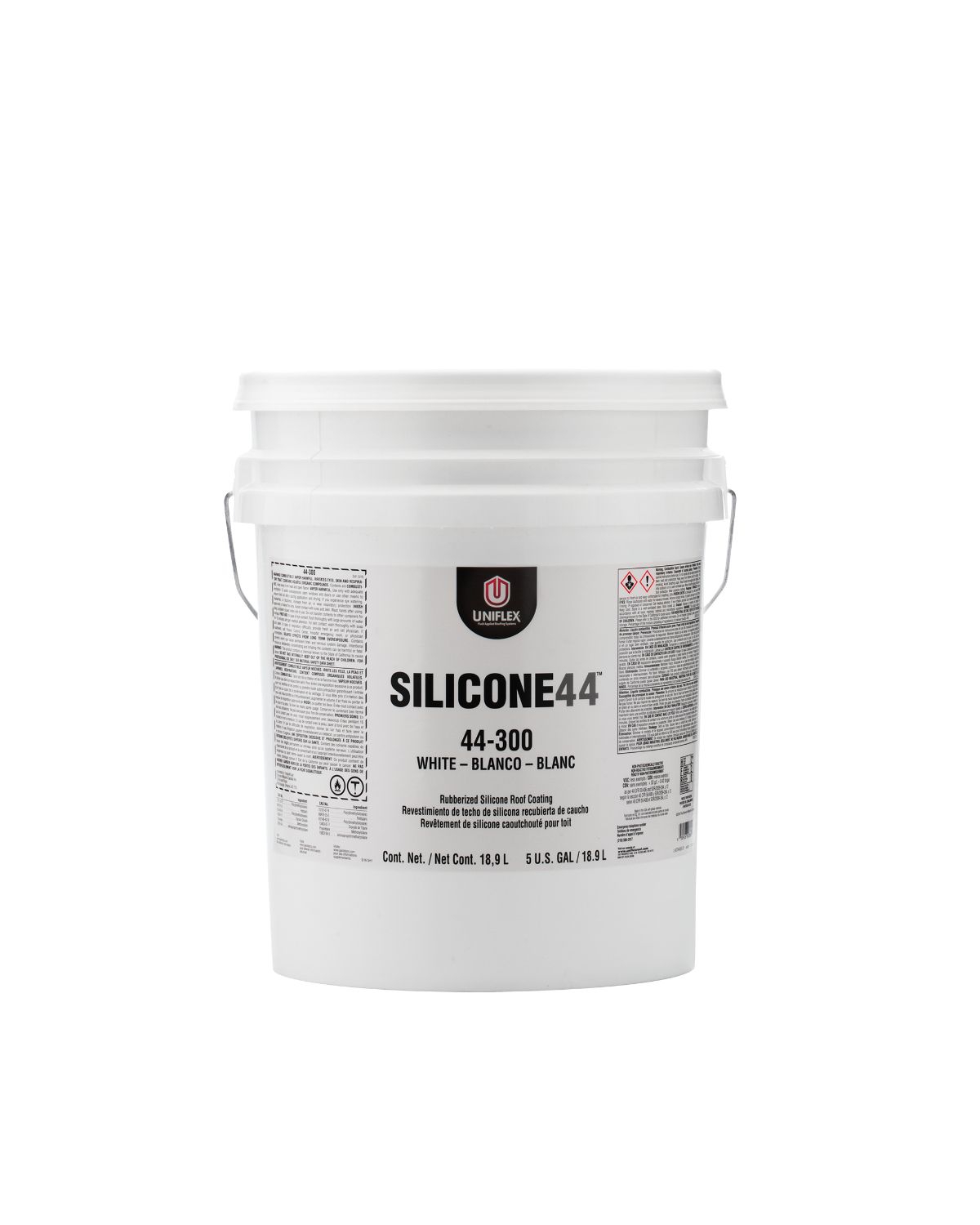
| Where water stands after rain | Silicone44 KST044300 (white) or KST044320 (gray), or on some roofs the solvent-based pair. Silicone resists standing water but does not fix drainage. |
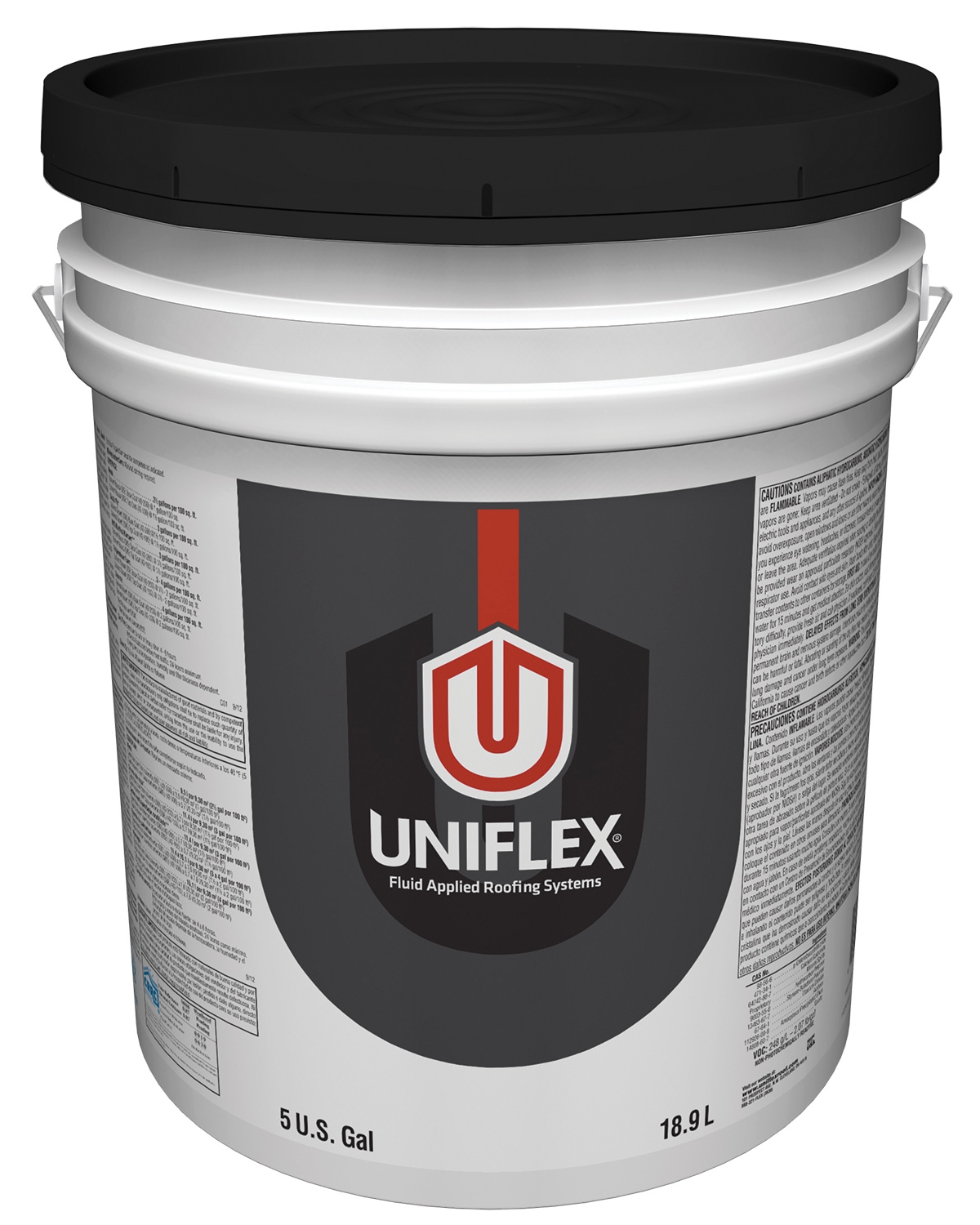
Genuine Sherwin-Williams Uniflex
The materials, on the shelf
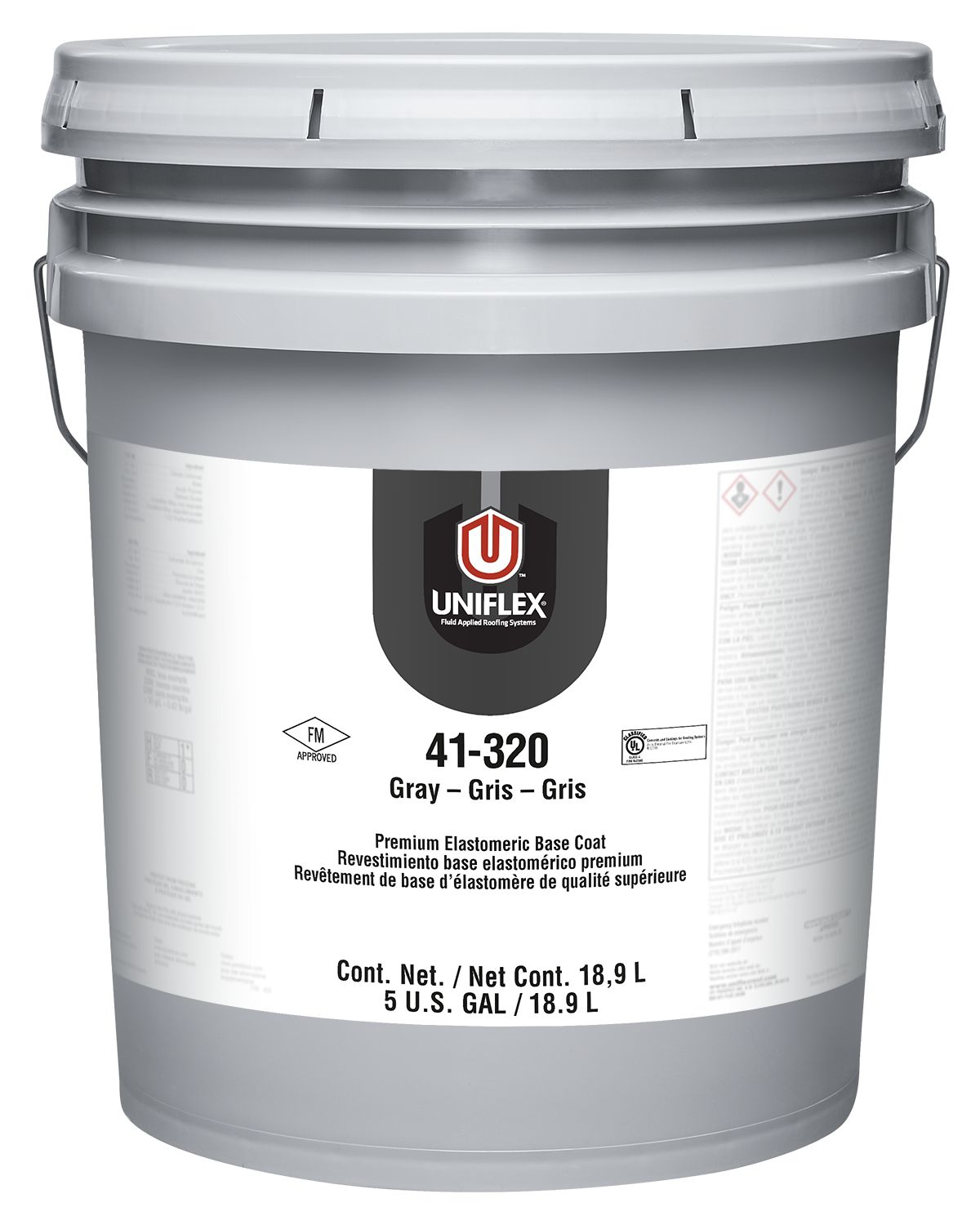
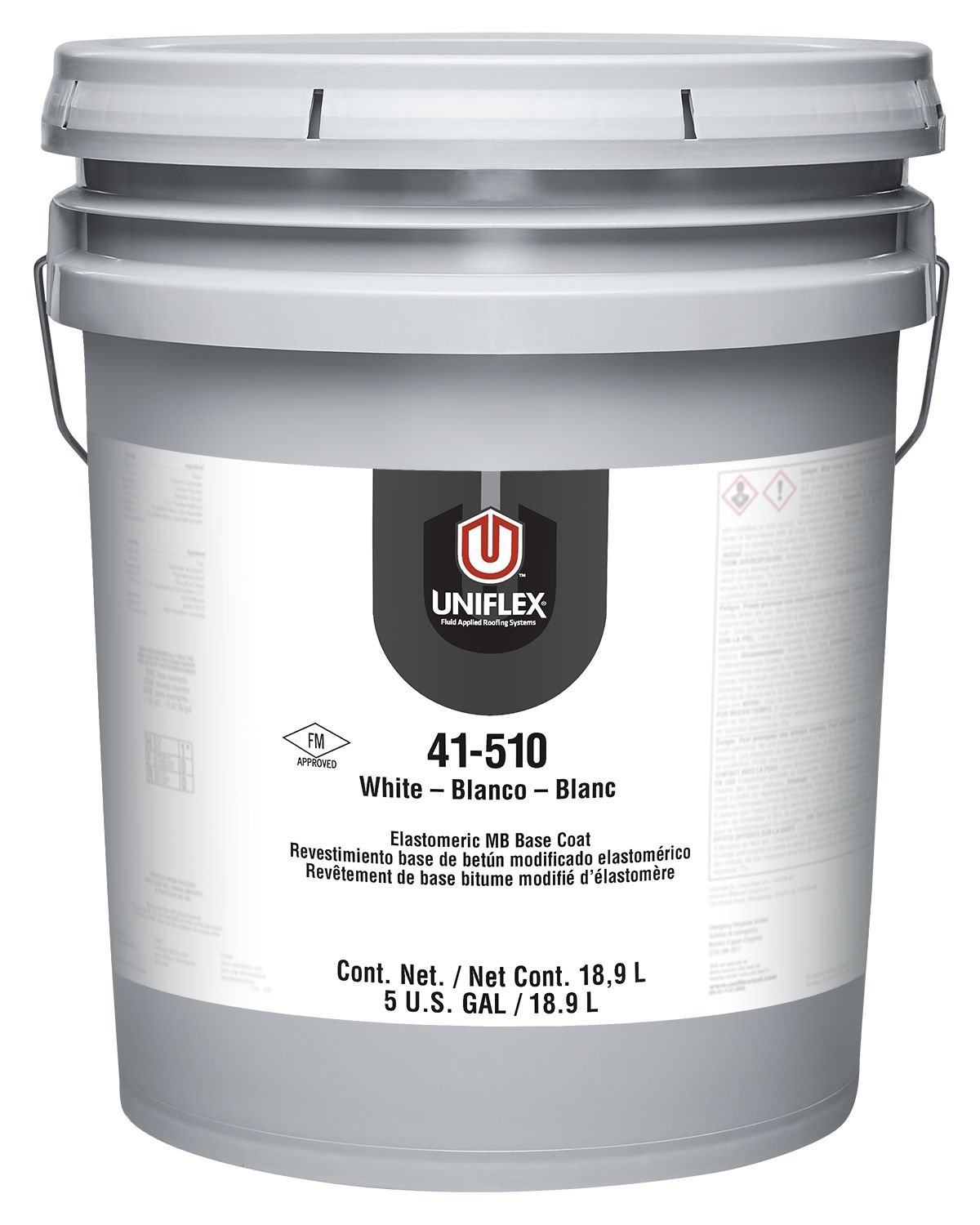
The acrylic and silicone finish coats and the base coats at the core of the build-ups above, each listed under its Sherwin-Williams part number.
Who does what
What we do, and what we do not
CoatYard is an authorized reseller of the Sherwin-Williams Uniflex roofing line. Here is where our part starts and where it stops.
-
We arrange the scan
A drone moisture scan for commercial low-slope roofs anywhere in the US, flown only with the owner's written go-ahead: a map of what looks wet, video from the flight and a written assessment.
-
We supply the materials
Genuine Sherwin-Williams Uniflex in the maker's sealed packaging, in stock by the pail, the drum and the tote, with the right build-up for each roof type.
1–3 business days Ship time, stocked items
-
We introduce an installer
We work with a network of installers, roofing contractors who apply these systems, and can introduce you to one anywhere in the US, who looks at the roof and says whether it is a good candidate.
-
We do not apply coatings
We never do the roofing work ourselves, and we do not issue system warranties: any system warranty is Sherwin-Williams', under its own terms, through its authorized contractors.
Questions
The questions owners ask first
How long does a commercial roof restoration last?
What does commercial roof restoration cost per square foot?
Does a roof restoration come with a warranty?
Does the building have to close while the roof is restored?
What if the scan flags areas that look wet?
Which roofs cannot be restored?
Who applies the coating?
Can a roof restoration be treated as maintenance for tax?
Guides
Read further before you budget
The longer reads behind the sections above.
- Restore or replace: how to tell whether a roof can be coated
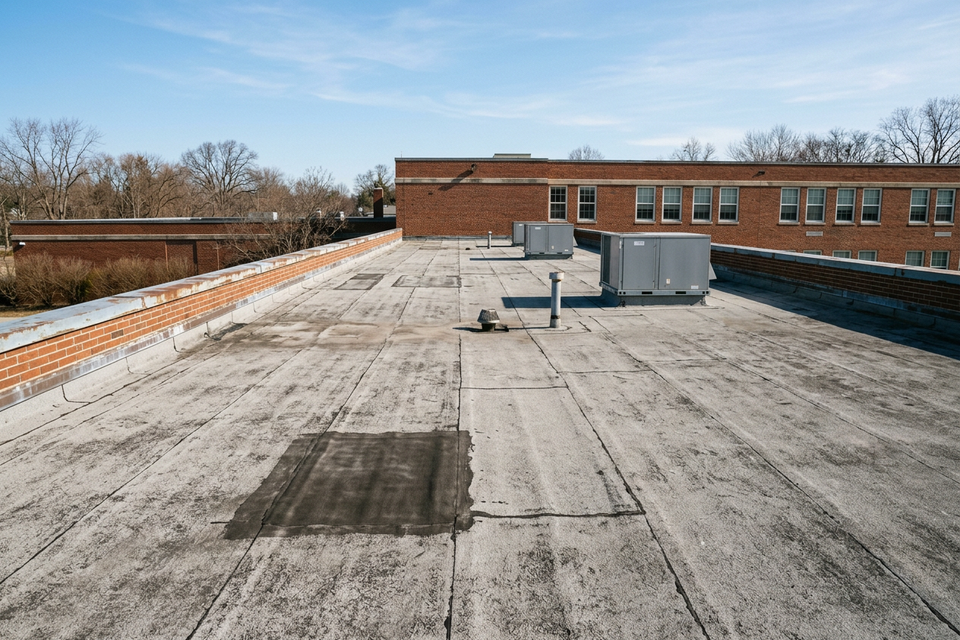
What makes a low-slope roof a candidate for a fluid-applied restoration, what rules it out, and the survey, cores and test patch that settle it.
- Coating, recover or replacement: three ways to renew a flat roof
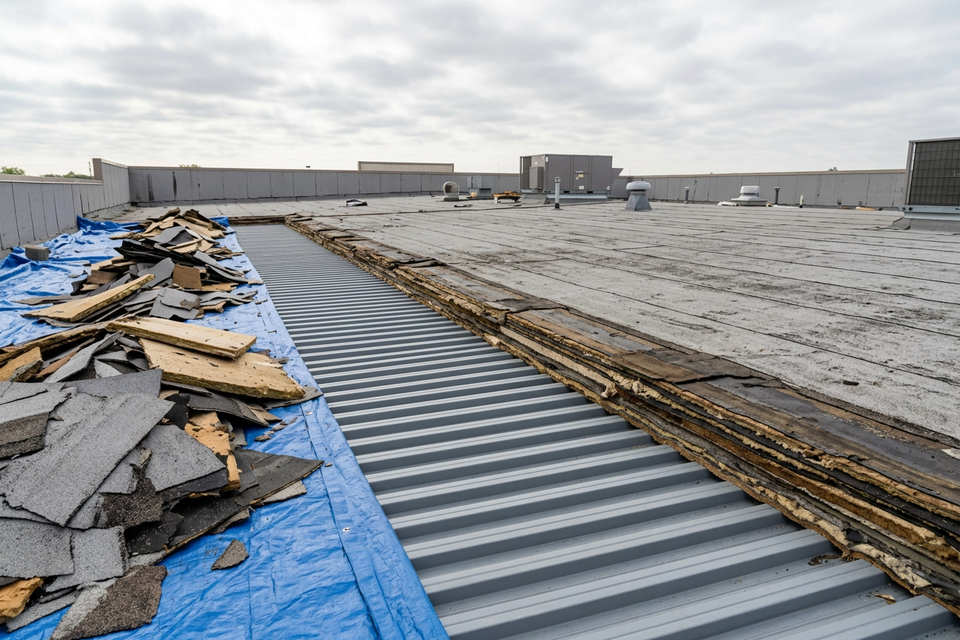
How a coating restoration, a recover and a tear-off compare on fit, cost, code and wet insulation, and how a moisture survey, cores and the deck pick one.
- How long a roof coating lasts, and what decides it
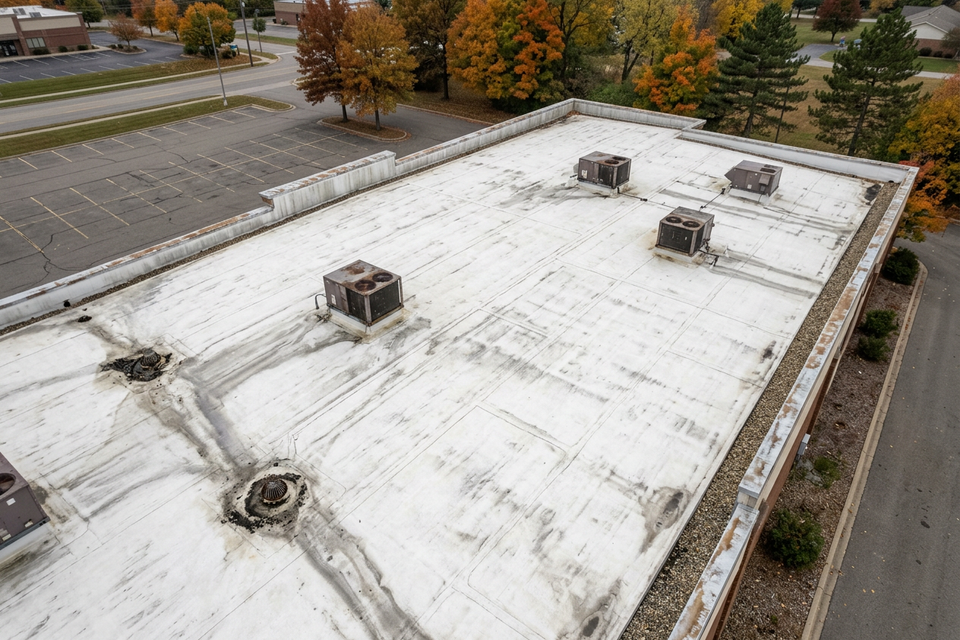
Six things decide how long a roof coating lasts: the roof underneath, film thickness, adhesion, drainage, details and upkeep. Here is what to ask about each.
- What a commercial roof coating costs per square foot
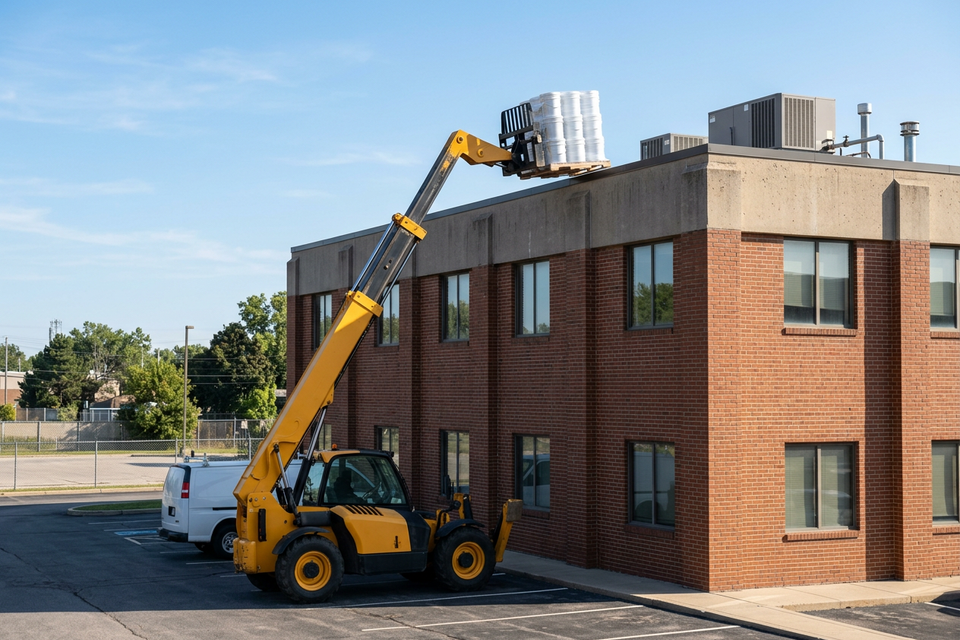
Here is what a coating restoration typically costs per square foot installed, the seven things that move the number, and how to firm it up before anyone bids.
- Silicone vs acrylic roof coatings: let the drainage decide
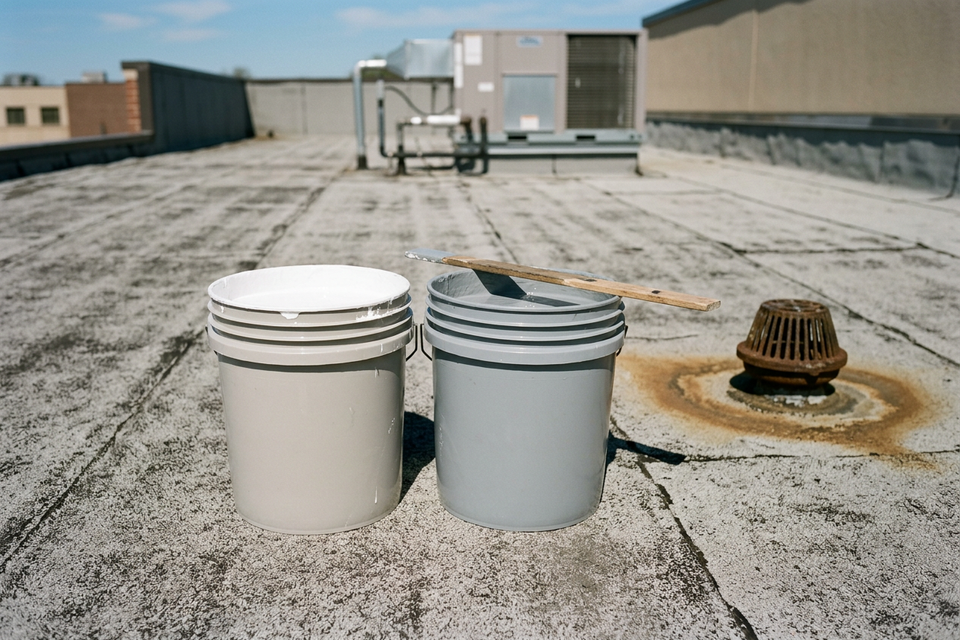
Acrylic where the roof drains, silicone where water stands: a side-by-side on ponding, sun, dirt, film build, recoating and cost, and what each commits you to.
- Why roof coatings blister, peel and fail, and how to prevent it
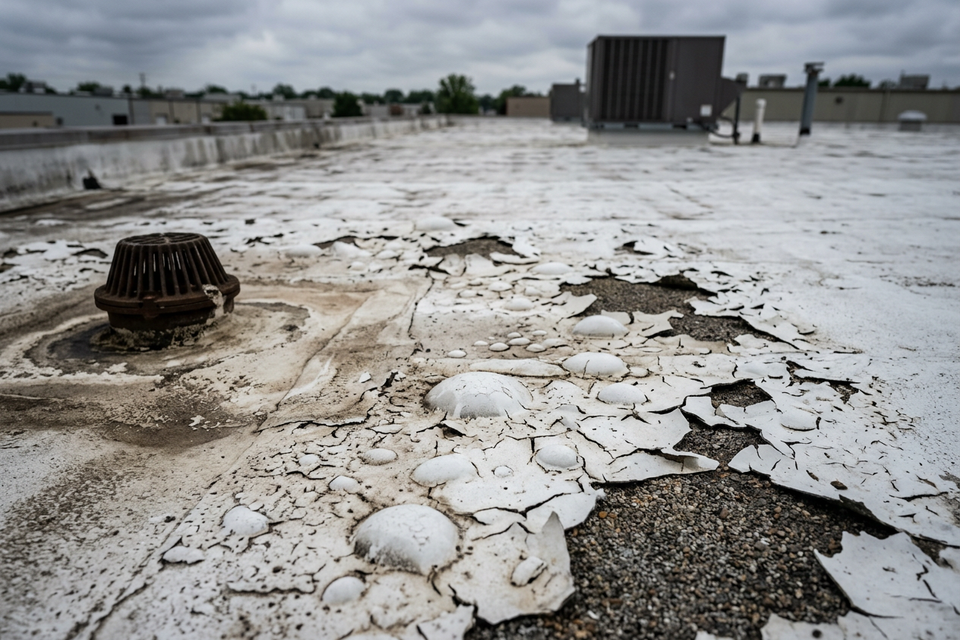
Roof coatings blister, peel and wear out early for eight known reasons, from moisture sealed under the film to skipped details. Here is what prevents each.
Know what is under the membrane before you decide
Send the building's address and we will quote the scan; the price depends on the roof's size and where it is. We arrange scans for commercial low-slope roofs anywhere in the US. You get the map, video from the flight and a written assessment; nothing has to be decided until you have seen the map.