Wet insulation in a flat roof: why it comes out before a coating
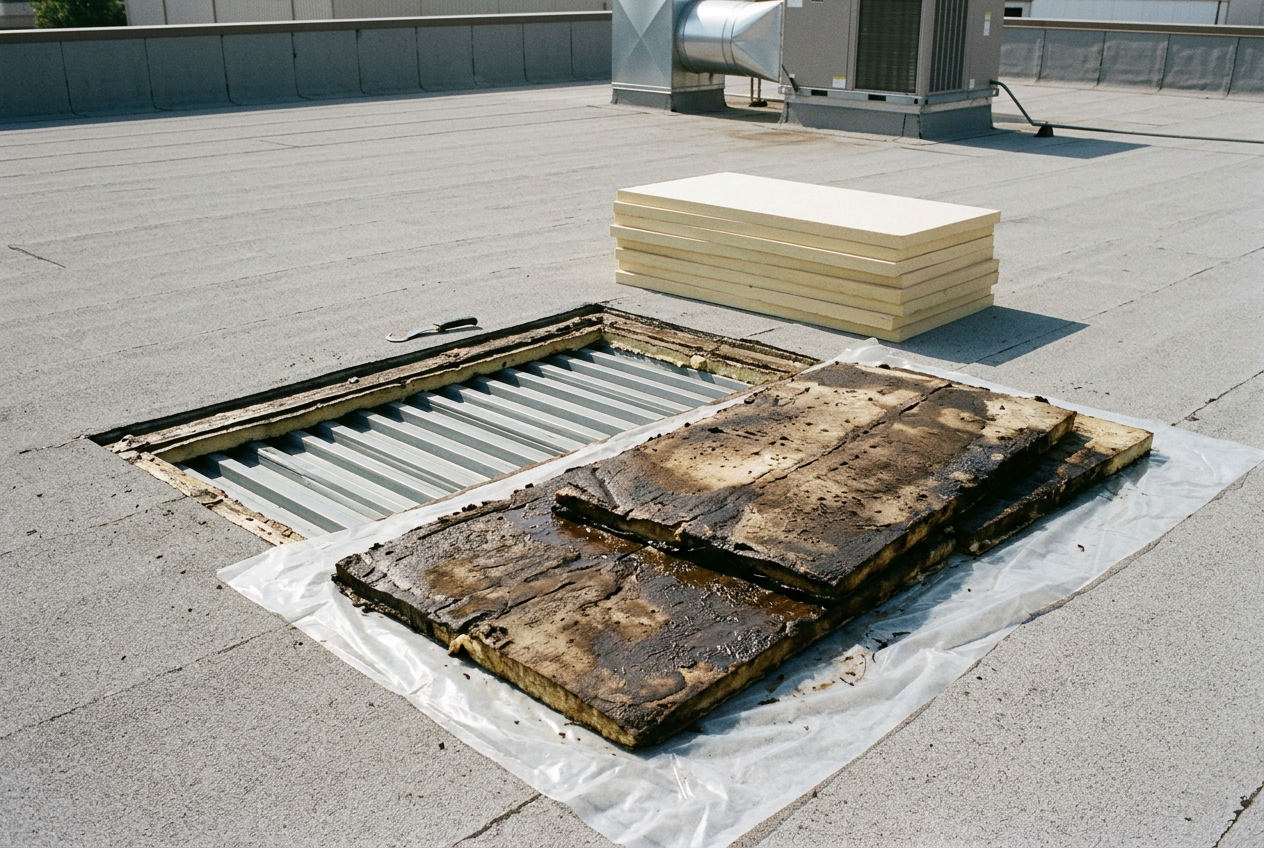
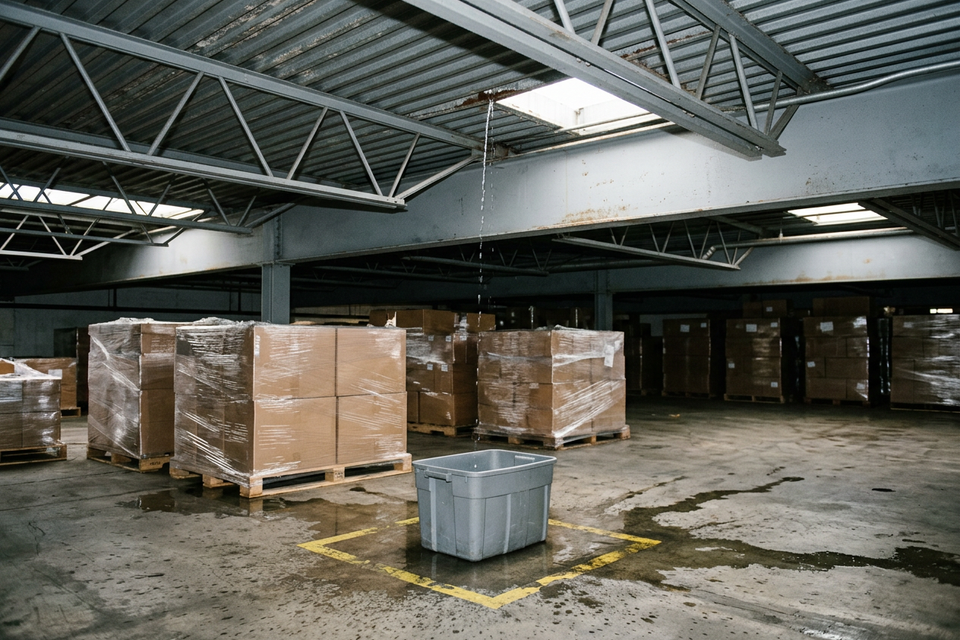
Wet insulation in a flat roof is insulation that has taken on water and cannot give it back: the membrane that keeps rain out keeps that water in. While it sits there it insulates less, keeps the deck and fasteners under it damp, adds weight, and is what the trade looks for first when a new coating blisters or lets go.
That is why it comes out first. A coating cannot dry what is under it, and coating makers, Sherwin-Williams included, require wet insulation to be found and replaced before a coating goes on. The owner’s questions are where it is, how much there is, and whether what is left is a roof worth restoring.
How insulation gets wet, and why it stays wet
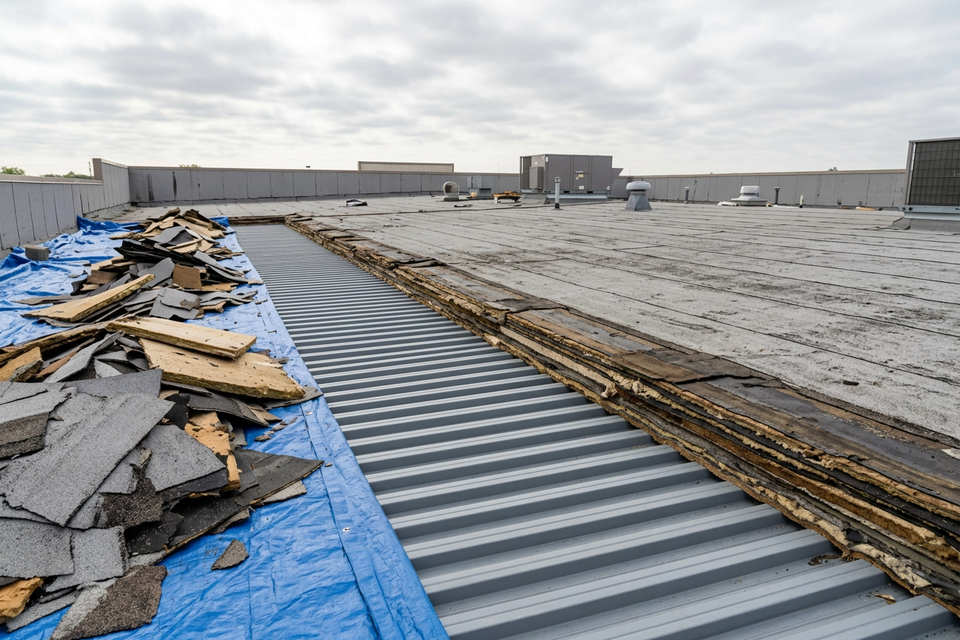
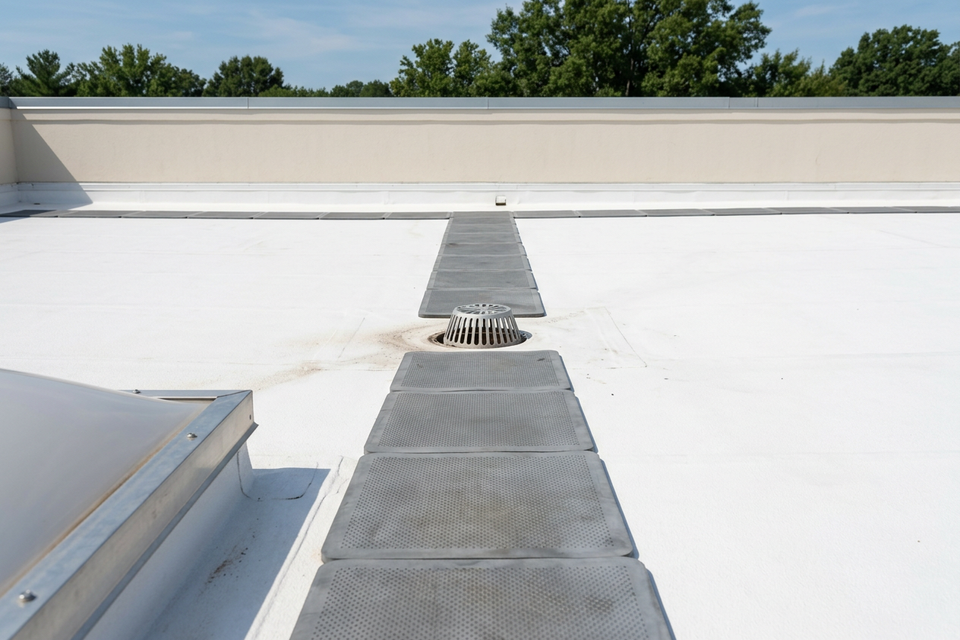
A typical low-slope commercial roof is a stack: a structural deck, rigid insulation boards, sometimes a cover board, and a membrane on top. Water reaches the insulation through the membrane: a split, an open lap, a flashing that has let go at a curb or a pipe.
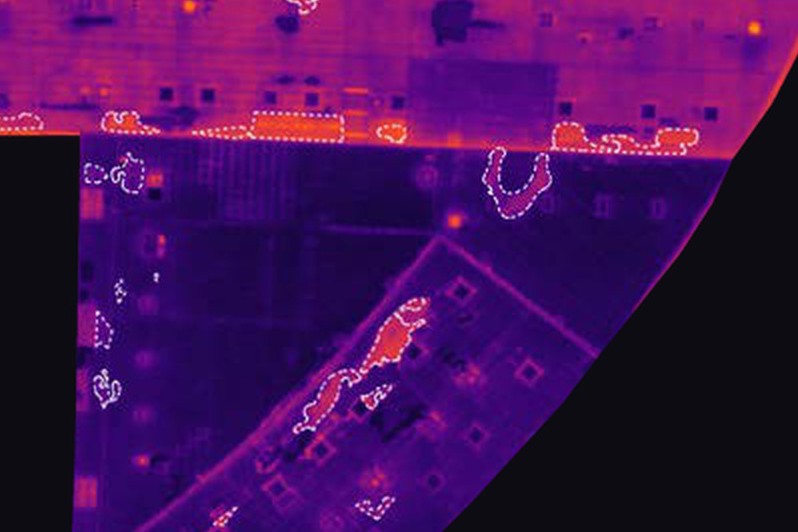
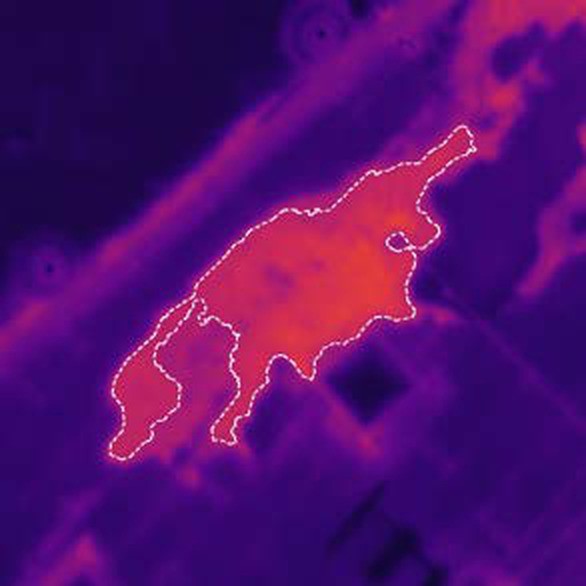
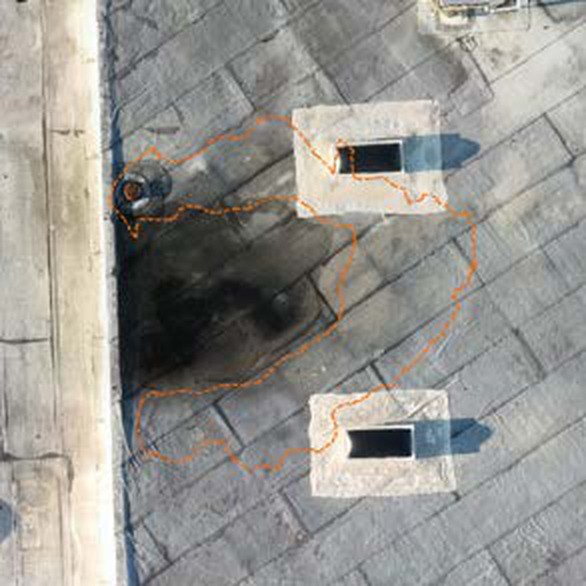
Once in, it spreads. On a thermal image wet insulation shows as an irregular blot or as rectangles that follow the layout of the boards.
Then it stays, because the membrane that kept the rain off the rest of the roof keeps this water from leaving. Repair the break and the insulation under it is still wet. A moisture survey shows where the water is now, not where it got in; finding the point of entry is separate work.
What wet insulation does
ASTM D7954, the standard practice for impedance-scanner moisture surveys, puts the stakes plainly in its public abstract: trapped moisture can lead the roof system to fail early and lowers its thermal resistance. On the roof that comes to four things.
| What it does | Why it matters | Who owns the question |
|---|---|---|
| Insulates less | Wet insulation resists heat flow less than dry | The owner |
| Keeps the deck and fasteners damp | Steel rusts and wood rots where water is held against them | The building’s engineer |
| Adds weight | Water is load the roof did not carry dry | The building’s engineer |
| Works against a new coating | Trapped moisture is the first cause the trade names for blisters and lost adhesion | The contractor and the coating maker |
Why roof coatings fail takes the last row further.
Why a coating cannot fix it
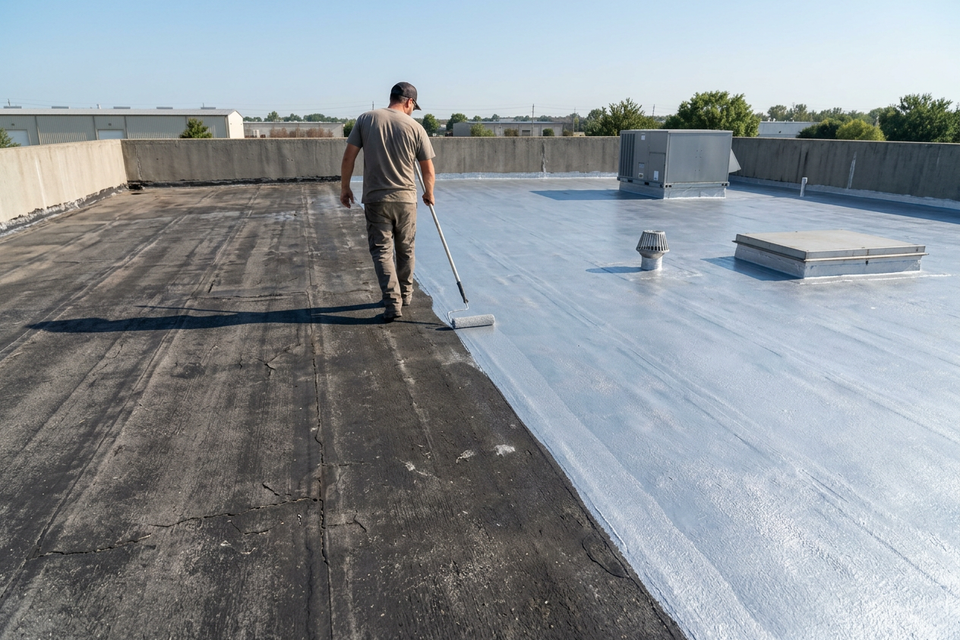
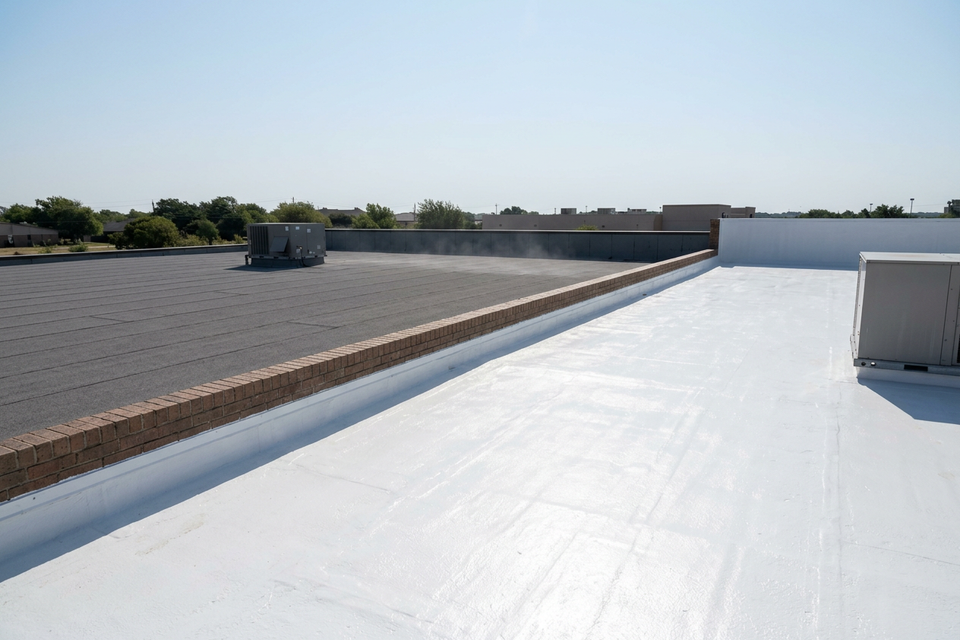
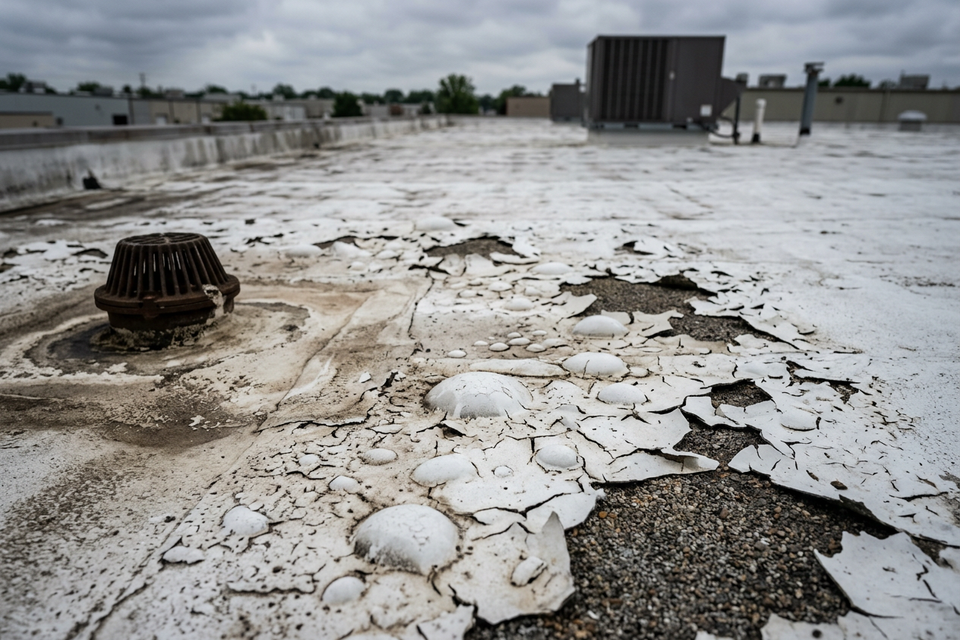
A coating is a film on top of the roof. It keeps new water out and does nothing for water already underneath. Laid over a wet area it seals the water in, and the wet spot spreads under a surface that looks finished. Applied over a sound, dry roof, a restoration system adds 10 to 15 years of service life. The word dry is there for this reason.
So the specifications put moisture first. Sherwin-Williams Uniflex guide specifications ask for every roof area to be inspected for moisture, for a roof plan that shows the wet insulation, and for wet insulation and damaged decking to be removed and replaced before coating. Other coating makers’ specifications say much the same.
How it is found: a scan, then cores
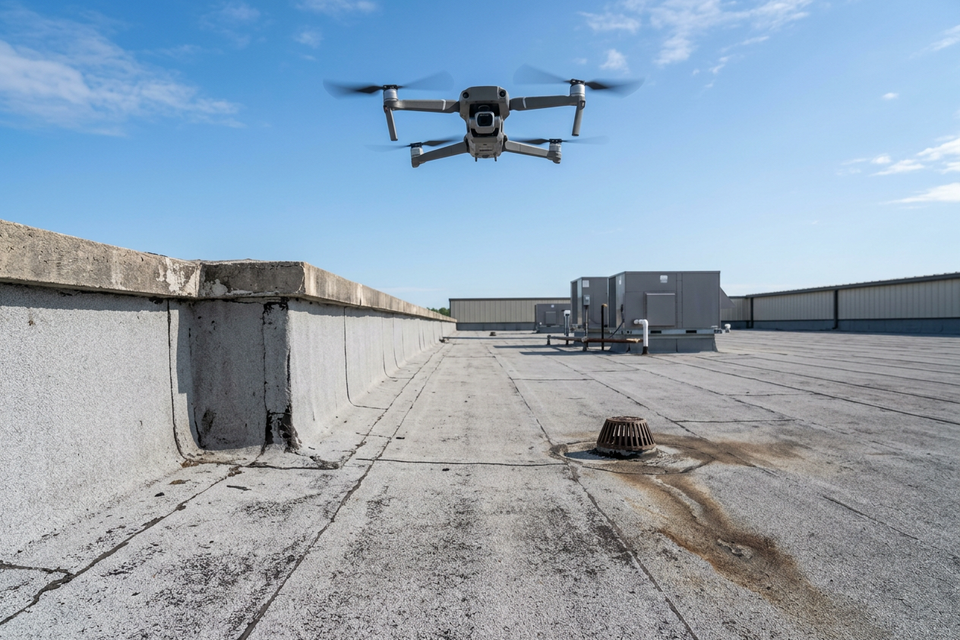
Our drone moisture scan works like this. On an evening after a sunny day, once the sun has set, a drone with a thermal camera flies over the roof. Wet insulation under the surface holds the day’s heat longer than dry insulation, so it shows up warmer on the images. You get a map of the roof with any areas that look wet outlined and measured in square feet, video from the flight and a written assessment of what the scan found; the flagged areas are then confirmed with small core samples. It usually takes one evening, nobody has to walk the whole roof, and the building runs as normal. We fly only with the owner’s go-ahead.
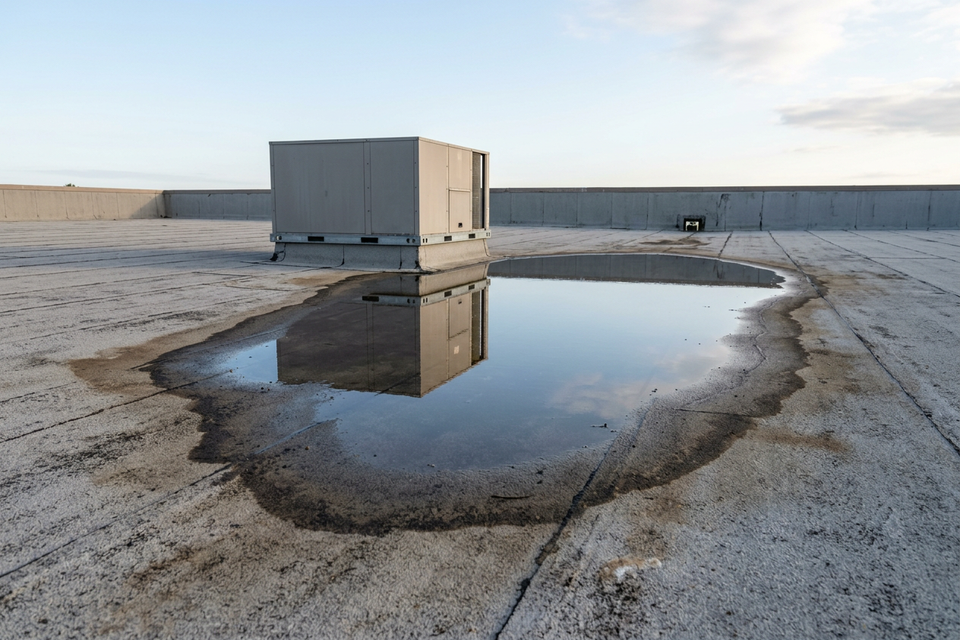
A thermal camera reads temperature, not water. Exhaust from rooftop equipment, ponded water and dirt can all read warm. So the scan marks suspects; the cores confirm them. ASTM C1153 is the standard practice for locating wet insulation with infrared imaging, and verifying the images with invasive tests is part of what it covers.
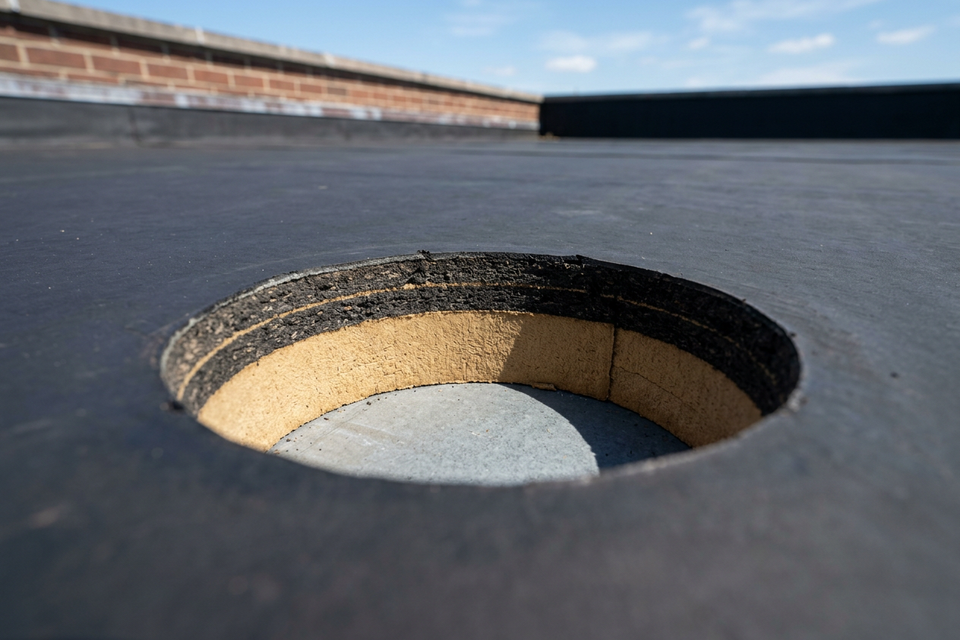
A core sample is a small cut through the assembly at a flagged area. It shows how many layers are up there, what the insulation is and how thick, and whether it is wet. Where a moisture figure is needed, the sample is weighed, dried and weighed again. Each core is patched the day it is cut; on an asphaltic roof, wet-dry roof cement KST058600 takes a repair wet or dry.
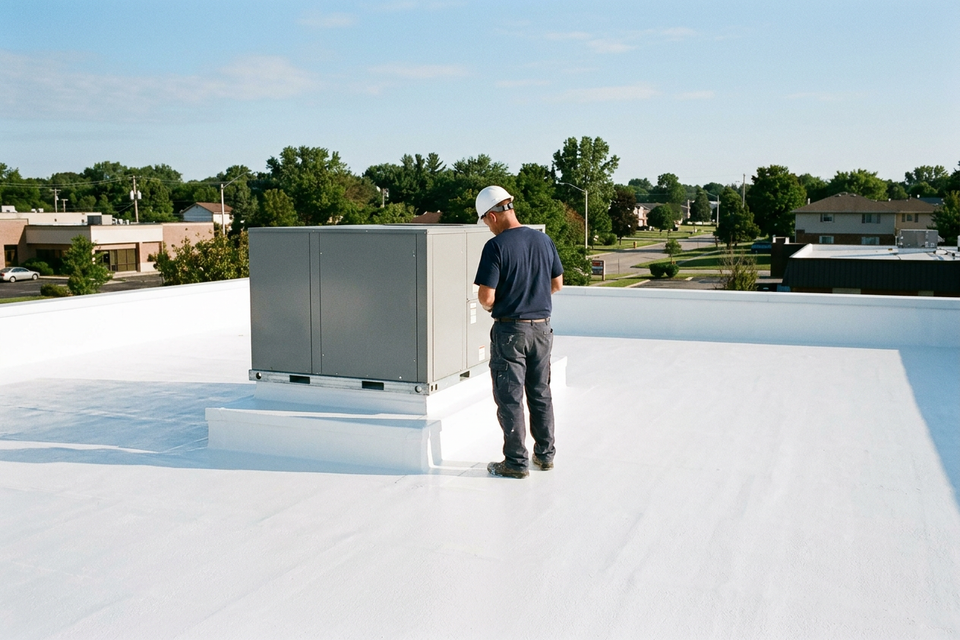
A thermal scan needs a sunny day followed by a clear, dry, calm evening, and it is the wrong tool for roofs under ballast or pavers, metal panel roofs, highly reflective or already-white-coated surfaces, and insulation that does not hold water, and a poor fit for gravel-surfaced built-up roofs. There the survey is usually done another way. A white coating also makes later thermal work harder, one more reason to scan before coating.
How much is too much
Cutting out and replacing a few wet areas is routine. The question is where routine ends. Manufacturers commonly draw the line somewhere between 15% and 30% of the roof area. Those are rules of thumb, not a standard, and they differ by source. Past that line, once the cores have confirmed it, cut-and-replace stops being a repair line and becomes a replacement.
The arithmetic runs like this. Restoring a low-slope roof with a coating system typically runs $3.50 to $7 per square foot installed. Tearing it off and replacing it typically runs $10 to $18. Both are typical installed ranges drawn from published industry figures, not a quote; the roof’s condition, how much wet insulation has to come out, access and region all move the number. Every square foot cut out is torn off and rebuilt before it is coated, so as the wet share grows the restore figure climbs toward the replace figure. Run the numbers with your own roof area.
For scale, the sample scan on this site flagged 28 areas totaling 1,929 sq ft, 3.8% of a roof of about 50,000 sq ft. Nothing in it was cored, so that is a map of suspects, not a verdict on the roof.
How wet areas come out and go back
- Cut back to dry. At each confirmed area the membrane and the wet insulation come out, and the cut keeps going until the insulation at the edge is dry and sound. A thermal outline is approximate, so the opening can end up larger or smaller than the map showed.
- Look at the deck. Damaged decking is replaced. Anything doubtful about what the deck can carry goes to the engineer.
- Replace to matching thickness. New insulation goes in level with what surrounds it, so the patch sits flush with the field.
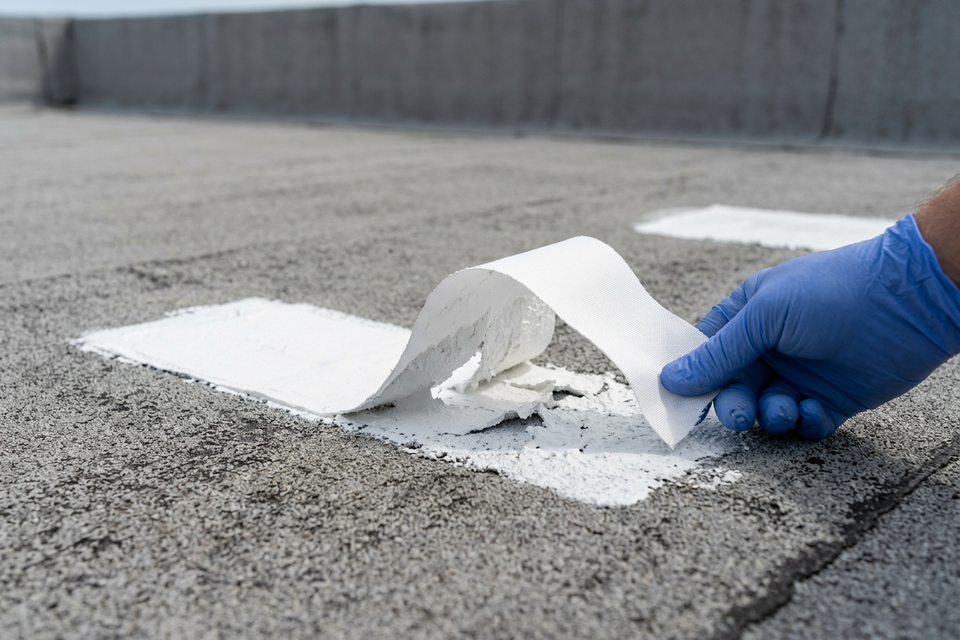
- Tie it back in. New membrane goes over the patch and is joined to the existing roof, and those joints are reinforced like every other seam before the field coats go on.
The square footage coming out and going back becomes a line on the contractor’s price; From moisture map to restoration scope shows how.
At least one coating maker’s published specification allows a moisture-relief vent instead of a cut-out where the wet area is small and only moderately wet. Sherwin-Williams Uniflex guide specifications call for wet insulation to be removed and replaced, so on a Uniflex system a vent is a question for the manufacturer’s representative, not an assumption.
Who decides
- You decide restore or replace, after the map and the cores.
- The contractor writes the scope: what is cut out, what goes back, and how. We work with a network of installers — roofing contractors who apply these systems — and can introduce you to one anywhere in the US, who looks at the roof and says whether it is a good candidate for restoration.
- The building’s engineer decides anything about the deck: what it carries, what added weight means for it, and whether a rusted or rotted section stays. Nothing here is structural advice.
- The local building department decides whether existing roofing has to come off at that address and what permits the work needs. The Florida Building Code does not let a new roof covering go over an existing roof that is water-soaked (Section 1511.3 of the 8th Edition); how that reads onto a coating is the department’s answer. See Restoring a roof in Florida.
- The manufacturer inspects the finished roof before it issues a system warranty. Sherwin-Williams offers UNIGUARD system warranties of 10 or 15 years when one of its authorized contractors applies the system. The warranty is the manufacturer’s, issued under its own terms; we supply the materials.
What to ask before anyone prices the roof
- Was the whole roof surveyed for moisture, by which method, and in what conditions?
- Which flagged areas were cored, and what did each core show?
- How many square feet are coming out, and how does the price change if the cut-outs grow or shrink once the roof is open?
- What did the deck look like under the wet areas?
- Where did the water get in, and is that repair in the scope?
The first step is finding out whether anything is wet, and where. The scan-fit tool tells you in a few questions whether a thermal scan suits your roof’s surface. Then request a moisture scan with the building’s address. We arrange scans for commercial low-slope roofs anywhere in the US. Nothing about the roof has to be decided until you have seen the map.
Last updated 2026-10-05.