
Sherwin-Williams Uniflex · EPDM, TPO, PVC and Hypalon
Restore an EPDM, TPO, PVC or Hypalon roof in place
An attached membrane over dry insulation can be coated where it lies: the preparation the membrane calls for, tape and sealant at the details, then the single-ply base coat and an acrylic finish, or Silicone44 on its own where water stands. In stock by the pail and the drum, shipped in 1–3 business days. Applied over a sound, dry roof, a restoration system adds 10 to 15 years of service life.
Condition first
A candidate has an attached membrane and dry insulation
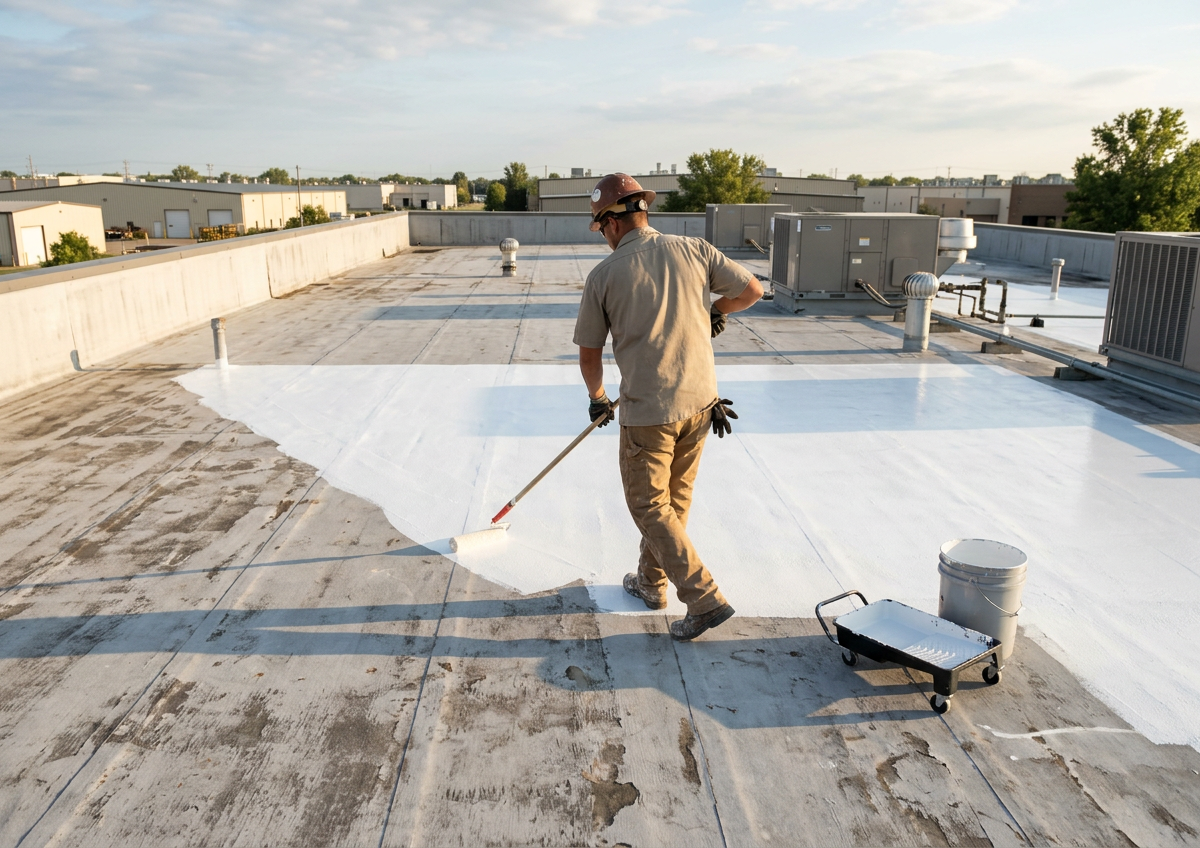
On a single-ply roof that can be restored, the wear is at the laps and the details. EPDM opens at its seams and laps, and as it shrinks it pulls at flashings, curbs and the perimeter. TPO weathers at the surface: it chalks and wears thin. Any membrane picks up punctures around rooftop units and along the paths service crews walk. Those are repairs, made one detail at a time before anything is coated. What no coating fixes is a membrane that has come loose, or wet insulation under it.
- The membrane is still attached, and the splits are at laps and details, not running through the field
- The insulation is dry. A roof with wet insulation is not a candidate until that is cut out and replaced
- The deck is sound: what it carries and why it deflects are questions for the building's engineer
- Water leaves at the drains and scuppers; where it still stands after rain, the finish changes to silicone
- PVC is coatable: Uniflex's single-ply specifications cover EPDM, TPO and PVC. Hypalon takes the acrylic system; where it holds water, send us the roof
Surveying this roof
Insulated single-ply is what the scan is for
Coating makers, Sherwin-Williams included, require wet insulation to be found and replaced before a coating goes on, and its guide specification for silicone over single-ply asks for every roof area to be inspected for moisture. A membrane can look sound while the boards under it are wet. On an evening after a sunny day, a drone with a thermal camera flies the roof; wet insulation holds the day's heat longer than dry insulation and shows warmer. You get a map, video from the flight and a written assessment, before anyone budgets for a coating or a new roof.
- Suits EPDM, TPO, PVC and Hypalon laid over insulation, on commercial low-slope roofs anywhere in the US; on a bright white membrane, tell us the surface and we will say whether a flight is worth it
- The map outlines every area that looks wet and measures it in square feet
- The scan marks suspects; the cores confirm them. Nothing has to be decided until you have seen the map
- It needs a sunny day, then a clear, dry, calm evening; we fly only with the owner's go-ahead
- On ballast, a highly reflective surface or insulation that holds no water, the survey is done another way
- Scan before you coat: a white coating makes later thermal work harder
The build-up
What goes over a single-ply roof, from the membrane up
Work from the bottom of the drawing up, details before field. Wet areas the scan flags and the cores confirm are cut out and replaced first. EPDM gets the wash primer, rinsed off; TPO, PVC and Hypalon are pressure-washed instead. On EPDM and aged TPO and PVC, bonding tape and the black MS hybrid sealant close the laps, seams and flashings; on Hypalon the butyl seam tape is the listed detail, coated the same day. Keep the brushable repair sealant KST058500 off EPDM. The single-ply base coat then covers the field and every detail, and is never left without a finish coat.
- Finish coat KST041300 Or the commercial grade KST041500
- Single-ply base coat KST041321 Base coat only: must be topcoated
- Tape KST058006 and sealant KST058310 Laps, seams and flashings; butyl tape on Hypalon
- Wash primer KST038620 EPDM only, rinsed off; others pressure-washed
- Existing EPDM, TPO, PVC or Hypalon Attached, repaired at the details
- Insulation Dry; wet sections replaced first
- Roof deck Sound
Choosing the finish coat
Acrylic where it drains, silicone where water stands
Silicone44 is the finish where water stands, but it does not fix drainage: Uniflex's silicone specifications still expect at least 1/4 in per ft of slope and working drains. The solvent-based pair does not list single-ply. Whether the deck can carry standing water is the engineer's question.
| Feature | Acrylic finish coat | Silicone44 finish coat |
|---|---|---|
| Where it goes | Roofs that drain | Where water stands after rain |
| Part numbers | KST041300, or KST041500 (commercial) | Silicone44 KST044300 (white), KST044320 (gray) |
| What goes under it | Base coat KST041321; the wash primer first on EPDM only | No base coat: the wash primer on EPDM, nothing on weathered TPO or PVC, after an adhesion test |
| Under standing water | Can peel under prolonged ponding | Made for standing water; does not fix drainage |
| Hypalon | Listed: pressure wash, then KST041321 and the finish | No Uniflex silicone document covers it: send us the roof |
| Installed cost | Toward the low end of the restore range | Toward the high end of the restore range |
Order by part number
The single-ply system, in stock
Genuine Sherwin-Williams Uniflex in the maker's sealed packaging, shipped in 1–3 business days. Priced per project. Count the laps, curbs and penetrations: they set the tape and sealant on the order. Under silicone, Uniflex details curbs and penetrations with OneFlash sealant, which we do not stock.
-
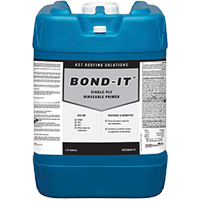
KST038620 Uniflex Bond-It wash primer
-
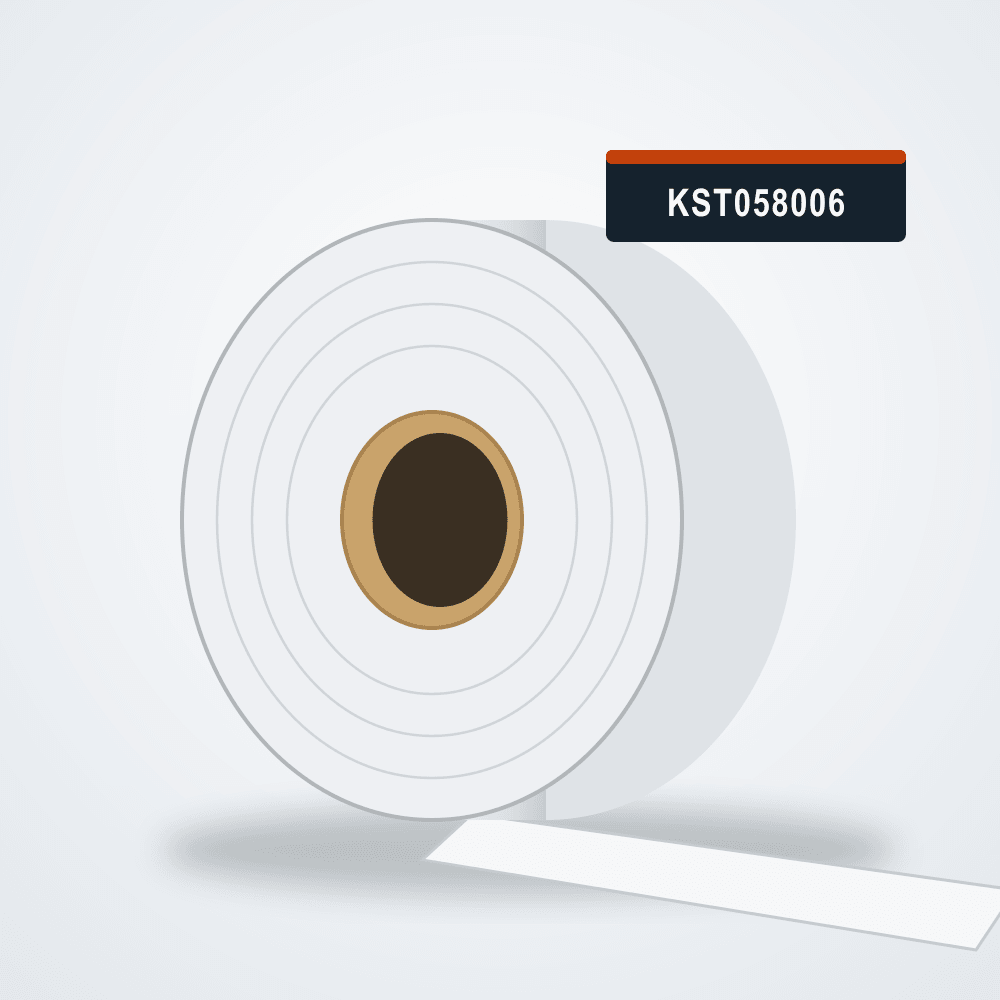
KST058006 Uniflex MS hybrid fleece-backed roof bonding tape · 6 in × 50 ft
-
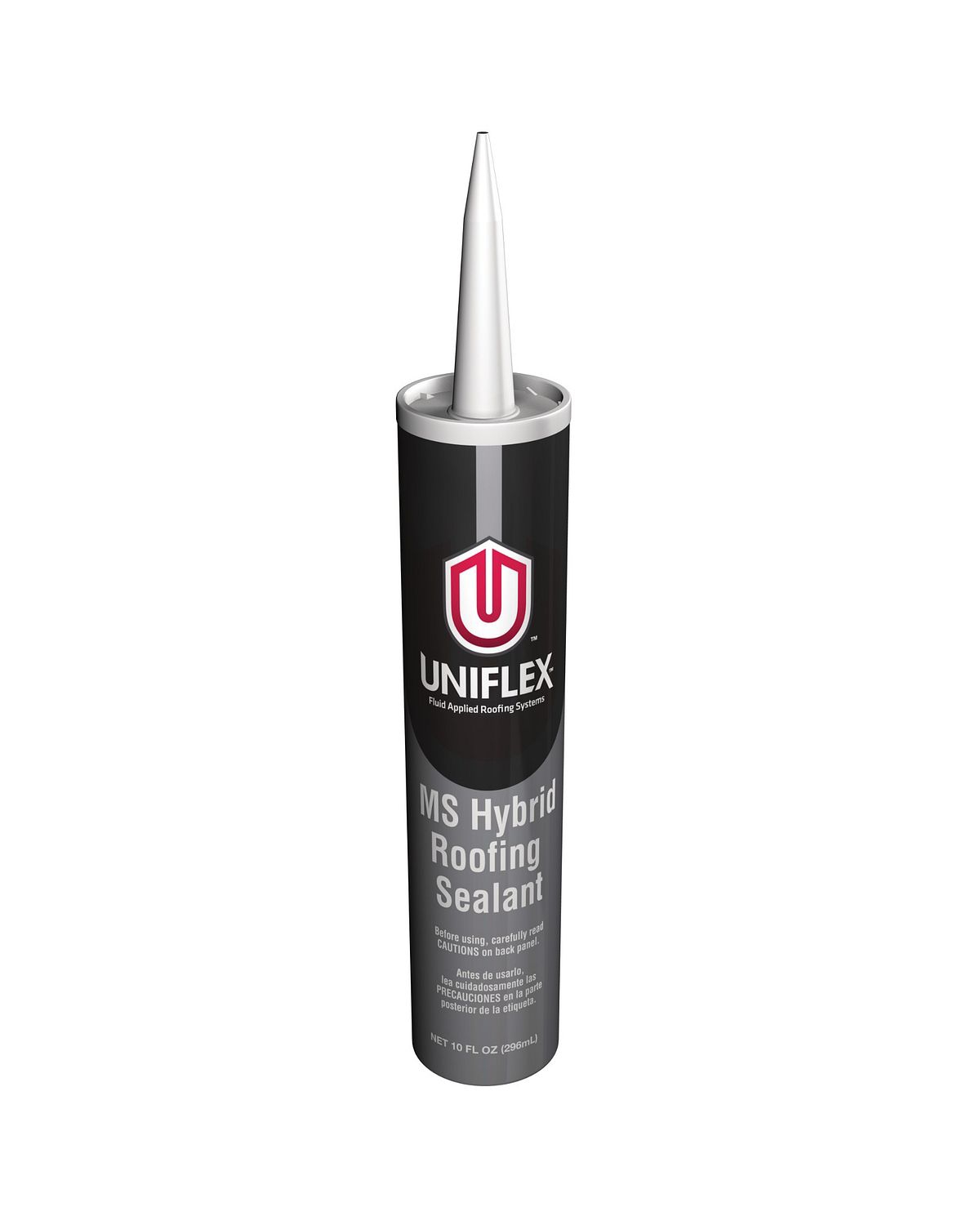
KST058310 Uniflex MS hybrid roofing sealant
-
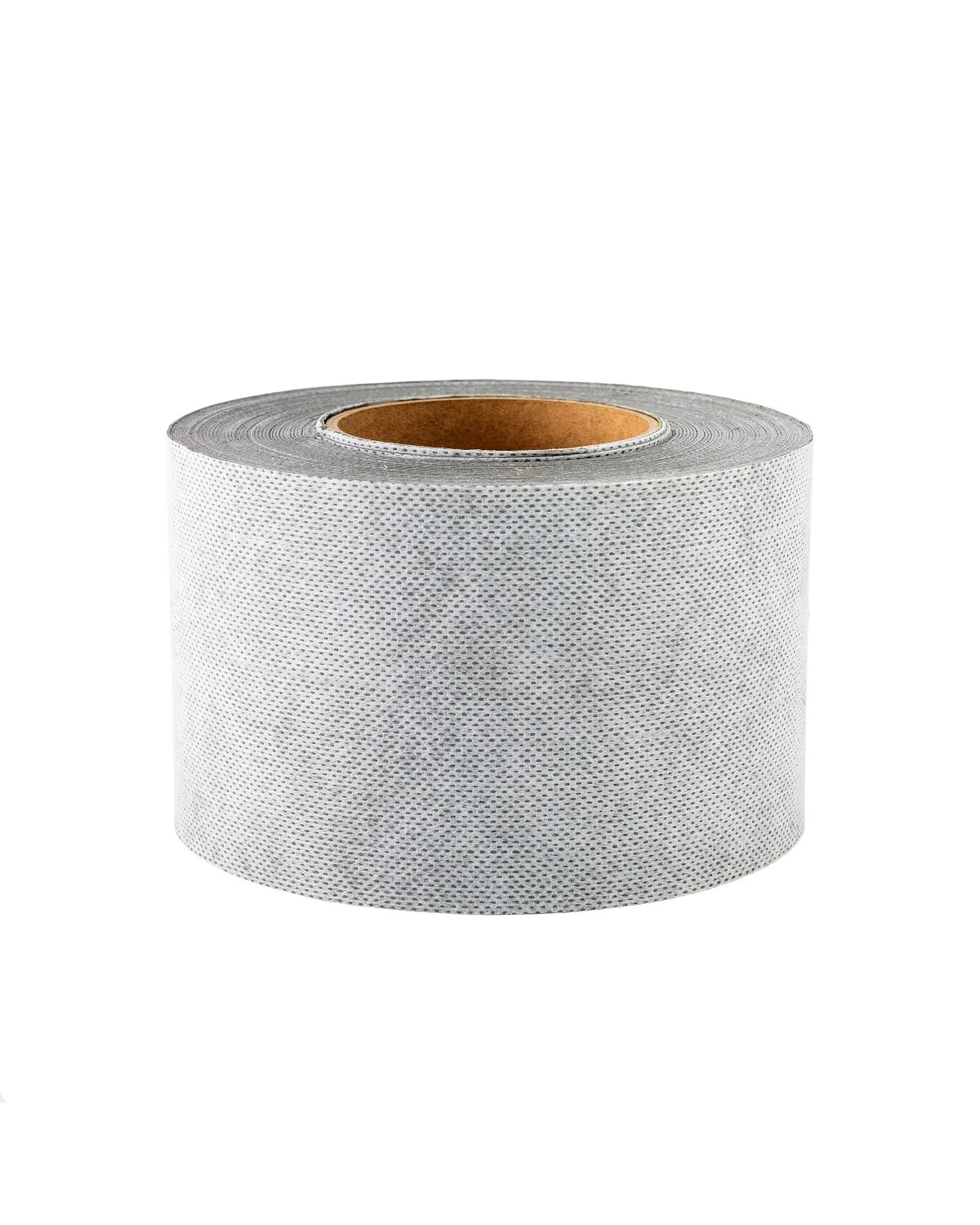
KST020804 Uniflex butyl seam tape · 4 in × 50 ft
-
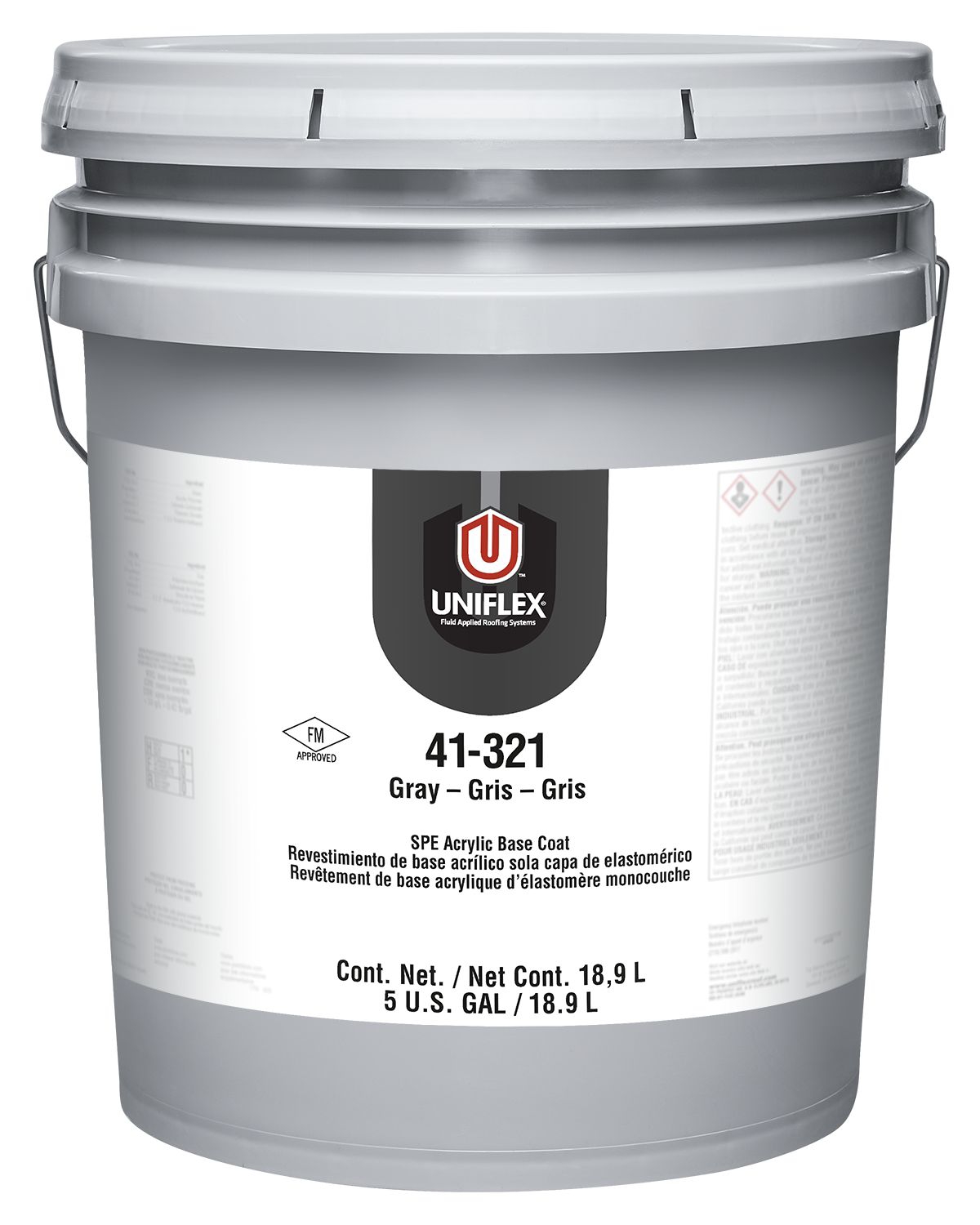
KST041321 Uniflex single-ply acrylic base coat
-
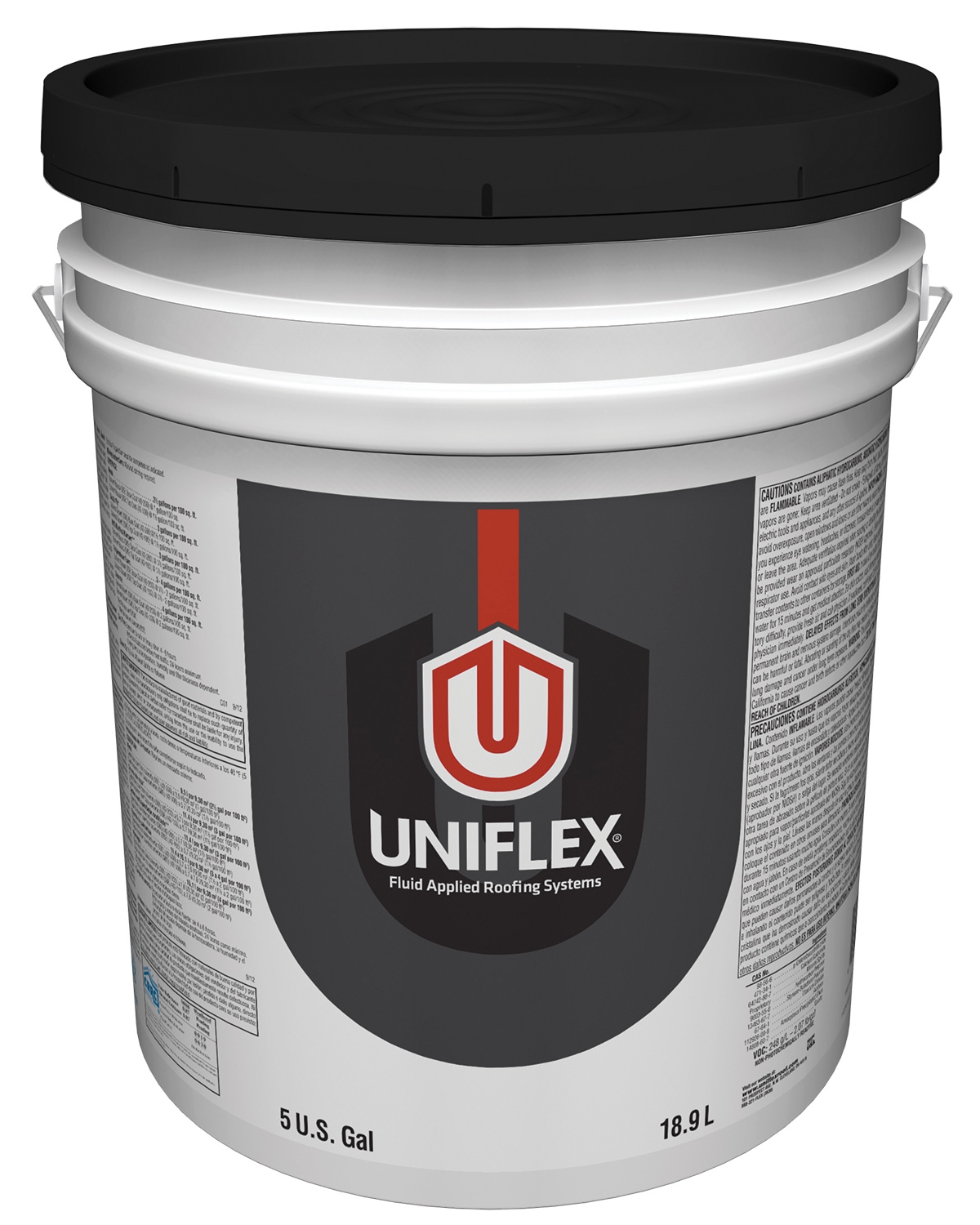
KST041300 Uniflex premium acrylic elastomeric roof coating
-
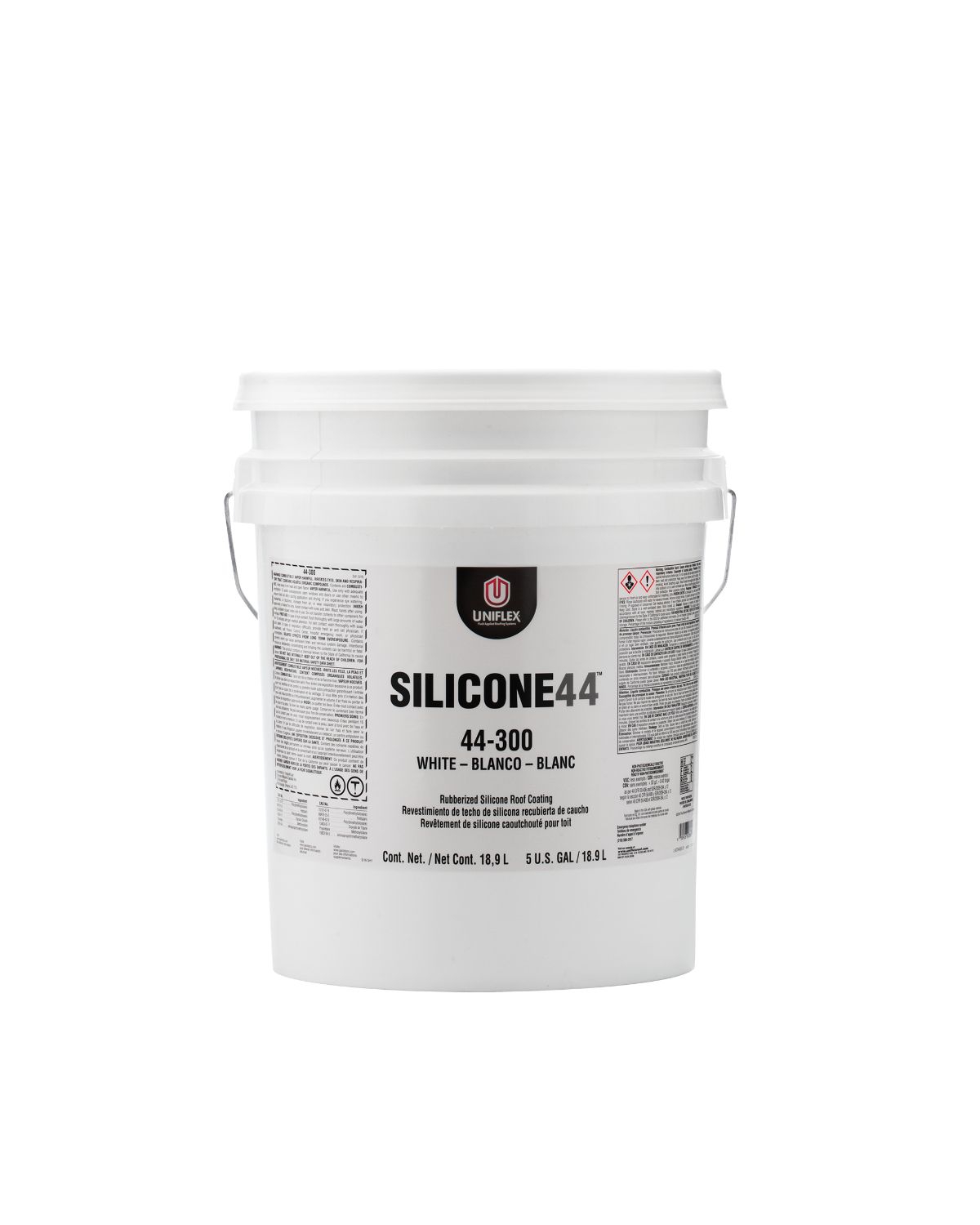
44-300 Uniflex Silicone44 rubberized silicone roof coating
-
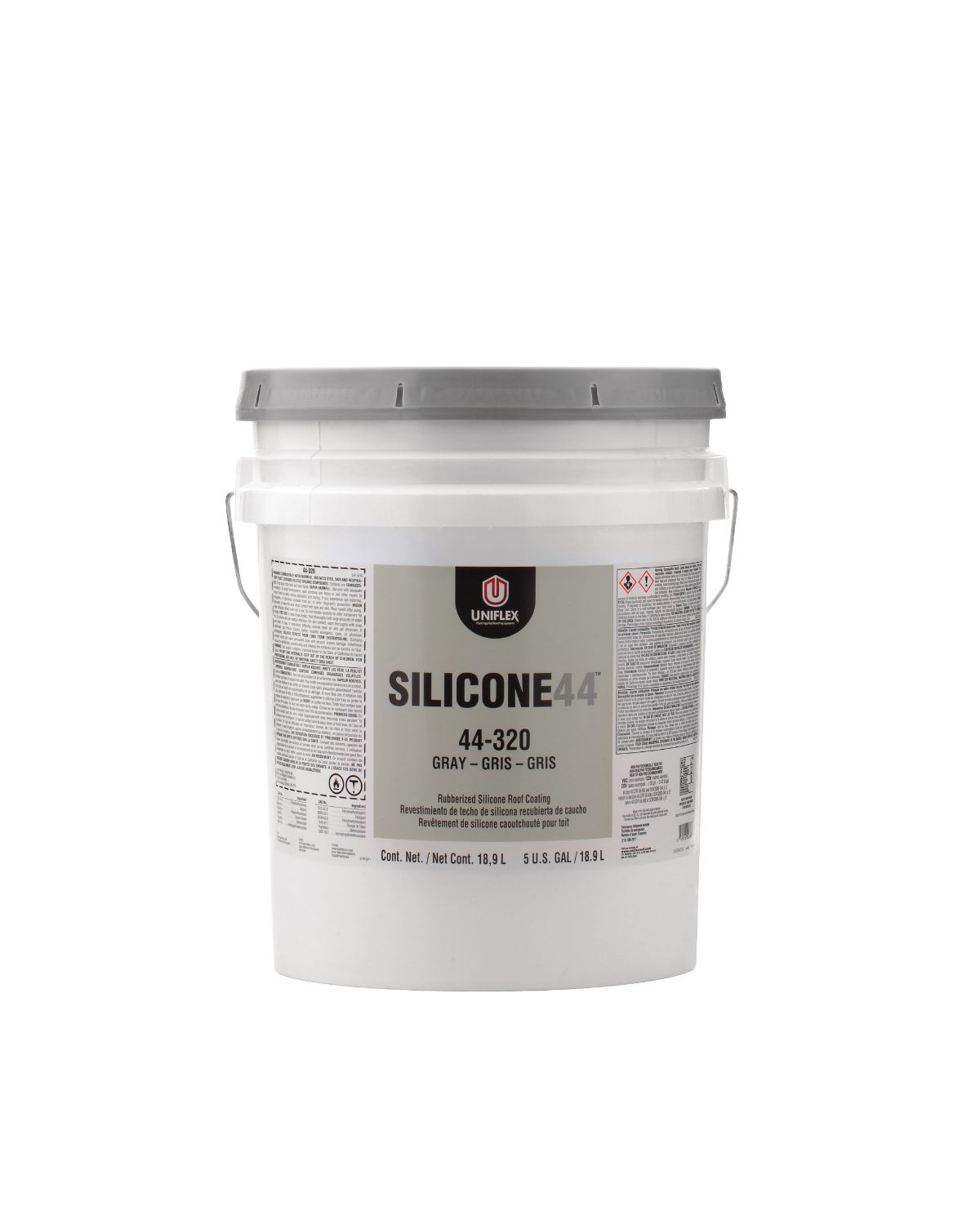
44-320 Uniflex Silicone44 rubberized silicone roof coating
Questions
Before you coat a single-ply roof
Can you coat over a TPO roof?
Do I have to prime EPDM before coating it?
What about a PVC roof?
What about a Hypalon roof?
How do we know the coating will hold on this membrane?
Will a thermal scan work on a ballasted EPDM roof?
Can the restored roof carry a manufacturer's warranty?
Who applies the system?
What does it cost against replacing the roof, and how long does it last?
Get the single-ply system counted and priced
Tell us the membrane, the area of each roof level, the linear feet of laps and flashings, the curbs and penetrations, and whether water stands anywhere. If nobody knows yet what is under the membrane, start with the scan.
We reply within one business day.