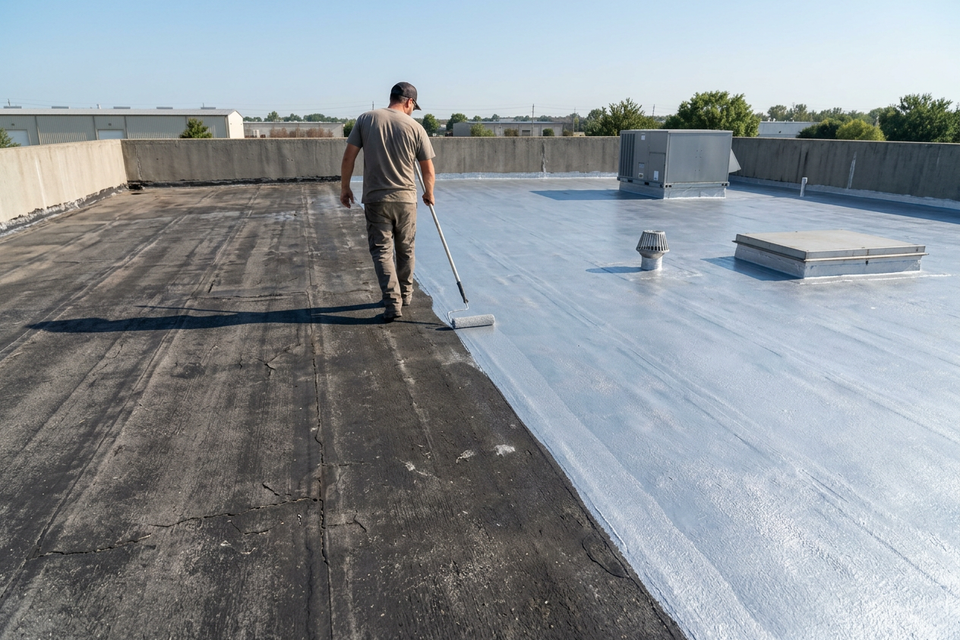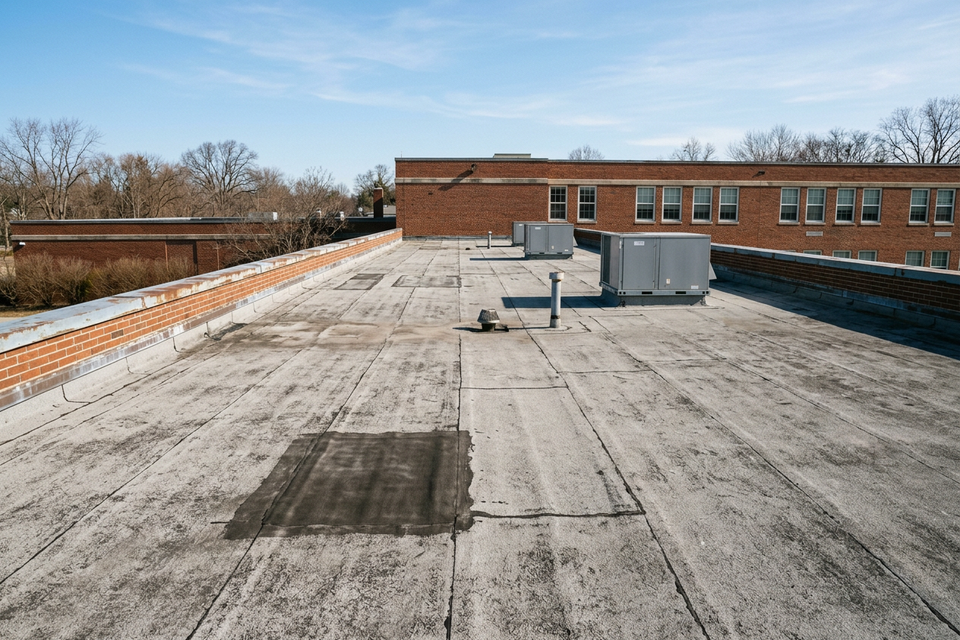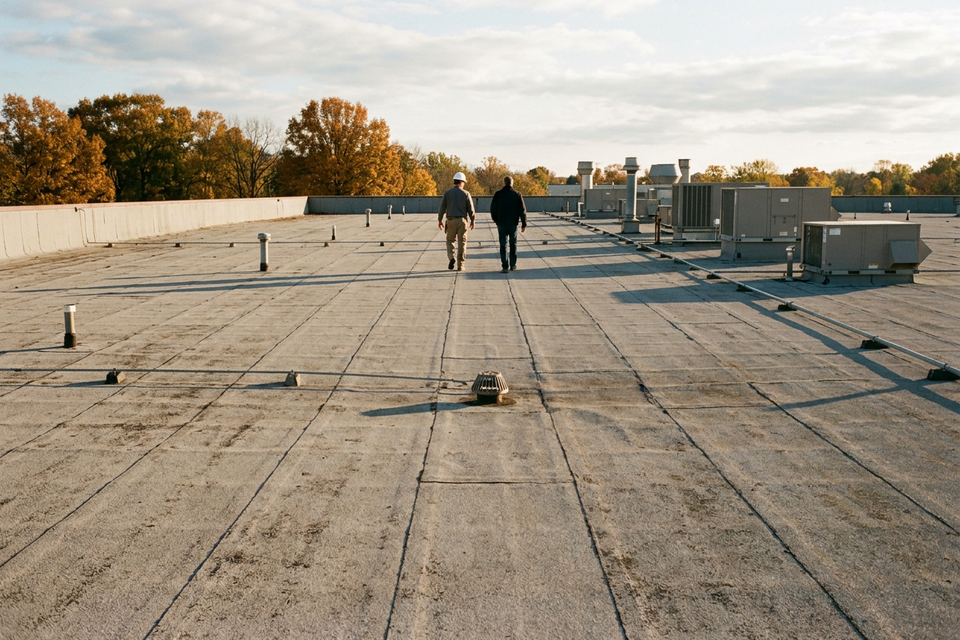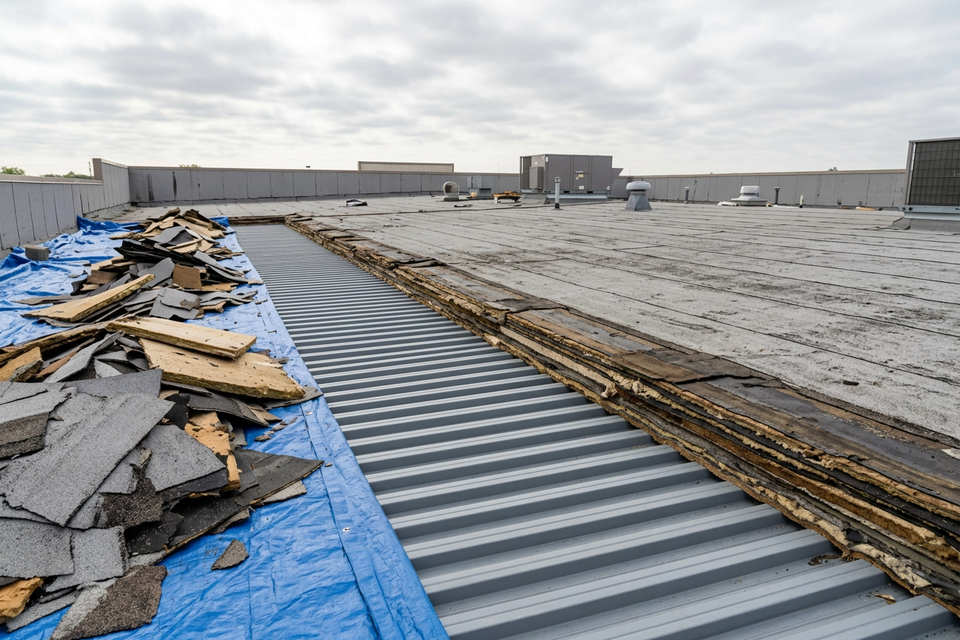
The roof coating adhesion test patch: make it, pull it, read it
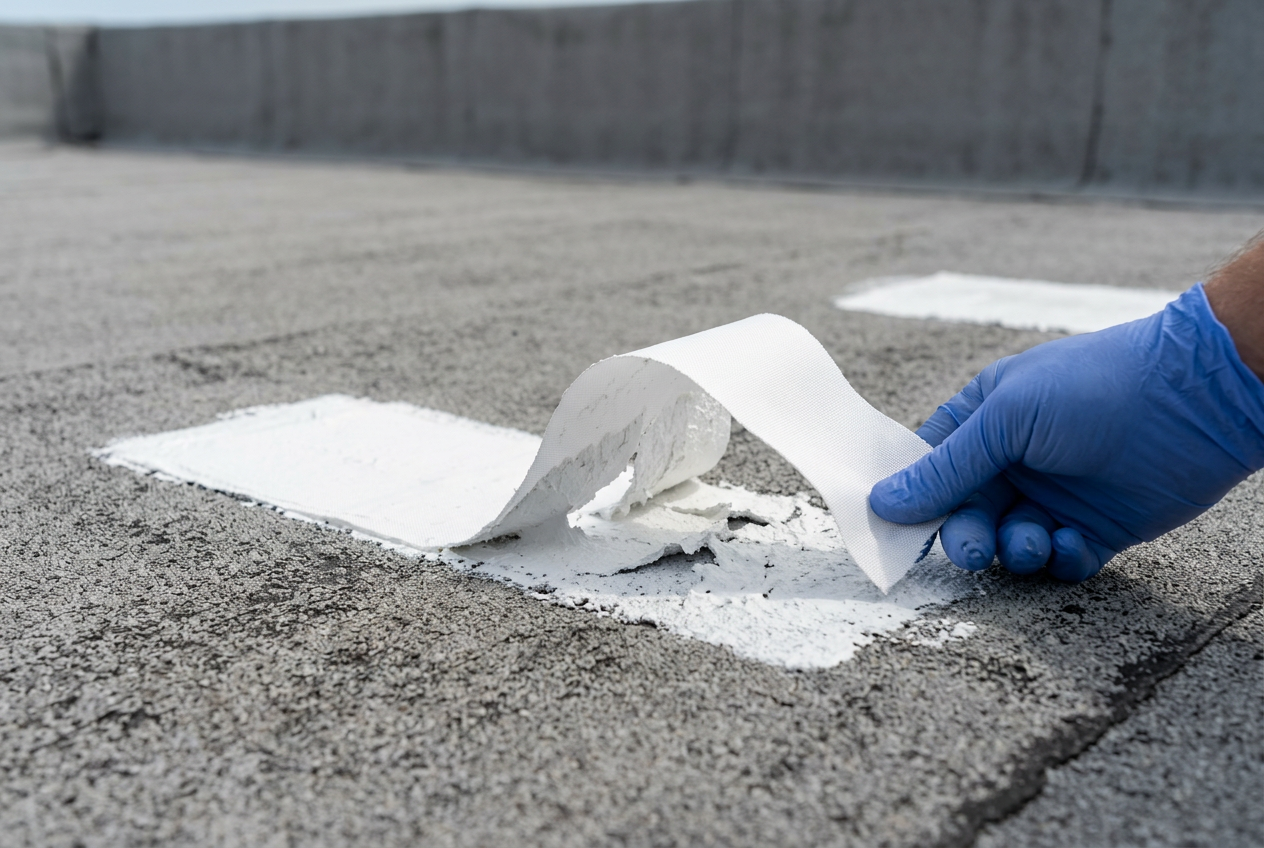
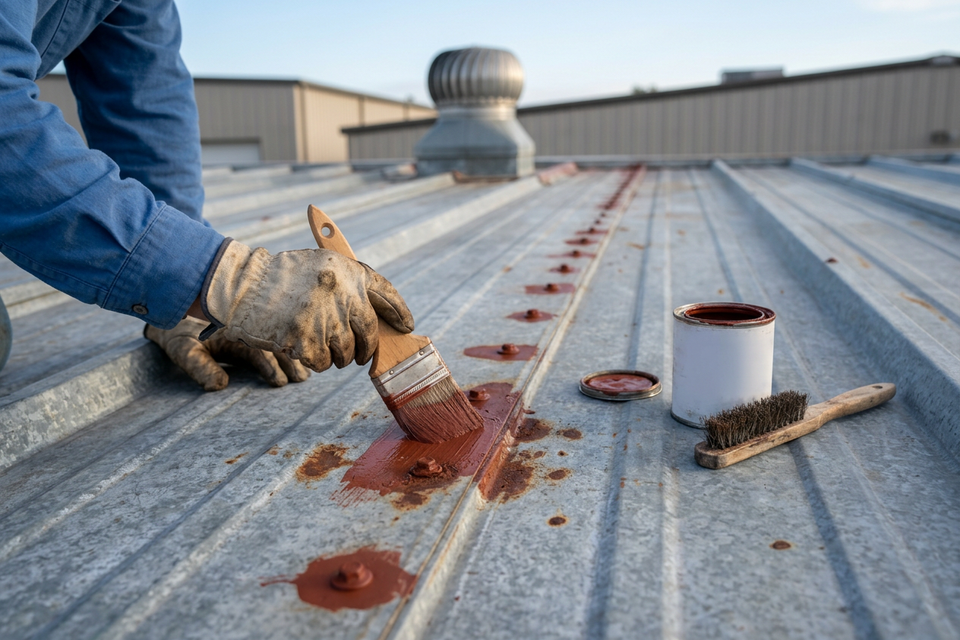
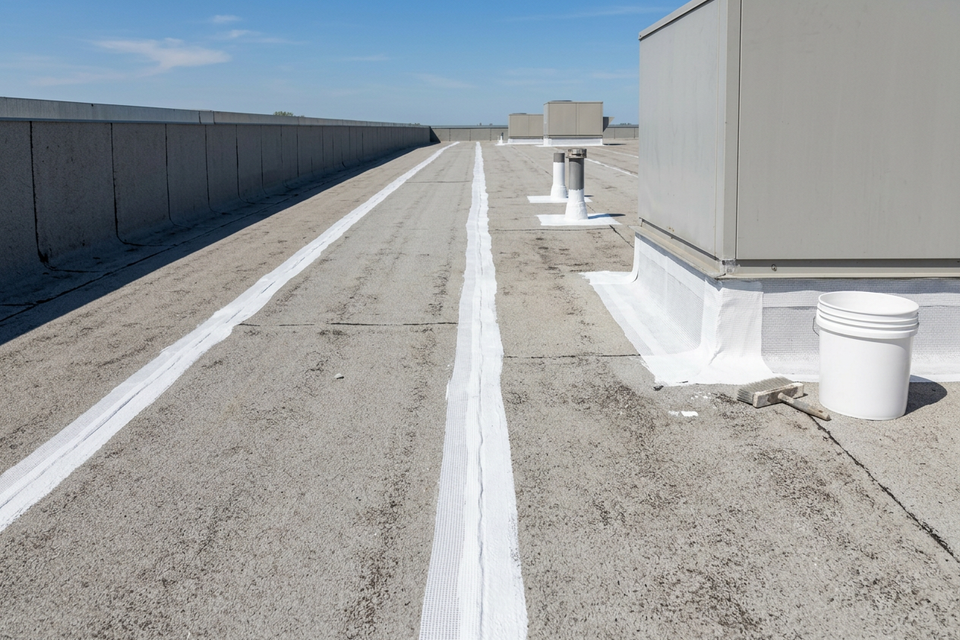
An adhesion test is a small patch of the real coating system, laid on the real roof and pulled by hand. Clean the spot the way the job will be cleaned, prime it if the system calls for a primer, bed a strip of reinforcing fabric in the first coat with one end left loose, coat over it, let it cure, then peel the strip back by that loose end. For Silicone44, Uniflex makes the test the rule on every job: a small patch of Silicone44 with a fabric strip embedded, left three days, then pulled. A data sheet says what a coating bonds to in principle; only the patch says whether it bonds to this roof.
Then read the break. Coating that tears through itself has bonded: a pass. Coating that lifts granules, fibers or old coating with it has bonded to a surface that cannot hold it as it is. A strip that comes away clean never bonded, and no finish coat on top will change that. Patch every roof section, surface condition and existing coating before the job is priced, and record each one.
Why the test exists
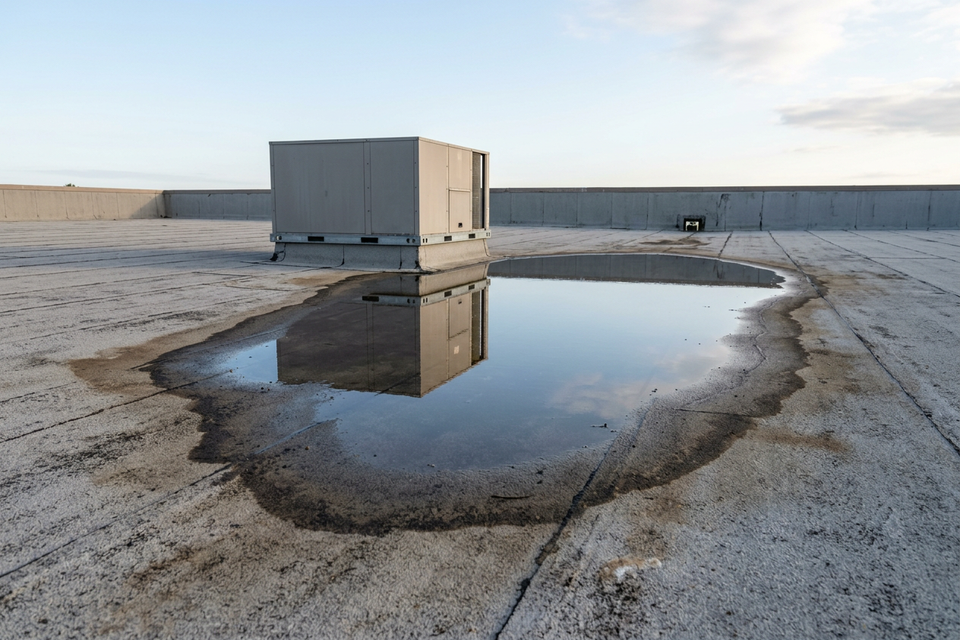
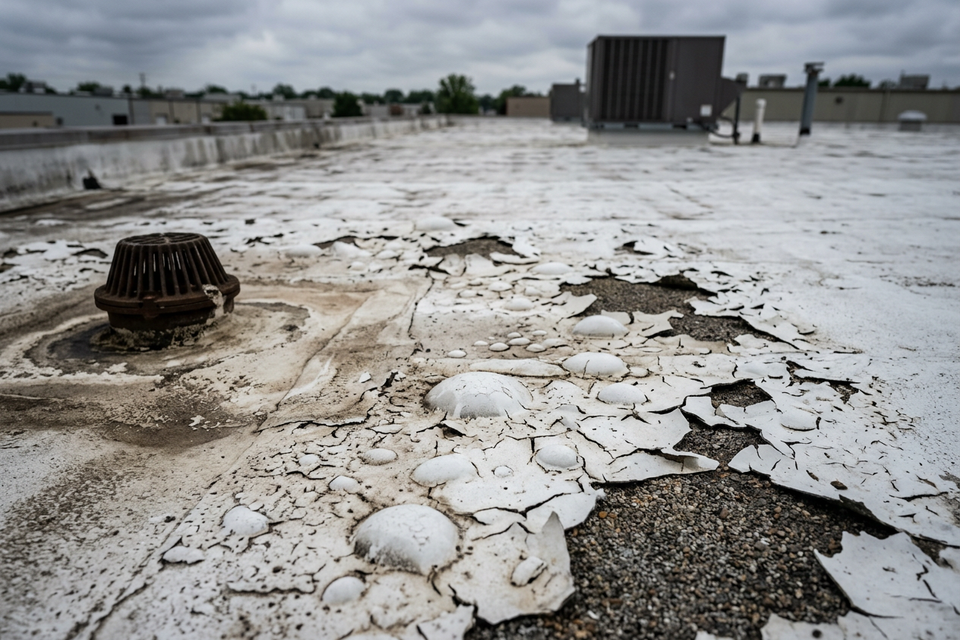
A coating bonds to the first thing it touches. If that is chalk, oil, the silt a pond leaves behind or granules that have let go of the cap sheet, the coating is bonded to something that is not bonded to the roof, and it leaves with it. An old coating is a substrate too. Cleaning takes most of that away; the patch finds out whether it took enough.
Under Silicone44 the patch also decides the primer. Uniflex looks for at least 2 lb per inch; a lower result goes to Uniflex, which names the primer for that roof. Its guide specifications ask for every substrate to be peel-tested and the results sent to the manufacturer.
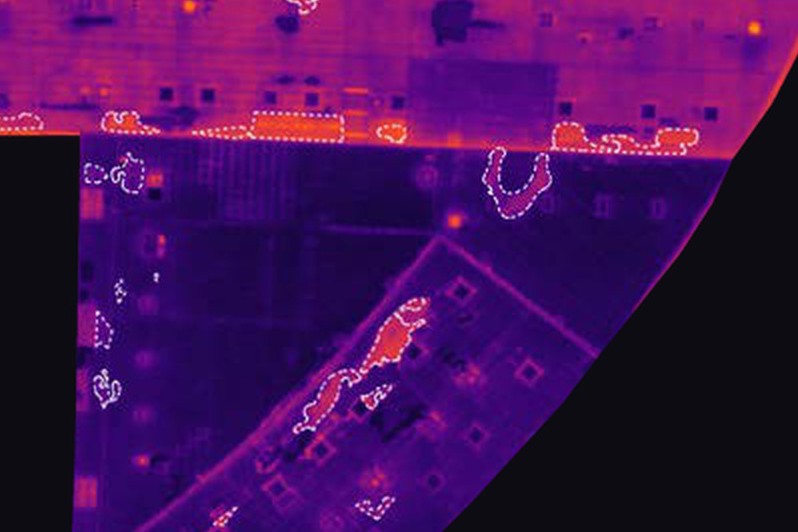
A survey and core cuts settle whether the roof is sound and dry, with the moisture scan marking suspects for the cores to confirm. The patch answers the remaining question: whether the system will hold to the surface. Can this roof be restored puts those checks in order.
Where the patches go
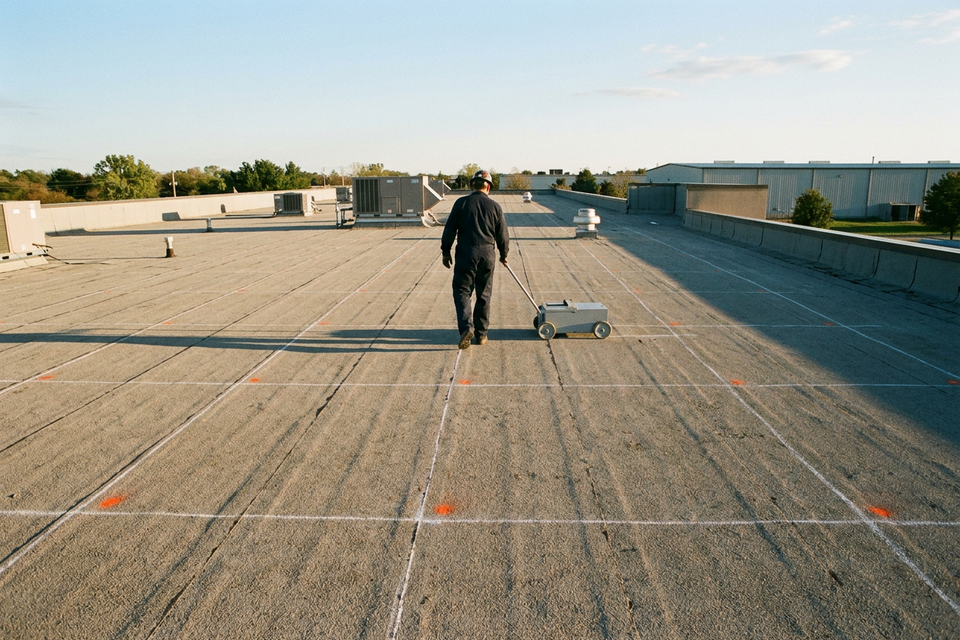
One patch on the cleanest part of the roof is not a test of the roof. Put one on:
- Each roof section: every level, every substrate, every area a past repair treated differently.
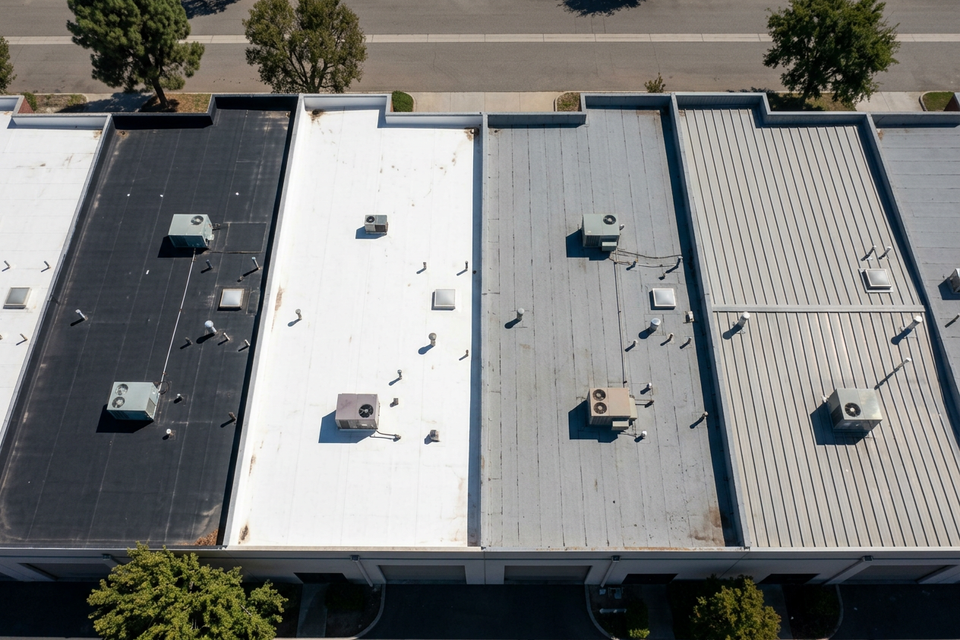
- Each surface condition: the chalked field; low areas where water stands and leaves silt; around kitchen exhausts; on metal, a sound panel and a rusted one; on a cap sheet, an area shedding granules and one that is not.
- Each existing coating: the old aluminum, the acrylic rolled over a leak, the silicone on the section done separately.
How many is the specification’s call. For Silicone44, Uniflex asks for more tests where the roof is worn, shaded, previously coated or holds water. Number each patch on the roof plan and keep it out of the walk path while it cures.
How to make one
The patch gets exactly what the field will get. A patch scrubbed by hand on a roof that will be machine-washed has tested a different roof.
- Clean as the job will clean. Pressure wash as the data sheet directs, treat rust, get the silt out of the low spots and the loose granules off the cap sheet, and let it dry.
- Prime where the system calls for it. Under an acrylic system: rust-inhibitive primer KST034520 on corroded steel, acrylic rust-inhibitive primer KST036520 on pre-finished panels, wash primer KST038620 on EPDM only (rinsed off before it dries), acrylic concrete primer KST036500 on concrete; asphaltic roofs and sound foam take none. Under Silicone44: KST034520 on rust, the wash primer on EPDM, and nothing on weathered TPO and PVC, foam, concrete or a sound existing coating; newer asphalt takes Uniflex’s Bleed Blocker Primer, which we do not stock. Primers by substrate has the full list.
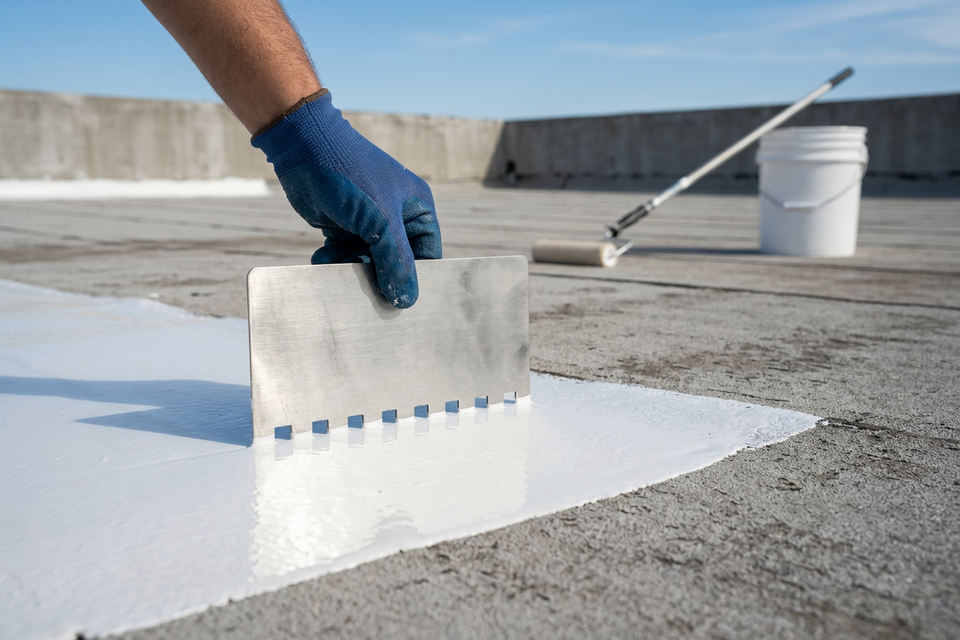
- First coat. Under an acrylic system, the base coat at the data-sheet rate: premium acrylic KST041320 on metal and concrete, commercial-grade KST041520 on sprayed foam, single-ply KST041321 on EPDM, TPO, PVC and Hypalon, elastomeric MB KST041510 on asphaltic roofs; on a solvent-based job, its base coat KST042200. Under Silicone44 there is no base coat: the first coat is Silicone44 KST044300 (white) itself.
- Bed the fabric. Work a strip of 6 in polyester reinforcing fabric KST20385A into the wet first coat until it is saturated, leaving one end dry and loose as a handle. Rolls are at Fabrics and tapes.
- Coat over it. Premium acrylic finish KST041300 where the roof drains; more Silicone44 on a silicone patch; on a solvent-based job, finish KST042100 over its base coat. Under prolonged ponding an acrylic can lose adhesion and peel (Ponding water and roof coatings).
- Cure before pulling. The data sheet sets the cure; Uniflex’s Silicone44 test waits three days. A patch pulled early tests wet coating, not the bond. Mark the date it went down and the earliest it may be pulled.
How to pull it and read the break
Grip the loose end and peel the strip back over itself, slowly. Look at its back, then at the roof. The break is in one of four places.
| Where it broke | What you see | What it means |
|---|---|---|
| In the coating | Coating torn through itself, on roof and strip | Pass. The bond is stronger than the film. |
| In the roof surface | Granules, mat fibers, foam or old coating on the strip | The bond held; the surface let go. Clean back to sound material and patch again. |
| Between two coats | Clean parting between primer and base coat, or old coating and new | Wrong or uncured primer, dirt between coats, or an old coating this chemistry will not hold to. |
| At the roof | Strip and roof both clean | Fail. The coating never bonded to this surface. |
Most strips show a mix; read the share. Coating torn along most of the strip with one clean corner sends you back to how that corner was cleaned, not to a new product. Have one person read every patch, and photograph each one, strip and roof.
Pull-off testing: the instrumented version
The hand-pulled patch shows where the break is; an instrumented pull-off test also puts a number on it. Uniflex’s silicone specification for single-ply membranes calls for field adhesion testing to ASTM D4541, so on a job built to it the hand pull is not the whole test. For Silicone44 the pass is Uniflex’s 2 lb per inch; for any other system, what counts as a pass belongs to the specification for that system on that substrate, and another maker’s figure does not transfer.
When a patch fails
A failed patch has found on a few square feet what the field would have found across the roof. Three answers, in order.
- Clean harder. Suspect the surface first: chalk, oil, silt or a film the wash did not lift. Change the cleaning, not just the effort: a second wash where silt sat, rust treated rather than rinsed, mildew treated as the data sheet directs. Patch, cure and pull again.
- Change the primer. If a clean patch still releases, add the primer the data sheet lists for the substrate, or switch primers where it offers a choice; under Silicone44, the result goes to Uniflex, which names the primer. An existing coating is its own case: Silicone44 goes directly over a sound, aged acrylic, silicone or urethane coating once it is washed and loose coating is scraped back, while another chemistry over cured silicone is the harder question, and only a patch answers it.
- Accept that the roof is not a candidate for this system. When a re-cleaned, correctly primed patch still comes away clean, this surface and this chemistry will not agree. Another chemistry may pass, which is why one coating maker’s representative, in a 2025 trade-press article, advised going into every adhesion test with a fallback coating in mind. Or the roof is not a candidate at all, and that is cheaper to learn now than after the first pallet.
What not to do: coat anyway, or price the job off the one patch that passed. Why roof coatings fail covers the rest of that list.
What goes in the file, and who decides
Record each patch; the manufacturer’s representative or the owner’s next contractor may read it years later.
- Patch number and location on the roof plan, with photographs.
- Substrate, surface condition and any existing coating; how and when it was cleaned.
- Primer and each coat by part number, with dates and weather.
- Date pulled, where it broke in the table’s terms, and who pulled and read it.
The same single-ply specification also asks for photographs, inspection reports and substrate conditions to reach the manufacturer before bid, and the manufacturer inspects the finished roof before it issues a system warranty. Sherwin-Williams offers UNIGUARD system warranties of 10 or 15 years when one of its authorized contractors applies the system. The warranty is the manufacturer’s, issued under its own terms; we supply the materials. A file of passed patches makes a roof eligible for nothing; it is the evidence the people who decide will ask for, and Roof coating warranties covers the rest.
Who settles what:
- The current data sheet names the preparation, the rate and the cure.
- The specification, and the manufacturer’s representative where a system warranty is wanted, set the patch count, the test and what counts as a pass.
- The contractor owns the means and methods, patches included.
- The building’s engineer decides anything structural; nothing here is structural advice.
Pick the build-up with the system finder, then send the area, substrate, detail counts and what the patches showed through the quote form. A person counts the material, names what is not included, and replies within one business day with the price, freight and a ship date.
Last updated 2026-10-05.