Ponding water and roof coatings: what to fix before you coat
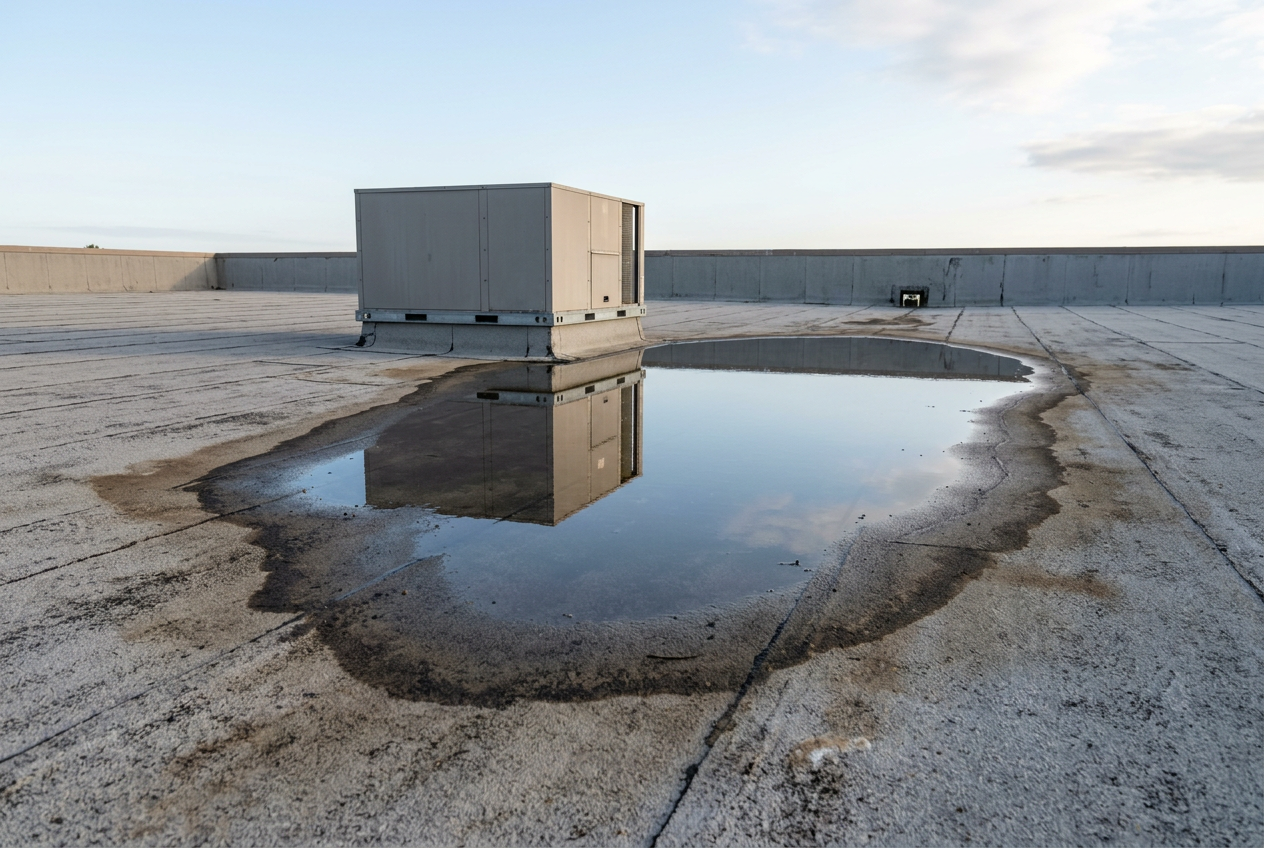
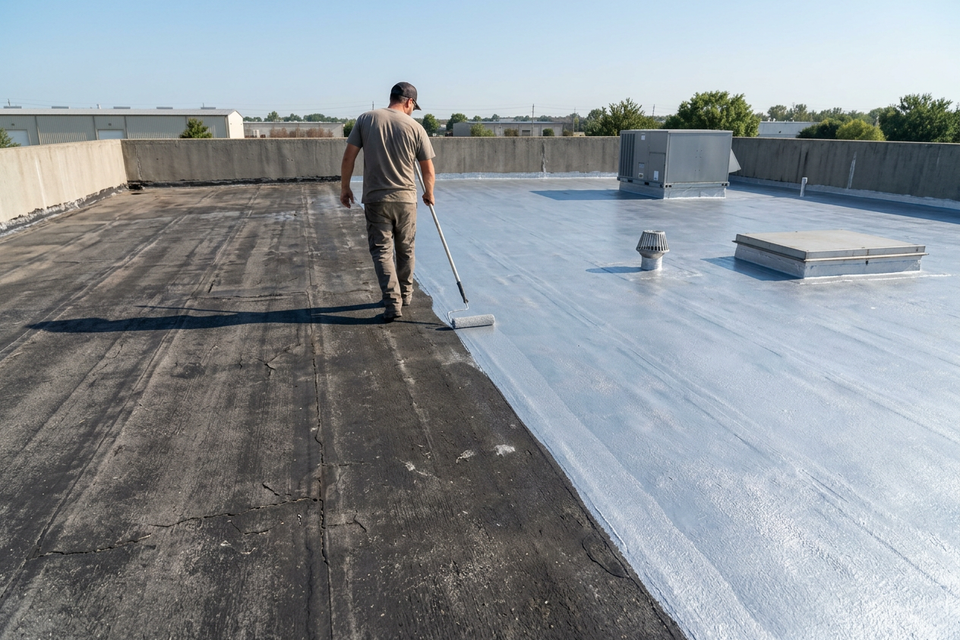
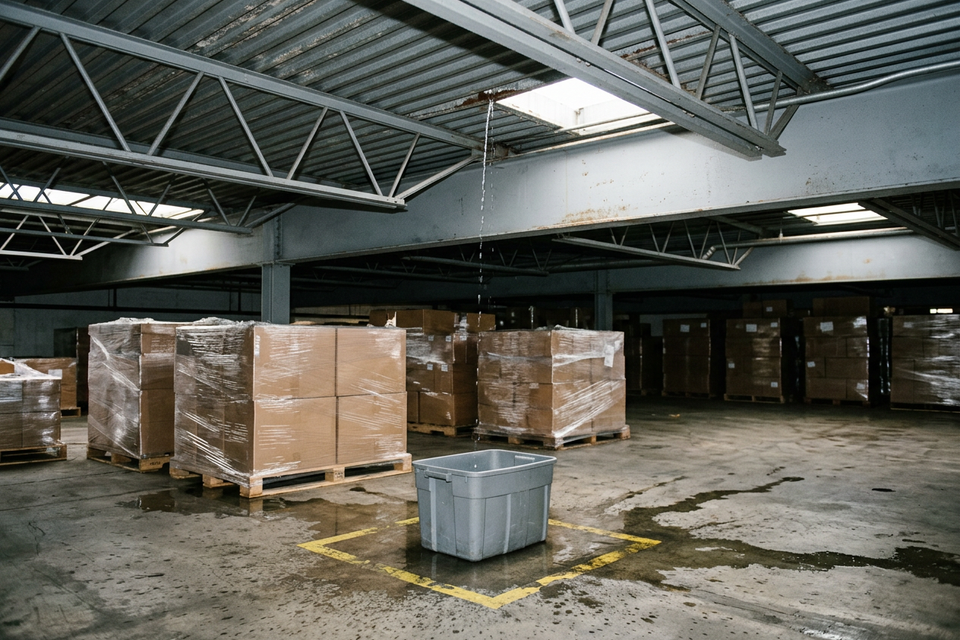
Ponding water does not rule a roof out of a coating, but it changes the job in two ways. First, the reason the water stands has to be found and, wherever it can be, corrected before anything goes on: a coating is a surface; it adds no slope and takes none of the water’s weight off the deck. Second, wherever water will still stand after that, the finish coat is silicone or the solvent-based elastomeric pair, not a water-based acrylic, which is not made to sit under water.
So the order of work is: find out why the water stands, fix what can be fixed, build up what can be built up, and only then choose the finish coat for what will still hold water. Those same areas are where a thermal scan needs a second look, so they get core cuts before anyone prices the job.
What counts as ponding
A low-slope roof holds some water for a while after rain. Ponding is water that is still there when it should have gone. Contractors commonly treat water still standing 48 hours after the rain stopped as ponding, and at least one coating maker writes that figure into its guide specification as a requirement that ponding clear within 48 hours. Where the specification for the job names a figure, that figure governs.
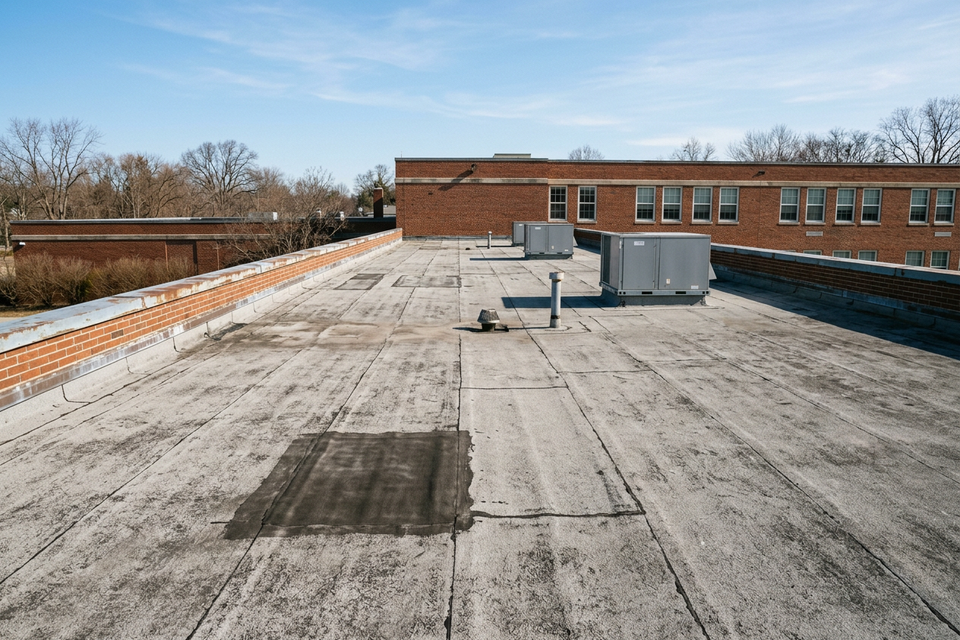
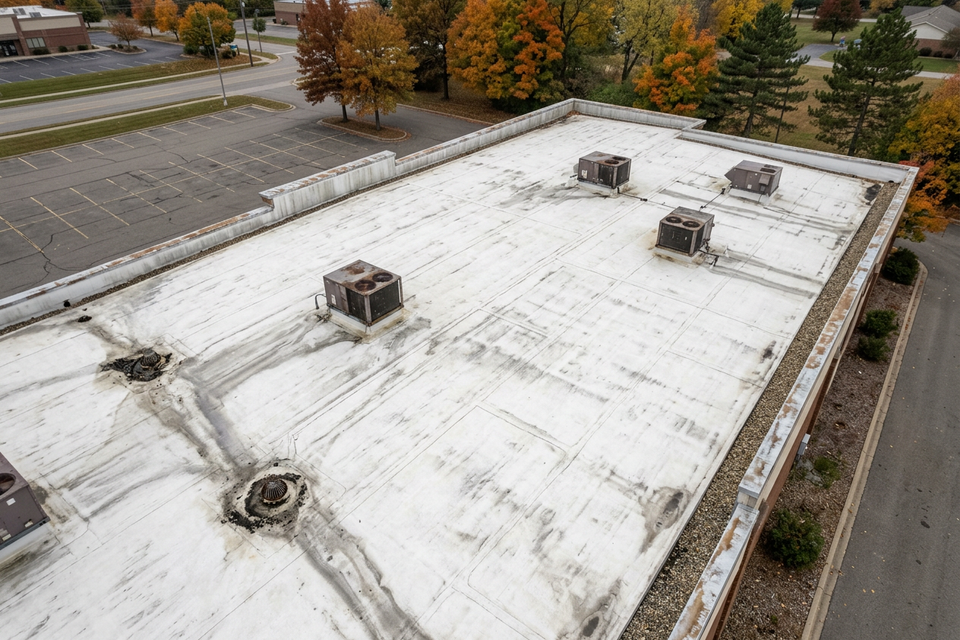
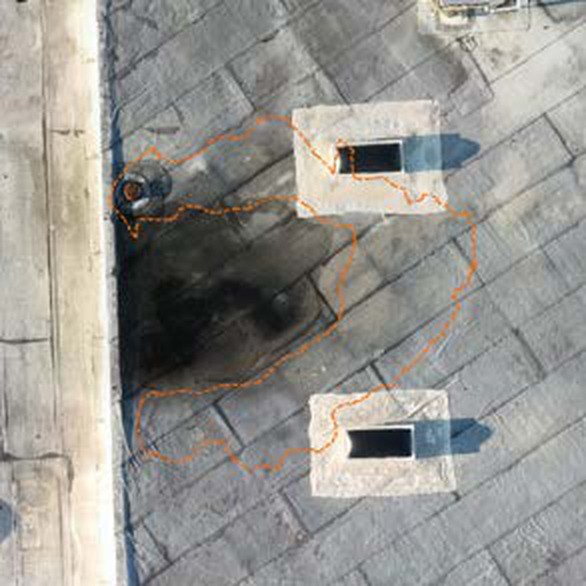
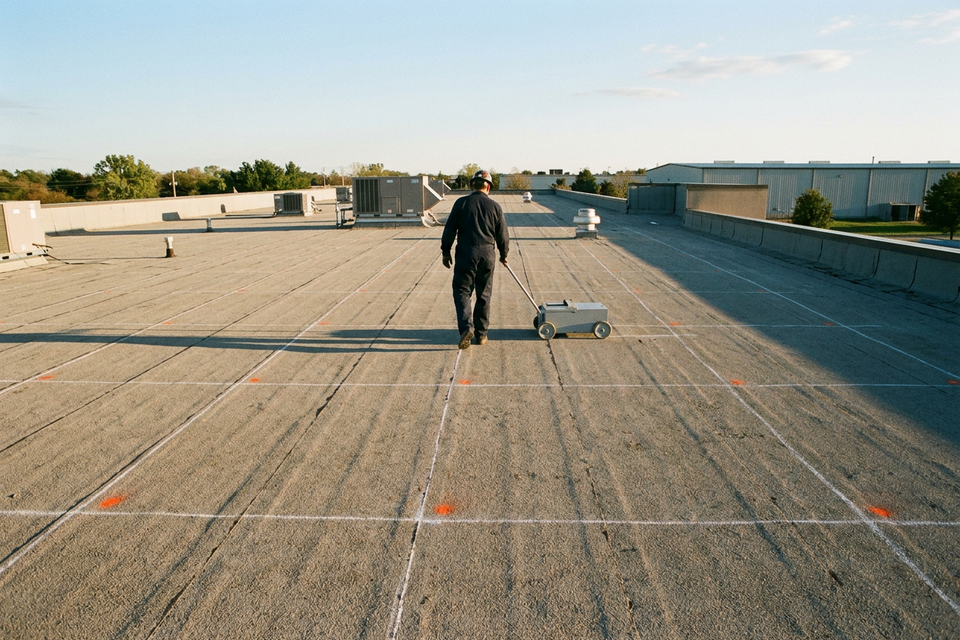
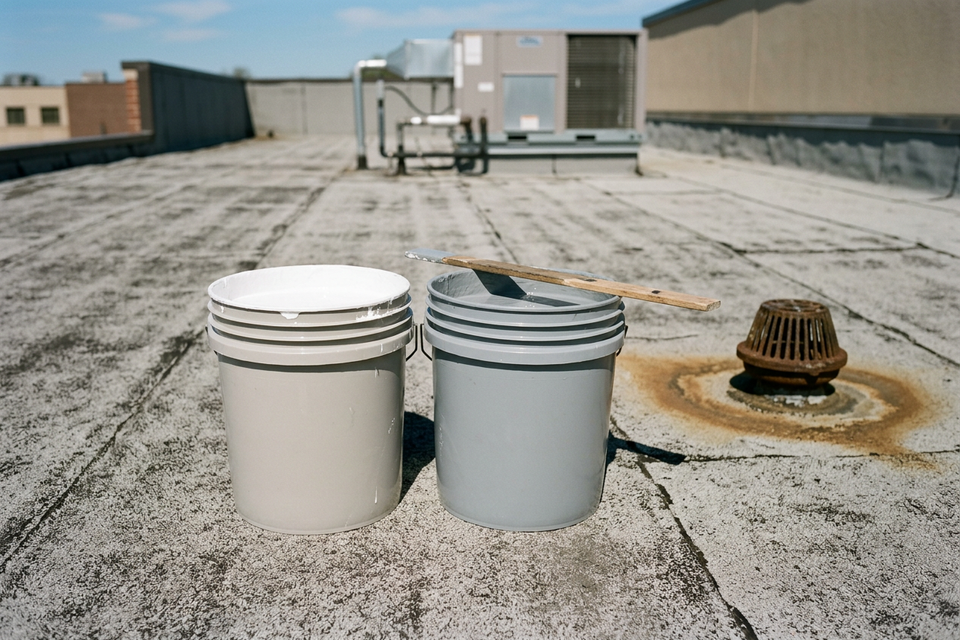
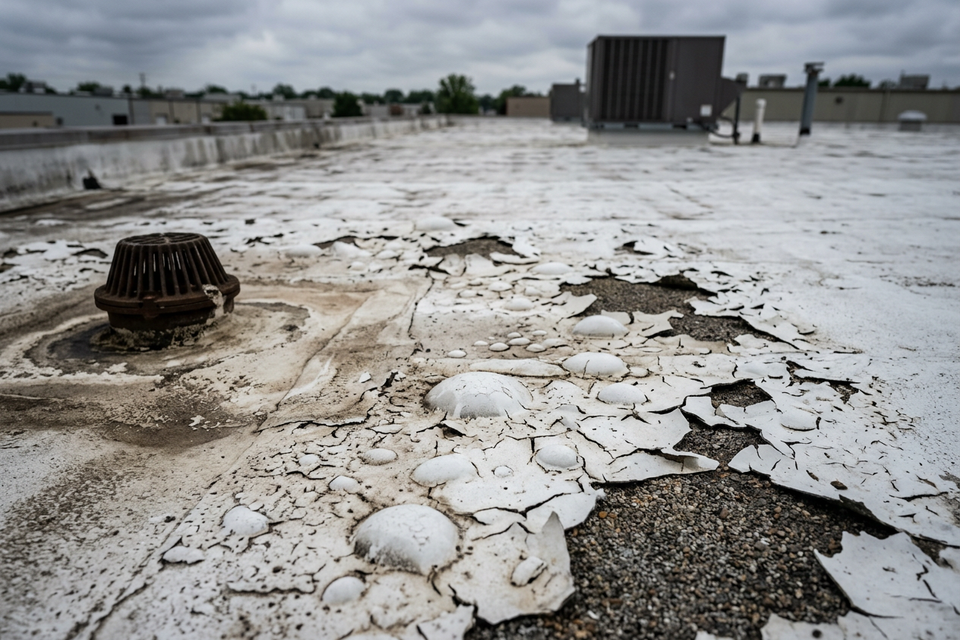
The roof usually tells you where before the rain does: dark stains with a tide line of silt, dirt settled where water sat, the growth that follows standing water. On the sample scan on this site, one flagged area of 176.2 sq ft is a ring around exactly that kind of dark ponding stain between two curbs. Nothing in the sample was cored, so it is a suspect, not a finding.
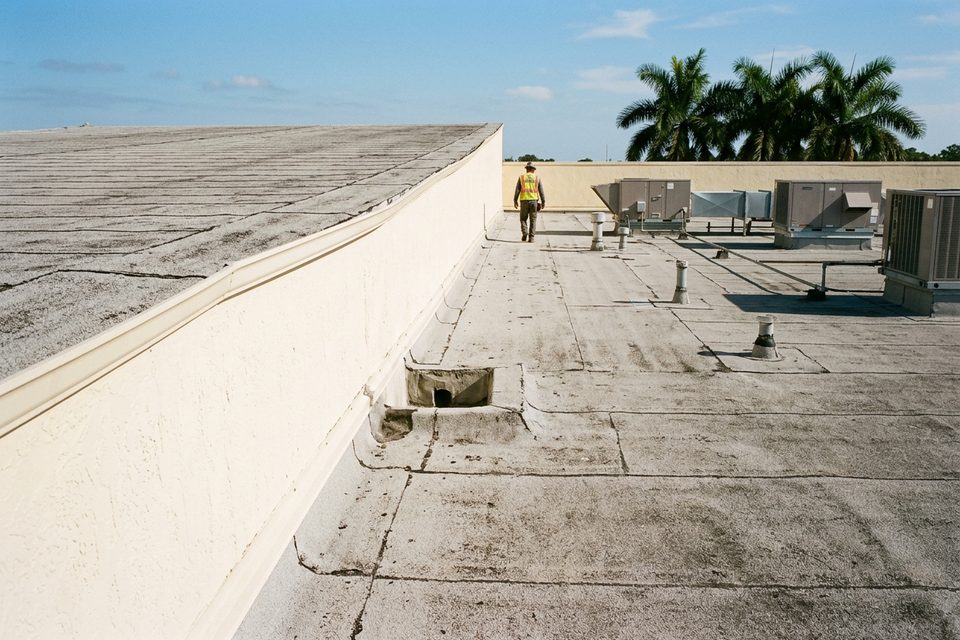
How much of the roof is involved matters as much as where. A few low spots at drains and behind rooftop units are a detail line in a restoration; water across the field after every rain is a different conversation, and the first question is why.
Why it matters for a coating
A water-based acrylic is not made to sit under water. Acrylic is water-sensitive until it has cured, and under prolonged ponding the film can lose adhesion and peel. On a roof that drains it is the default finish coat; in a spot that holds water for days it is the wrong product.
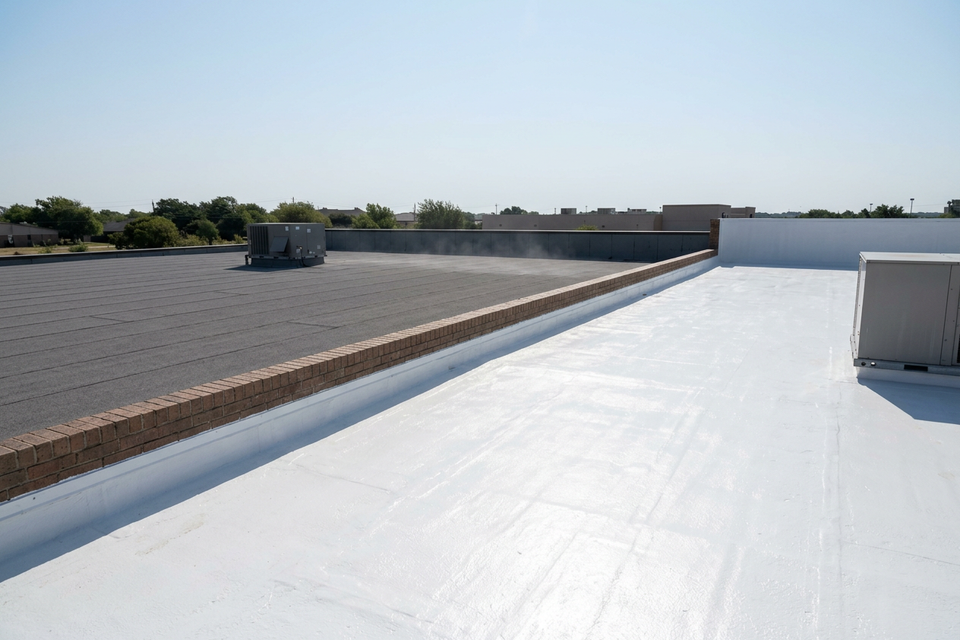
Standing water leaves dirt behind. Silt, dust and growth settle where water sits, and a white finish coat that holds dirt dulls. Silicone picks up more dirt than other coatings, so a ponding area under it wants to be as small as the slope allows. The Silicone44 data sheet has the roof pressure-washed and any mildew treated before anything goes on.
Water is weight. The same data sheet, for a coating made for areas where water stands, still says to follow NRCA guidance and remove the ponding, because the load can lead to collapse. What the deck carries and why a roof deflects are the building’s engineer’s questions, and nothing here is structural advice.
The specification asks about it. Sherwin-Williams’ guide specification for silicone over single-ply membranes asks for a roof plan that marks ponding alongside water intrusion, wet insulation and damaged deck. Applied over a sound, dry roof, a restoration system adds 10 to 15 years of service life. A pond puts both words of that condition in question.
Find the cause first
A low spot is a symptom. Coating over it hides the symptom and keeps the cause. The usual causes, roughly from easiest to hardest:
- Blocked drains and scuppers. Leaves, granules, a ball in the strainer. Clear them and watch the next rain before deciding anything.
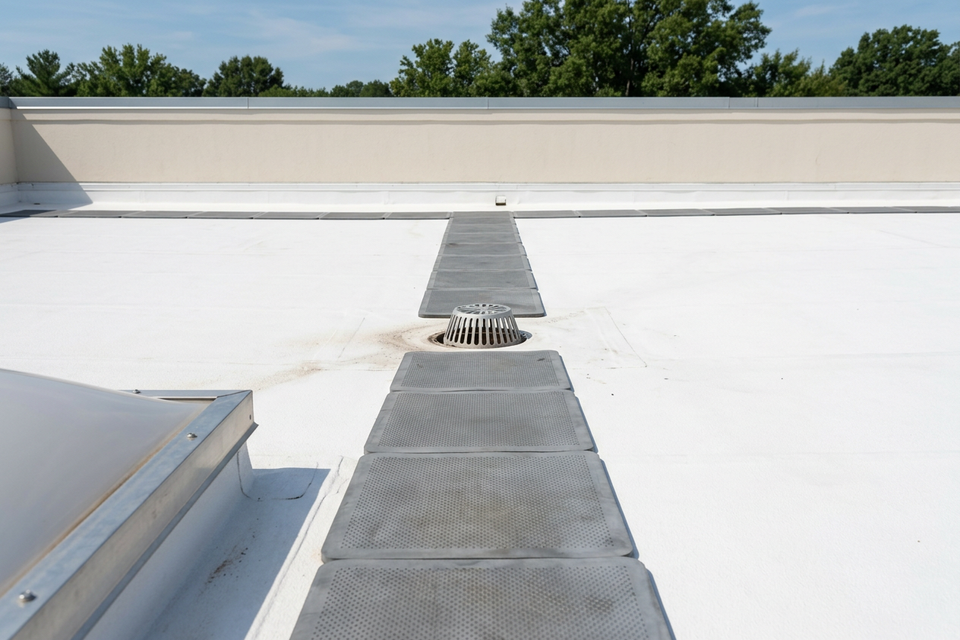
- Drains set high. A drain bowl sitting proud of the membrane, so water stops short of the outlet. The area gets built up to it or the drain gets reset: a roofing repair, not a coating line.
- Equipment with no cricket. Water held behind an HVAC curb, a duct support or a pipe rack because nothing diverts it around.
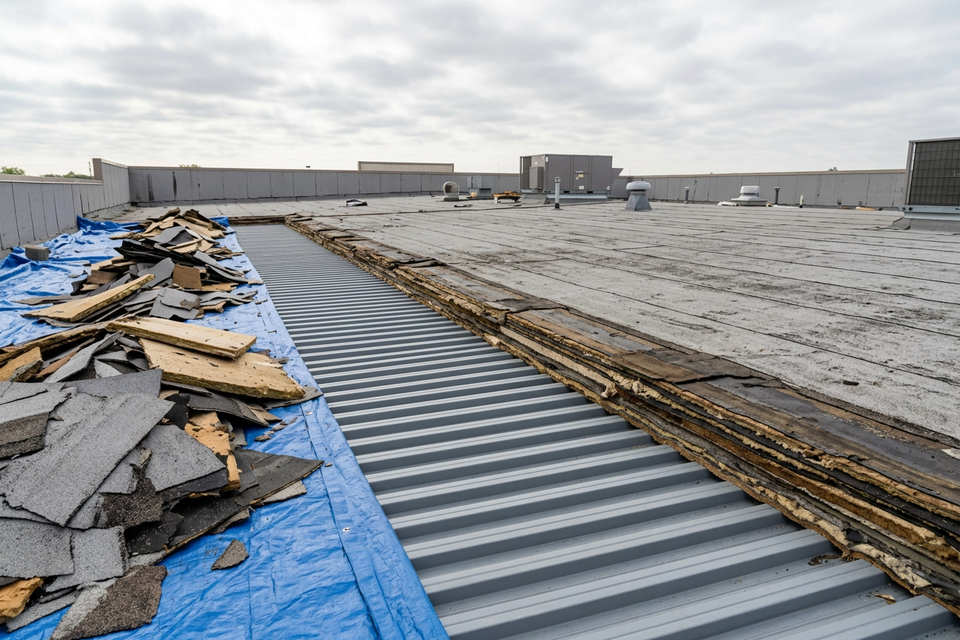
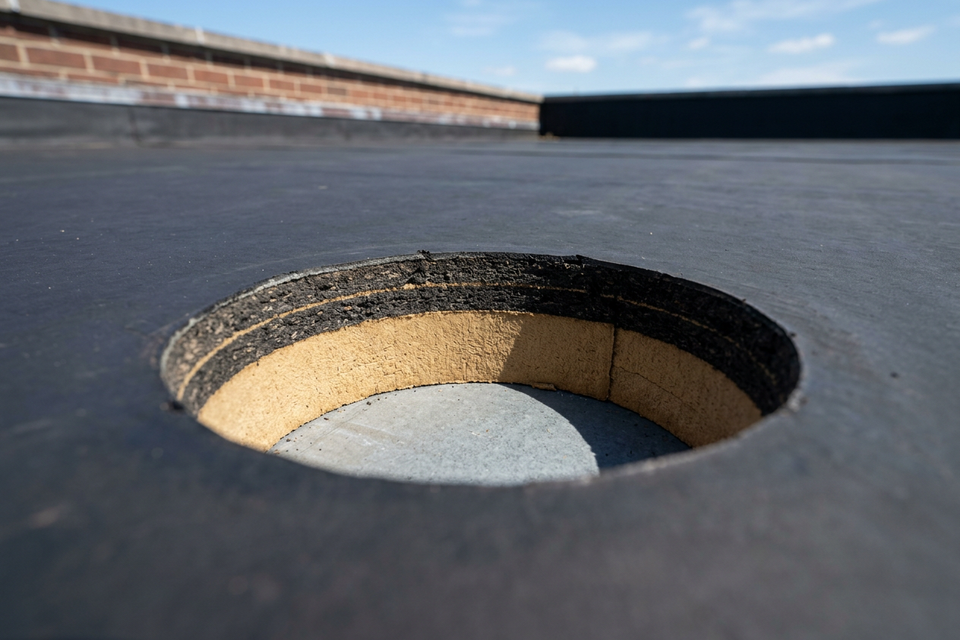
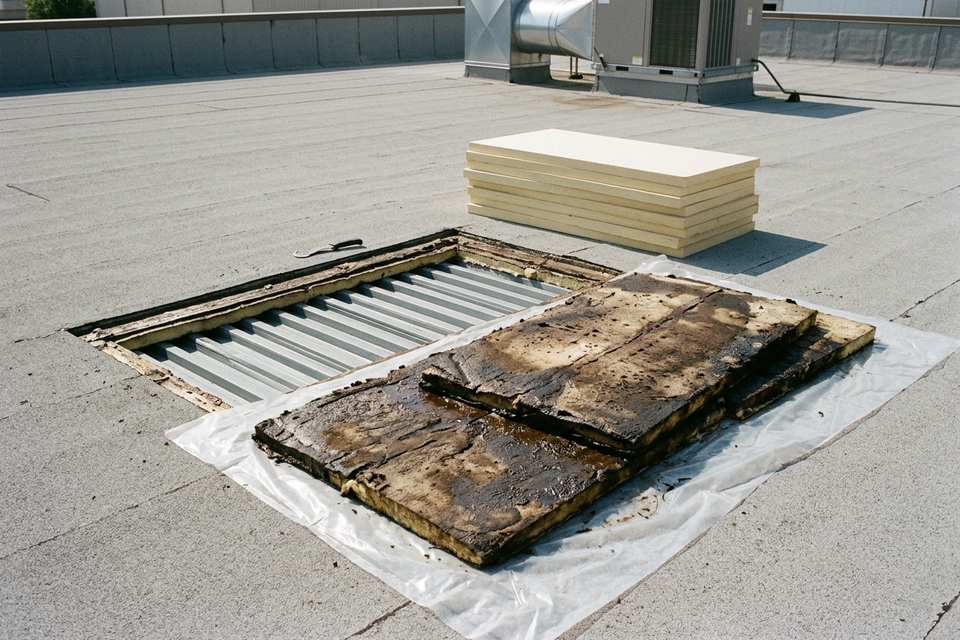
- Insulation that is crushed or wet under the low spot. A core cut says whether what is under the dish is crushed, wet or both; wet insulation comes out before any coating goes on.
- Deflection. The structure sags between supports and the water sits in the sag. No coating product corrects it; the building’s engineer decides that, and any change that adds drains or slope.
Core samples covers what a core cut tells you; for the whole roof’s moisture picture, how the scan works describes the drone moisture scan we arrange.
Fixes in the line
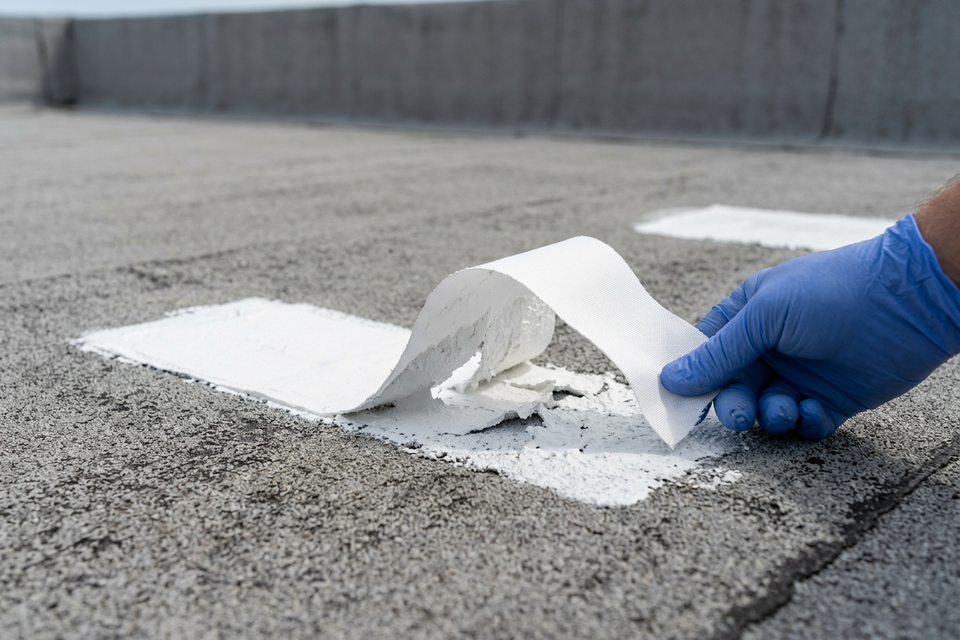
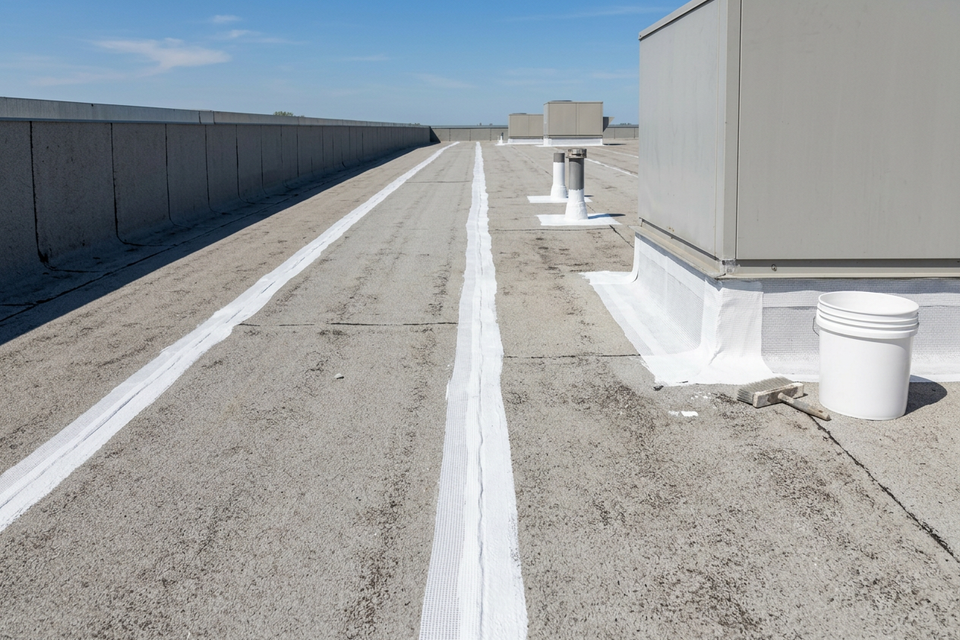
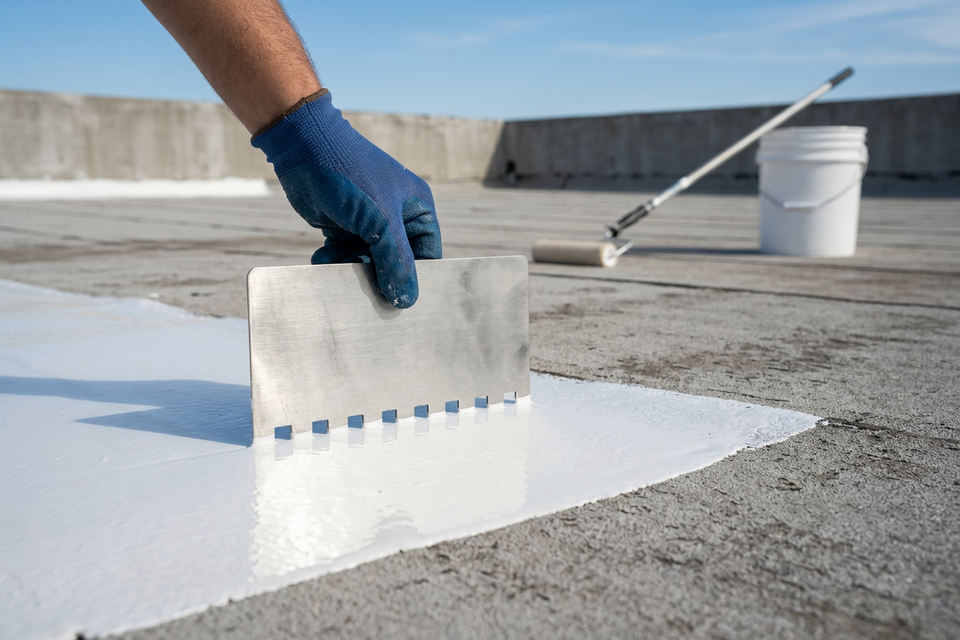
The Sherwin-Williams Uniflex line has one product aimed at the low spot itself. Slope Builder KST0SLPBD, a powder mixed with water on site into a cementitious slurry, builds the crickets behind rooftop equipment and fills low areas near drains, in valleys and along parapets, before an acrylic system goes on. Its data sheet names the preparation, the rate and the cure; the contractor lays the crickets out. No silicone specification names it under Silicone44, so where silicone is the finish, the adhesion test and Uniflex decide.
Slope Builder corrects a low spot. It does not make a dead-flat roof drain, lift a deflected deck or fix a drain set too high; those are repairs, design changes or structural work.
Wet-dry roof cement KST058600, which patches core cuts on an asphaltic roof, and the other detail products are at Patch & repair.
Then the chemistry: where water will still stand
After the slope work, some roofs still hold water: a dead-flat section between drains, a field with too little fall, a parapet strip that cannot be built up far enough.
| Finish coat | Where it belongs | Listed substrates | What to know |
|---|---|---|---|
| Acrylic KST041300 | A roof that drains | Metal, foam, concrete, smooth BUR, mod bit, cap sheet, EPDM, Hypalon | Water-based; can lose adhesion and peel under prolonged ponding |
| Silicone44 KST044300 (white), Silicone44 KST044320 (gray) | Areas where water stands | Metal, EPDM, TPO, PVC, smooth BUR, mod bit, cap sheet, foam, concrete, existing acrylic, silicone and urethane coatings | No base coat under it; picks up dirt; slick underfoot; contractors commonly recoat it with silicone |
| Solvent-based pair: base KST042200, finish KST042100 | Areas where water stands | Metal, foam, smooth BUR, mod bit, granular cap sheet | One resin for base and finish; not listed for single ply or concrete; regulated freight |
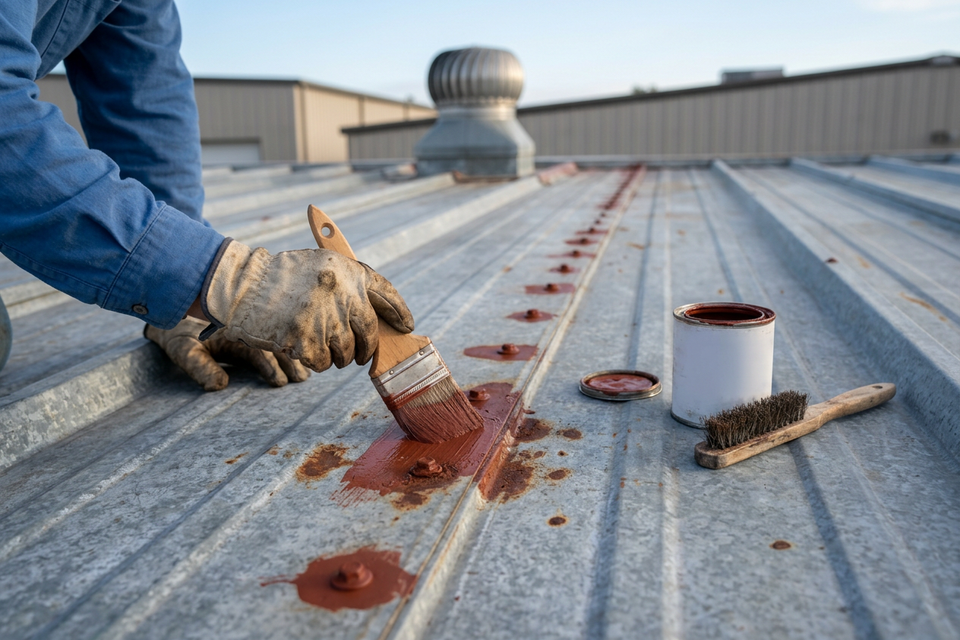
What goes under the silicone is not what goes under an acrylic. Uniflex puts no base coat under Silicone44: rusted metal takes the rust-inhibitive primer KST034520, EPDM the wash primer KST038620, newer asphalt Uniflex’s Bleed Blocker Primer (not in our catalogue; ask on the quote form), and weathered TPO, PVC, foam and concrete nothing. An adhesion test on every silicone job settles the rest, with extra tests where water stands. No Uniflex silicone document covers Hypalon, so a Hypalon roof that holds water is one to send us. Silicone vs acrylic roof coatings has the build-ups side by side and what silicone means for the next recoat.
Made for areas where water stands does not mean the water can stay. Silicone does not fix drainage: Uniflex’s silicone specifications still expect at least 1/4 in per ft of slope and working drains, and water that stands for long means more inspection, cleaning and recoating over the years. The ponding that can be removed is removed first; the chemistry is for what is left.
Ponding areas on a thermal scan
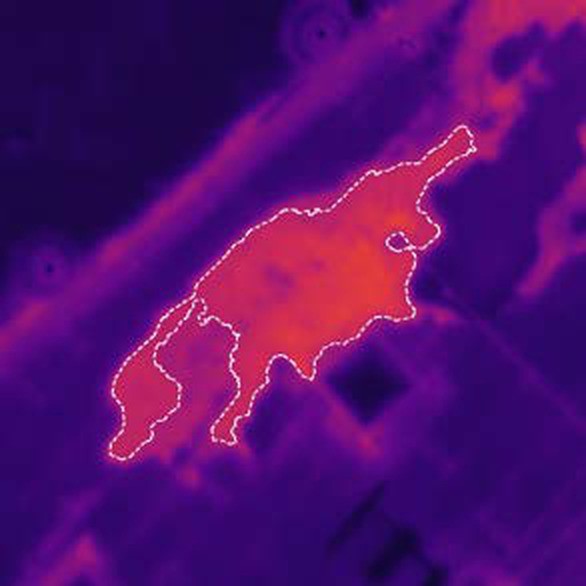
A thermal scan is flown on a clear evening after a sunny day and reads surface temperature: what stays warmer after sunset because something on or under the surface is holding the day’s heat. Ponding areas tend to show up, for two reasons. Standing water, and the dirt it leaves behind, hold heat and can read warm on their own, with dry insulation underneath. Or the insulation under the pond is wet. Nothing in the image says which.
That is why a flagged ponding area gets a core before anyone prices a tear-out. The scan marks suspects; the cores confirm them. Nor does the scan say where the water got in: ASTM C1153, the standard practice for locating wet insulation with infrared imaging, gives no method for finding the cause of the moisture or its point of entry. And the flight waits for a dry surface: a roof still carrying water is scanned later or surveyed another way, since a nuclear gauge can be used in ponded areas where a camera cannot.
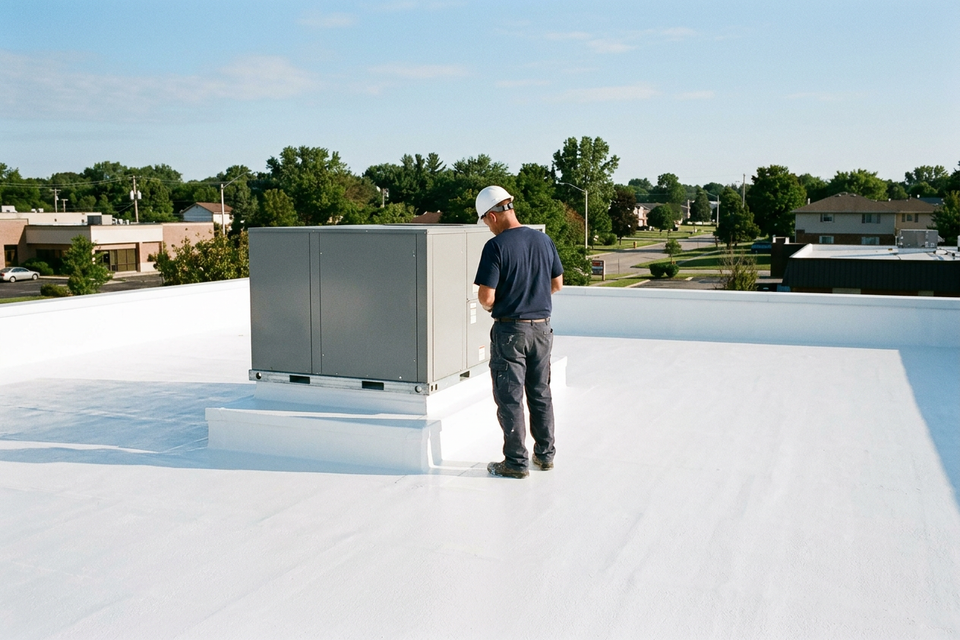
How to read a thermal roof scan walks through telling a wet-insulation pattern from a rival explanation such as a ponding stain. And a white coating of any chemistry makes later thermal work harder: a roof that is going to be coated is easier to scan before than after.
Who decides
- The contractor writes the scope, lays out the crickets and owns the means and methods.
- The building’s engineer decides why a roof deflects, what the deck carries and whether drains or slope can be added.
- The building department decides what the repair needs a permit for. In Florida, the Florida Building Code’s rules for Miami-Dade and Broward counties (Sections 1521.3 and 1521.13) say a repair may not create additional ponding and that the contractor must warn the owner of the ponding risk; restoring a roof in Florida covers what the code asks.
- The data sheet and the written specification name the preparation, the rate and the cure; the adhesion test patch settles whether the system holds on this roof. Where a system warranty is wanted, the manufacturer inspects the finished roof and issues it under its own terms; we supply the materials.
The system finder gives the build-up with part numbers for the roof type, for the areas that drain and for the areas that will still hold water. Then send the roof area, the substrate, where water stands and roughly how much of the roof it covers, and any named specification, through the quote form. A person prices the materials, names what is not included, and replies with the price, freight to the site and a ship date.
Last updated 2026-10-05.