When to coat a flat roof: the day, the season and the budget year
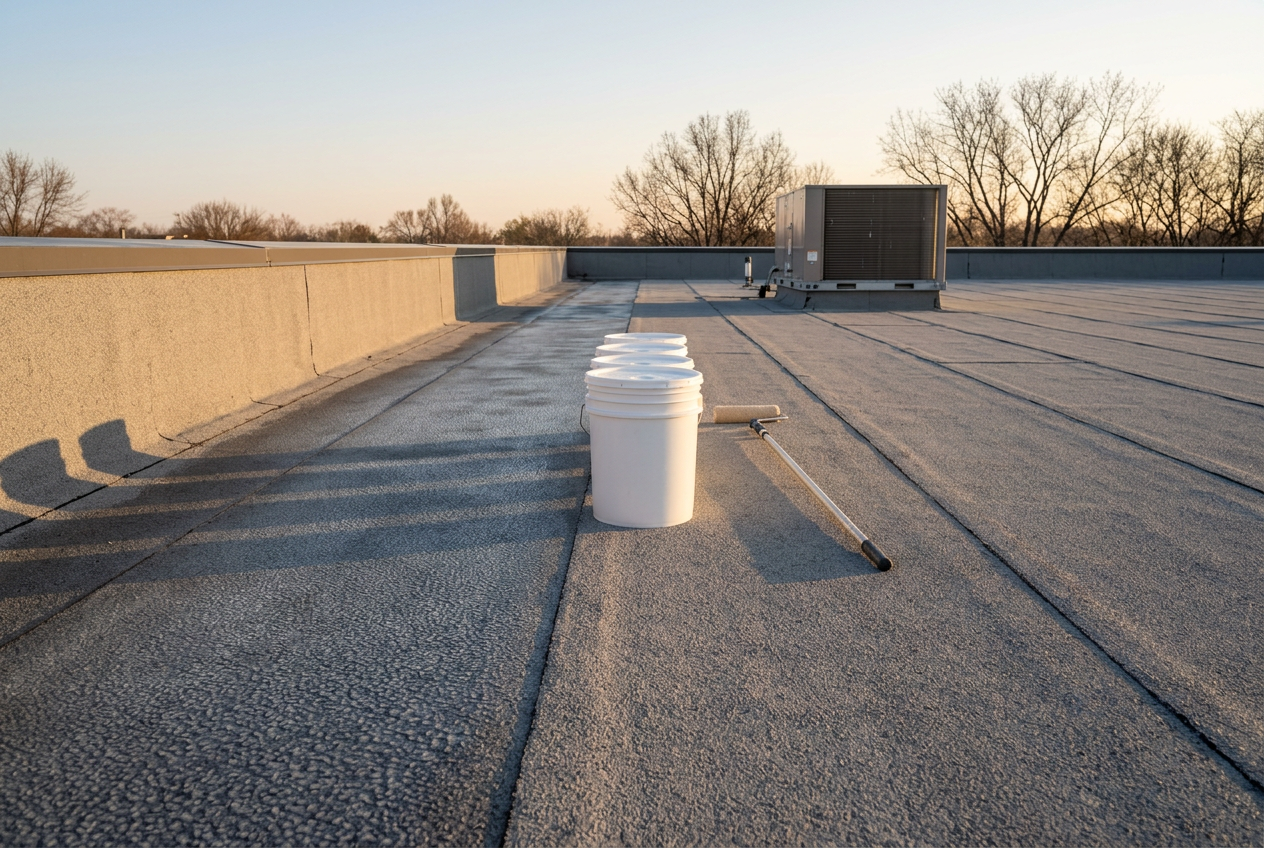
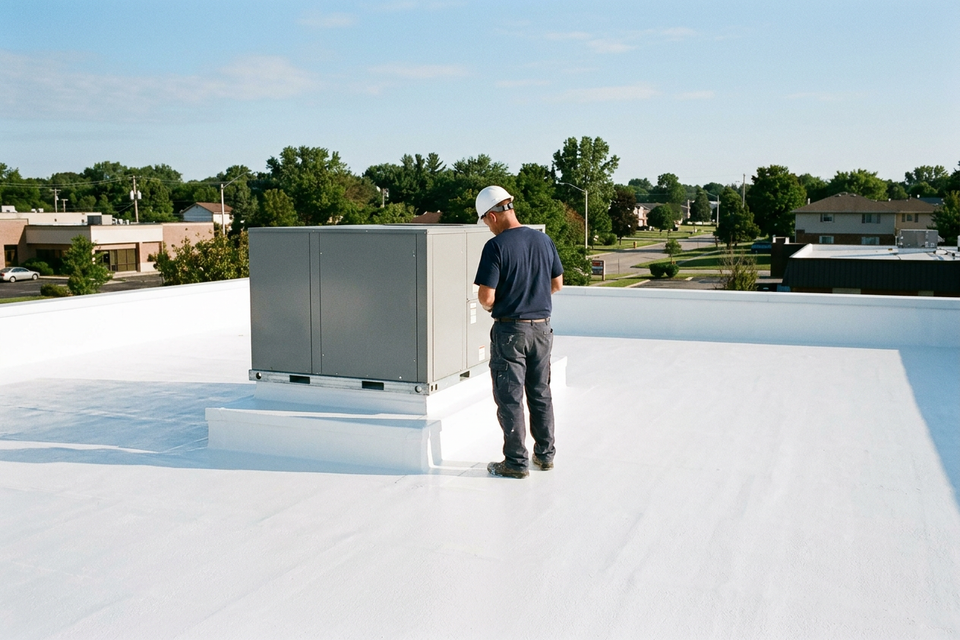
The easiest time of year to coat a flat roof is the local dry, mild season: in Florida, the dry season, December to April. Elsewhere, pick the months when rain is least frequent and the roof stays inside the coating’s temperature window through the working day.
The season only raises the odds; the day decides. Each coat needs a dry, clean surface, temperatures inside its data sheet’s window, a surface above the dew point, and no rain until the film can take it. Because the work belongs in the dry season, it is worth getting into the budget months ahead (on a calendar-year budget, between August and November), with a moisture scan behind the number rather than a guess.
What the coating needs on the day
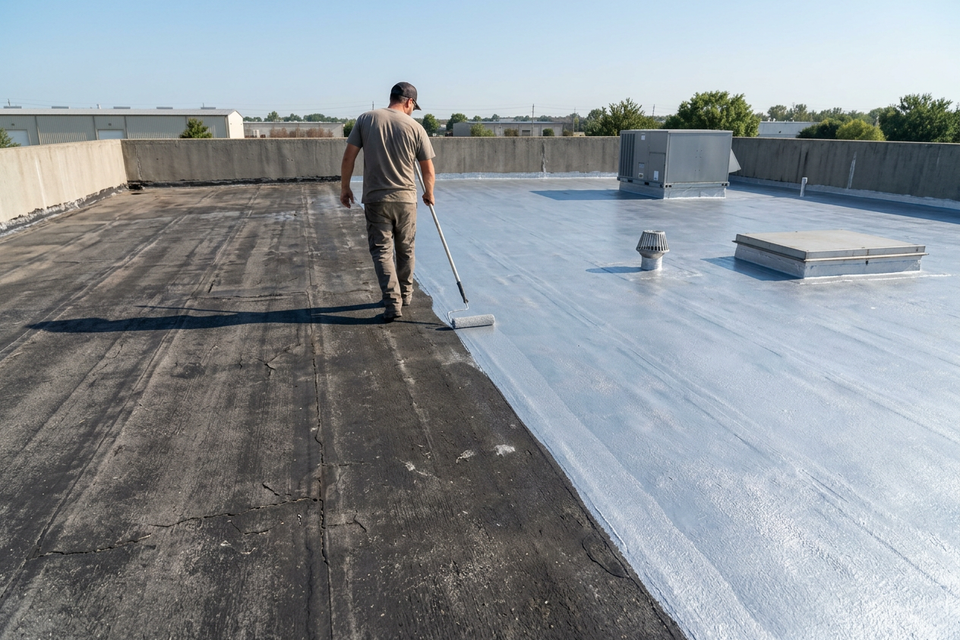
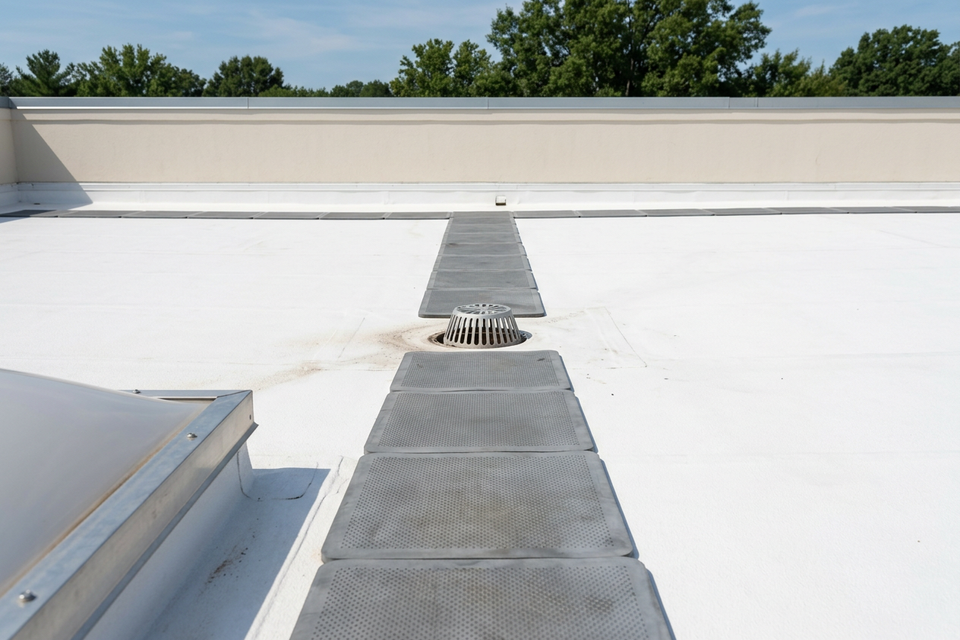
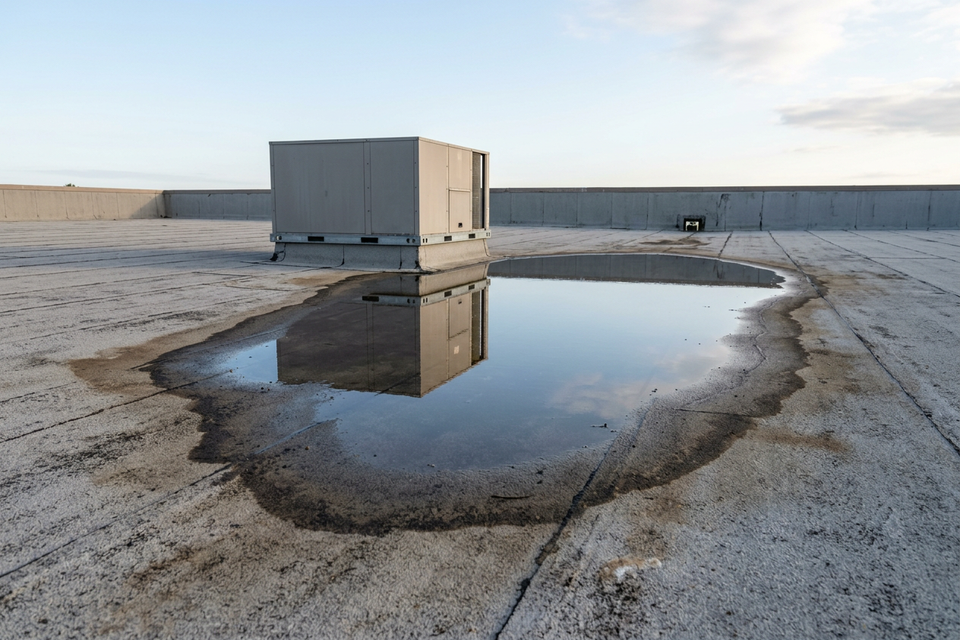
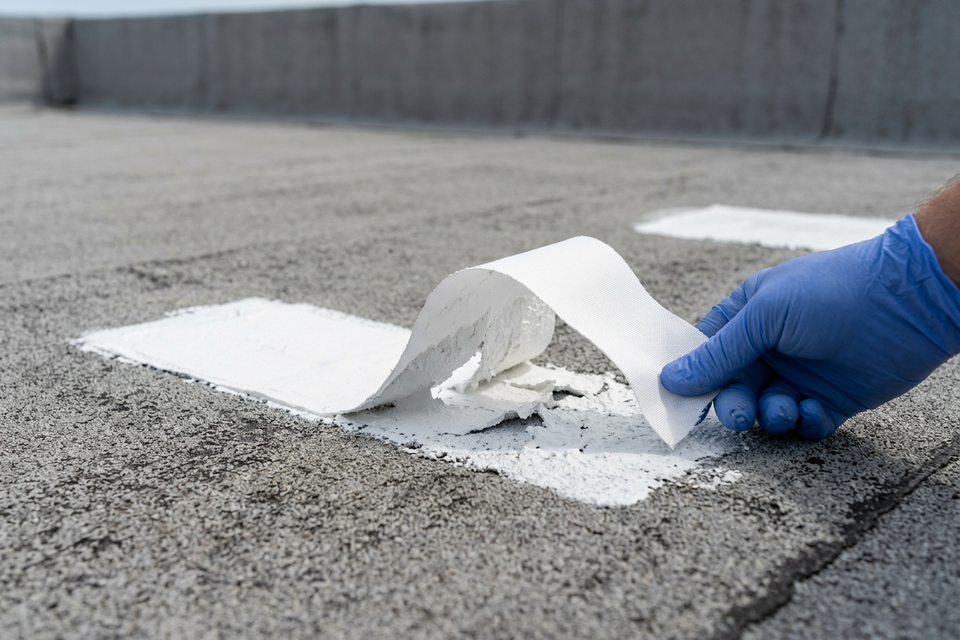
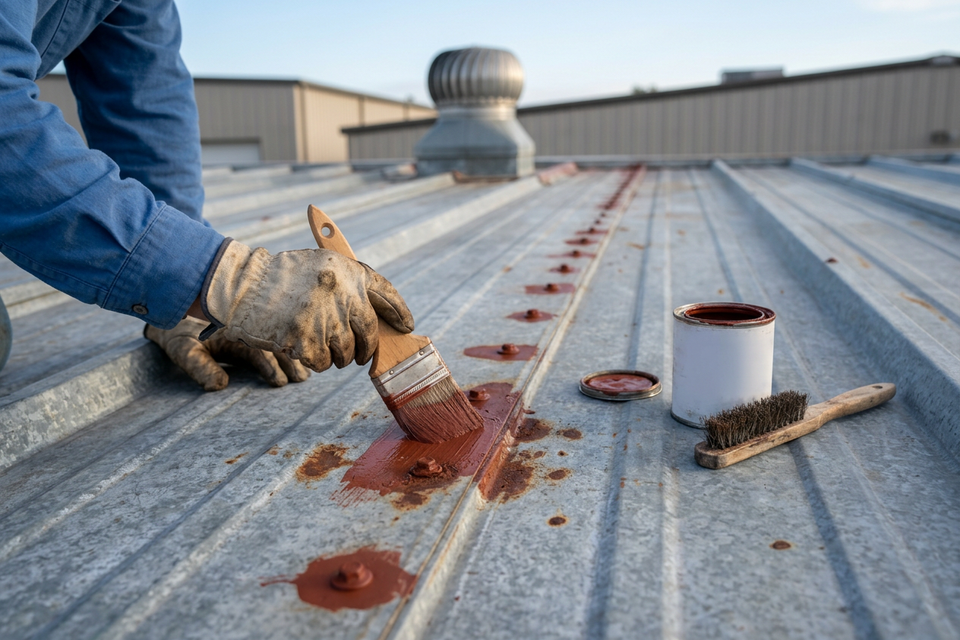
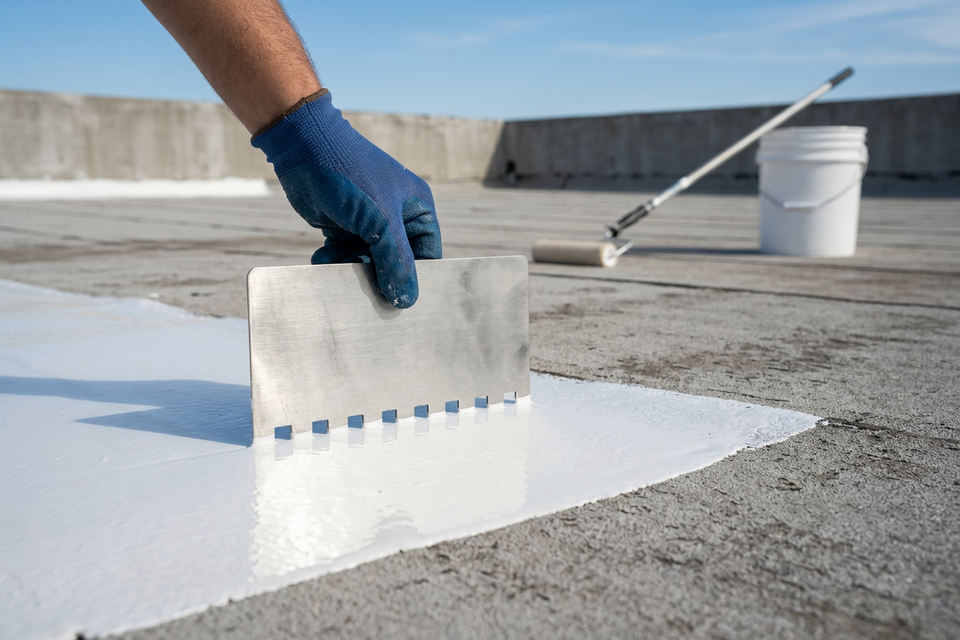
A dry, clean surface. No standing water, no damp left from rain, no dew. The roof is pressure-washed and cleared of dirt, chalk, loose granules and ponded silt, then left to dry again before the first coat. The data sheet names the preparation, the rate and the cure; the adhesion test patch settles whether the coating holds on this roof.
Surface and air temperature inside the window. The data sheet gives the range; work to it, not to this page. A dark roof in full sun runs hotter than the air, so the surface temperature is measured on the roof, not taken from a forecast.
A surface above the dew point. When a surface cools to the dew point of the air around it, water condenses on it; the silicone data sheet, for one, asks for a surface completely dry, dew included. Morning dew has to be gone before the first coat, and a late coat has to be able to take water before the evening dew forms.
No rain on the fresh film. The data sheet gives the time before a coat can take rain and before the next coat can go on. When showers are forecast, the contractor judges that morning whether the coat will get past that point first.
How forgiving each chemistry is
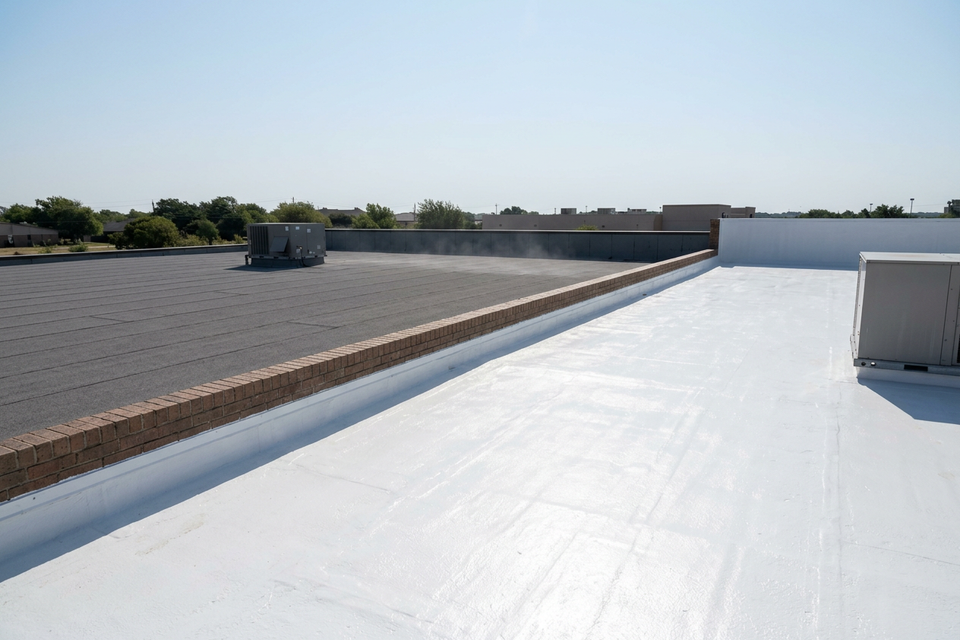
The Sherwin-Williams Uniflex finish coats come in three chemistries: water-based acrylic, such as the white acrylic finish coat KST041300; solvent-based elastomeric, the gray base coat KST042200 under the white finish coat KST042100; and silicone, Silicone44 KST044300 (white). They forgive different things.
| What matters | Water-based acrylic | Solvent-based elastomeric | Silicone |
|---|---|---|---|
| The day it goes on | Water-sensitive until cured: rain or heavy dew on the fresh film is the risk | Its own data sheet sets the window | A completely dry surface, dew included, a temperature window and a humidity ceiling |
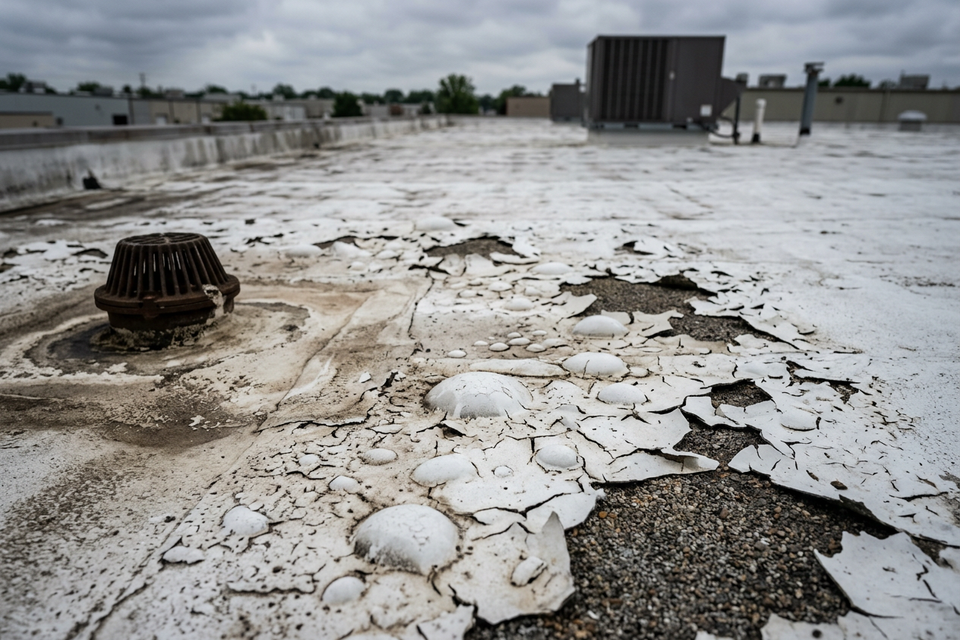
| Once cured, where water stands | Can lose adhesion and peel under prolonged ponding | The other route where water stands, on the roofs it is listed for | Used where a roof is often wet or holds water |
| In transit and storage | Must not freeze in transit or storage | Ships as regulated freight | Pails stocked; drums quoted and moved by freight |
Drainage picks the chemistry, as silicone vs acrylic explains, and the weather picks the day. Under Silicone44, Uniflex’s adhesion test patch is left three days before it is pulled, so it goes in the schedule ahead of the start date. Claims that solvent-based coatings take a wider range of weather are common; we have not seen them confirmed on a data sheet, so work to the product’s own.
The season: Florida’s dry months, and the same logic elsewhere
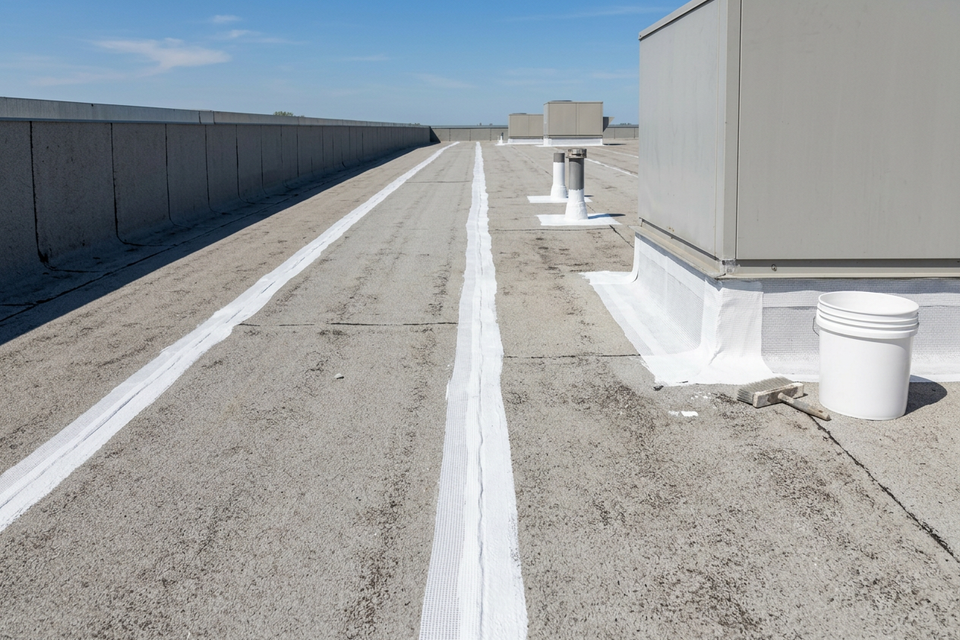
In Florida the dry season is the easiest time because of the list above: the fewer days that bring rain, the more days meet every condition at once, and the sooner each coat can follow the last. A restoration is several steps (wash, repairs, primer where the substrate needs it, seams and details, then the coats), and each needs those conditions.
Where winters are cold, the data sheet’s temperature floor closes the season at both ends, and water-based material has to be kept from freezing in the yard as well as on the truck.
None of this is a deadline. The calendar decides when the work is easiest, not whether it has to happen.
The budget year: when the decision is made
On a calendar-year budget, August to November is a good time to get dry-season work into next year’s numbers: the scan and the cores first, then the scope and the price, then the budget line, then a start date when the weather opens. If the timing does not fit this year, the next dry season works the same way.
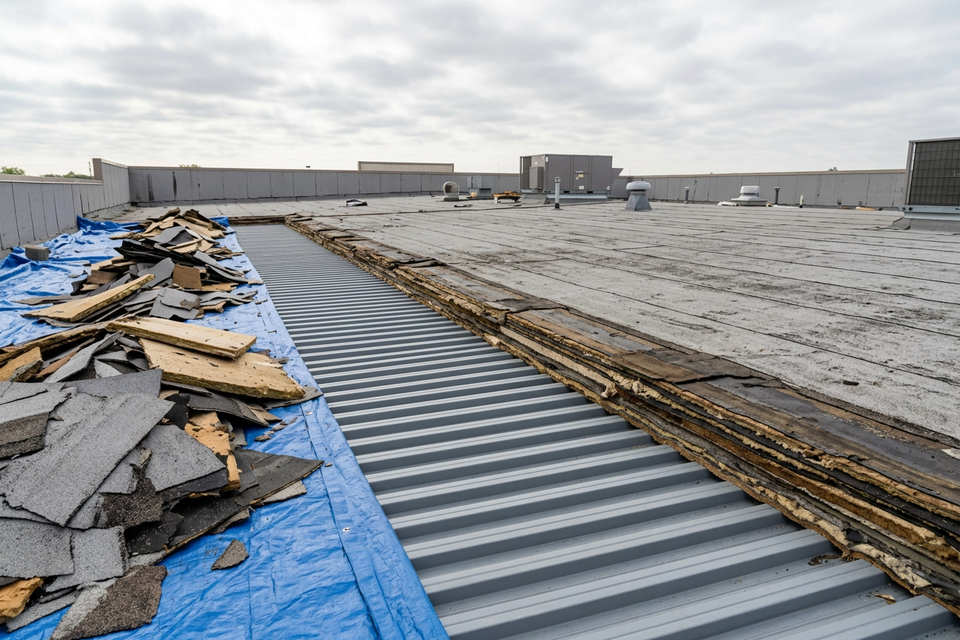
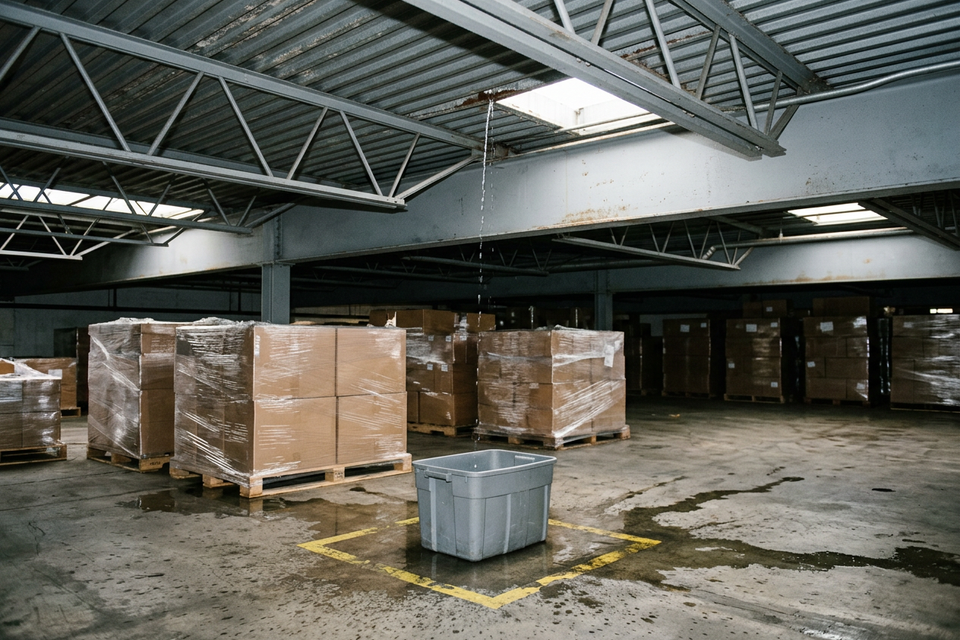
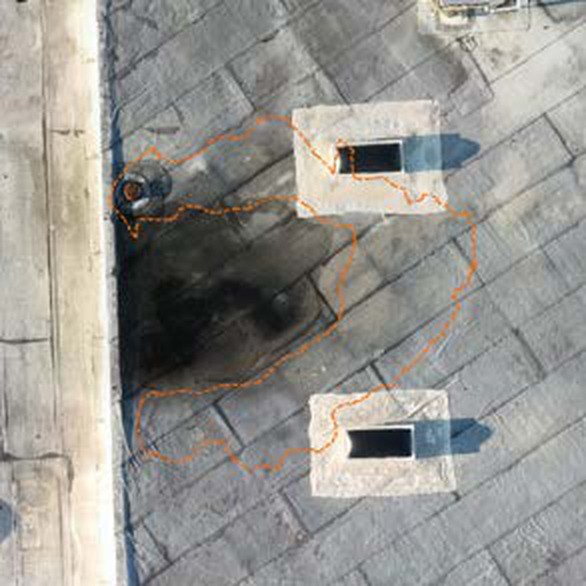
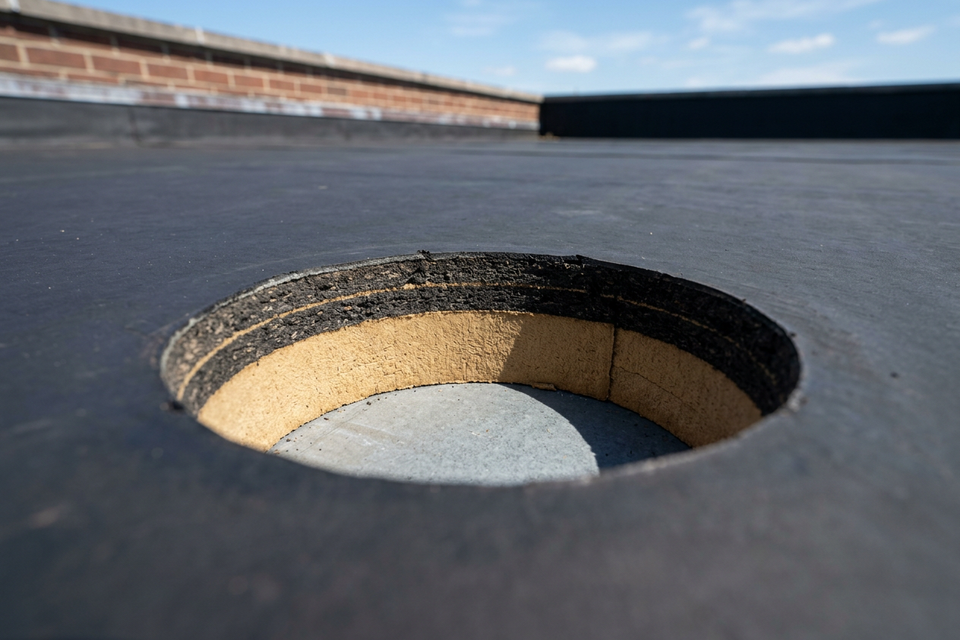
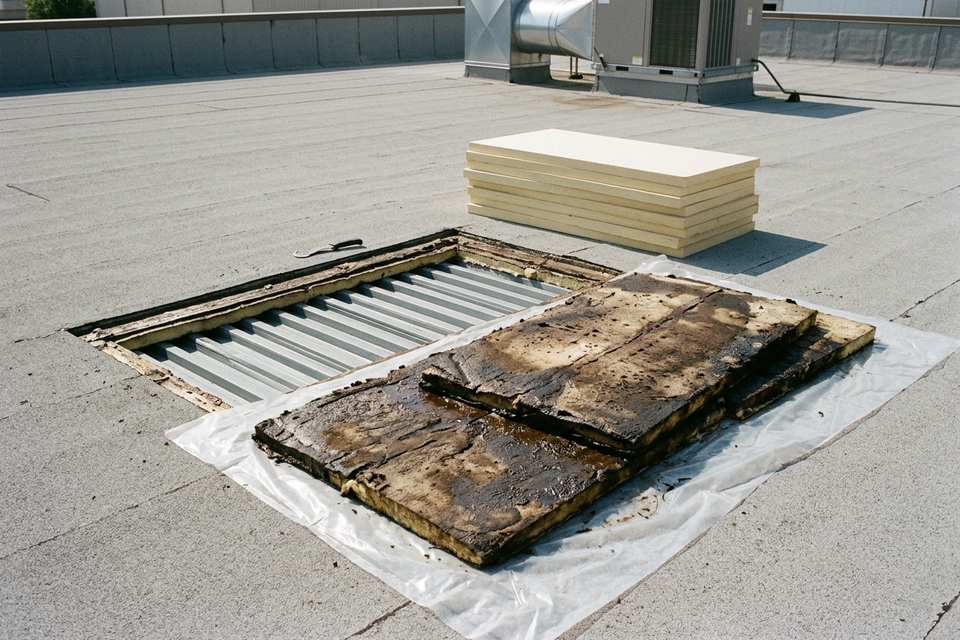
Coating makers, Sherwin-Williams included, require wet insulation to be found and replaced before a coating goes on. The map shows whether the roof needs a coating with a few sections replaced first, or whether so much of it is wet that replacing it makes more sense — before you budget for either. With the scan first, the budget is built on what the roof needs rather than a guess.
For orientation, restoring a low-slope roof with a coating system typically runs $3.50 to $7 per square foot installed. Tearing it off and replacing it typically runs $10 to $18. Both are typical installed ranges drawn from published industry figures, not a quote; the roof’s condition, how much wet insulation has to come out, access and region move the number. Acrylic systems sit toward the low end of the restore range and silicone toward the high end, and Florida’s wind code keeps replacement in the upper half of its range. The cost page runs the numbers for your square footage.
The scan has a weather window of its own
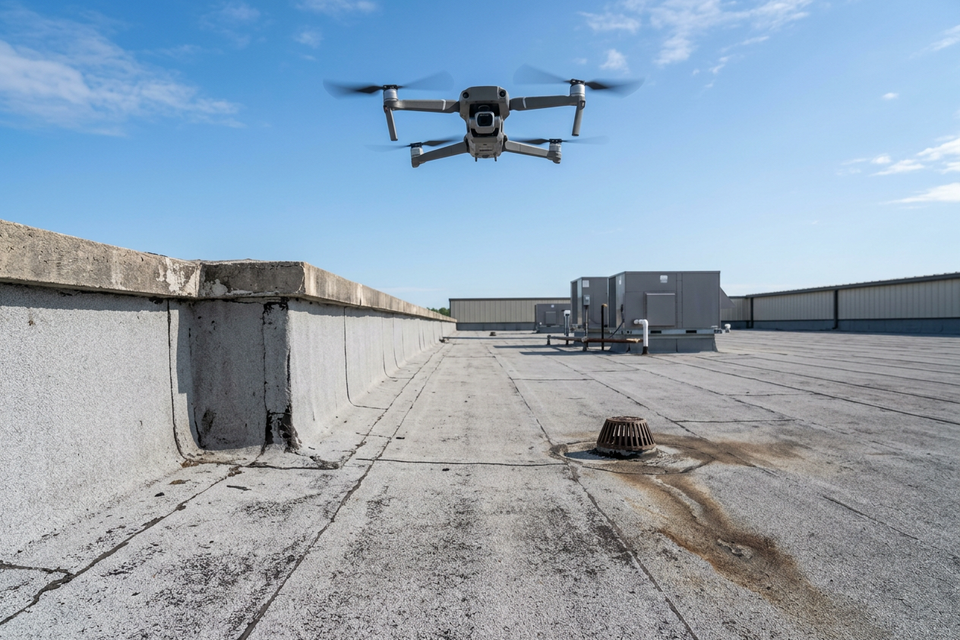
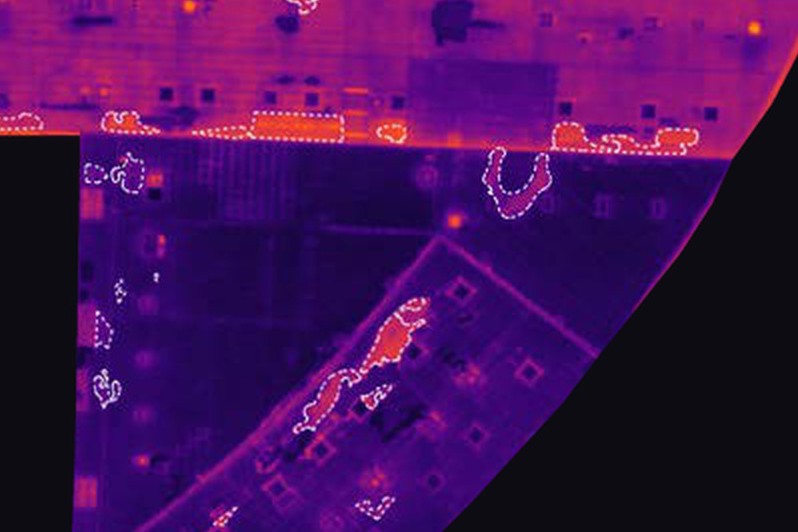
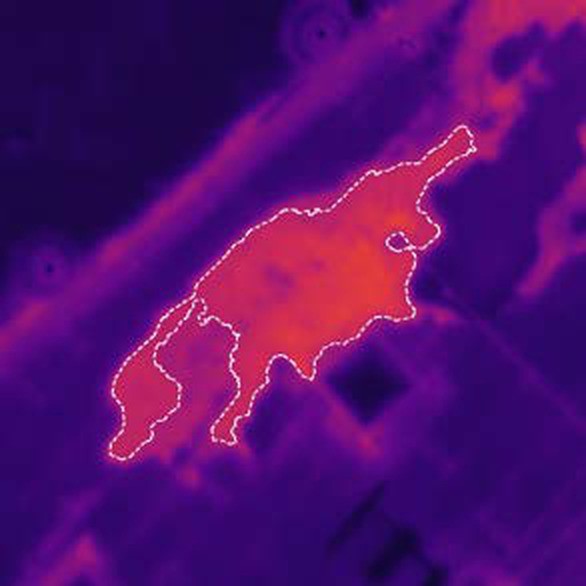
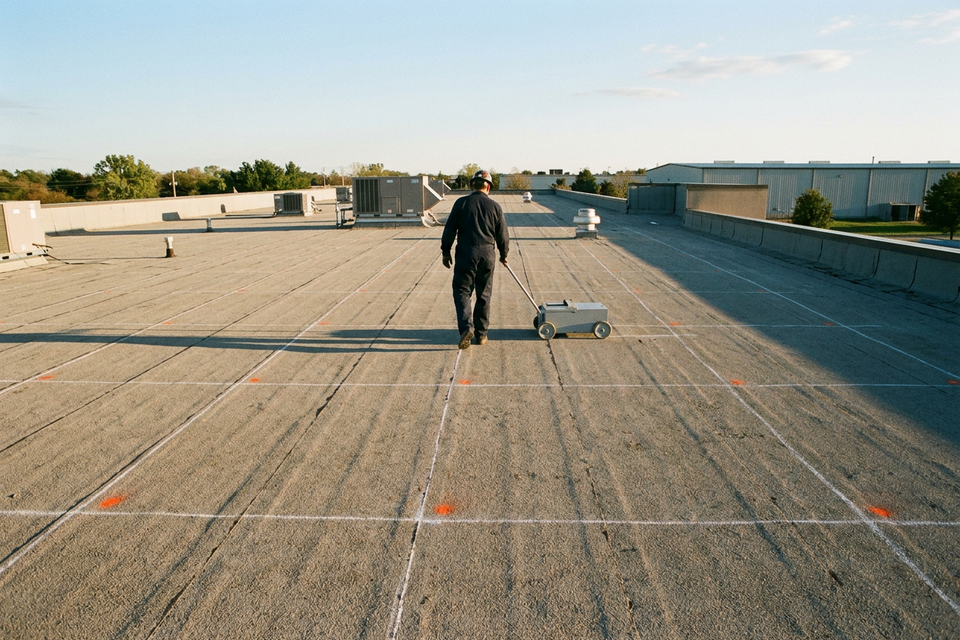
On an evening after a sunny day, once the sun has set, a drone with a thermal camera flies over the roof. Wet insulation under the surface holds the day’s heat longer than dry insulation, so it shows up warmer on the images. You get a map of the roof with any areas that look wet outlined and measured in square feet, video from the flight and a written assessment of what the scan found; the flagged areas are then confirmed with small core samples. It usually takes one evening, nobody has to walk the whole roof, and the building runs as normal. We fly only with the owner’s go-ahead.
A thermal scan shows temperature differences, not water: it needs a sunny day to load the roof with heat, then a clear, dry, calm evening to read it back. Cloud cuts the heating, wind weakens the pattern, and the membrane has to be dry, with no condensation on it. Practitioners’ figures for how long to wait after rain vary; ASTM C1153 is the standard practice for locating wet insulation with infrared imaging, and the standard and the conditions on the night govern.
One good day and evening is enough, so the scan can be flown well ahead of the budget, and it belongs before the coating: a white coating makes later thermal work harder. It suits low-slope roofs with insulation under a membrane, not roofs under ballast or pavers, metal panels, highly reflective or already-white surfaces, or closed-cell foam, and gravel-surfaced built-up roofs are a poor fit. Those are usually surveyed another way (cores, a capacitance or nuclear survey, a walk-through), and the scan-fit tool says which; how the scan works has the rest.
Lead time for the materials
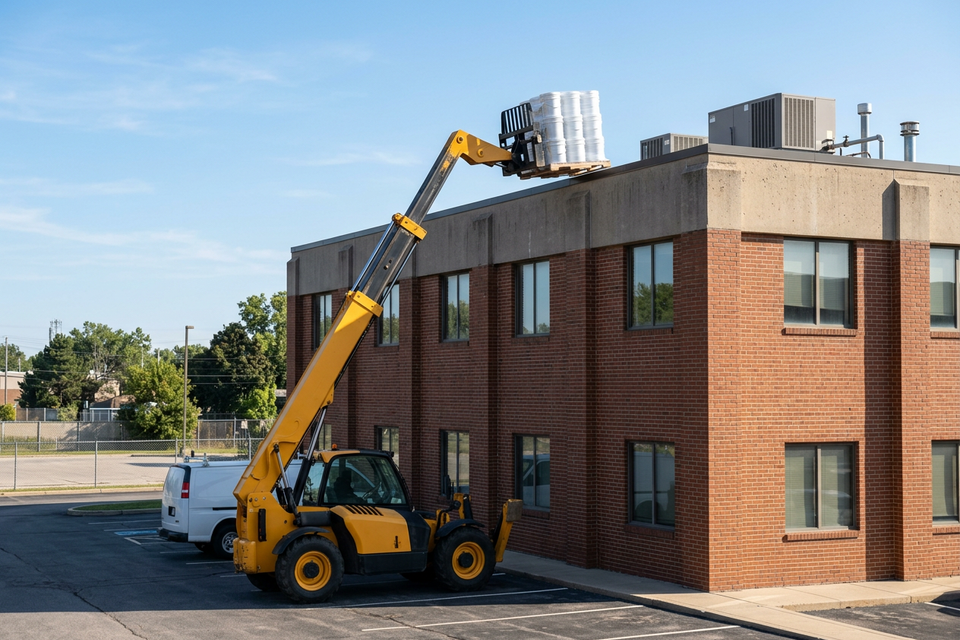
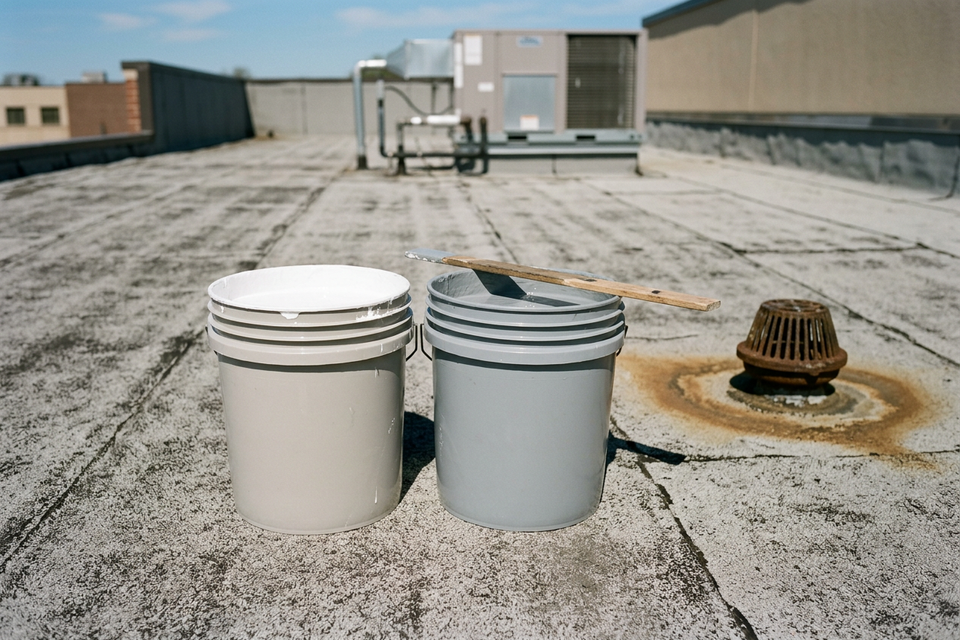
The coatings are stocked by the 5-gallon pail, the 55-gallon drum and the 275-gallon tote, and stocked items ship in 1–3 business days. Pails and cartons go by parcel or pallet, drums and totes by freight; say whether the site has a dock, and where it has none we quote a lift-gate. Solvent-based coatings, asphalt primers and aluminum coatings ship as regulated freight. Anything not on the shelf is ordered in, and the quote, answered within one business day, gives the ship date before you commit. How ordering works has the sequence.
The material count comes off the scope, and the scope off the survey: the measured areas and detail lengths, which the material estimator turns into pails and drums by coat. Because water-based acrylic must not freeze, a cold-climate delivery is timed to the start date, not to the budget approval.
Who decides
- The contractor sets the start date, reads the data sheet and the roof that morning, and owns the means and methods; a written specification outranks this page. Ask which data sheet the crew works to, how surface temperature and dew point are checked, and what happens if rain comes. If you have no contractor, we work with a network of installers — roofing contractors who apply these systems — and can introduce you to one anywhere in the US, who looks at the roof and says whether it is a good candidate for restoration.
- The manufacturer inspects the finished roof before it issues a system warranty, so that inspection belongs in the schedule. Sherwin-Williams offers UNIGUARD system warranties of 10 or 15 years when one of its authorized contractors applies the system. The warranty is the manufacturer’s, issued under its own terms; we supply the materials.
- The building’s engineer decides anything structural, the building department what the work needs at that address, and the owner’s accountant how it is treated on the books.
From scan to finished roof sets out every step and who does each one. If the roof has not been surveyed, the calendar starts there: request a moisture scan with the building’s address. We arrange scans for commercial low-slope roofs anywhere in the US. Nothing about the roof has to be decided until you have seen the map.
Last updated 2026-10-05.