Roof coating warranties: what they are and what they ask of you
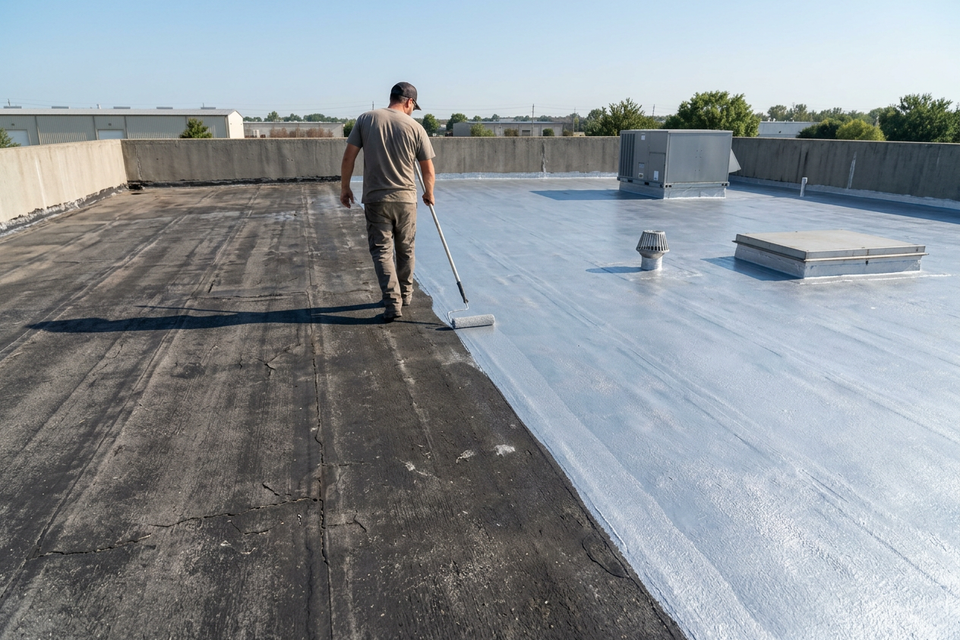
A coated roof can carry two different warranties. A product warranty comes with the material and concerns the material alone. A manufacturer’s system warranty is issued for one roof, after the job, and manufacturers’ specifications typically ask for six things first: a contractor the manufacturer has authorized, a moisture survey with the wet insulation taken out, adhesion tests, a dry film thick enough for the term, the manufacturer’s own inspection of the finished roof, and maintenance by the owner afterwards.
Nearly all of that is settled before and during the work. So decide whether you want a system warranty before anyone prices the job, and read the document before you sign.
Two warranties, and who issues each
A product warranty comes with the product and speaks to the material itself: on the data sheet, typically that it is free of defects in material and manufacture, with replacement product as the remedy. It says nothing about how or where the material was applied.
A manufacturer’s system warranty is issued for one named roof, for a term in years, typically after one of its authorized contractors has applied the complete system to its specification and the manufacturer has inspected the result. Sherwin-Williams offers UNIGUARD system warranties of 10 or 15 years when one of its authorized contractors applies the system. The warranty is the manufacturer’s, issued under its own terms; we supply the materials.
| Product (material) warranty | Manufacturer’s system warranty | |
|---|---|---|
| Who issues it | The manufacturer | The manufacturer |
| What it concerns | The material as supplied | The coating system as applied on one named roof |
| What comes first | Buying the product | An authorized contractor, the specification followed, the manufacturer’s inspection |
| Where the terms are | The data sheet or the product’s warranty document | The warranty document for that roof |
A third promise is ours as the seller: the goods are warranted to match their description and to be free of manufacturing defects when delivered. What the contractor warrants for its own work is separate; ask for it in writing.
What manufacturers’ specifications ask before a system warranty
Each maker writes its own specification and warranty document, but published specifications ask for much the same six things.
- An authorized contractor. A manufacturer issues a system warranty on work by a contractor in its own program. Confirm the contractor’s standing with the manufacturer, for this system, before you sign; choosing a contractor covers the rest.
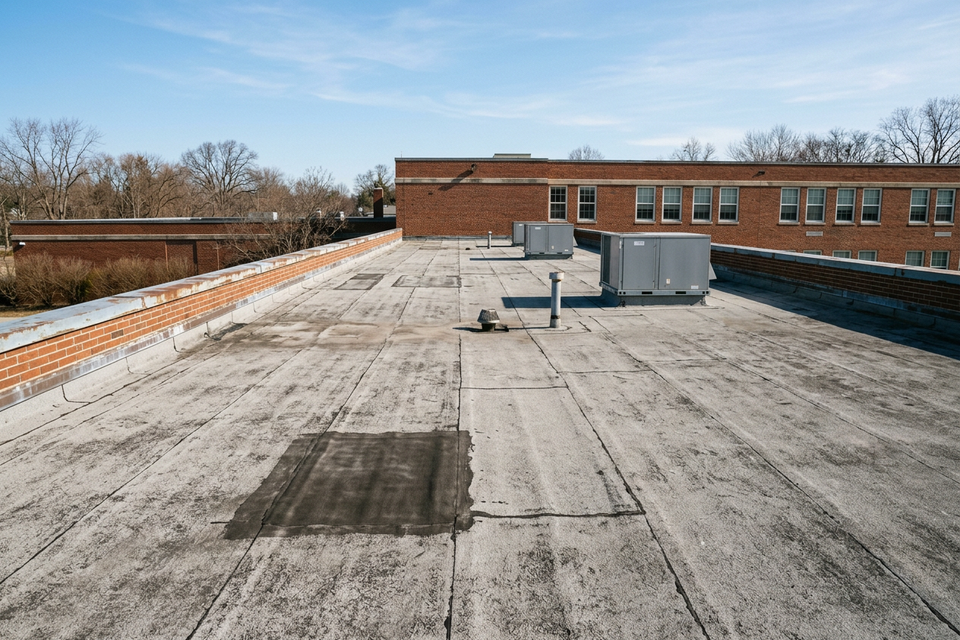
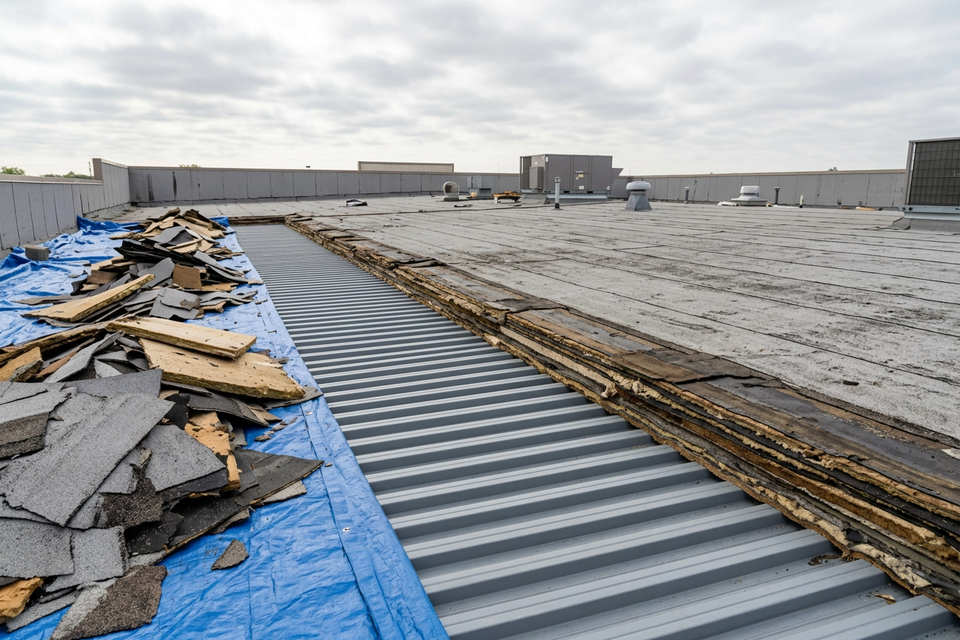
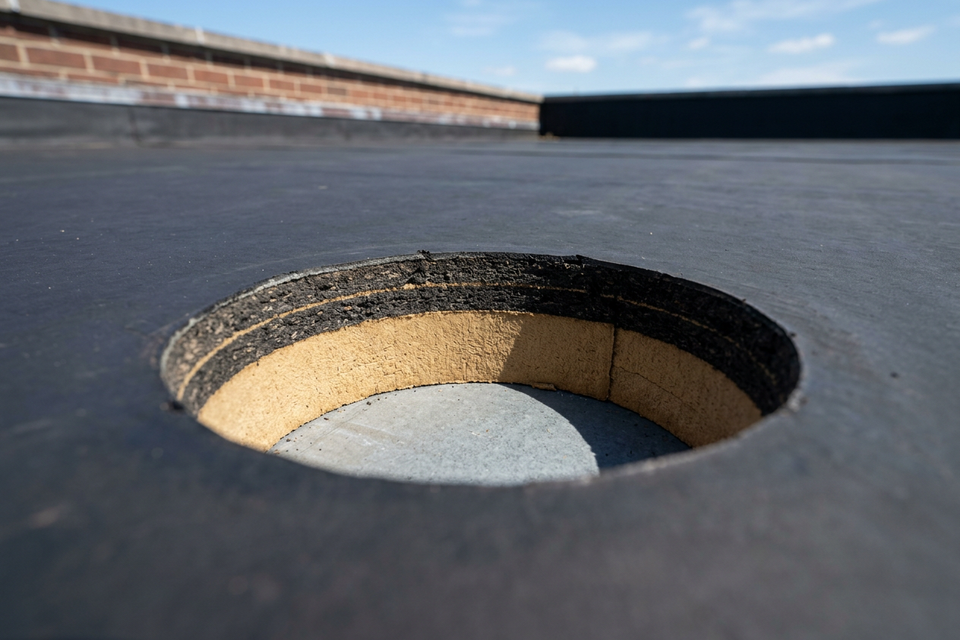
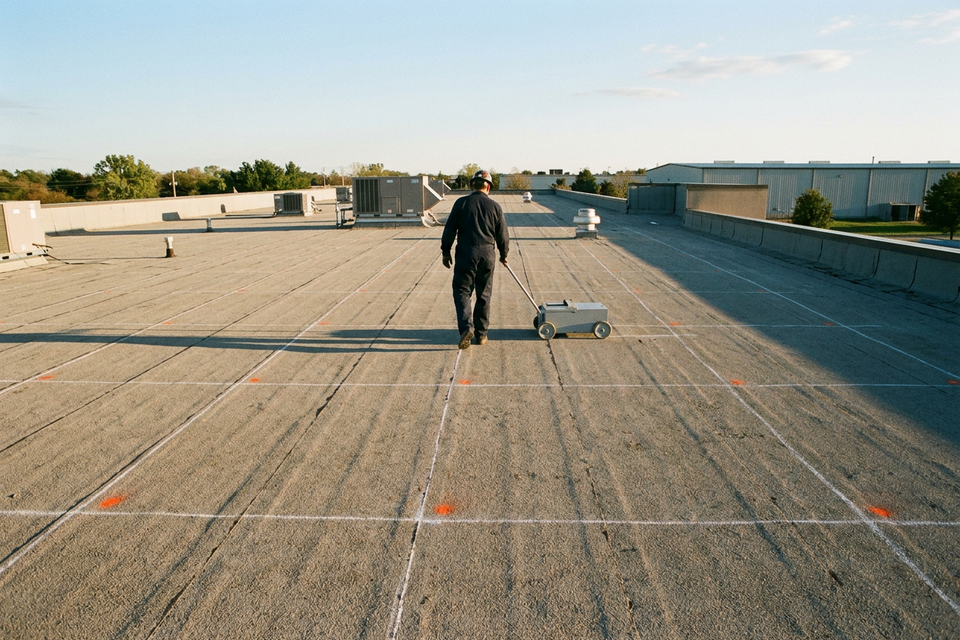
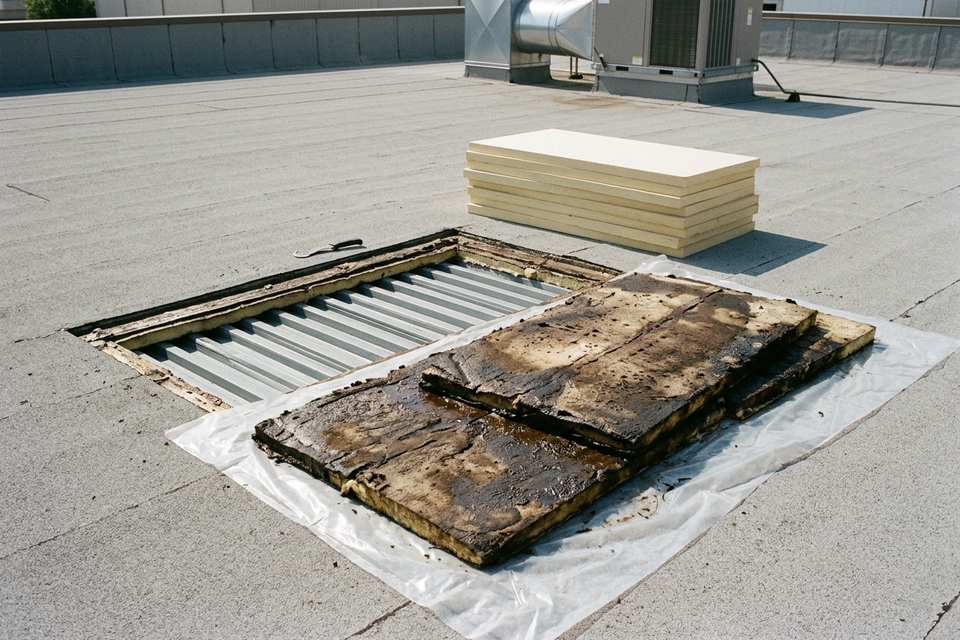
- A moisture survey, and the wet insulation out. Specifications ask for the roof areas to be inspected for moisture, the wet areas drawn on a roof plan, and wet insulation removed and replaced before any coating. Sherwin-Williams’ Uniflex moisture survey requirements make it explicit: a moisture survey on every Uniflex system-warranty project, by a qualified person, and a third-party survey where a 15-year warranty is requested. Which survey a maker accepts, and whether it accepts a given one, is the maker’s call; infrared, nuclear, capacitance and core sampling all appear in published specifications. ASTM C1153 is the standard practice for locating wet insulation with infrared imaging.
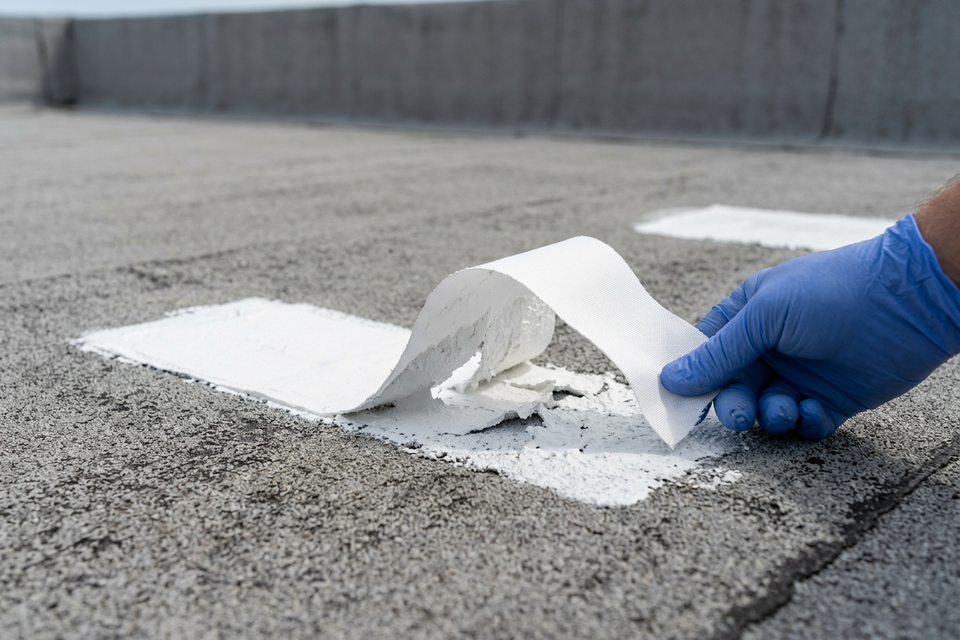
- Adhesion tests. Specifications call for adhesion tests on the roof’s actual substrates, with the results sent to the manufacturer; some name ASTM D4541, the pull-off test, as the method. The adhesion test patch explains the test.
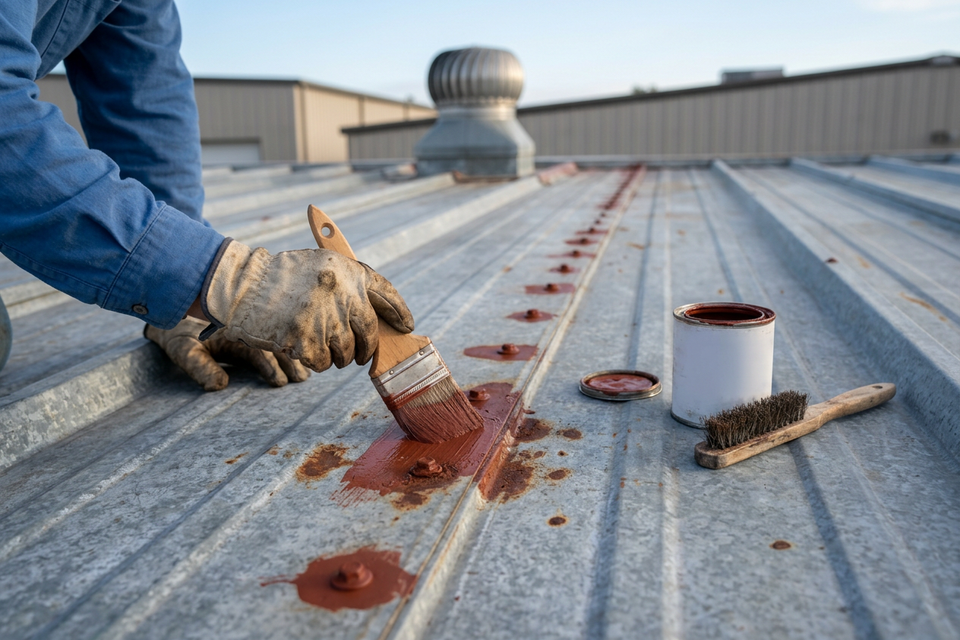
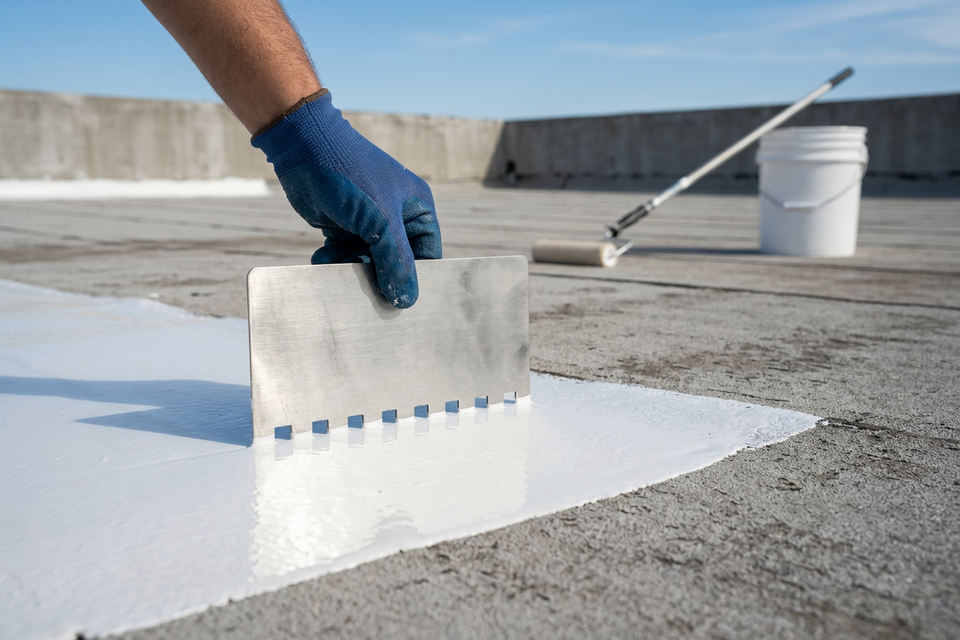
- A dry film to match the term. Specifications set the dry film thickness by warranty term: a longer term calls for a thicker film, so more gallons per 100 sq ft. Two prices for the same roof can be prices for two different films. The schedule is the manufacturer’s and we do not reprint one; Wet mils, dry mils and coverage has the arithmetic.
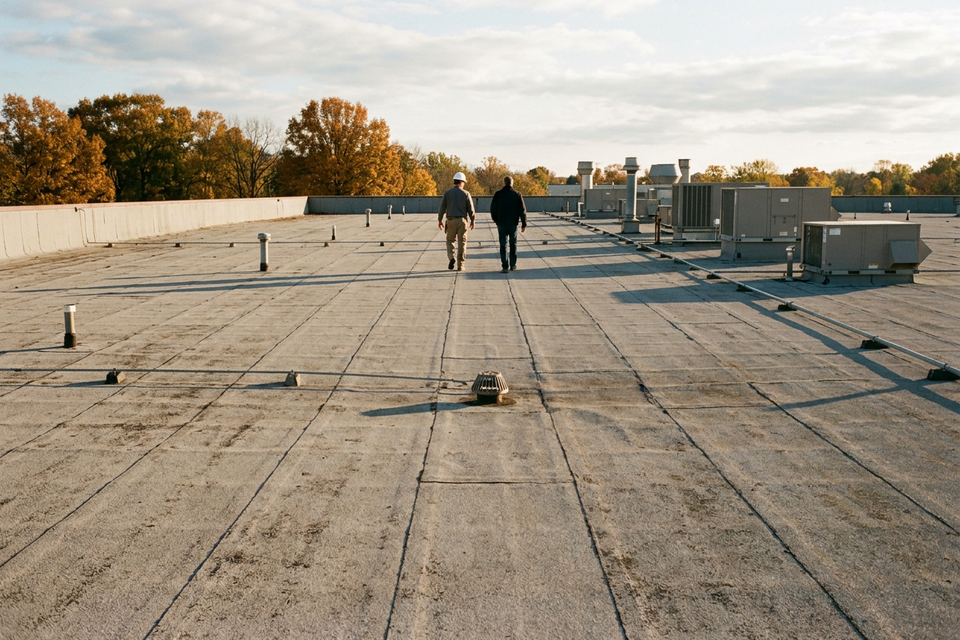
- A final inspection. The manufacturer inspects the finished roof before it issues a system warranty. Until that has happened and the document is in your hands, the warranty is an intention.
- Maintenance by the owner. Warranties commonly make maintenance by the owner a condition: the roof kept up as the manufacturer’s maintenance guidelines describe. Keep a dated log of inspections and repairs; Looking after a coated roof sets out a routine.
Some specifications also ask for photographs, inspection reports and the substrate’s condition to reach the manufacturer before the job is bid, so its approval is in hand before work starts. None of this is our list, and none of it states any one warranty’s terms; the specification and warranty document for your roof govern.
What a system warranty generally is not
A system warranty generally concerns the coating system that was applied, not the existing roof or the deck beneath it. It is not automatic: buying the materials does not create one, nor does having a moisture survey flown, ours included, and even an authorized contractor’s job carries one only when the manufacturer issues it. And a term is not a forecast: how long a coating actually serves is decided by the roof underneath, the film, the details and the upkeep, which How long a roof coating lasts takes up.
No general guide can tell you what a particular warranty says. Read the document; the manufacturer’s terms govern.
Questions to ask before work starts
Put these to the contractor, and to the manufacturer’s representative where the answer is theirs.
- Which warranty is in this price: the product warranty only, or a manufacturer’s system warranty, and for what term?
- Are you authorized by the manufacturer for this system today, and who there can confirm it?
- Is the job being registered for the warranty, and what has the manufacturer asked to see before work starts?
- Which moisture survey and report will the manufacturer’s representative accept, and what happens to the areas it marks?
- Where will adhesion be tested, and who receives the results?
- What dry film is this price built for, and how is it checked while the work goes on?
- Who calls for the final inspection, and when?
- Is there a charge for the warranty or the inspection, and is it in this price?
Read the warranty document before you sign, looking for the things that vary: the term and when it starts, what is excluded, the remedy and any limit on it, how and to whom a problem must be reported, what it says about standing water and about later work on the roof by other trades, whether it passes to a new owner, and what maintenance and records it asks of you. A warranty is a contract; where a point matters, have your attorney read it.
Contractors: bring the manufacturer’s representative in before you bid, not after.
Why the scan report and the core log belong in the file
Coating makers, Sherwin-Williams included, require wet insulation to be found and replaced before a coating goes on. The paper that shows it was done is a roof plan resting on two records: the survey report and the core log.
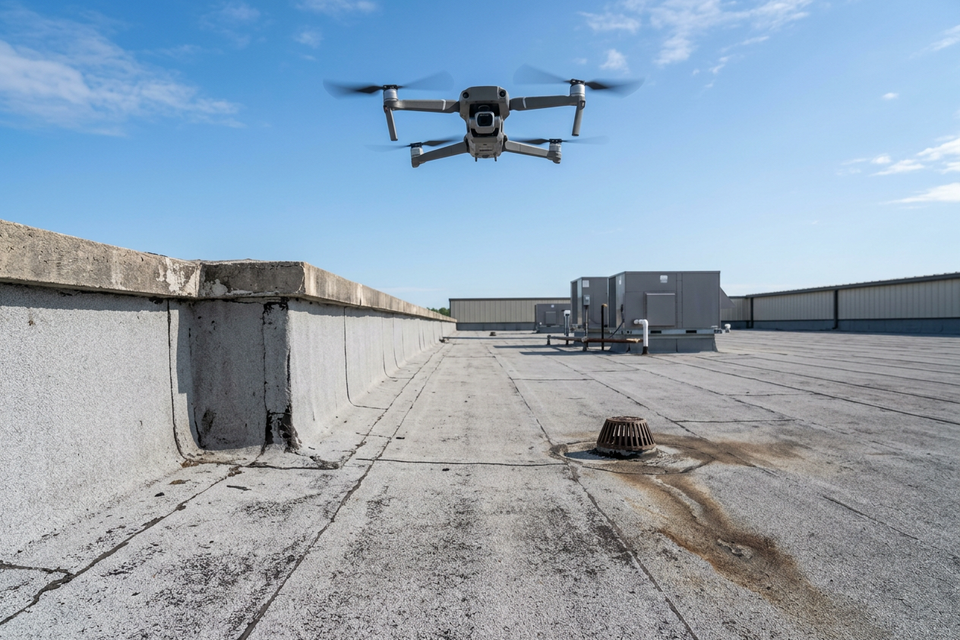
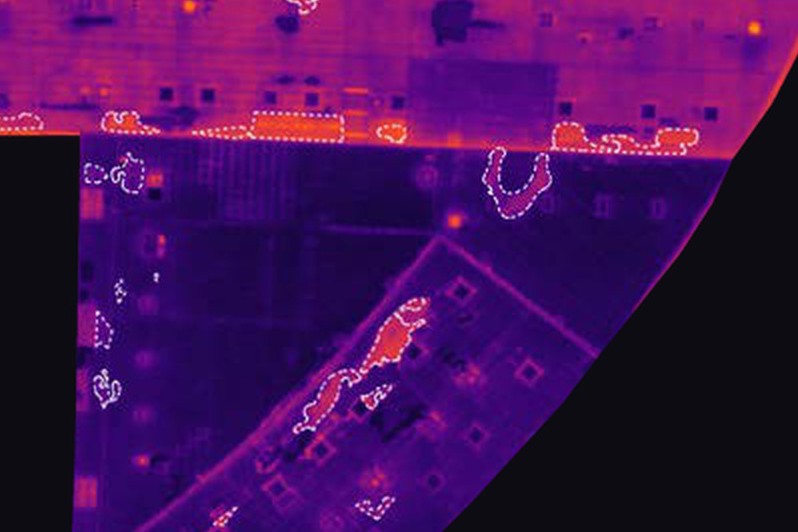
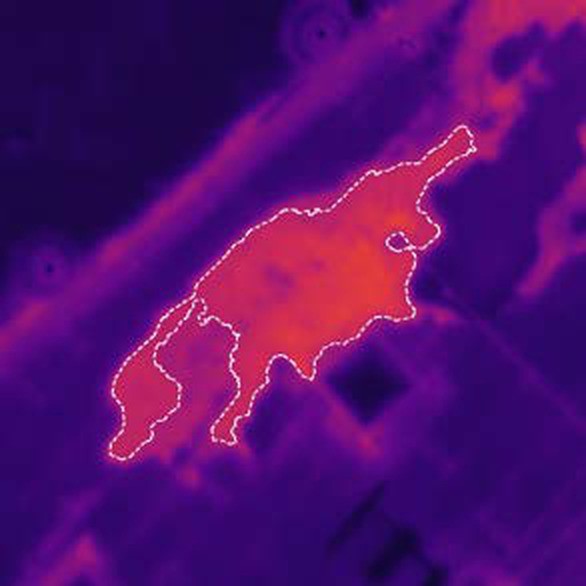
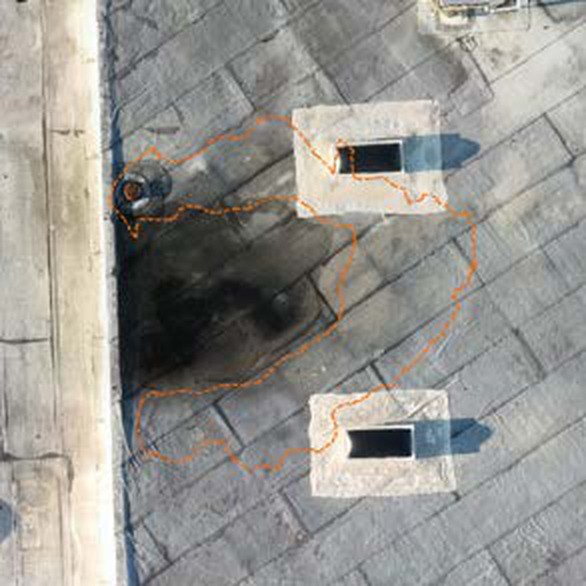
With our drone moisture scan, a drone with a thermal camera flies over the roof on an evening after a sunny day, once the sun has set. Wet insulation under the surface holds the day’s heat longer than dry insulation, so it shows up warmer on the images, and you get a map with any areas that look wet outlined and measured in square feet, along with video from the flight and a written assessment of what the scan found. A thermal camera shows temperature differences, not water, so those areas are then confirmed with small core samples. It usually takes one evening, nobody has to walk the whole roof, the building runs as normal, and we fly only with the owner’s go-ahead. The scan marks suspects; the cores confirm them. The core log records each cut: where, what was found, and how it was patched.
Keep both, with the plan of what was cut out and what went back.
- The manufacturer’s representative may ask to see them. Whether a survey and plan satisfy a specification is the representative’s call, so ask before the survey is booked.
- They record what was under the membrane on the day it was coated. A white coating makes later thermal work harder, so the survey before the coating is the easiest one to get.
- They answer questions years later, when a problem is reported, the building is sold or the roof comes up for another coat.
Add the adhesion test results, the specification and data sheets, the film checks, photographs of the details before the field coats covered them, the warranty document and the maintenance log. What the file does not do is make a roof eligible for anything. No scan, no report and no purchase does that.
Who decides
- The manufacturer decides whether a system warranty is issued, for what term, and on what terms.
- The contractor applies the system to the specification, owns the means and methods, and deals with the manufacturer on registration and inspection.
- The owner decides whether a system warranty is wanted, reads the document, looks after the roof and keeps the file.
- We supply the materials, arrange the scan, and can introduce you to one of the installers we work with anywhere in the US, a roofing contractor who looks at the roof and says whether it is a good candidate for restoration. We do not issue a system warranty, and nothing we sell or arrange confers one. Put the authorization question to every contractor, one we introduce included.
If a commercial low-slope roof has not been surveyed for moisture, start there: request a moisture scan with the building’s address. We arrange scans for commercial low-slope roofs anywhere in the US. If you know the roof, the system and the term, send the area, the substrate and the detail counts through the quote form and say a system warranty is wanted, so the material list matches that specification.
Last updated 2026-10-05.