Coating, recover or replacement: three ways to renew a flat roof
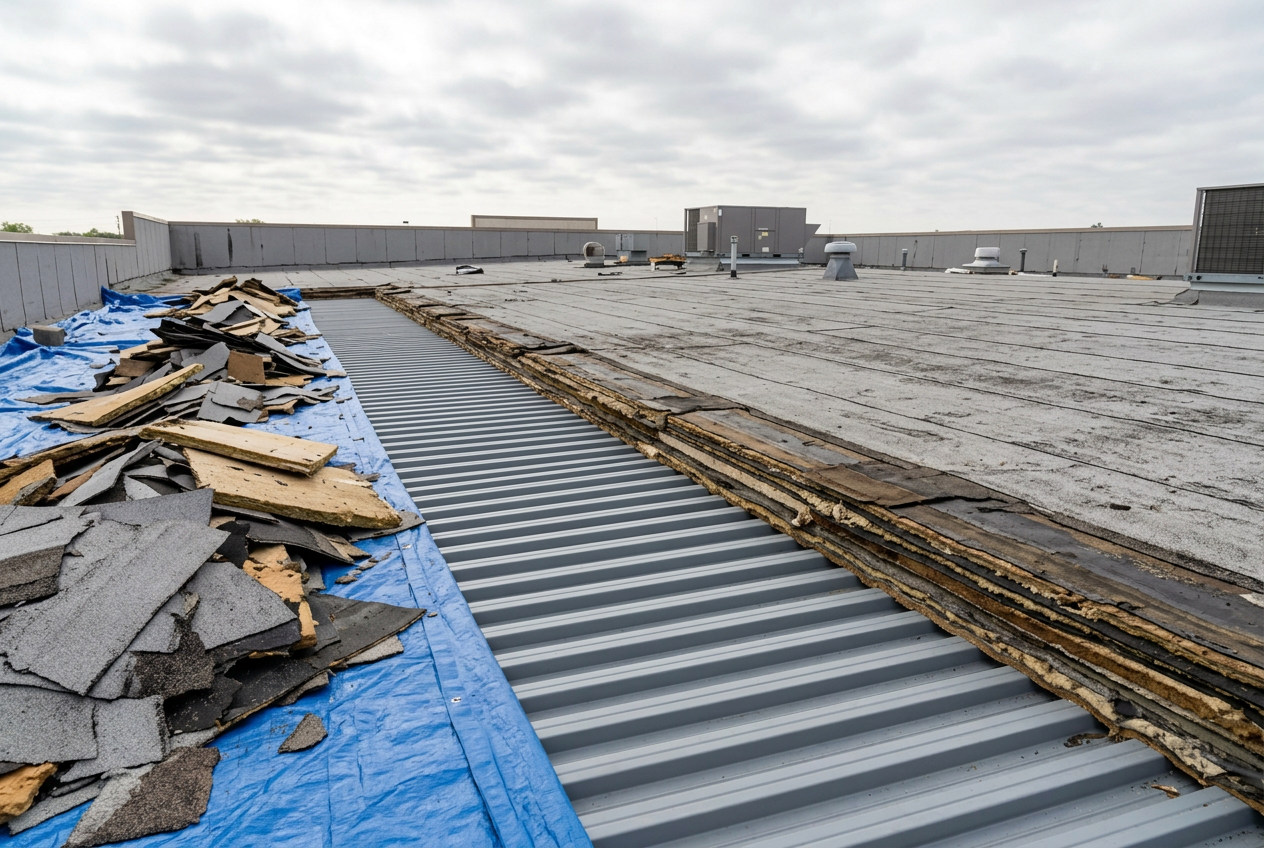
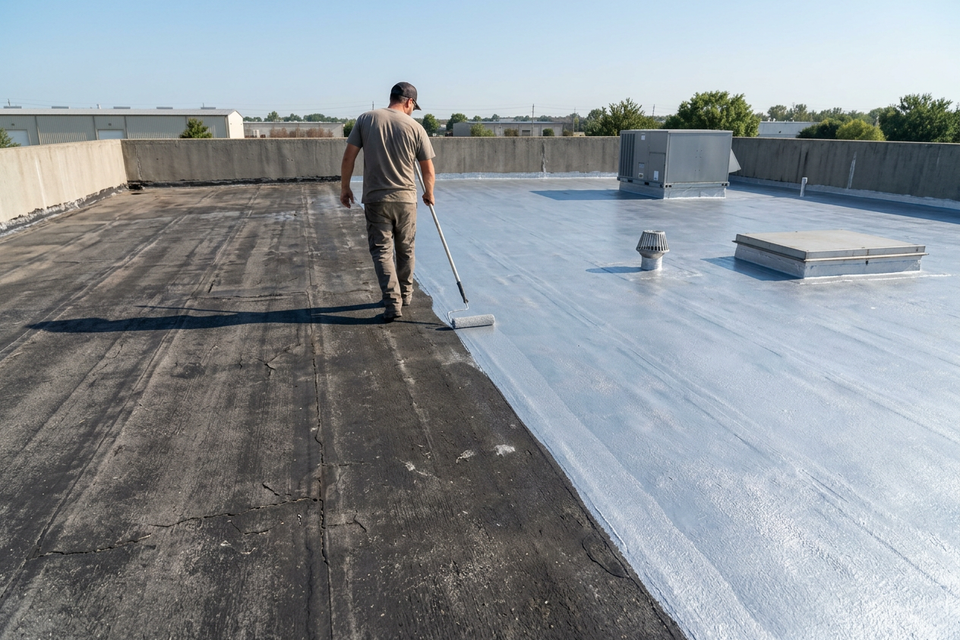
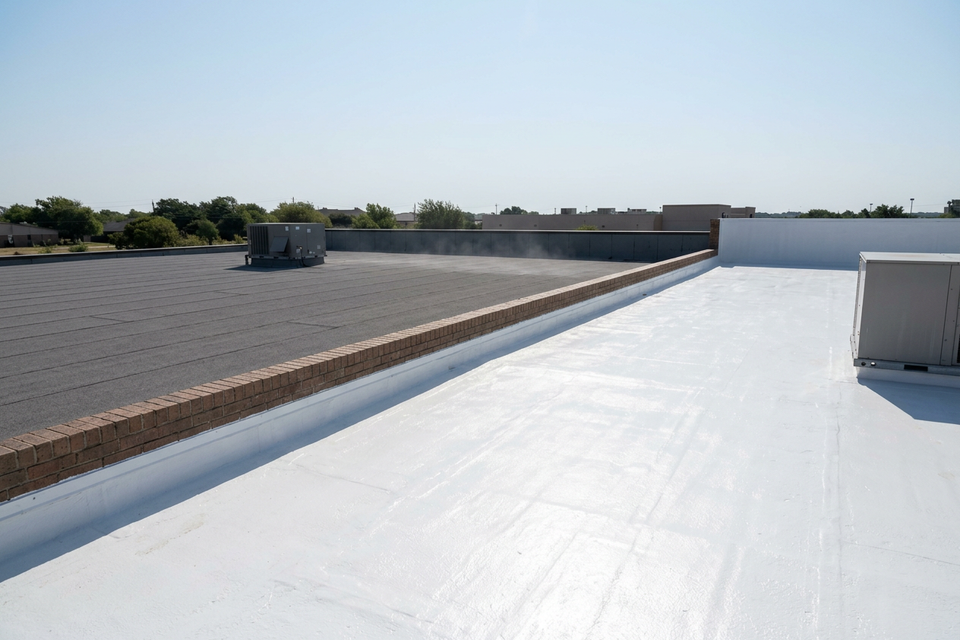
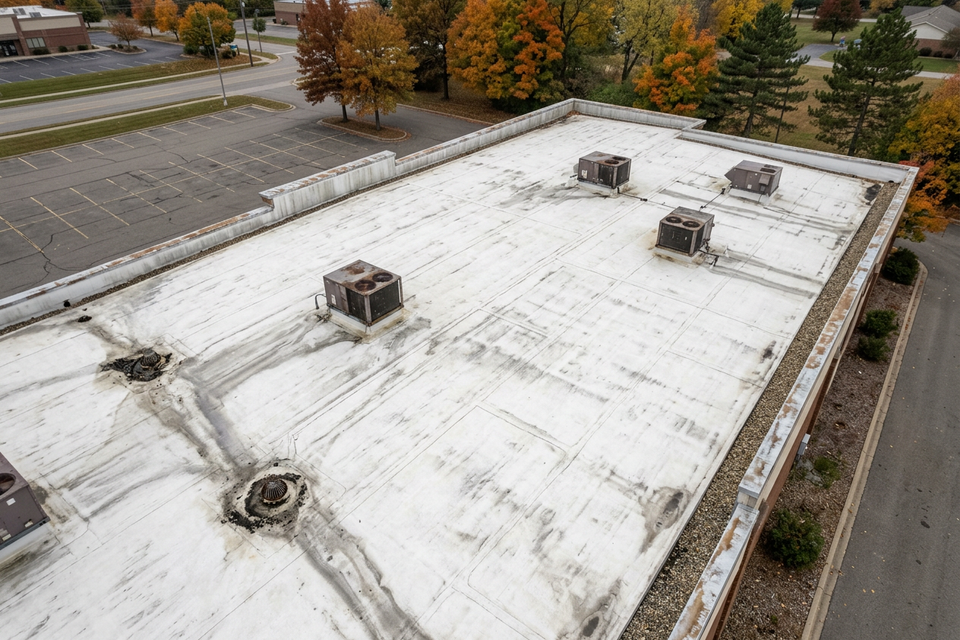
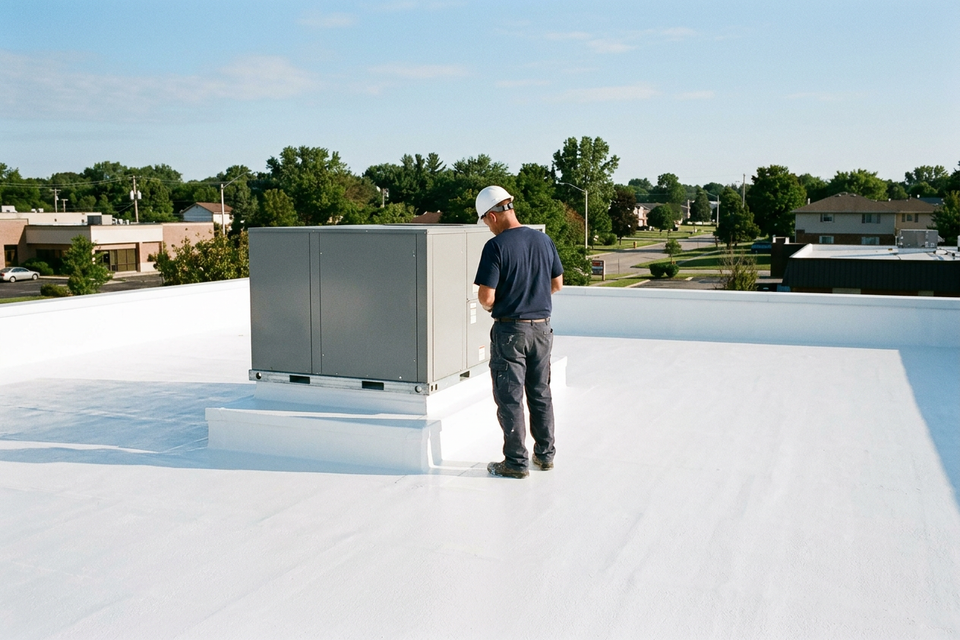
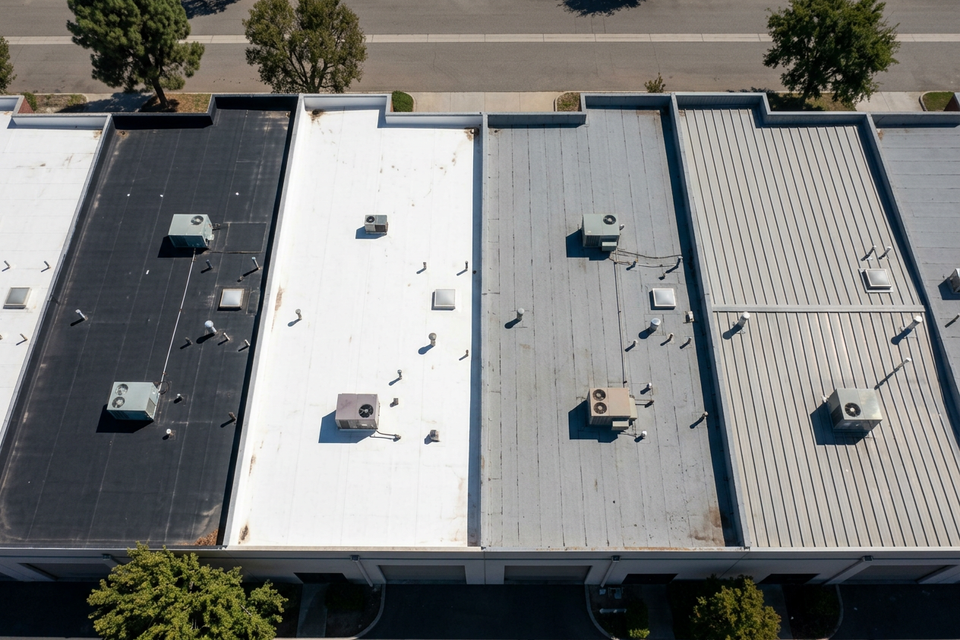
A low-slope roof can be renewed three ways. A coating restoration puts a new fluid-applied surface on the roof that is already there. A recover lays a new membrane over the old roof. A tear-off strips everything to the deck and builds a new roof. Cost rises in that order, and the less you remove, the sounder and drier the existing roof has to be.
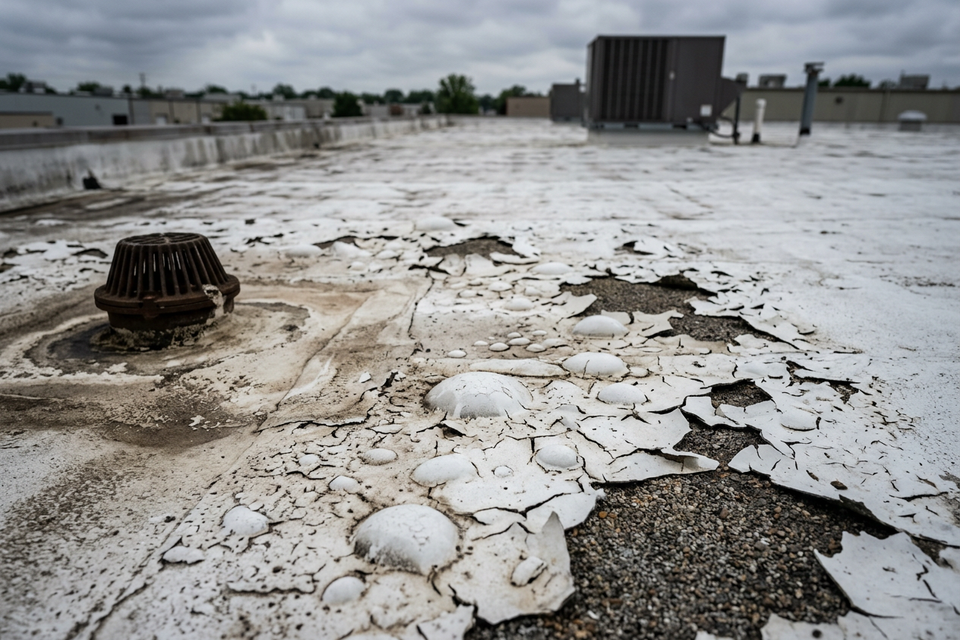
The roof makes most of the choice. How much insulation is wet, how many roof coverings are already on and what shape the deck is in decide which of the three are open. A moisture survey, a few cores and a look at the deck answer that before anyone prices anything. The working rule: do the least the roof’s condition allows.
The three, side by side
| Question | Coating restoration | Recover | Tear-off and replacement |
|---|---|---|---|
| What it is | Primer where needed, reinforced details and the coats on the existing membrane | A new membrane over the existing roof, which stays in place | Every layer removed to the deck, then a new roof |
| When it fits | Deck sound, insulation dry, membrane largely intact and attached | Membrane too worn to coat, on a dry, sound roof with one covering | Much of the insulation wet, deck in doubt, or no further covering allowed |
| What rules it out | Widespread wet insulation, membrane failure through the field, structural problems | A water-soaked roof, two or more coverings, a structure that cannot take the weight | Nothing about the roof; only cost and disruption |
| Disruption | No tear-off; the building stays open | Old roof stays on, so nothing is stripped to the deck | Roof opened to the deck; every layer hauled away |
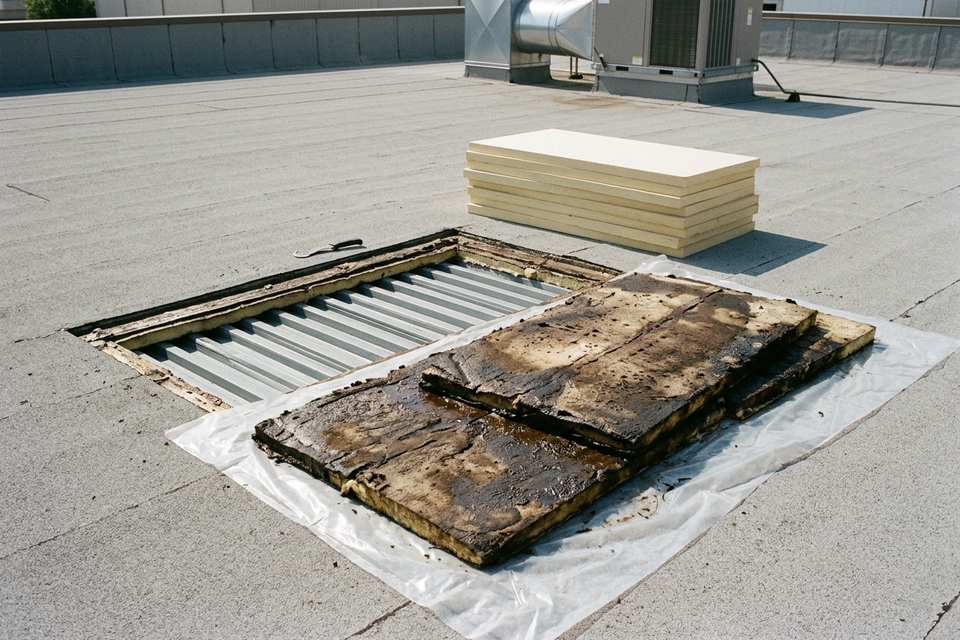
| Wet insulation | Cut out and replaced before coating | Cut out and replaced before the new membrane | Removed with everything else |
| Who signs off | Contractor; manufacturer for a system warranty; building department on permits | Building department on coverings and permit; engineer on added weight | Building department on permit and current code; engineer on the deck |
The first column restores the roof you have; the other two are new roofs. Applied over a sound, dry roof, a restoration system adds 10 to 15 years of service life. A recover and a replacement are new membranes sold on their makers’ terms; we give no lifespan for either, and we supply materials for the first column only. Can this roof be restored has the full candidate test.
What each one costs
Restoring a low-slope roof with a coating system typically runs $3.50 to $7 per square foot installed. Tearing it off and replacing it typically runs $10 to $18. Both are typical installed ranges drawn from published industry figures, not quotes; the roof’s condition, how much wet insulation has to come out, access and region move the number. Acrylic systems sit toward the low end of the restore range and silicone toward the high end, and Florida’s wind code keeps replacement in the upper half of its range.
We give no figure for a recover. It sits between the two: it buys a complete new membrane with its flashings and attachment, which a coating does not, but skips most of the stripping, hauling and rebuilding a replacement is priced on. Ask for it as its own bid line, and run the numbers for the other two.
What the building code says about layers and wet roofs
This is reference, not code advice. The International Building Code, which state codes such as Florida’s are built on, covers reroofing in Section 1512.
- A recover has conditions. It is not permitted where the existing roof is water-soaked or too deteriorated to serve as a base, or where the roof already has two or more applications of any type of roof covering. Then every layer comes off, down to the deck.
- A coating is handled separately. The 2021 edition lists roofs a new protective coating may go over without tear-off, among them built-up, modified bitumen, single-ply, metal panels and sprayed polyurethane foam. NRCA’s Professional Roofing magazine reported in 2022 that such a coating is not counted as another layer.
States amend the model. The Florida Building Code, 8th Edition (2023), keeps the water-soaked and two-coverings rules but not that list: the one coating exception in its reroofing text is for an existing sprayed polyurethane foam roof. Whether a coating counts as a roof covering under that text is a reading the building department makes for the address; Florida’s roofing trade association reads a maintenance coating as not one. Restoring a roof in Florida goes through the rest.
What each asks of the roof and the building
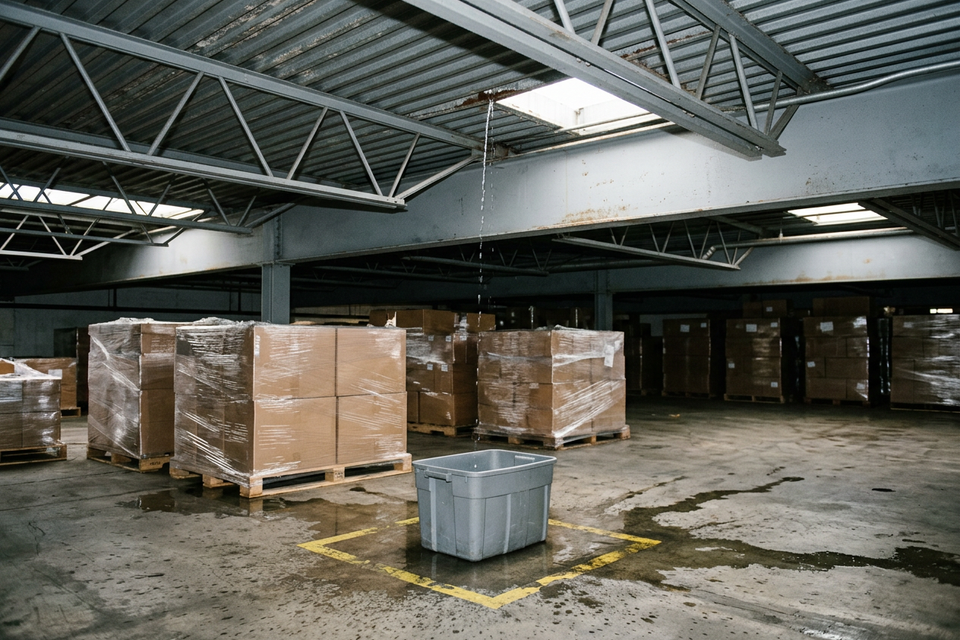
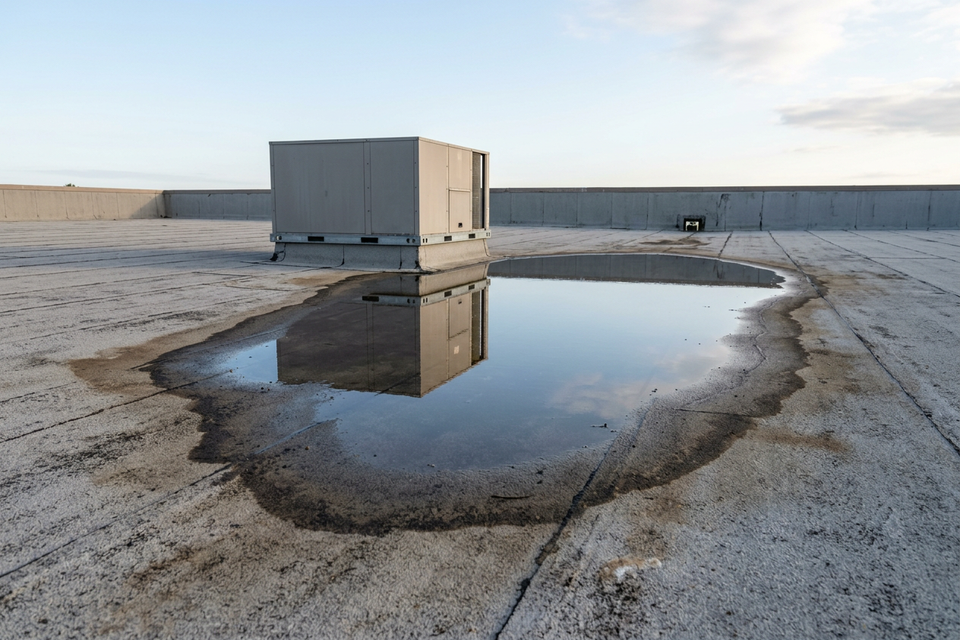
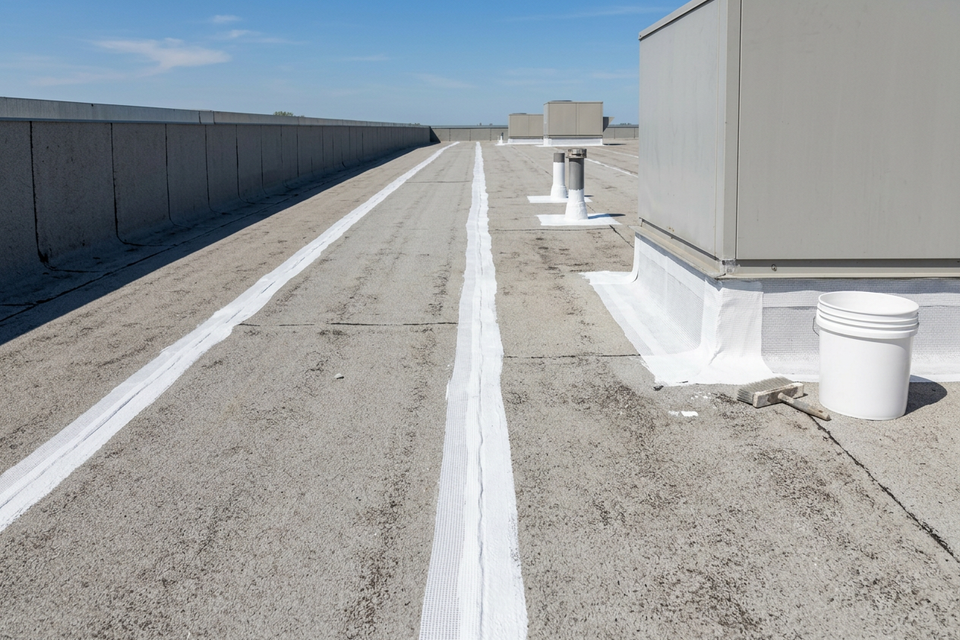
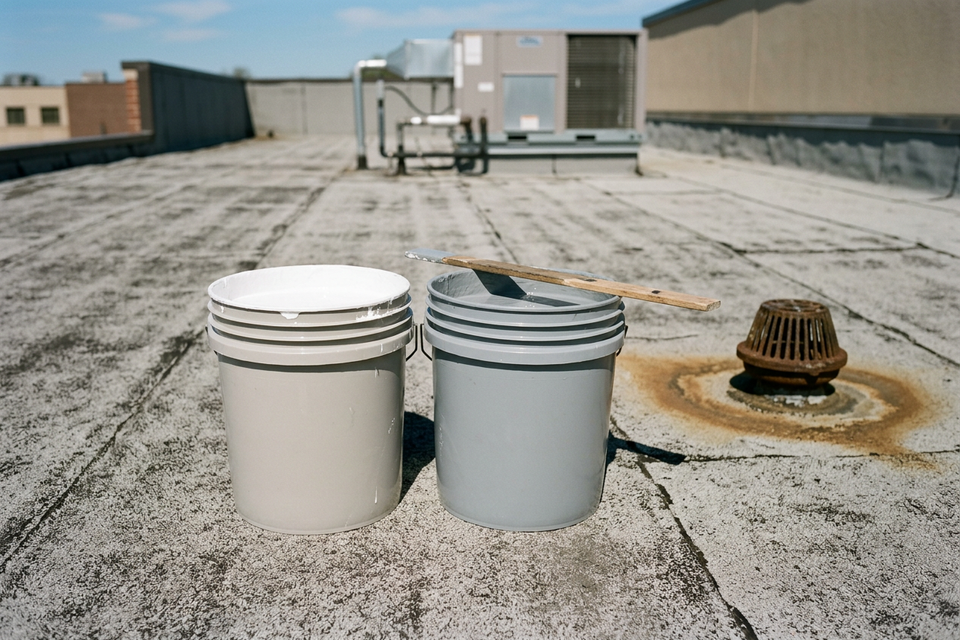
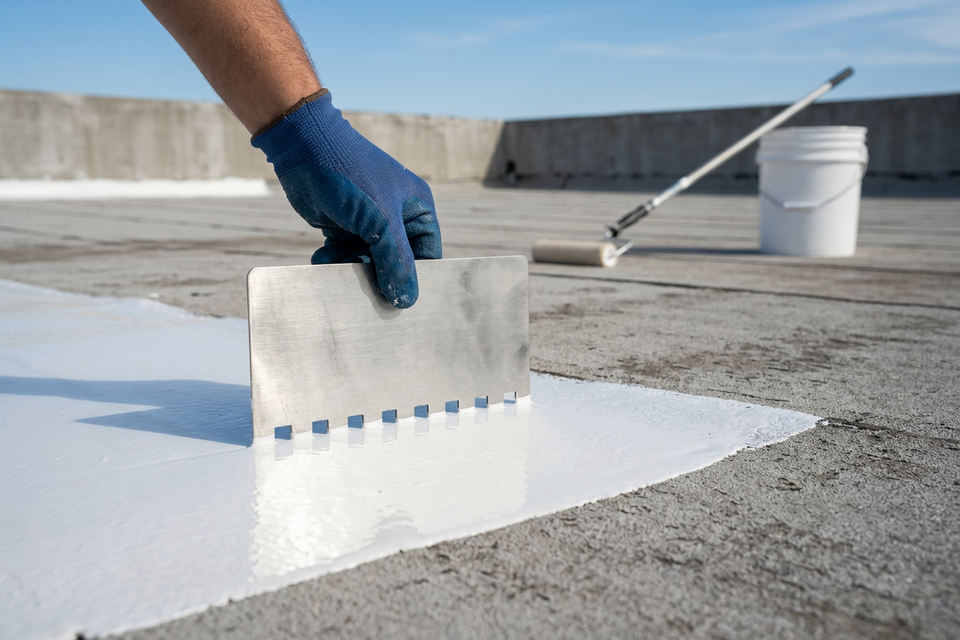
A coating. Coating makers, Sherwin-Williams included, require wet insulation to be found and replaced before a coating goes on; laid over a wet area, a coating seals the water in. Then the roof is cleaned, seams and flashings repaired, and the coating goes on with the building open throughout. It adds little weight.
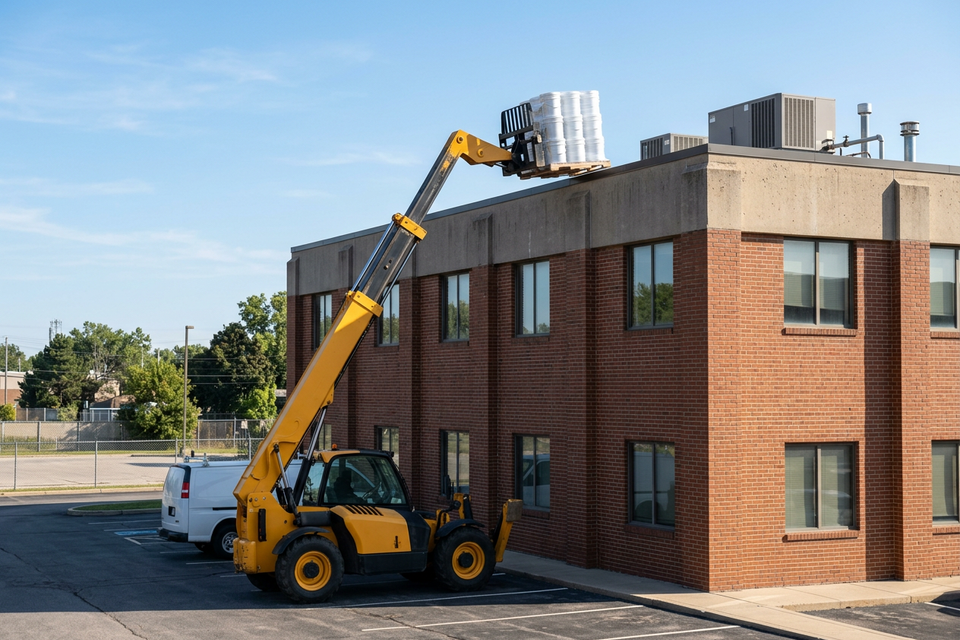
A recover. The same rule holds: trade press reports that manufacturers require a moisture survey before a recover so wet material is not sealed in. It adds the weight of another roof covering, which is the engineer’s question. Under the model code it also uses up the count: once two coverings are on, the next membrane goes on a bare deck.
A tear-off. Wet insulation leaves with everything else, and so does the dry. The roof comes open to the deck, so the work is planned around the people, stock and equipment underneath. Only a tear-off exposes the whole deck for inspection and repair. Florida’s Energy Conservation Code treats the two new roofs differently: a roof replacement must meet current insulation requirements where the existing insulation is entirely above the deck, while a recover is listed among the alterations that need not, provided energy use does not go up. The building department reads that for the address.
How to choose: what the survey, the cores and the deck rule in or out
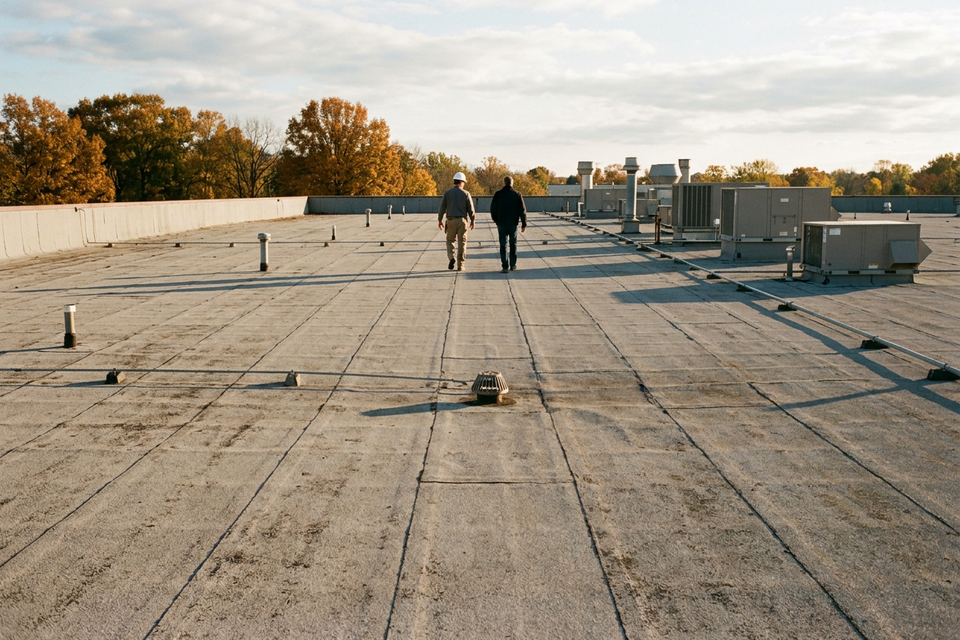
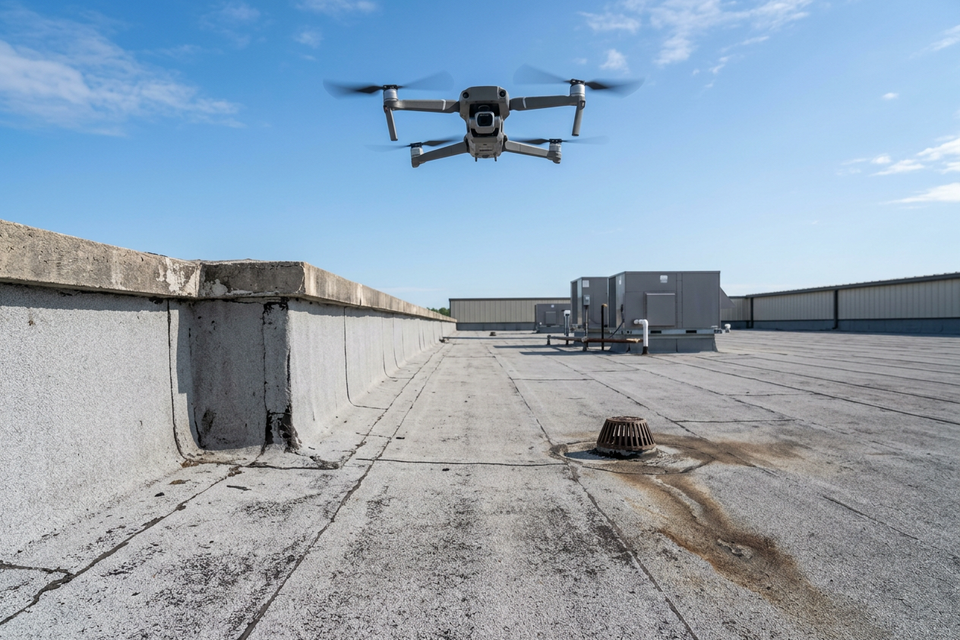
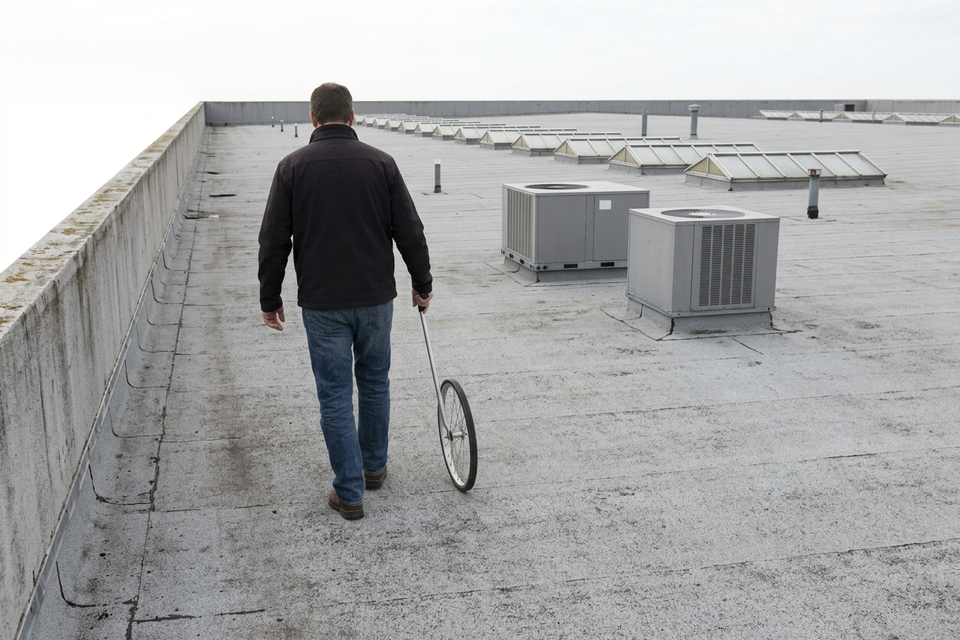
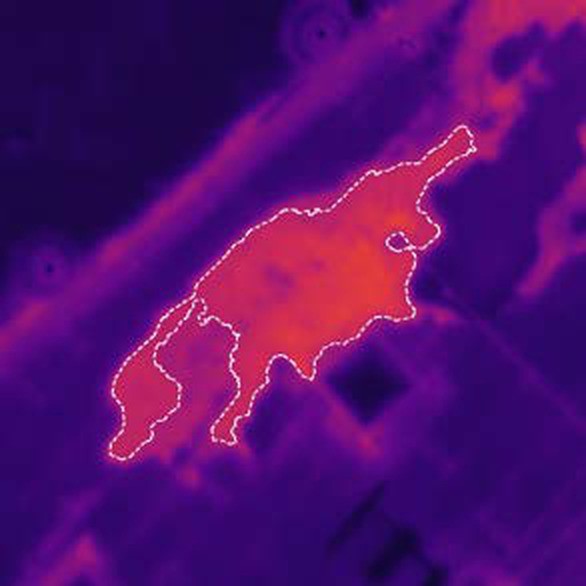
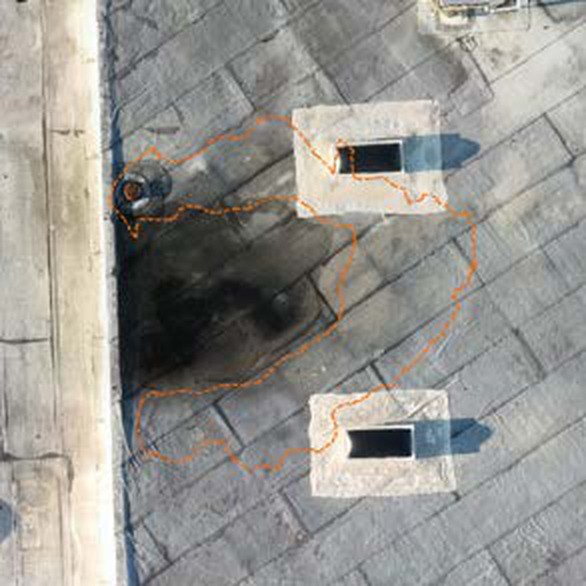
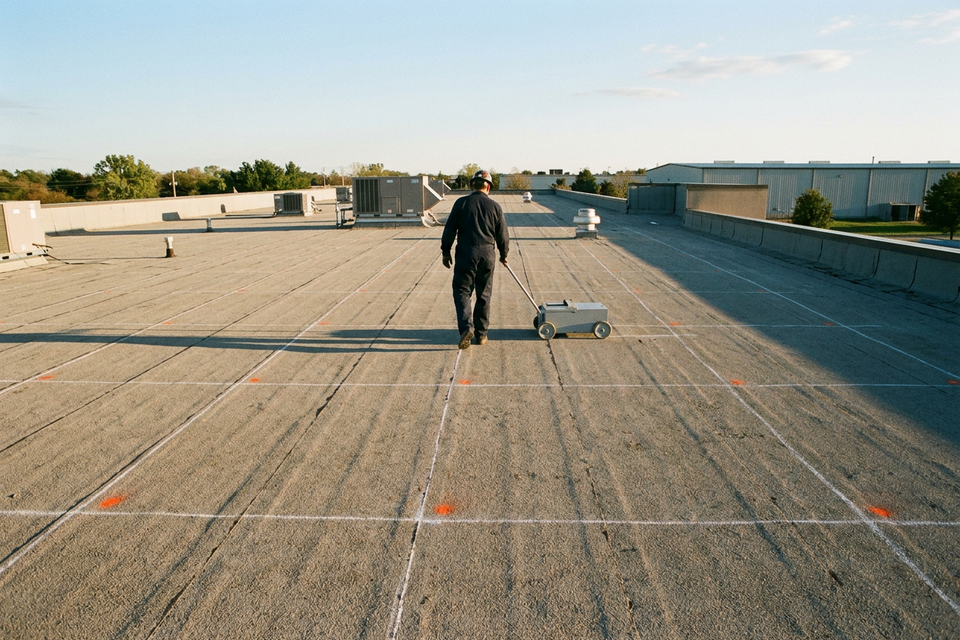
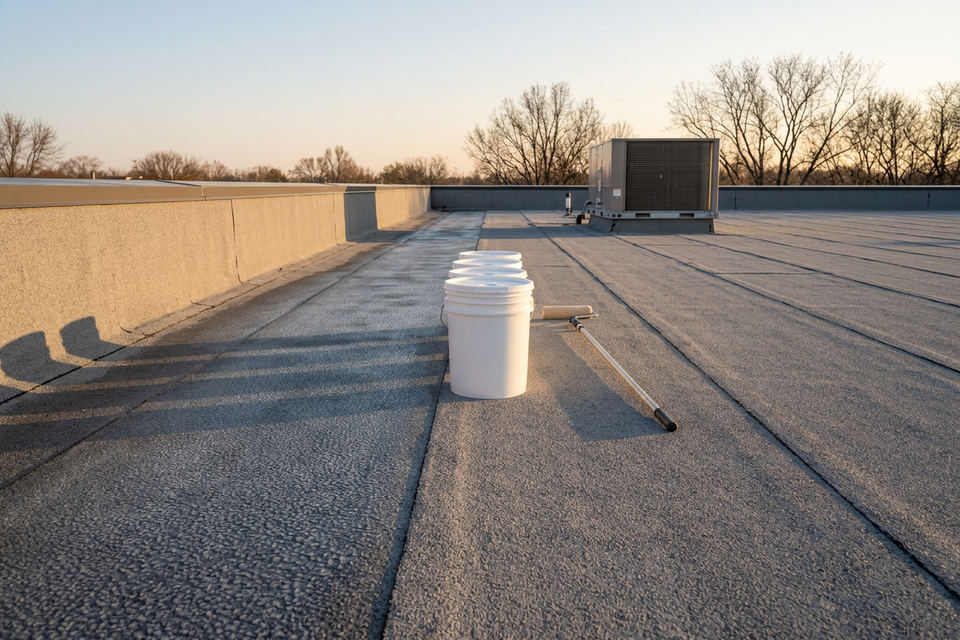
The survey comes first. Ours is a drone moisture scan: on an evening after a sunny day, once the sun has set, a drone with a thermal camera flies over the roof. Wet insulation under the surface holds the day’s heat longer than dry insulation, so it shows up warmer on the images. You get a map with any areas that look wet outlined and measured in square feet, video from the flight and a written assessment of what the scan found; the flagged areas are then confirmed with small core samples. It usually takes one evening, nobody has to walk the whole roof, the building runs as normal, and we fly only with the owner’s go-ahead. Roofs under ballast or pavers and metal panel roofs do not suit a thermal scan, and gravel-surfaced built-up roofs are a poor fit; those are usually surveyed another way.
- The survey says how much looks wet, and where. Little or nothing flagged leaves the coating and the recover open; a few areas leave them open with cut-outs first. Manufacturers commonly draw the line somewhere between 15% and 30% of the roof area, a rule of thumb, not a code or a standard. Past it, cut-and-replace becomes a replacement.
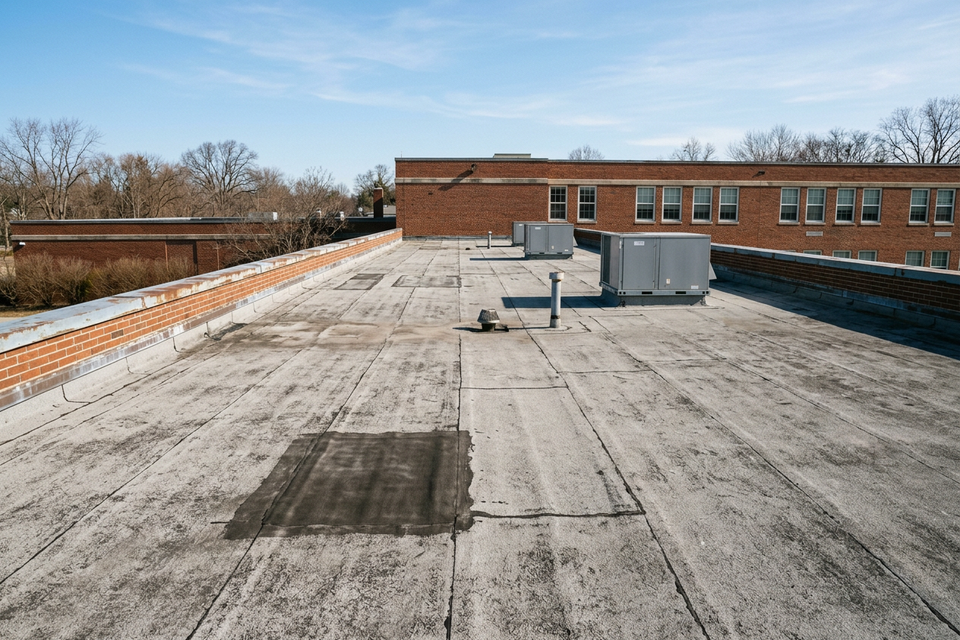
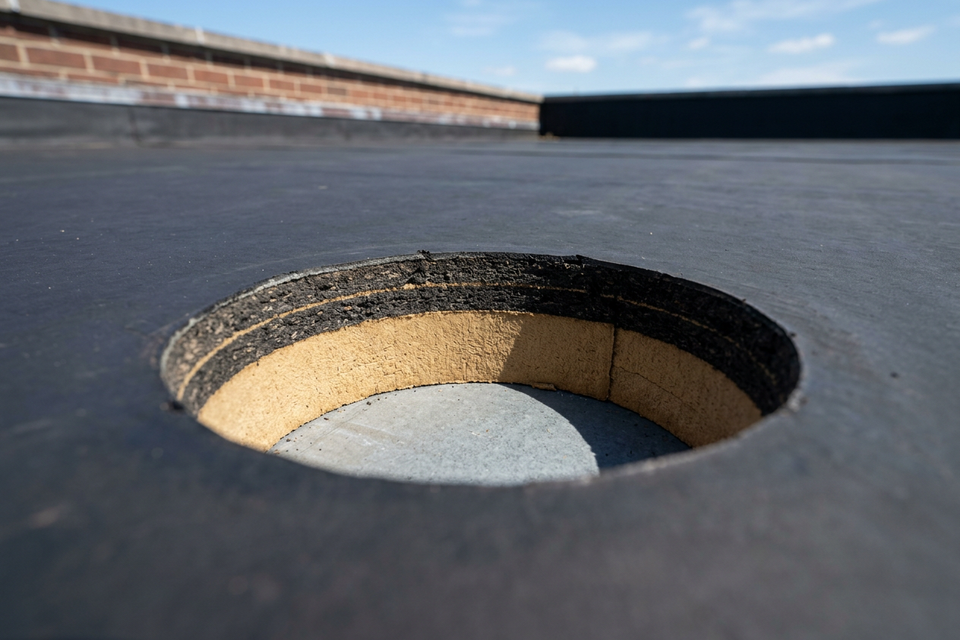
- The cores say what the roof is made of. The scan marks suspects; the cores confirm them. A core also shows how many roof coverings are in place. Two, and the recover is out under the model code’s count: the choice narrows to a coating, where the roof and the department allow it, or a tear-off.
- The deck says whether the lighter two are on the table. A sound deck keeps all three open. Rusted steel, rotted wood or a deck that moves underfoot goes to the building’s engineer, and deck that needs repair has to be exposed: under a cut-out, or everywhere in a tear-off.
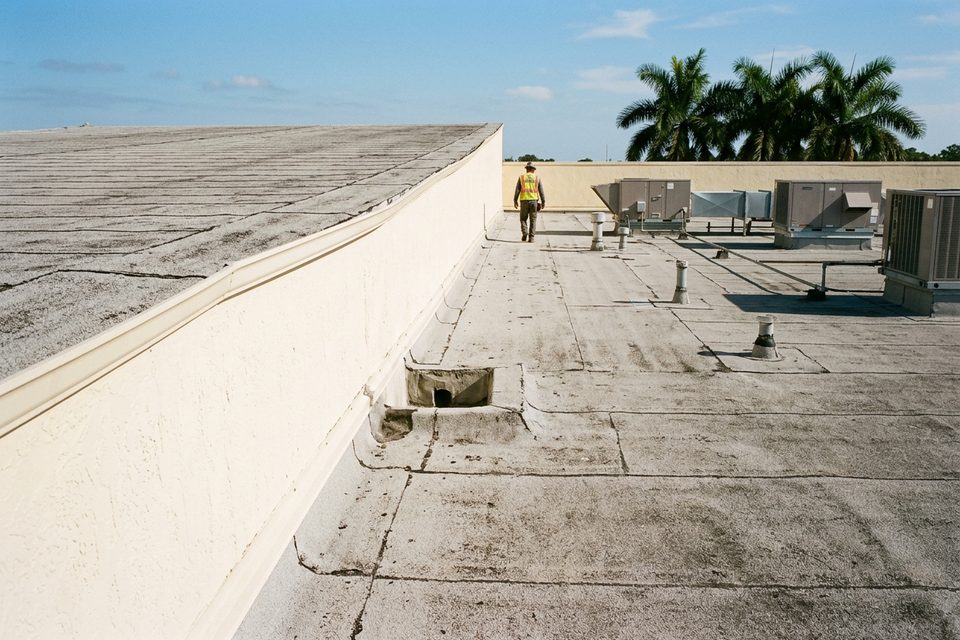
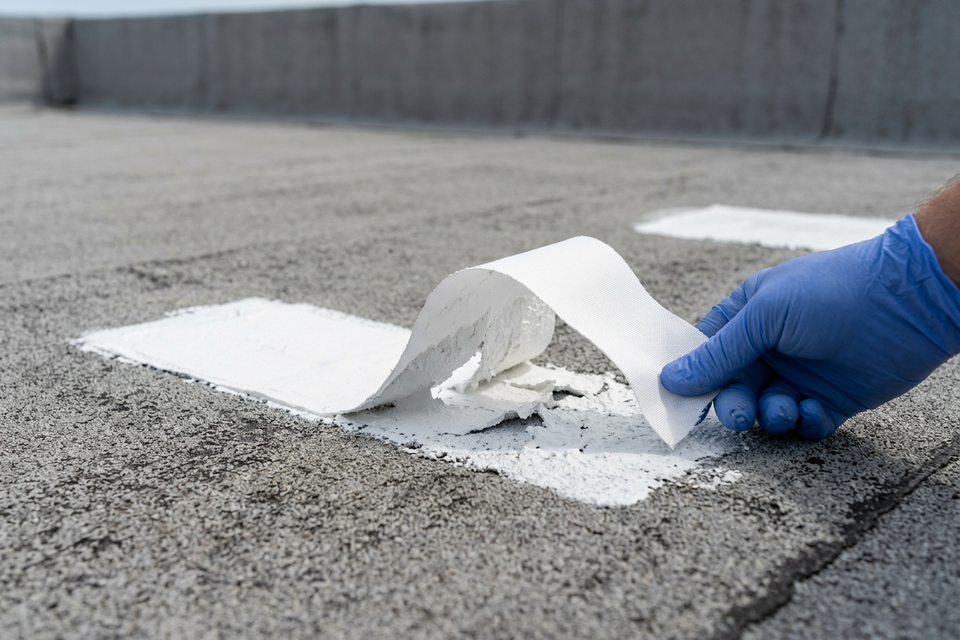
- The membrane sorts coating from recover. Weathered but attached, with splits at the laps that can be repaired one by one: a coating candidate, with an adhesion test patch to settle whether the system holds. Splits through the field or laps open along their length: past coating; the first three answers then pick recover or tear-off.
Who decides
- The contractor writes the scope. We work with a network of installers — roofing contractors who apply these systems — and can introduce you to one anywhere in the US, who looks at the roof and says whether it is a good candidate for restoration.
- The building’s engineer decides anything structural, including what may be added to the deck.
- The local building department decides what has to come off and what permits the work needs.
- The manufacturer issues any system warranty under its own terms, after inspecting the finished roof; we supply the materials.
- The owner’s accountant decides how the work is treated on the books.
What to ask before you take bids
- Was the whole roof surveyed for moisture, and which flagged areas were cored?
- How many roof coverings are on the building, and what does the building department say may stay?
- How many square feet come out, and what happens to the price if that grows once the roof is open?
- For a coating, was an adhesion test patch pulled? For a recover, who checked the added weight?
The restore-or-replace tool sorts a survey’s findings on the deck, insulation, membrane and drainage. The first thing it needs is what is wet, and the scan is how anyone finds out: request a moisture scan with the building’s address. We arrange scans for commercial low-slope roofs anywhere in the US. Nothing about the roof has to be decided until you have seen the map.
Last updated 2026-10-05.