Choosing a commercial roof coating contractor: what to check
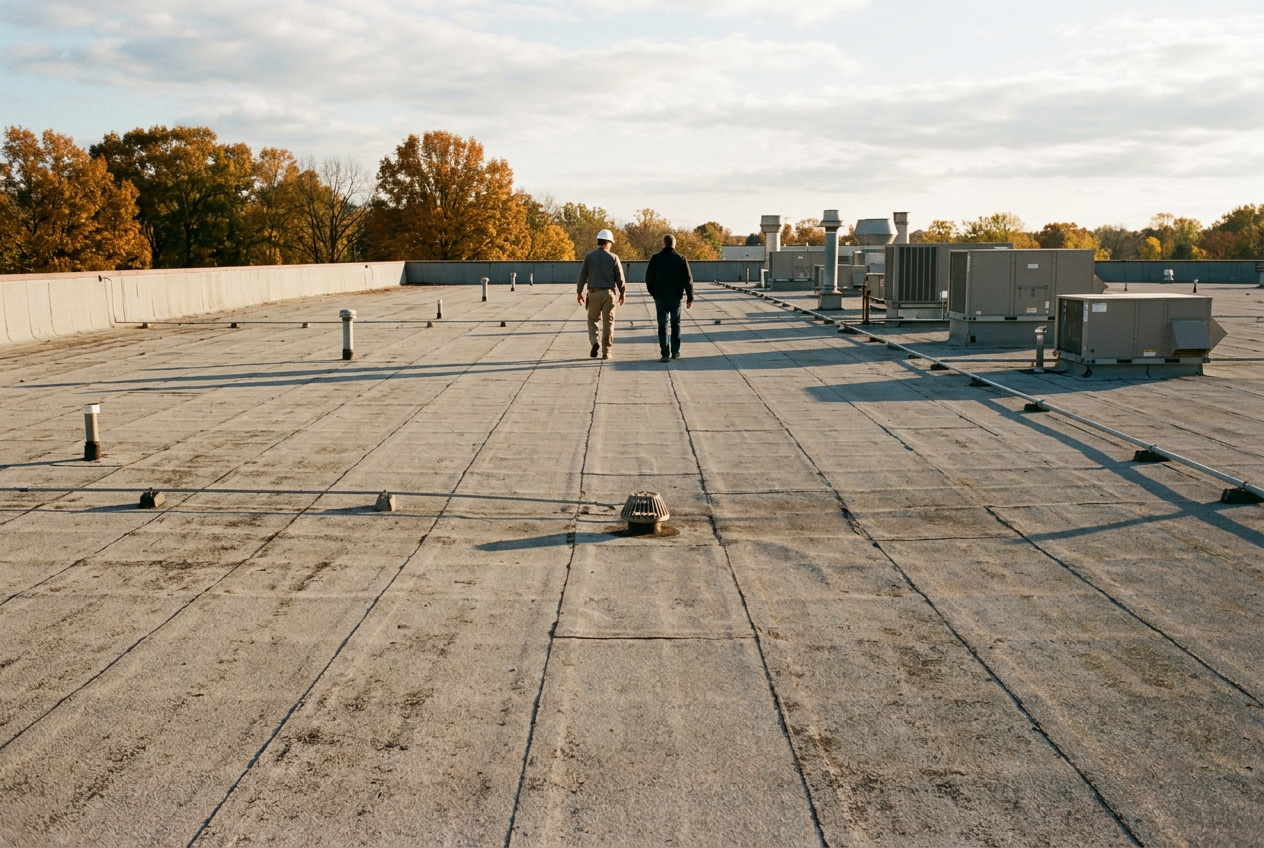
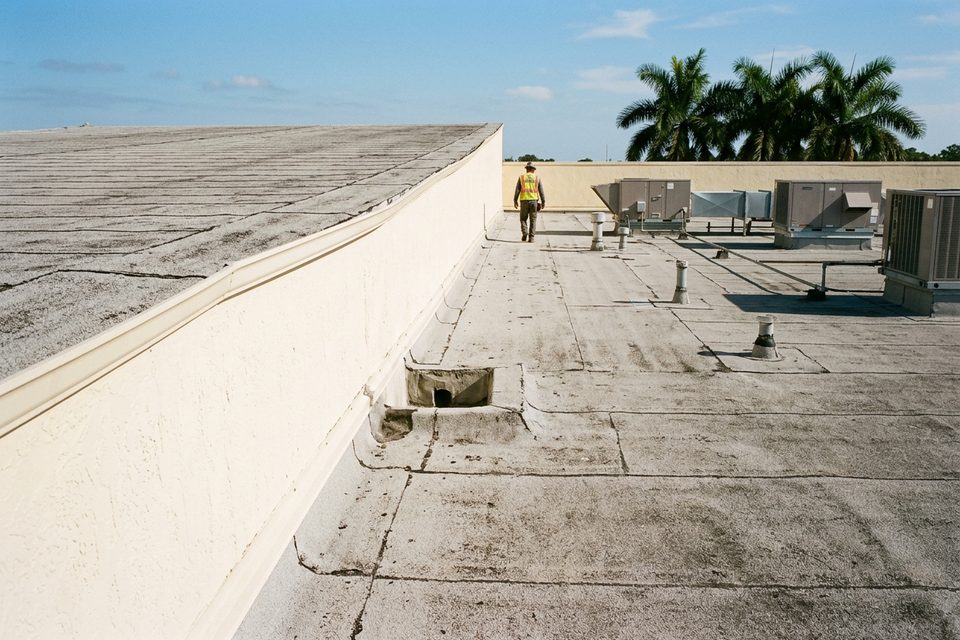
Choose a roofing contractor who holds whatever license your state asks of roof coating work, has put fluid-applied systems on your kind of roof, is authorized by the coating maker if you want a system warranty, and prices the job from a survey of your roof: a moisture scan, core samples and an adhesion test patch. A bidder who skips the survey is pricing a guess.
Then have every bidder price the same written scope, down to the part numbers, the dry film and a unit rate for wet insulation found later. Compare the bids line by line, go and see roofs each one has coated, call the people who run those buildings, and get proof of insurance before anyone goes up.
The license comes first
Florida’s contractor statute, Fla. Stat. §489.105(3)(e), puts all kinds of roofing and coating work in the roofing contractor’s scope, except a coating that is not represented to protect the roof, repair it, keep water out, stop leaks or extend its life. Read the other way round: a coating sold to protect a roof or extend its life is roofing-contractor work, and whoever applies it should hold that license.
In Miami-Dade and Broward counties, the Florida Building Code’s HVHZ provisions list applying coatings as roofing maintenance (Section 1513) and require a permit for maintenance too, with only the exemptions Section 105 allows, on a permit application executed by a licensed contractor (Section 1512.3). Elsewhere in Florida, ask the building department whether the work needs a permit.
Outside Florida, find out what license, if any, the state or city asks of a contractor who coats roofs. Wherever the building is, check the license number against the licensing board’s own record, and check that the name on the license matches the bid. Nothing here is legal advice; the licensing board and the building department decide for the address.
Fluid-applied work is its own trade
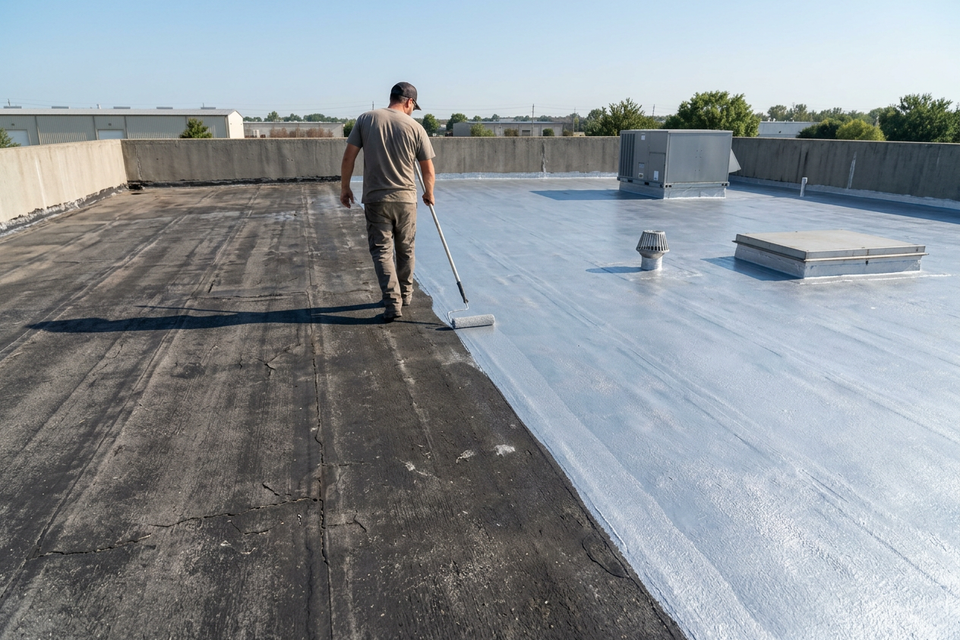
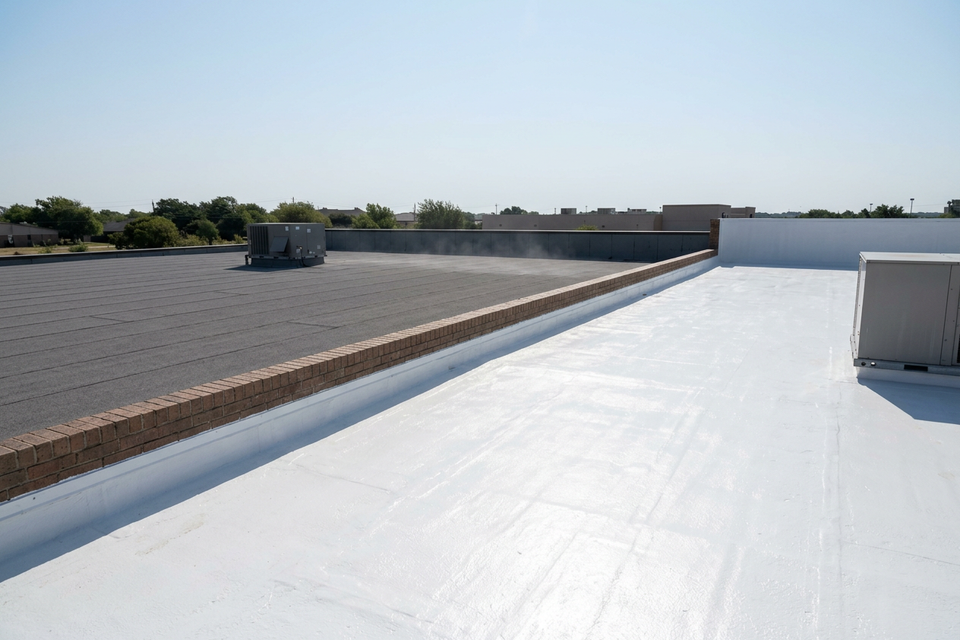
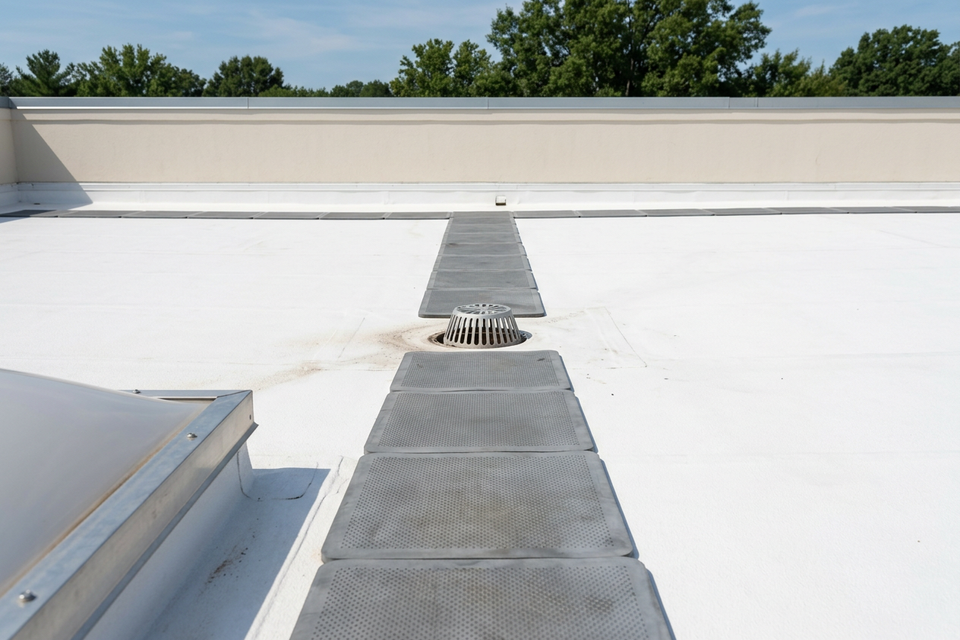
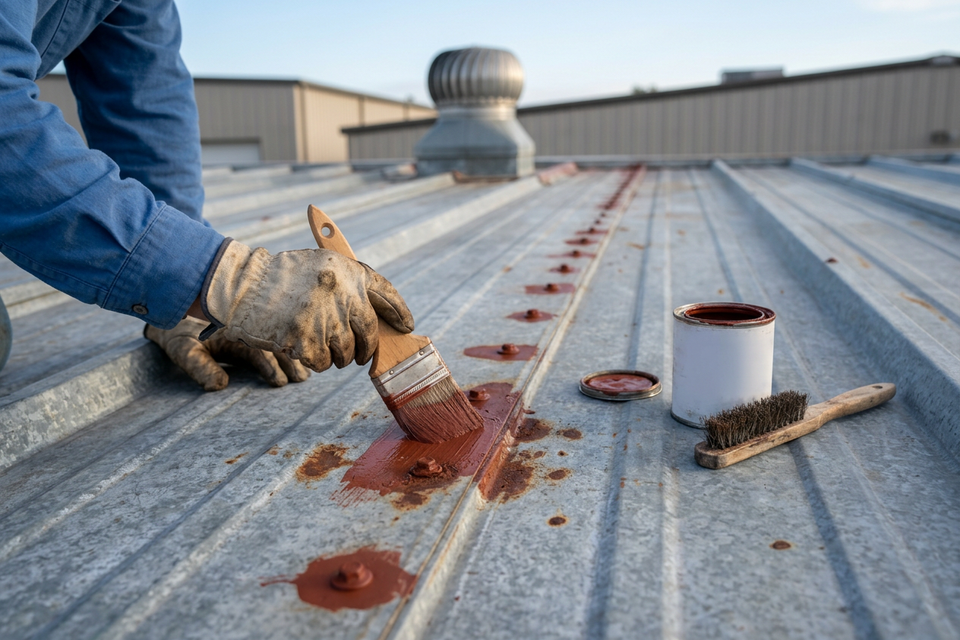
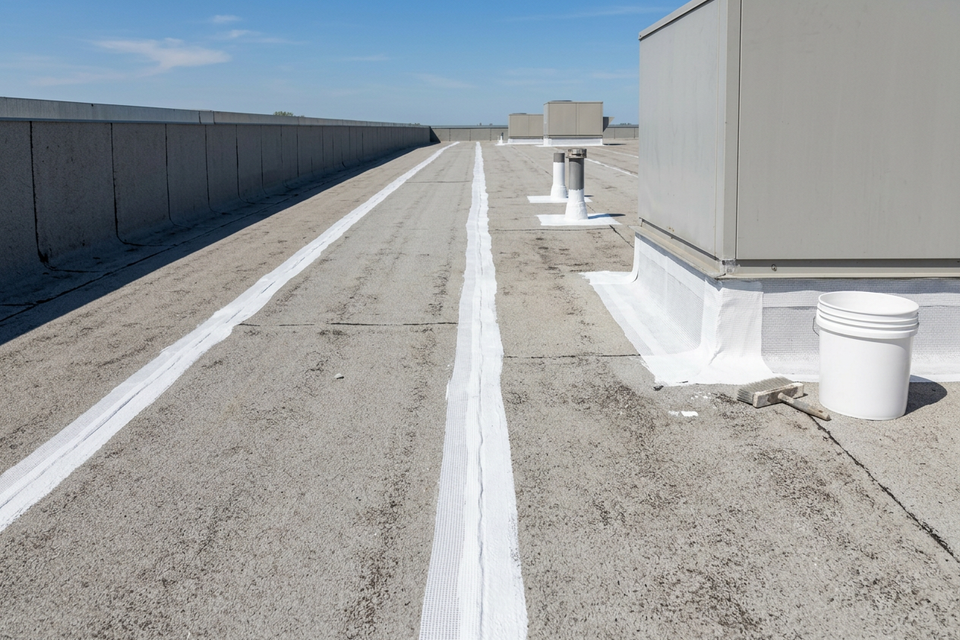
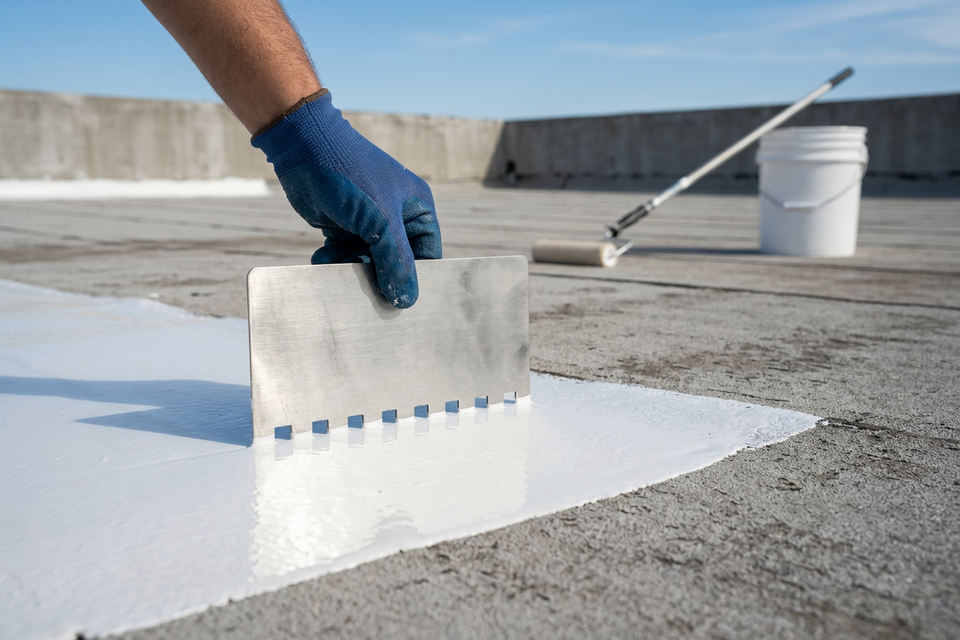
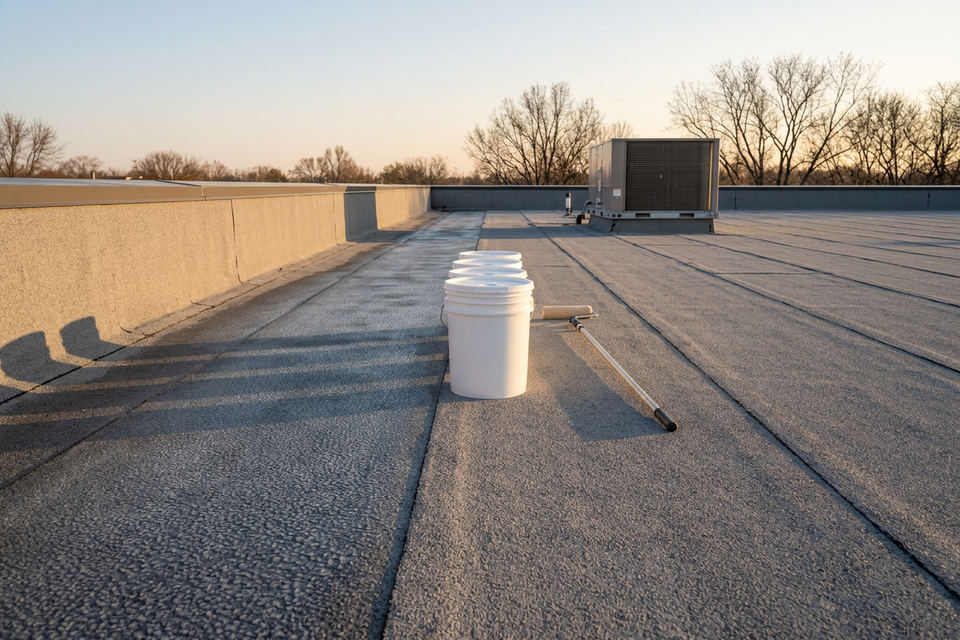
A contractor who installs membranes well has not necessarily coated a roof. Fluid-applied work has its own sequence: wash the field clean, prime by substrate, reinforce every seam, fastener head and penetration with fabric or tape, then lay the coats (base and finish, or silicone on its own) to a measured film, inside the weather window the data sheet sets.
Ask how many fluid-applied jobs the contractor has done on your substrate and with which systems, which specification the crew will work to, and who checks the film as it goes down. Systems by roof type and the restoration process show what good answers sound like.
Authorized, if you want a system warranty
Sherwin-Williams offers UNIGUARD system warranties of 10 or 15 years when one of its authorized contractors applies the system. The warranty is the manufacturer’s, issued under its own terms; we supply the materials.
If you want one, confirm the contractor’s standing with Sherwin-Williams itself before you sign. Only the manufacturer authorizes a contractor: buying the materials from us, a scan, or an introduction from us does not. The manufacturer inspects the finished roof before it issues a system warranty, so put that inspection in the scope. Roof coating warranties has the questions to ask.
The survey comes first
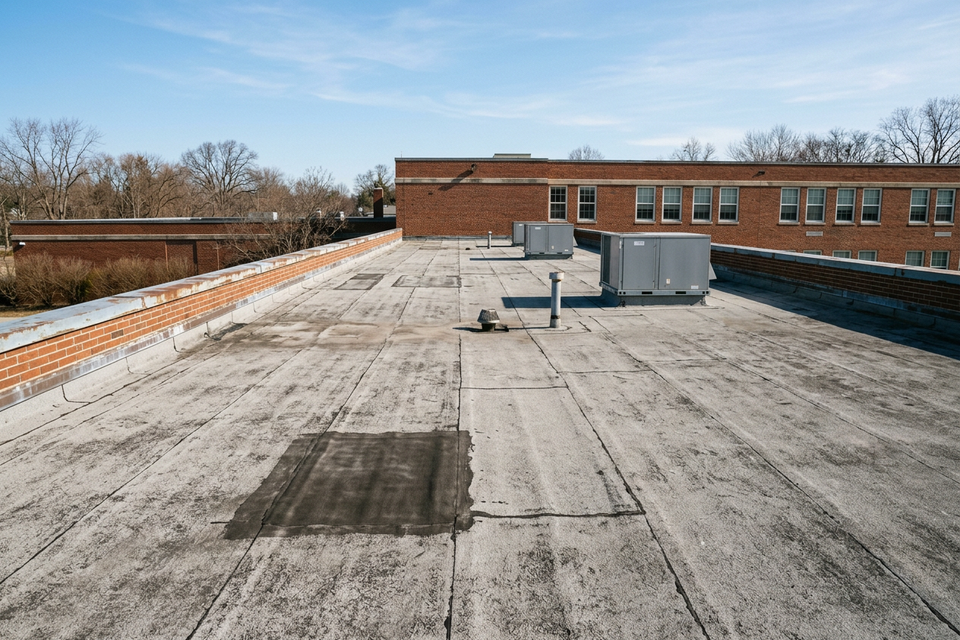
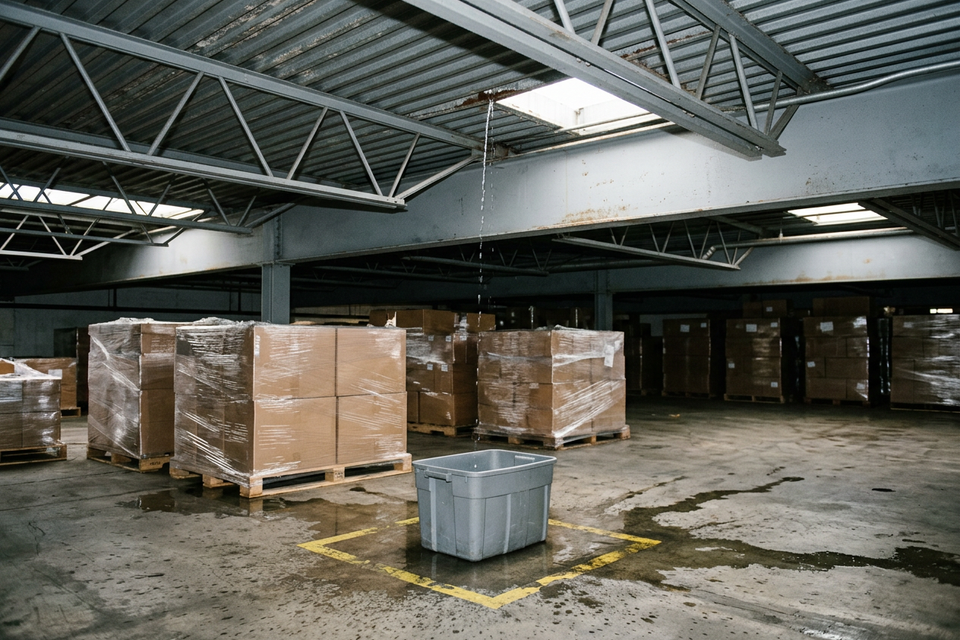
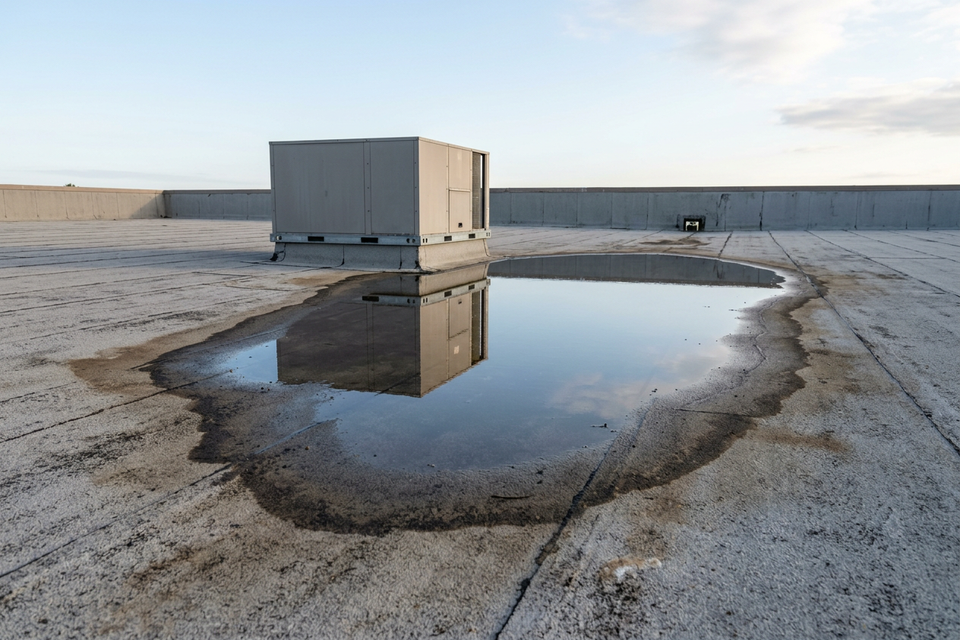
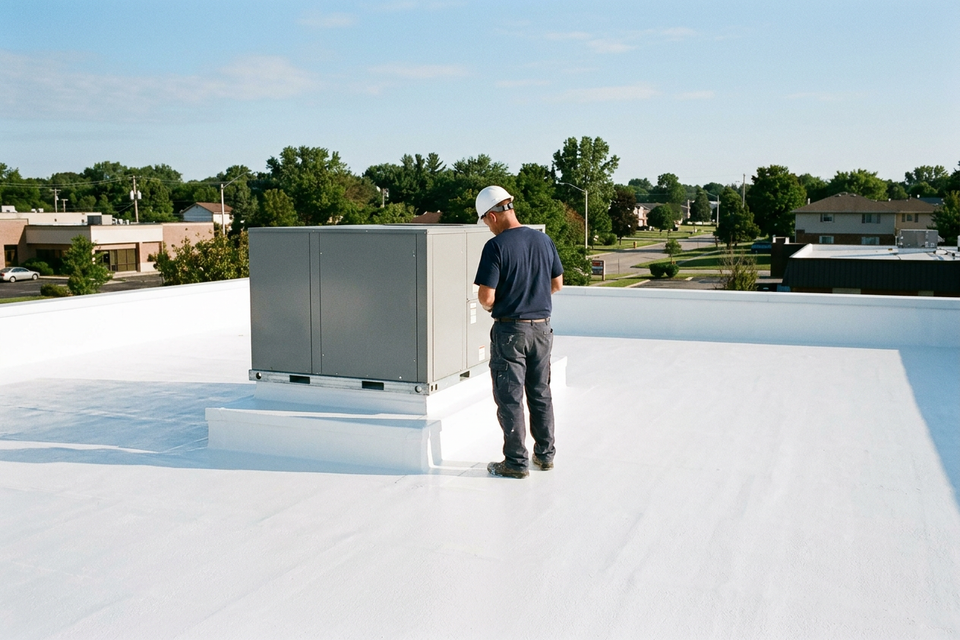
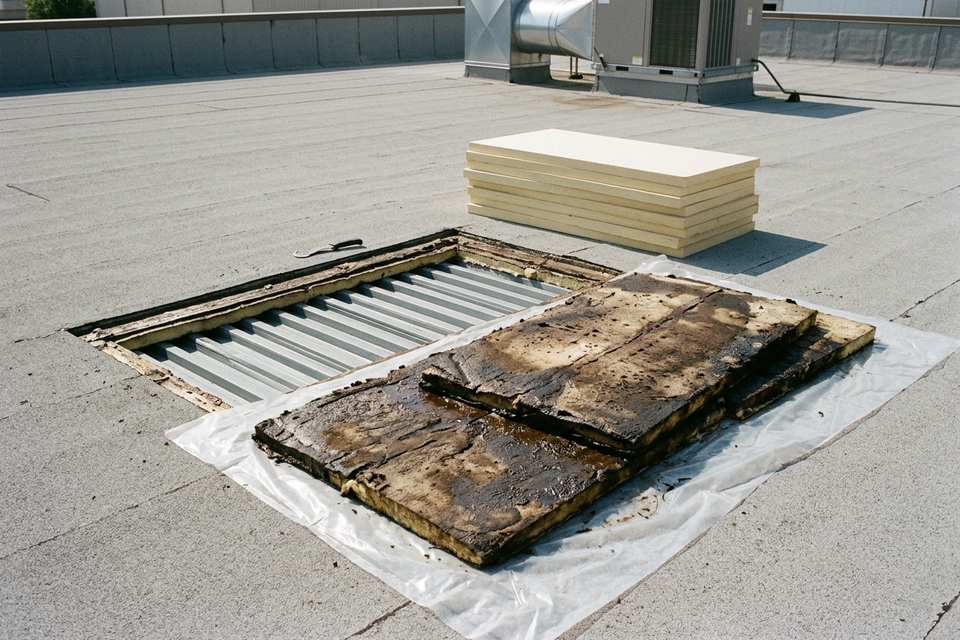
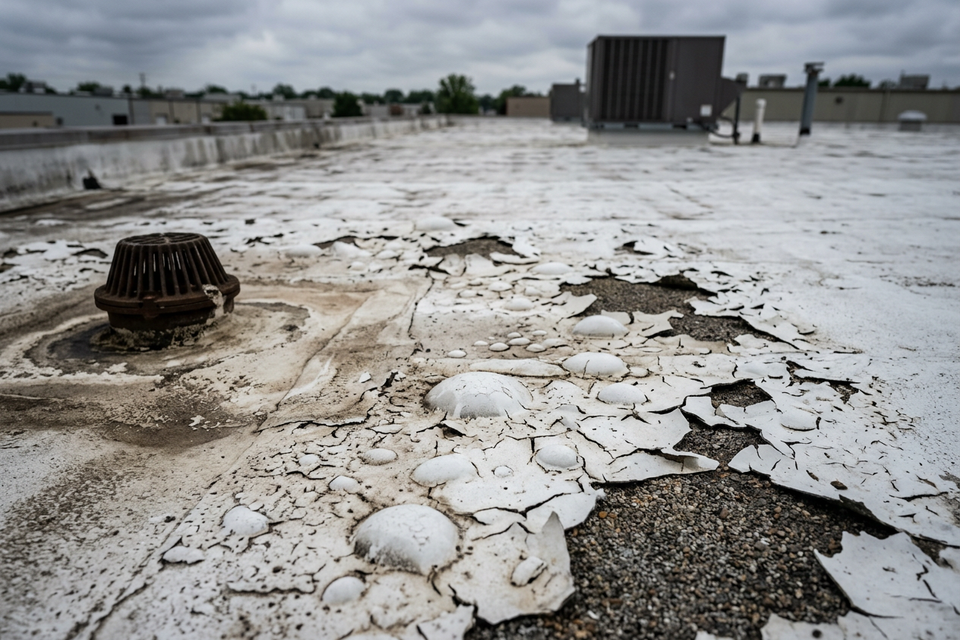
Coating makers, Sherwin-Williams included, require wet insulation to be found and replaced before a coating goes on. Sherwin-Williams’ own guide specification asks for a moisture inspection of all roof areas, a roof plan of the wet areas and field adhesion testing. Applied over a sound, dry roof, a restoration system adds 10 to 15 years of service life; the survey is how anyone finds out whether a roof is sound and dry.
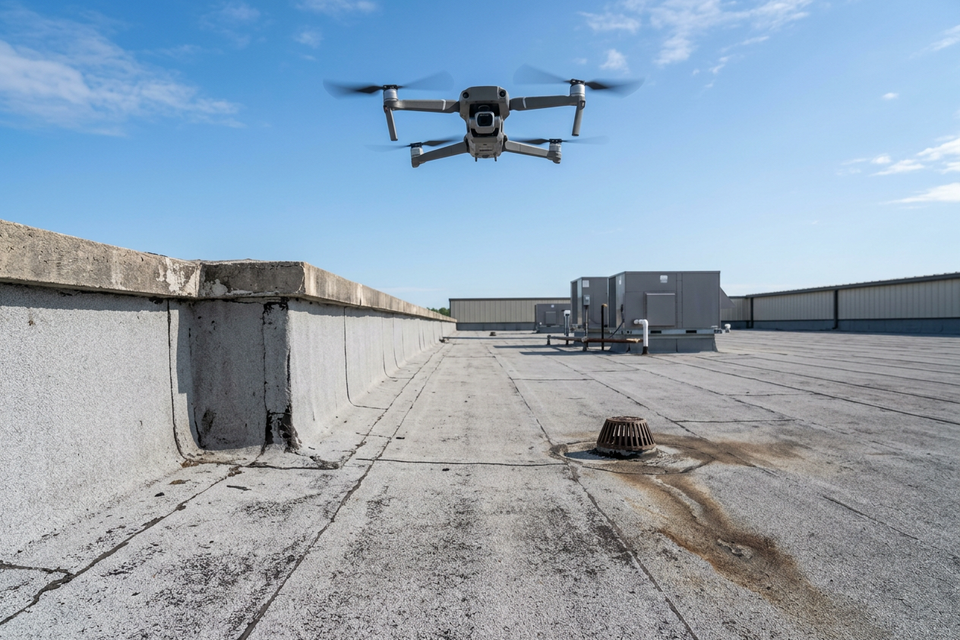
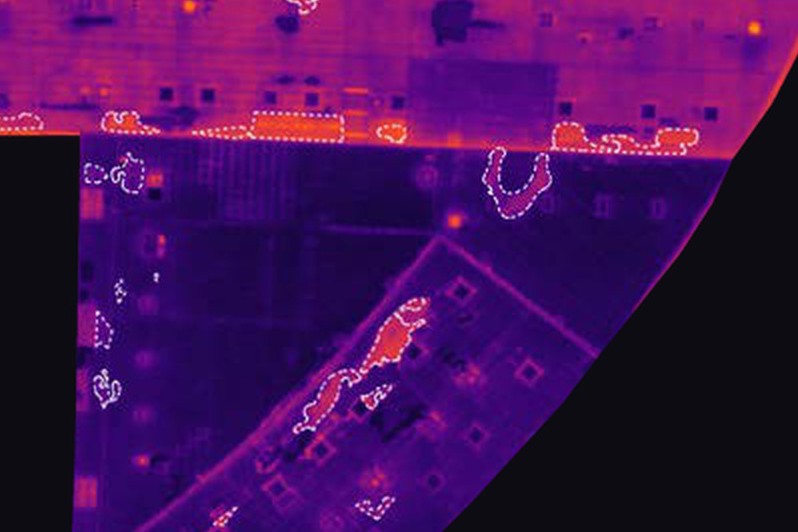
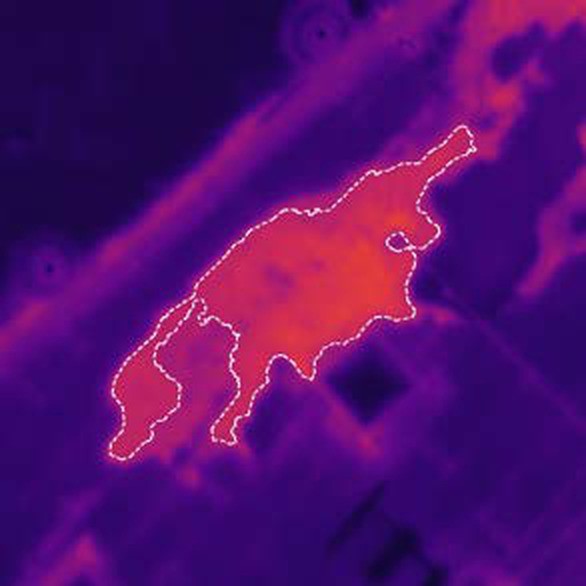
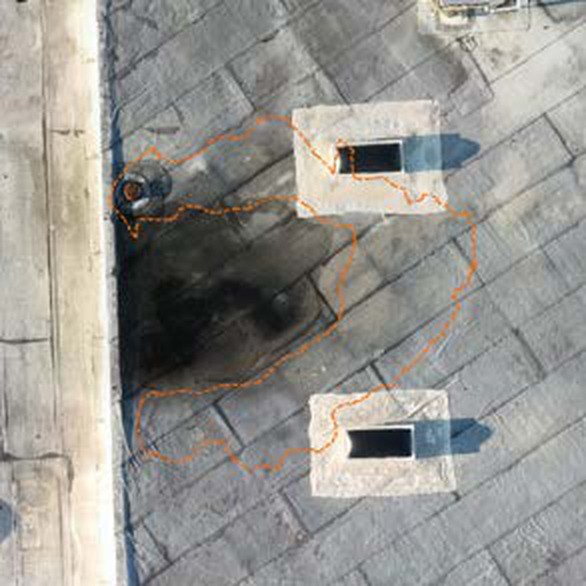
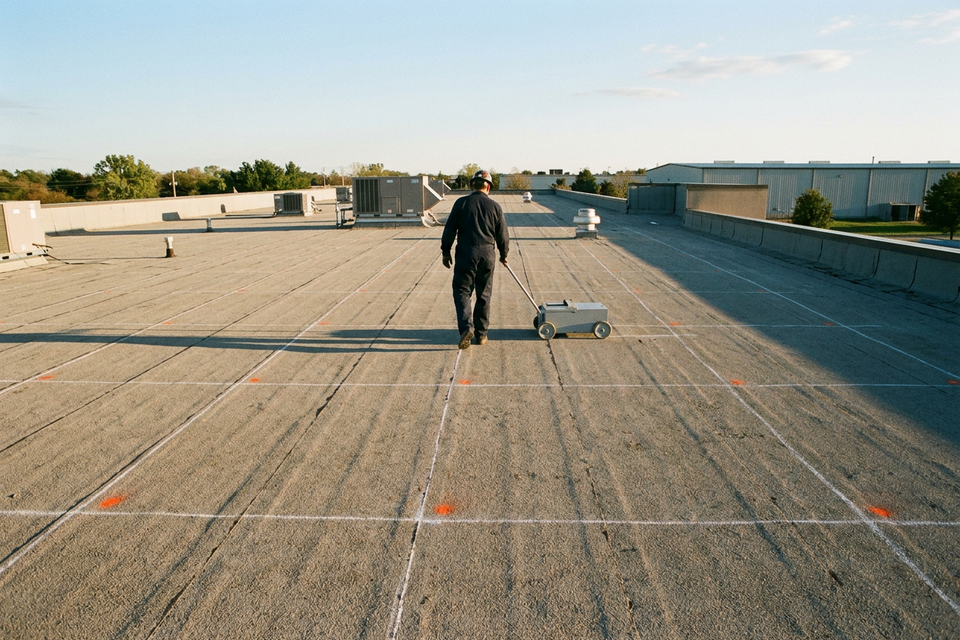
- A moisture scan. On an evening after a sunny day, once the sun has set, a drone with a thermal camera flies over the roof. Wet insulation holds the day’s heat longer than dry insulation, so it shows up warmer, and you get a map with any areas that look wet outlined and measured in square feet, along with video from the flight and a written assessment of what the scan found. It usually takes one evening, nobody has to walk the whole roof, the building runs as normal, and we fly only with the owner’s go-ahead (how the scan works). A thermal camera shows temperature differences, not water: ASTM C1153, the standard practice for locating wet insulation with infrared imaging, calls for its findings to be verified by cores. It is the wrong tool on roofs under ballast or pavers, metal panel roofs, highly reflective or already white-coated surfaces and closed-cell foam, and a poor fit on gravel-surfaced built-up roofs, which are usually surveyed another way; the scan-fit tool says what surveys those instead.
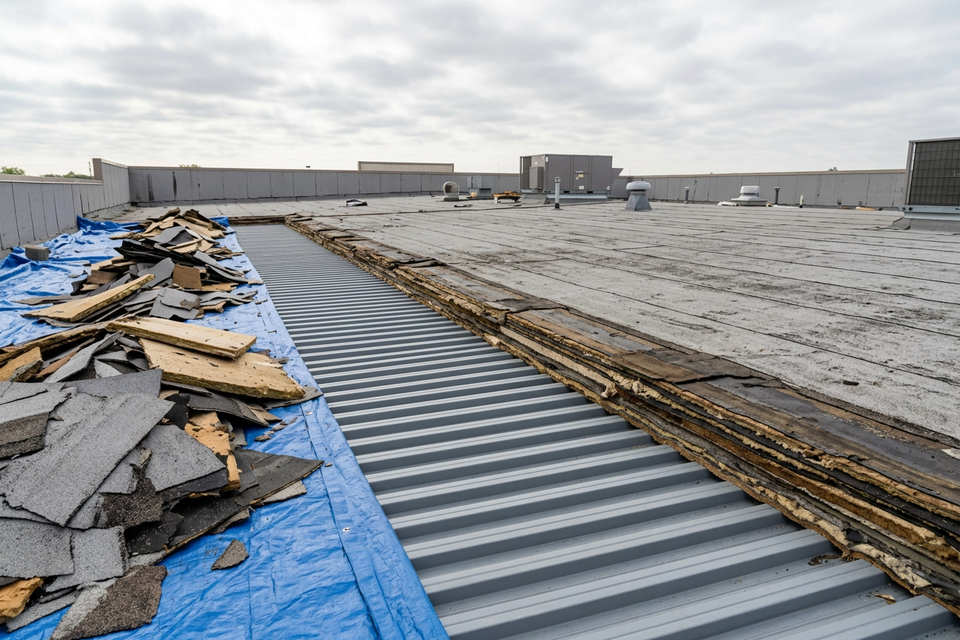
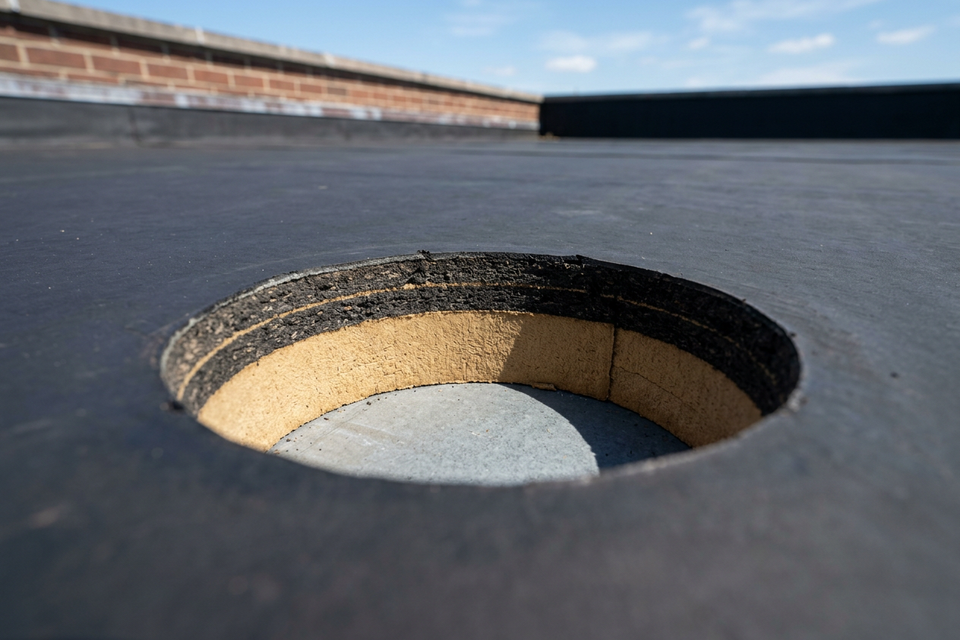
- Core samples. Small cuts through the assembly confirm the areas the scan marked and show the layers, the insulation, its thickness and whether it is wet. The scan marks suspects; the cores confirm them. Core samples has the detail.
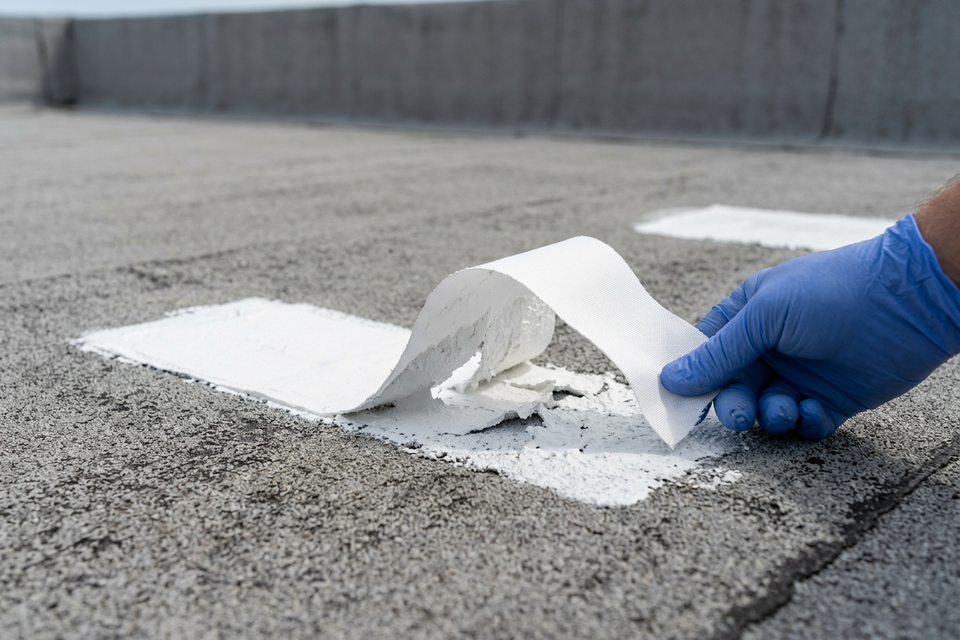
- An adhesion test patch. The actual system on a small area of the actual roof, cured as the data sheet requires, then pulled. It settles whether the system holds on this roof; the adhesion test patch explains how to read one.
A bid priced without them is one of three things: an allowance for wet insulation, to be revised once the roof is open, so not yet a price; a plan to coat whatever is there, sealing any water in under a surface that looks finished; or a survey after award, so ask when, who pays, and what happens to the price after.
What the written scope names
Each line should be something you can check on the roof:
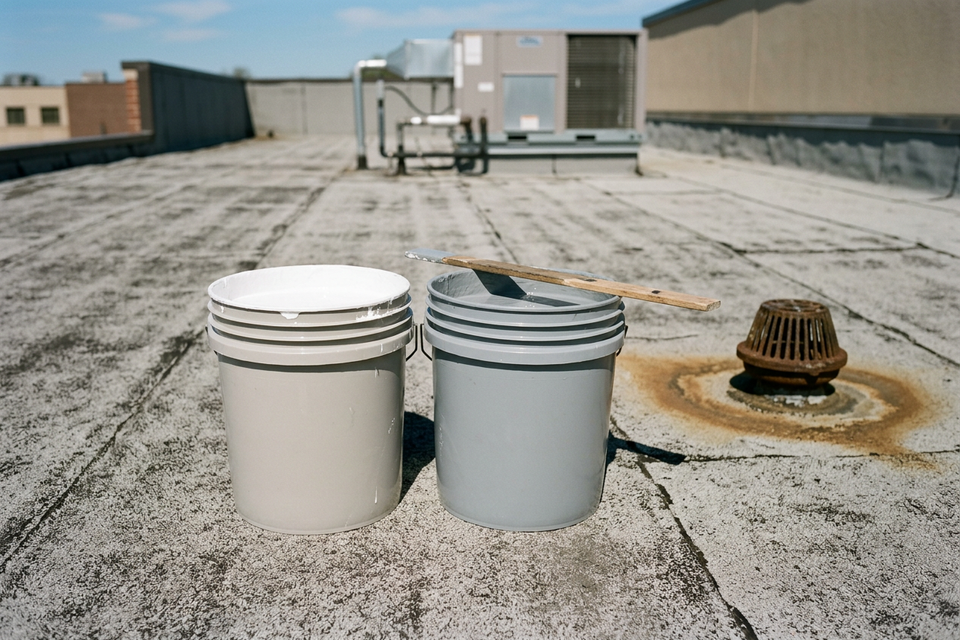
- The products. Each by maker and part number, not by chemistry alone. On a metal roof in Sherwin-Williams Uniflex, for example: rust-inhibitive primer KST034520 on corroded steel, butyl seam tape KST020804 on the panel seams, acrylic base coat KST041320, premium acrylic finish coat KST041300. Where water stands, the build-up changes, not just the finish: Silicone44 KST044300 (white) goes on with no base coat under it and the laps striped with the silicone, or the solvent-based pair goes on as base and finish.
- The primer, by substrate. Which one, where, and what the test patch showed.
- The details. Every seam, fastener head, curb, pitch pan, drain and pipe, reinforced with polyester fabric KST20385A or tape before the field coats, with the seam footage and the count of curbs and penetrations the price assumes.
- The coats. Base and finish, or silicone on its own: which coat goes where, how many, and the color of the finish.
- The dry film. The mils dry to be achieved (where a system warranty is wanted, coating specifications commonly set it by warranty term) and how the crew checks the film during the work; Wet mils, dry mils and coverage has the arithmetic.
- Wet insulation. The square feet the survey found, included in the price; who cuts it out and replaces it to matching thickness; and a unit rate per square foot for any more found once the roof is open.
- Cleanup. Disposal of what came out, protection of rooftop units and the ground below from overspray, the roof left clear.
- The final inspection. The contractor’s walk-through with you and, where a system warranty is wanted, the manufacturer’s inspection, with who calls for it and when.
Comparing bids on the same scope
Two installed prices compare only when they describe the same job:
| Line | What should match across bids |
|---|---|
| Survey | The same scan and cores, and the same square feet of wet insulation included |
| Products | The same part numbers, primer to finish coat |
| Dry film | The same mils dry, for the same warranty term |
| Details | The same seam footage and count of curbs and penetrations |
| Wet insulation | The same unit rate for area found beyond the survey |
| Warranty | The same kind and term, priced as its own line |
| Exclusions | Each bid’s list, read side by side |
A low bid built on a thinner film, or on no survey, is a bid for a different job. What a commercial roof coating costs gives the typical installed ranges and what moves a roof inside them.
Proof you can go and see
Ask each bidder for roofs a few years old, coated with the same system on your kind of roof, that you can go and look at, and for whoever runs each building. Call them: has the roof leaked since, did the crew come back when asked, was the system warranty issued where one was wanted, would they hire the contractor again? Nothing on a website, ours included, stands in for that.
Before anyone goes up, ask for a current certificate of insurance issued by the contractor’s insurance agent, and have your own insurer or attorney say what coverage and limits the job needs.
Our part, and who decides
We work with a network of installers, roofing contractors who apply these systems, and can introduce you to one anywhere in the US, who looks at the roof and says whether it is a good candidate for restoration. We arrange the scan and supply the materials, whichever contractor you choose. We do not apply coatings, we do not issue a system warranty, and an introduction is not a verdict on the roof: put every question on this page to a contractor we introduce as well. Roofing and coating contractors who apply these systems can Join the installer network, and a person answers; it is our network, not Sherwin-Williams’ authorized-contractor programme.
- The contractor writes the scope, owns the means and methods, and says whether the roof is a candidate.
- The manufacturer decides whether a system warranty is issued, and on what terms.
- The building’s engineer decides anything structural.
- The licensing board and the building department decide what license and permits the work needs.
If the roof has not been surveyed, start there. Building owners sets out the path from scan to finished roof; then request a moisture scan with the building’s address. We arrange scans for commercial low-slope roofs anywhere in the US.
Last updated 2026-10-05.