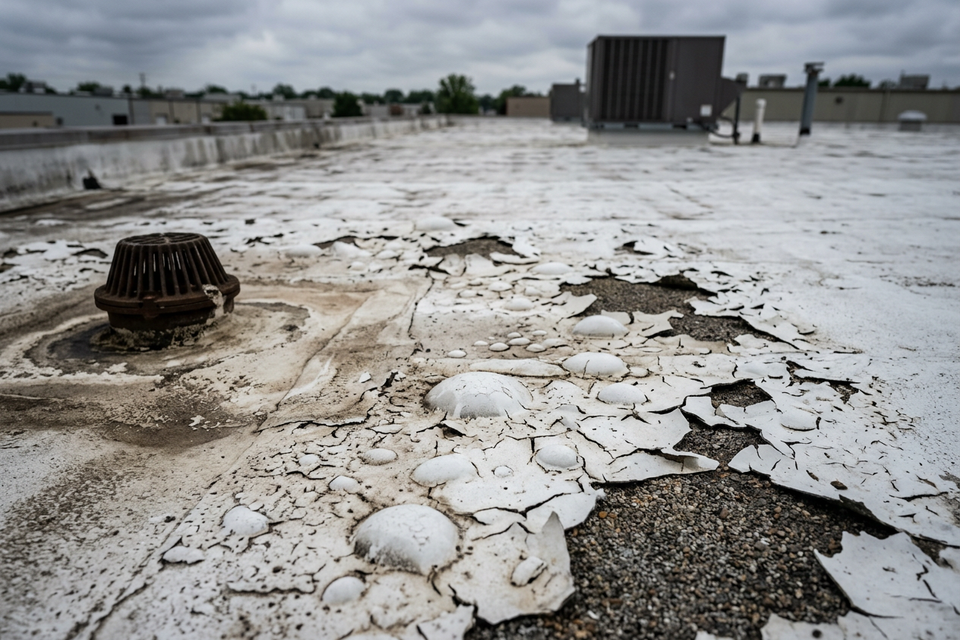
A commercial flat roof is leaking: what to do first
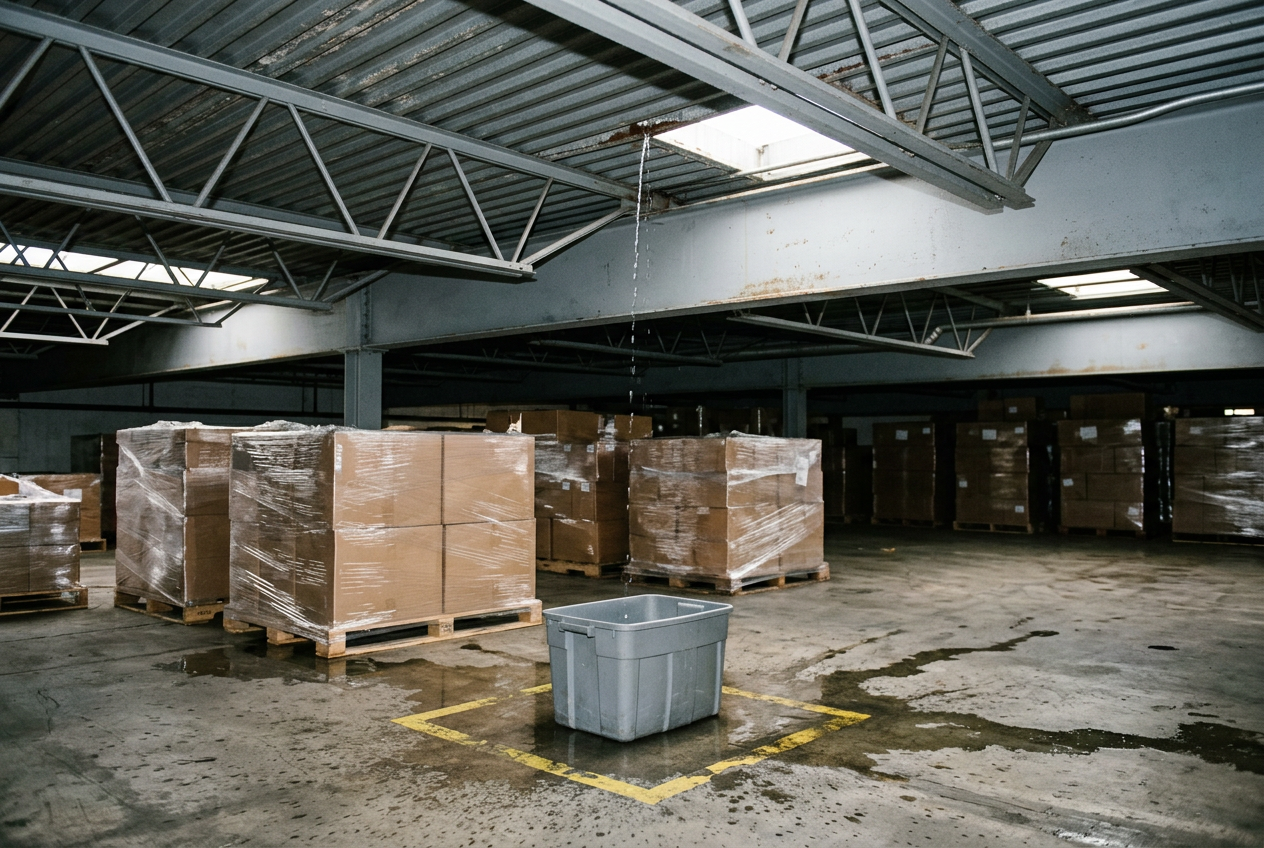
When a commercial flat roof leaks, do four things in this order. Keep people and stock clear of the water. Write down and photograph what you see. Have a roofing contractor find the opening and close it, with a temporary repair if the roof is still wet. Then, once the weather allows, find out whether water got into the insulation, and how far.
The first three limit the damage. The fourth decides what the roof needs. A leak is one opening in the membrane; whether it ends as a patch, a restoration or a replacement depends on the insulation underneath, and that is read with a moisture scan and a few core samples, not from the position of a drip.
Inside the building: contain it and write it down
- Keep people out from under it and cordon the area off; a saturated ceiling is heavy and the floor is wet.
- Leave water near electricity to someone qualified. If it is running into light fixtures, panels or machinery, the circuit gets switched off first.
- Catch it and clear its path. Bins under the drips, plastic sheeting over what cannot move, stock out of the way.
- Mark every drip with tape on the floor so it can be found after the ceiling dries.
- Photograph it and write down when it started, how hard it was raining, whether it stopped with the rain, and what sits on the roof above: a rooftop unit, a drain, a parapet wall.
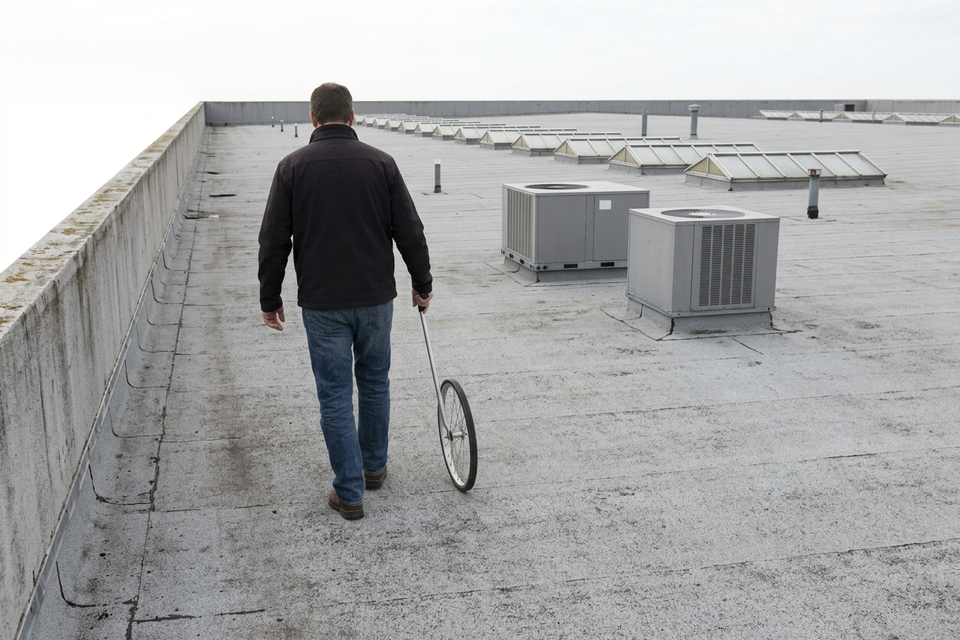
Stay off the roof; finding the opening is roofing work, and your notes are where the roofer starts.
Why the drip may be nowhere near the hole
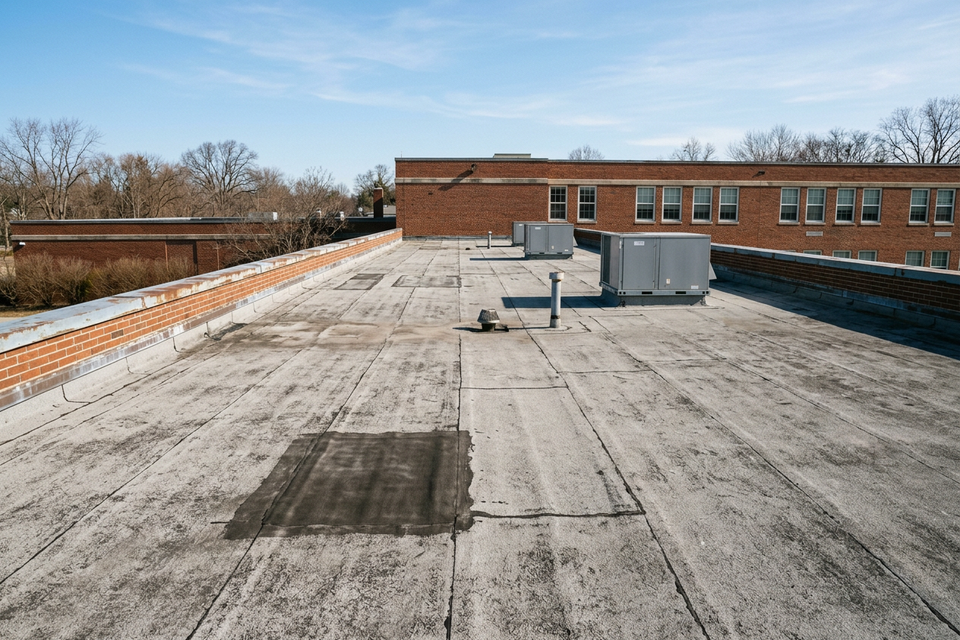
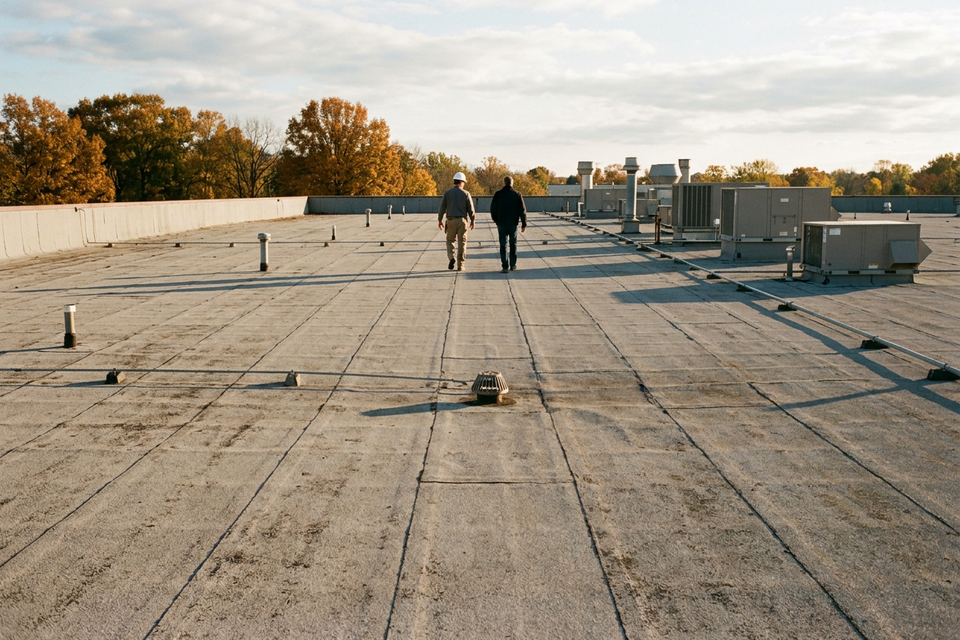
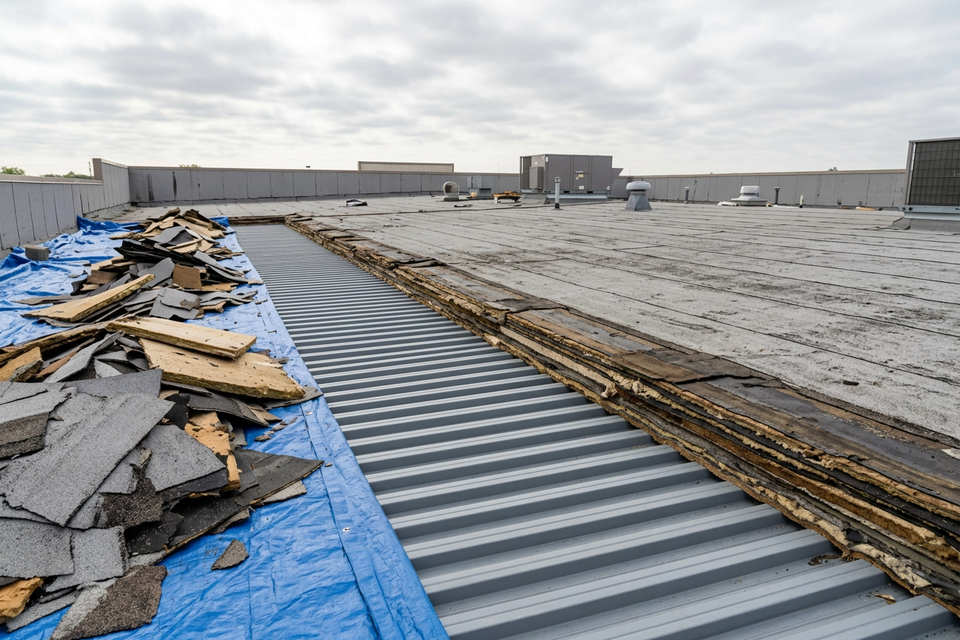
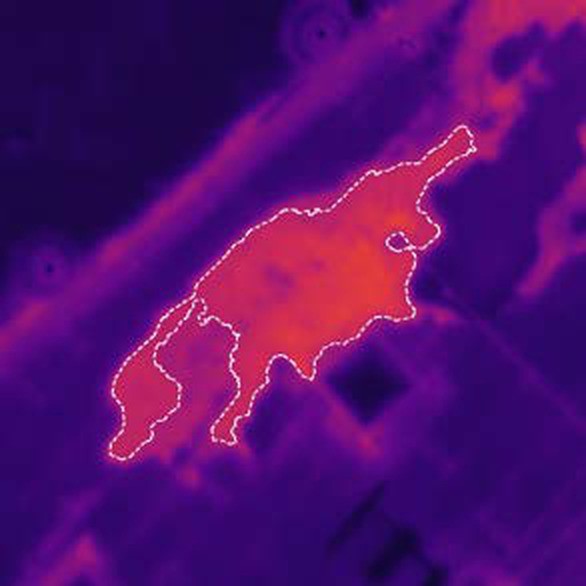
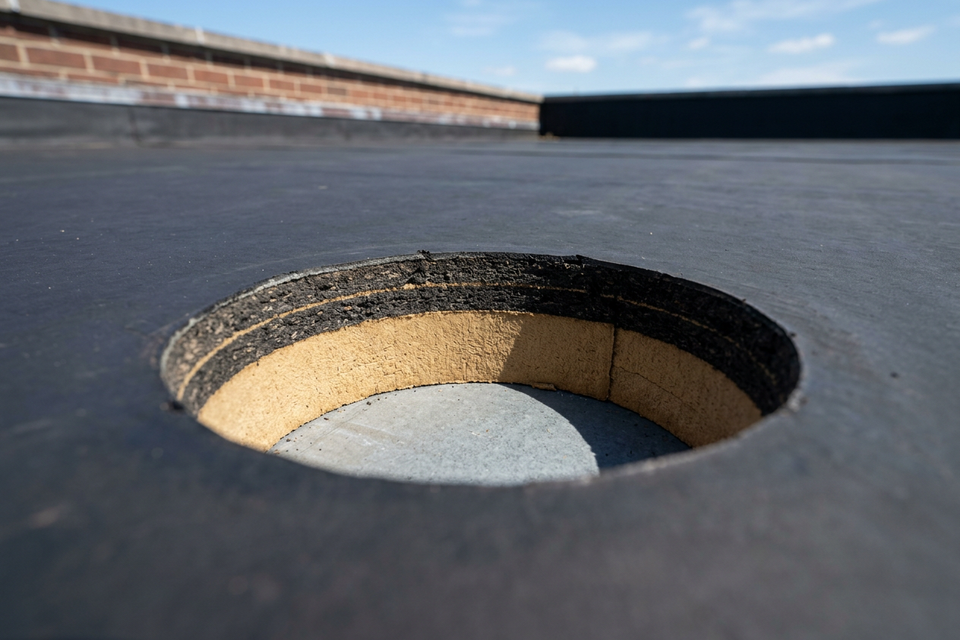
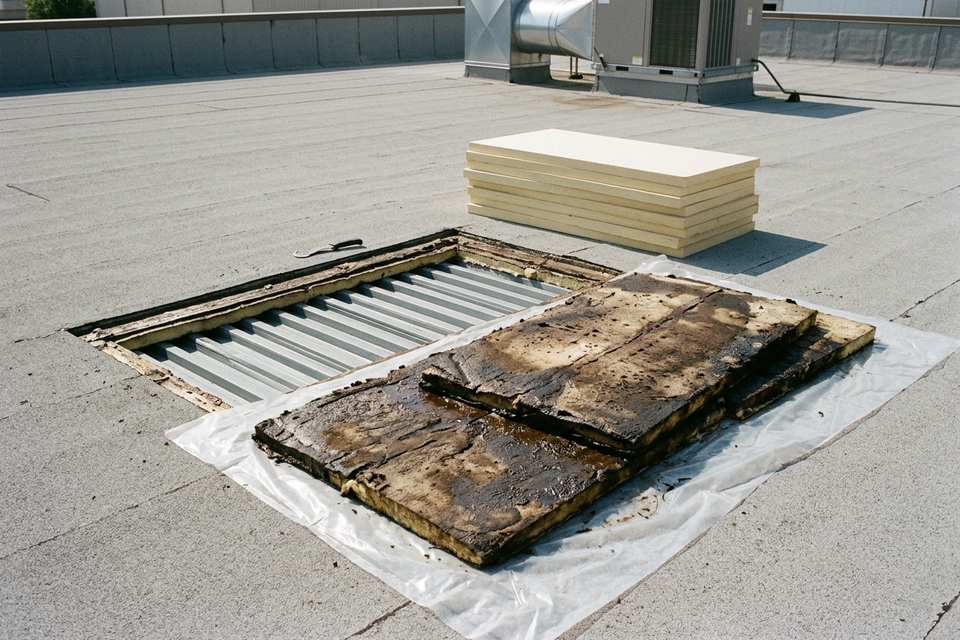
A typical low-slope commercial roof is a stack: structural deck, rigid insulation boards, sometimes a cover board, membrane on top. Water that gets through the membrane does not drop straight into the room. It lands on the insulation and spreads; thermal surveys typically find wet insulation either as an irregular area spreading through the assembly or as a board-shaped one following the joints between boards. It reaches the deck and runs until it finds a way down: a deck side lap, a fastener hole, the gap around a pipe.
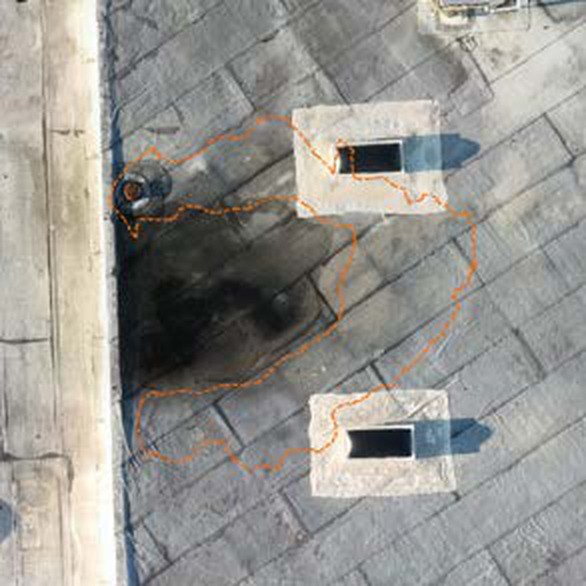
So the stain on the ceiling marks where water left the roof, not where it entered; roofers commonly find the two a long way apart. The search starts above the drip and works outward to the nearest seams, flashings and penetrations.
Where water usually gets in
Most leaks are detail leaks; water seldom comes through the open field of the membrane.
- Laps and seams, where two sheets overlap.
- Flashings, where the roof turns up a parapet or a curb, and where it ends at an edge.
- Penetrations: pipes, conduits, vents and pitch pans, each a hole through the roof sealed by hand.
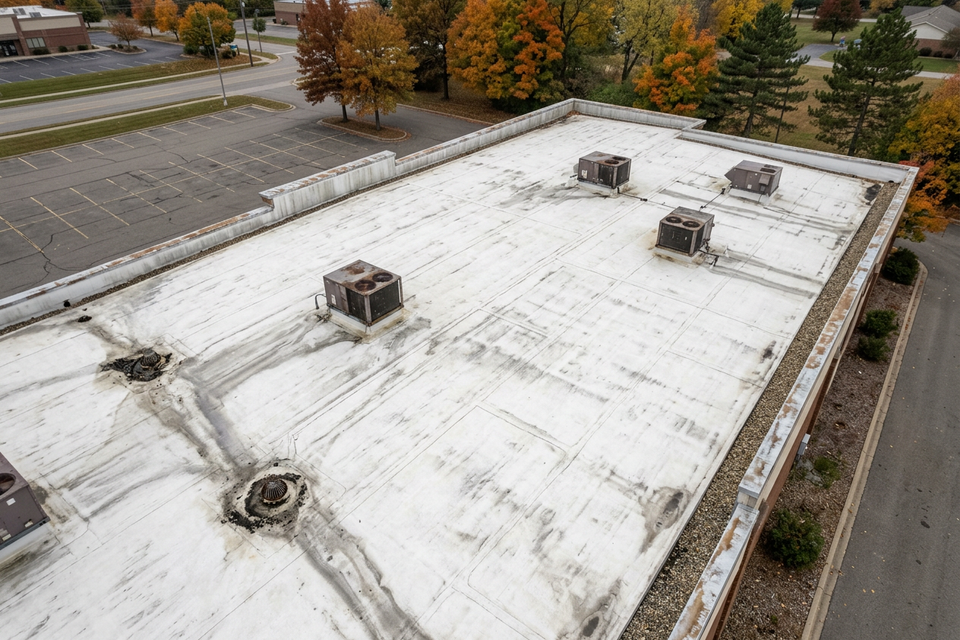
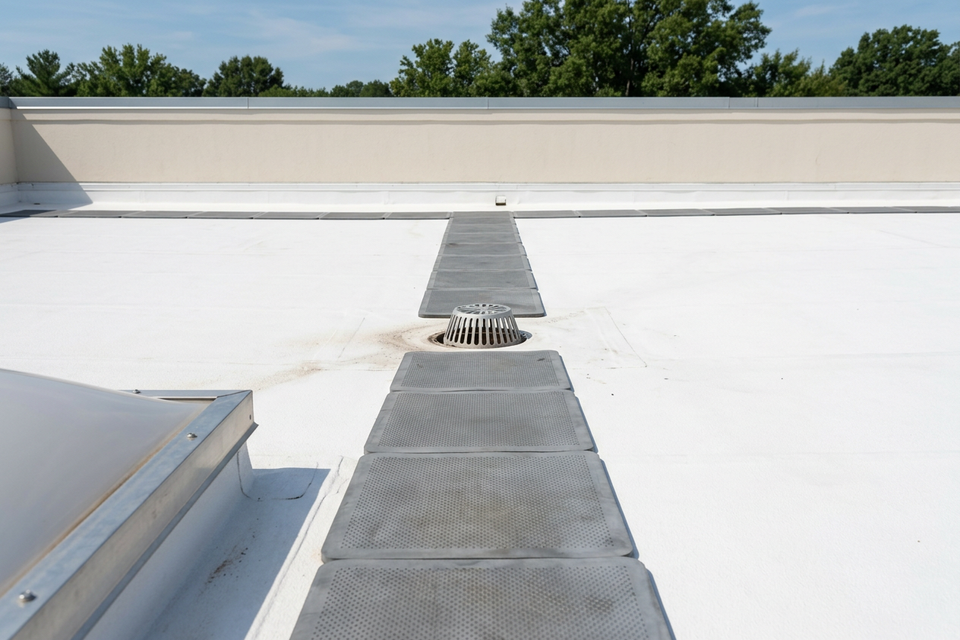
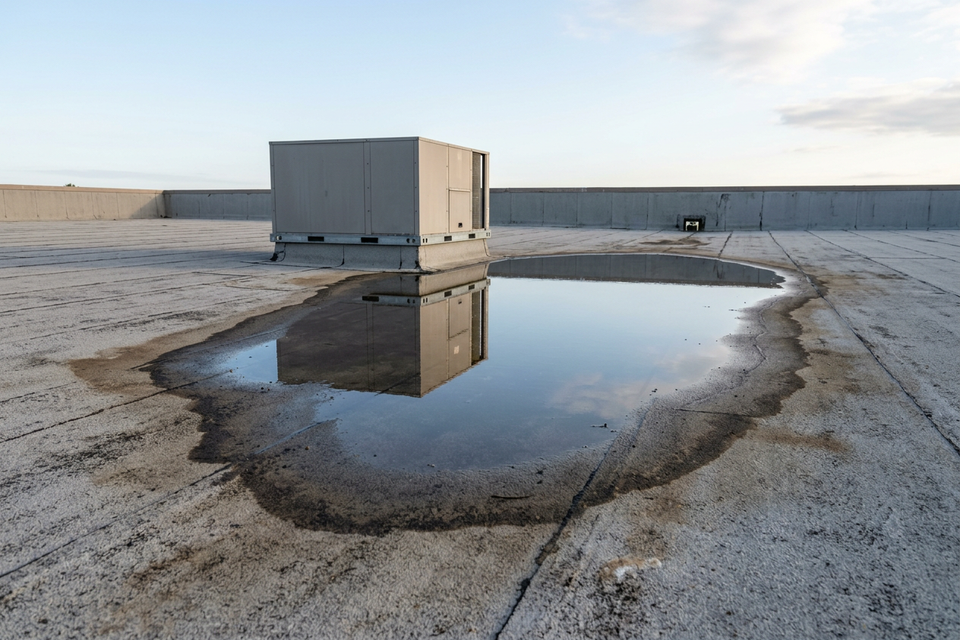
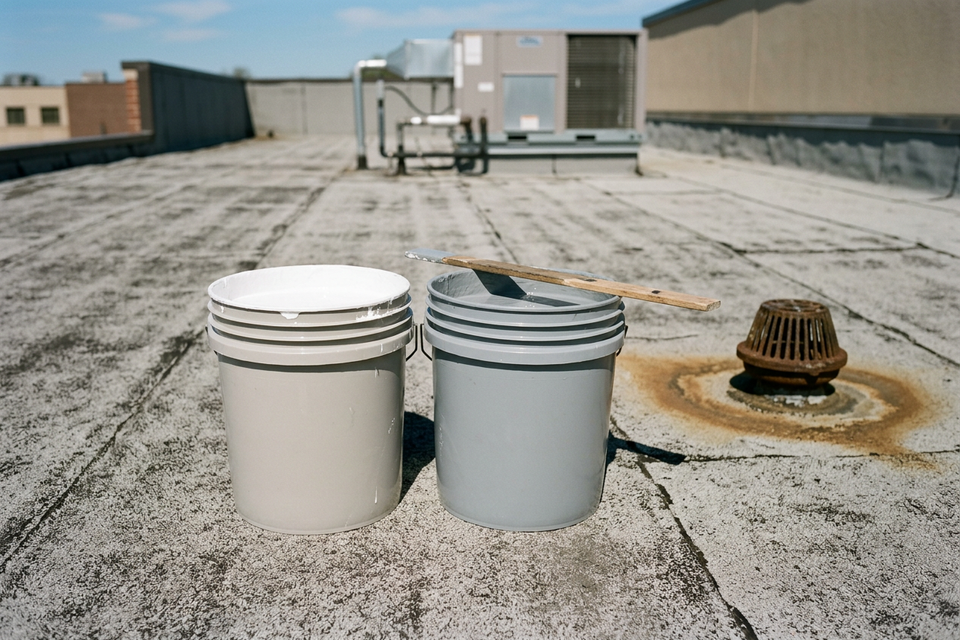
- Drains and scuppers. A blocked drain leaves water standing over the laps and flashings around it.
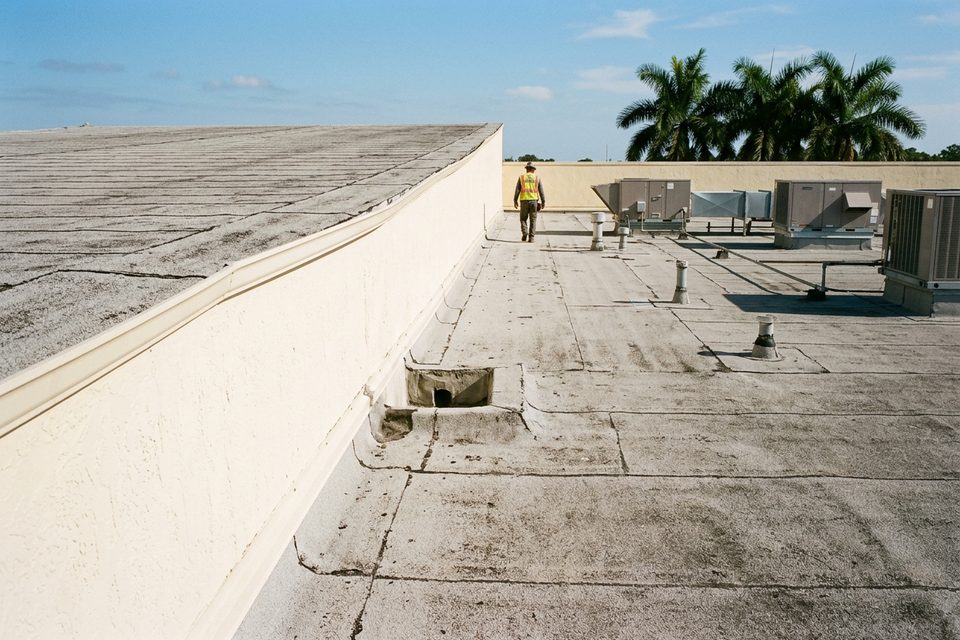
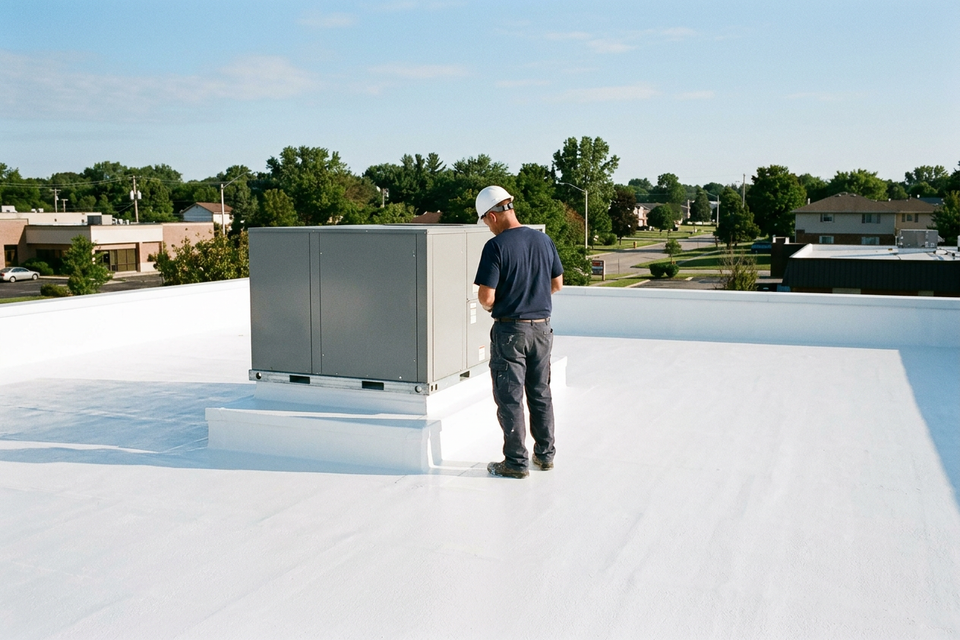
- Rooftop equipment: the curbs the units sit on and the flashings around them.
- Punctures and tears, often along the routes people walk to reach that equipment.
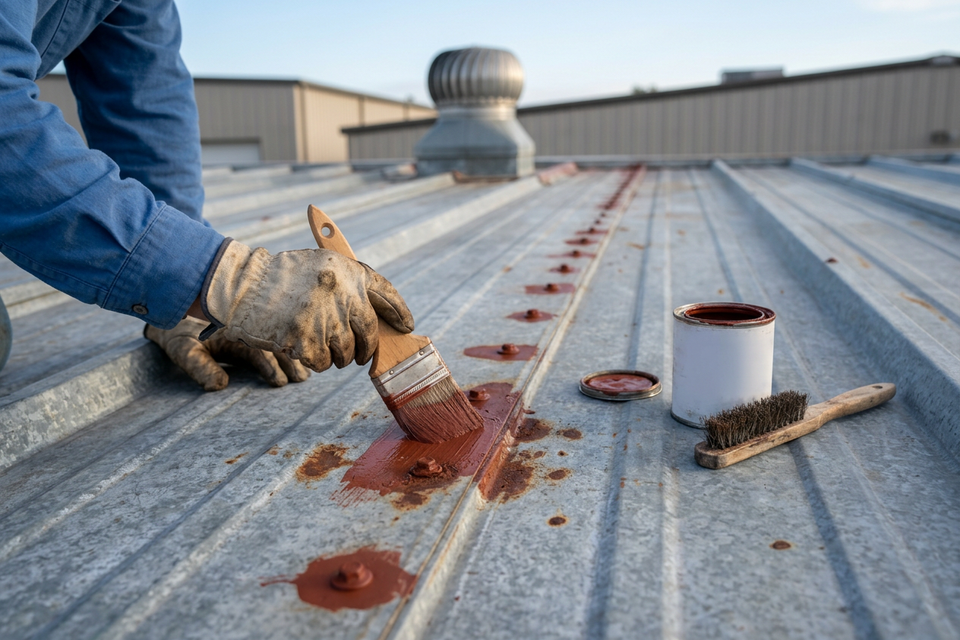
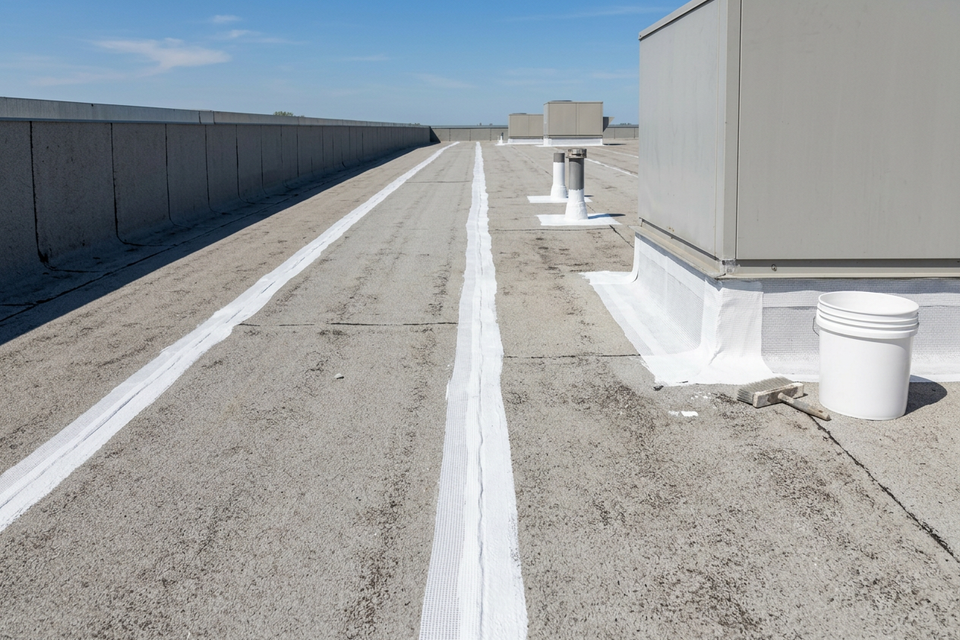
Seams, fasteners and flashings covers how these details are rebuilt.
The temporary repair, and what goes into it
Call a roofing contractor and ask for two things: find where the water is getting in, and close it. If the roof is under a warranty, report the leak to whoever issued it before the repair is made; its terms, not this page, say what happens next.
In the rain, or on a roof still wet, the first repair is usually temporary, made with a material listed for that roof and those conditions. The roof type matters, as the Sherwin-Williams Uniflex line shows.
| Roof or detail | Material | Listed use and conditions |
|---|---|---|
| Modified bitumen, built-up and other asphaltic roofs | Wet-dry roof cement KST058600 | Asphaltic roofing, wet or dry |
| Metal seams and flashings; holes and splits in built-up, modified bitumen, foam and concrete | Acrylic patching cement KST041220 | Detail patching on a clean, dry surface |
| EPDM and coated metal; TPO and PVC once primed | MS hybrid sealant KST058300 | Gunned seals at seams, pipe boots and curbs |
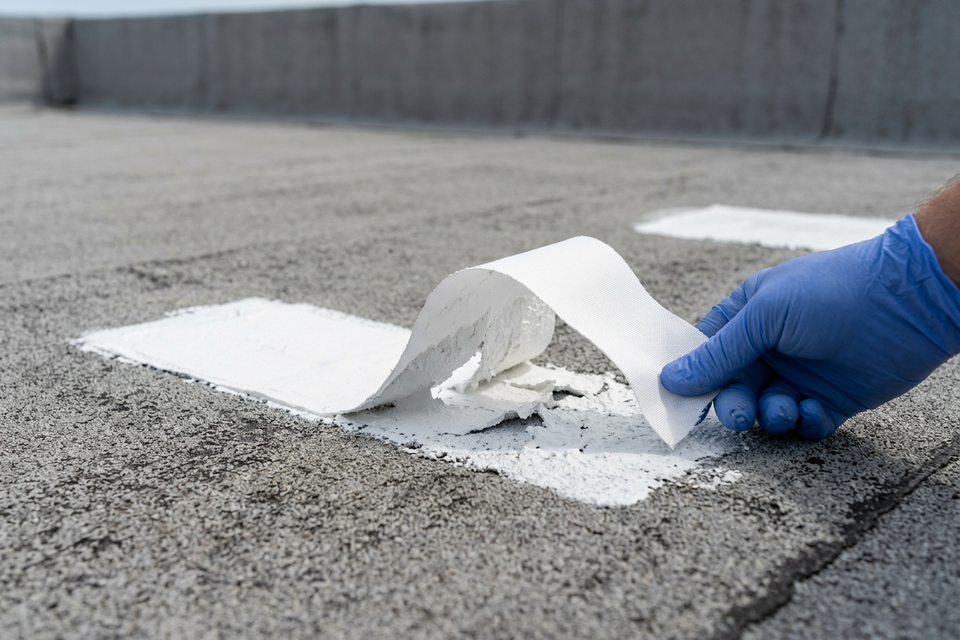
| Holes and tears in membranes, gutters and flashings | Fleece-backed bonding tape KST058006 | Goes on from 0 °F up, wet surfaces included |
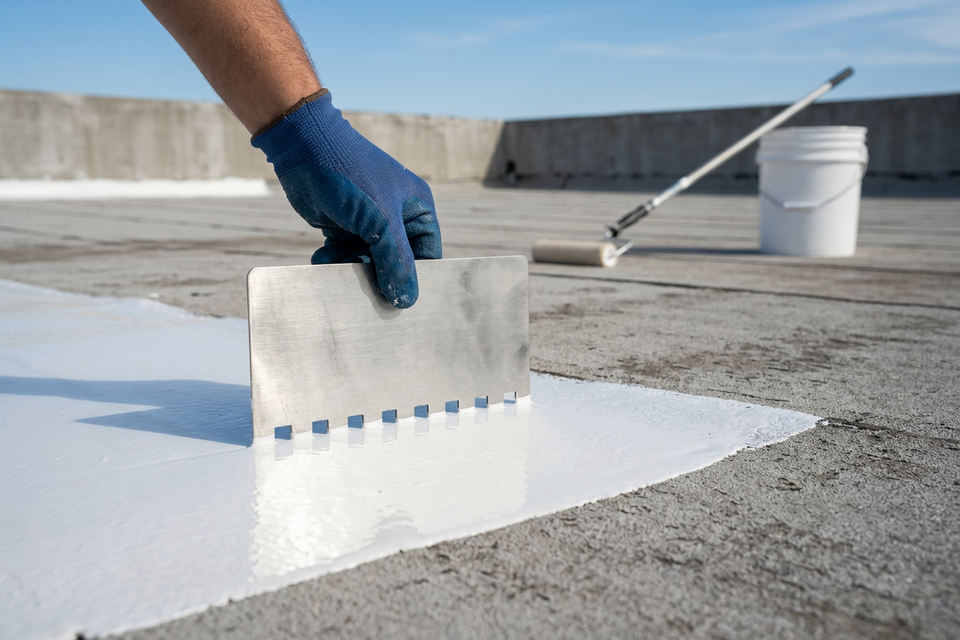
A cement repair bigger than a pinhole is built in three courses: cement, polyester fabric bedded into it, cement over the top. On any roof the product data sheet and the roofer decide what goes down. The cements are at Patch & repair.
A temporary repair has one job: stopping more water coming in at that spot. It takes out none of the water already inside the roof and says nothing about how much got in. Ask the roofer back in dry weather for a proper repair.
The question the leak cannot answer
What decides the roof’s future is not where the hole was but whether water got into the insulation, and how far it spread before the hole was closed.
Insulation that gets wet under a membrane does not dry on its own: the membrane that keeps rain out also keeps that water in. Trapped moisture reduces the insulation’s thermal resistance and can lead to premature failure of the roof system, as the scope of ASTM D7954 puts it. Coating makers, Sherwin-Williams included, require wet insulation to be found and replaced before a coating goes on. Wet roof insulation has more.
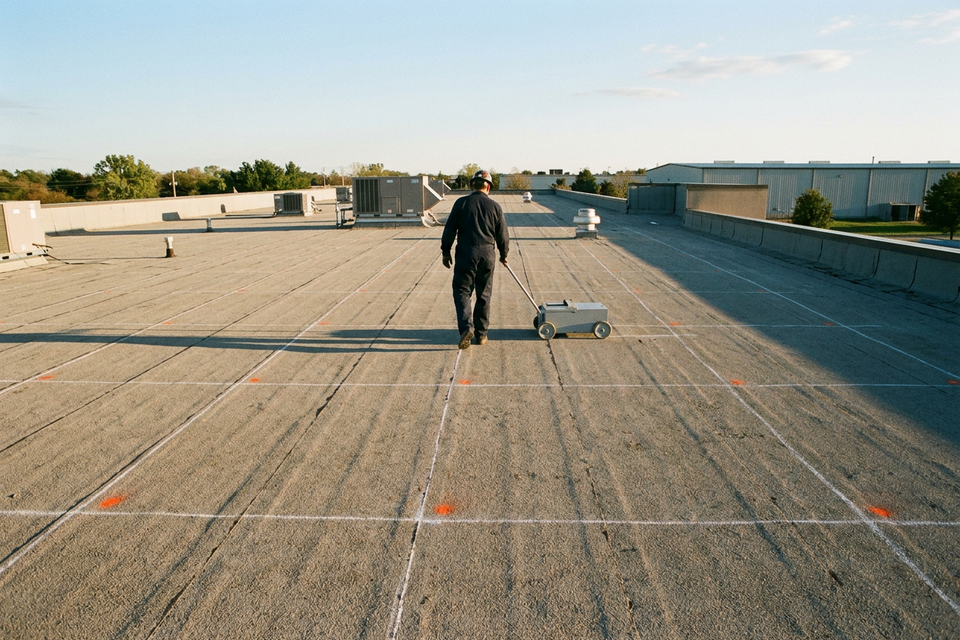
A drip cannot tell you that; a moisture survey and core samples can, and our drone moisture scan is one way to run the survey. On an evening after a sunny day, once the sun has set, a drone with a thermal camera flies over the roof. Wet insulation under the surface holds the day’s heat longer than dry insulation, so it shows up warmer on the images. You get a map of the roof with any areas that look wet outlined and measured in square feet, video from the flight and a written assessment of what the scan found; the flagged areas are then confirmed with small core samples. It usually takes one evening, nobody has to walk the whole roof, and the building runs as normal. We fly only with the owner’s go-ahead.
Three limits.
- It is not a leak finder. ASTM C1153 is the standard practice for locating wet insulation with infrared imaging, and its published scope gives no method for finding the cause of the moisture or its point of entry. The roofer finds the hole; the scan shows where insulation looks wet.
- It shows temperature, not water. The scan marks suspects; the cores confirm them.
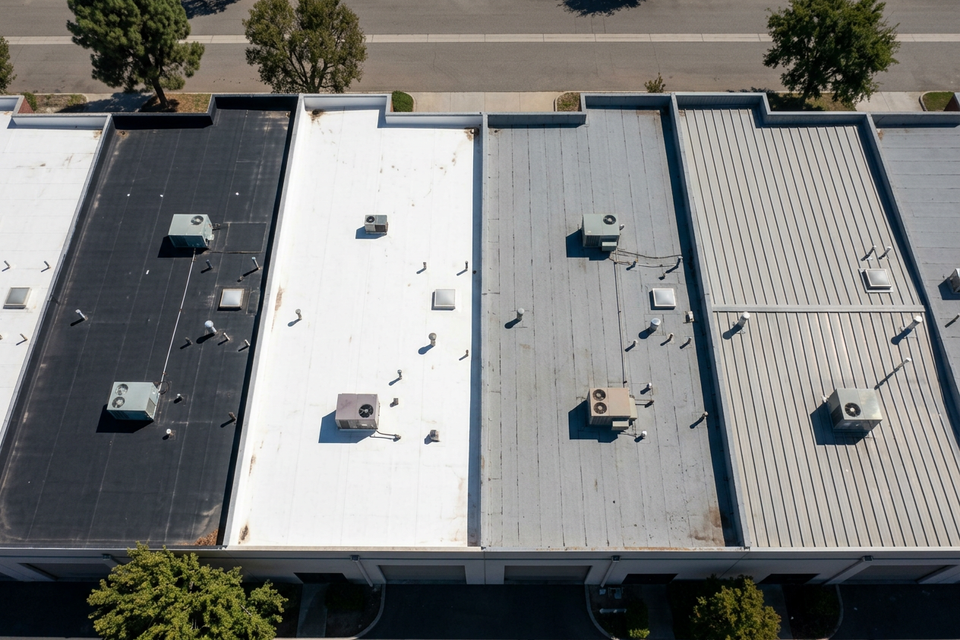
- It waits for the weather and does not suit every roof. It needs a sunny day followed by a clear, dry, calm evening, so it is booked for those conditions, not the day of the leak. It is the wrong tool for roofs under ballast or pavers, metal panel roofs, highly reflective or already-white-coated surfaces, and insulation that does not hold water, and a poor fit for gravel-surfaced built-up roofs, which are usually surveyed another way; the scan-fit tool says what to use instead.
Repair, restore or replace
With the map and the cores in hand, the choice usually comes down to three paths.
| What the survey and cores show | Path | What it involves |
|---|---|---|
| Dry insulation; the leak traced to one detail | Repair and carry on | A proper repair at that detail, logged on the roof plan |
| A few wet areas in a roof that is otherwise sound | Restore | Wet sections cut out and replaced, details reinforced, then the coating system over the whole roof |
| Wet insulation across a large share of the roof | Replace | Tear-off and a new roof |
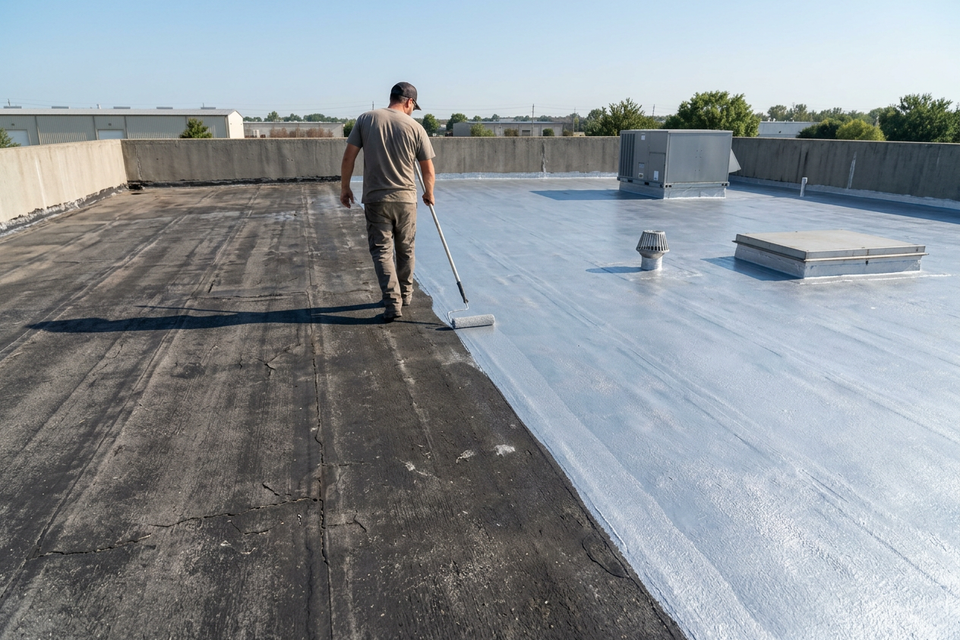
Applied over a sound, dry roof, a restoration system adds 10 to 15 years of service life. A roof with wet insulation is not a candidate until that is cut out and replaced, and a coating laid over a wet area seals the water in. That is why the map comes before the budget.
Restore or replace sets out what makes a roof a candidate and what rules it out; once you know the square footage coming out, run the numbers on restoring against replacing.
Who decides, and what to ask the roofer
- The roofing contractor finds the entry point, makes the repair and writes the scope for anything larger. We never do the roofing work ourselves. We work with a network of installers — roofing contractors who apply these systems — and can introduce you to one anywhere in the US, who looks at the roof and says whether it is a good candidate for restoration.
- The building’s engineer decides anything about the deck, including what standing water adds to it. Nothing here is structural advice.
- The local building department decides what permits the work needs and whether another layer is permitted at that address.
On the repair visit, ask:
- Where did the water get in? Ask for photographs before and after the repair.
- Is the repair temporary, and what will the finished repair be?
- What is the roof made of: which membrane, what insulation, what deck, how many roofs stacked?
- Was the insulation at the opening wet?
- Were the drains and scuppers clear?
Mark every leak on a roof plan: the date, where it showed inside, where it got in and what was done.
The restore-or-replace tool takes the roof through the candidate questions; what it cannot tell you is whether any insulation is wet, and that takes the scan and the cores. Request a moisture scan with the building’s address. We arrange scans for commercial low-slope roofs anywhere in the US. Nothing about the roof has to be decided until you have seen the map.
Last updated 2026-10-05.