
Concrete roof decks
Coating a concrete roof deck starts at the cracks
On exposed concrete, three things decide the job: a slab the engineer calls sound, a surface cured and dry enough to coat, and whether water drains or stands. Under acrylic the order runs: repairs, primer, fabric at every crack and joint, base coat, finish coat; Silicone44 goes straight onto cured concrete. Every layer has its Sherwin-Williams part number, in stock, shipped in 1–3 business days.
Candidate or not
Coat the deck only if the slab is sound
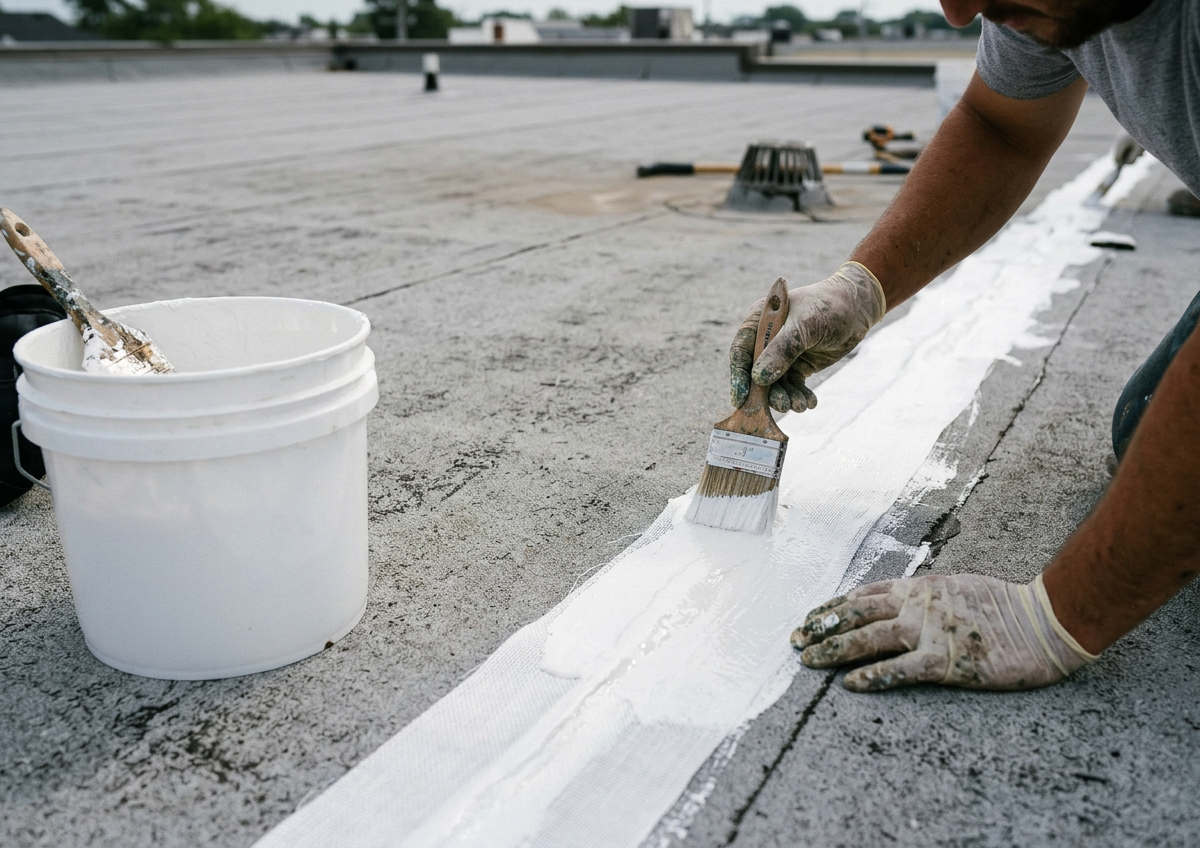
On a concrete deck the trouble starts at the details: cracks across the slab, joints whose sealant has let go, spalls, failed sealant at penetrations and water standing in low areas. A coating system closes those over a slab that is still sound; it does not repair the slab. This build-up is for exposed concrete, bare or coated before; either way there is no insulation on top for a thermal scan to read, so the deck is surveyed on foot. Where the concrete sits under insulation and a membrane, that roof decides the system and the survey.
- Structurally sound: deep spalls, deflection or a deck that moves are the building's engineer's call
- Cured, clean and dry: for Silicone44, Uniflex asks for at least 29 days of cure, moisture of 15% or less, and sealers and release compounds removed
- Cracks, joints and small holes that can be repaired one by one before anything is coated
- Penetrations, curbs and drains that can be resealed and detailed, counted at the survey, not mid-job
- Water that leaves at the drains, or low areas that can be corrected; where it still stands, the finish changes
In section
The build-up, from the deck up
Read it from the bottom. This is the acrylic system. Patching cement closes the holes and cracks in the slab, and a primer made for concrete goes over the clean deck. Fabric reinforces every crack, joint and transition, and sealant closes the metal penetrations. The base coat covers the field and the details, and the finish coat is what the weather sees. Where water stands, Silicone44 goes straight onto the cured concrete instead, and the primer and the base coat drop out.
Concrete deck, acrylic system
- Finish coat White acrylic KST041300 where the deck drains
- Base coat Gray acrylic KST041320 or KST041520
- Fabric and sealant KST20385A at cracks and joints; KST058300 at pipes
- Concrete primer Acrylic KST036500
- Repairs Patching cement KST041220 in holes and cracks
- Concrete deck Sound, cured, clean and dry
Step by step
The order of work, deck to finish
Part numbers are Sherwin-Williams Uniflex. Each product's data sheet names the preparation, the rate and the cure, and a written specification wins over this list.
-
Survey the deck and lay a test patch
Walk the deck and mark every crack, joint, spall, penetration and low area on a plan of the roof; that plan becomes the material count. Lay an adhesion test patch of the system before the full order. Anything structural goes to the building's engineer.
-
Clean and repair
Laitance, curing compounds, oil and loose material come off, and the deck dries as the data sheet requires. Close small holes, splits and cracks with acrylic patching cement KST041220. A deep spall, or a crack that keeps moving, goes back to the engineer before anything is coated.
-
Prime the concrete
Under the acrylic system, prime with acrylic concrete primer KST036500 where the data sheet calls for it; it is listed for concrete and for surfaces with a pH of 6 to 13. Concrete parapets and curbs take the same primer as the field. Silicone44 takes no primer on concrete.
-
Detail cracks, joints and penetrations
Reinforce cracks, joints and transitions three-course: a coat, polyester fabric KST20385A, a coat. Seal pipes, vents and other metal penetrations with MS hybrid sealant KST058300, which is listed for metal; its data sheet says what the concrete side of the bead needs.
-
Base coat
Lay the base coat over the field and the detailed areas: gray acrylic elastomeric KST041320, or the commercial grade KST041520. Both are listed as a base coat on concrete.
-
Finish coat
Where the deck drains, finish in white acrylic elastomeric KST041300. White finish coats reflect sunlight and keep the roof surface cooler. Where water still stands after the low areas are corrected, the system changes to Silicone44, with no primer and no base coat.
By part number
The materials for this deck
Genuine Sherwin-Williams Uniflex under its own part numbers, in the maker's sealed packaging, in stock and shipped in 1–3 business days. Silicone44 KST044300 (white) goes straight onto cured concrete where water stands. Everything is priced per project.
-
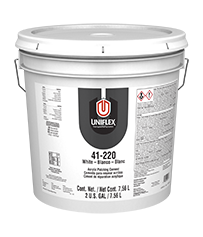
KST041220 Uniflex acrylic patching cement
-
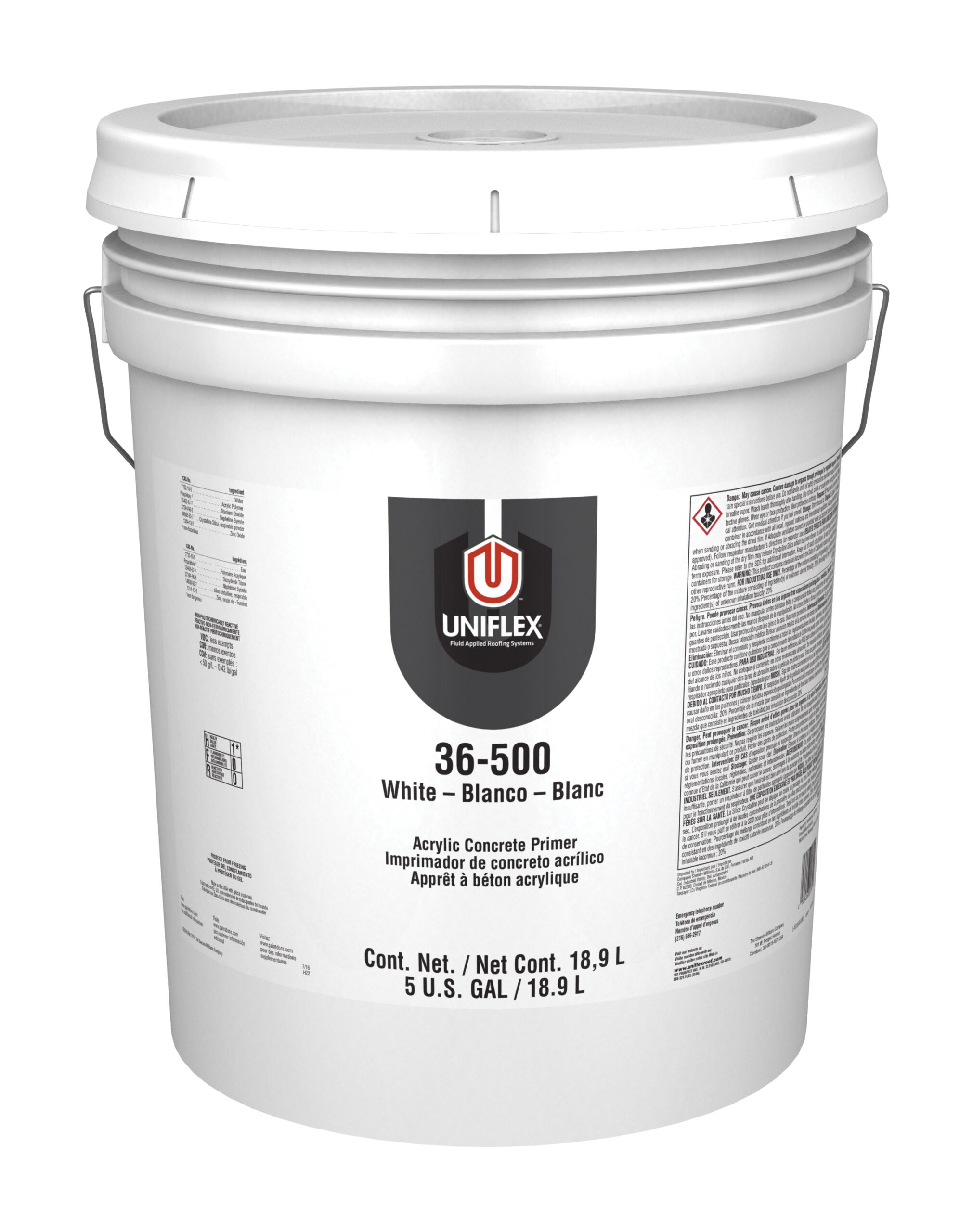
KST036500 Uniflex acrylic concrete primer
-
KST20385A Uniflex polyester reinforcing fabric · 6 in × 324 ft
-
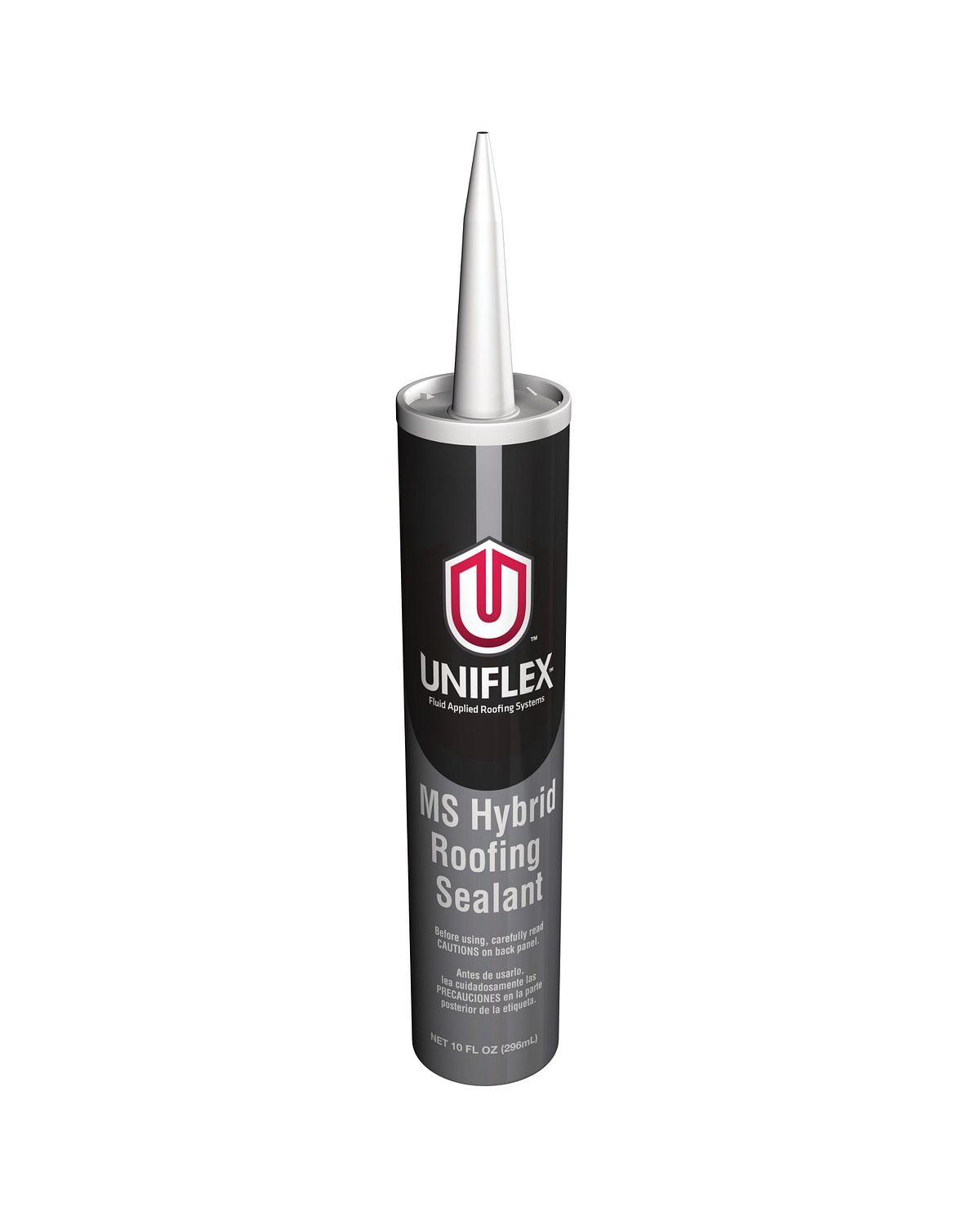
KST058300 Uniflex MS hybrid roofing sealant
-
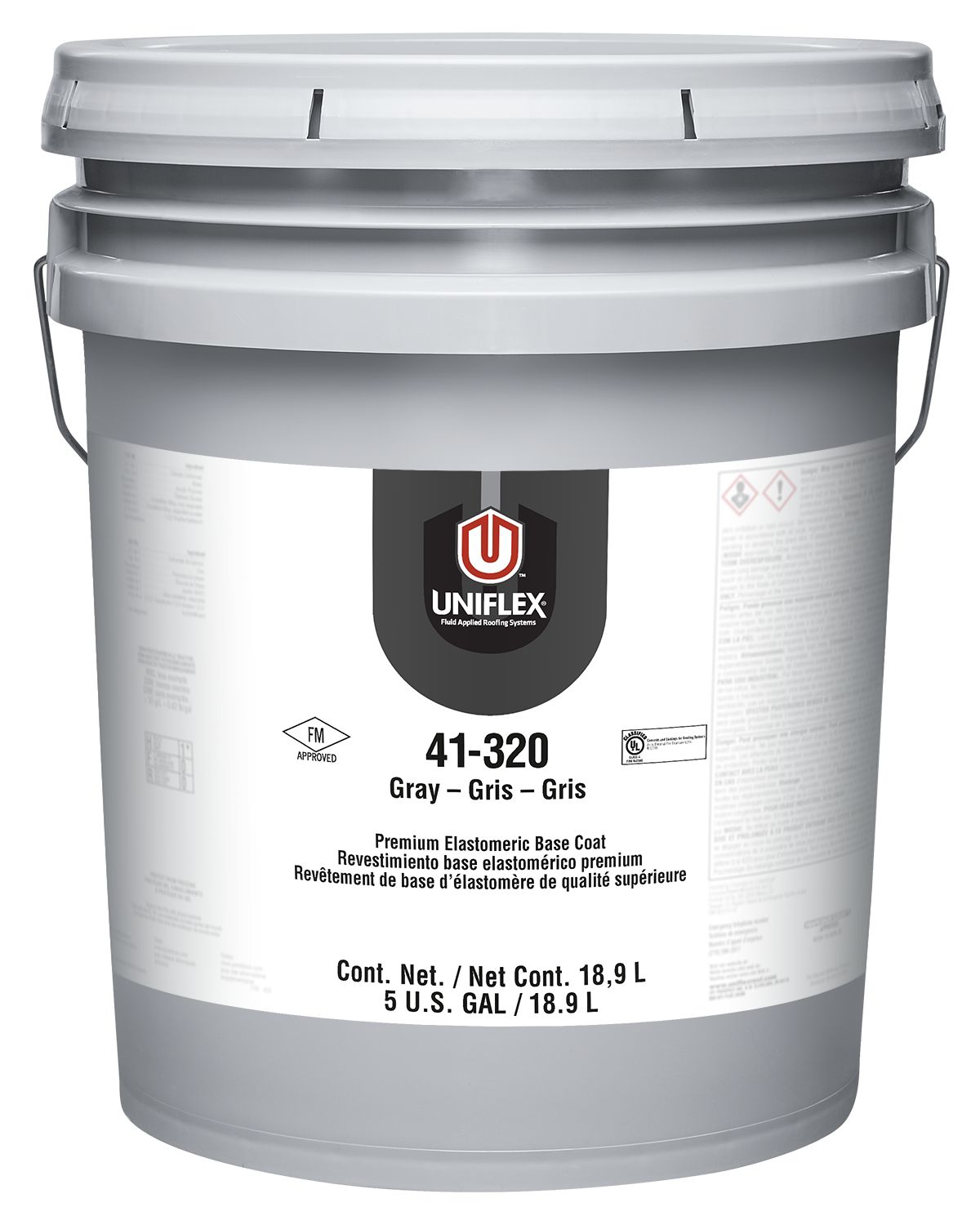
KST041320 Uniflex premium acrylic elastomeric base coat
-
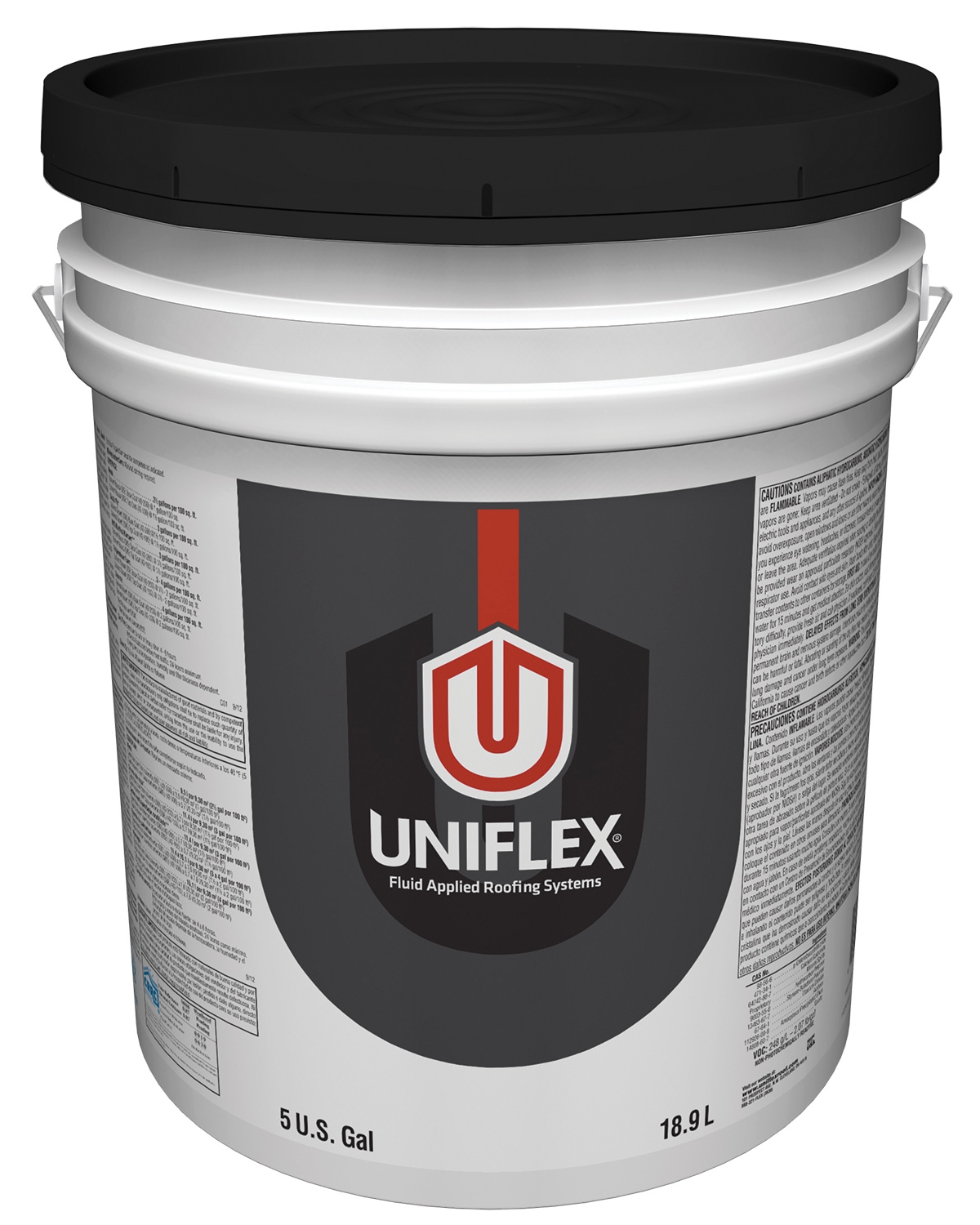
KST041300 Uniflex premium acrylic elastomeric roof coating
-
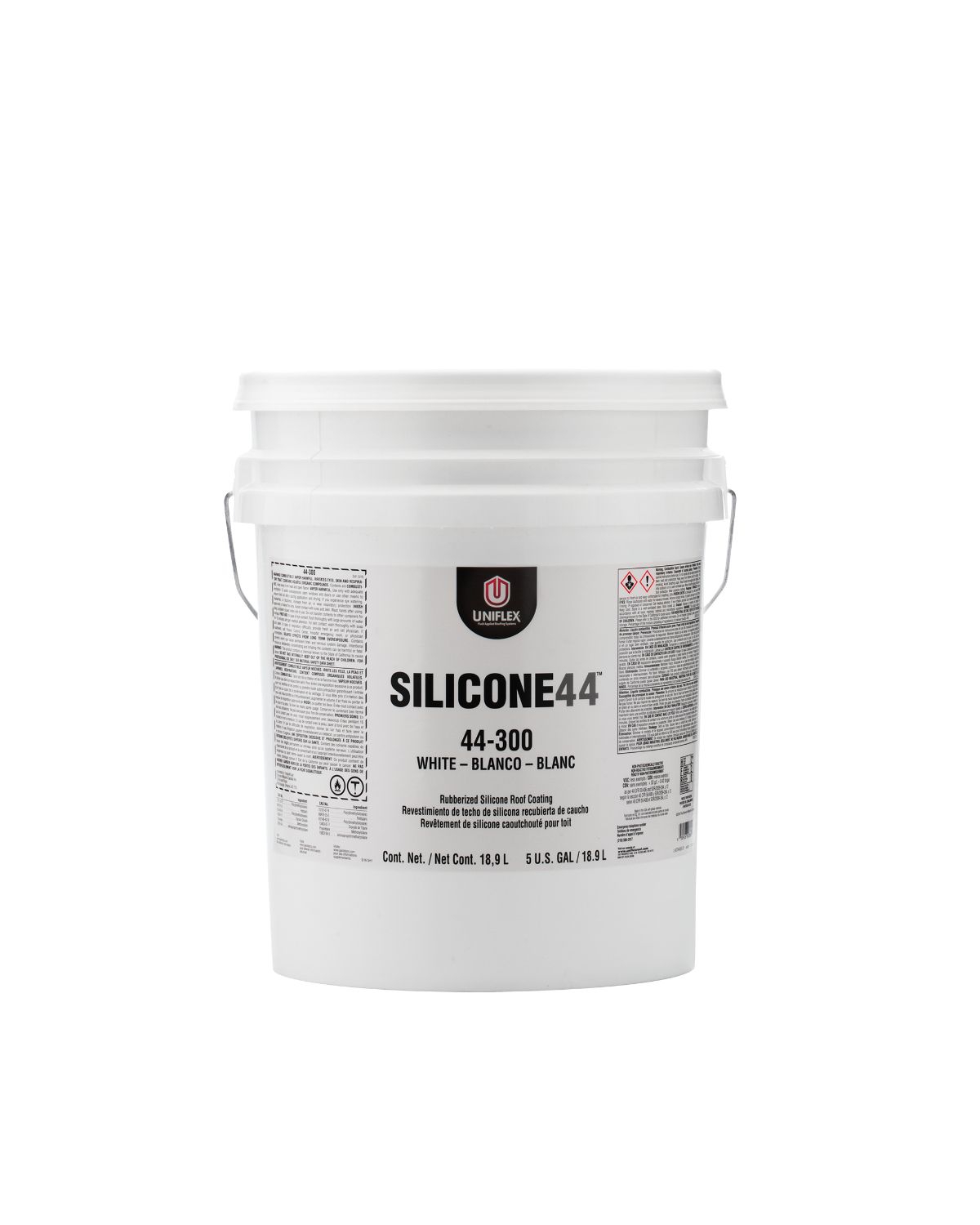
44-300 Uniflex Silicone44 rubberized silicone roof coating
-
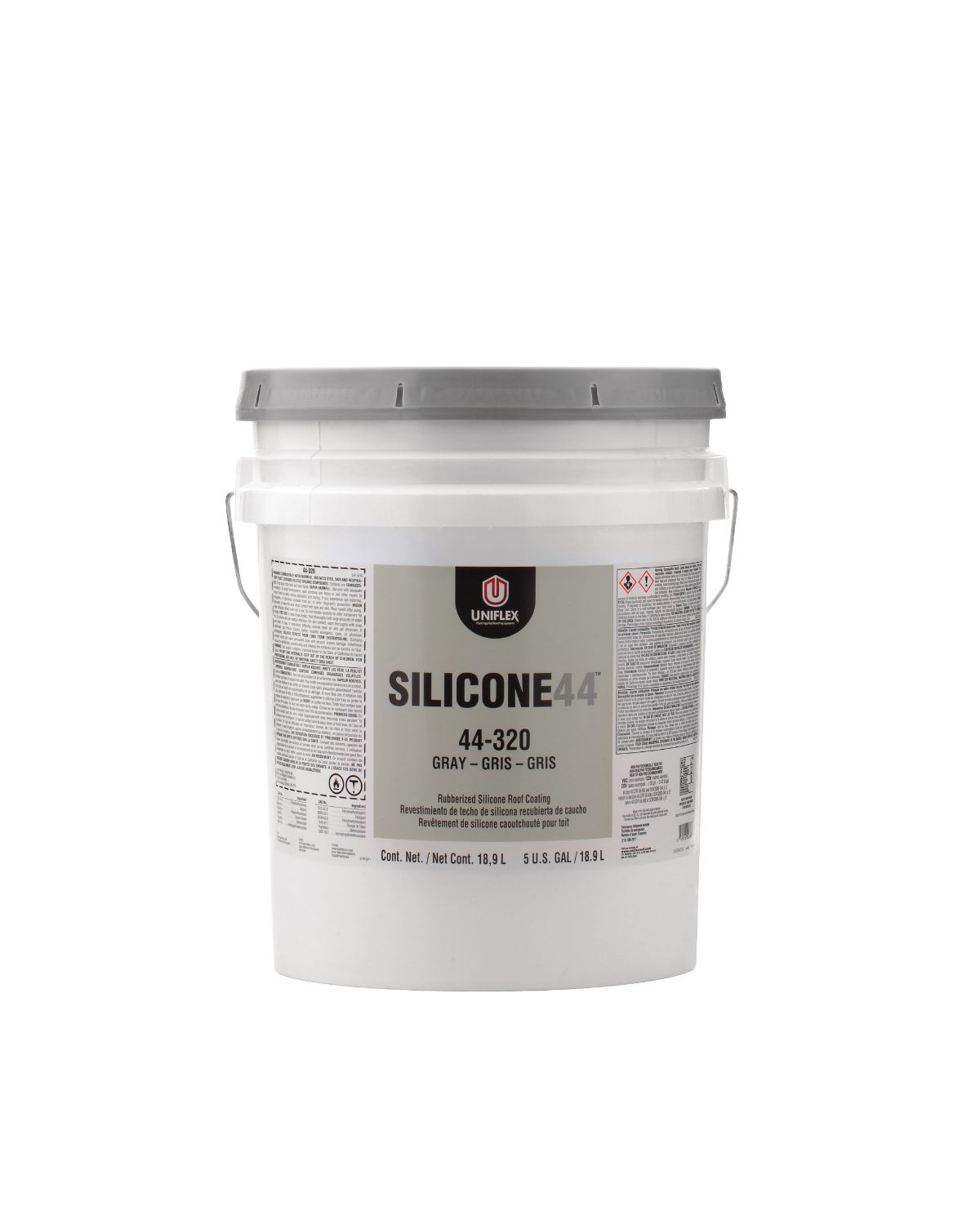
44-320 Uniflex Silicone44 rubberized silicone roof coating
Ponding and low areas
Where water stands, the finish changes
Acrylic is the finish for a deck that drains: under prolonged ponding it can lose adhesion and peel. Correct the low areas first where you can. Even the silicone's own data sheet says to remove ponding, because standing water adds load to the deck, and whether this slab carries it is the building's engineer's question. Where water will still stand, Silicone44 goes directly onto clean, cured concrete, with no primer and no base coat, once an adhesion test passes.
- Silicone44 KST044300 (white) or KST044320 (gray), straight onto the concrete: KST036500 and the acrylic base coats stay out of this build-up
- Uniflex asks for concrete cured at least 29 days, moisture of 15% or less, and sealers and release compounds removed
- Wider cracks are reinforced with polyester fabric KST20385A; Uniflex specifies its own sealant for the cracks, which we do not stock, so ask us
- At curbs and penetrations, Uniflex's silicone specifications use its OneFlash sealant, which we do not stock either
- Silicone44 does not fix drainage: Uniflex's silicone specifications still expect at least 1/4 in per ft of slope and working drains
- The solvent-based pair, KST042200 and KST042100, does not list concrete, so it stays out of this build-up
Questions
Before you coat the deck
Can a drone thermal scan survey a concrete roof deck?
Can new concrete be coated?
Can I coat over an old coating on the deck?
How much material does a concrete deck take?
How long does a coated concrete deck last, and is there a warranty?
Who applies the system?
Get the concrete deck counted and priced
Send the deck area, the linear feet of cracks and joints, a count of penetrations and whether water stands anywhere. The quote comes back with the price, the freight and a ship date. If you have no contractor yet, say so, and we can introduce you to an installer anywhere in the US.
We reply within one business day.