
Sprayed polyurethane foam roofs
Recoating a spray foam roof starts with the foam
On a foam roof the coating takes the weather and the foam under it is the roof. The foam decides the recoat: sound, dry foam takes an acrylic base and finish coat, or Silicone44 on its own, with no primer; wet or damaged foam is cut out and replaced first. Here is the build-up in genuine Sherwin-Williams Uniflex, by part number, in stock and shipped in 1–3 business days.
Candidate or not
The foam has to be sound and dry
Foam is protected by its coating. Once the coating wears thin or goes missing, the sun degrades the exposed foam, and every gouge from foot traffic or equipment and every hole pecked by a bird is a way in for water. So the first question on a foam roof is not which coating but what state the foam is in. Applied over a sound, dry roof, a restoration system adds 10 to 15 years of service life; on a foam roof, that means sound, dry foam.
- Sound foam: it does not crumble under a screwdriver, and it is still bonded to what it was sprayed onto
- Dry foam: where water got in, that foam is cut out and replaced before any coating goes on
- Damage you can repair one place at a time: sun-worn foam, gouges, splits, pecked holes, blisters
- Water that leaves at the drains and scuppers; where it stands, fix the low spot or change the finish
- A deck that carries the roof, which is a question for the building engineer
The build-up
The recoat, from the foam up
Read it from the bottom. The foam stays: it is the insulation and the body of the roof, and the coating is the layer that takes the weather. Wet or damaged foam is cut out and replaced, and small holes, splits and blisters are patched. Then the base coat goes straight onto the clean foam with no primer, and the finish coat over it: a gray base under a white finish, so the crew can see coverage.
- Finish coat KST041300 white, where the roof drains
- Base coat KST041520 gray, straight onto the foam
- Repairs KST041220 at holes, splits and blisters
- Existing foam, cleaned Sound and dry; wet or damaged foam replaced
- Roof deck Structurally sound: the engineer's call
How the recoat goes
The order of work, by part number
Each step is finished before the next one starts. The data sheet names the preparation, the rate and the cure for every product here, and a written specification wins over this list.
-
Survey the foam
Our drone moisture scan is the wrong tool on foam: closed-cell foam does not hold water the way board insulation does. Walk the roof with a plan and take cores; mark worn coating, sun-damaged foam, gouges, pecked holes, blisters and every penetration. That survey becomes the material count.
-
Clean the roof
Wash the field, get dirt, ponded silt and anything loose off, and let the roof dry as the data sheet requires. What is left on the surface bears on whether the new coat holds.
-
Cut out and repair
Wet or damaged foam is cut back to sound foam and replaced; the foam itself is not in our catalogue. Small holes, splits, cracks and blisters, and the flashings at penetrations and walls, are closed with acrylic patching cement KST041220 under an acrylic finish; under Silicone44, ask us.
-
Lay an adhesion test patch
Put the system down on a small area, over the old coating where some remains, let it cure, then pull it. For Silicone44, Uniflex's test embeds a fabric strip, waits three days and looks for at least 2 lb per inch; a lower result goes to Uniflex. Nothing else settles whether it holds on this roof.
-
Base coat, no primer
Under an acrylic finish, gray acrylic elastomeric base coat KST041520, the commercial grade, goes straight onto sound, clean foam; the premium grade KST041320 lists polyurethane foam too. No primer in this build-up unless the data sheet or the test patch says otherwise.
-
Finish coat
White acrylic elastomeric KST041300 where the roof drains. Where water stands, Silicone44 KST044300 (white) or KST044320 (gray) goes straight onto the clean foam instead, with no primer and no base coat, or the solvent-based pair, base coat KST042200 under finish coat KST042100.
Genuine Sherwin-Williams Uniflex
The materials for a foam roof
Genuine Sherwin-Williams Uniflex in the maker's sealed packaging, in stock and shipped in 1–3 business days; both acrylic base coats and the acrylic finish coat come by the pail, the 55-gallon drum and the 275-gallon tote. Priced per project; the solvent-based pair ships as regulated freight.
-
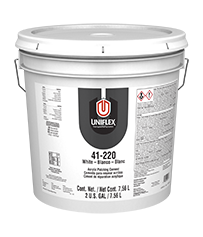
KST041220 Uniflex acrylic patching cement
-
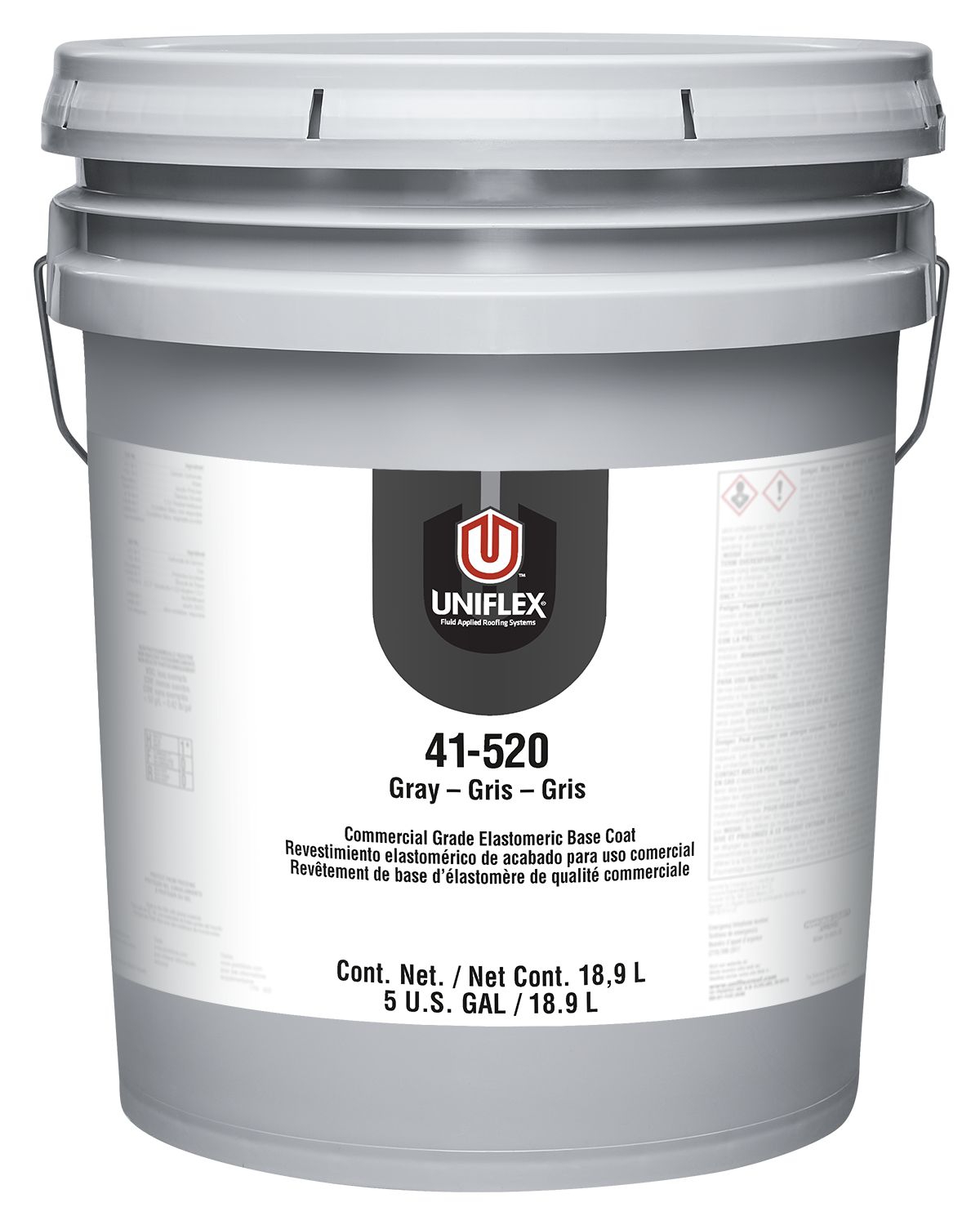
KST041520 Uniflex commercial-grade acrylic elastomeric base coat
-
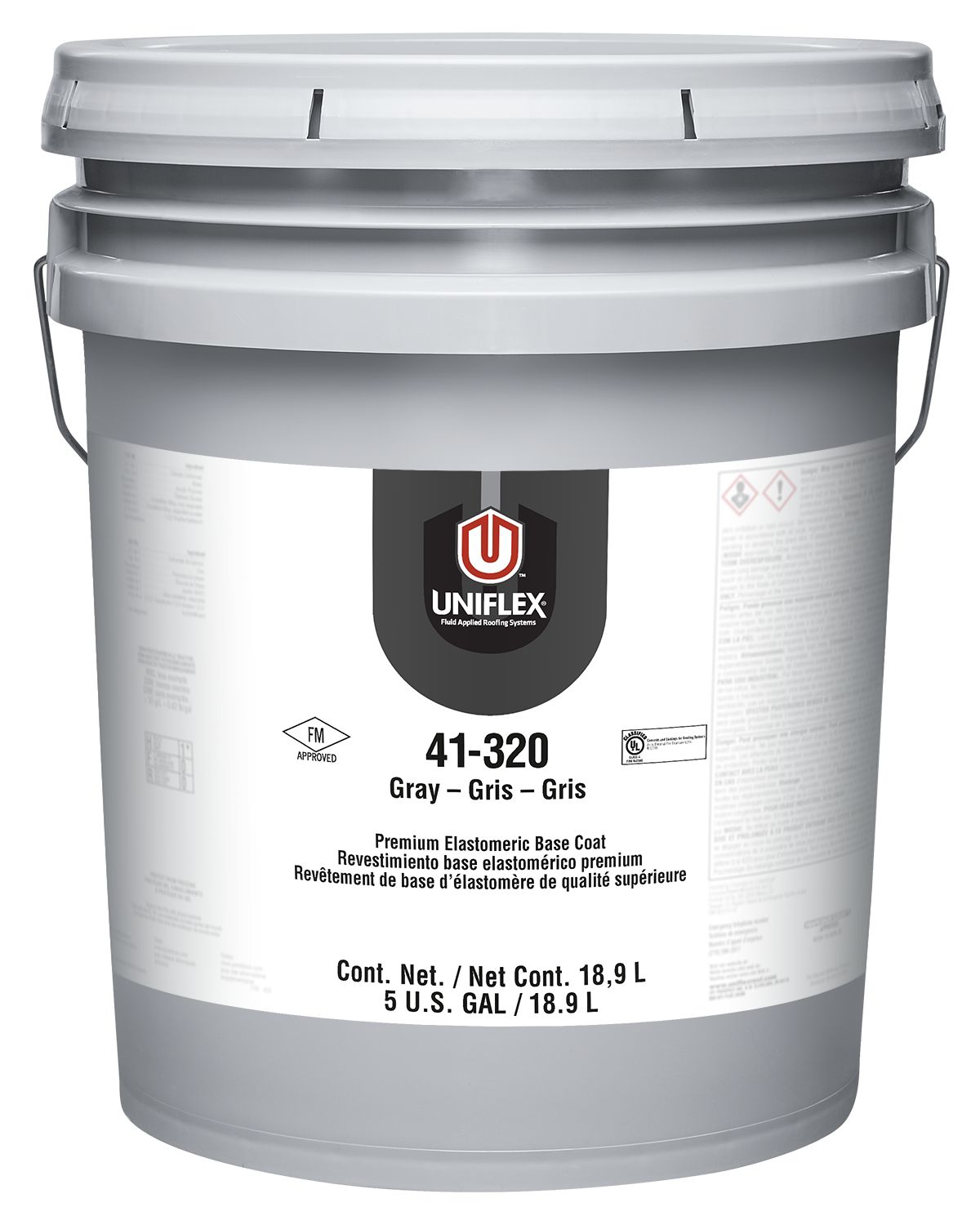
KST041320 Uniflex premium acrylic elastomeric base coat
-
KST041300 Uniflex premium acrylic elastomeric roof coating
-
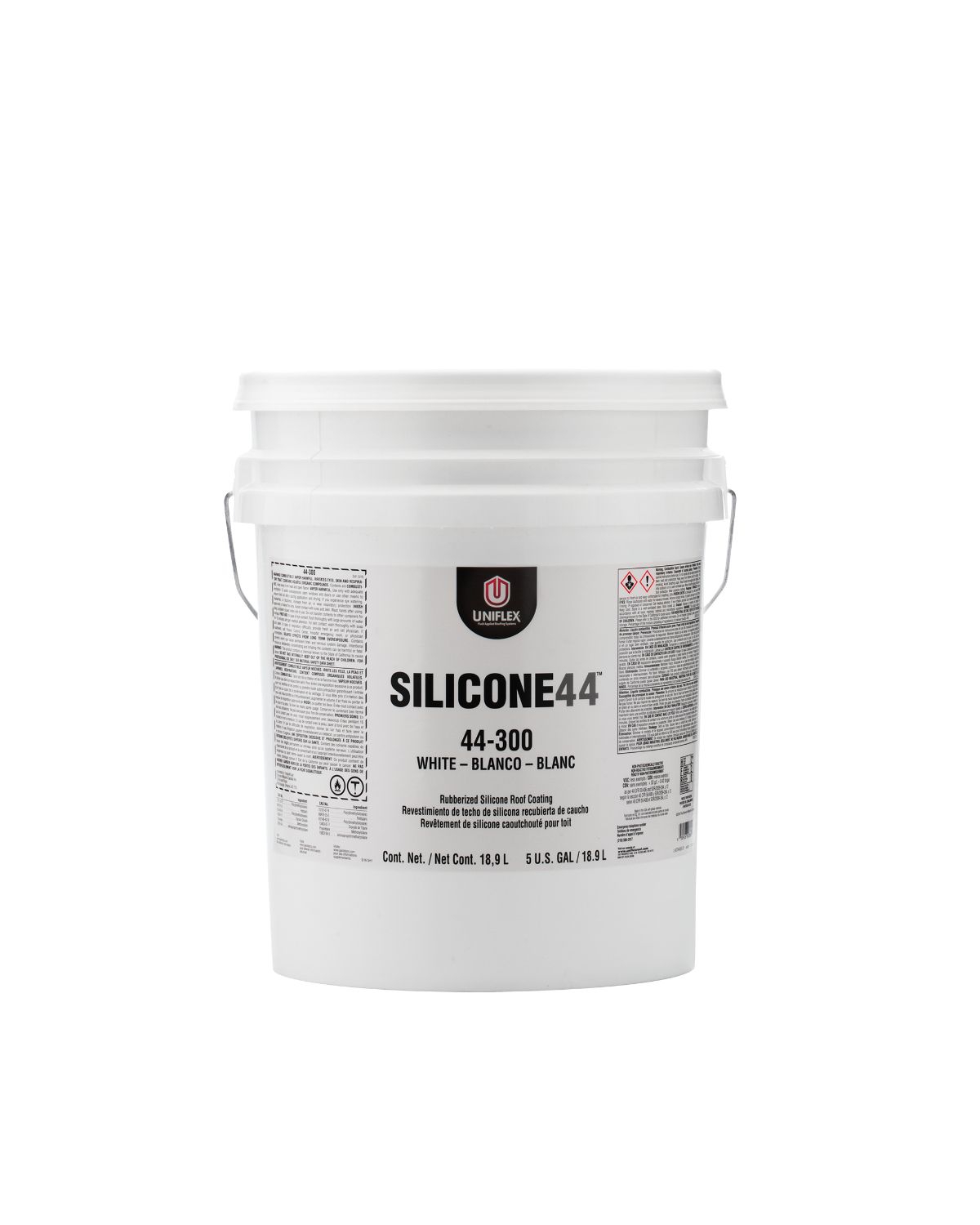
44-300 Uniflex Silicone44 rubberized silicone roof coating
-
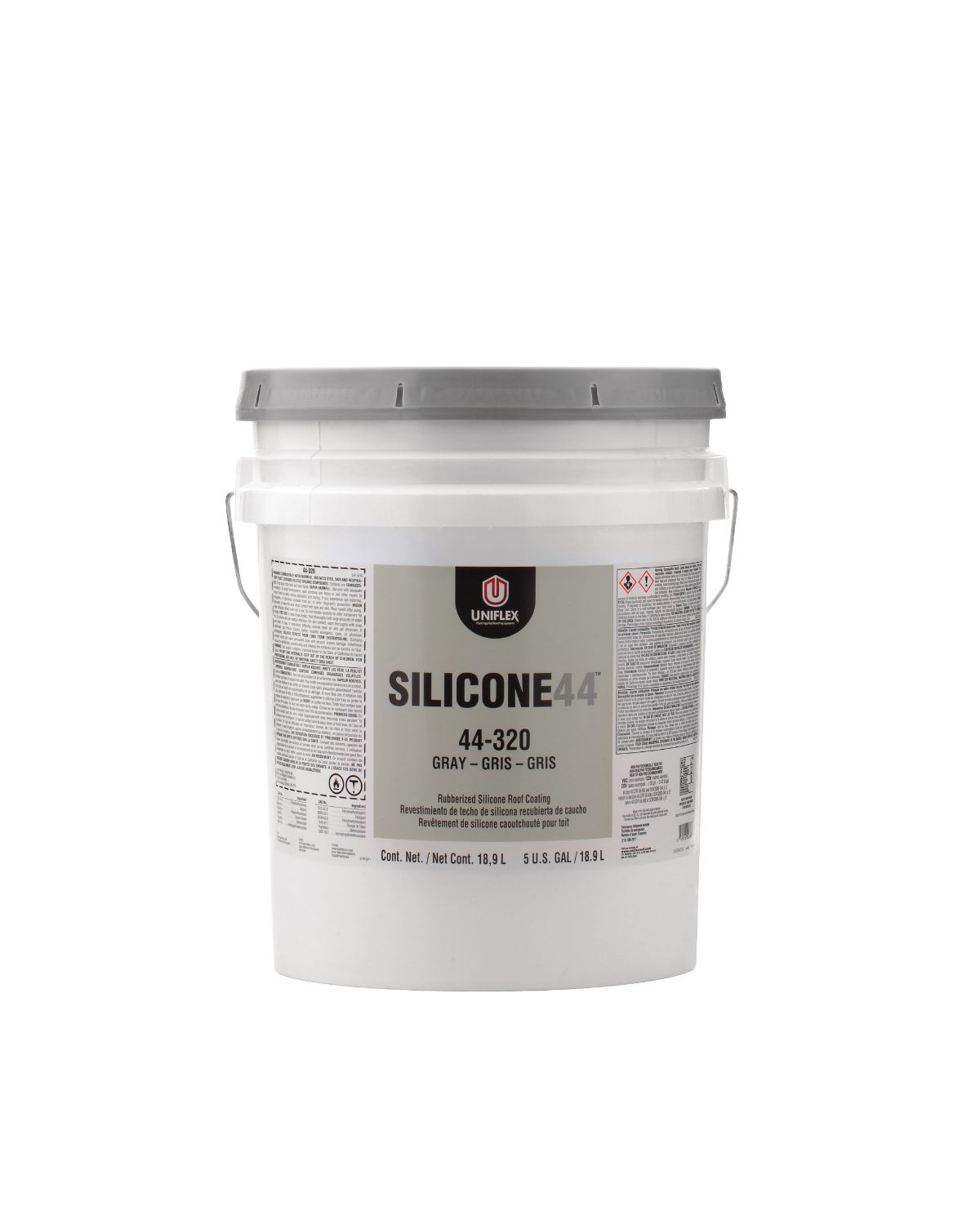
44-320 Uniflex Silicone44 rubberized silicone roof coating
-
KST042200 Uniflex premium solvent-based elastomeric base coat
-
KST042100 Uniflex premium solvent-based elastomeric roof coating
Questions
Before you recoat the foam
If a thermal scan is the wrong tool, how is a foam roof surveyed?
What if water stands on the foam?
Does the old coating have to come off?
Can a foam roof be recoated without tearing it off?
What settles the specification, and can the recoat carry a warranty?
I own a foam roof. Who does the work?
Price the recoat off the survey
Send the roof area, what the walk-through and the cores found, the penetrations to detail, whether water stands and whether a system warranty is wanted. Foam's orange-peel surface has real area in it; allow for it in the count. No contractor yet? We can introduce an installer anywhere in the US.
We reply within one business day.