Infrared vs nuclear roof moisture surveys: four methods compared
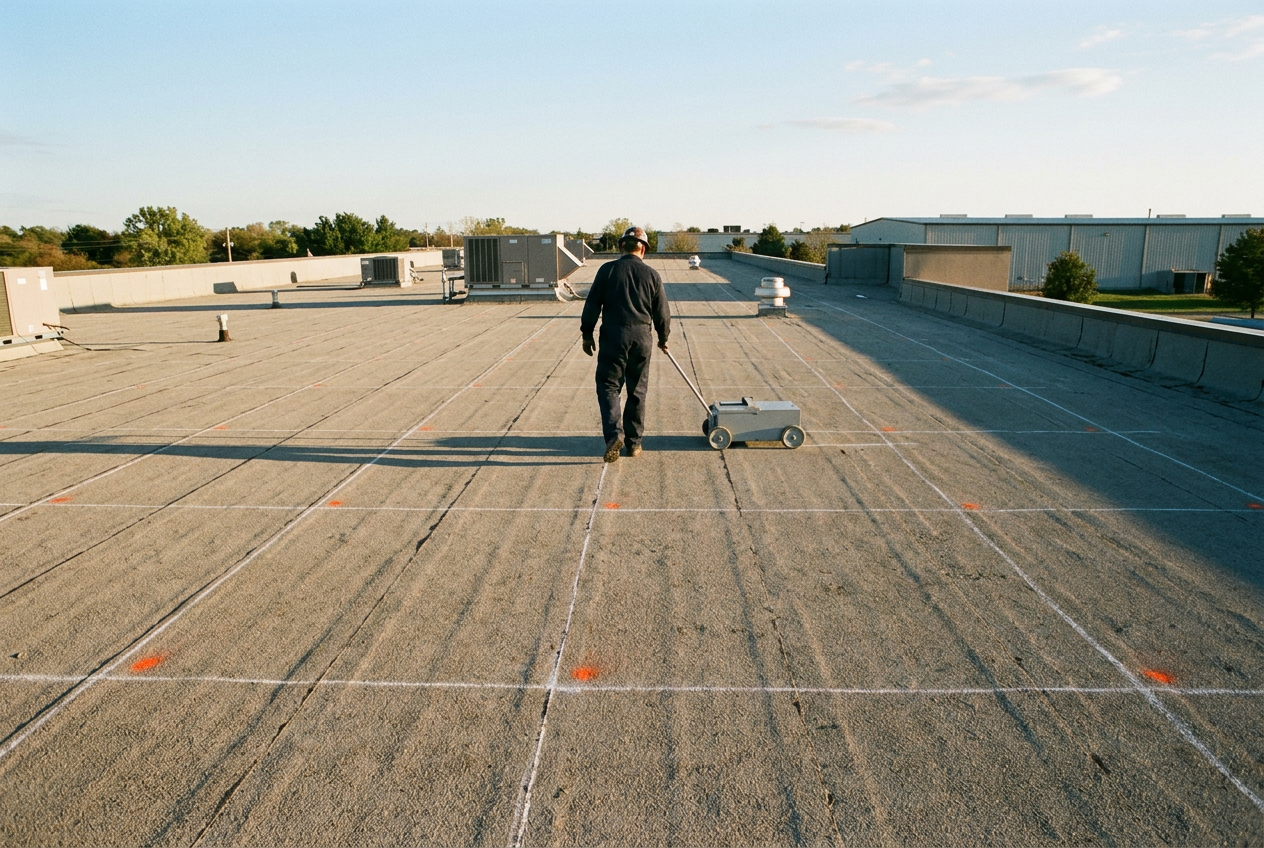
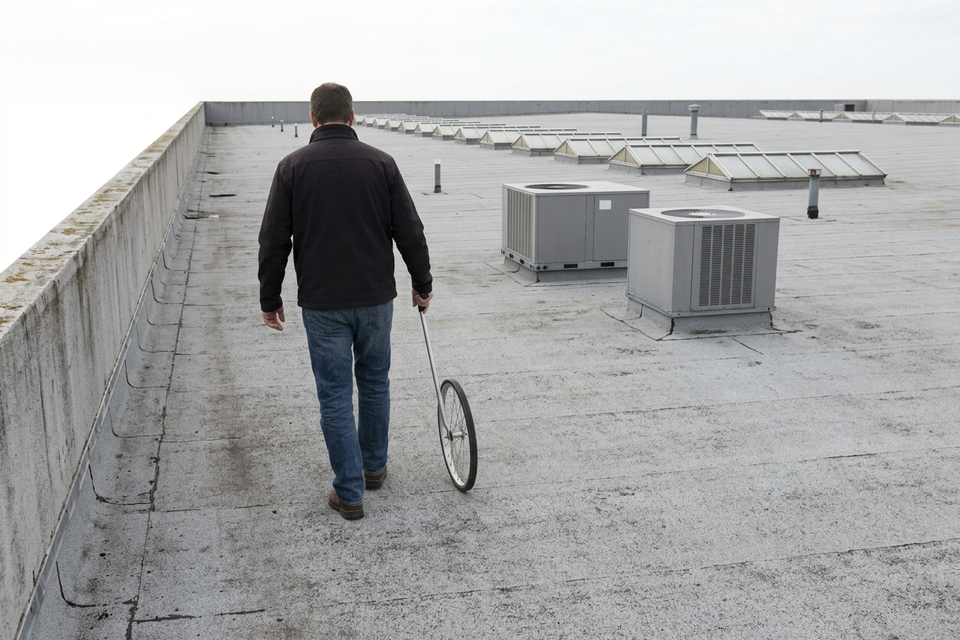
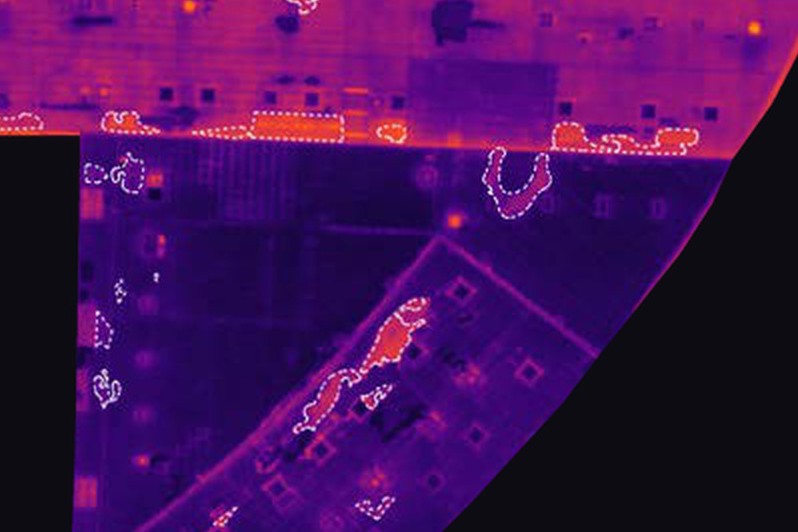
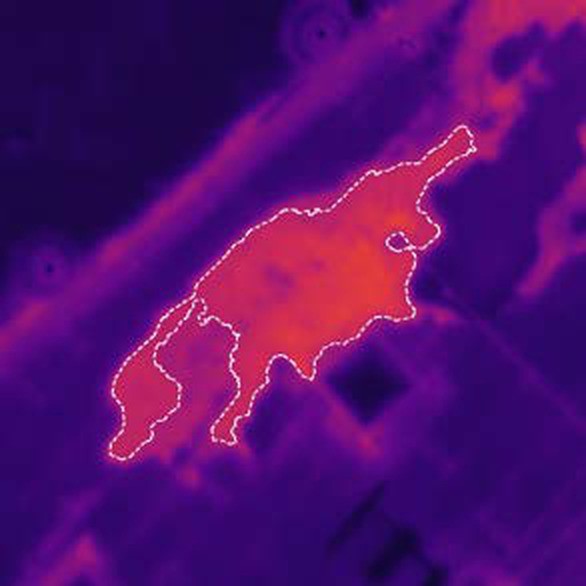
Infrared and nuclear surveys look for the same thing, insulation that may be wet under the membrane, by different routes. An infrared survey images the roof after sunset and shows where the surface has stayed warm; from the air it can cover a large roof in one evening, but it needs the right weather and the right kind of roof. A nuclear gauge is walked across the roof and read at grid points 5 to 10 ft apart, responding to the hydrogen in water. The result is a grid of readings rather than a picture, and it is the method suggested where infrared cannot be used, ballasted roofs among them. Electrical impedance scanning, often called capacitance, is the third option.
None of the three sees water. Each reads something that changes when insulation is wet, so each hands back a map of suspects, and the published standard for each calls for core cuts to verify it. So the choice is rarely infrared or nuclear. It is which non-destructive method suits this roof, with cores to follow.
Four methods side by side
Three non-destructive surveys, each with a published standard, and the core cut all three rely on.
| Method | How it works | Roofs it suits | Roofs it does not | What you get |
|---|---|---|---|---|
| Infrared thermography (ASTM C1153) | A thermal camera images the roof after sunset; wet insulation holds the day’s heat longer and shows warmer | Insulation above the deck, in contact with the membrane: single-ply, modified bitumen, smooth built-up | Ballast or pavers, metal panels, inverted assemblies, insulation that does not hold water, reflective or white-coated surfaces; gravel-surfaced built-up is a poor fit | A roof plan with the warm areas outlined and measured |
| Electrical impedance, or capacitance (ASTM D7954) | A scanner on the surface reads an electrical property that changes where material is wet | Insulated roofs under non-conductive membranes: asphalt, coal tar, modified bitumen, thermoplastics, spray foam; uninsulated roofs over wood, concrete or gypsum decks | Metal or conductive surfacings, black EPDM, foil facers, inverted assemblies with the overburden in place, a wet surface | Wet-or-dry readings on a grid, relative, not a percentage |
| Nuclear gauge (ANSI/SPRI/IIBEC NT-1) | Neutrons go into the roof and the hydrogen in water scatters them back | Ballasted and gravel-surfaced roofs; ponded areas | Its limit is detail: readings at grid points, not a picture of the surface | Relative counts at points 5 to 10 ft apart |
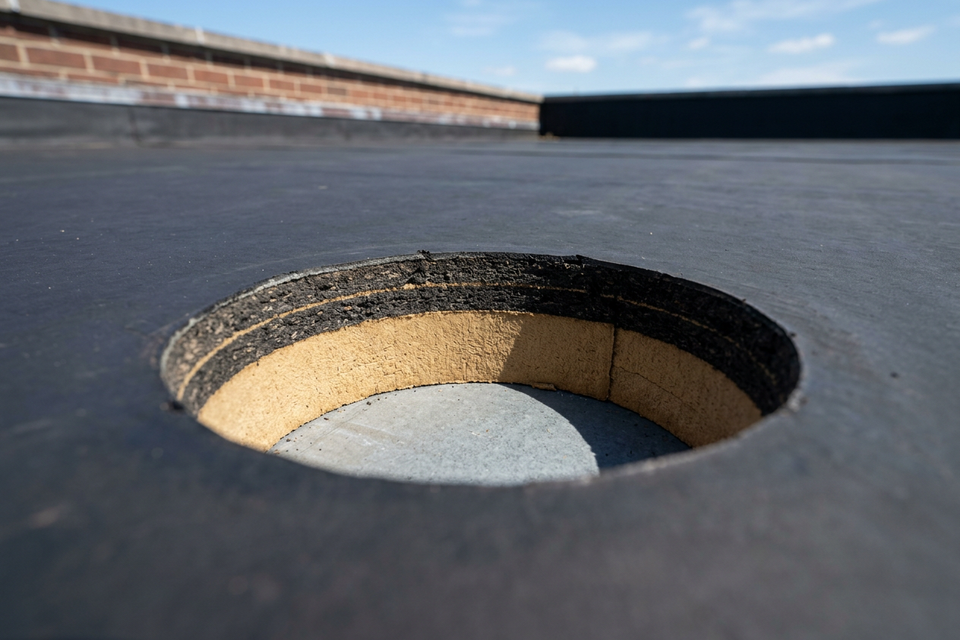
| Core cuts | A small plug is cut through the assembly; where the amount matters it is weighed, dried and weighed again | Any roof the owner allows to be cut and patched | Not a survey by itself: a core speaks for one spot | The layers, their condition, wet or dry, and moisture by weight |
Capacitance and impedance are two names for the same family of instruments; the ASTM practice says electrical impedance. ASTM C1153 is the standard practice for locating wet insulation in roofing systems with infrared imaging, from the ground or the air. ASTM D7954 is the practice for impedance scanners, and nuclear gauges have their own standard, ANSI/SPRI/IIBEC NT-1. Handheld moisture meters and probes belong to the checking step: the infrared practice has its findings verified by cores, or by cores plus moisture-meter probes.
Why a survey is two jobs
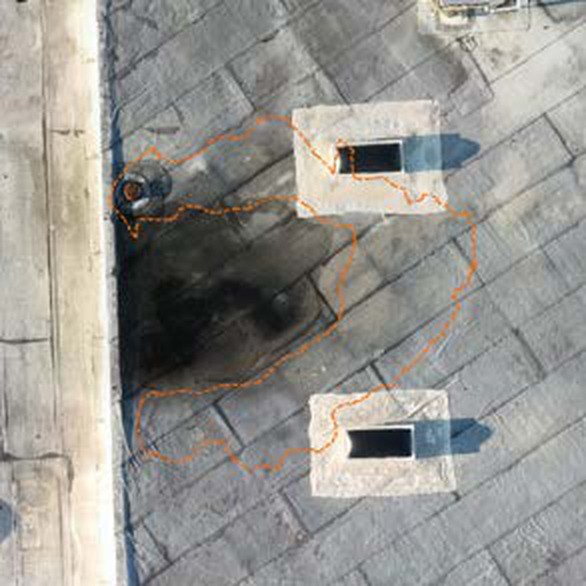
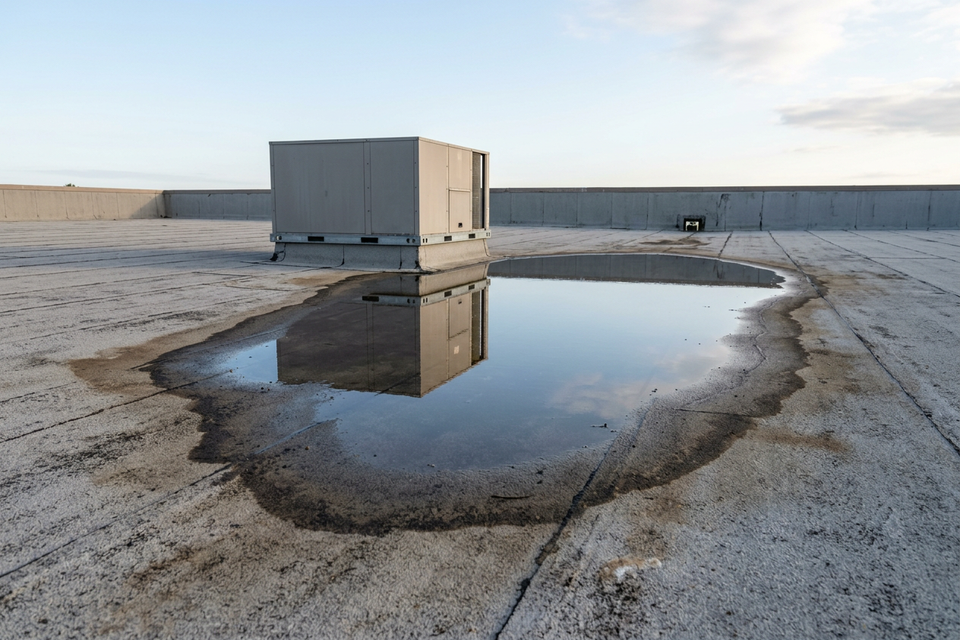
A thermal camera reads surface temperature, an impedance scanner an electrical property, a nuclear gauge scattered neutrons. All three readings are relative: they say this spot differs from that one, never how much water it holds. And a reading can be fooled. On a thermal image, exhaust from rooftop units, ponded water, a change in membrane thickness, dirt and debris can all show warm; How to read a thermal roof scan goes through those patterns.
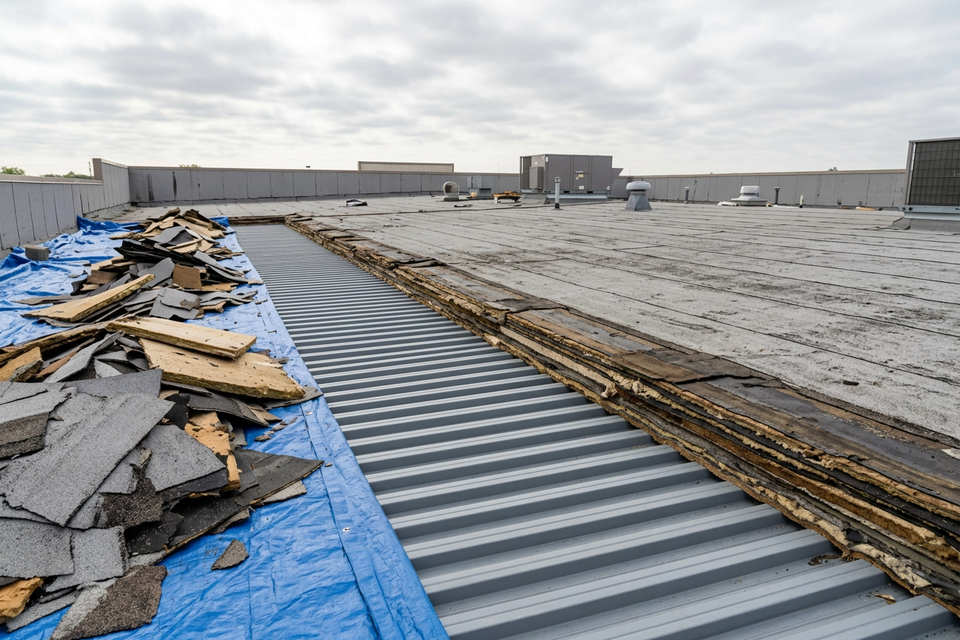
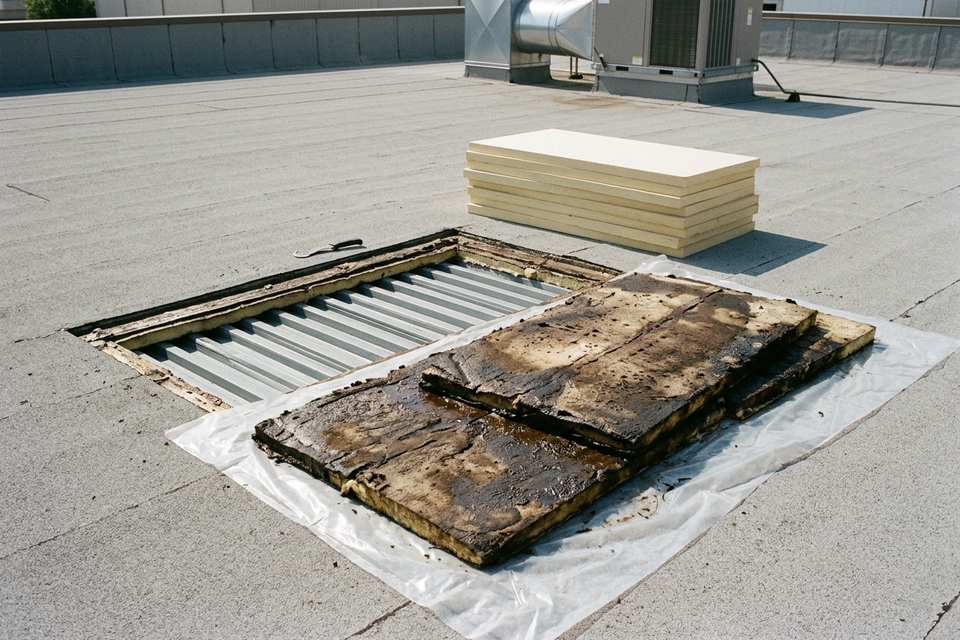
The mistake costs money both ways. A false positive acted on means sound roofing cut out for nothing. A wet area missed means a coating laid over water, which seals it in. Core cuts catch both: a core shows what the roof is made of and whether the insulation is wet.
The survey says where to cut; the cores say what the readings mean. One trade-journal treatment calls an investigation that relies on a single method insufficient. The scan marks suspects; the cores confirm them.
Which method for which roof
Start from the roof, not the instrument. On single-ply, modified bitumen or smooth built-up over absorbent insulation, an infrared survey is the natural first pass. The choice changes on these roofs.
- Ballasted and paver-covered. The stone stores the day’s heat and masks the small differences the camera needs; thermography training guidance points to capacitance or nuclear gauges instead. Where the membrane under the stone is black EPDM, impedance is out too, which leaves the nuclear gauge and cores. Inverted assemblies, with insulation above the membrane, are outside the impedance practice while the overburden is in place.
- Gravel-surfaced built-up. A poor fit for a thermal scan: gravel makes thermal patterns that can be indistinguishable from small wet spots. These roofs are usually surveyed another way, with a capacitance or nuclear survey on a grid, then cores.
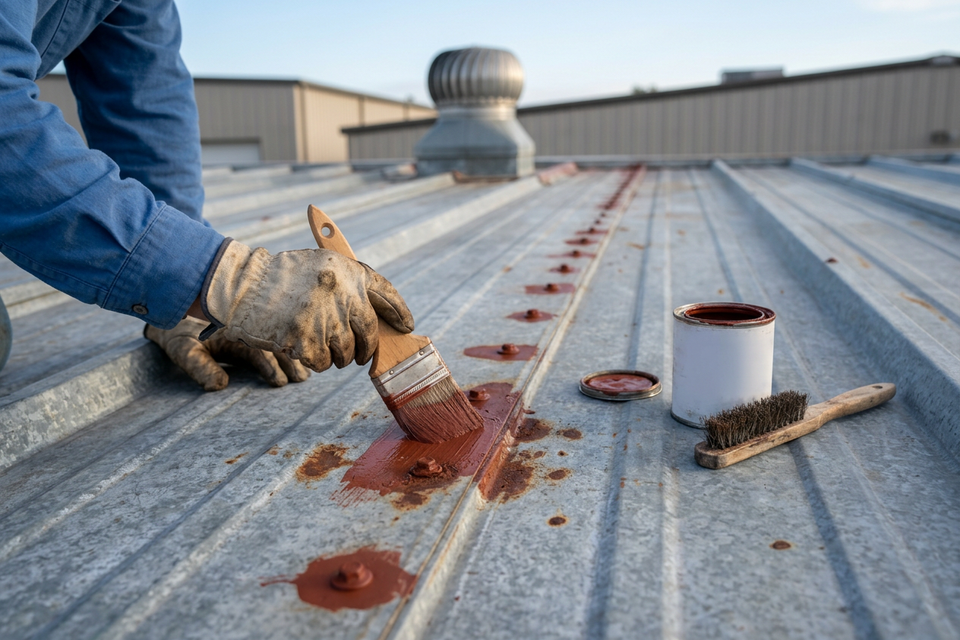
- Metal panels. Standing-seam metal cannot be scanned with a thermal camera for this purpose, and the impedance practice excludes metal surfaces. What matters on a metal roof is found on foot: loose fasteners, open seams, rust and penetrations. Metal roof systems starts there.
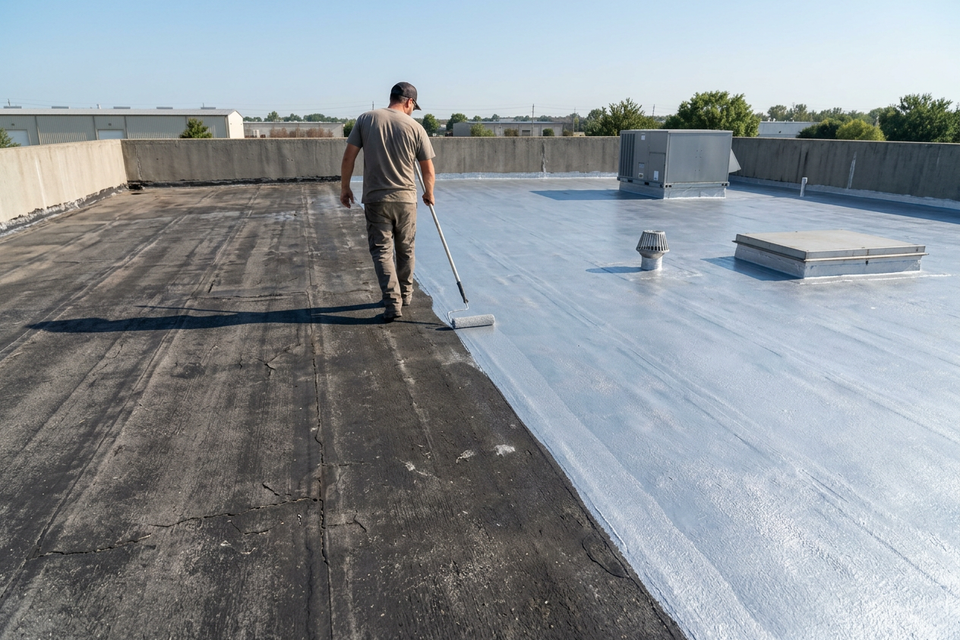
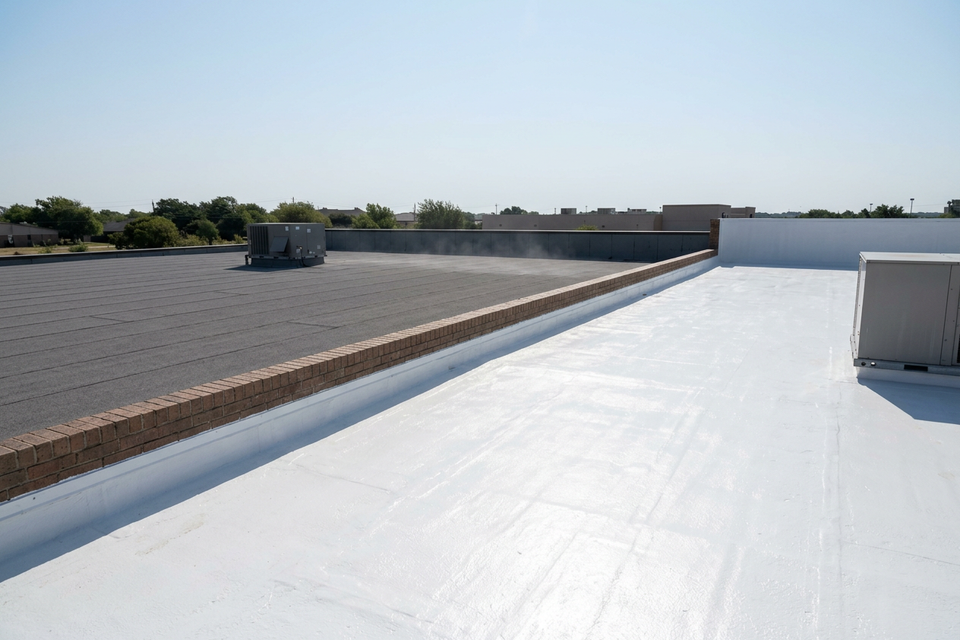
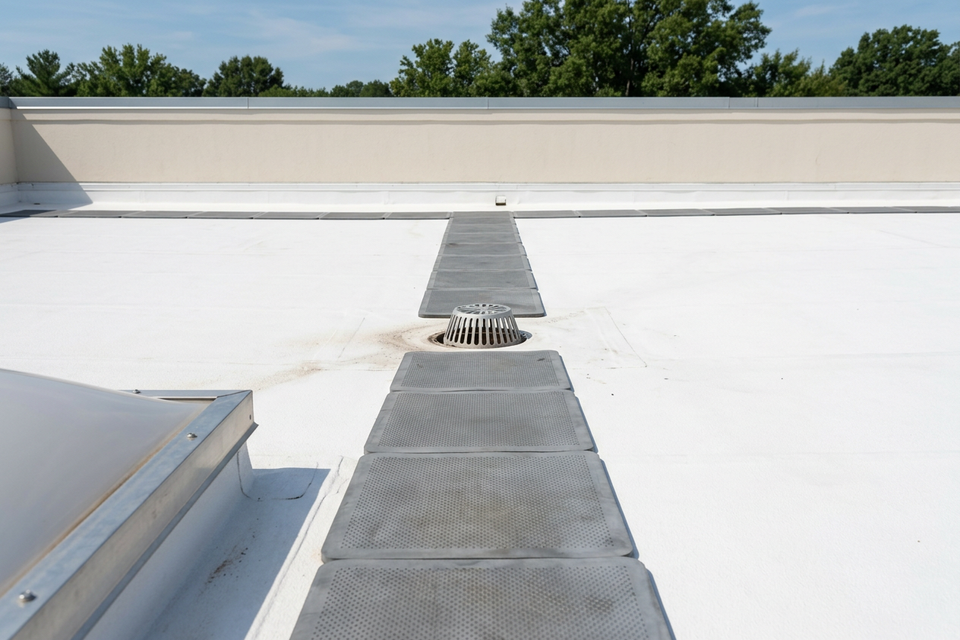
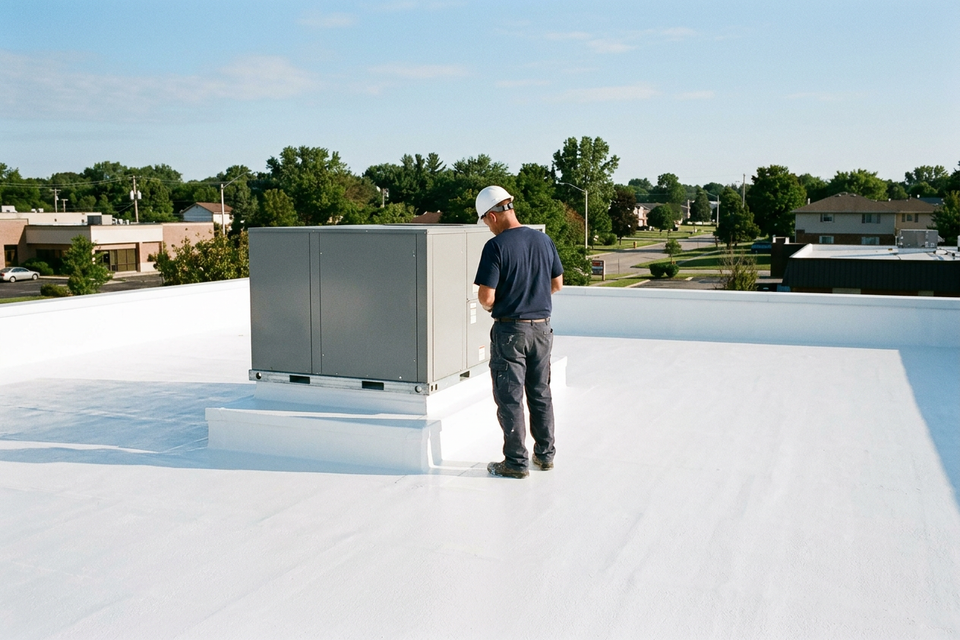
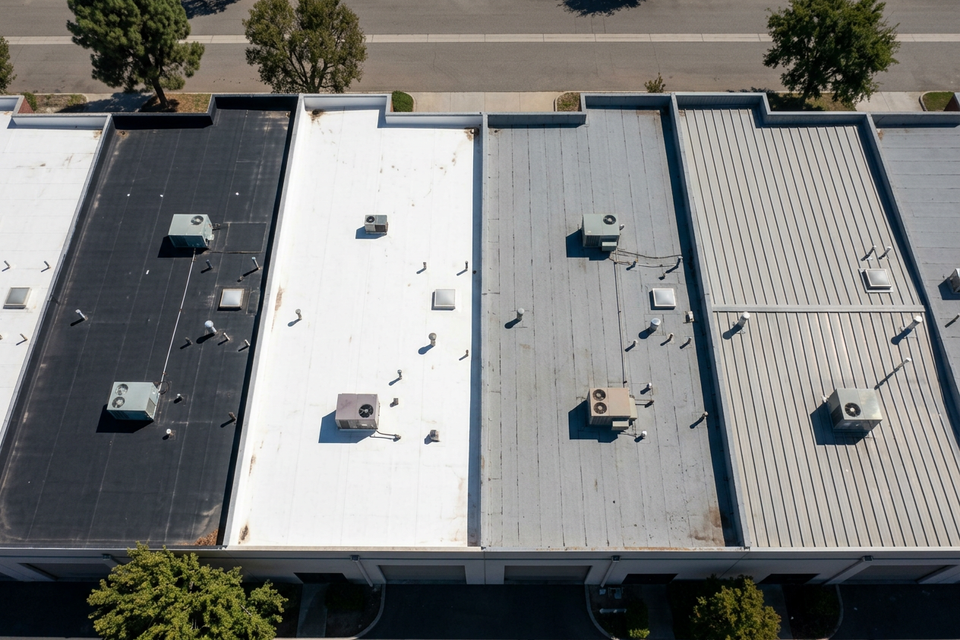
- White-coated and highly reflective. Reflections and uneven emissivity degrade thermal data; an already-white-coated surface is the wrong roof for a thermal camera, so ask about a grid survey and cores. A white coating makes later thermal work harder: scan before the first coating goes on.
- Sprayed polyurethane foam. Closed-cell foam does not soak up water the way absorbent board does, so the warm pattern a camera looks for may not form. The impedance practice lists spray foam among the roofs it covers. Cores decide, and foam found wet or damaged is cut out before a recoat.
Speed, disruption and cost
Survey prices depend on the roof’s size and where the building is, so this compares in kind, not in dollars.
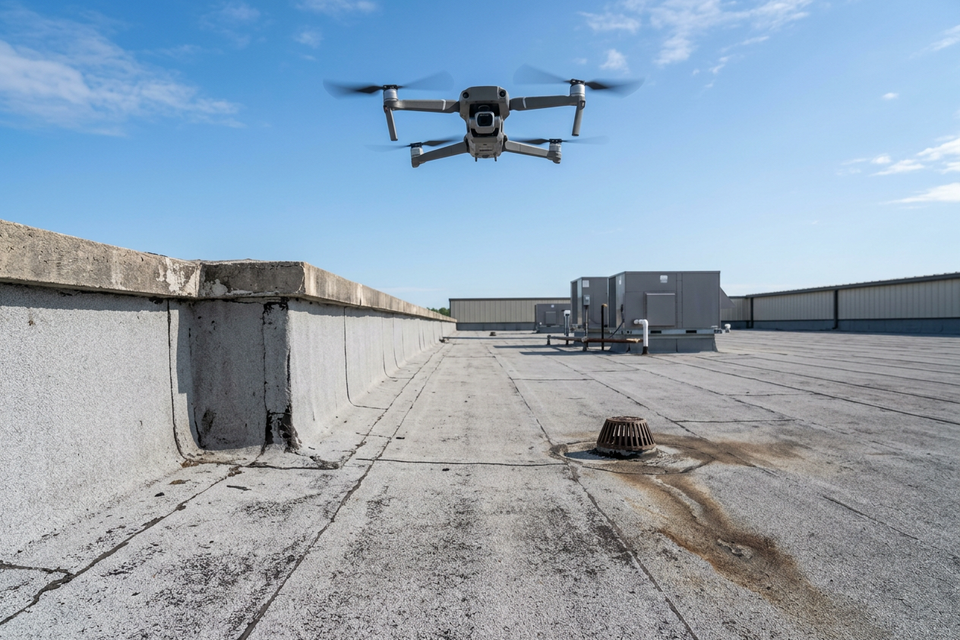
- Infrared from the air is the quick one on a large roof: usually one evening, nobody walking the whole field, the building running as normal. It waits on the weather, and an aerial view cannot see under rooftop equipment.
- Grid surveys, nuclear or impedance, are walked reading by reading, so the time on the roof grows with the area. Neither needs the sunny day and the cooling evening that infrared does, though an impedance scanner needs a dry surface.
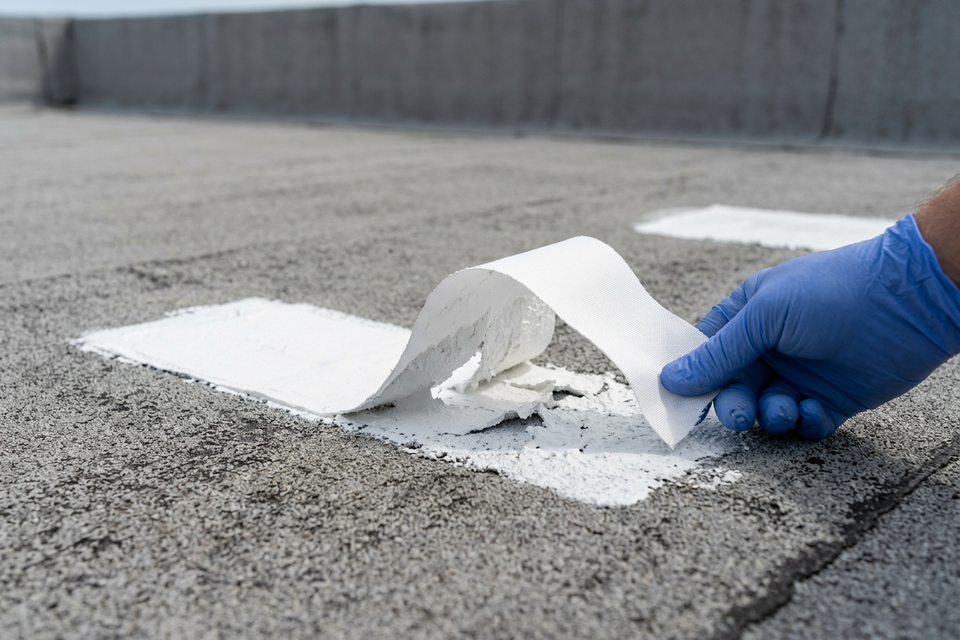
- Cores are the one destructive step, so each is patched the day it is cut; on an asphaltic roof, wet-dry roof cement KST058600 takes that repair wet or dry.
What coating makers’ specifications ask for
Coating makers, Sherwin-Williams included, require wet insulation to be found and replaced before a coating goes on. On how it is found, their published guide specifications differ. One names an infrared scan. Another accepts a nuclear or an infrared scan. A third lists infrared, nuclear, capacitance and core sampling side by side, with a minimum core count that rises with roof area. A Sherwin-Williams Uniflex guide specification asks for all roof areas to be inspected for moisture following the standard practices for moisture surveying, for a roof plan showing the wet areas, and for wet insulation to be removed and replaced before coating.
Read the specification for the system going on the roof before the survey is booked, and where a system warranty is wanted, ask the manufacturer’s representative which survey and report they will accept. The manufacturer decides that under its own terms; no survey makes a roof eligible by being carried out. Roof coating warranties covers the rest of that chain.
Who decides, and what to ask
- The owner decides whether the roof is surveyed and gives permission for the cores.
- The surveyor decides whether the roof and the conditions suit the method.
- The manufacturer decides what its specification accepts.
- The building department decides what the code requires at the address.
- The contractor turns the confirmed map into a scope: what comes out and what goes back.
Questions for any survey provider, us included:
- Which method, and why that one for this surface and insulation?
- What conditions does it need, and what if the evening does not deliver them?
- Do I get a roof plan with the suspect areas outlined and measured, or images only?
- Which parts of the roof could not be read, and how will they be checked?
- How many cores, who cuts and patches them, and are the samples weighed?
Where a drone scan fits
Our drone moisture scan is an infrared survey flown from the air. You get a map with any areas that look wet outlined and measured in square feet, video from the flight and a written assessment of what the scan found; the flagged areas are then confirmed with small core samples; a sample scan shows what the map looks like. We fly only with the owner’s written go-ahead. It carries every limit of the method: it shows temperature differences, not water; it needs a sunny day followed by a clear, dry, calm evening; it is the wrong tool on roofs under ballast or pavers and on metal, white-coated and foam roofs; and it is a poor fit on gravel-surfaced built-up roofs. Where it does not suit, we say so. We arrange scans for commercial low-slope roofs anywhere in the US.
If you are not sure which row your roof belongs in, the scan-fit tool says whether a thermal scan will work on it and, if not, what will. If it will, request a moisture scan and add the building’s address; nothing about the roof has to be decided until you have seen the map.
Last updated 2026-10-05.