What a commercial roof coating costs per square foot
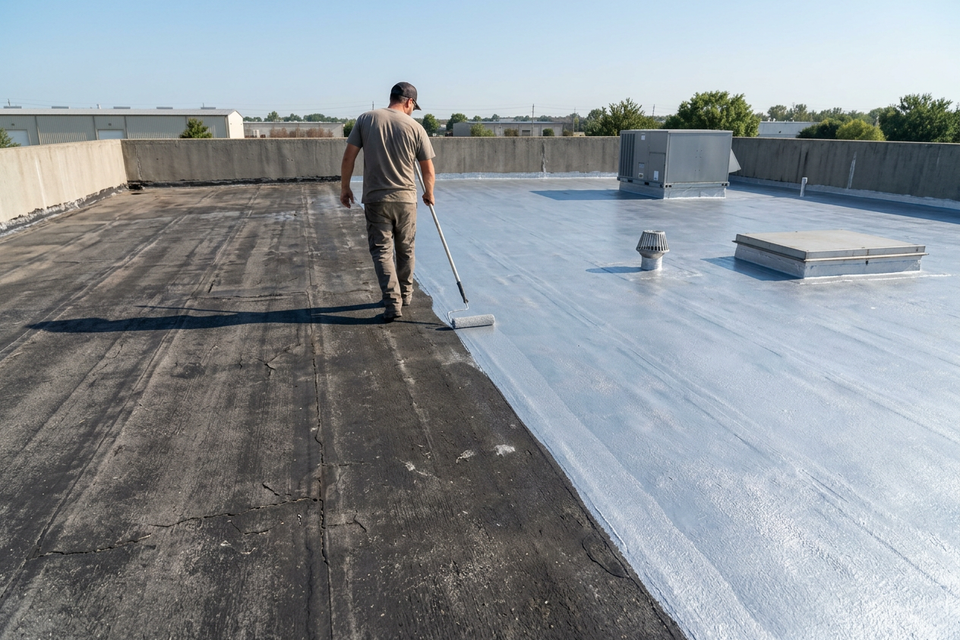
Restoring a low-slope roof with a coating system typically runs $3.50 to $7 per square foot installed. Tearing it off and replacing it typically runs $10 to $18. Both are typical installed ranges drawn from published industry figures, not quotes.
Where a roof lands inside the restoration range depends on things a web page cannot see: the roof’s condition, how much wet insulation has to come out, access, region and the system chosen. Acrylic systems sit toward the low end and silicone toward the high end. To firm up the number, find out what is under the membrane before a contractor prices the job.
Why a per-square-foot figure misleads
A per-square-foot figure treats every roof as the same roof: a clean, dry field with an ordinary number of curbs and pipes. It is silent on what sits under the membrane, and that decides most jobs.
The published figures also come from contractors and trade sources, each describing its own typical job; none is an independent cost index. Use the range to decide whether restoration deserves a closer look, not to set a budget. Seven things move a roof inside it:
| What moves it | Toward the low end | Toward the high end |
|---|---|---|
| Repairs | Dry insulation, a few split laps | Wet insulation to cut out and replace |
| Details | Open field, few penetrations | Crowded with curbs, pipes and seams |
| Surface | Smooth membrane | Granulated cap sheet, rough or ribbed |
| Size and access | Large, low, easy to reach | Small, tall or hard to reach |
| Chemistry | Acrylic, on a roof that drains | Silicone, where water stands |
| Film thickness | The shorter warranty term | The longer warranty term |
| Region | Short travel, lower-cost labor | Long travel, higher-cost labor |
The roof itself: repairs, details, surface and access
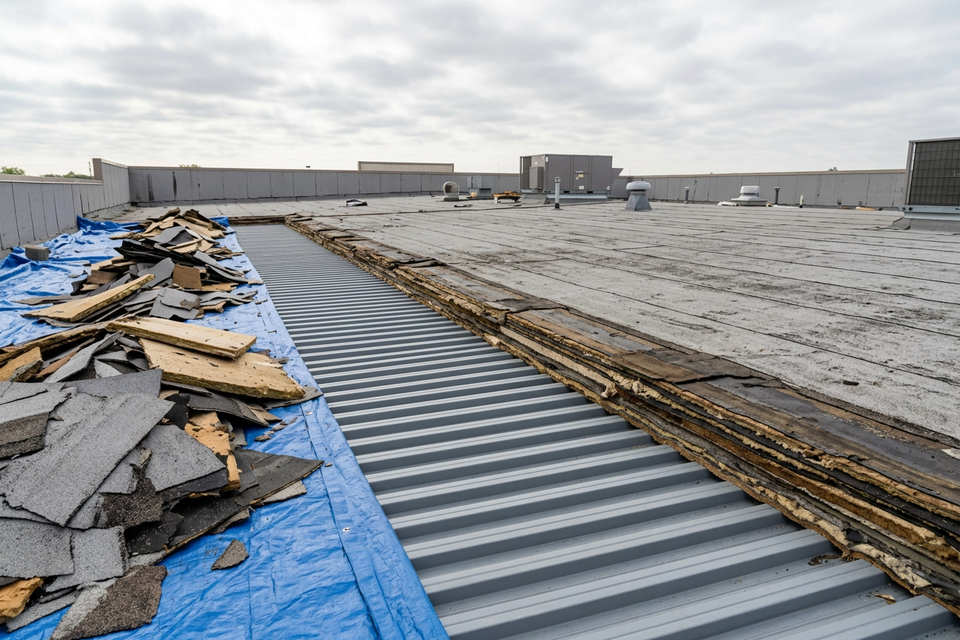
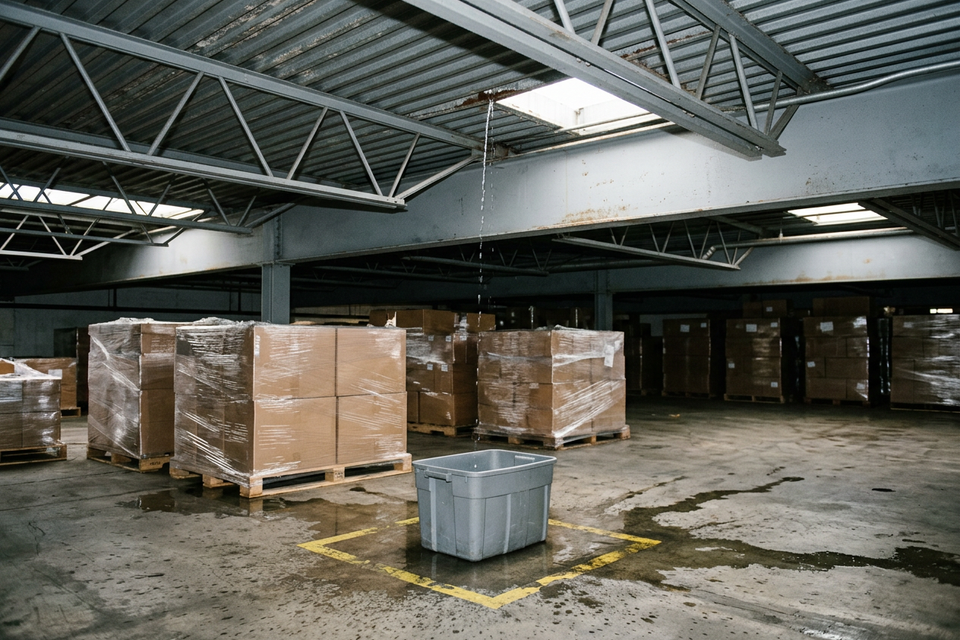
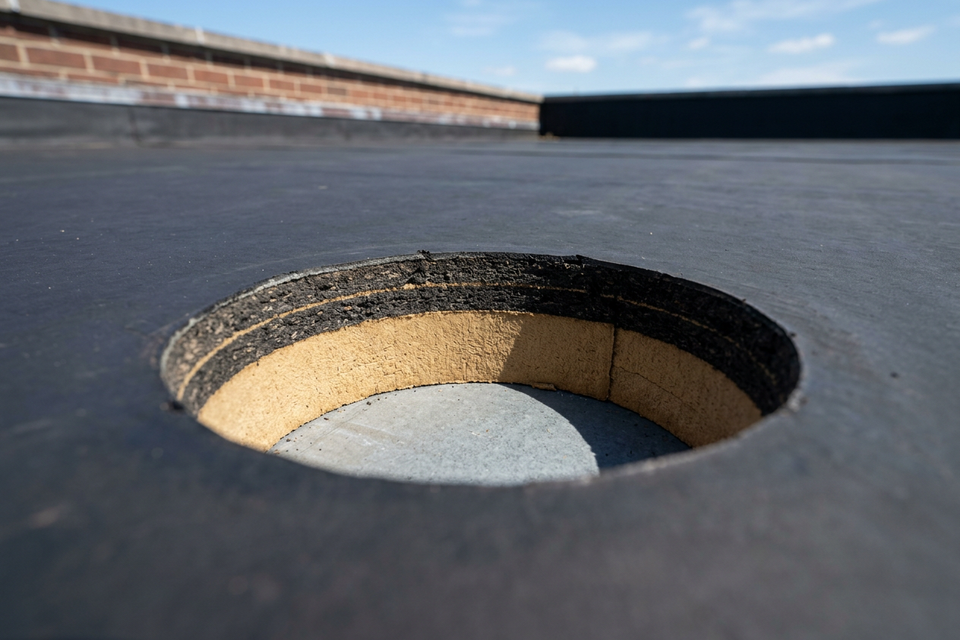
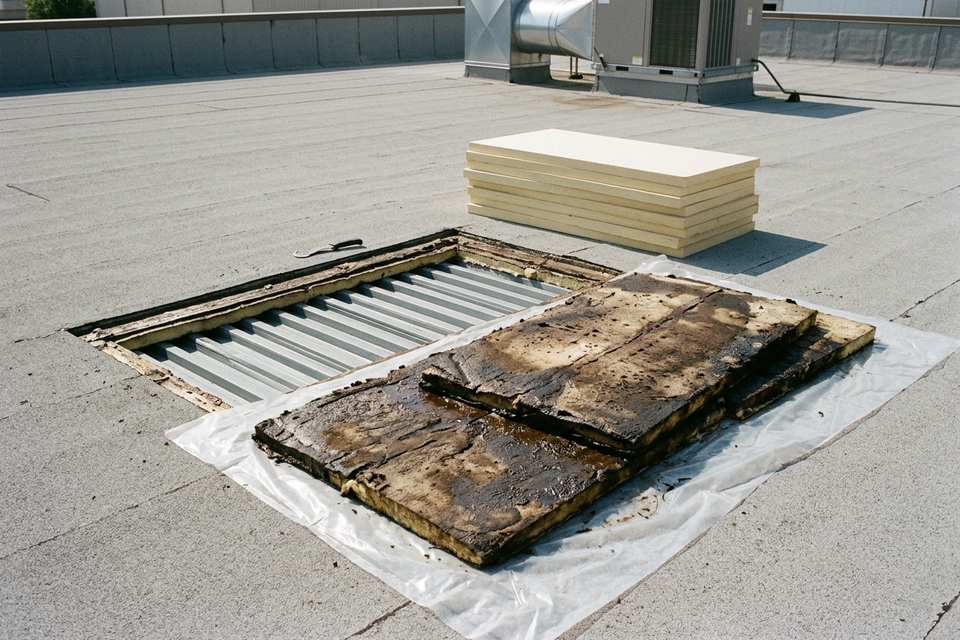
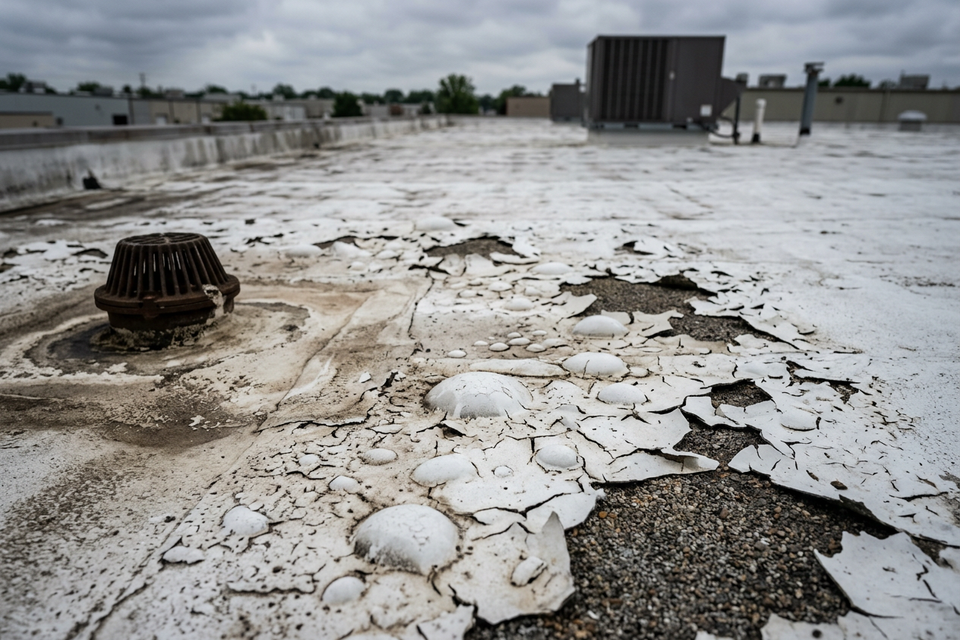
Repairs, and how much wet insulation comes out. Coating makers, Sherwin-Williams included, require wet insulation to be found and replaced before a coating goes on. That is roofing work, not coating: the wet area is cut back to sound material, the insulation replaced to matching thickness, and the patch tied back into the field. The square footage coming out and going back is its own line on the installed quote. A few wet areas are routine; when they add up to a large share of the roof, the comparison with replacement turns over. Wet roof insulation explains why it cannot stay.
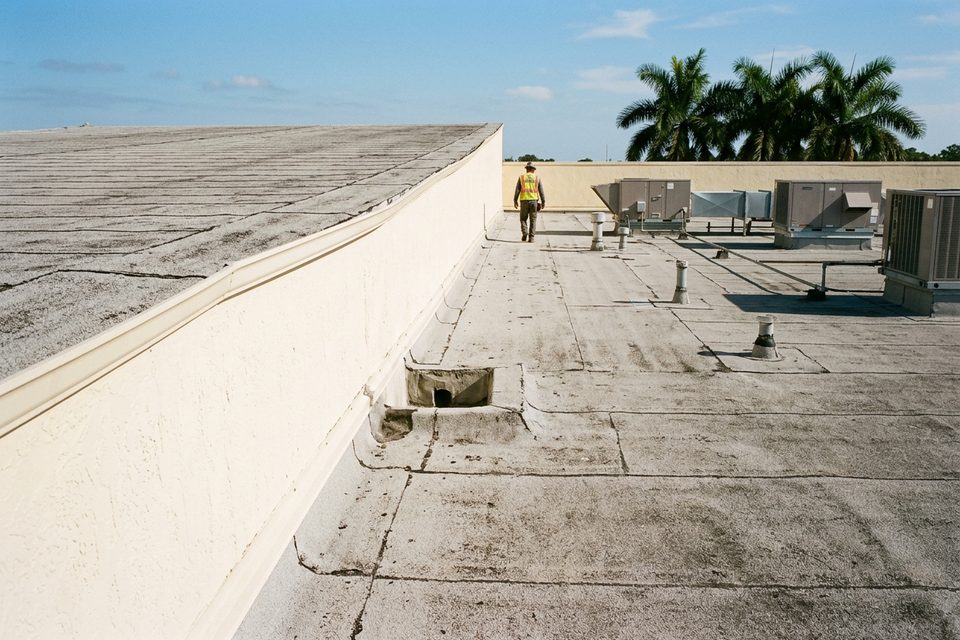
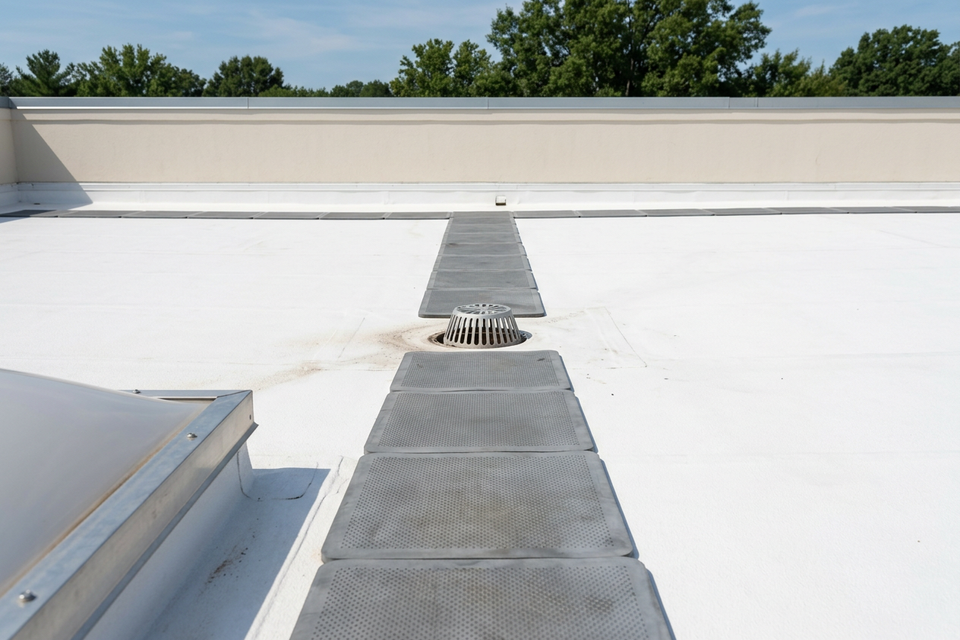
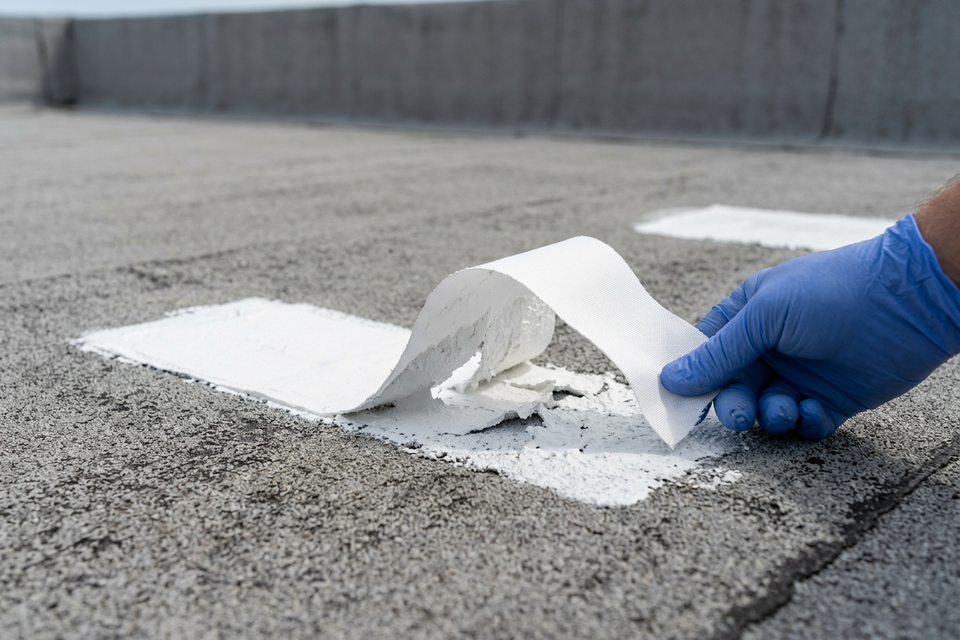
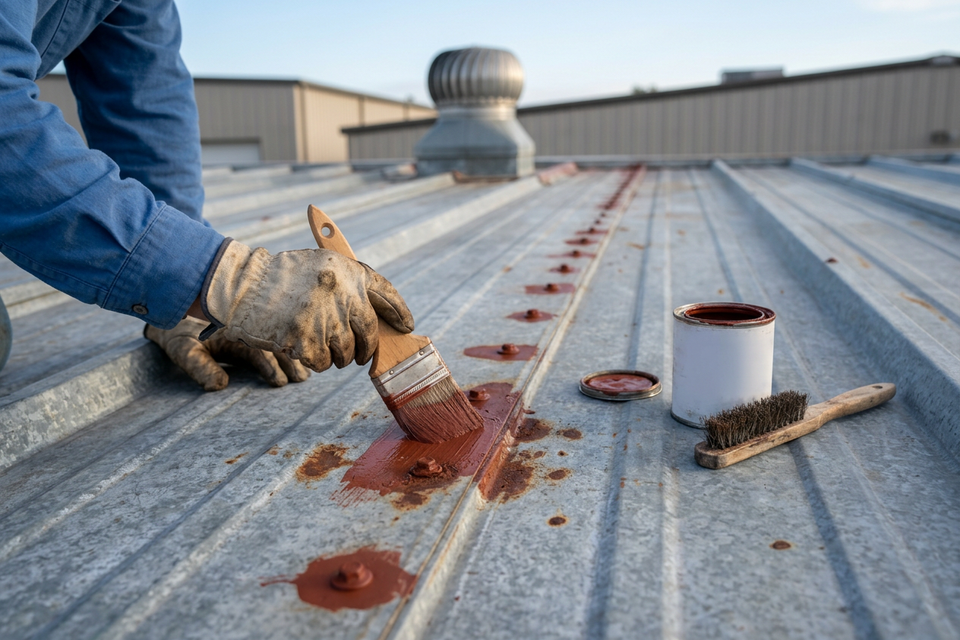
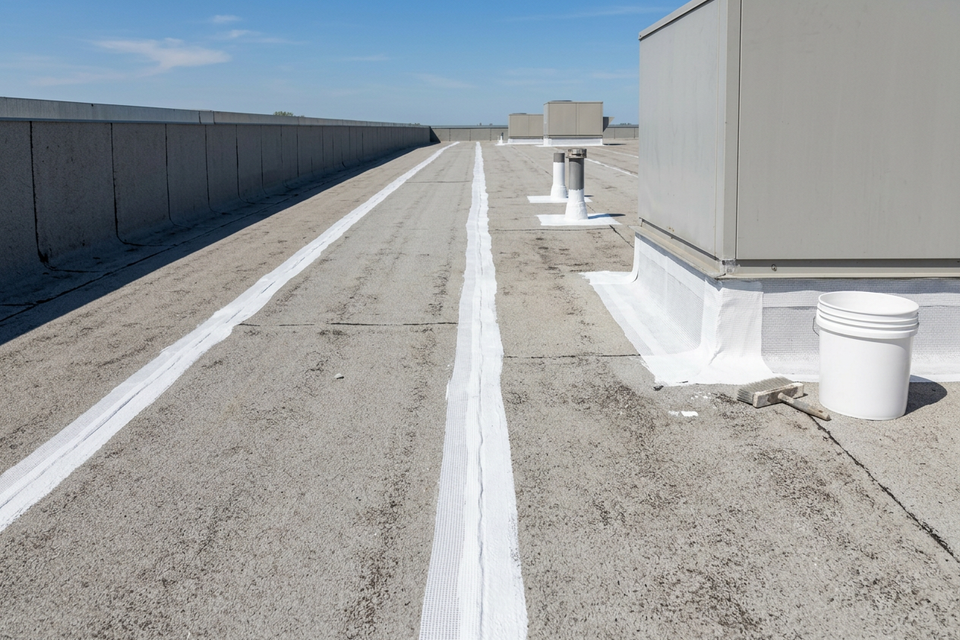
Details per square. The field is priced by the square; details are counted by the linear foot and by the piece. Every curb, pitch pan, drain ring and pipe is sealed and reinforced by hand before the field is coated, with polyester reinforcing fabric KST20385A or butyl seam tape KST020804. A metal roof adds its panel seams and fastener heads. A roof crowded with rooftop units carries more handwork per square than an open field; seams, fasteners and flashings covers it.
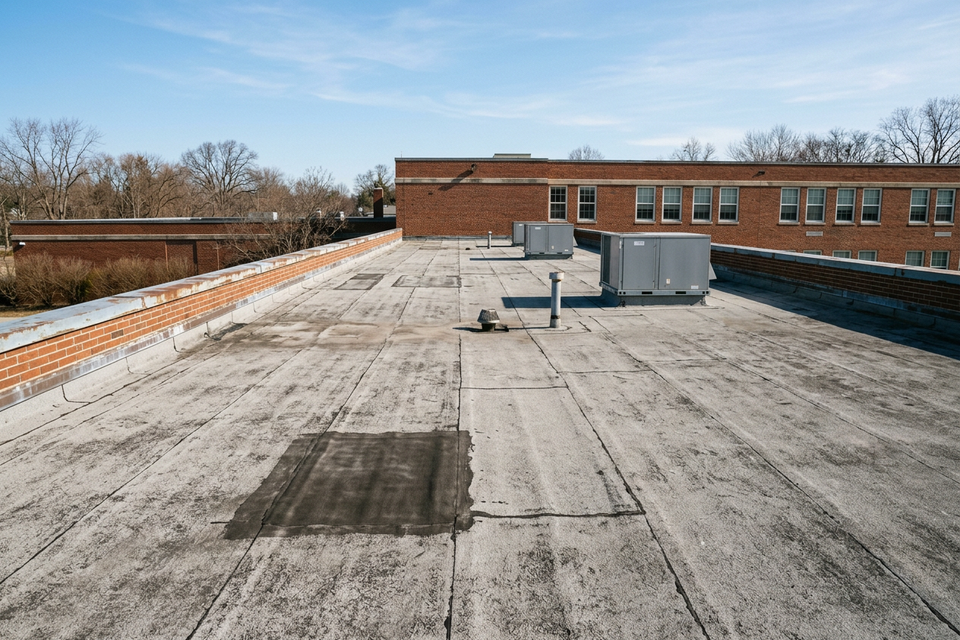
Surface texture. Gallons follow the surface, not the plan area. A granulated cap sheet swallows material into the granules on the first coat; a smooth membrane does not. Sprayed foam and ribbed metal carry more surface than their footprint. A data sheet usually gives its rate as a range, and on a rough roof the contractor takes the higher end; how much coating a roof takes walks through the count.
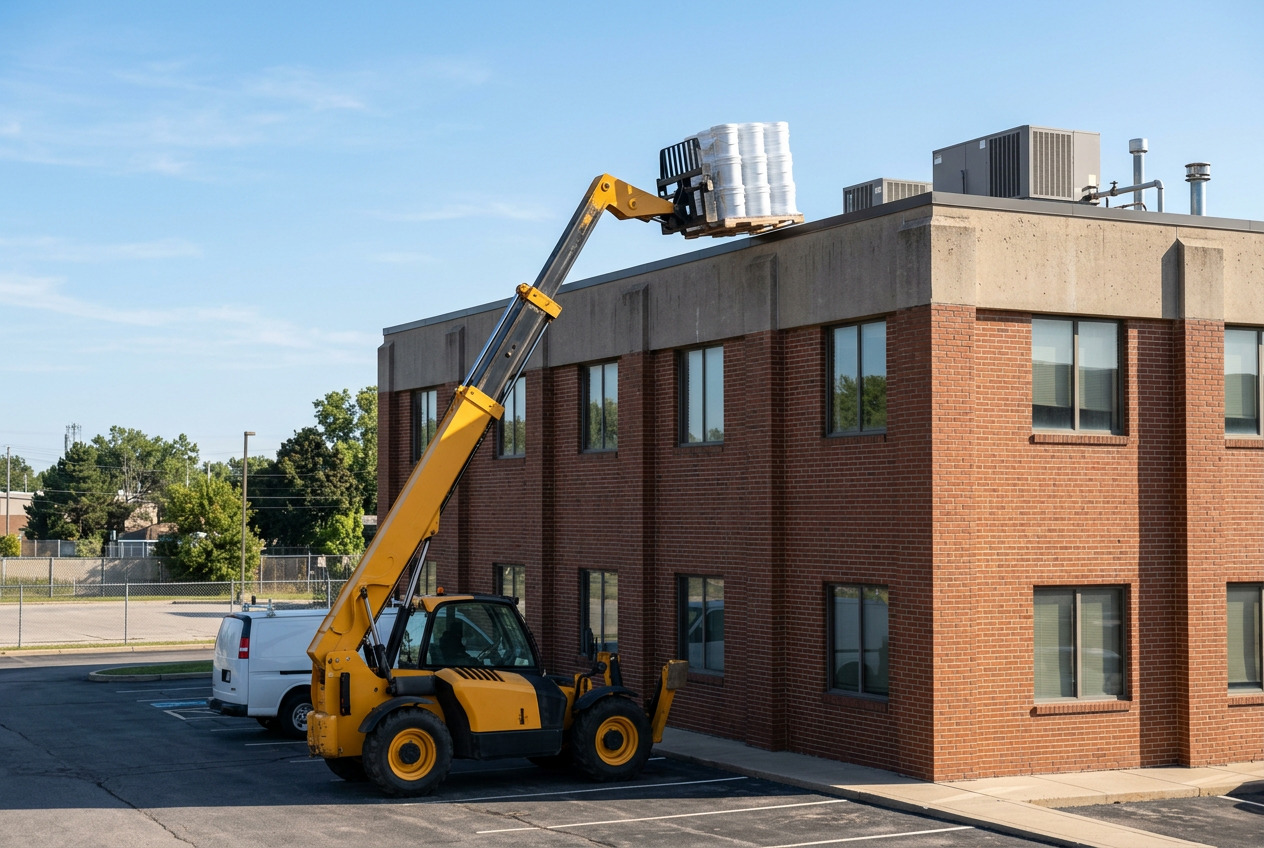
Size, height and access. Part of a job’s cost does not scale with area: getting a crew, its equipment and the material to the building and up onto the roof. A small roof spreads that over fewer square feet. A tall building, no easy way up for pallets, or restricted working hours add time no per-square-foot figure shows.
The system, the warranty term and the region
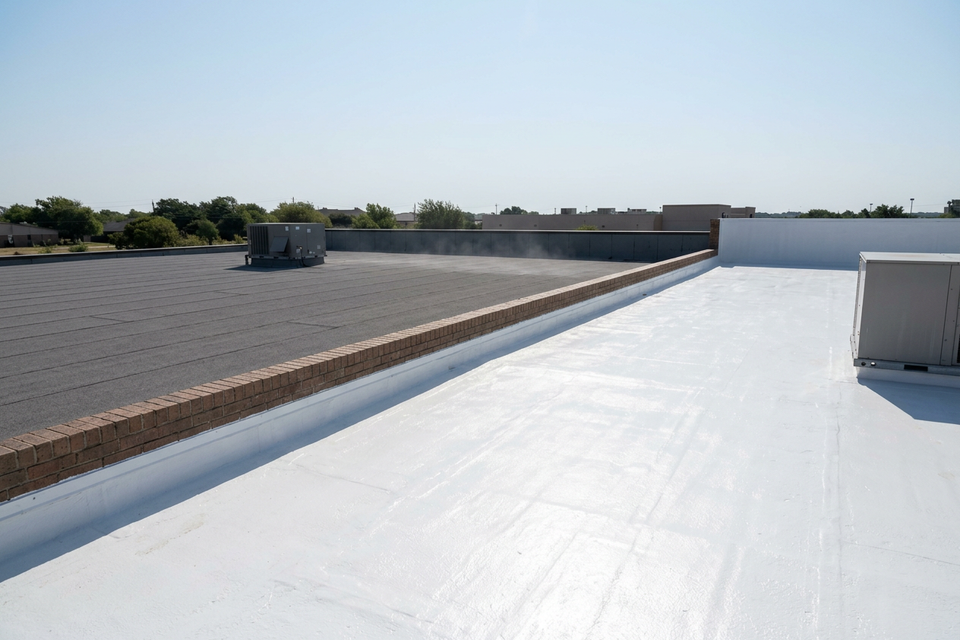
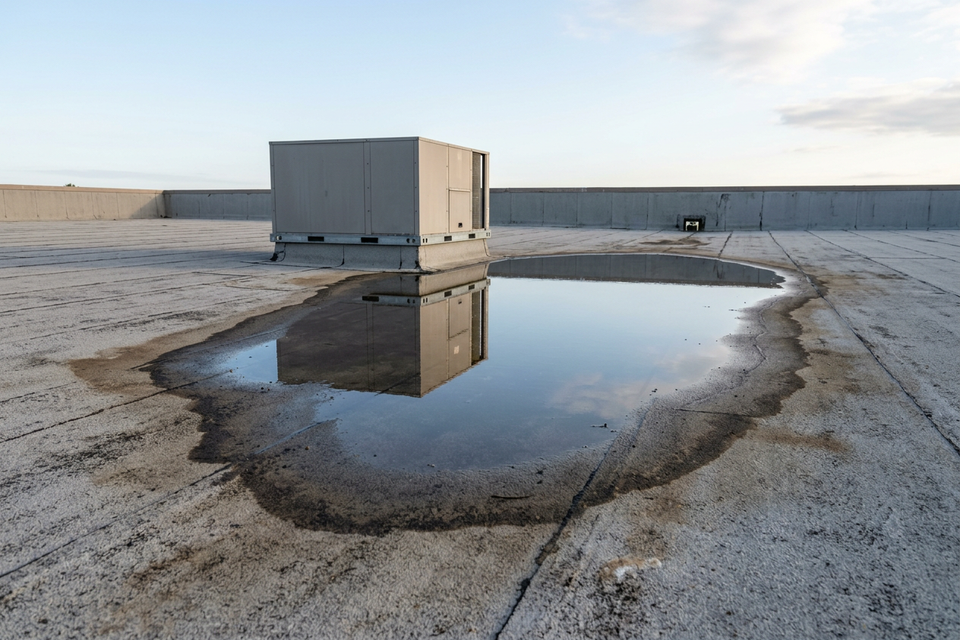
Chemistry. Drainage makes this choice, not the budget. On a roof that drains, the finish coat is a water-based acrylic such as premium acrylic finish coat KST041300. Where water stands it changes to Silicone44 KST044300 (white), with no base coat under it, because under prolonged ponding an acrylic film can lose adhesion and peel. Silicone vs acrylic roof coatings sets the two side by side.
Film thickness and the warranty term. Coating makers’ specifications set the dry film by warranty term: a longer term calls for a thicker film, so more gallons on every square. Decide whether a system warranty is wanted, and which term, before anyone prices. Sherwin-Williams offers UNIGUARD system warranties of 10 or 15 years when one of its authorized contractors applies the system. The warranty is the manufacturer’s, issued under its own terms; we supply the materials. The manufacturer’s specification names the film; we do not print rates.
Region. The published ranges are not specific to any one market. A contractor prices local labor and the travel to the building. Florida’s wind code keeps replacement in the upper half of its range.
Two quotes, not one
An owner ends up reading two prices, and they are not alternatives.
| Materials quote | Installed quote | |
|---|---|---|
| Who writes it | CoatYard | The roofing contractor |
| What it covers | Primer, coatings and detail materials, with freight to the site | Labor, cleaning, repairs, replacing wet insulation, the coating system and the equipment |
| What it is priced on | Roof area, substrate, detail lengths and the site ZIP | The survey, the repairs, the system and the warranty term |
The ranges at the top of this page describe the installed quote. Ours is priced per project: a person counts the material off the roof area and the detail lengths, names what is not included, and replies within one business day with the price, freight to the site and a ship date. We do not print material prices, and we do not apply coatings. Ask whether the installed price includes the materials, so nothing is counted twice. To check a count, the material estimator turns area and the data-sheet rate into gallons, pails and drums.
If you have no contractor yet, we work with a network of installers, roofing contractors who apply these systems, and can introduce you to one anywhere in the US, who looks at the roof and says whether it is a good candidate for restoration.
How a moisture scan firms up the number
The driver a contractor can least judge from the surface is wet insulation. Without a survey, that line is an allowance, and the real figure arrives once the roof is open. With a survey, it is a measured area on a plan, and every bidder prices the same square footage.
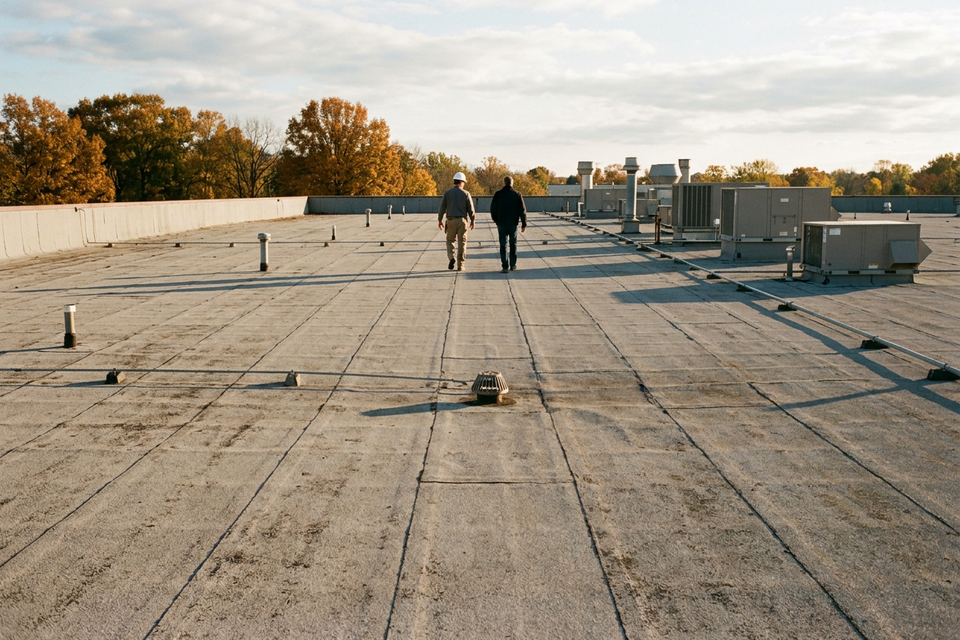
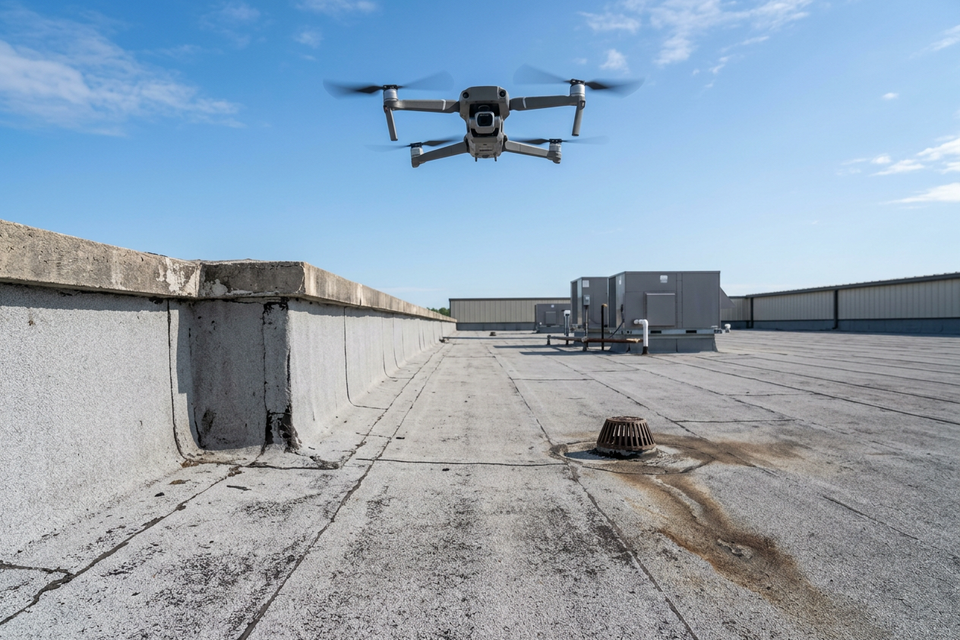
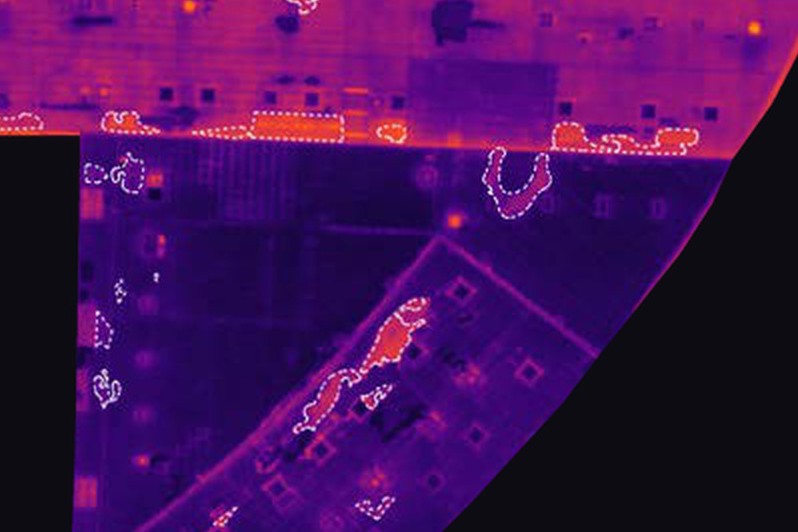
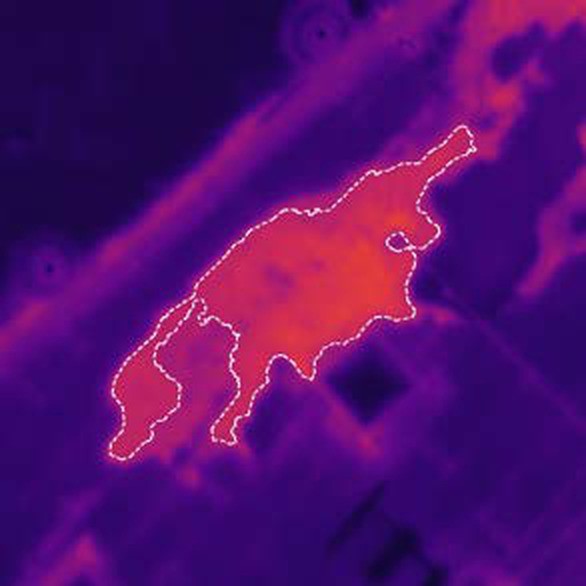
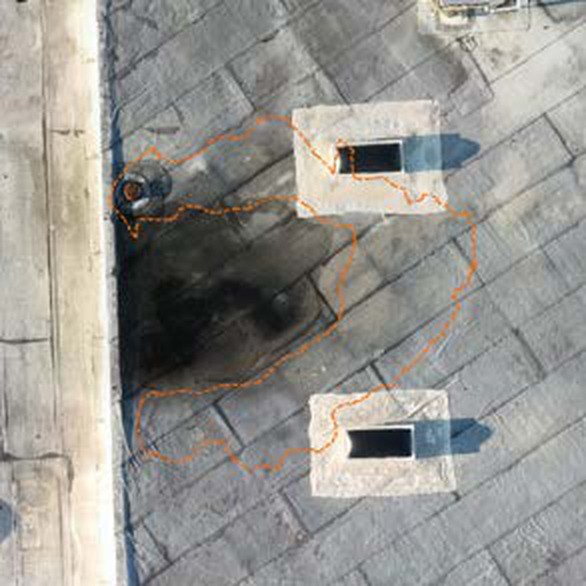
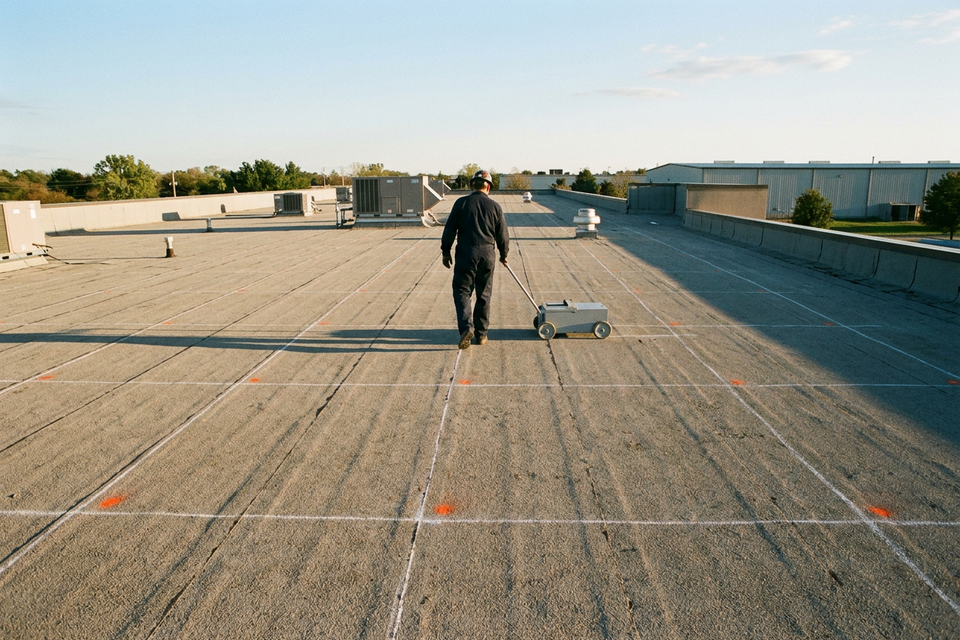
That is what our drone moisture scan is for. On an evening after a sunny day, once the sun has set, a drone with a thermal camera flies over the roof. Wet insulation under the surface holds the day’s heat longer than dry insulation, so it shows up warmer on the images. You get a map of the roof with any areas that look wet outlined and measured in square feet, video from the flight and a written assessment of what the scan found; the flagged areas are then confirmed with small core samples. It usually takes one evening, nobody has to walk the whole roof, and the building runs as normal. We fly only with the owner’s go-ahead.
The map shows whether the roof needs a coating with a few sections replaced first, or whether so much of it is wet that replacing it makes more sense, before you budget for either. The sample scan shows the map and the image pairs; a full scan also comes with video from the flight and a written assessment.
A thermal scan shows temperature differences, not water: the scan marks suspects; the cores confirm them. It needs a sunny day followed by a clear, dry, calm evening, and it suits low-slope roofs with insulation under a membrane. It is the wrong tool for roofs under ballast or pavers, metal panel roofs, highly reflective or already white-coated surfaces, and insulation that does not hold water, and a poor fit for gravel-surfaced built-up roofs; those are usually surveyed another way, and the scan-fit tool says how. We quote the scan for your roof when you ask; it depends on the roof’s size and where the building is.
What the money is compared against
Price is half the comparison; the other half is what it buys. Applied over a sound, dry roof, a restoration system adds 10 to 15 years of service life. There is no tear-off, and the building stays open throughout. The cost calculator runs both ranges against your own roof area and years of added service. A recover, a new membrane over the old roof, is the third route; coat it, cover it or tear it off compares all three.
Who decides, and what to ask
- The contractor prices the installed work and owns the means and methods.
- The building’s engineer decides anything structural.
- The local building department decides what permits the work needs.
- The manufacturer’s representative inspects the finished roof before a system warranty is issued.
- The owner’s accountant decides how the work is treated on the books.
Four questions make two installed quotes comparable:
- What moisture survey is this price based on, and how many square feet of wet insulation does it include?
- What happens to the price if more comes out once the roof is open?
- Which finish coat, how many gallons per square, and for which warranty term?
- How many curbs, penetrations and linear feet of seam are counted, and what is excluded?
If the roof has not been surveyed, start there: request a moisture scan and add the building’s address. We arrange scans for commercial low-slope roofs anywhere in the US. If you already know the roof area, the substrate and the system, send them through the quote form with the detail counts and the site ZIP, and we price the materials for that roof.
Last updated 2026-10-05.