How long a roof coating lasts, and what decides it
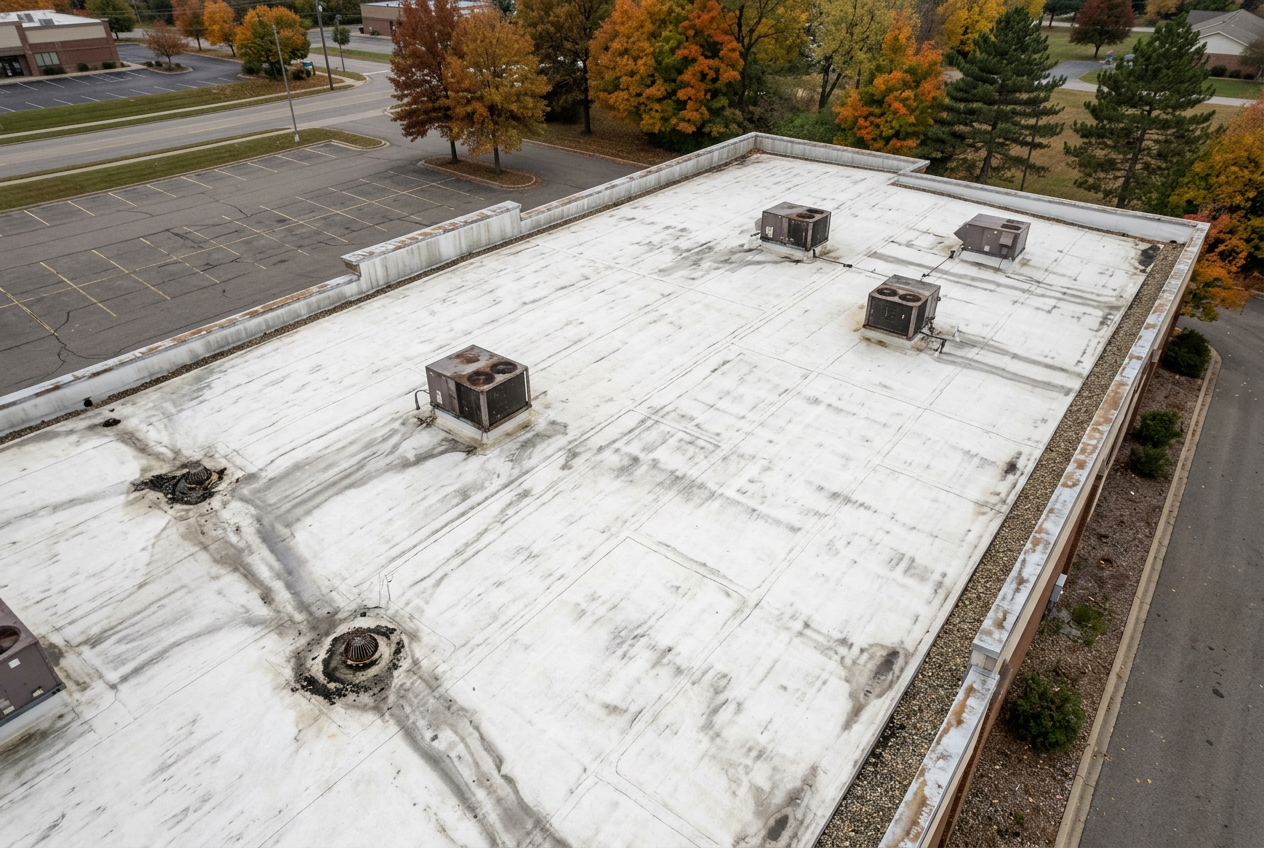
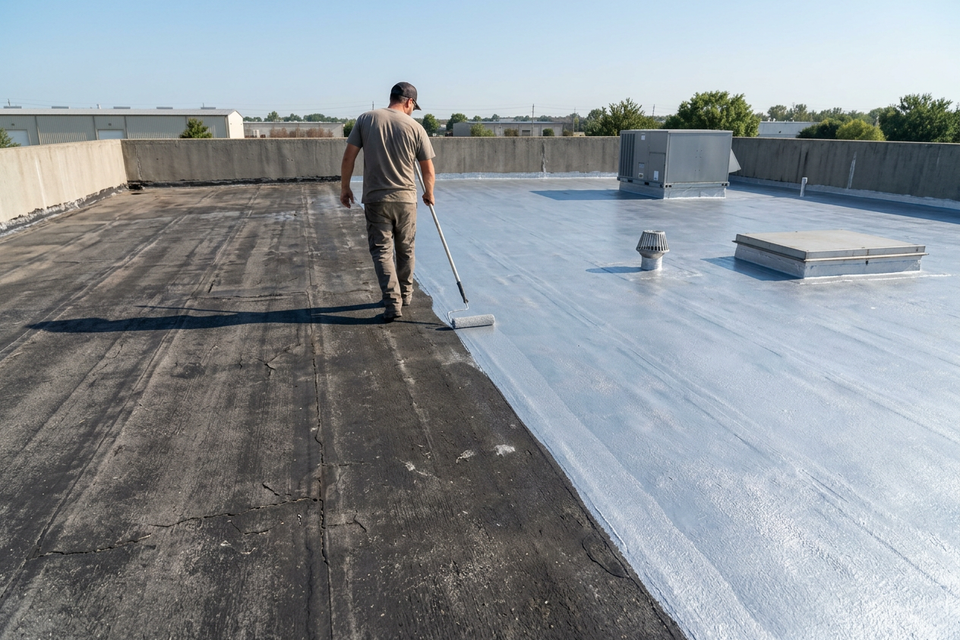
Applied over a sound, dry roof, a restoration system adds 10 to 15 years of service life. That is the only figure we publish for how long a roof coating lasts, and the condition in front of it carries as much weight as the number.
Whether a particular roof gets those years comes down to six things: the roof underneath, the thickness of the dry film, how well the coating is bonded, whether water drains, how the seams and penetrations were detailed, and whether anyone looks after the roof afterwards. Five of the six are settled before the crew leaves, the first before a pail is opened.
Six things that decide it
| What decides it | Why it matters | What to ask |
|---|---|---|
| The roof underneath | A coating cannot dry wet insulation | How was the roof checked for moisture, and where was it cored? |
| Film thickness | The dry film is what weather wears away | What dry film is specified, and how is it checked? |
| Adhesion | A coating holds only as well as its bond | What did the adhesion test show? |
| Drainage | Standing water is hard on some coatings | Where does water stand, and what is planned there? |
| Detail work | Seams and penetrations are where water gets in | How many feet of seams and how many penetrations are priced? |
| Maintenance | Small damage left alone becomes a leak | Who looks over the roof afterwards, and how often? |
The roof underneath: sound and dry
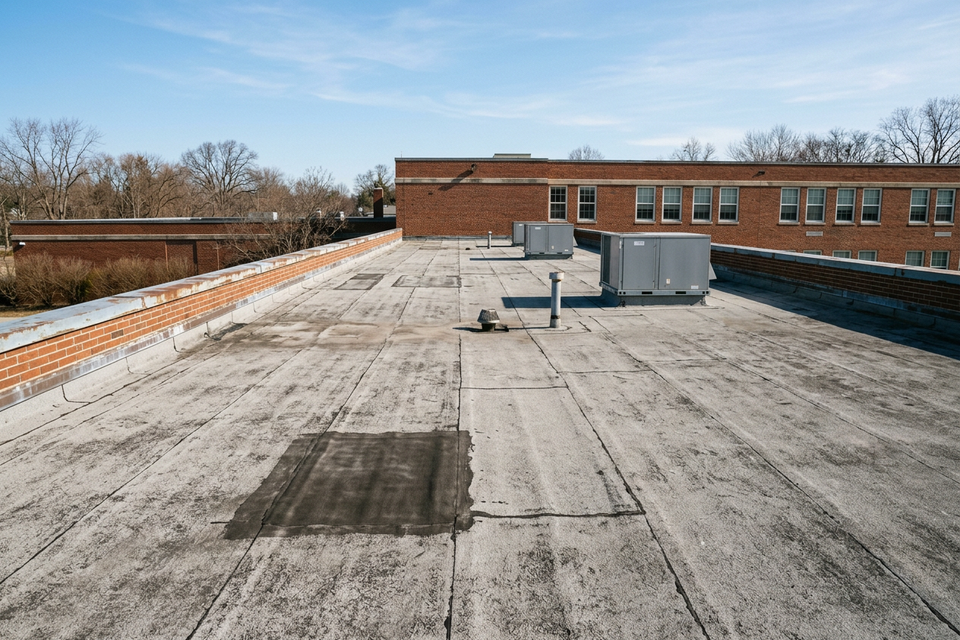
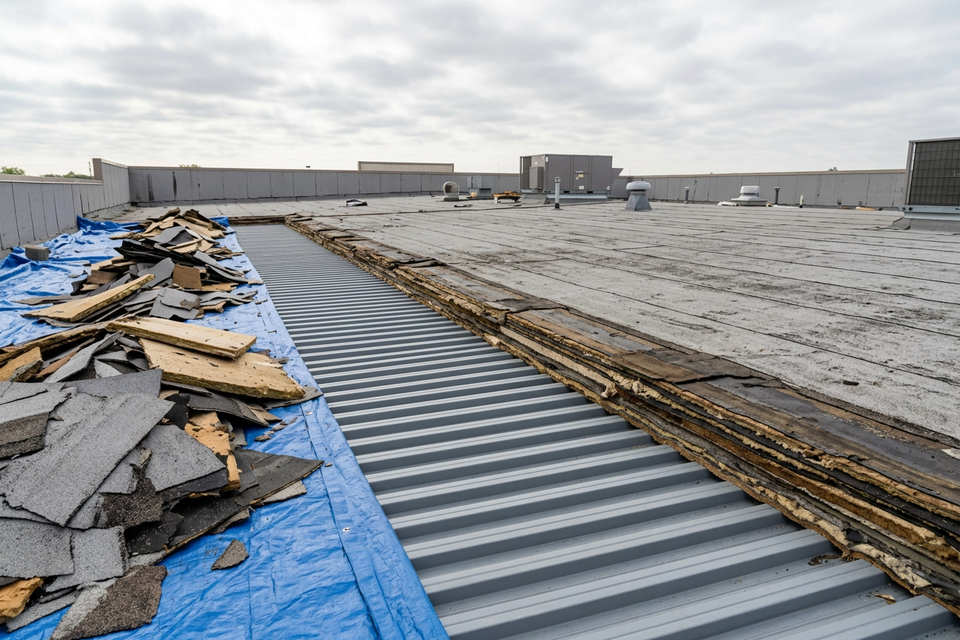
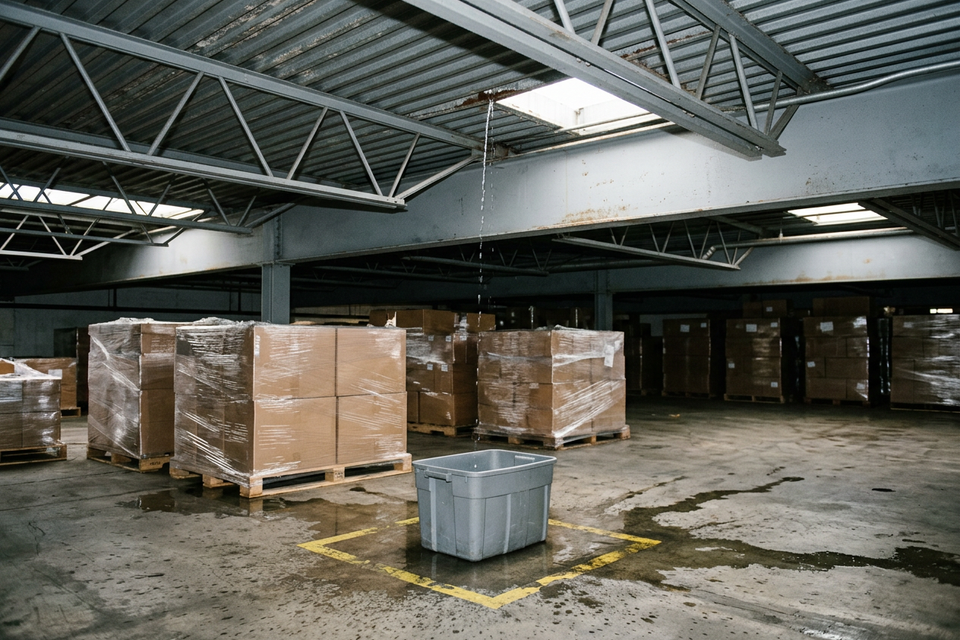
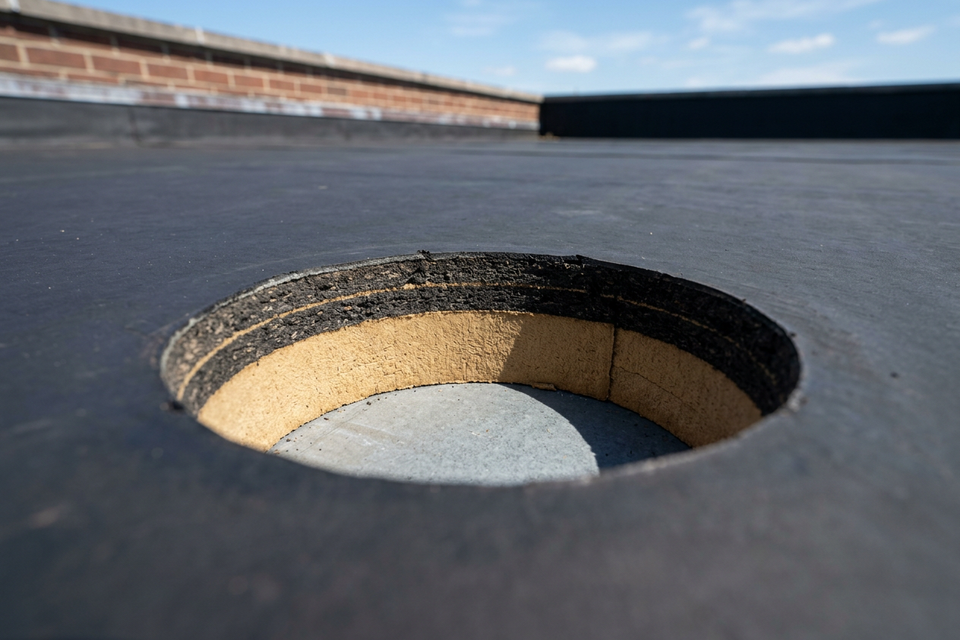
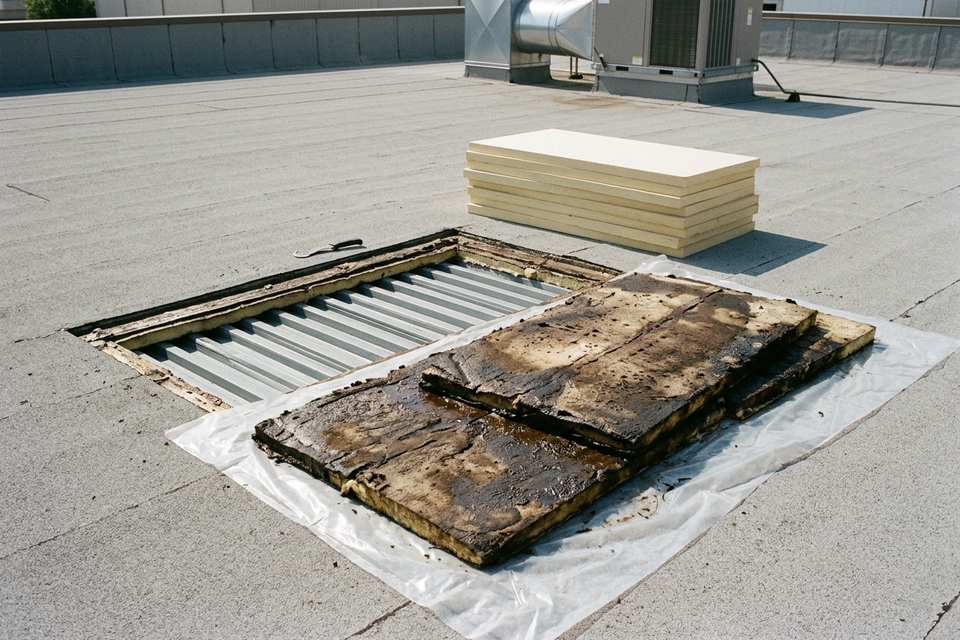
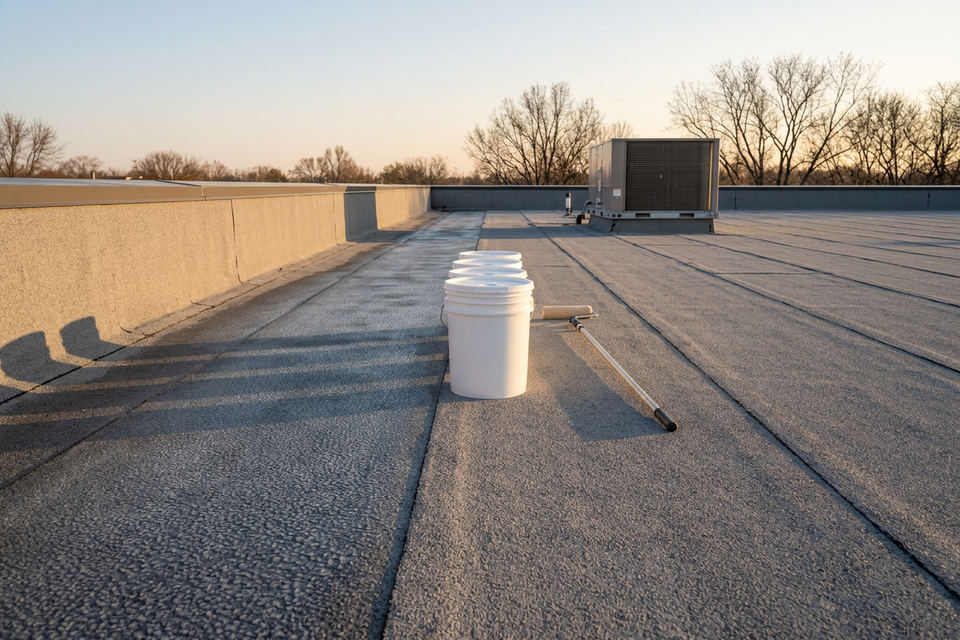
A coating keeps new water out. It does nothing for water already in the assembly, and wet insulation goes on working on the deck and fasteners underneath. Coating makers, Sherwin-Williams included, require wet insulation to be found and replaced before a coating goes on.
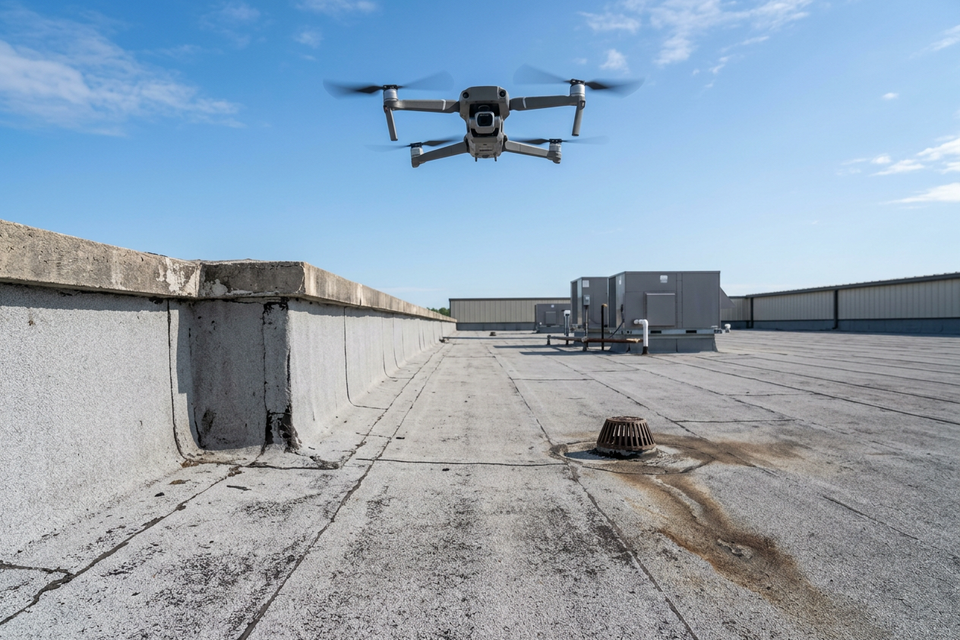
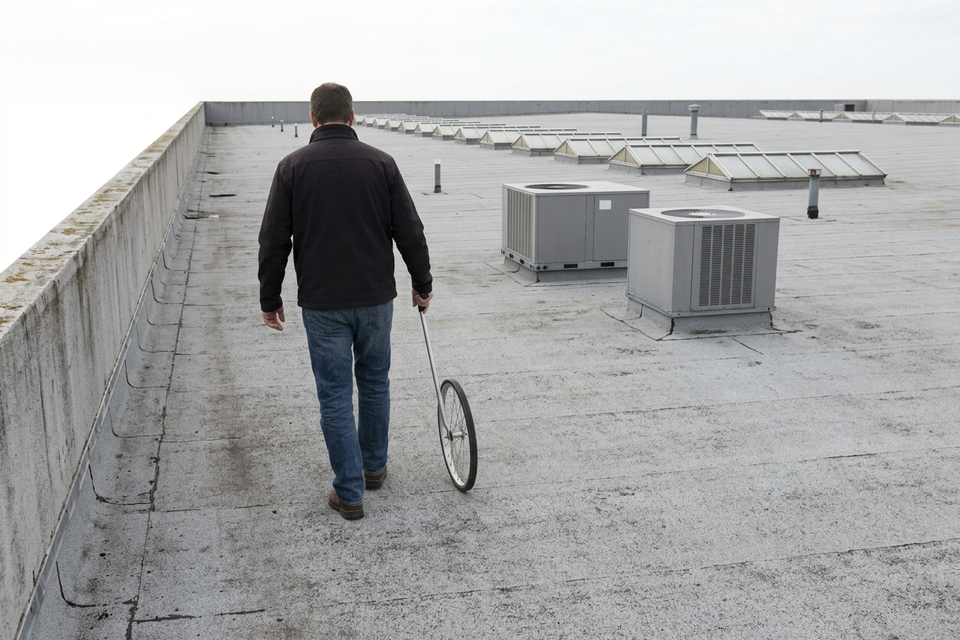
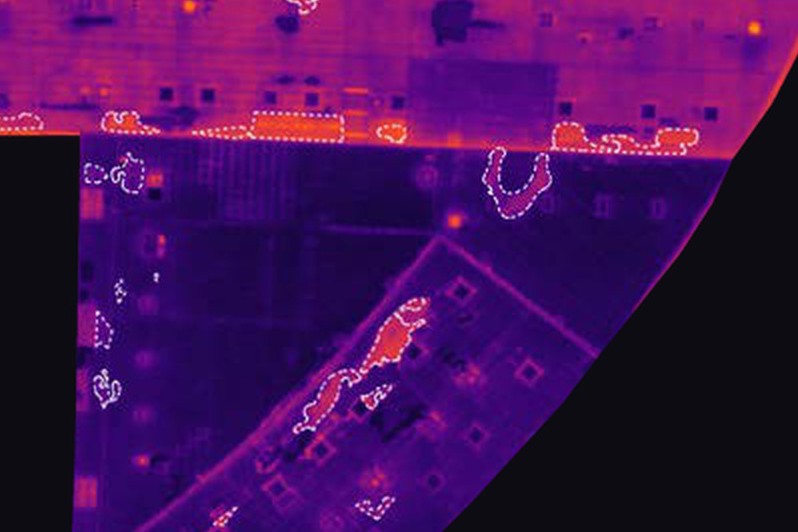
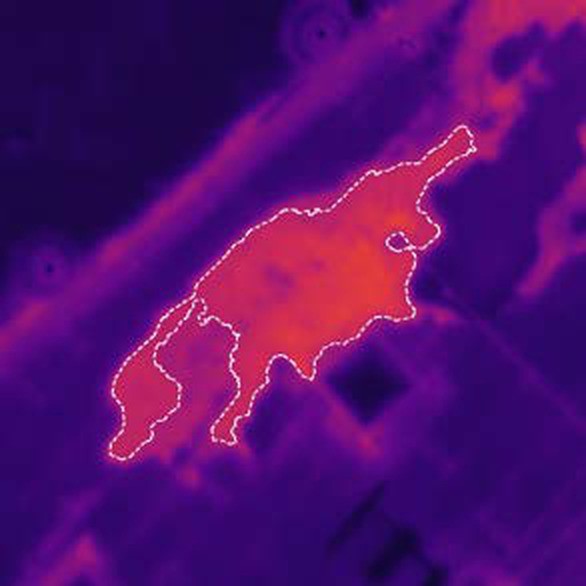
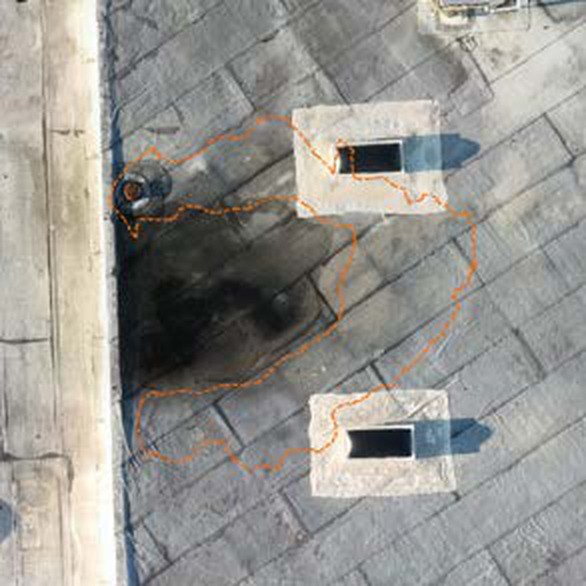
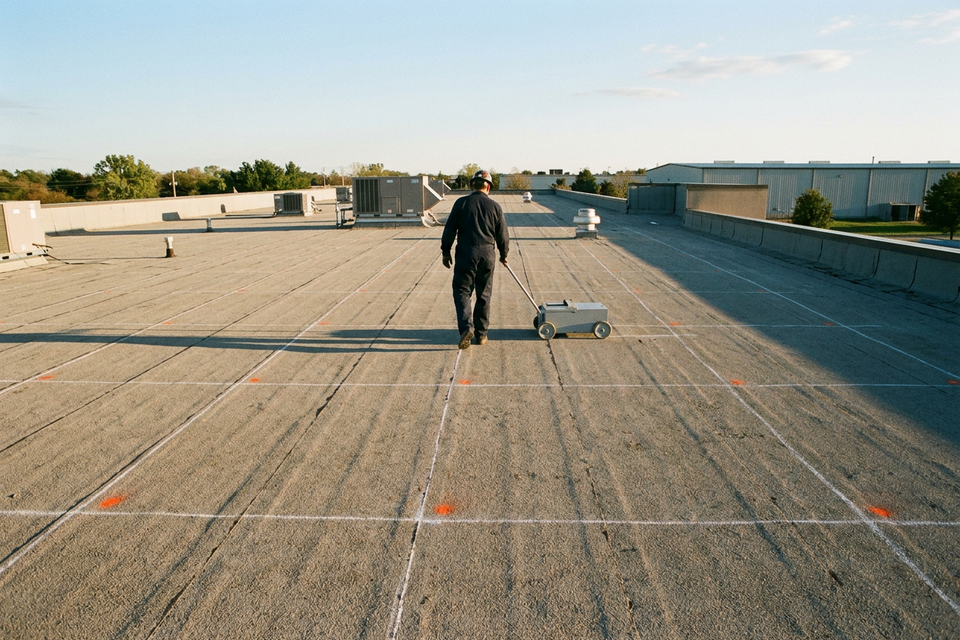
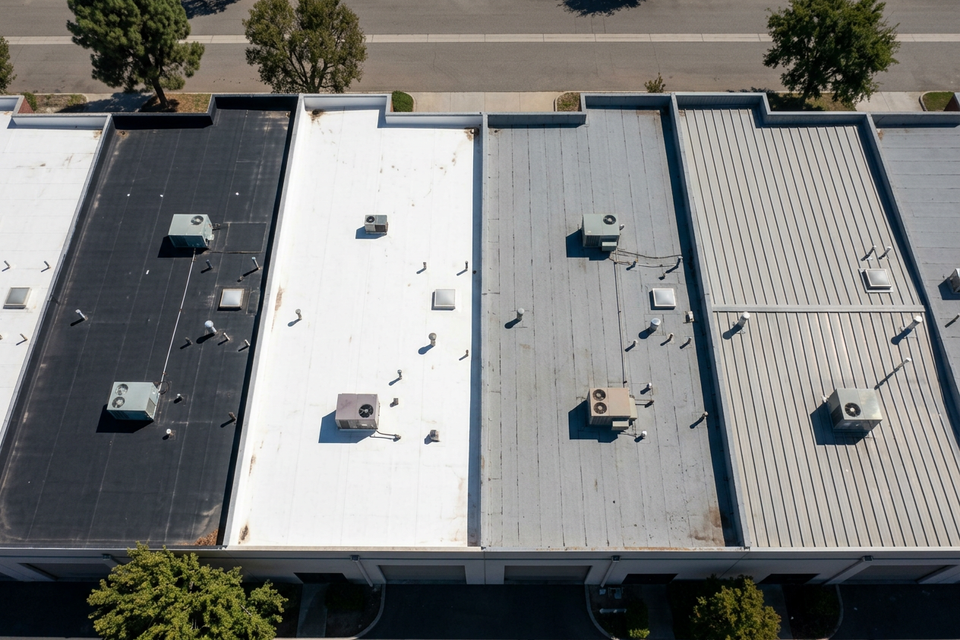
So dry is something to establish, not assume. With our drone moisture scan, a drone with a thermal camera flies over the roof on an evening after a sunny day, once the sun has set. Wet insulation under the surface holds the day’s heat longer than dry insulation, so it shows up warmer on the images, and you get a map of the roof with any areas that look wet outlined and measured in square feet, along with video from the flight and a written assessment of what the scan found. A thermal camera shows temperature differences, not water, so those areas are then confirmed with small core samples. It usually takes one evening, nobody has to walk the whole roof, and the building runs as normal. A thermal scan does not suit every roof; the scan-fit tool says which, and what is used instead. For reference, ASTM C1153 is the standard practice for locating wet insulation with infrared imaging.
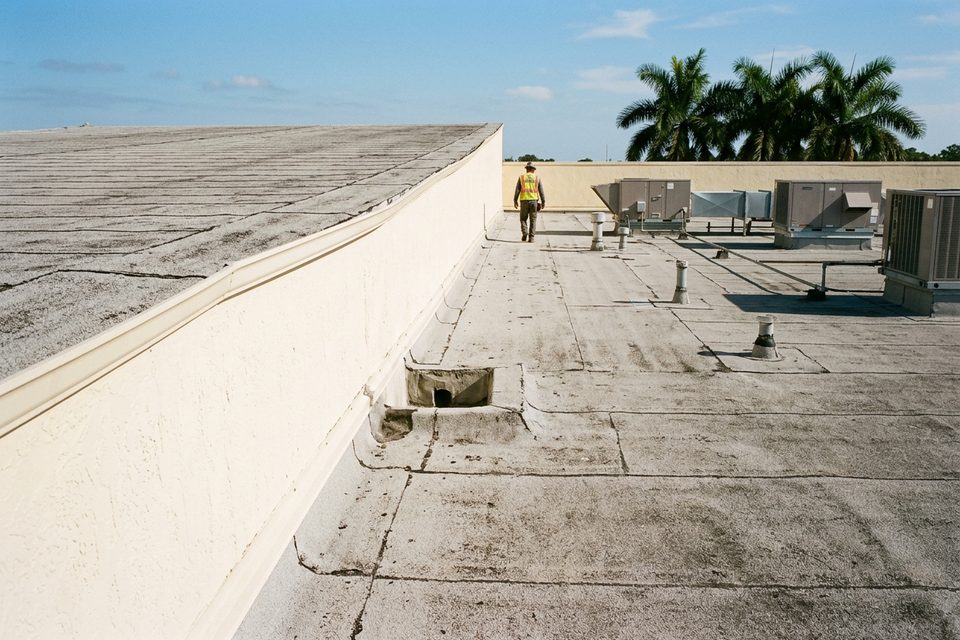
The map shows whether the roof needs a coating with a few sections replaced first, or whether so much of it is wet that replacing it makes more sense, before you budget for either. Sound is the other half: a deck that carries the work and a membrane that is weathered but largely intact and still attached. Restore or replace sets out what makes a roof a candidate and what rules one out.
Film thickness, adhesion and details
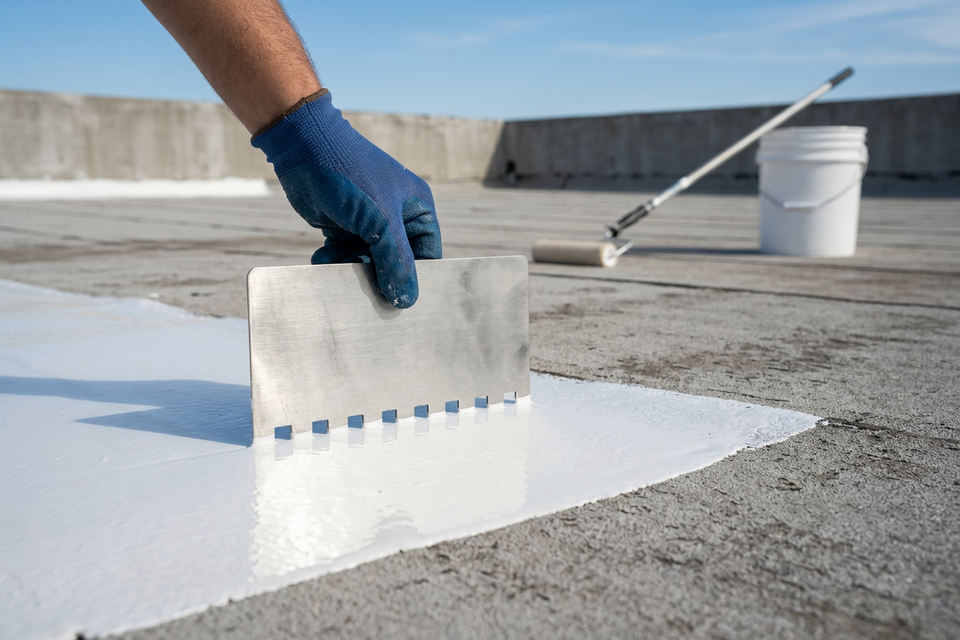
Film thickness. What protects the roof is the dry film, and it is thinner than what went down wet. As the water or solvent leaves, the film shrinks to the wet thickness times the coating’s volume solids (a mil is a thousandth of an inch), and the data sheet names both figures. A water-based acrylic, for one, chalks and loses some thickness as it weathers, so a film laid thin has less to give up. The rate belongs to the product’s data sheet, and a wet-mil gauge in the fresh coat shows whether the roof is getting it. Wet mils, dry mils and coverage has the math.
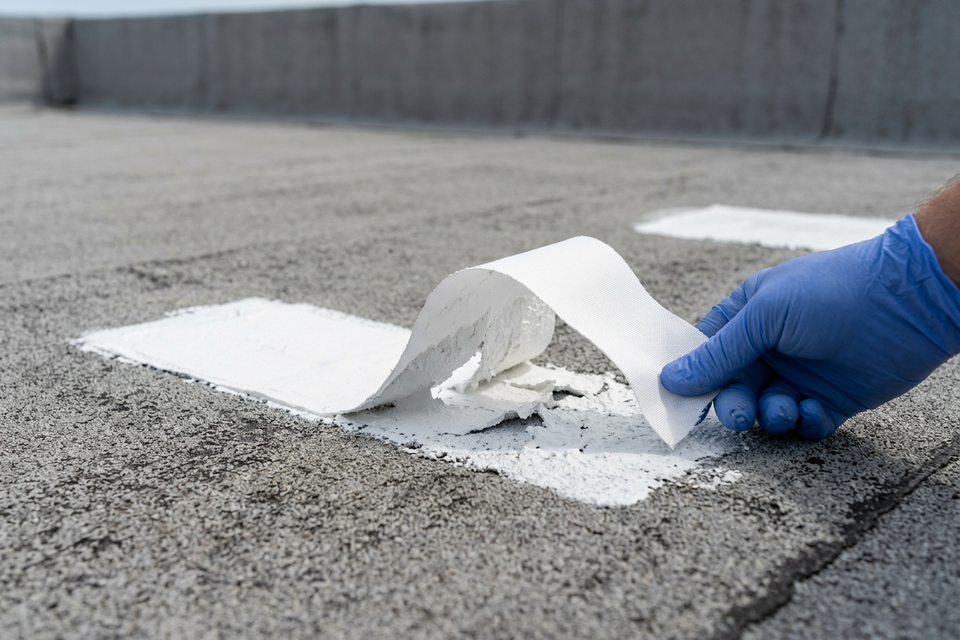
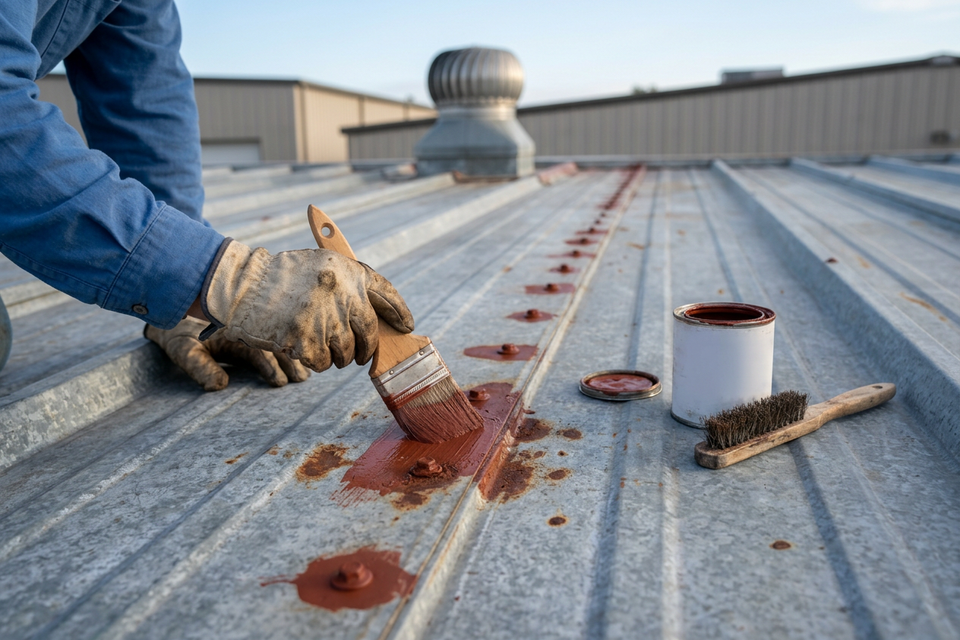
Adhesion. A coating bonds to whatever it touches first. If that is dirt, chalk, oil or loose granules, the bond is to something not attached to the roof. The answer is a clean, dry surface, the primer the substrate calls for, and an adhesion test patch: the actual system put down on a small area, cured as the data sheet requires, then pulled. Sherwin-Williams Uniflex guide specifications call for field adhesion testing, and for Silicone44 Uniflex requires a test on every job, looking for at least 2 lb per inch after three days.
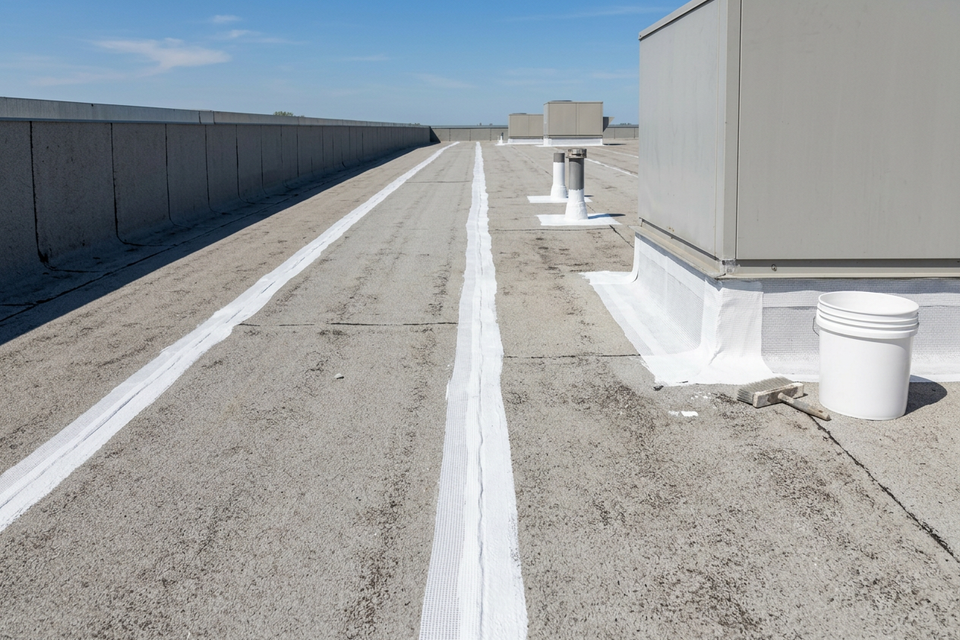
Details. Seams, fastener heads, curbs, pitch pans, drains and flashings are where water gets into a roof. Each is reinforced before the field coats go on, with polyester reinforcing fabric KST20385A bedded in coating or, on metal seams, butyl seam tape KST020804; under Silicone44, Uniflex stripes the metal laps with the silicone itself. Seams, fasteners and flashings covers each one.
Drainage and maintenance
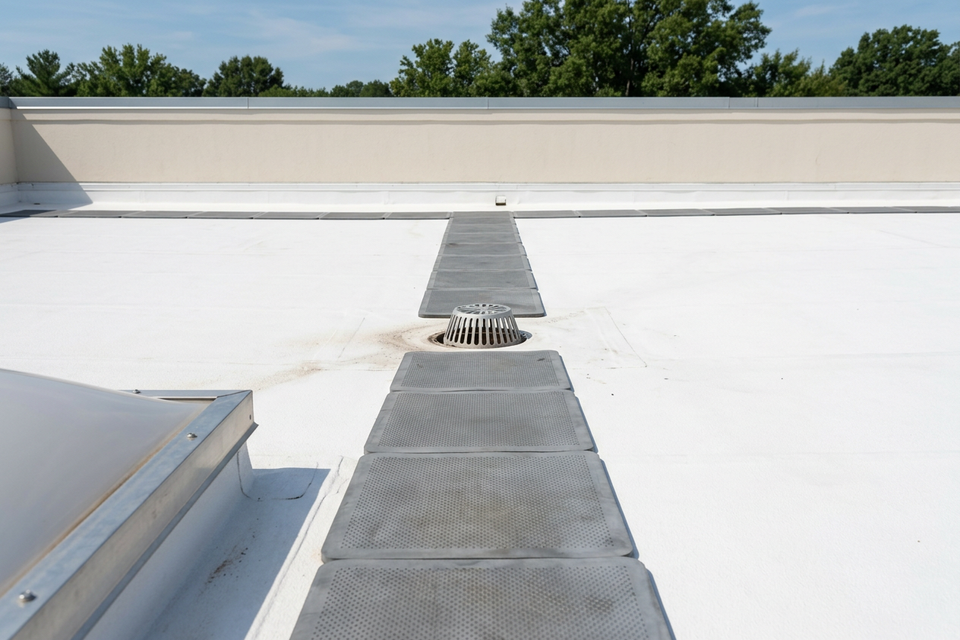
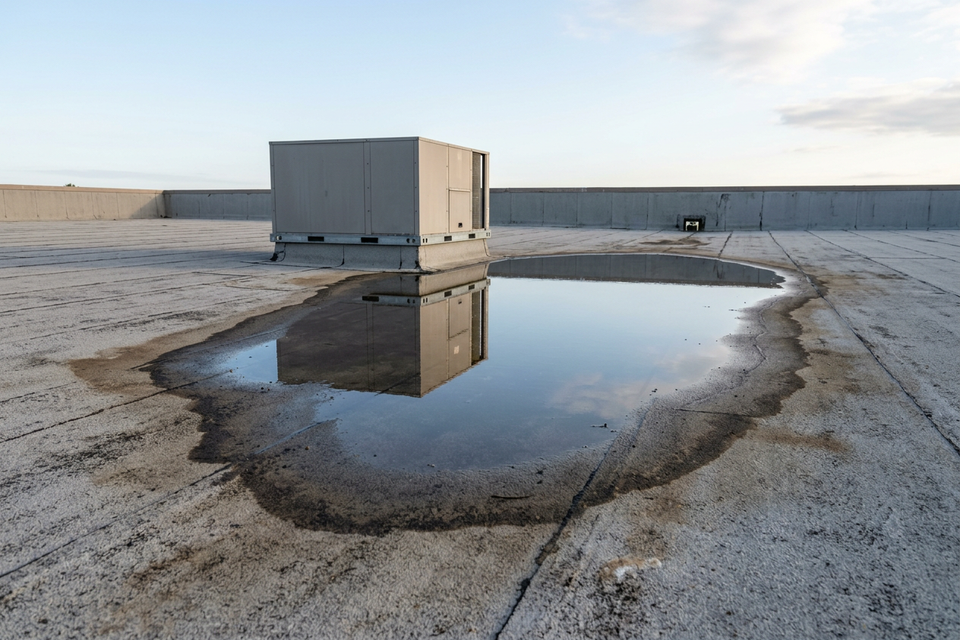
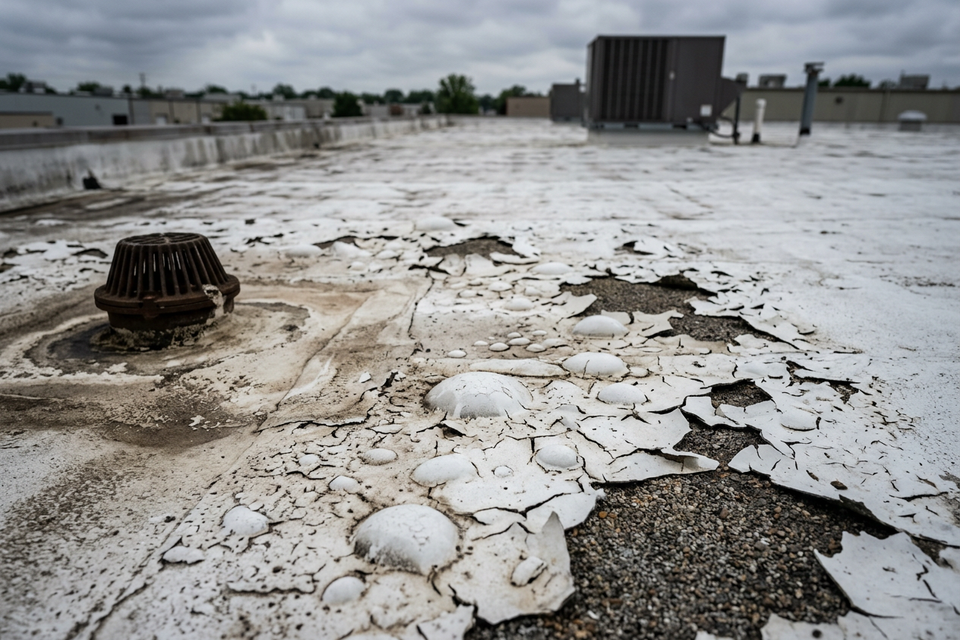
Drainage. Water should leave at the drains and scuppers. Acrylic is the usual finish on a roof that drains; under prolonged ponding a water-based acrylic can lose adhesion and peel. Low areas at drains, in valleys and along parapets can be built up first; under an acrylic system, Slope Builder KST0SLPBD is in the line for that. Where water still stands, the finish is Silicone44 KST044300 (white), with no base coat under it, or the solvent-based base coat KST042200 under finish coat KST042100, each on the substrates its data sheet lists. Silicone does not fix drainage: Uniflex’s silicone specifications still expect at least 1/4 in per ft of slope and working drains, and water that stands for long means more inspection, cleaning and recoating over the years. Ponding water and roof coatings goes further, and silicone vs acrylic compares the finishes.
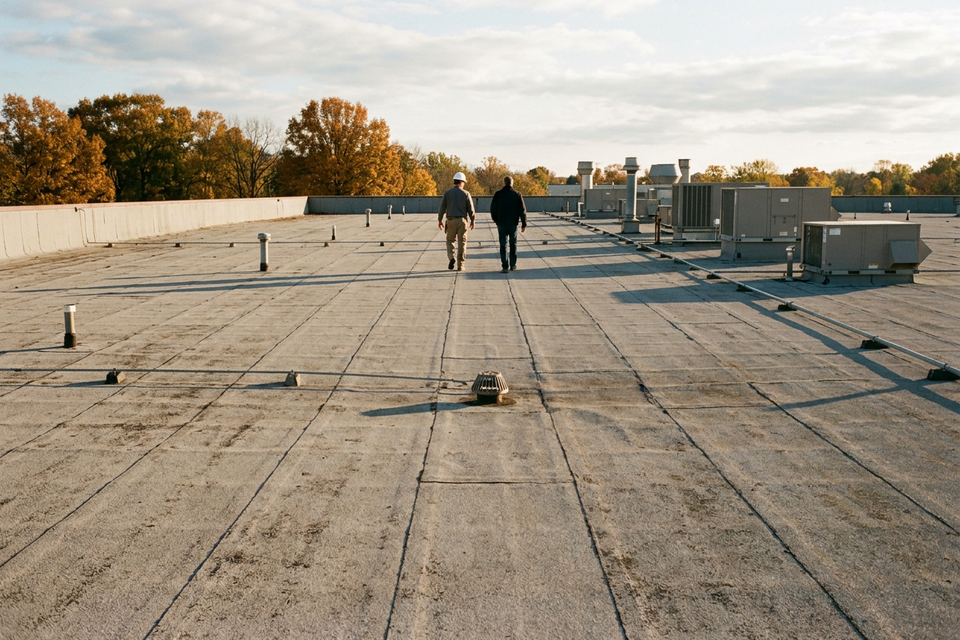
Maintenance. A roof that is looked after lasts longer than one that is not. The one figure we can cite is for roofs in general, not coated roofs: a 1999 conference paper on roof life cycles (C. P. Hodges, Effective Roof Management) cites research in which under-maintained roofs lost more than one-fourth of their service life compared with highly maintained roofs, and heavily trafficked roofs lost 18 to 20 percent. Looking after a coated roof sets out a routine for one that is coated.
What a warranty term tells you
A manufacturer’s system warranty is the nearest thing to the maker’s own answer to the same question: a term in years, put in writing. Sherwin-Williams offers UNIGUARD system warranties of 10 or 15 years when one of its authorized contractors applies the system. The warranty is the manufacturer’s, issued under its own terms; we supply the materials.
Two things are worth knowing before you compare bids. First, across the industry a longer term is specified at a thicker dry film, so two prices for the same roof can be prices for two different films. The schedule belongs to each manufacturer’s specification, and we do not reprint one; ask which term each price is built for. Second, the manufacturer inspects the finished roof before it issues a system warranty. Nothing we sell or arrange, the scan included, confers one. Roof coating warranties explains what they are and what they ask of an owner.
How long the roofs underneath last
Published service lives for the membranes a coating goes over vary by source, by roof type and by the age of the data, and none of them is a coating figure, so we do not reprint them.
Set a restoration beside the roof you already have and it is a second stretch of service from a roof already paid for, with no tear-off. Divide an installed cost by the years it buys and you have a cost per year, the fair way to compare restoring with replacing; run the numbers with your own years. Age alone settles nothing; condition does.
Coating the roof again
A coating that has weathered can sometimes be coated again. Nobody can promise that on the day the first one goes on, and we publish no re-coat interval.
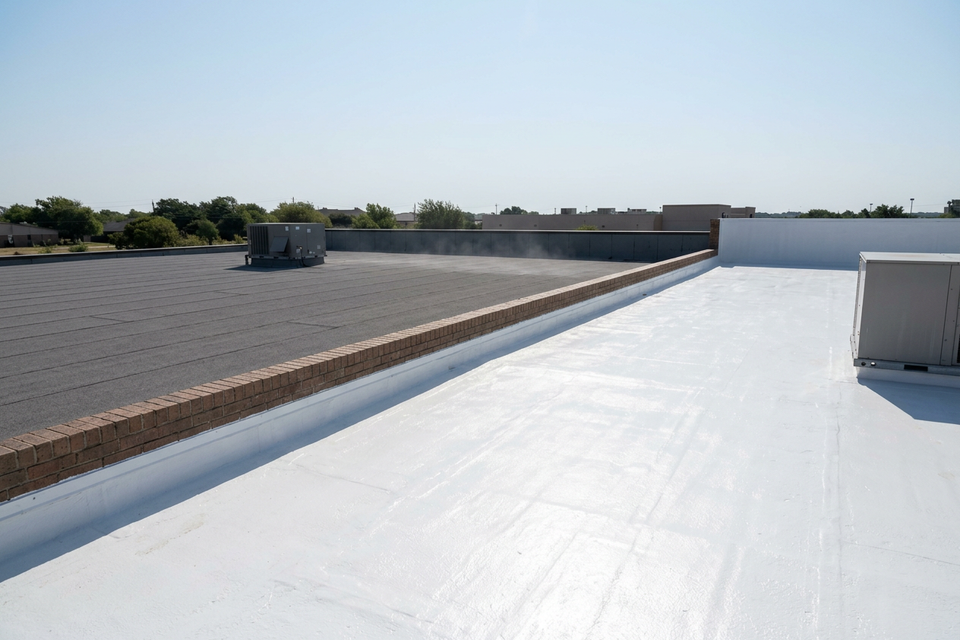
When the time comes, the roof is a new candidate. It is cleaned, repaired and assessed again: surveyed for wet insulation, cored where the survey points, and test-patched. The old coating is now the substrate, and what bonds to it is a data-sheet question: Silicone44 KST044300 (white), for one, goes directly over a sound, aged acrylic, silicone or urethane roof coating after washing, scraping loose coating back and passing adhesion tests. The adhesion test and the data sheet decide, not the calendar.
A white coating also makes later thermal work harder, so the moisture survey at that point is done another way. It is one more reason to scan before the first coating, not after it.
Who decides
- The data sheet names the preparation, the rate and the cure; the adhesion test patch settles whether the system holds on this roof.
- The contractor owns means and methods: cleaning, film checks, details, the call on the weather. See choosing a contractor.
- The manufacturer decides whether to issue a system warranty, under its own terms.
- The building’s engineer decides anything structural, including why water stands. Nothing here is structural advice.
- The owner decides whether the roof is looked after afterwards.
If you are weighing a coating for a commercial low-slope roof, the first unknown to remove is what is under the membrane. How the scan works sets out what you get and what a thermal scan cannot do; then request a moisture scan with the building’s address. We fly only with the owner’s go-ahead, for commercial low-slope roofs anywhere in the US. Nothing about the roof has to be decided until you have seen the map.
Last updated 2026-10-05.