Looking after a coated roof: inspections, repairs and records
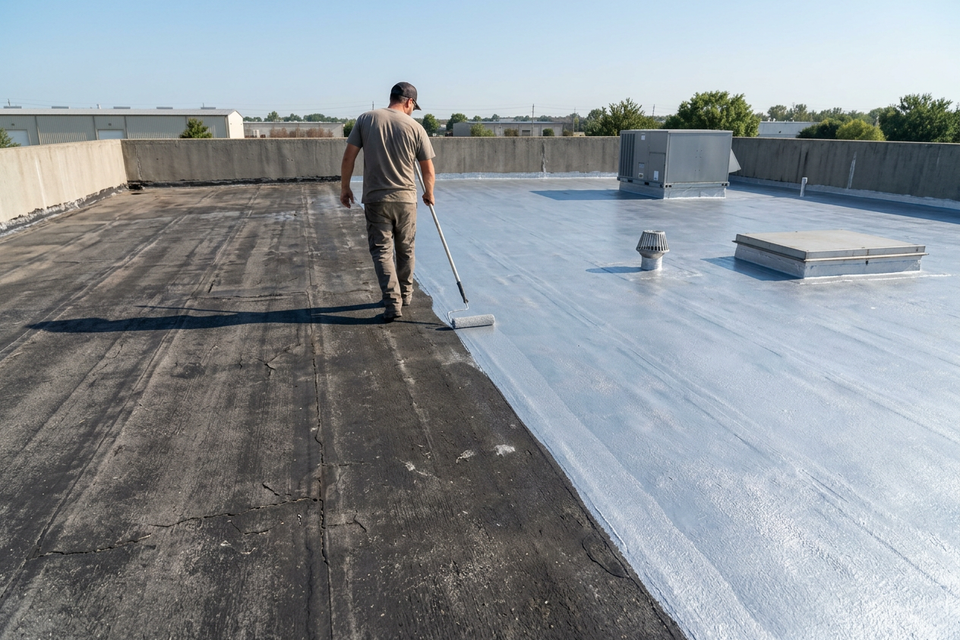
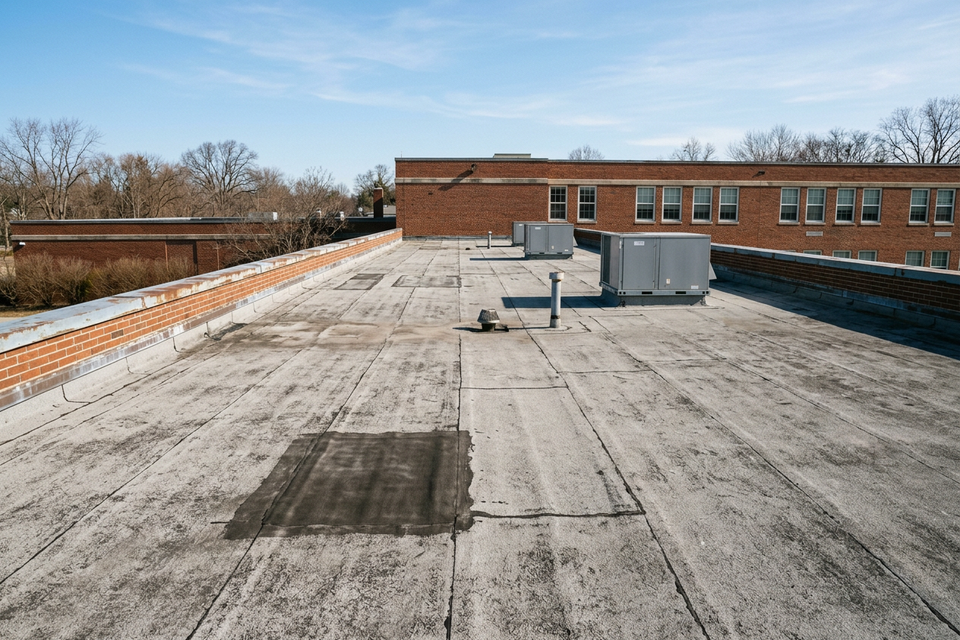
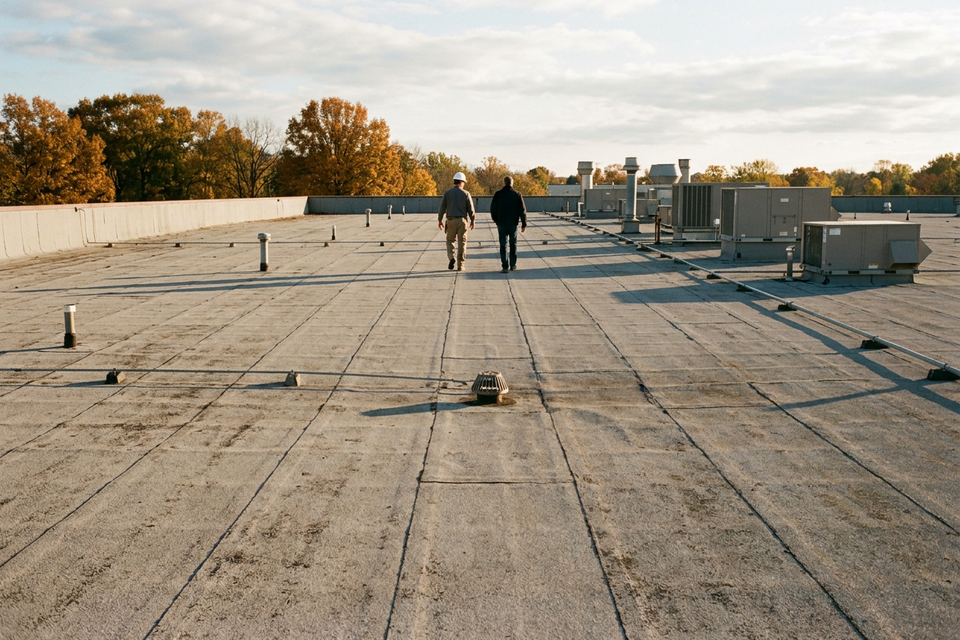
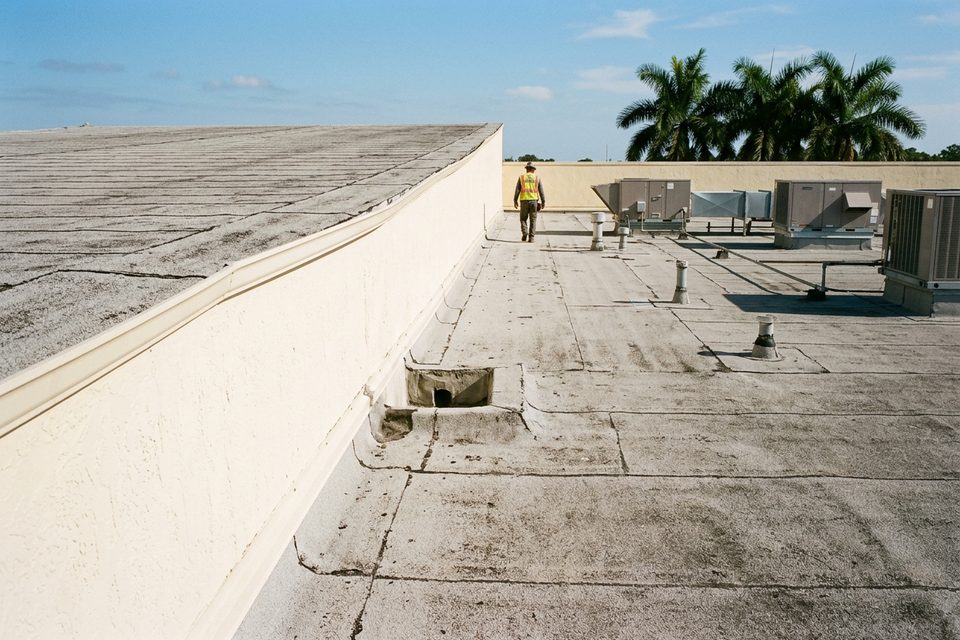
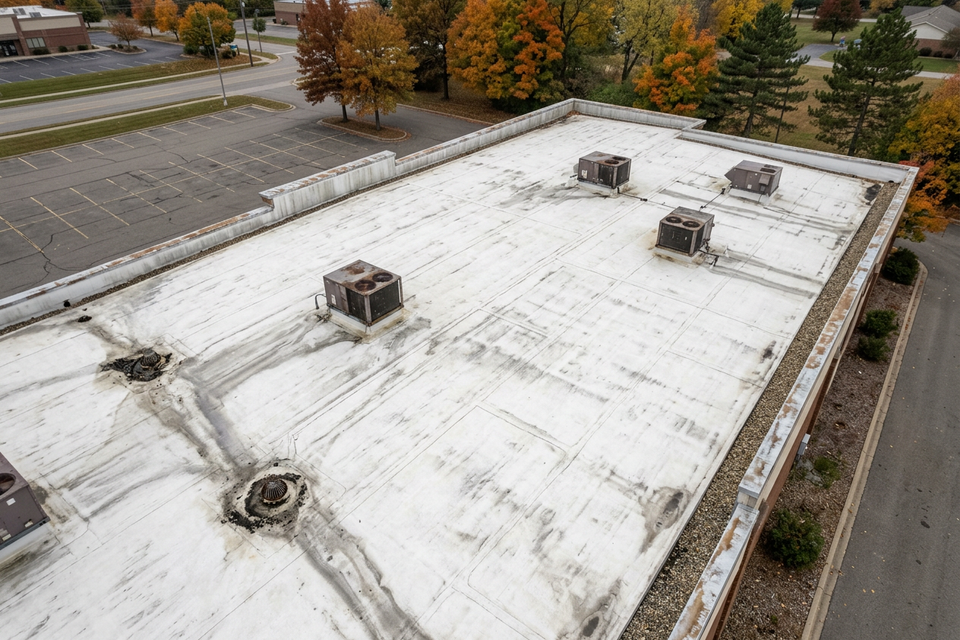
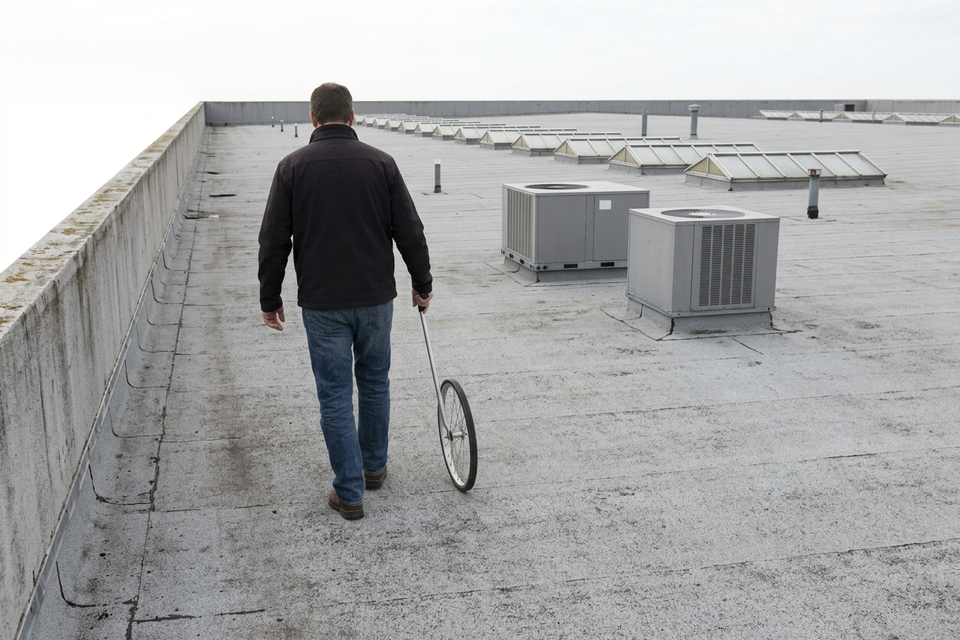
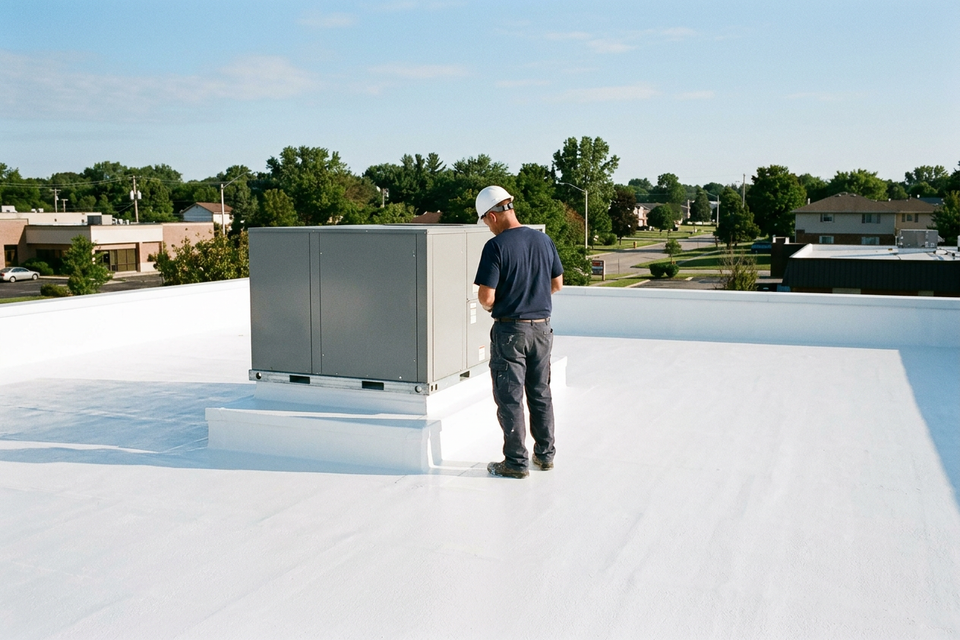
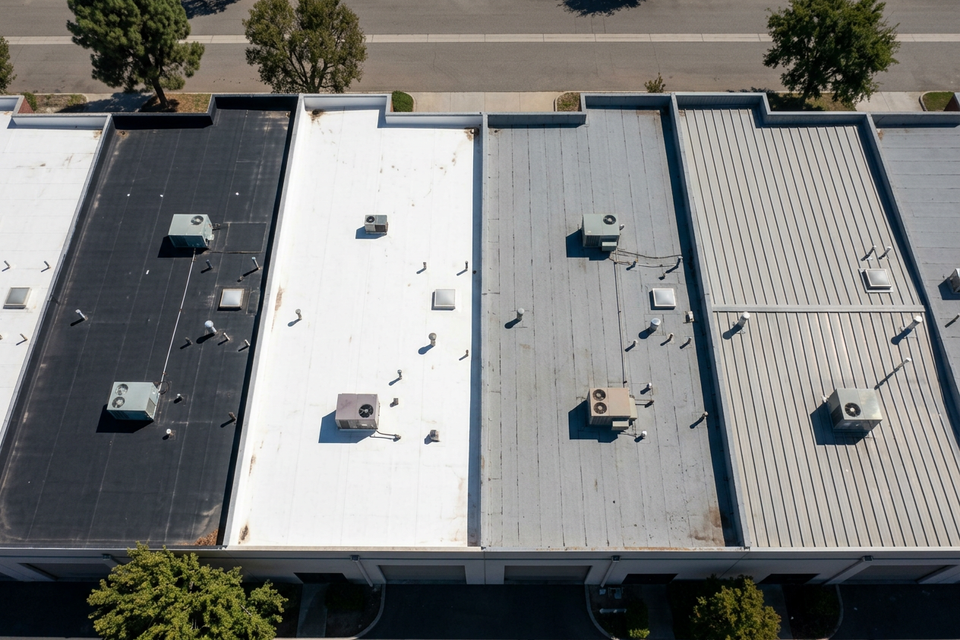
A coated roof is looked after like any low-slope roof, with one difference: every repair has to bond to the coating already there. Walk it twice a year, the common convention among facility managers and roofing contractors, and after any other trade has worked on it. Keep drains and scuppers clear and debris off. Check seams, flashings, the sealant at each penetration, the field for punctures, and low spots for water that did not stand there before. Repair damage while it is small, with materials that match the finish coat, and log what you found and did.
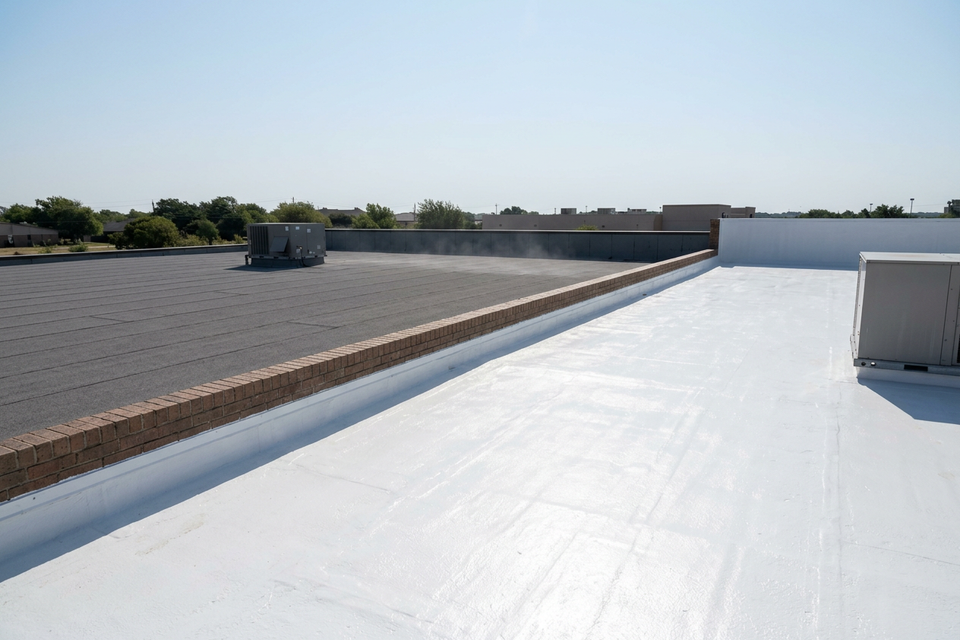
Applied over a sound, dry roof, a restoration system adds 10 to 15 years of service life. Upkeep is part of getting them. Research by Kyle and Kalinger, cited in a 1999 conference paper on roof life cycles by C. P. Hodges, found that under-maintained roofs lost more than one-fourth of their service life compared with highly maintained ones. That was roofs in general, not coated roofs; how long a roof coating lasts covers what else decides it.
When to walk it
Where the maintenance guidelines that come with the system set a schedule, follow it rather than the twice-a-year convention. Contractors commonly treat water still standing 48 hours after rain as ponding, a figure at least one coating maker’s guide specification also uses, so a walk two days or so after rain shows whether drainage has changed.
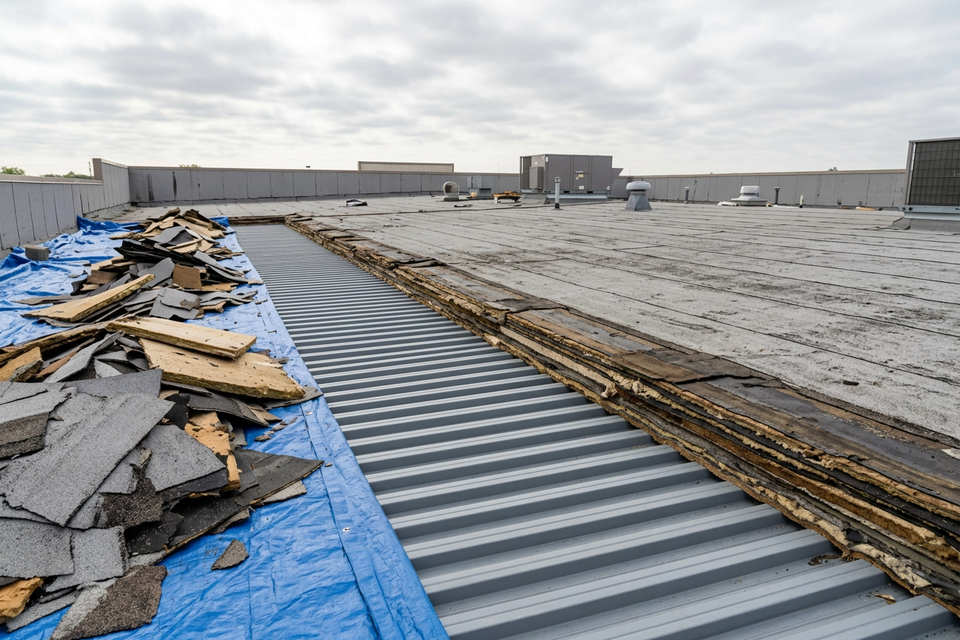
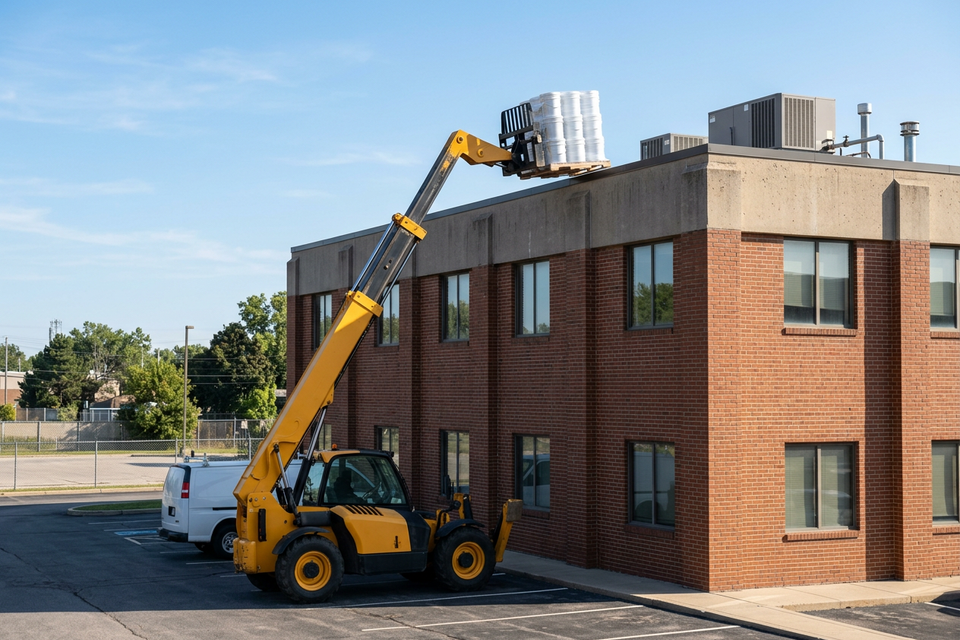
Add a walk after any work on the roof by another trade: HVAC service, an electrician running conduit, a plumber at a vent stack, a sign installer. Each can leave a new penetration or a puncture nobody mentioned. Walk it soon after they leave, hardest where they worked.
Building staff can do the routine walk, under the building’s rooftop safety rules, with a camera and the roof plan. Repairs, and a closer look when something turns up, belong to a roofing contractor.
What to look at
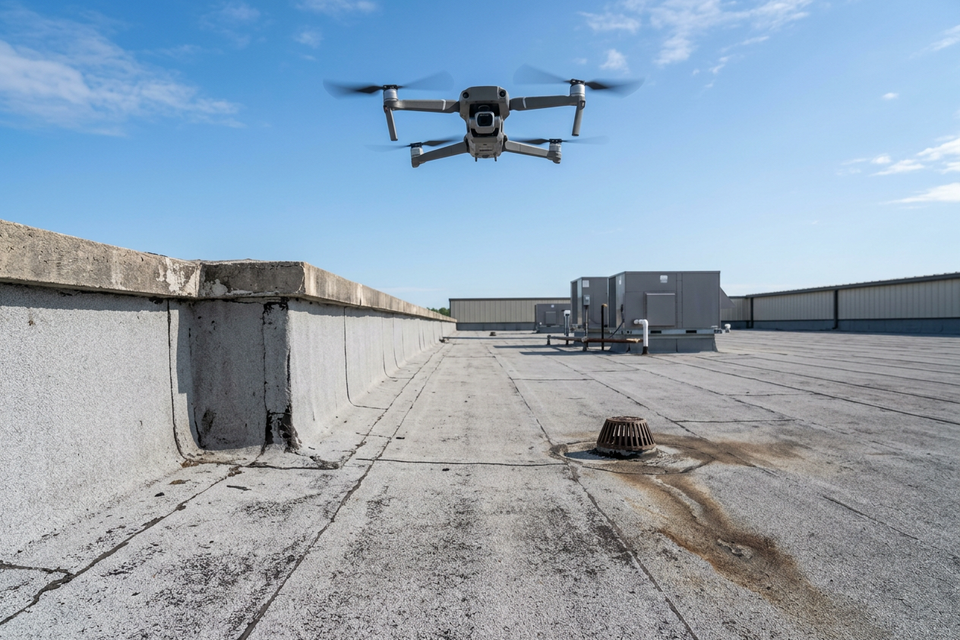
Start at the drains and work outward, marking each finding on the plan with a photograph.
| Where | Look for | Do |
|---|---|---|
| Drains and scuppers | Leaves, silt, bags, a strainer missing or clogged | Clear them; replace the strainer |
| The field | Debris, punctures, dropped fasteners, wear on a walk route | Sweep; mark punctures |
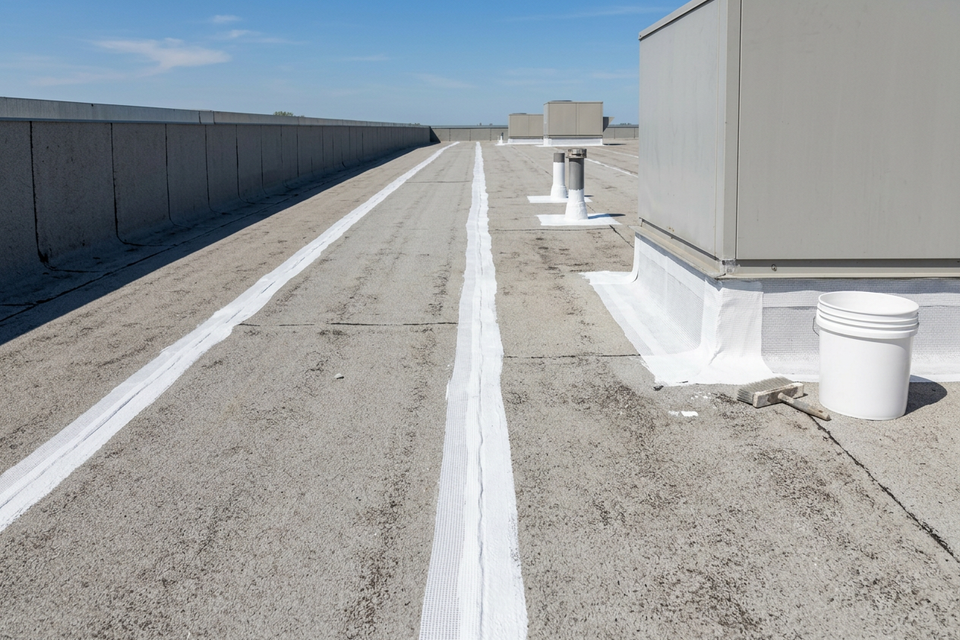
| Seams and laps | A lifted edge, a crack along a reinforced seam, fabric showing | Mark for repair |
| Flashings, curbs, parapets | Open laps, cracks at the wall, fasteners backed out, loose counterflashing | Mark for repair |
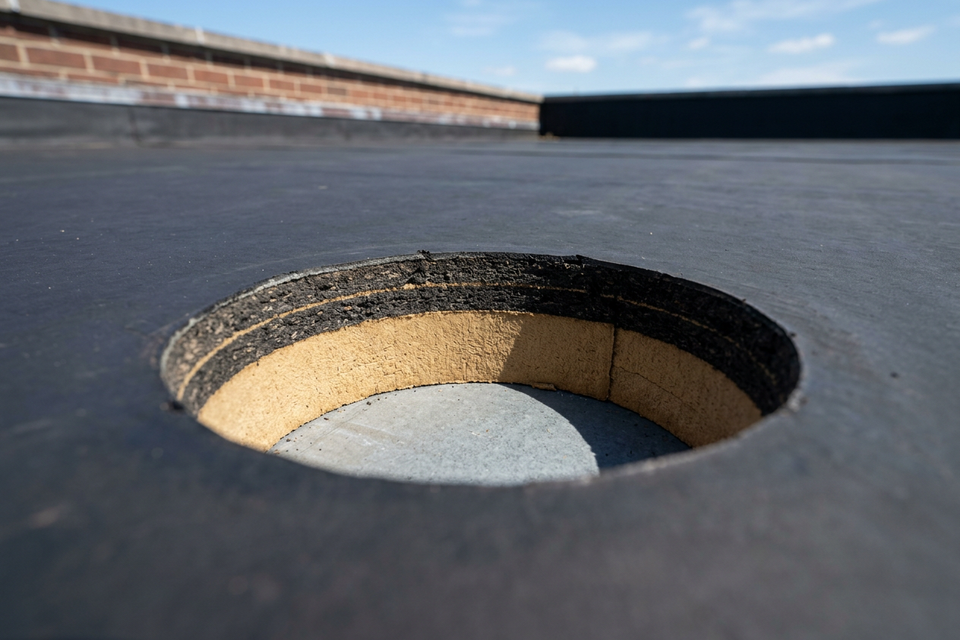
| Penetrations and pitch pans | Sealant cracked, pulled away or sunk; a new pipe nobody sealed | Mark for resealing |
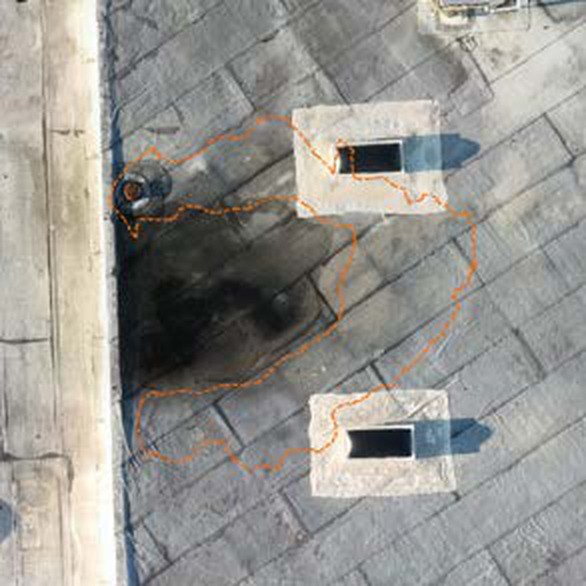
| Rooftop equipment | Oil or grease on the coating; parts set down on the field | Clean off oil; move parts onto supports |
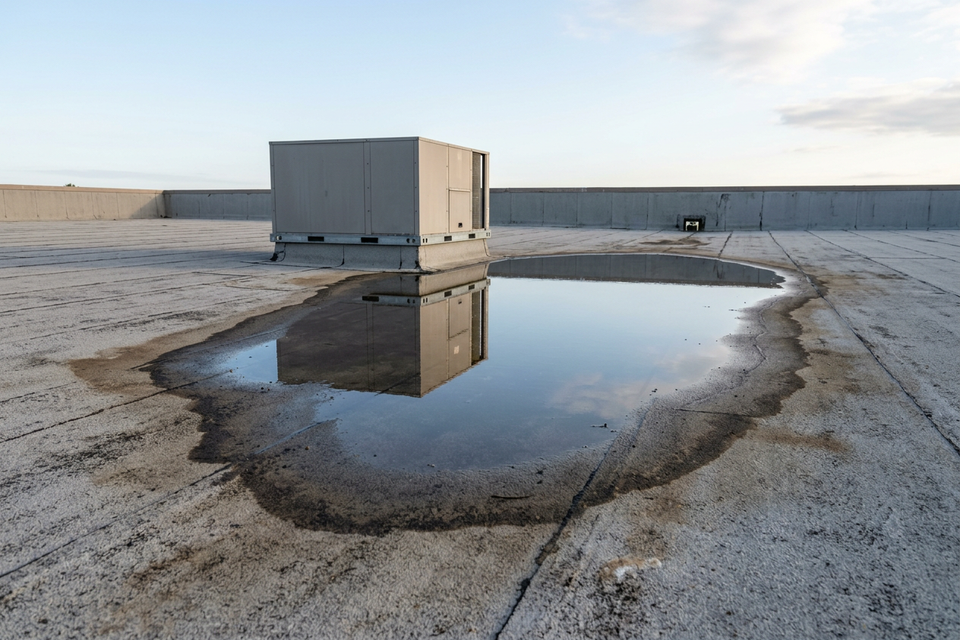
| Low areas | New water standing two days after rain; a tide line of silt | Find the cause first |
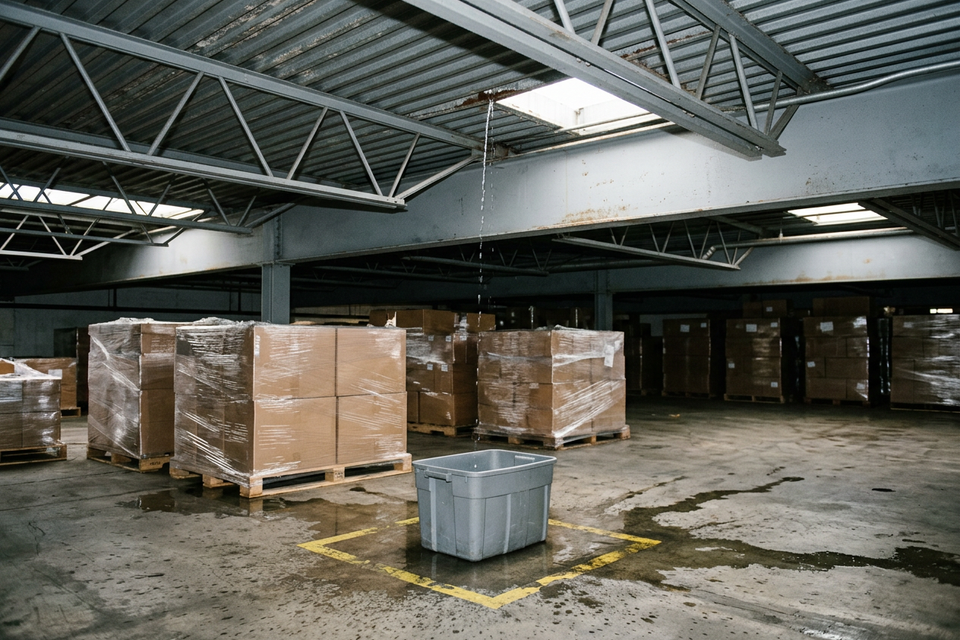
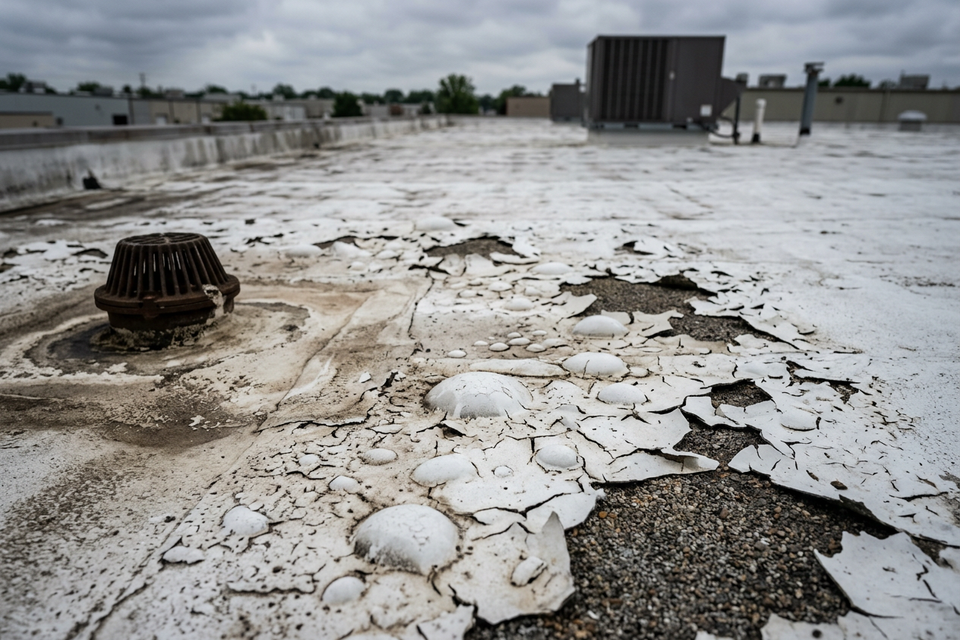
New standing water has a cause: a blocked drain or scupper, a missing strainer, debris dammed against a curb, or the deck deflecting. The first three are maintenance; the last is for the building’s engineer, and nothing here is structural advice. Under prolonged ponding a water-based acrylic can lose adhesion and peel, and water is weight on the structure: even the Silicone44 data sheet, for a coating positioned for ponding water, says to follow NRCA guidance and remove ponding. Ponding water and roof coatings goes further.
Cleaning
Dirt collects where water sat and where units drip, and it dulls a white surface; silicone picks up more dirt than other coatings and loses reflectivity as it does. Oil and grease matter more, because a repair has to bond to the surface and oils bear on whether it does.
How a cured coating may be washed, with what and at what pressure, is for the manufacturer’s maintenance guidelines and the data sheet to say; ask rather than guess. Silicone has a slick surface, so plan a wash that nobody has to walk across.
Repairs with materials that match
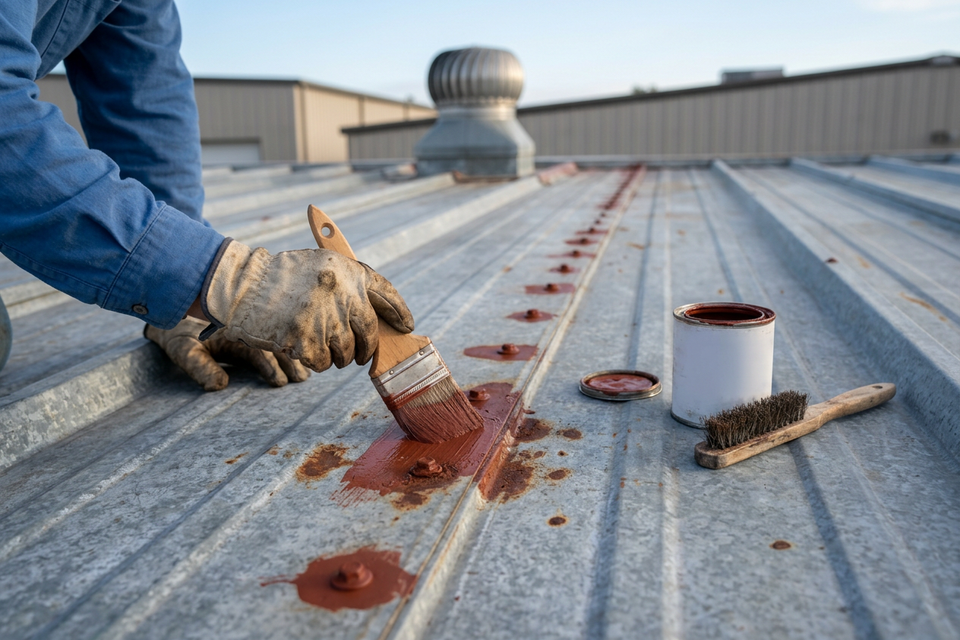
Repair with the chemistry of the finish coat, read each repair material’s data sheet, and treat a larger repair as a small coating job: same cleaning, same reinforcement, same cure. On silicone, repair with silicone. Coating makers publish silicone-over-silicone recoat specifications, and contractors commonly treat cured silicone as a surface little else bonds to: a trade rule of thumb, not an absolute.
| Finish on the roof | Patch and reinforce with | Sealant at penetrations |
|---|---|---|
| Acrylic, such as KST041300 | Acrylic patching cement KST041220 with 6 in polyester fabric KST20385A, then the finish coat | MS hybrid KST058300, used at penetrations in the metal, single-ply and concrete build-ups |
| Silicone44 KST044300 (white) | More silicone over the cleaned area | None in our catalogue today; ask at quote time |
| Solvent-based KST042100 | Its base coat KST042200 with fabric, under the finish | Brushable repair sealant KST058500, listed for damp, oily or slightly dirty surfaces |
| Aluminum KST020475, on an asphaltic roof | Wet-dry roof cement KST058600 with fabric, then the aluminum | Tripolymer KST058400, which lists steel and asphalt |
Sealants are matched here by the substrates each one lists, not by a pairing the maker publishes; read the sealant’s data sheet, and let an adhesion test patch settle a larger repair. Where a coating has worn through to bare TPO, the MS hybrid sealant needs adhesion promoter KST058700 first. The cartridges and cans are at Roofing sealants.
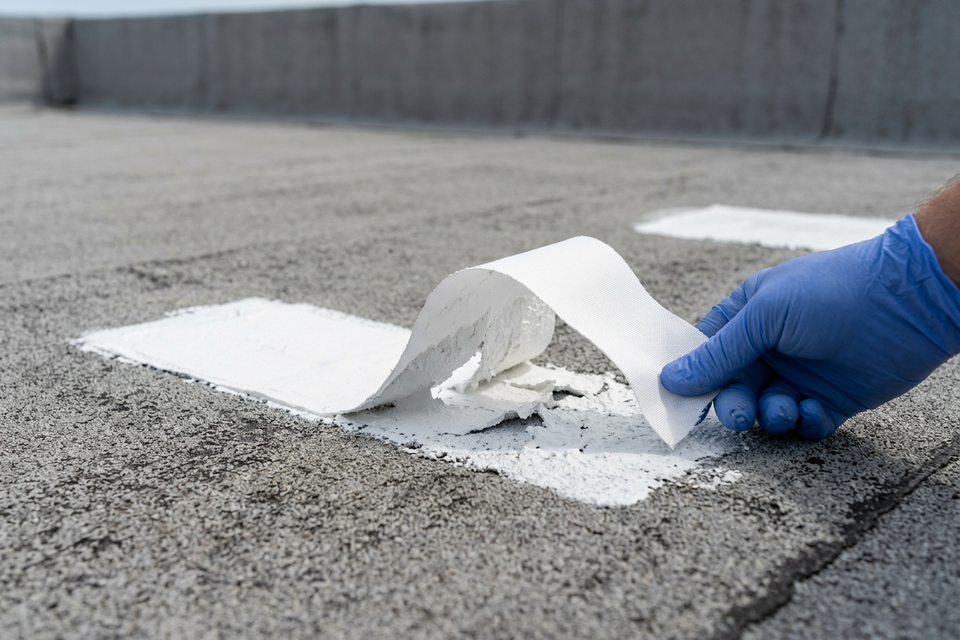
Worth keeping on hand: fleece-backed bonding tape KST058006 seals holes, tears and open seams at gutters, flashings and skylights, goes down from 0 °F on a wet surface and is listed as needing no coating over it: a repair for when the weather is wrong for coating.
Seams, fasteners and flashings covers each detail; why roof coatings fail covers what a repair left too long becomes.
Walk pads and rooftop traffic
The same research found that heavily trafficked roofs lost 18 to 20 percent of their service life. Feet, ladders and dropped tools wear at the coating. Silicone is soft, with less abrasion resistance than other coatings and a slick surface, a poor fit for steady foot traffic. A water-based acrylic chalks and loses film thickness as it ages, so a worn route has less to give.
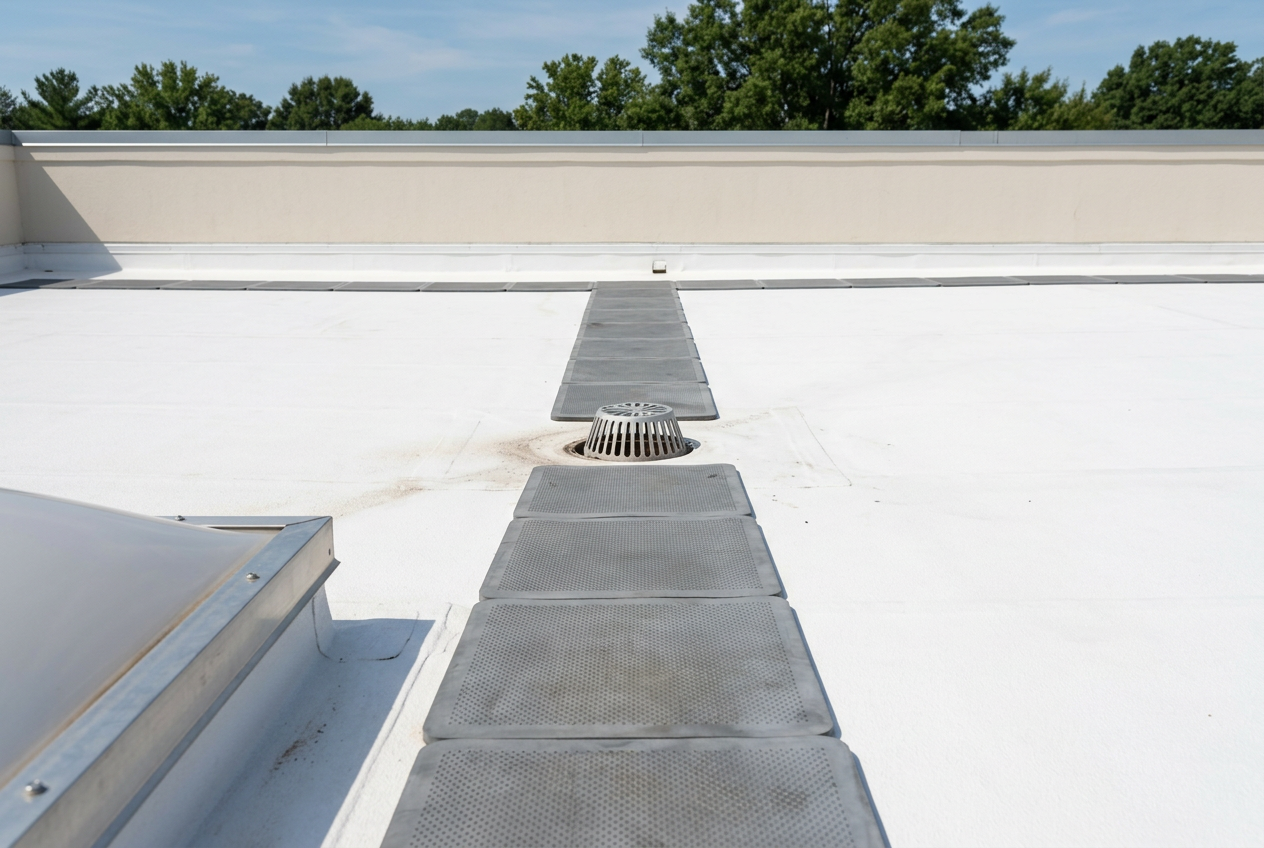
Put walk pads on the routes service crews actually take: from the hatch or ladder to each unit, and around it where panels open. We do not list a pad; which one may go over the system is for the manufacturer’s specification and the contractor. Then control the traffic. Nobody drills, cuts or sets equipment on the roof without telling whoever keeps the log; ladders and parts go on supports, not on the field; trades report what they fastened or cut before they leave.
Records, and what a warranty asks
System warranties commonly make maintenance by the owner a condition. What that means for your roof is in the warranty document, which governs, and in the maintenance guidelines that come with the system; ask for both when the warranty is issued. The warranty is the manufacturer’s, issued under its own terms; we supply the materials. Roof coating warranties sets out what they ask of an owner.
Keep a dated log. For each walk: who walked it and what was found where, with photographs. For each repair: the date, the contractor, the material by part number and the data sheet it was done to. For each trade visit: who, when, and what they fastened or cut. File it with the moisture survey map, the core log, the adhesion test results, the specification and data sheets, and the warranty document. When a problem is reported, the building is sold or the roof comes up for another coat, a dated file settles what memory cannot.
Moisture checks once the roof is white
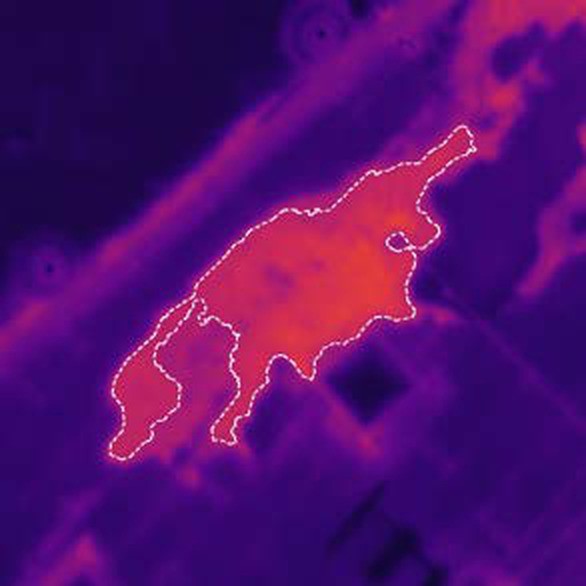
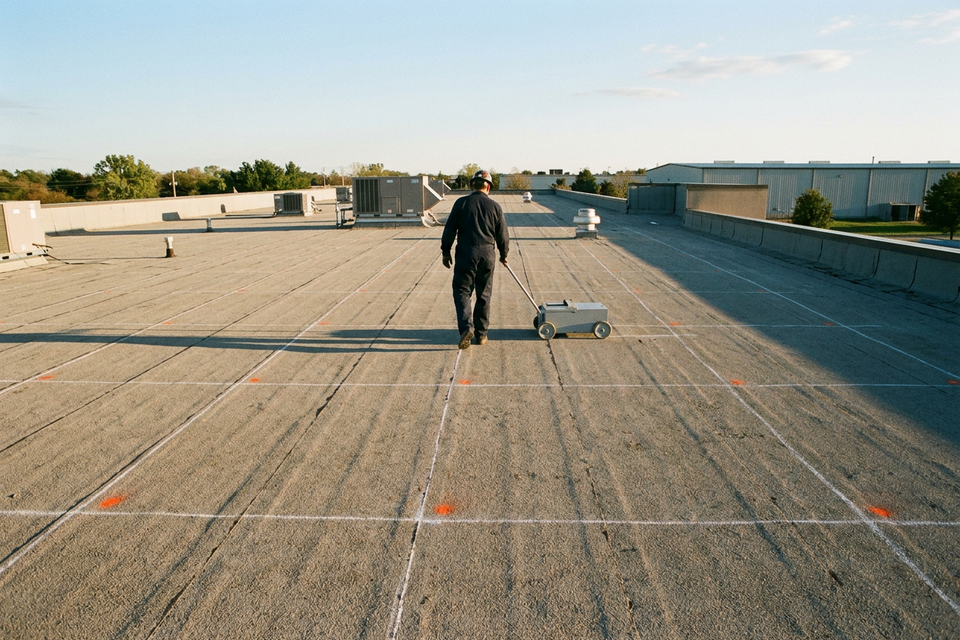
A thermal scan reads surface temperature after sunset, and on a white, highly reflective coating, reflections and uneven emissivity degrade the data: an already-white roof is the wrong roof for a thermal camera. The check is done another way: cores, a walk-through, or a grid of readings with a capacitance (electrical impedance) scanner, for which ASTM D7954 is the standard practice, or a nuclear gauge, covered by ANSI/SPRI/IIBEC NT-1. Grid readings are relative; core samples confirm them. The surveyor picks the method by what is under the coating and what the coating is; D7954, for one, excludes metal and conductive surfacings. Infrared, capacitance, nuclear and cores compared sets them side by side.
Each core through a coated roof is patched the day it is cut, with the matching materials above. The survey made before coating earns its keep here: its map and core log record the roof before it was coated, and a later surveyor sets new readings beside them. That is one more reason to scan before coating, not after.
Who decides
- The owner schedules the walks, keeps the log and controls who goes on the roof.
- The contractor does the repairs and owns the means and methods.
- The data sheet names the preparation, the rate and the cure; the adhesion test patch settles whether a larger repair holds.
- The manufacturer decides what its warranty asks, under its own terms.
- The building’s engineer decides anything structural, including whether deflection is why water stands.
- The local building department decides whether a repair needs a permit at that address.
When a walk turns up a list, the cements and fabric are at Patch and repair. Describe the list in the notes on the quote form, with the finish coat on the roof, what was found and where, and the site ZIP; a person replies with the materials that match, the price, freight to the site and a ship date.
Last updated 2026-10-05.