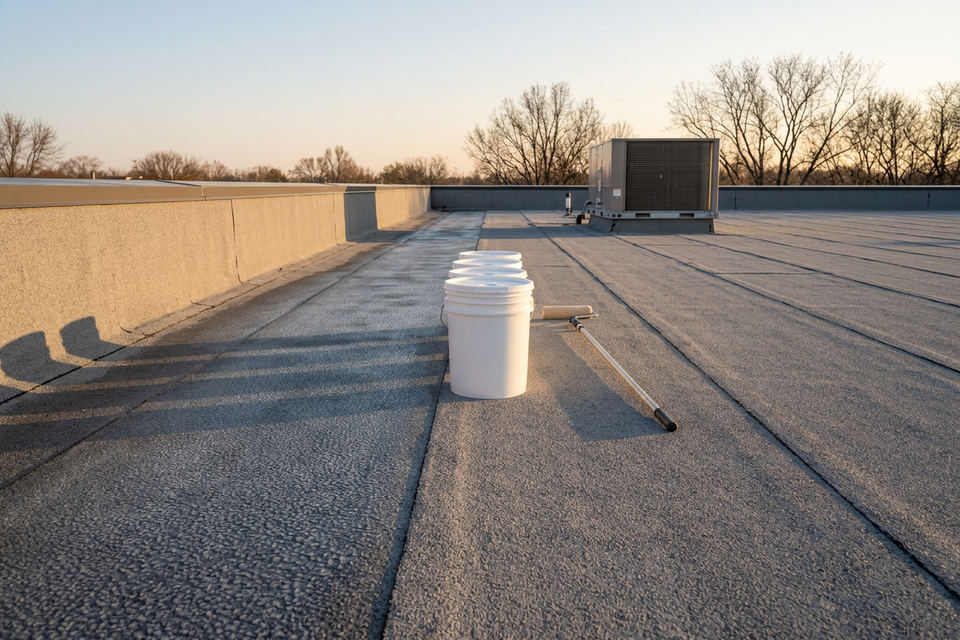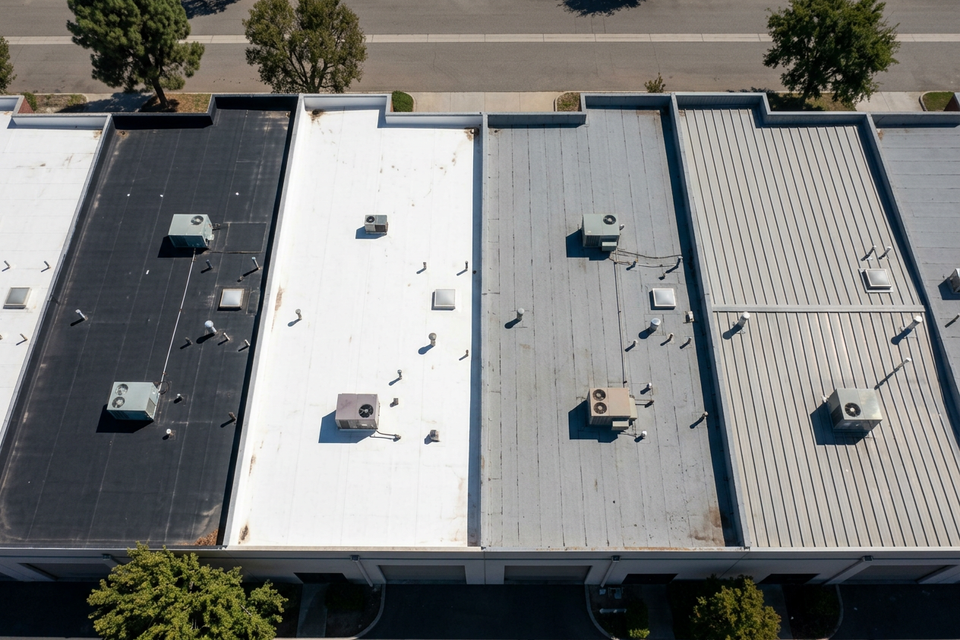
Primers under roof coatings: what each substrate needs
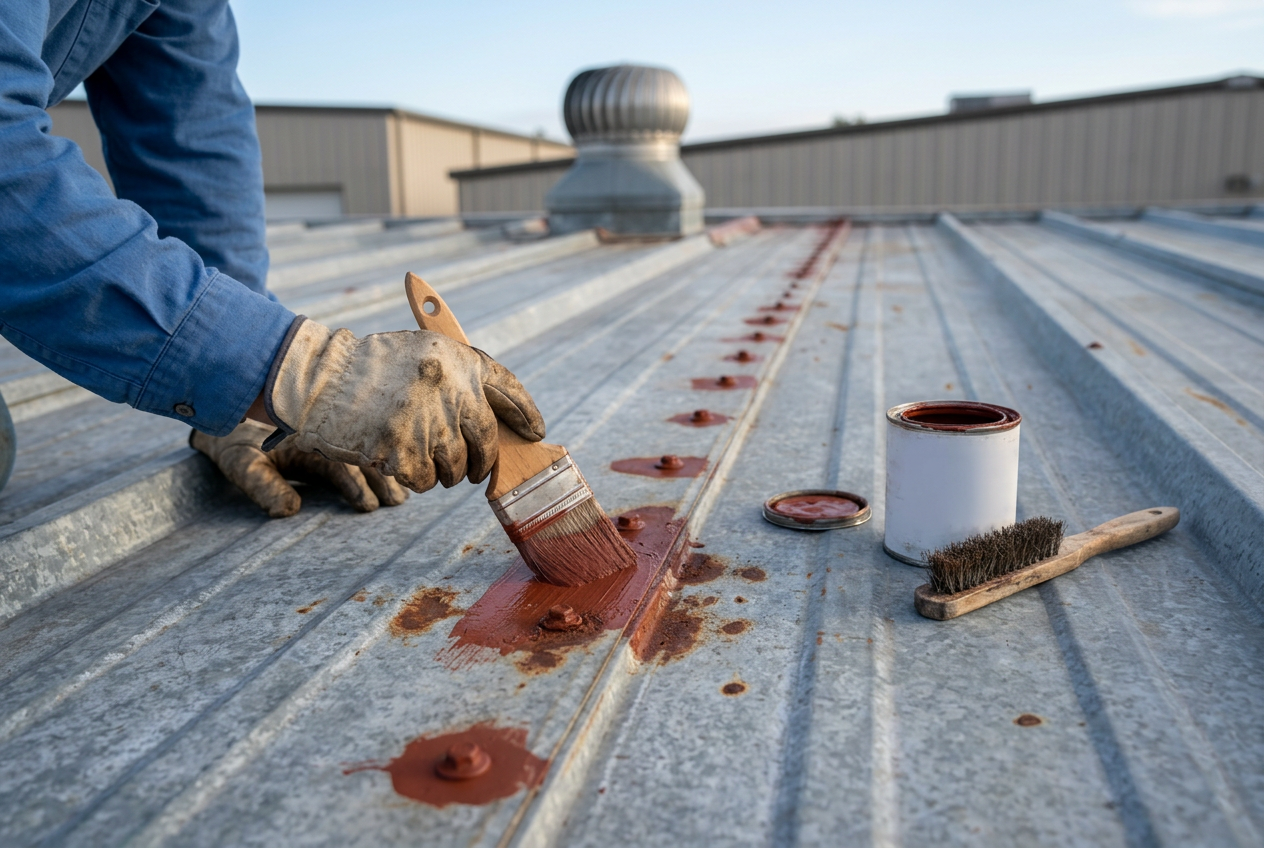
Sometimes, and two things decide: the substrate and the finish going over it. Under the acrylic systems in the Sherwin-Williams Uniflex line, corroded steel, pre-finished metal panels, EPDM and concrete each take a primer of their own, while asphaltic roofs and sound foam take none because the base coat is the first coat. Under Silicone44 there is no base coat at all, and most roofs take no primer: rusted metal gets the rust-inhibitive primer, EPDM the wash primer, newer asphalt a bleed-blocking primer, and an adhesion test decides the rest.
No table settles it for a particular roof. The current data sheet for the system being priced names the primer and the preparation, and an adhesion test patch shows whether that system holds on this roof. A primer is also a narrower thing than its name suggests: not a cleaner, not a rust converter, and no help at all to wet insulation.
Under an acrylic system
| Substrate | Primer or first coat | Why |
|---|---|---|
| Corroded iron and steel | Rust-inhibitive metal primer, red KST034520 | Alkyd; listed for metal where corrosion is a problem |
| Pre-finished fluorocarbon (Kynar) panels | Acrylic rust-inhibitive metal primer, white KST036520 | The acrylic system’s primer for pre-finished panels; water-based |
| EPDM | Bond-It wash primer KST038620, then single-ply base coat KST041321 | A wash-and-rinse cleaner made for EPDM; not for white EPDM |
| TPO, PVC and Hypalon | None: pressure wash, then single-ply base coat KST041321 | The wash primer is for EPDM only; on PVC the adhesion test settles the build-up |
| Smooth BUR, modified bitumen, granular cap sheet | None: MB base coat KST041510 (gray KST041512) is the first coat | The manufacturer’s own listings call it the Elastomeric MB Primer |
| Concrete | Acrylic concrete primer, white KST036500 | Listed for concrete and for surfaces with a pH of 6 to 13; water-based |
| Sprayed polyurethane foam | None | Base coat KST041520 or KST041320 goes directly on sound foam; damaged or wet foam comes out first |
Under Silicone44
Uniflex never puts an acrylic base coat under Silicone44 KST044300 (white) or Silicone44 KST044320 (gray), so none of the base coats above belongs here, and neither does the concrete primer.
| Substrate | Primer | What else to know |
|---|---|---|
| Metal | KST034520 on every rusted area, cured before coating | Laps are striped with Silicone44. On factory-finished (Kynar) panels an adhesion test decides; send us the roof |
| Weathered EPDM | Wash primer KST038620, rinsed, roof dried | New EPDM takes a different primer; ask us |
| Weathered TPO and PVC | None | Adhesion test first; new membrane takes a primer; ask us |
| Hypalon | No Uniflex silicone document covers it | Uniflex names any primer in writing after an adhesion test; send us the roof |
| Smooth BUR, modified bitumen, cap sheet | Uniflex Bleed Blocker Primer, where the asphalt is newer or likely to bleed through | We do not stock it; ask on the quote form. No MB base coat and no asphalt primer under silicone |
| Sprayed foam, concrete, existing coatings | None | Silicone44 goes directly on; concrete cured at least 29 days, moisture 15% or less, sealers and release compounds removed |
Under aluminum, and at sealant details
The aluminum coatings name no primer for any roof they list, granulated cap sheet included: their preparation is pressure washing and a fully dry roof, at 50 °F or warmer with no rain forecast. The black asphalt primer KST020412 is a rejuvenator for dried-out smooth BUR and modified bitumen, not a required first step and not for granulated surfaces. Aluminum roof coating vs elastomeric has the route.
One aerosol is a primer for a sealant, not for a coating: the TPO and PVC adhesion promoter KST058700 goes ahead of the white MS hybrid sealant KST058300, which lists primed TPO and PVC; EPDM needs none. It ships as regulated freight.
What a primer does, and what it does not
In this line a primer has one of five jobs: a rust-inhibitive coat on metal; a wash that takes the carbon black off EPDM; a coat listed for concrete under an acrylic system; a bleed blocker that keeps newer asphalt from staining through silicone; and a rejuvenator for dried-out asphalt under aluminum. What a primer does not do is where jobs go wrong.
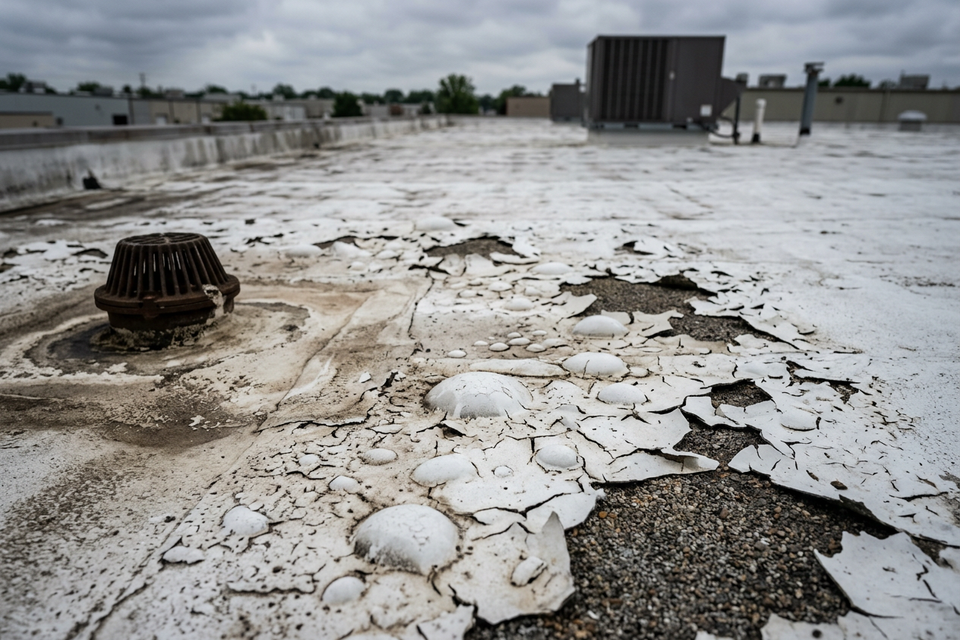
- It is not a cleaner. Dirt, ponded silt, loose granules, chalk and oils come off before the primer goes on; a primer over dirt bonds to the dirt. Even the wash primer, a cleaner by name, is no substitute for getting ballast, debris and loose plates off the membrane first.
- It is not a rust converter. The rust-inhibitive primers go over sound metal with corrosion on it, not over scale. Loose rust and scale come off first, fasteners get tightened or replaced, and a panel rusted through is a repair, or a question for the building’s engineer.
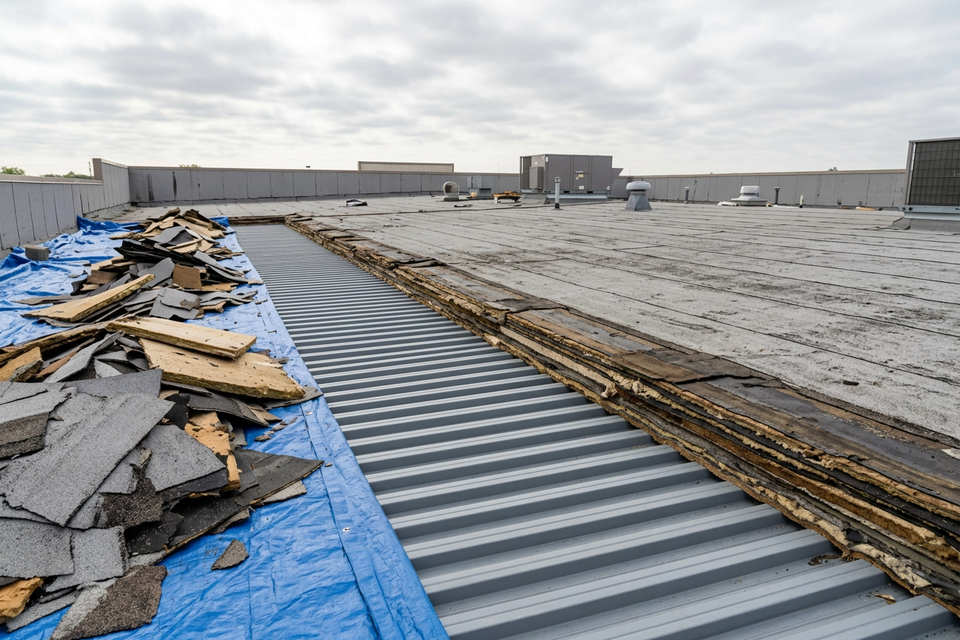
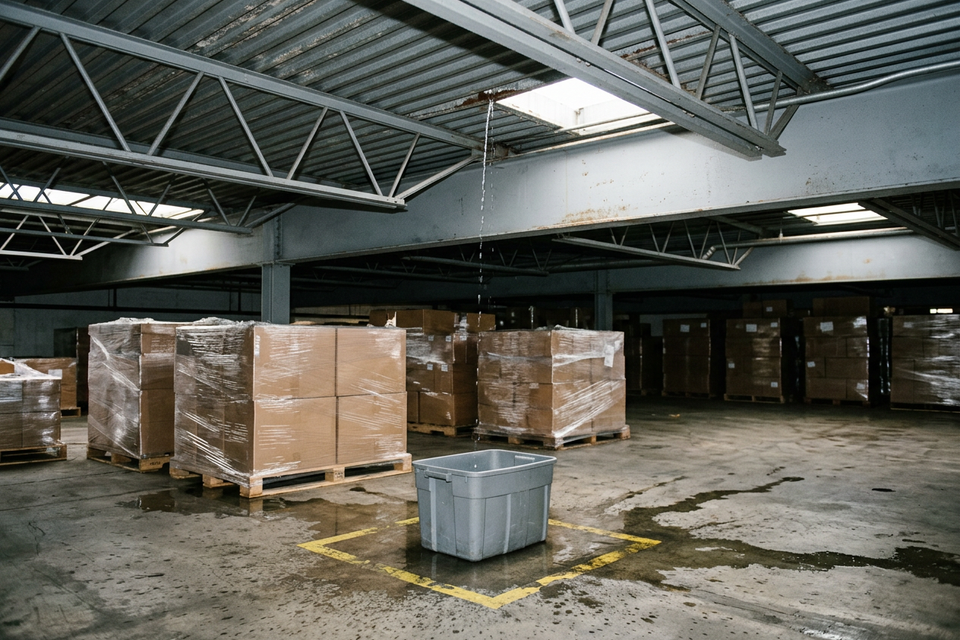
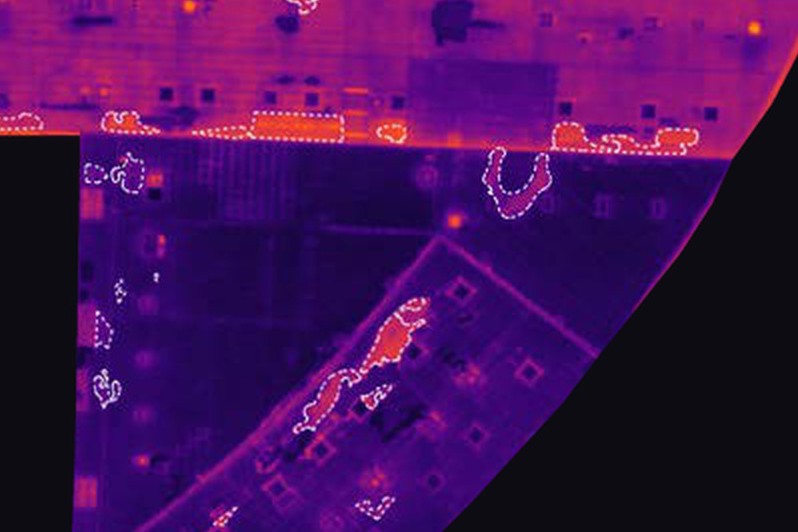
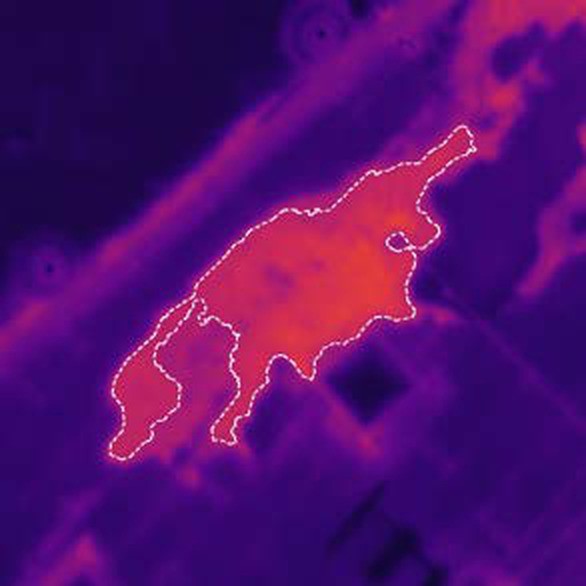
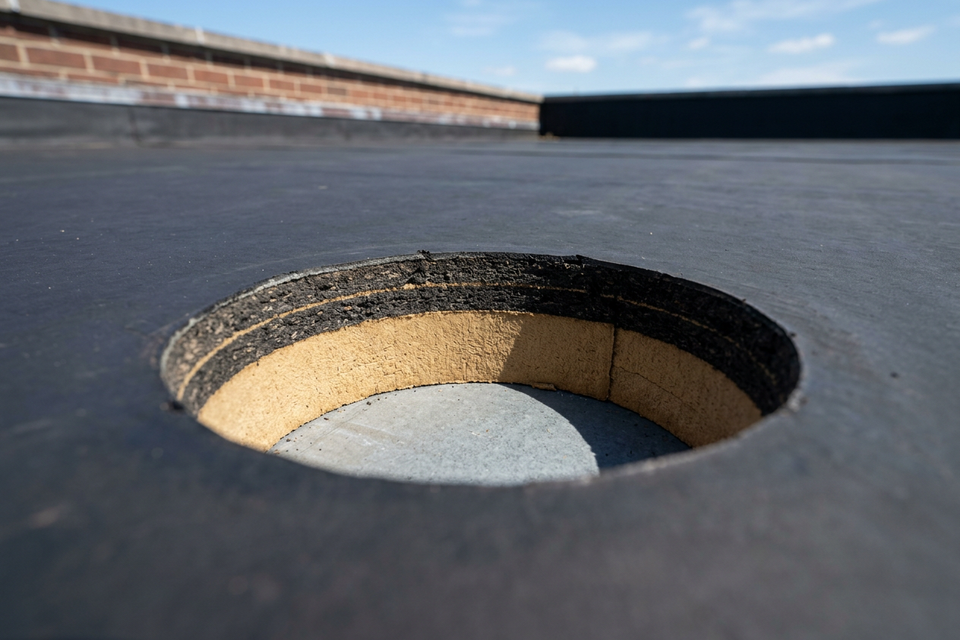
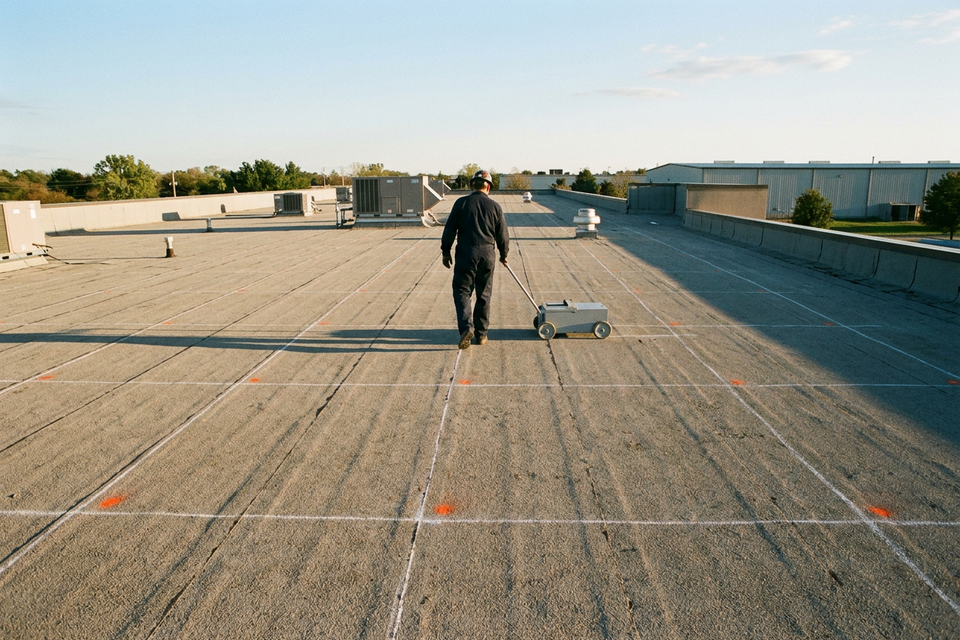
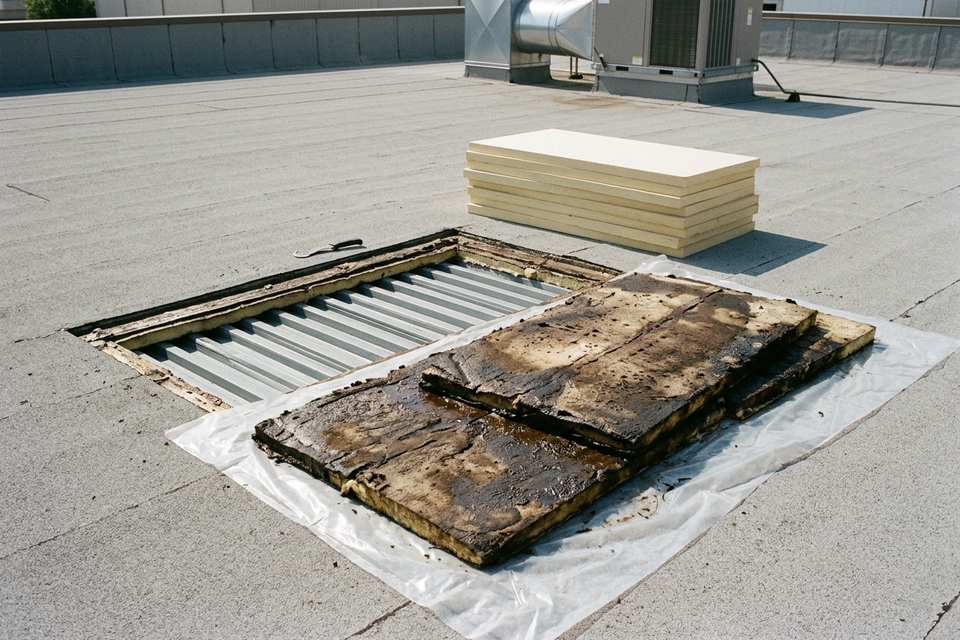
- It is not a cure for a wet roof. Nothing in a pail dries insulation; a system laid over a wet area seals the water in. A roof with wet insulation is not a candidate until that is cut out and replaced; Wet roof insulation covers how the scan marks it and the cores confirm it.
- It is not a patch. Splits, open laps, blisters and torn flashings are repaired first: acrylic patching cement KST041220 on metal, foam and concrete, wet-dry roof cement KST058600 on asphaltic roofs. The detail course comes after the primer and does not replace the repair.
Clean first, then prime
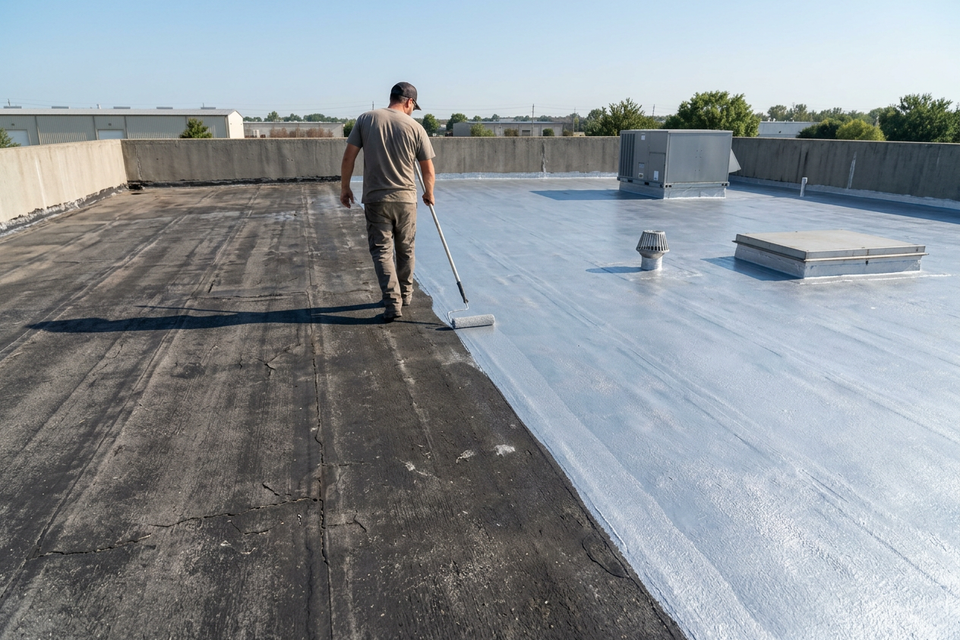
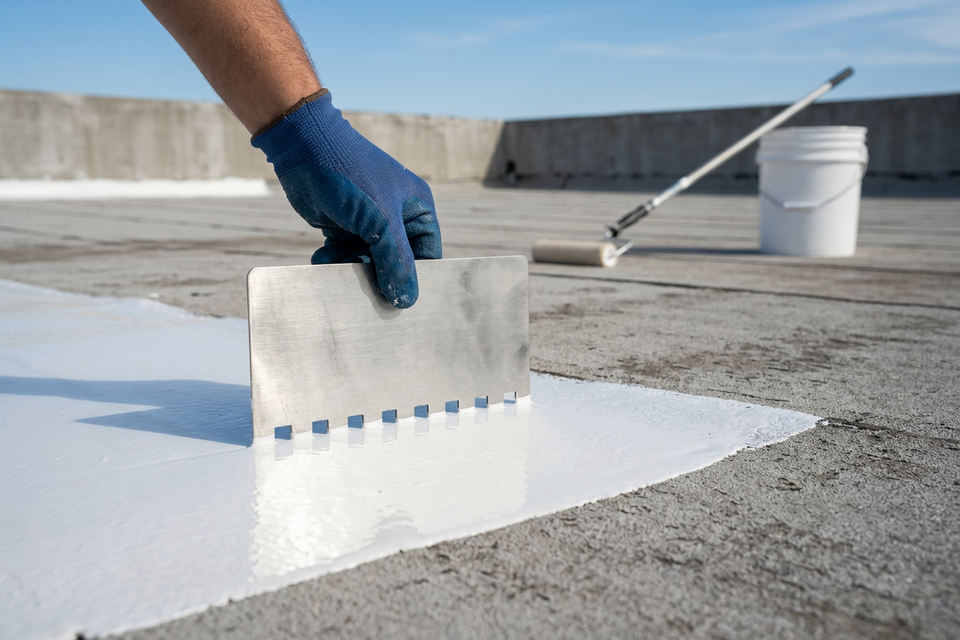
The order of work is the same on every roof: clean, repair, correct the low spots, prime where the substrate needs it, detail every seam and penetration, then the coats: base and finish under acrylic, Silicone44 on its own under silicone. Priming is only as good as the steps ahead of it.
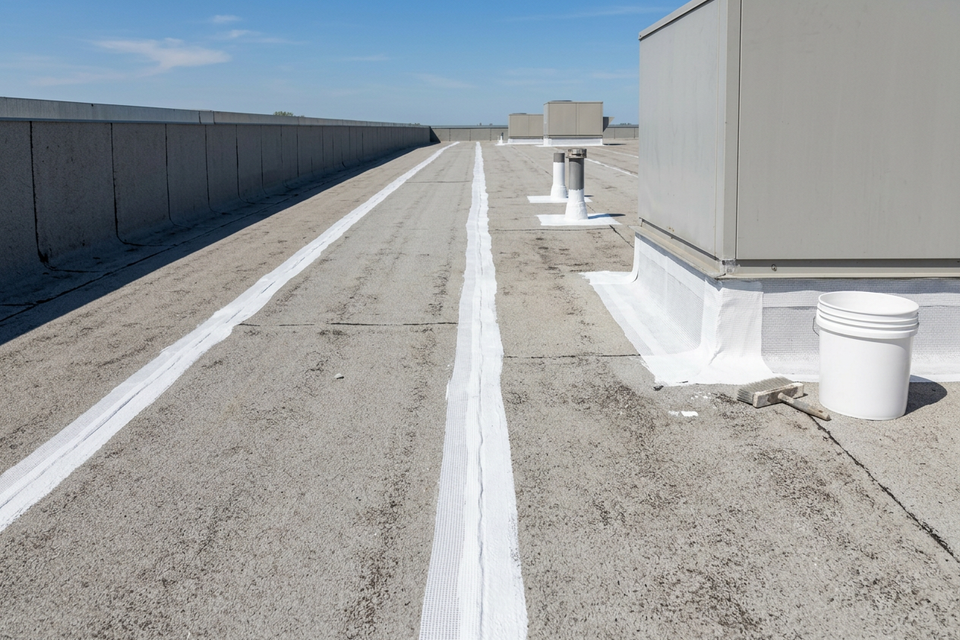
Clean means pressure-washing the field and letting the roof dry as the data sheet requires. Prime the seams, fastener plates, curbs and penetrations along with the field, so the detail course lands on a primed surface.
On EPDM the wash primer is a rinse-off product: it goes on, works for the time the data sheet gives, and is rinsed off; where it dries on the membrane before the rinse, it goes on again, and the membrane dries before the next coat. Every other primer dries or cures for the window its data sheet names. The sheet also names the rate, the dry time and the coat count; this guide prints none of them.
What we do not stock, and what stays open
- Bleed Blocker Primer. Uniflex’s primer for newer asphalt under silicone is not in our catalogue. Ask for it on the quote form; we say what we can supply.
- New membranes. Unweathered EPDM, TPO and PVC take a primer the weathered membrane does not. Tell us the membrane’s age.
- Hypalon under silicone, and factory-finished panels under silicone. No Uniflex silicone document names the primer; the adhesion test and Uniflex decide. Send us the roof.
- Pack sizes. Manufacturer documents disagree on which packs the acrylic metal primer and the asphalt primer ship in, and the quote confirms what ships. The stocked primers sit with the base coats at Base coats & primers.
Who decides
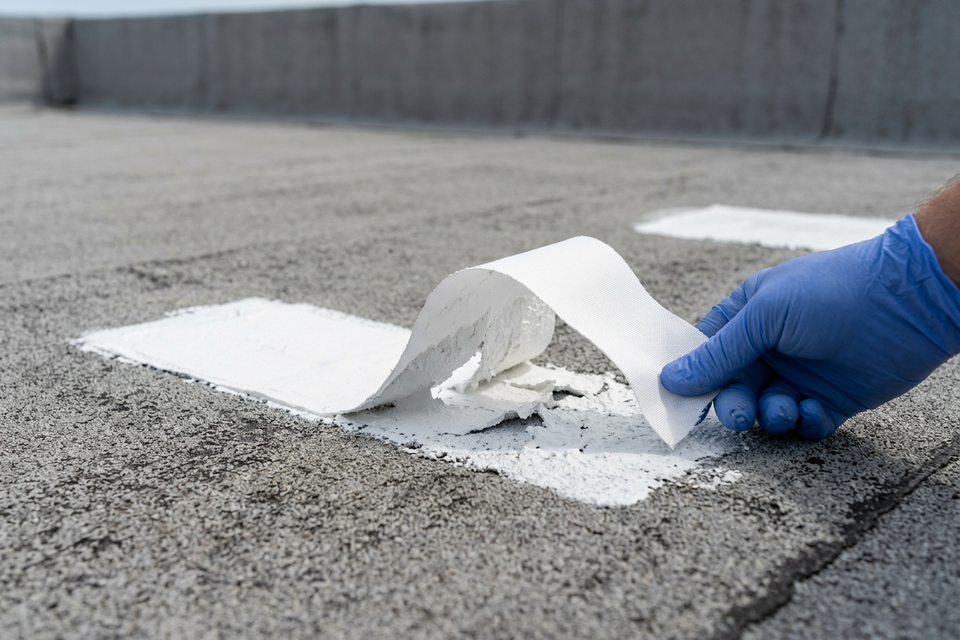
The data sheet names the primer and the preparation; the adhesion test patch settles whether the system holds on this roof. For Silicone44, Uniflex makes the test the rule on every job: a small patch of Silicone44 with a fabric strip embedded, left three days, then pulled. It looks for at least 2 lb per inch, and a lower result goes to Uniflex, which decides the primer. The adhesion test patch covers where to place one, how to make it and how to read the break.
Where a system warranty is wanted, the Sherwin-Williams Uniflex guide specifications ask for every substrate to be peel-tested, with the results sent to the manufacturer, and name ASTM D4541 for field adhesion testing; the manufacturer inspects the finished roof before it issues the warranty. Sherwin-Williams offers UNIGUARD system warranties of 10 or 15 years when one of its authorized contractors applies the system. The warranty is the manufacturer’s, issued under its own terms; we supply the materials. Nothing bought here makes a roof eligible for one.
- The contractor writes the scope and owns the means and methods.
- The manufacturer inspects the finished roof before it issues a system warranty, under its own terms.
- The building’s engineer decides anything structural, a deck or panel rusted through included; nothing here is structural advice.
What to send for a quote
- The substrate, with each roof level listed separately; for metal, whether the panels are bare, corroded or pre-finished; for single-ply, the membrane and whether it is new or weathered.
- The finish the job is heading for: acrylic, silicone, solvent-based or aluminum, since the primer follows from it.
- The system named in the specification, if one is named, and what any test patches showed.
- Whether a manufacturer system warranty is wanted, the site ZIP and your timing.
Run the roof through the system finder, which names the build-up for each substrate, then send it through the quote form: a person prices the primer with the rest of the system, names what is not included, and replies within one business day with the price, freight and a ship date.
Last updated 2026-10-05.