Cool roof ratings after ENERGY STAR: what the numbers mean now
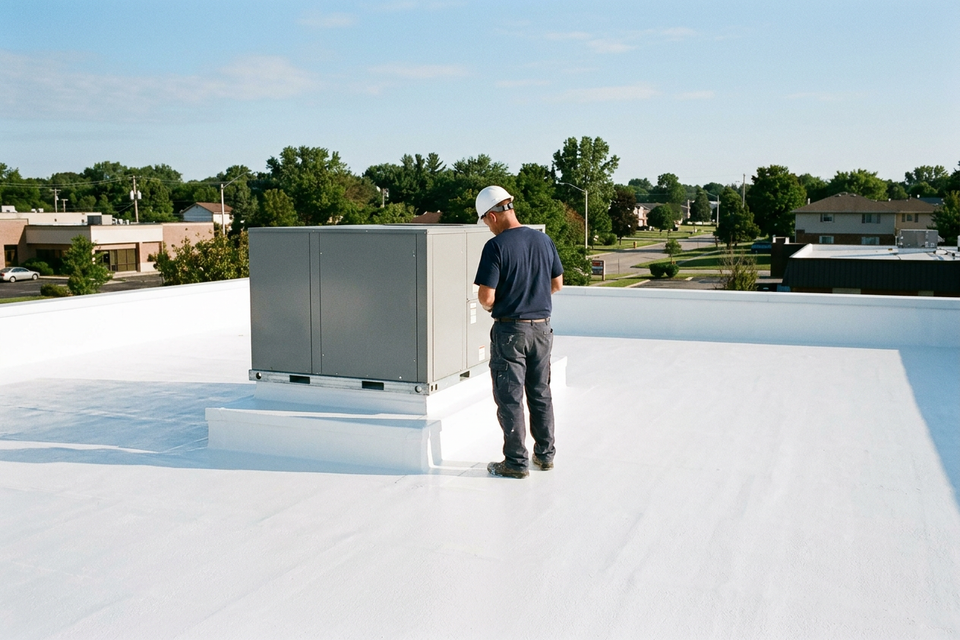
On paper, a cool roof now means three numbers rated by the Cool Roof Rating Council (CRRC): solar reflectance, thermal emittance, and the solar reflectance index (SRI) worked out from the two. Each comes as an initial value and a three-year-aged value, and the energy codes that set minimums write them as aged values. ENERGY STAR is no longer part of it: the U.S. Environmental Protection Agency ended its program for roof products on June 1, 2022.
So the question to put to a supplier is not whether a coating is a cool roof. It is what the CRRC listing for that product, in the color going on the roof, says after three years of weathering, and whether that clears the threshold the specification names. Which threshold applies to a building is for the designer and the code official.
The three numbers, in plain words
| Number | What it measures | Written as |
|---|---|---|
| Solar reflectance | The share of the sun’s energy a surface sends back rather than absorbs | A decimal from 0 to 1; a bright white sits high, a dark surface low |
| Thermal emittance | How readily a surface gives off the heat it has absorbed | A decimal from 0 to 1 |
| SRI | Reflectance and emittance worked into one index | A number; the higher it is, the cooler the surface in the sun |
Codes ask for reflectance and emittance together because a surface that reflects well but emits poorly holds on to the heat it does take in. Florida’s and California’s codes accept an SRI in place of the pair, so one number can stand for both; their minimums are in the code table below.
Initial and three-year-aged values
The initial value is measured on new material. The three-year-aged value is measured after the material has weathered for three years. A white surface collects dirt and weathers in service, so a number taken on new material says less about the roof a few years on. The codes write their minimums on the aged figure.
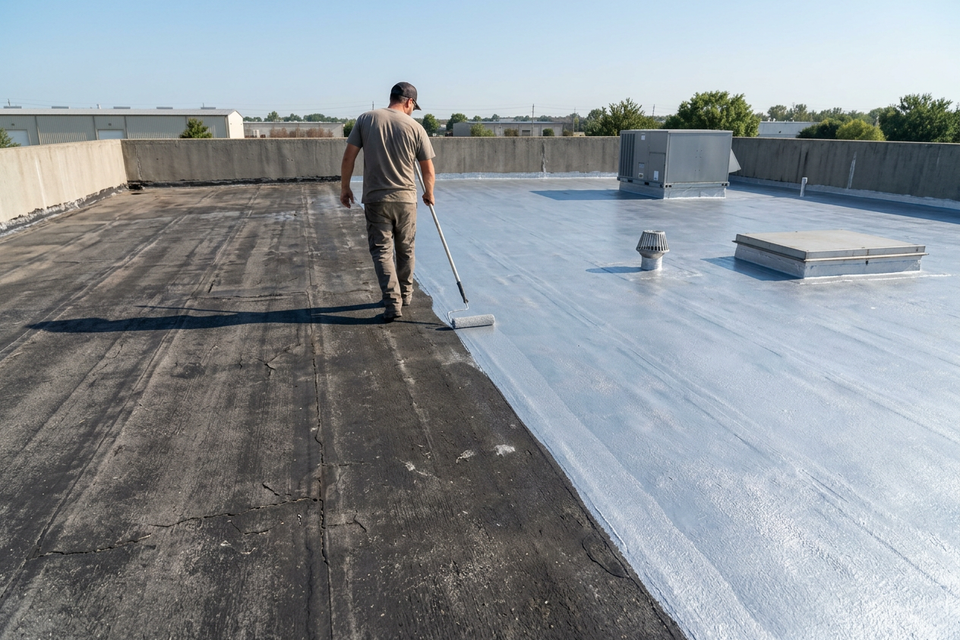
The trade describes the two common chemistries differently here. Silicone picks up dirt more than other coatings and loses reflectivity as it does; acrylic chalks and slowly loses film thickness. Either way, the aged figure is the one that belongs on a submittal. A reflectance figure in sales literature may be an initial value; the listing says which is which.
Who lists them, and how to look a product up
The CRRC runs the rating program and publishes the Rated Roof Products Directory on its website, coolroofs.org. It is the reference that replaced the EPA program for roofs, as the council’s notice of the sunset records: since June 1, 2022 no roofing product carries that certification. Older brochures and web pages still show the mark. Nothing sold for a roof today should, and a proposal that leans on it is out of date.
To look a product up:
- Find the product in the directory in the exact color on the submittal. Reflectance goes with color: a white and a light gray of the same coating are different surfaces.
- Record the aged solar reflectance, aged thermal emittance and aged SRI, with the listing itself.
- Compare them with the threshold the specification names.
- Keep a copy of the listing with the submittal.
If the product and color are not in the directory, they have no CRRC rating, whatever the literature says.
The codes that set minimums
Two state codes carry the numbers below. The designer and the code official decide what applies to a building, and nothing here is code advice.
| Code | Roofs it covers | Aged reflectance with emittance | Or SRI | Does a recoat bring it in? |
|---|---|---|---|---|
| Florida Building Code, Energy Conservation, 8th Edition (2023), Section C402.3 | Low-slope, directly above cooled space, Climate Zones 1 to 3 | 0.55 (0.63 in Zone 1A) with 0.75 | 64 (75 in Zone 1A) | Ask the building department |
| California Title 24, Part 6 (2022 and 2025) | Nonresidential low-slope, all climate zones | 0.63 with 0.75 | 75 | Yes, once more than 50 percent of the roof or 2,000 sq ft, whichever is less, is recoated |
Florida. Section C402.3 sets out the two options in Table C402.3, both as three-year-aged values. Areas under solar panels and rooftop equipment, shaded areas and heavy ballast are among the exceptions. The section takes aged values measured to ASTM C1549, ASTM E903 or ASTM E1918, or rated under the CRRC-1 program. Which counties sit in Climate Zone 1A, and whether recoating an existing roof brings the section into play at all, are questions for the designer and the building department. Restoring a roof in Florida covers the rest of what the state asks before you coat.
California. The California Energy Commission’s nonresidential cool roof page states the thresholds for nonresidential low-slope roofs in every climate zone, and the alteration trigger in the table counts roof area replaced or recovered as well as recoated. Only CRRC-rated values count.
Elsewhere. ASHRAE 90.1-2022 sets minimum three-year-aged solar reflectance and thermal emittance for roofs, and the 2024 International Energy Conservation Code has its own low-slope roof provisions. Which edition a state or city has adopted, and with what amendments, varies; the code official for the address says which one governs.
What a rating does not tell you
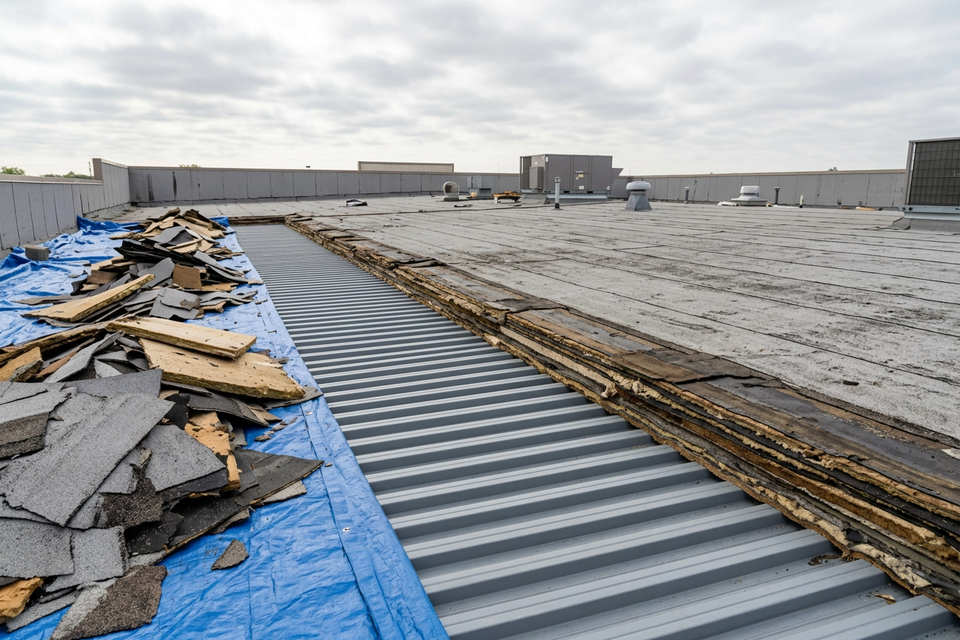
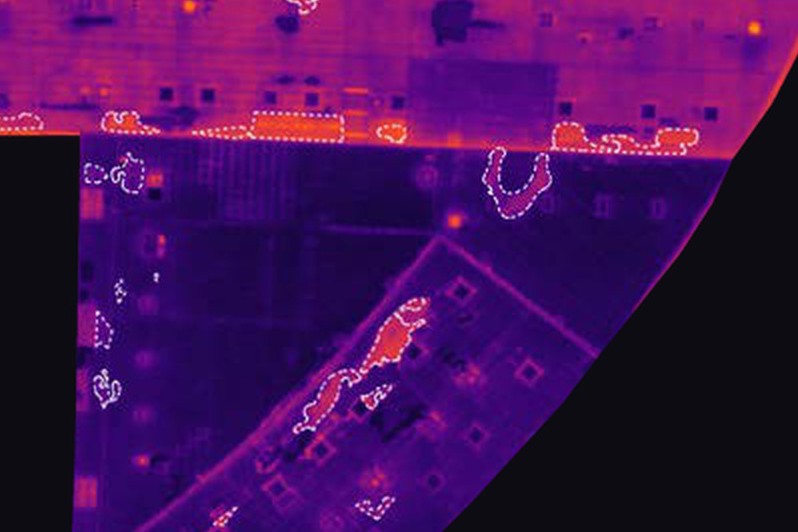
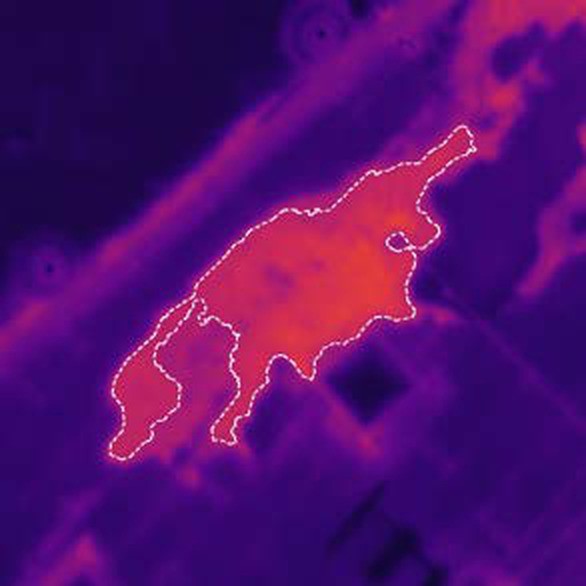
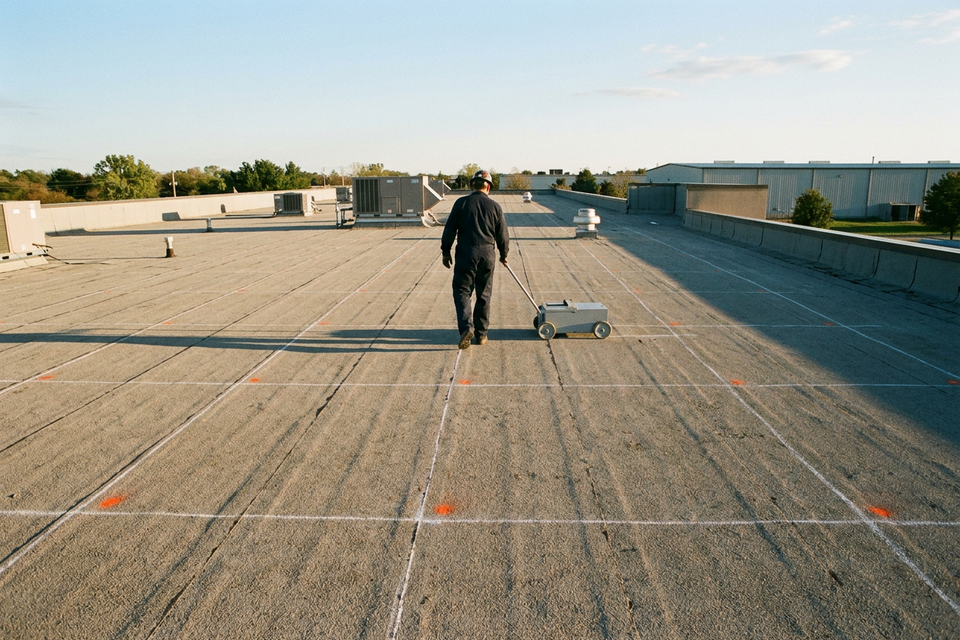
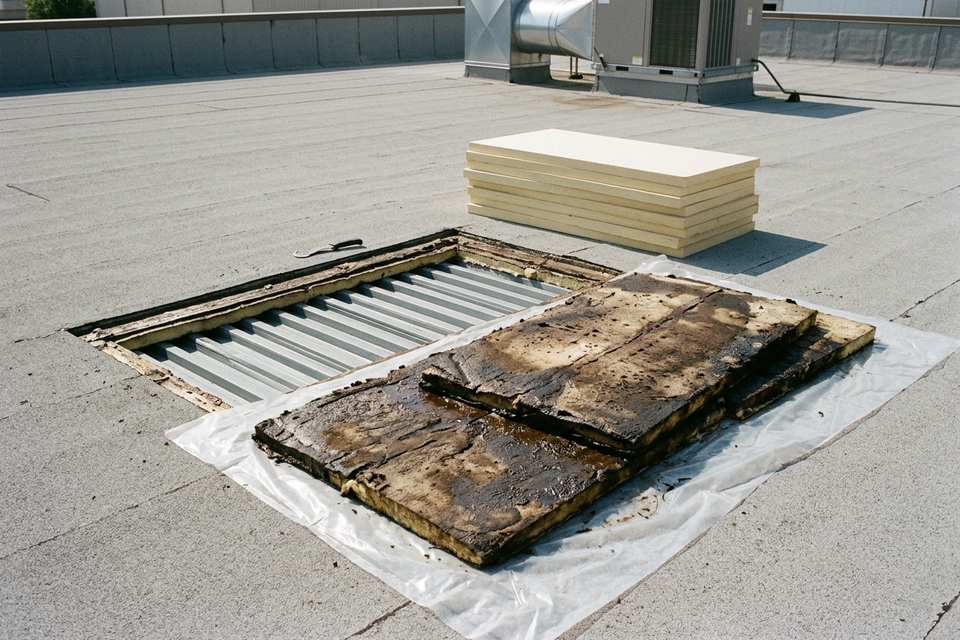
Whether the roof is a candidate. A rating describes the surface going on, not what is under it. Coating makers, Sherwin-Williams included, require wet insulation to be found and replaced before a coating goes on. A white coating also makes later thermal work harder, one more reason to survey before coating; how the scan works describes the drone moisture scan we arrange.
How long it lasts. Applied over a sound, dry roof, a restoration system adds 10 to 15 years of service life. The rating has no bearing on whether the roof is sound or dry. Looking after a coated roof covers the upkeep a white surface needs once it is on.
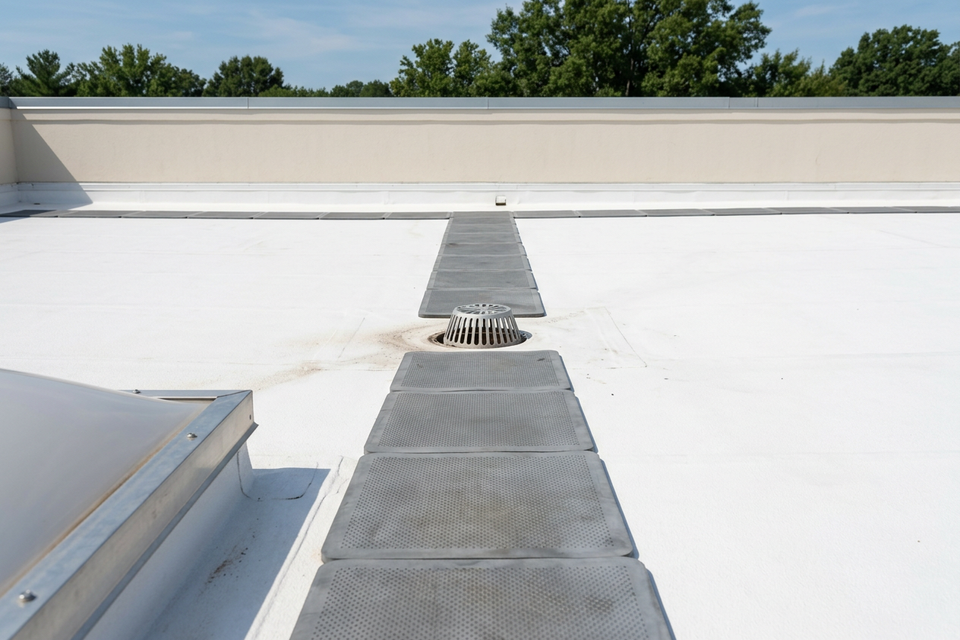
What it is worth in dollars. White finish coats reflect sunlight and keep the roof surface cooler. What that means for a particular building depends on the building, and we do not put a figure on it. In July 2020 the Federal Trade Commission brought cases against four coating sellers over energy-savings and R-value claims it said were unsubstantiated. A supplier who answers a question about ratings with a savings percentage is answering a different question.
Which chemistry to use. Reflectance does not choose between acrylic and silicone. Whether water stands on the roof comes first: acrylic can lose adhesion under prolonged ponding, and silicone is used where the roof is often wet or ponds. Both come in white, and silicone vs acrylic roof coatings sets out the trade.
Who decides, and what to ask a supplier for
- The designer (the architect or engineer of record) decides which code section applies and writes the threshold into the specification.
- The building department decides how the code reads at the address, whether a recoat brings the cool-roof section into play, and what the permit requires.
- The manufacturer publishes the data sheet and can say which of its products and colors are listed.
- The contractor puts down the specified product, in the specified color, at the film the data sheet names.
Ask any supplier, us included, for three things:
- The CRRC listing for the exact product and color, with its aged solar reflectance, thermal emittance and SRI.
- The current data sheet for that product.
- The part number and color that will ship, so they can be matched to the listing.
Then check the listing against the threshold before the material is ordered. A product and color with no listing have no CRRC rating; whether aged values from another source will do is for the designer and the code official.
We do not state CRRC values for the coatings we sell. The white finish coats we carry from the Sherwin-Williams Uniflex line are the premium acrylic finish coat KST041300, the commercial-grade acrylic KST041500, Silicone44 KST044300 (white) and the solvent-based elastomeric KST042100, all at Elastomeric & silicone finish coats. Where a product page’s spec table shows a figure, it is the maker’s statement, not a CRRC rating. For a rated value, ask for the listing for the product and color you are specifying, and check it in the directory yourself.
If you know the roof type, the systems pages show the build-up each one takes, finish coat included. Then send the roof area, the substrate, and the product and color your specification names through the quote form. We price the materials for that roof, name what is not included, and reply with the price, freight to the site and a ship date.
Last updated 2026-10-05.