Restoring a roof in Florida: what the code asks before you coat
Florida’s 25 percent rule is in the Florida Building Code, 8th Edition (2023): no more than 25 percent of a roof, or of a roof section, may be repaired, replaced or recovered in any 12-month period unless the covering on the whole roof or section is replaced or recovered to the current code. Since 2022 a state statute adds an exception: where the roof was built, repaired or replaced under the 2007 code or a later edition, only the part being worked on has to meet the code in effect.
The rule does not say where a coating fits. The code’s reroofing text names one coating case, a protective coating over an existing spray polyurethane foam roof, which may go on without tear-off; in Miami-Dade and Broward counties the code lists applying coatings as roofing maintenance, which still needs a permit there. How the rest applies to a coating is the local building department’s reading for the address, and the roofing contractor pulls the permit. This guide is reference, not code advice.
The 25 percent rule, and the 2022 exception
The rule sits in Section 1511.1.1 of the code’s Building volume, Section 706.1.1 of its Existing Building volume and, in the High-Velocity Hurricane Zone, Section 1521.4. A roof section is the code’s division of a roof by existing joints, parapet walls, flashing, a difference of elevation, roof type or legal description (Section 1502), so roofs at three levels may be three sections.
Senate Bill 4-D of 2022 wrote the exception into Section 553.844(5) of the Florida Statutes, and the code carries it in the same sections. It covers a roofing system or section built, repaired or replaced in compliance with the 2007 Florida Building Code or a later edition, where 25 percent or more of it is being repaired, replaced or recovered, and local governments may not amend it. A law firm’s note and Florida’s roofing trade association both give March 1, 2009 as the date the 2007 edition took effect, so on their reading the exception reaches roofs permitted from then on.
Whether a coating counts as a repair, a recover or neither, and which edition a roof was permitted under, are the building department’s calls for the address; the contractor pulls the permit.
When the code requires a tear-off
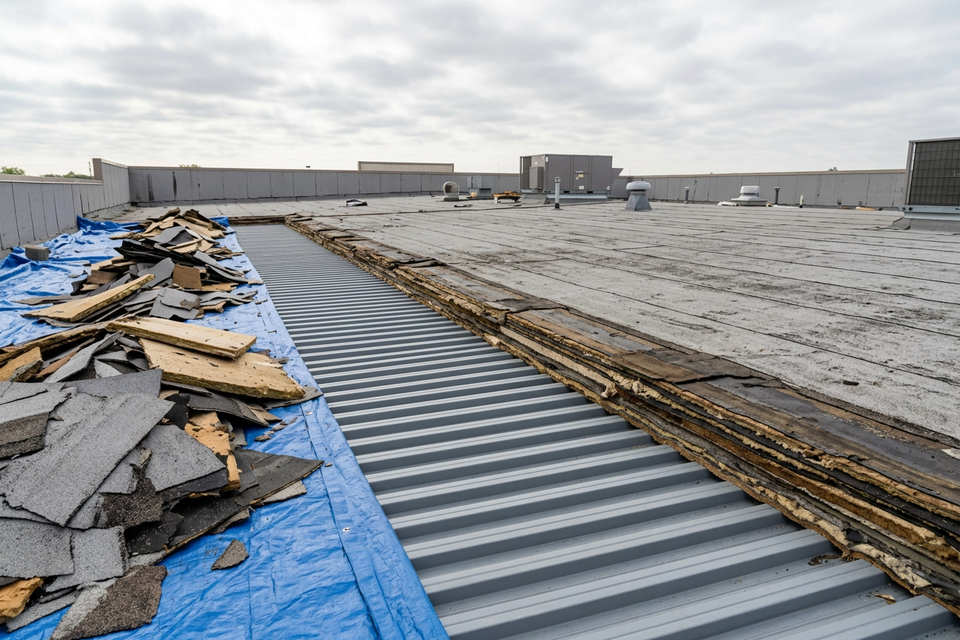
Section 1511.3 of the Building volume, and Section 706.3 of the Existing Building volume, require every existing layer to come off down to the deck where any of these is true:
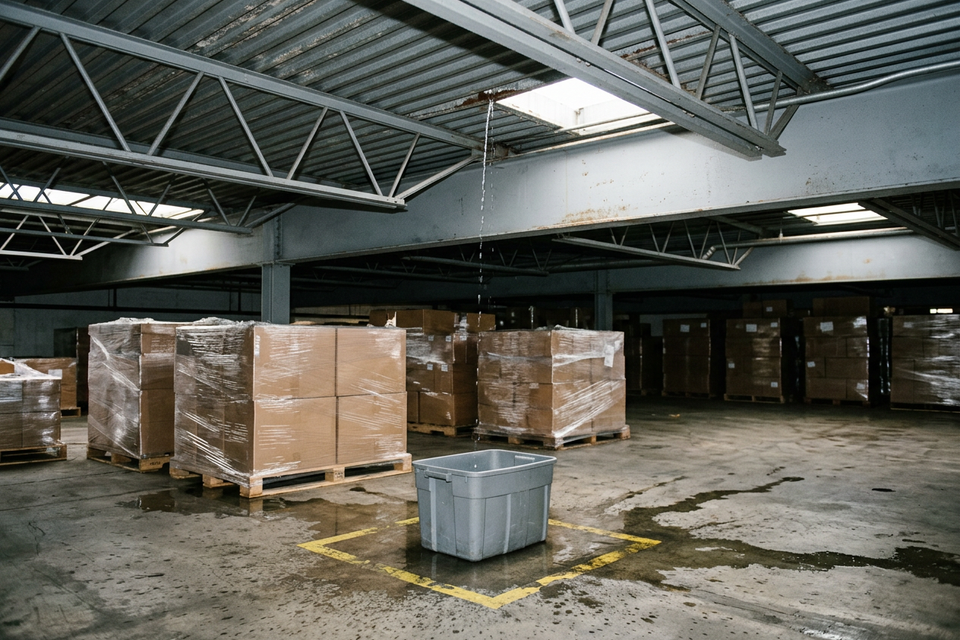
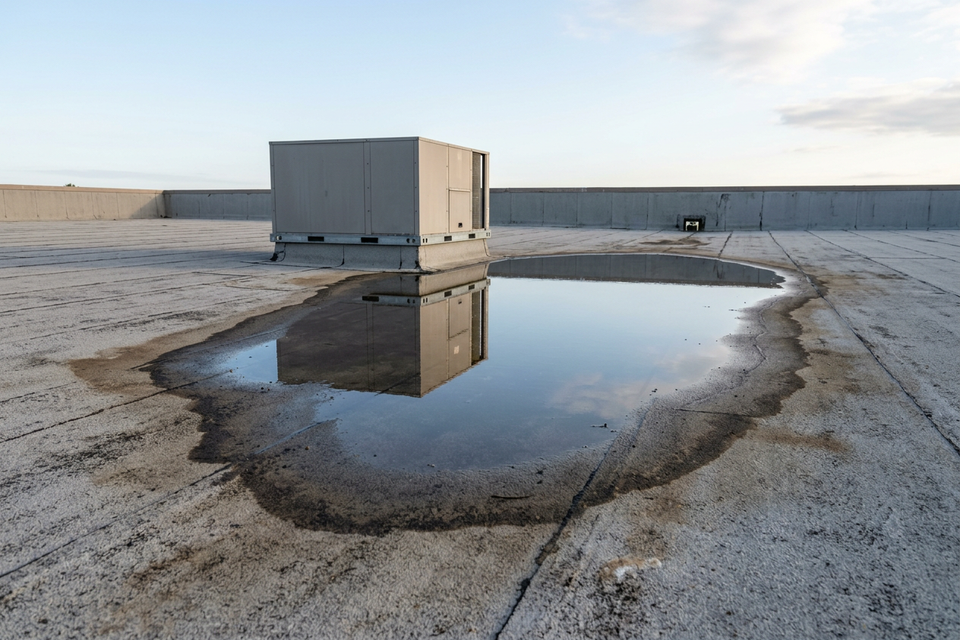
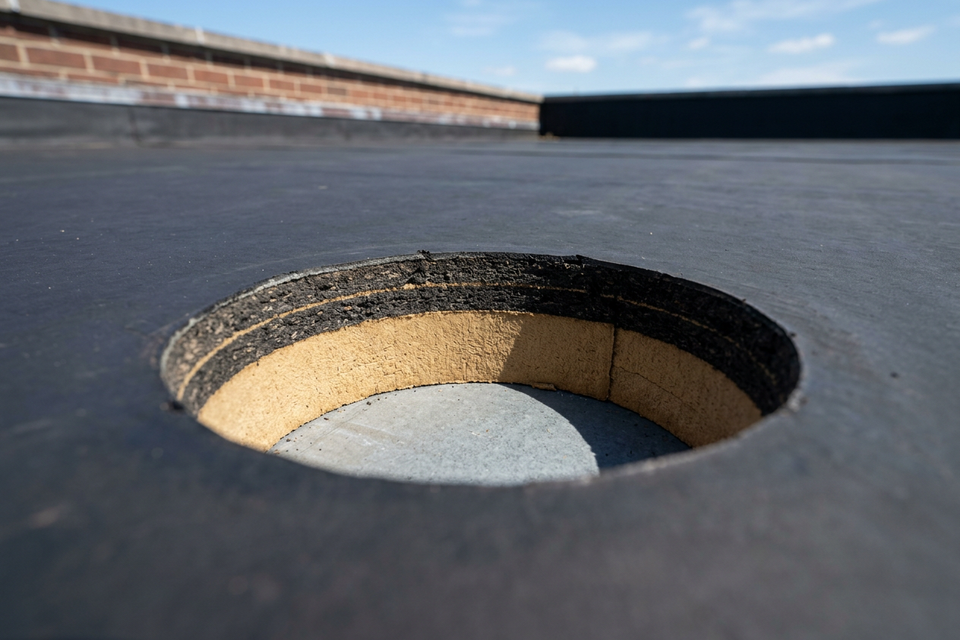
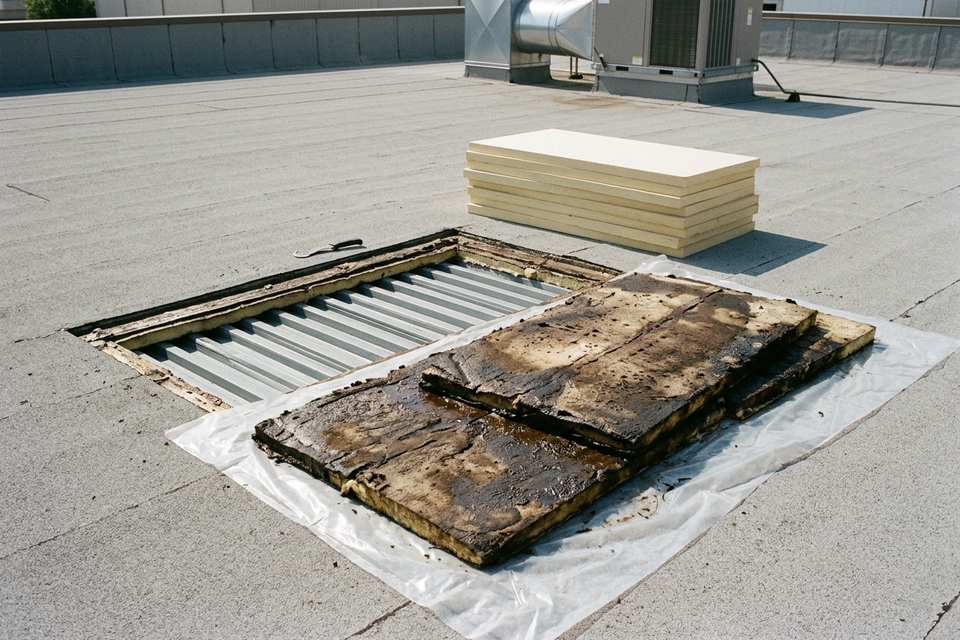
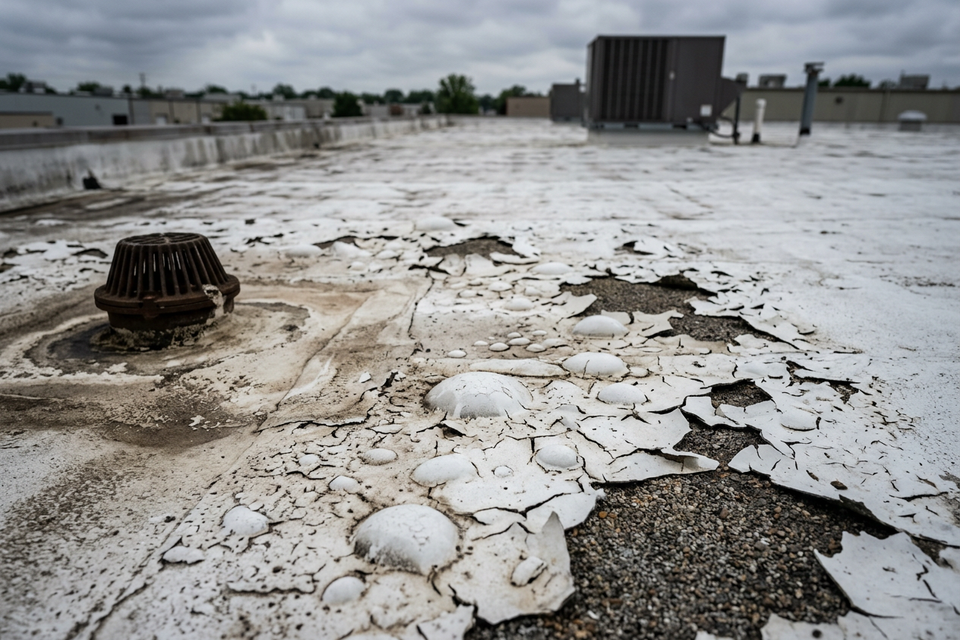
- The existing roof is water-soaked, or too deteriorated to serve as a base.
- The existing covering is wood shake, slate, clay, cement or asbestos-cement tile.
- The roof already has two or more applications of any type of roof covering.
- Blisters exist and have not been cut open and secured.
- The existing covering is to carry the new roof’s attachment and the securement provisions cannot be met.
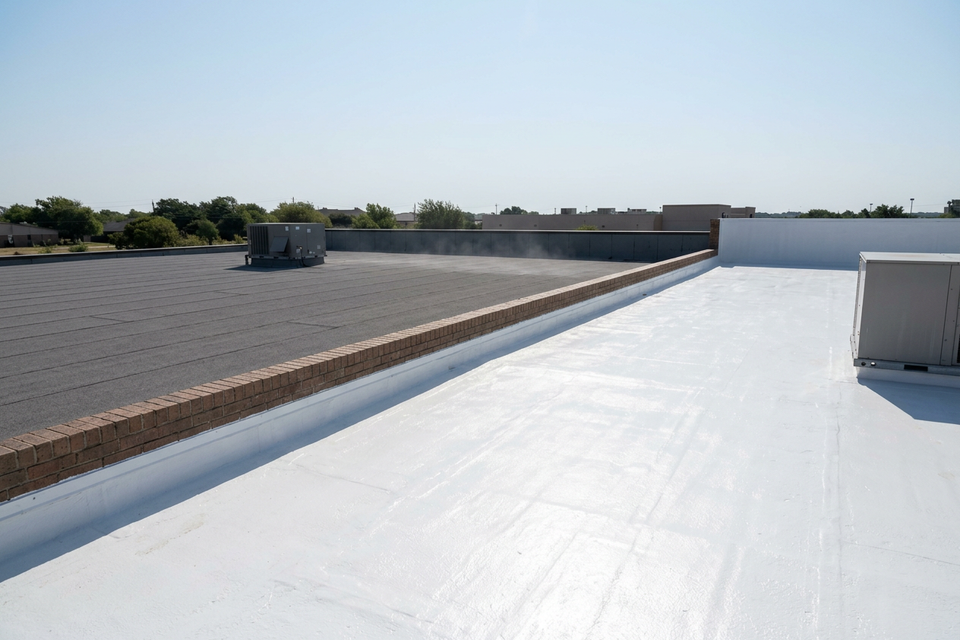
Among the exceptions is one for coatings: a new protective coating over an existing spray polyurethane foam roof is permitted without tear-off (see spray foam roofs). The International Building Code, which Florida’s adopts with amendments, lists more roof types a coating may go over; Florida’s text drops that list. Whether an existing coating counts toward condition 3 is a matter of reading: Florida’s roofing trade association reads a maintenance coating as not a roof covering, but the building department’s reading is the one that applies.
Condition 1 is the one most restorations turn on. Coating makers, Sherwin-Williams included, require wet insulation to be found and replaced before a coating goes on. Wet roof insulation explains why it comes out first, and coat it, cover it or tear it off sets the three paths side by side. The building department settles conditions 1 and 3 for the address; the contractor pulls the permit.
Miami-Dade and Broward: the High-Velocity Hurricane Zone
The High-Velocity Hurricane Zone is Miami-Dade and Broward counties, where Chapter 15 adds its own sections. Three bear on a coating.
What the work is called. Section 1513 defines roofing maintenance as the work of extending the longevity of a roofing system through preventative care, and lists applying coatings among its examples.
Maintenance still needs a permit. Section 1512.3 requires a permit for all work in connection with the application, repair or maintenance of any roofing component or assembly, except as Section 105 allows, on the HVHZ Uniform Roofing Permit Application executed by a licensed contractor.
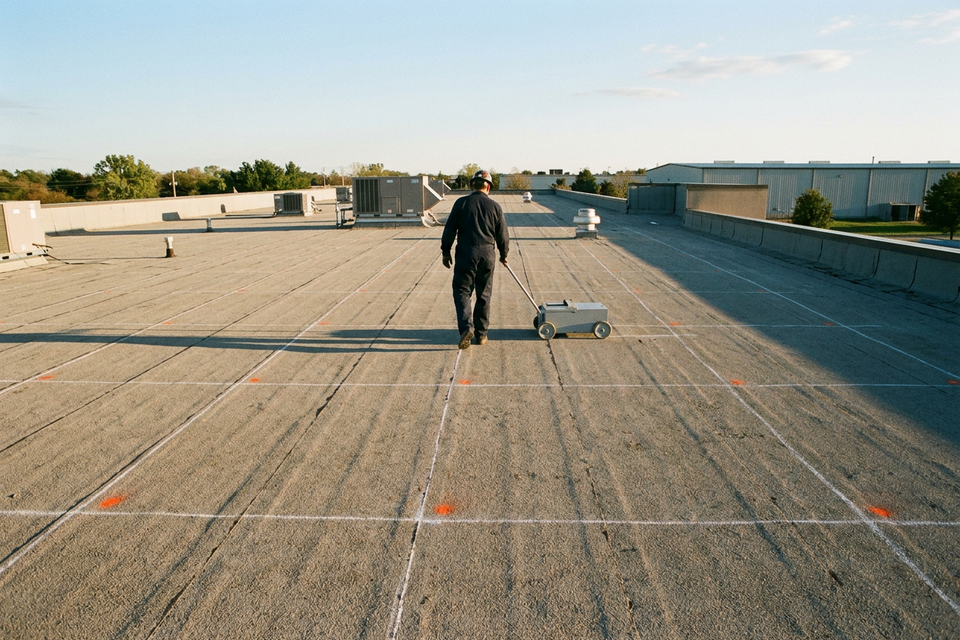
A moisture limit for a recover. Section 1521.12 says an existing assembly to be covered by a new roofing system may not exceed 5 percent moisture by weight in the membrane and 8 percent in commercially manufactured rigid board insulation, verified by a moisture survey under TAS 126 and filed with the permit application. TAS 126 points an infrared survey to ASTM C1153, and a percent by weight comes from cores weighed wet and then dry. Whether the section reaches a coating classed as maintenance is the building department’s reading.
| The question | Statewide | Miami-Dade and Broward |
|---|---|---|
| Where the text names coatings | over existing spray foam, no tear-off (1511.3) | applying coatings is roofing maintenance (1513) |
| Permit for a coating | the building department’s call | required unless Section 105 exempts it (1512.3) |
| Moisture before a recover | no recover over a water-soaked roof (1511.3) | 5 percent membrane, 8 percent rigid board insulation, by weight (1521.12) |
| Survey for a recover | the building department’s call | TAS 126, filed with the permit application (1521.12) |
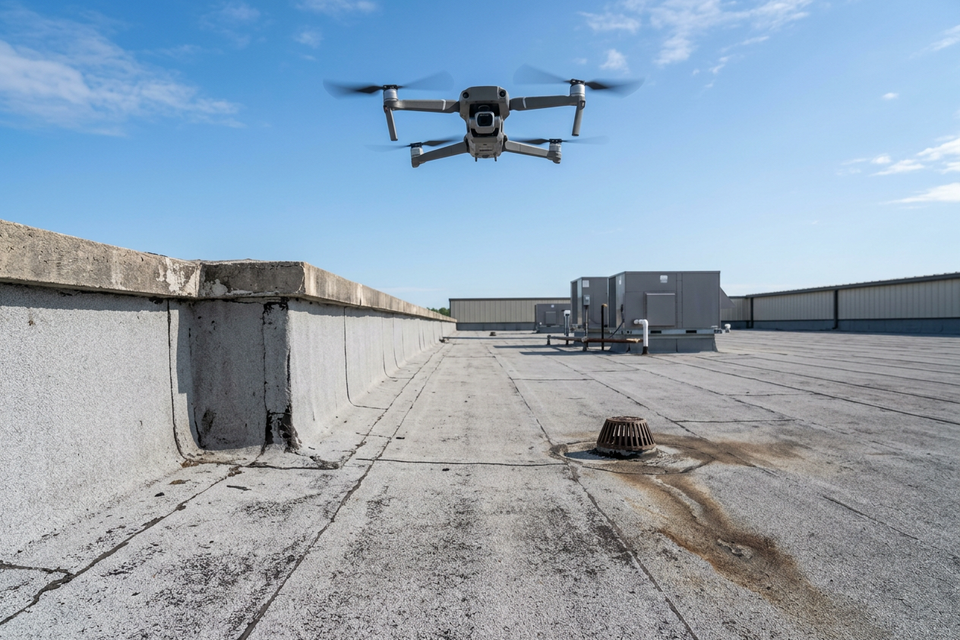
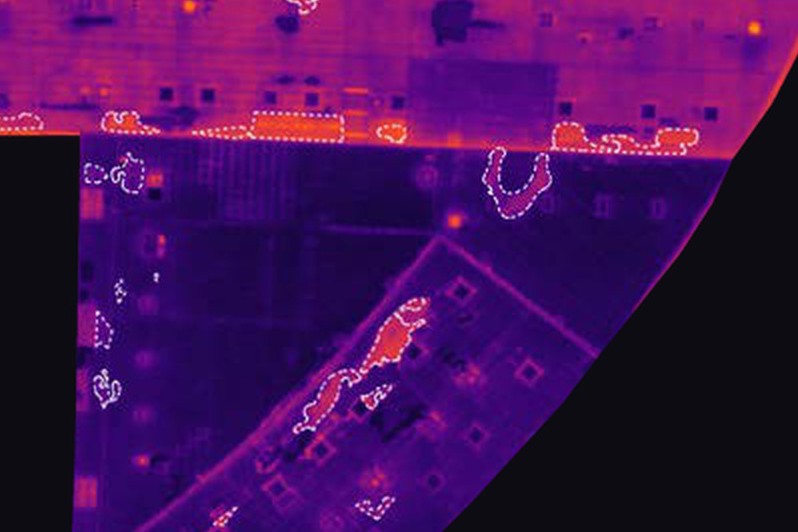
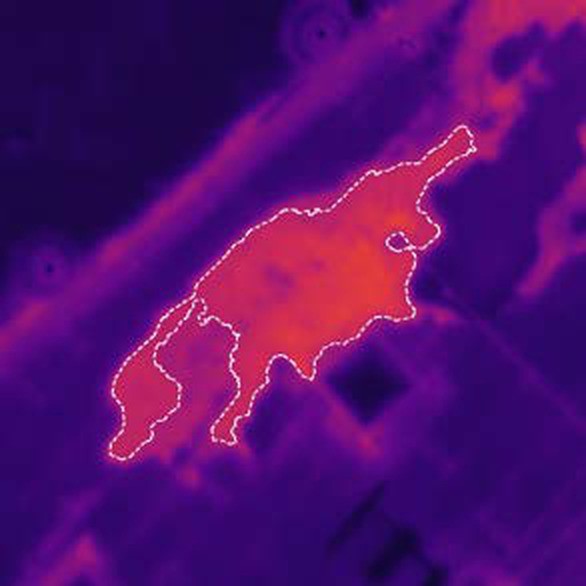
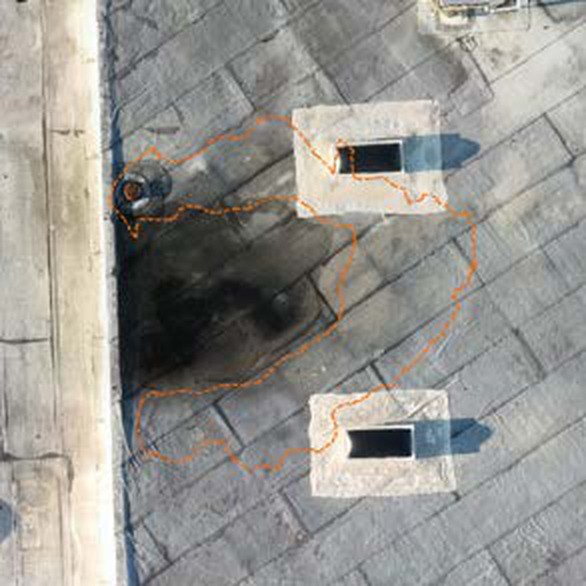
Our drone moisture scan is an infrared survey. On an evening after a sunny day, a drone with a thermal camera flies over the roof; wet insulation holds the day’s heat longer than dry insulation and shows up warmer, and you get a map with any areas that look wet outlined and measured in square feet, along with video from the flight and a written assessment of what the scan found; the flagged areas are then confirmed with small core samples. A white coating makes later thermal work harder, one more reason to scan before coating. Whether a scan and its cores are accepted as the TAS 126 survey for a permit, and who must sign it, is for the building department to say before the flight; the licensed contractor files the survey.
Who may apply a coating in Florida
Section 489.105(3)(e) of the Florida Statutes defines a roofing contractor’s scope to include installing, maintaining, repairing, altering, extending or designing all kinds of roofing and coating. The exception is coating not represented to do what the statute lists, which includes protecting the roof, repairing it, stopping leaks and extending its life. A restoration system is sold on exactly those terms, so on the statute’s wording applying one is roofing-contractor work.
We supply the materials and never apply them. We work with a network of installers, roofing contractors who apply these systems, and can introduce you to one anywhere in the US, who looks at the roof and says whether it is a good candidate for restoration; choosing a contractor covers what to check. Which license the permit needs is the building department’s call; the contractor pulls the permit.
The energy code’s cool-roof thresholds
Section C402.3 of the Florida Building Code, Energy Conservation covers low-sloped roofs directly above cooled, conditioned space in Climate Zones 1, 2 and 3. Table C402.3 gives two options: a three-year-aged solar reflectance of 0.55 (0.63 in Climate Zone 1A) with a three-year-aged thermal emittance of 0.75, or a three-year-aged solar reflectance index of 64 (75 in Climate Zone 1A). The aged values count, not a product’s initial figures; cool roof ratings explains them. Which counties sit in Climate Zone 1A, and whether recoating an existing roof brings the section into play, are the building department’s reading.
The 9th Edition, and the dry season
Florida’s roofing trade association reports that the 9th Edition (2026) of the Florida Building Code takes effect on December 31, 2026, and that its reroofing changes add a recover exception where two coverings exist and the upper one, or both, is removed down to an adequate substrate. Section numbers here are the 8th Edition’s; the building department says which edition a permit is reviewed under.
Florida’s dry season, December to April, is the easiest time to do the work. Each coat needs the air temperature, humidity and dry surface its data sheet names, and the scan needs a sunny day followed by a clear, dry, calm evening. When to coat a roof has the detail; the contractor schedules around the conditions and the permit.
Who decides, and what to ask
- The local building department decides how the code reads for the address and what the permit requires.
- The roofing contractor pulls the permit, files any survey it needs, and owns the means and methods.
- The building’s engineer decides anything structural, including what the deck carries.
Before anyone prices the job, have the contractor ask the building department which edition the roof was permitted under; how many coverings it carries and whether an existing coating counts as one; whether the planned coating is maintenance, a repair or a recover; and, in Miami-Dade or Broward, what moisture survey the permit needs and who must sign it.
The water-soaked test and the moisture limit both start with what is under the membrane. The restore-or-replace tool sorts a survey’s findings on the deck, insulation, membrane and drainage. Request a moisture scan with the building’s address; we arrange scans for commercial low-slope roofs anywhere in the US, Florida included, and nothing about the roof has to be decided until you have seen the map.
Last updated 2026-10-05.