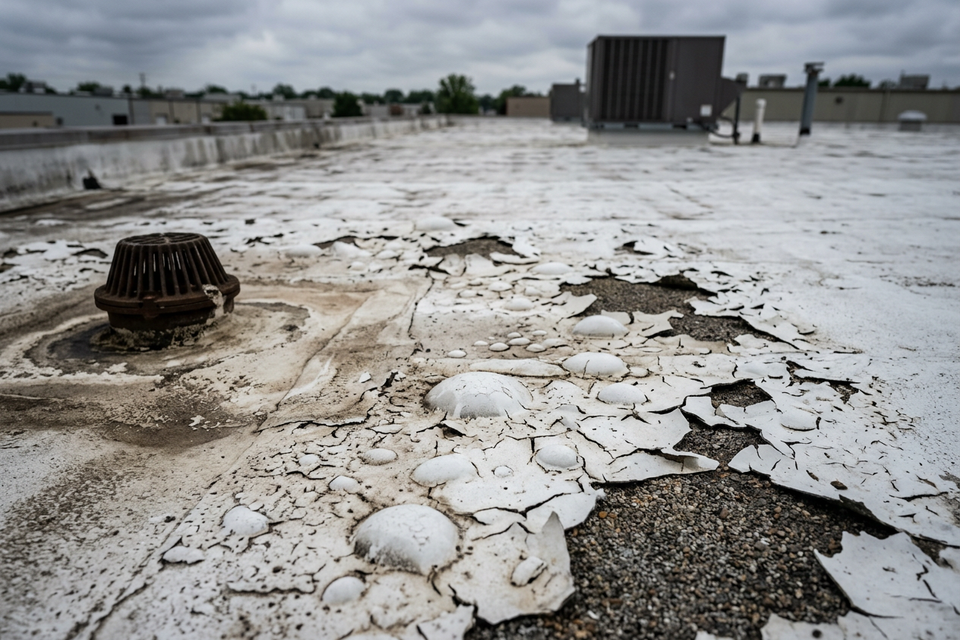
Seams, fasteners and flashings: where restoration is won or lost
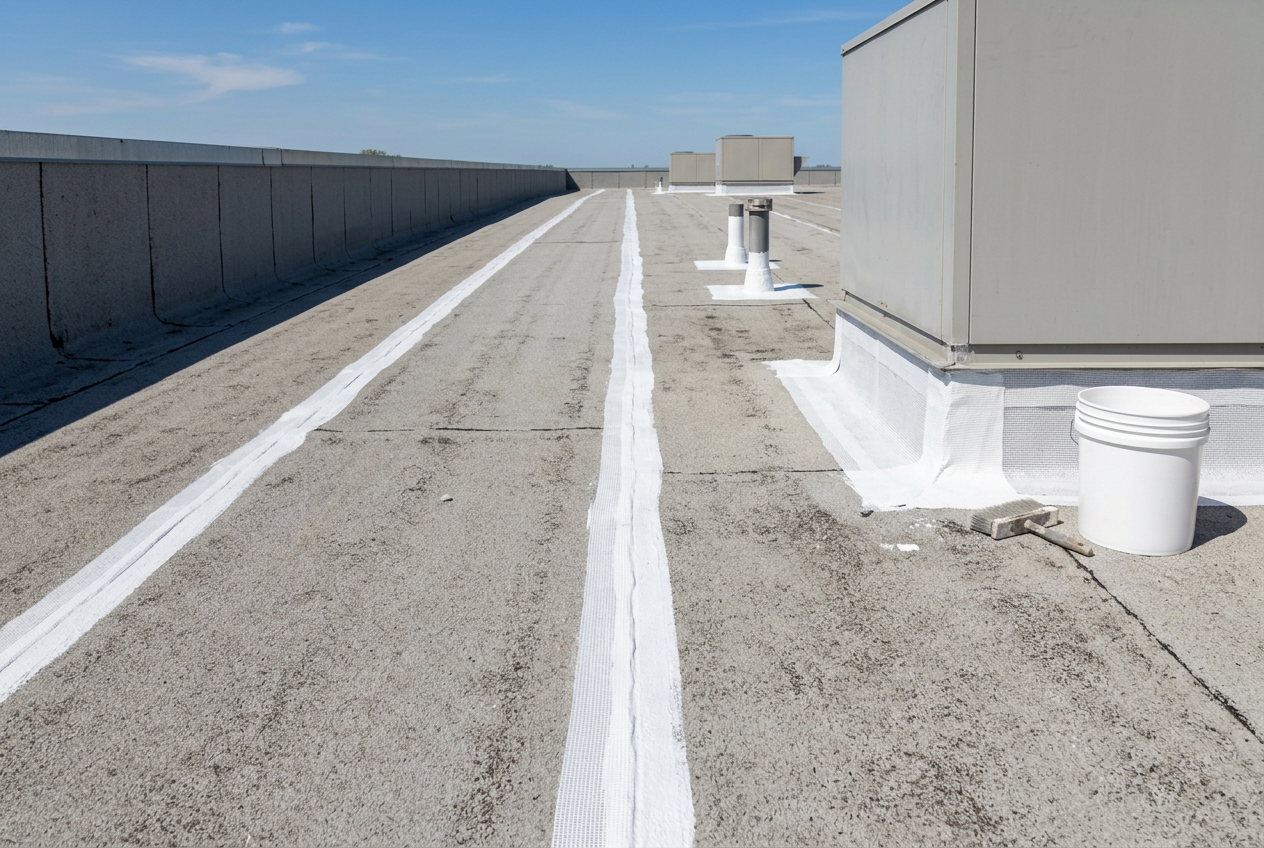
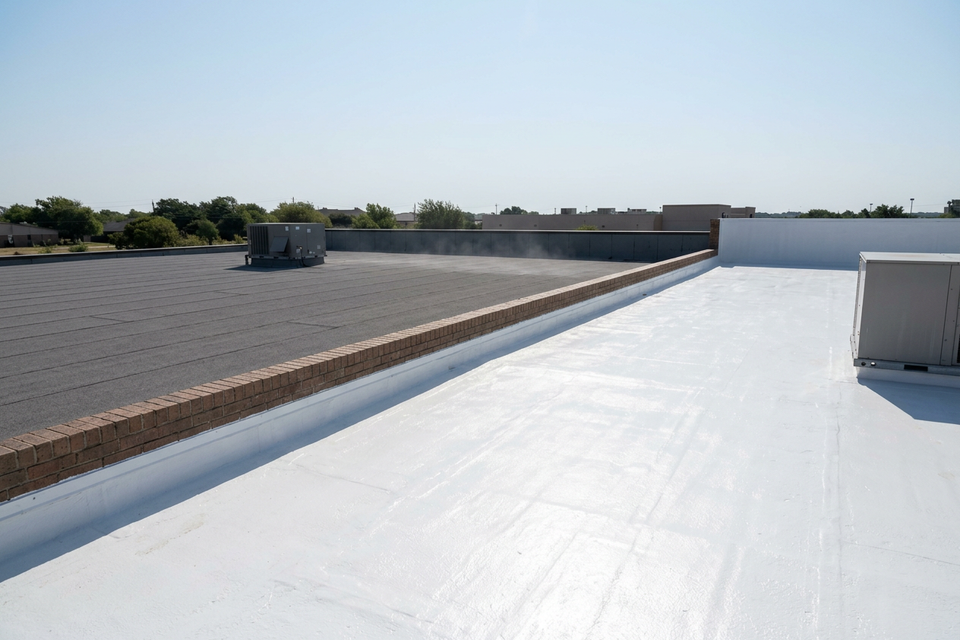
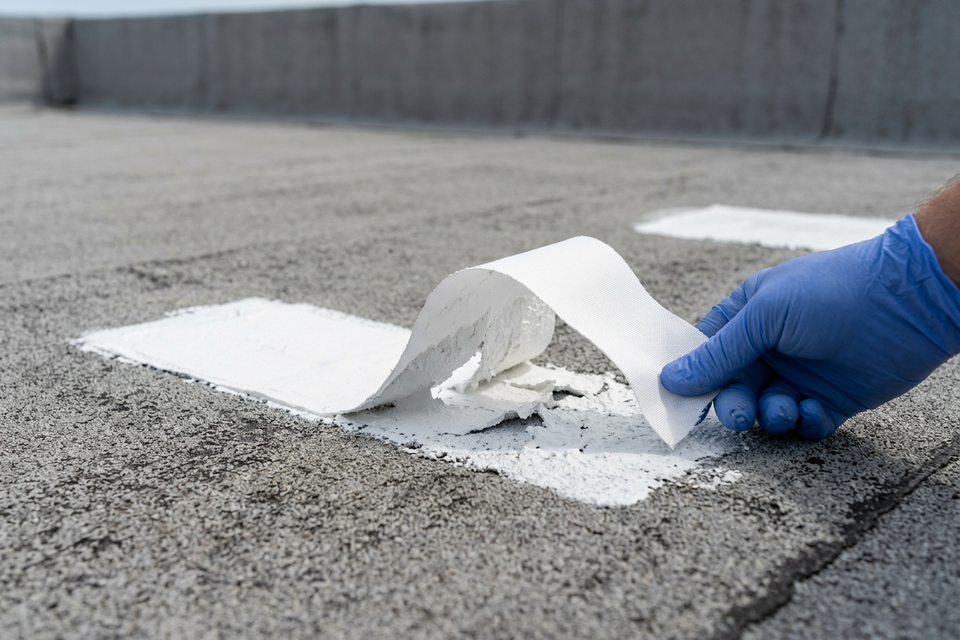
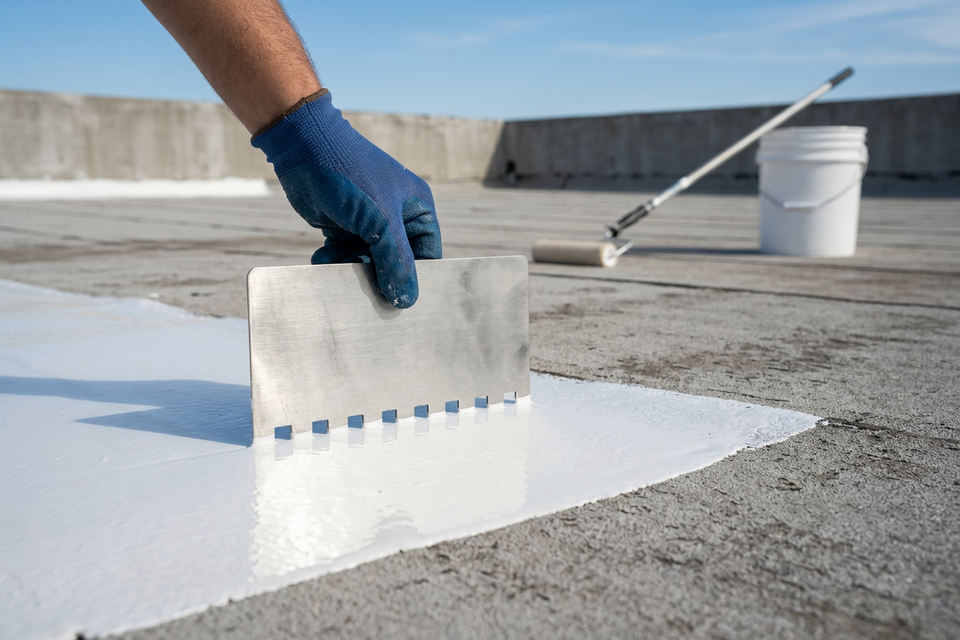
Every seam, lap, fastener row, flashing and penetration on a roof being restored is reinforced before the field coats go on, and the roof type decides with what. On metal it is self-adhering butyl seam tape, laid dry and coated over. On EPDM, TPO and PVC it is fleece-backed MS hybrid bonding tape, which needs no coat over it; on Hypalon, butyl seam tape coated over the same day. On smooth built-up, modified bitumen and cap sheet roofs it is polyester fabric bedded in a wet coat and coated over: the three-course. Cartridge sealants close the joints around penetrations where the build-up calls for them. Under Silicone44 the details change: metal laps are striped with the silicone itself, and single-ply and asphaltic seams are sealed with black MS hybrid sealant.
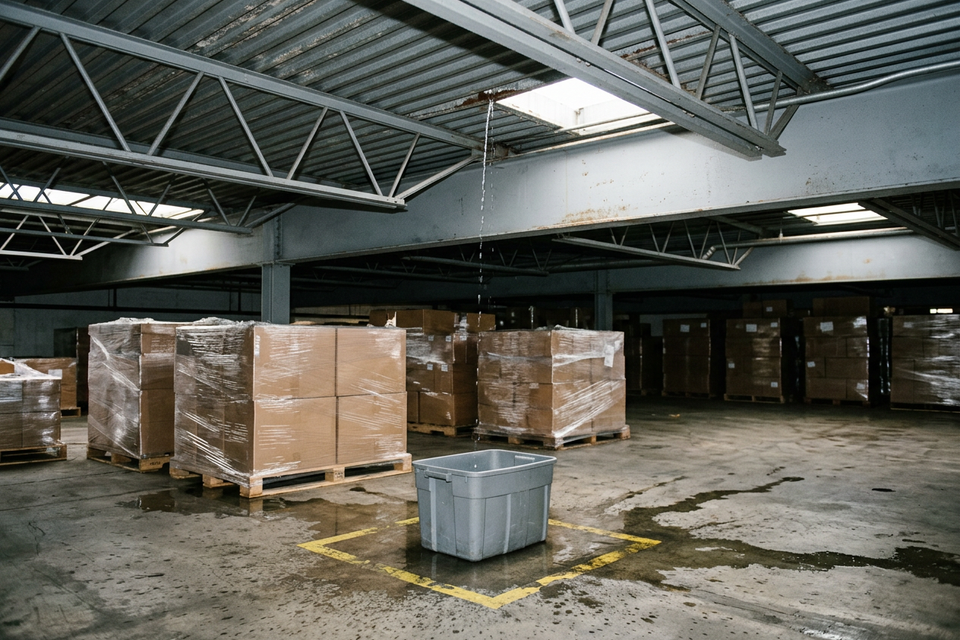
The field coats are gallons across open roof. The details are where water crosses a joint and where a restoration holds or fails, and they are the line most often missing from a material list, so count them at survey.
Details first, then the field
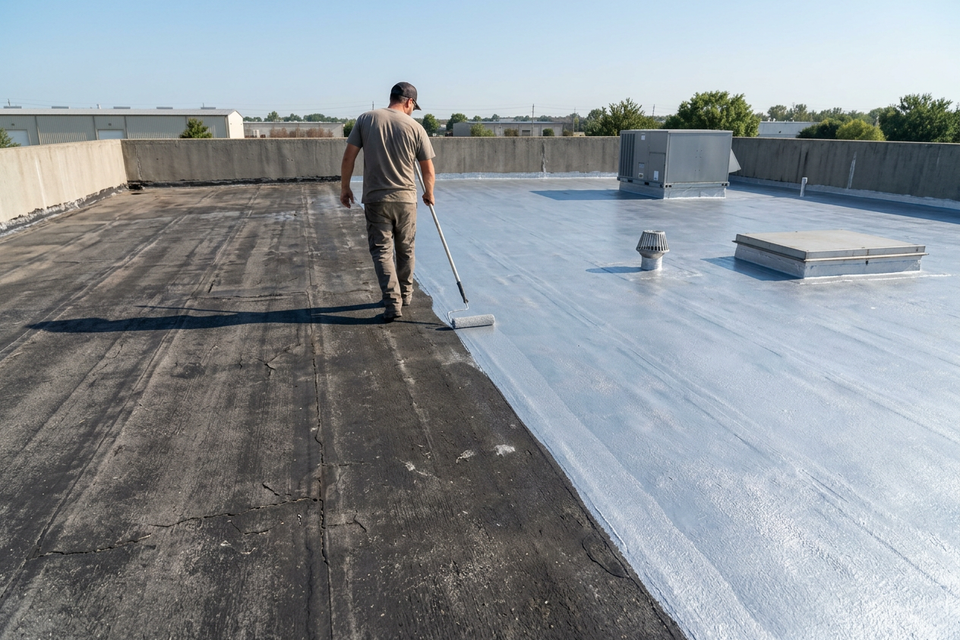
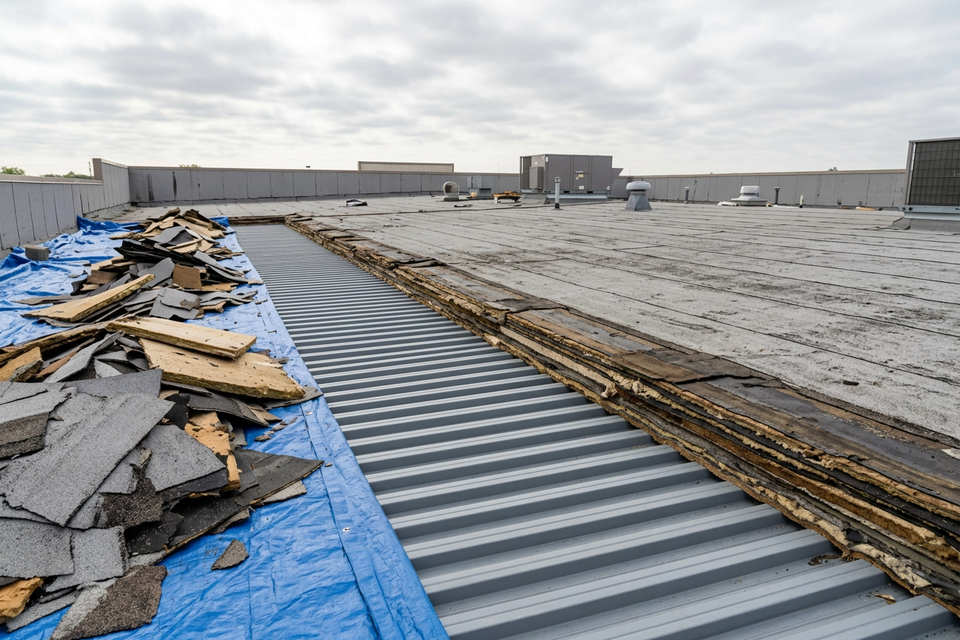
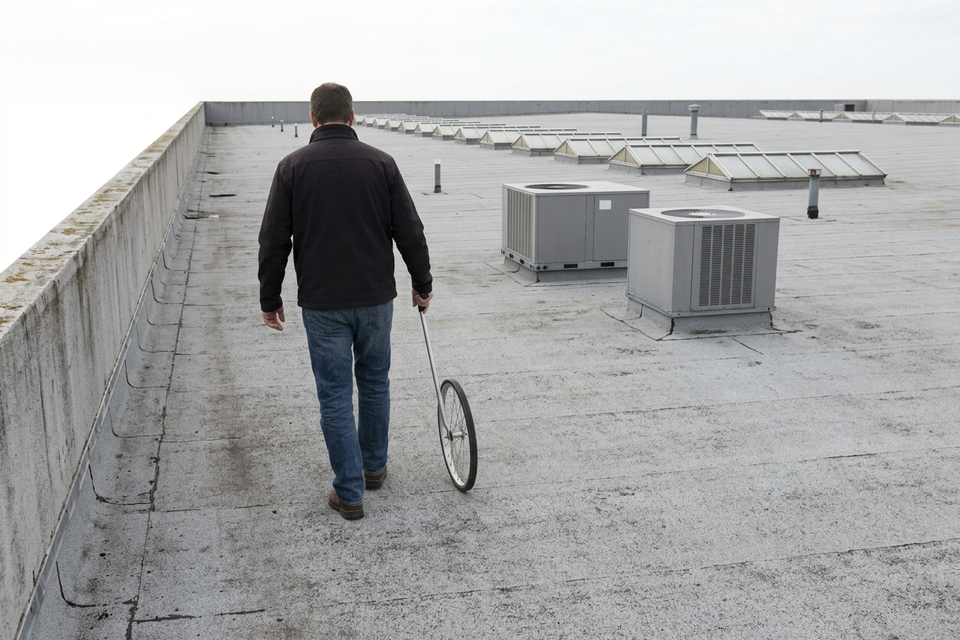
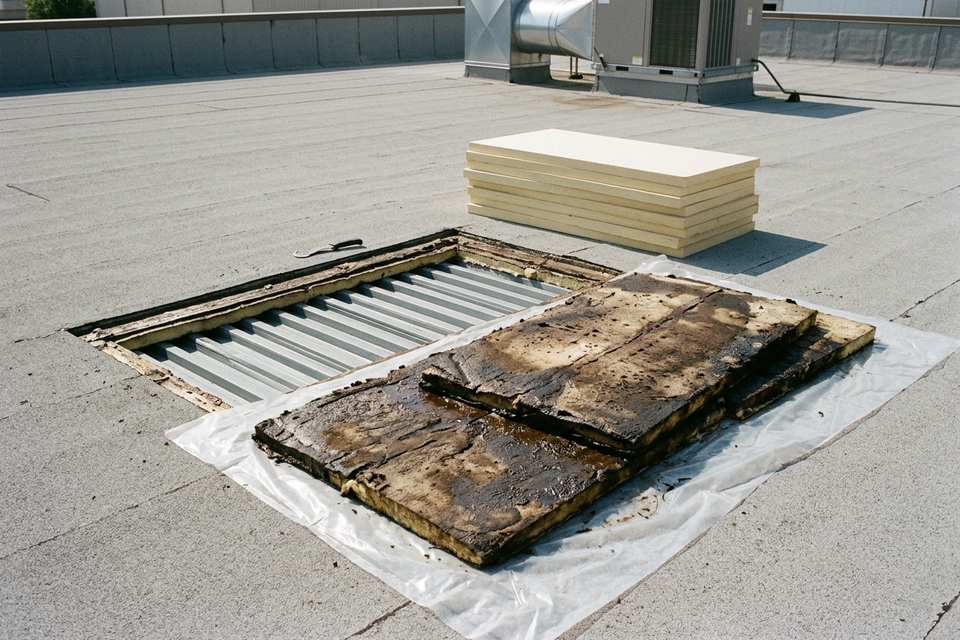
The order of work is the same on every roof type. Any wet insulation the survey found and the cores confirmed is cut out and replaced; the roof is cleaned and repaired; low spots at drains, in valleys and along parapets are built up, with Slope Builder KST0SLPBD under an acrylic system; the substrate is primed where the system calls for it. Then the details, and only then the field coats.
Details go first because the field coats cover them; a seam skipped until the finish is on becomes a repair on a finished roof. Patch core cuts the day they are made: on an asphaltic roof, wet-dry roof cement KST058600 takes that repair wet or dry.
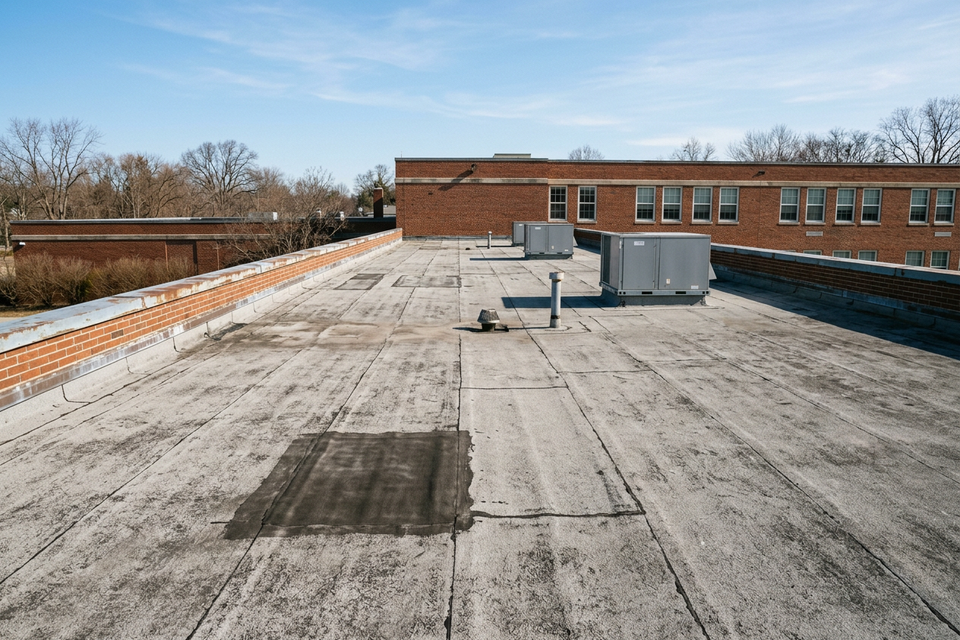
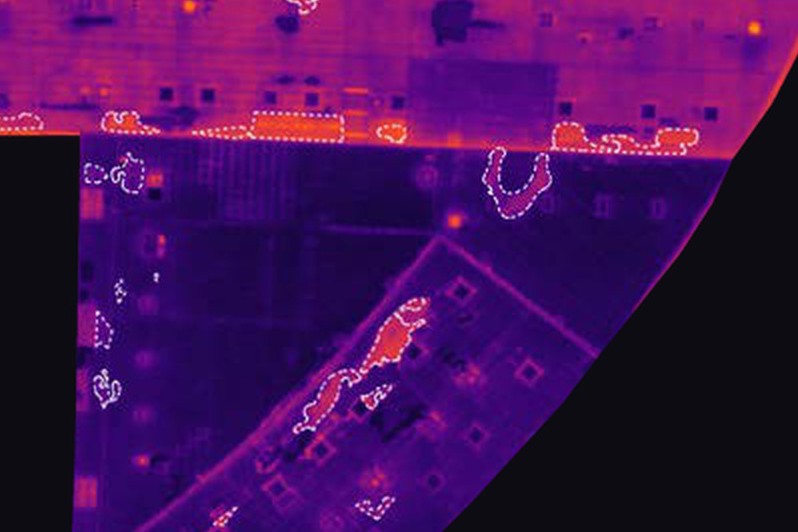
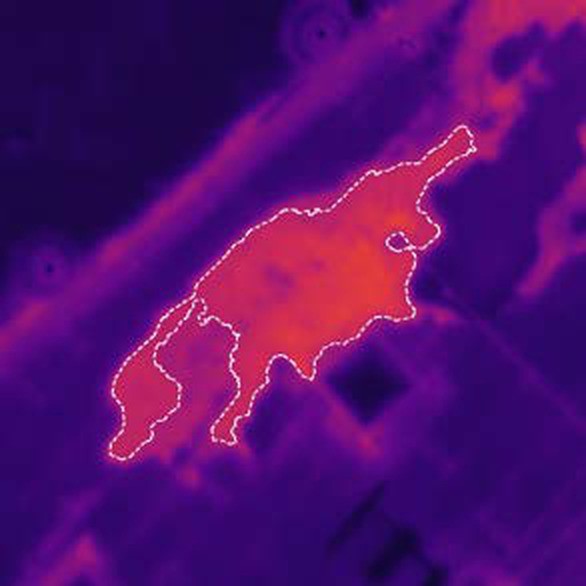
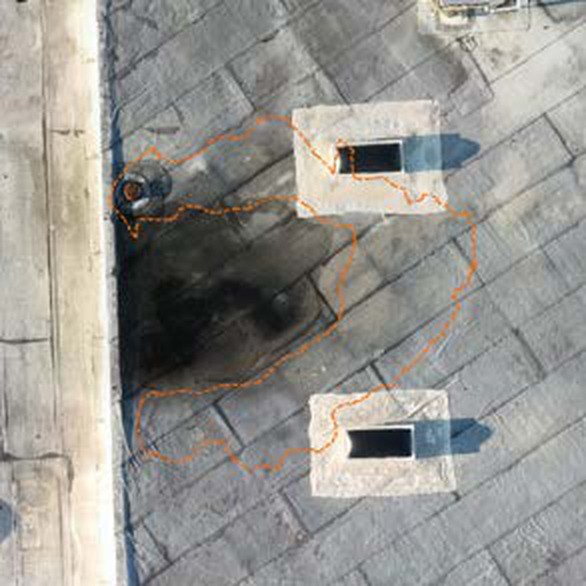
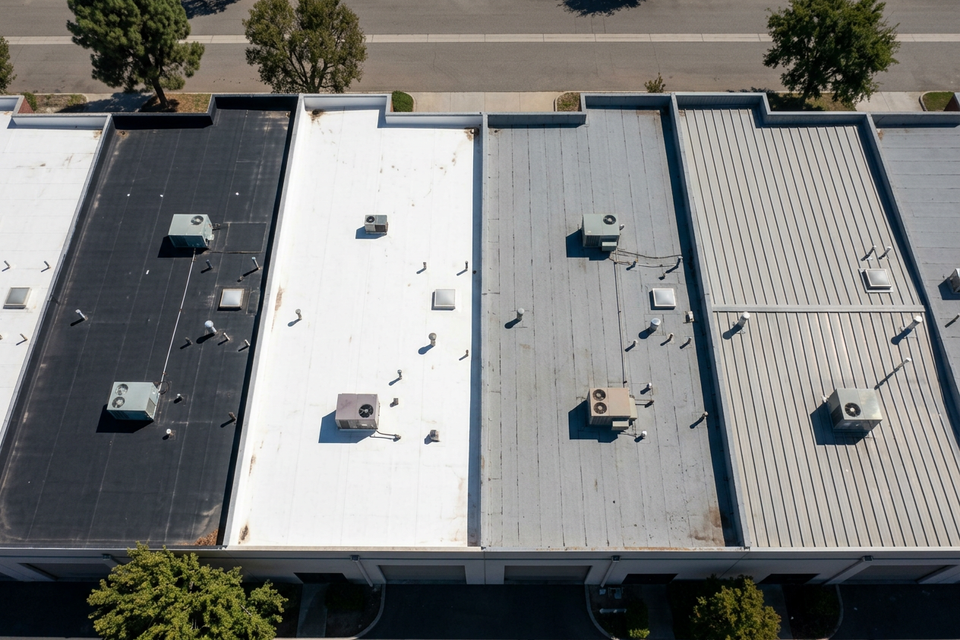
On an insulated membrane roof that has not been surveyed, our drone moisture scan maps the areas that look wet before anyone counts material: you get the map, video from the flight and a written assessment of what the scan found. The scan marks suspects; the cores confirm them. From moisture map to restoration scope turns those areas into a scope line, and Which coating system goes over which roof has each build-up.
Metal roofs: fasteners, laps and seams
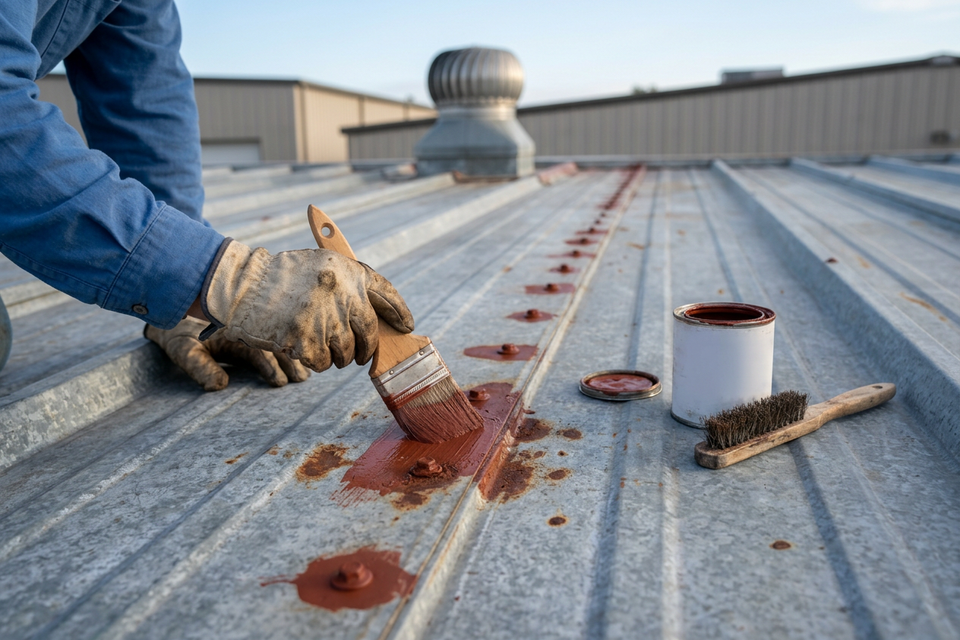
Fasteners come first: tighten what has backed out, replace what no longer bites, fasten any lap open more than 1/8 in, and treat the rust. Under an acrylic system, prime with rust-inhibitive metal primer KST034520 on corroded steel or the acrylic rust-inhibitive primer KST036520 on pre-finished panels.
Fastener heads are then covered like any other detail, with tape or fabric. Along a straight screw line, contractors commonly run one strip rather than working head by head: 2 in butyl tape KST020802, or fabric three-coursed in acrylic patching cement KST041220, which is listed for metal roof seams and flashings. The specification and the data sheet say what each head needs.
Horizontal end laps, where water runs across the joint, take butyl tape over the lap: 4 in KST020804, the width the system finder lists, or 6 in KST020806 and 8 in KST020808 where 4 in would not reach sound metal on both sides. Vertical side laps take the same tape along their length, and so do flashings. A pipe or bracket through the panel gets MS hybrid sealant KST058300, listed for metal and coated metal. Then the base coat KST041320.
Under Silicone44 the metal details are different. Every rusted area is primed with KST034520 and left to cure, then the end laps, fastened seams and ridge-cap laps are striped with Silicone44 KST044300 (white) before the field coat: no butyl tape, no base coat. Curbs and penetrations in Uniflex’s silicone specifications take its OneFlash sealant, which we do not stock; ask us rather than substitute a cartridge. The metal system page has both build-ups.
Single-ply roofs: laps, flashings and penetrations
On EPDM the wash primer KST038620 cleans the membrane first; it is made for EPDM only, so TPO, PVC and Hypalon are pressure washed instead. On EPDM, TPO and PVC an open lap, a tear or a hole takes fleece-backed MS hybrid bonding tape: 6 in KST058006, the width the system finder lists, or 4 in KST058004 on a small defect. It is listed for holes, tears and seams in gutters, flashings, skylights and membranes, and can go down on a wet surface.
Penetrations get an MS hybrid cartridge. The white KST058300 lists EPDM, primed TPO and primed PVC: on TPO and PVC the adhesion promoter KST058700 goes on first; on EPDM the sealant goes on directly. The black KST058310 lists EPDM and aged TPO and PVC; new TPO or PVC needs a primer first, so ask us. Under an acrylic finish, the single-ply base coat KST041321 and the finish follow.
Hypalon is the exception. The one detail product we stock that its maker lists for Hypalon is the butyl seam tape, KST020802 to KST020808, coated over with the elastomeric the same day. None of our cartridge sealants names Hypalon, and the adhesion promoter is for TPO and PVC only, so on Hypalon the sealant is confirmed with the manufacturer’s technical service and an adhesion test before the order: tell us the membrane type.
Under Silicone44, open seams and flashings on EPDM, TPO and PVC take the black KST058310, there is no base coat, and curbs and penetrations take the OneFlash sealant we do not stock. The single-ply system page has the build-ups.
Asphaltic roofs: the three-course
Smooth built-up, modified bitumen and granular cap sheet take the three-course at the details: a coat, polyester fabric worked into it while wet, and a coat over. Under an acrylic finish that coat is the MB base coat KST041510 (gray KST041512), listed for use with fabric. Under Silicone44 there is no MB base coat: seams and flashings are sealed with black MS hybrid KST058310, and where the asphalt is newer, Uniflex’s Bleed Blocker Primer goes first, which we do not stock. The system finder lists the 12 in fabric KST20385B for this build-up; the other rolls are 6 in KST20385A and 40 in KST020385, the width for field reinforcement. The specification has the last word on widths.
Repairs come before the detail course. Blisters are cut open and splits and open laps cleaned out, then each is closed with acrylic patching cement KST041220, listed for splits, cracks and blisters in built-up and modified bitumen and three-coursed with fabric, or with wet-dry roof cement KST058600, listed for asphaltic roofs wet or dry. The modified bitumen and built-up system page has the build-ups.
The details every roof has
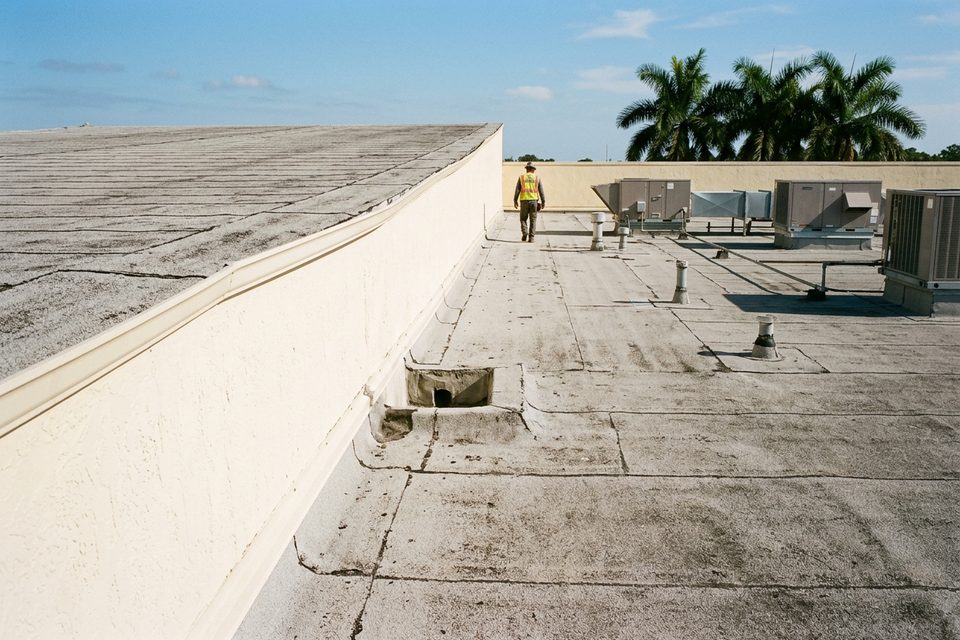
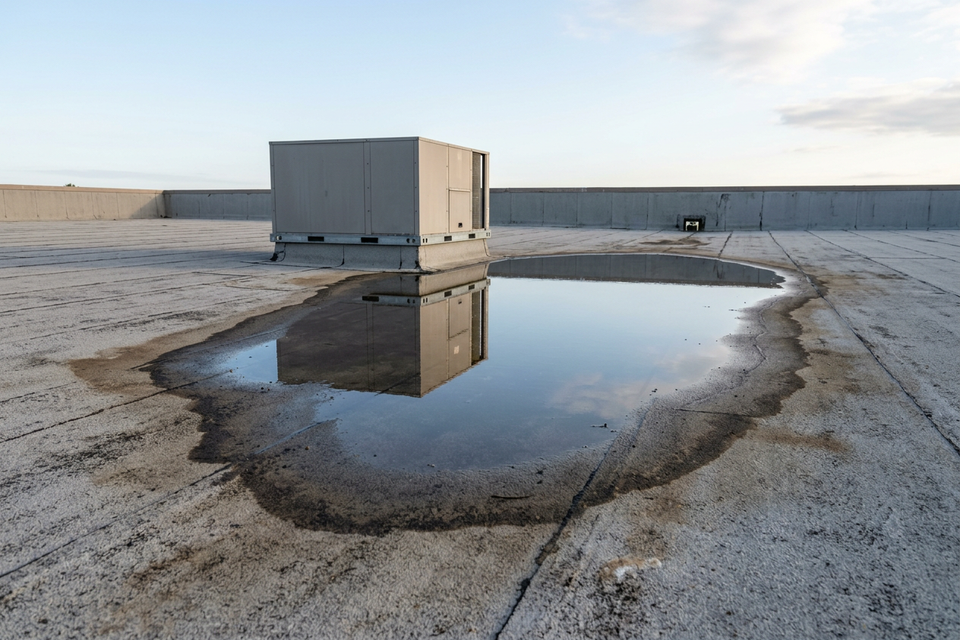
Curbs. Fabric runs up the curb and onto the deck on asphaltic and concrete roofs; bonding tape takes it on EPDM, TPO and PVC, seam tape on metal and Hypalon. Where water sits behind a rooftop unit, a Slope Builder cricket goes in first.
Pitch pans. The catalog carries no pourable pitch-pan filler, so the specification says how each pan is filled and tied into the coating, or whether it is replaced.
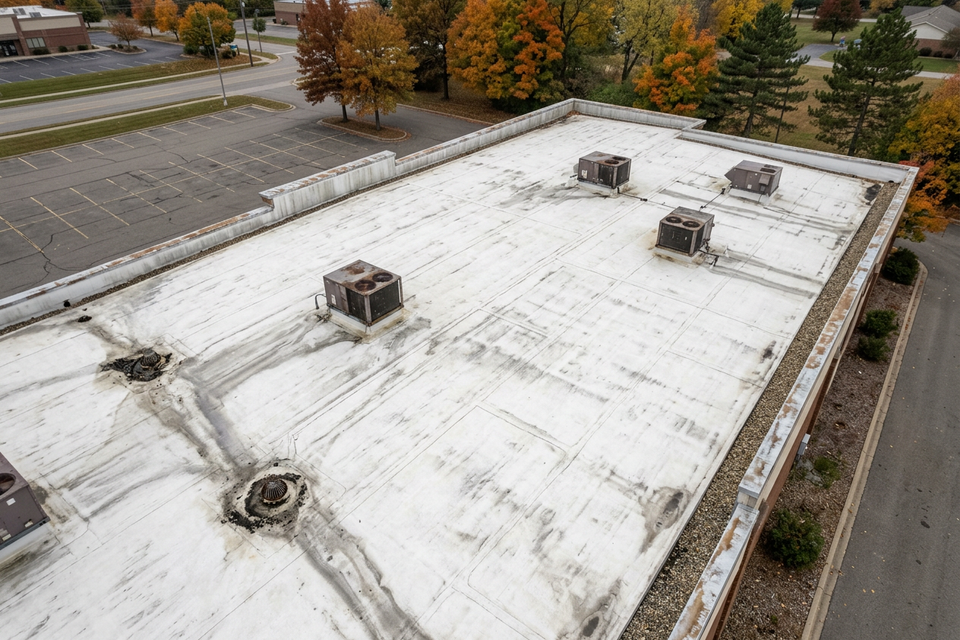
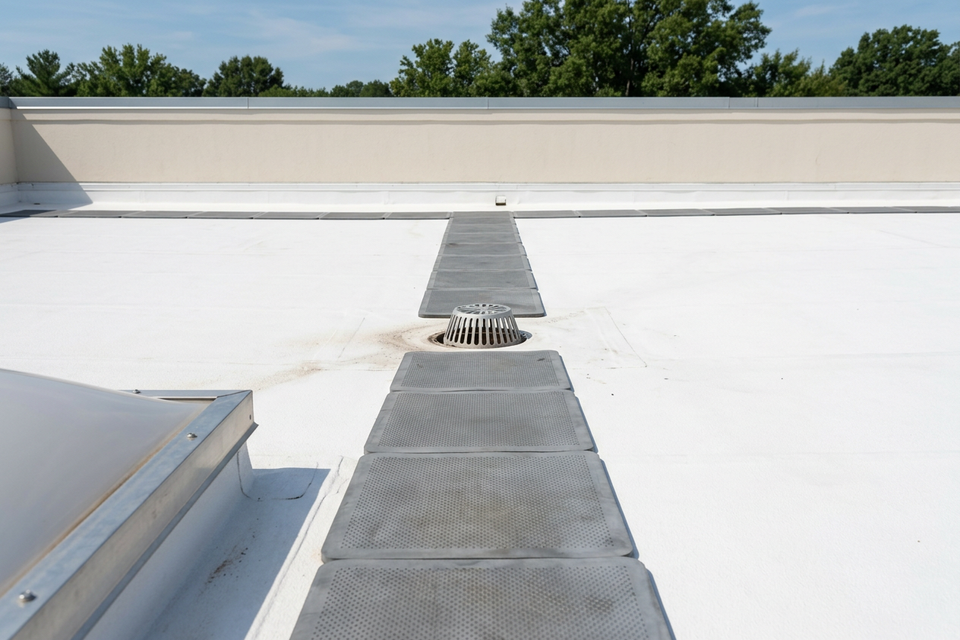
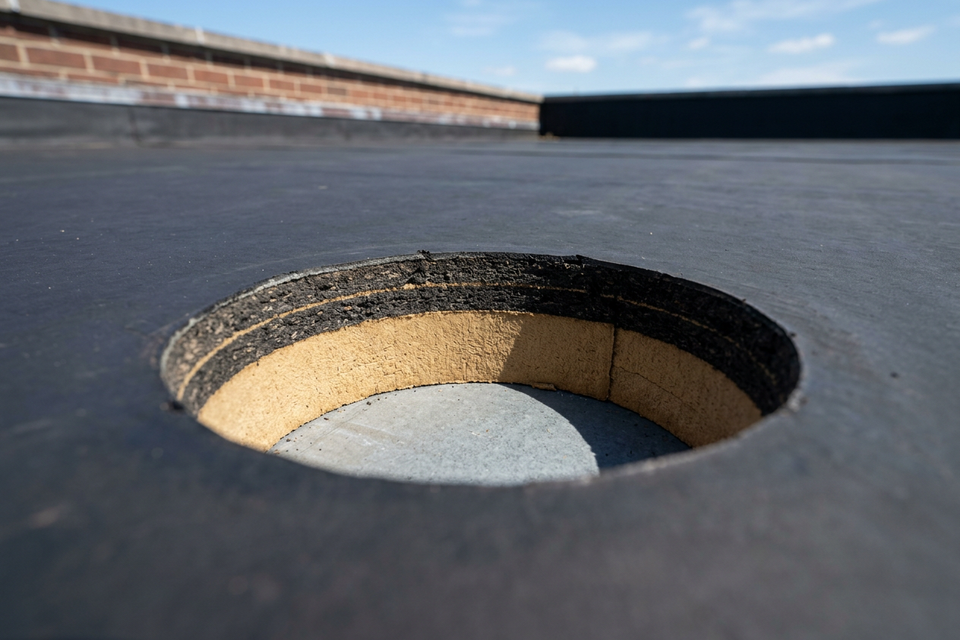
Drains and scuppers. Drain rings and scupper surrounds take the build-up’s own detail material, and the specification shows how it laps into the bowl and the throat. Low areas at a drain are built up first; where the cause is deflection, the building’s engineer decides.
Parapet flashings. The base flashing is reinforced up the wall to its termination. Termination bar, reglet and coping joints get a sealant bead: MS hybrid against EPDM, TPO and PVC as its sheet lists them, polyurethane or tripolymer on metal and masonry. The specification says where the coating stops.
Expansion joints. A joint built to move is the specification’s detail, not a tape detail.
Under an acrylic finish, the details by roof type:
| Detail | Metal | EPDM, TPO, PVC | Asphaltic |
|---|---|---|---|
| Seams and laps | Butyl tape, coated over | Bonding tape, no coat needed | Fabric in the MB base coat |
| Fastener rows | 2 in tape, or fabric in patching cement | — | — |
| Curbs and flashings | Seam tape, or fabric in the base coat | Bonding tape | 12 in fabric in the MB base coat |
| Penetrations | MS hybrid cartridge | MS hybrid; promoter first on TPO and PVC | Fabric three-course |
| Repairs | Patching cement | Bonding tape | Patching cement or wet-dry roof cement |
On Hypalon, butyl seam tape takes the seams, flashings and penetrations, coated over the same day.
The sealant families in the catalog
Five families, plus the adhesion promoter that goes ahead of one of them. Pick by the substrate list on the data sheet, not by color; where the specification names a sealant, it wins.
| Family | Listed for | Part number |
|---|---|---|
| MS hybrid, white | Metal, coated metal, EPDM, primed TPO and PVC | KST058300 |
| MS hybrid, black | Metal, EPDM, aged TPO and PVC; not white EPDM | KST058310 |
| Tripolymer | Coated metal, steel, brick, concrete, tile, wood, asphalt | KST058400 |
| Polyurethane | Steel, aluminum, coated metal, masonry, wood | KST058100 |
| Fast-skin polyurethane | Sheet metal, steel, brick, tile, wood | KST058200 |
| Brushable repair sealant | Many roofing materials, damp or oily included; not EPDM | KST058500 |
| Adhesion promoter | TPO and PVC, ahead of the MS hybrid | KST058700 |
None of them names Hypalon. Every color and cartridge size is at Roofing sealants; fabrics and tapes are at Reinforcing fabrics and seam tapes.
Count them at survey
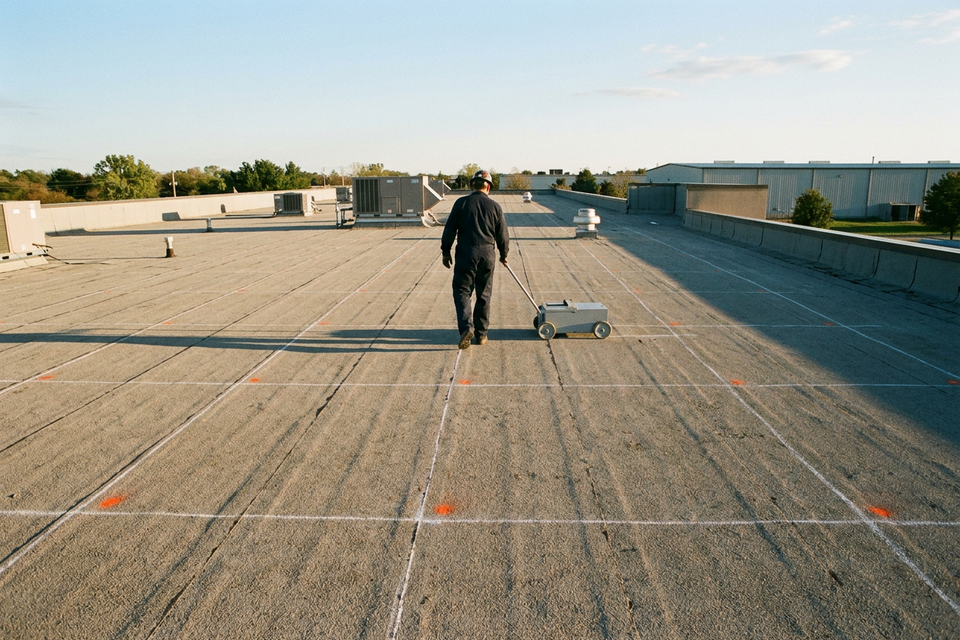
Details are counted in linear feet and each, never in squares. Walk the roof with the plan and record linear feet of seams, laps and fastener rows, with the width each will take; the perimeter of every curb, the parapet base and the length of each expansion joint; a count of penetrations, drains, scuppers and pitch pans; and every repair, by number and size. Add any wet areas the cores confirmed: each is cut out, replaced and tied back into the field. The Sherwin-Williams Uniflex guide specification for silicone over single-ply asks for a roof plan showing water intrusion, ponding, wet insulation and damaged deck; this walk and the survey results produce it.
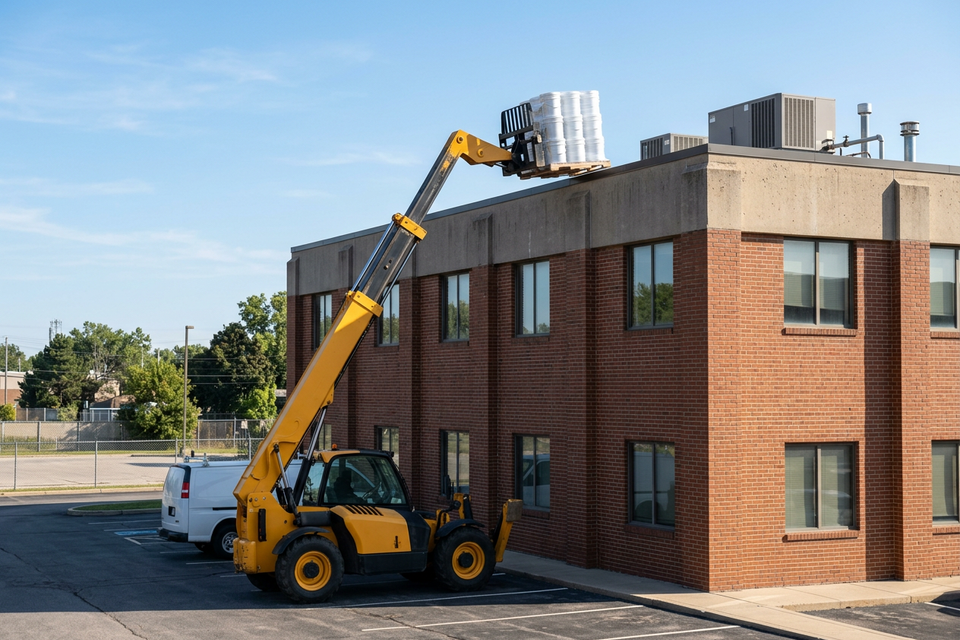
Then convert to rolls, cases and pails: tape in 50 ft rolls, fabric in 324 ft rolls, cartridges by the case. The coating a three-course uses belongs in the gallon total, not the fabric line; How to estimate material for a roof coating job has the case counts.
Who decides
- The contractor writes the scope and owns the means and methods.
- The specification and the data sheet name the preparation, the rate and the cure, what goes over tape and sealant, and the pitch-pan and expansion-joint details; the adhesion test patch settles whether the system holds on this roof.
- The building’s engineer decides anything structural, including why a roof deflects at a drain. Nothing here is structural advice.
- The manufacturer inspects the finished roof before it issues a system warranty. Sherwin-Williams offers UNIGUARD system warranties of 10 or 15 years when one of its authorized contractors applies the system. The warranty is the manufacturer’s, issued under its own terms; we supply the materials.
Run the field gallons through the material estimator, then send the detail list, the roof area by level, the substrate and the site ZIP through the quote form. A person counts the detail materials off those lengths, prices them with the coatings, names what is not included, and replies with the price, freight and a ship date.
Last updated 2026-10-05.